Filters

6 filtered results

Clear all filters
Favorites
With answer key
Interactive

6 filtered results

Difficulty Level

Grade


Introducing "Logical Reasoning Science Worksheets for Ages 3-4" from Kids Academy! Designed to spark curiosity and enhance cognitive development, these engaging printable worksheets introduce young learners to basic science concepts through fun and interactive activities. With a focus on logical reasoning, children develop critical thinking skills needed for successful problem-solving. Perfect for fostering early learning. With vibrant illustrations and age-appropriate tasks, these worksheets captivate young kids and make learning an enjoyable adventure. Invest in your child's future today with our expertly crafted resources - setting the foundation for a lifelong love of science and learning.

Check out this FREE Trial Lesson on Science for age 3-4!

Sorting Objects into 3 Categories

Favorites
With answer key
Interactive
  • 3-4
  • Logical Reasoning
  • Science
Sorting Animals in 3 Groups Worksheet

Sorting Animals in 3 Groups Worksheet

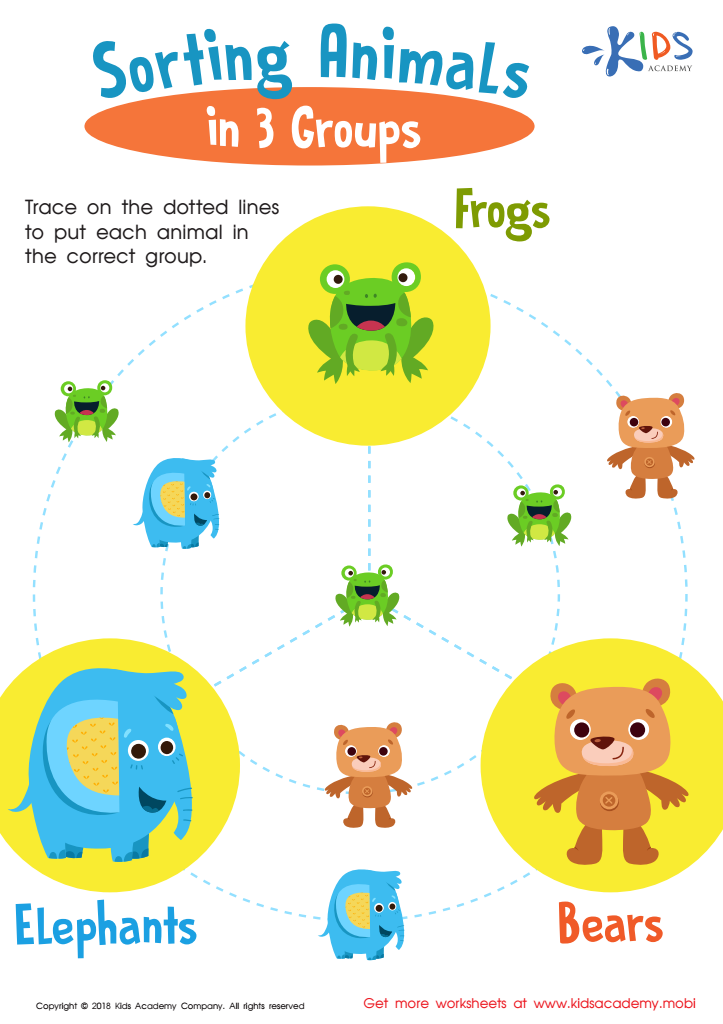
Let your kids practice and build skills for future Venn Diagrams with this PDF worksheet. They'll trace lines to match and group animals, and learn the differences and similarities of animals by categorizing with pictures and words. Plus, it's a great way to develop fine motor skills.
Sorting Animals in 3 Groups Worksheet
Worksheet
Emily's Pictures Worksheet
Emily's Pictures Worksheet

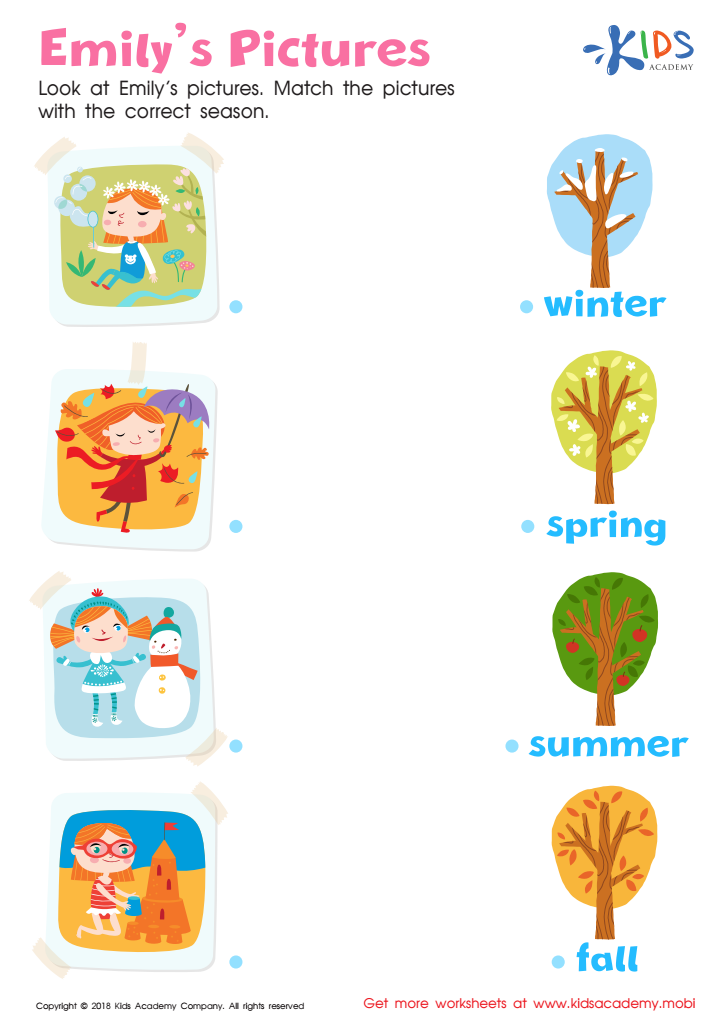
Look at the pictures of Emily on the left. Ask your child what she's doing in each one. Then, match the activities to the seasons on the right. Help your kids identify the correct season for each activity. Shorten to 80 words: Look at the pictures of Emily on the left. Ask your child what she's doing in each one, then match the activities to the seasons on the right. Help your kids find the correct season for each activity.
Emily's Pictures Worksheet
Worksheet
Class Supplies and Natural Resources Worksheet

Class Supplies and Natural Resources Worksheet

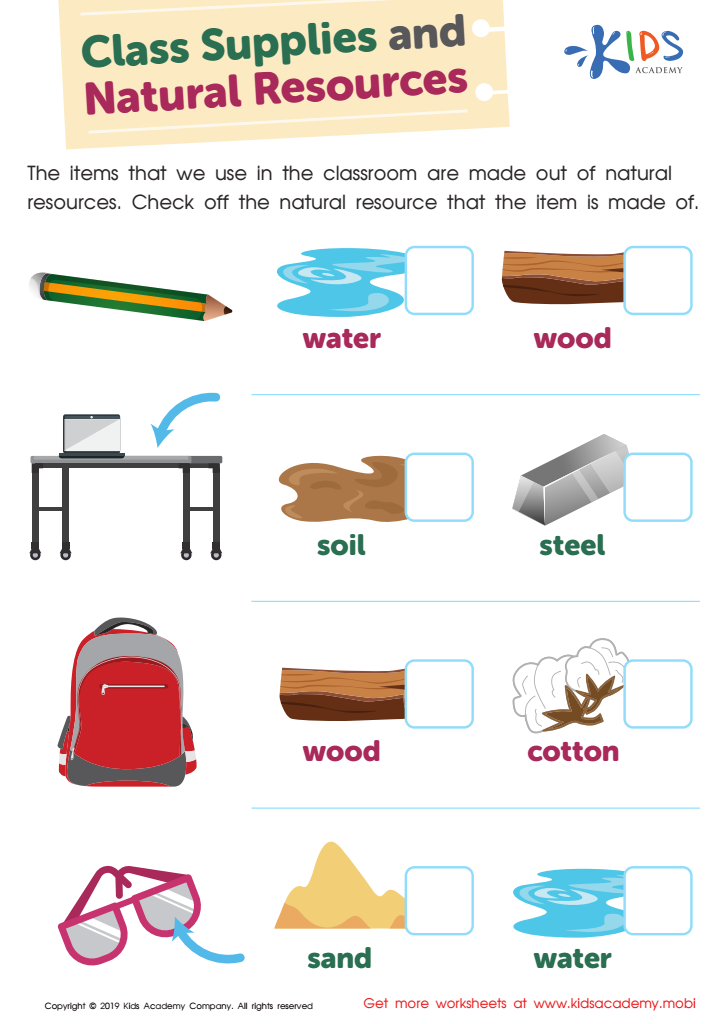
Look around the classroom with your students. Can they identify objects and name their natural resources? E.g. wood, cotton, steel. Ask your child to find an object made from wood. Then, look at this worksheet together. Ask your students to identify each object and check off the natural resource it's made from.
Class Supplies and Natural Resources Worksheet
Worksheet
Retelling the Details: What Can the Sun Melt? Worksheet

Retelling the Details: What Can the Sun Melt? Worksheet

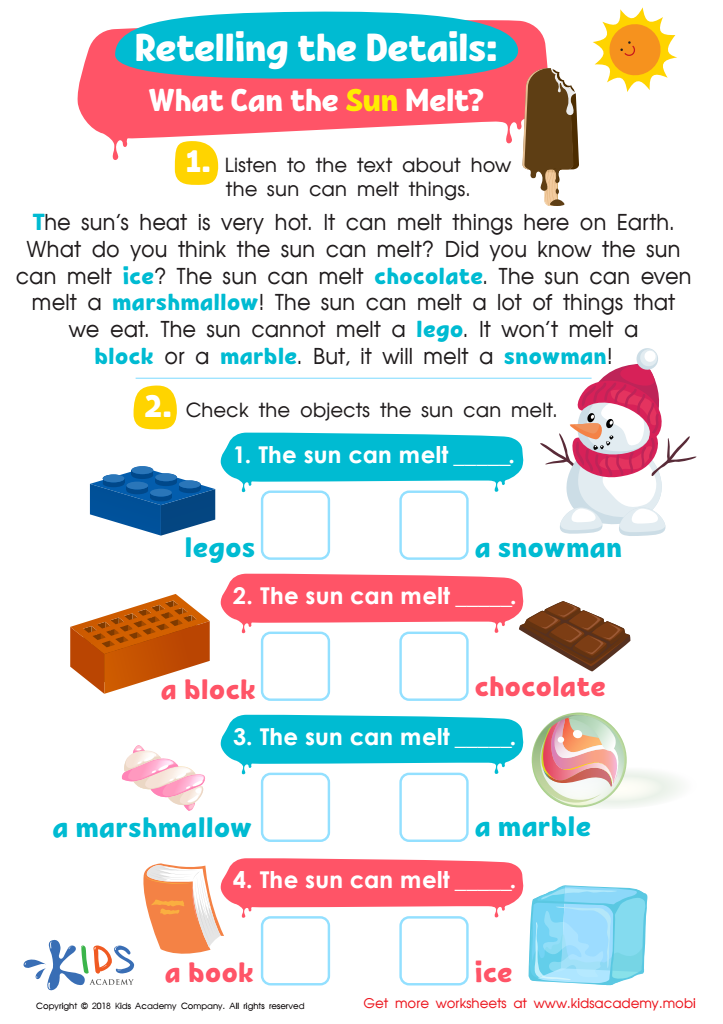
The sun is that hot yellow ball in the sky. Its intense heat can make us sweat and even melt things! Ask your kids what things the sun can melt. Read this short informative text and have them highlight the objects. Then, read the questions out loud and help them find the right answers.
Retelling the Details: What Can the Sun Melt? Worksheet
Worksheet
Summer and Winter Worksheet

Summer and Winter Worksheet

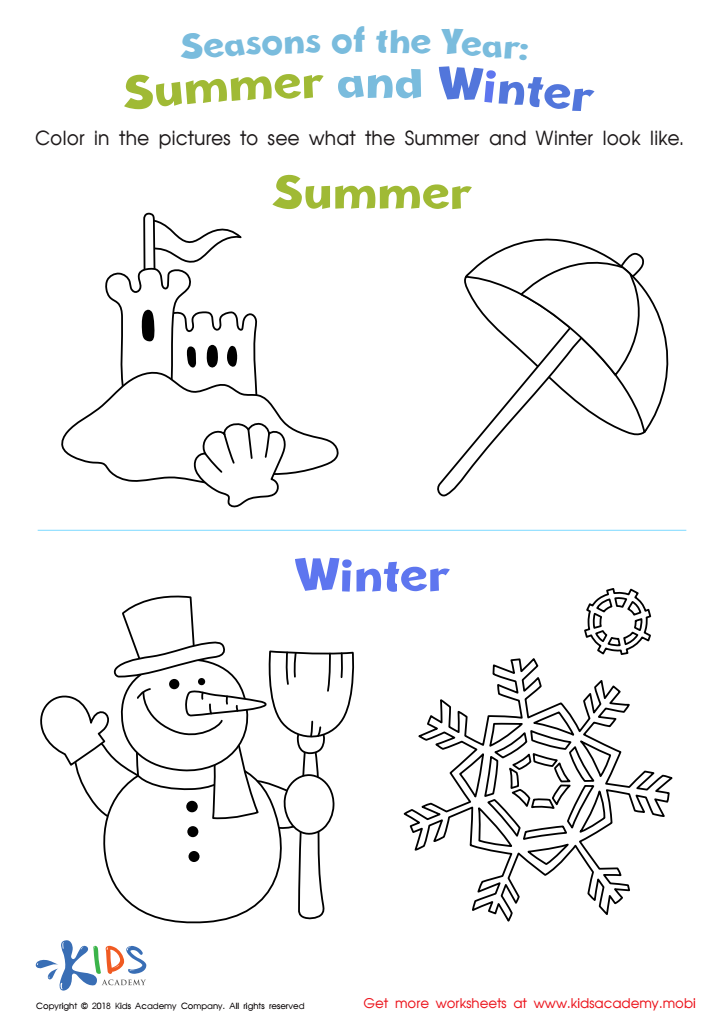
Ask your child what they associate with winter and summer. What do they look forward to in winter? What colors do they see most? What do they love doing in summer? Help them color in the pictures of winter and summer in the worksheet, choosing the colors they think best represent each season.
Download (PDF)
Assign to My Students
Summer and Winter Worksheet
Worksheet
Helpful Health Worksheet

Helpful Health Worksheet

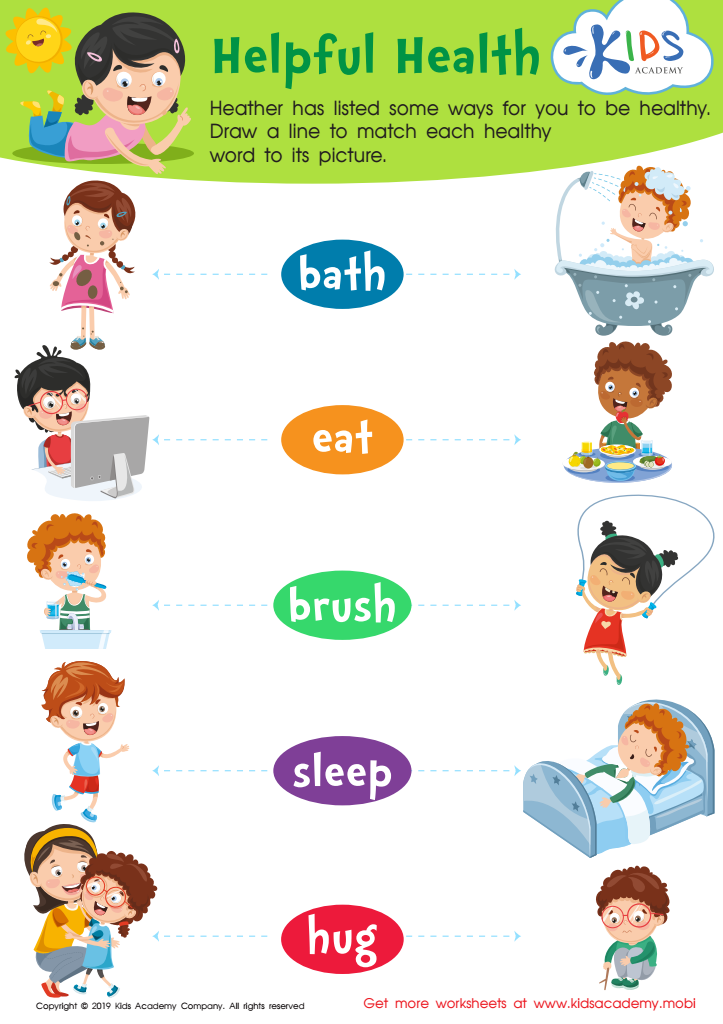
Kids can learn healthy habits with this free worksheet! With their pal Heather, they'll trace lines to connect health words with pictures like brushing teeth, hugging, and getting enough sleep. It's a great way to help young ones understand healthy activities.
Helpful Health Worksheet
Worksheet


Logical reasoning skills are foundational for young children's cognitive development and greatly benefit their future learning and problem-solving abilities. Between the ages of 3-4, children are in a critical period of brain development where exposure to logical reasoning activities can enhance their ability to think systematically and make connections.

Parents and teachers should focus on developing these skills because they promote better understanding and organization of information, which is essential for academic success across all subjects, including math, science, and reading comprehension. Logical reasoning helps children discern patterns, classify objects, and understand sequences, fostering their curiosity and ability to conduct experiments and test hypotheses even at a young age.

Furthermore, engaging in age-appropriate logical reasoning activities, such as simple puzzles, sequencing games, and storytelling with cause and effect, helps refine children's attention to detail and their capacity to understand and remember instructions. These skills also contribute significantly to social development, as children learn to follow rules, negotiate, and predict outcomes in various scenarios.

Implementing logical reasoning in early education paves the way for critical thinking, allowing children to become independent thinkers and effective problem solvers. Teachers and parents play a crucial role in creating environments rich with opportunities for young minds to explore, ask questions, and develop the reasoning skills they will use throughout their lifetimes.