
Logical Reasoning Social Studies Worksheets for Ages 3-4
6 filtered results
Difficulty Level
Grade
Age
-
From - To
Subject
Activity
Standards
Discover our engaging Logical Reasoning Social Studies worksheets designed specifically for children ages 3-4! These thoughtfully crafted activities encourage early learners to develop critical thinking and problem-solving skills while exploring social studies concepts. Each worksheet is tailored to enhance cognitive abilities through fun, interactive exercises that promote reasoning and decision-making. From patterns and sequences to cause and effect, your child will enjoy learning essential skills essential for their educational journey. Perfect for both at-home learning and classroom use, these worksheets will inspire curiosity and a love for social studies in your little ones. Start their learning adventure today!
Favorites
With answer key
Interactive
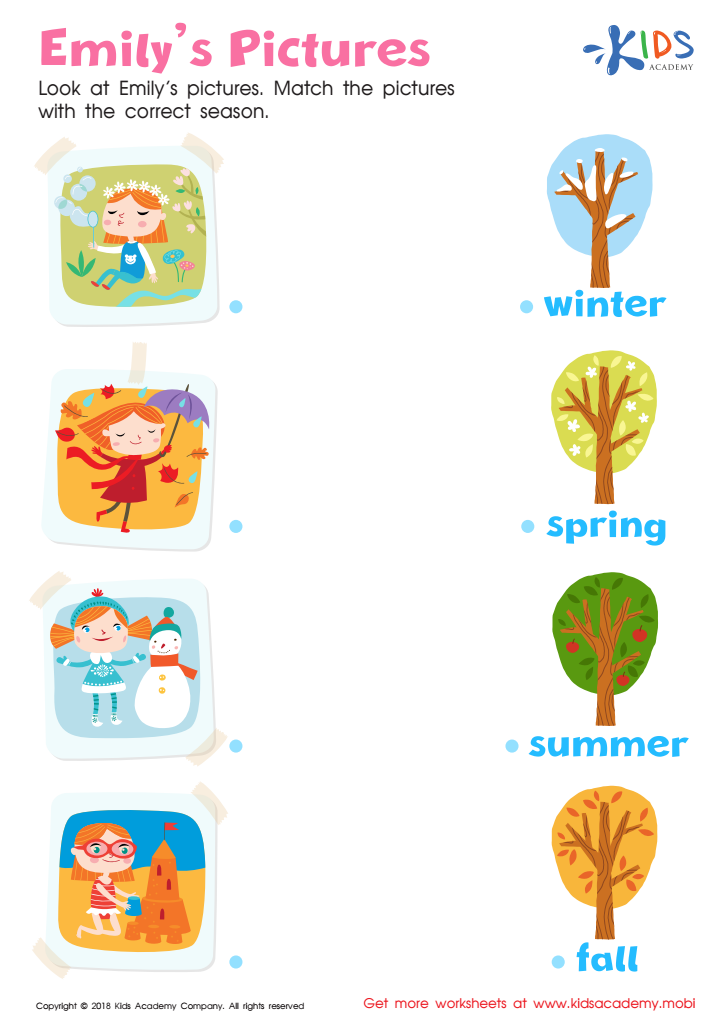
Emily's Pictures Worksheet
Look at the pictures of Emily on the left. Ask your child what she's doing in each one. Then, match the activities to the seasons on the right. Help your kids identify the correct season for each activity. Shorten to 80 words: Look at the pictures of Emily on the left. Ask your child what she's doing in each one, then match the activities to the seasons on the right. Help your kids find the correct season for each activity.
Emily's Pictures Worksheet
Worksheet
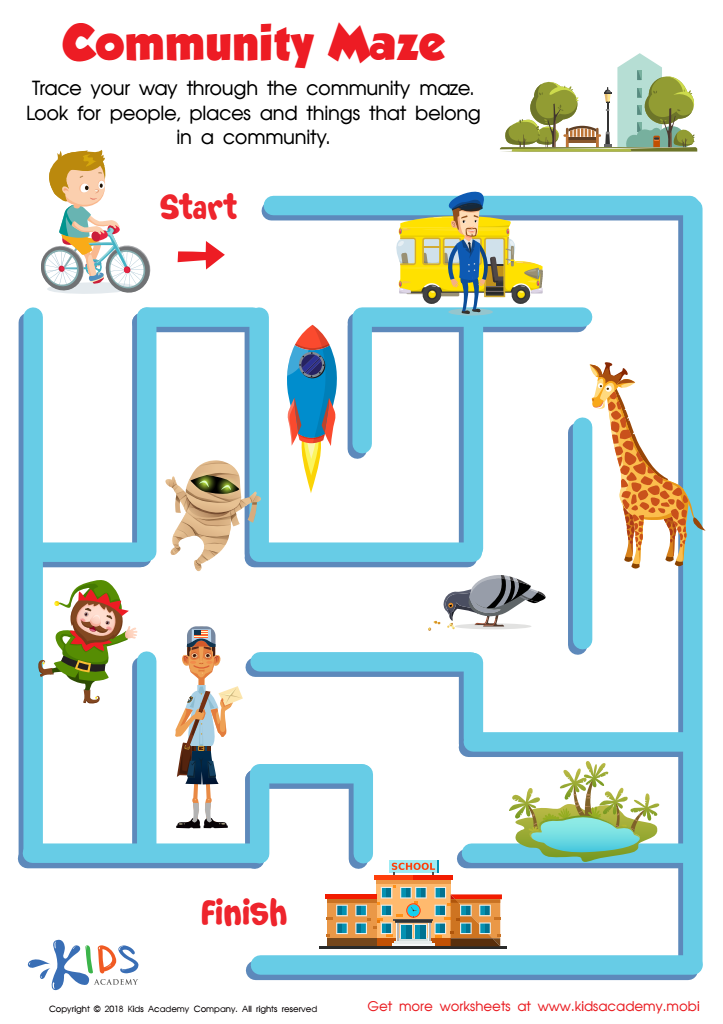
Community Maze Worksheet
Your kids will have a blast as they use their fine motor skills to trace their way through the community maze worksheet. Plus, they'll enjoy meeting people, places, and creatures to sort out who and what belong in a community and who and what don't! Help their friend bike to the neighborhood school and reinforce what life is like in a community.
Community Maze Worksheet
Worksheet
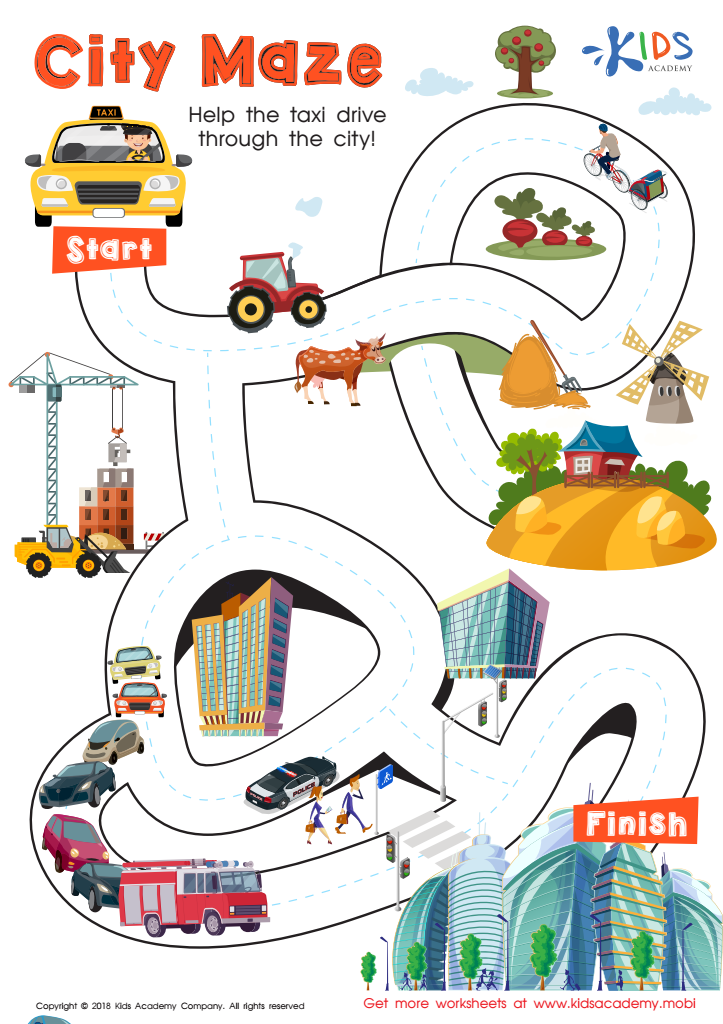
City Maze Worksheet
Kids love mazes! This free PDF city maze worksheet is sure to be a hit. Help your friend the taxi driver get through the maze, following traceable lines through different communities to the big city. It's a fun and challenging way to practice fine motor skills and succeed!
City Maze Worksheet
Worksheet
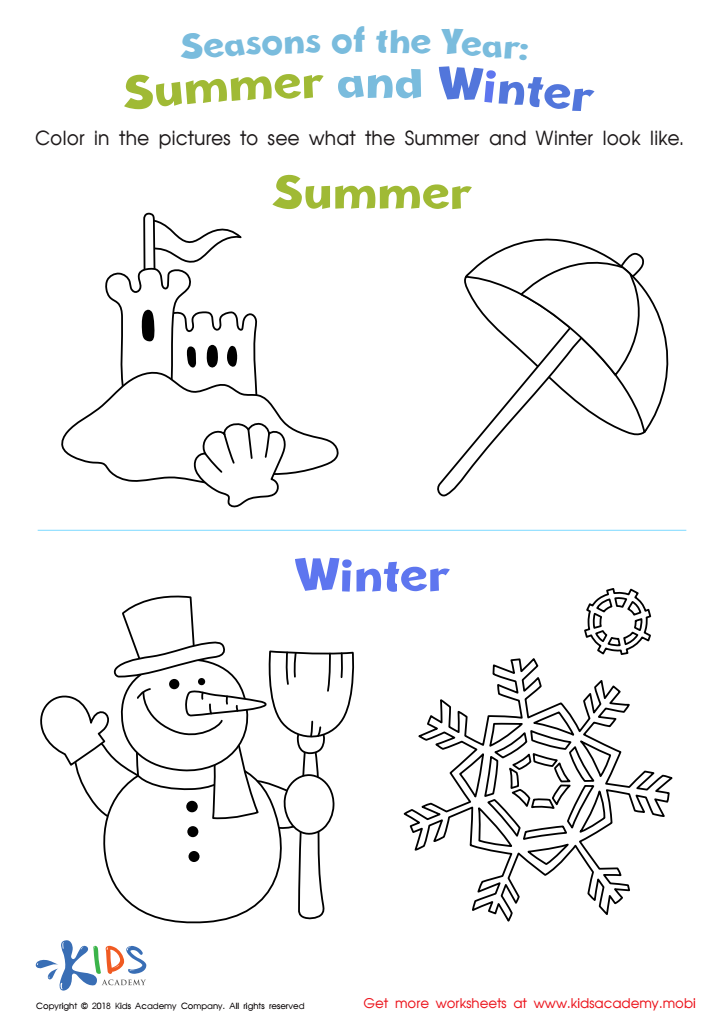
Summer and Winter Worksheet
Ask your child what they associate with winter and summer. What do they look forward to in winter? What colors do they see most? What do they love doing in summer? Help them color in the pictures of winter and summer in the worksheet, choosing the colors they think best represent each season.
Download (PDF)
 Assign to My Students
Assign to My Students
Summer and Winter Worksheet
Worksheet
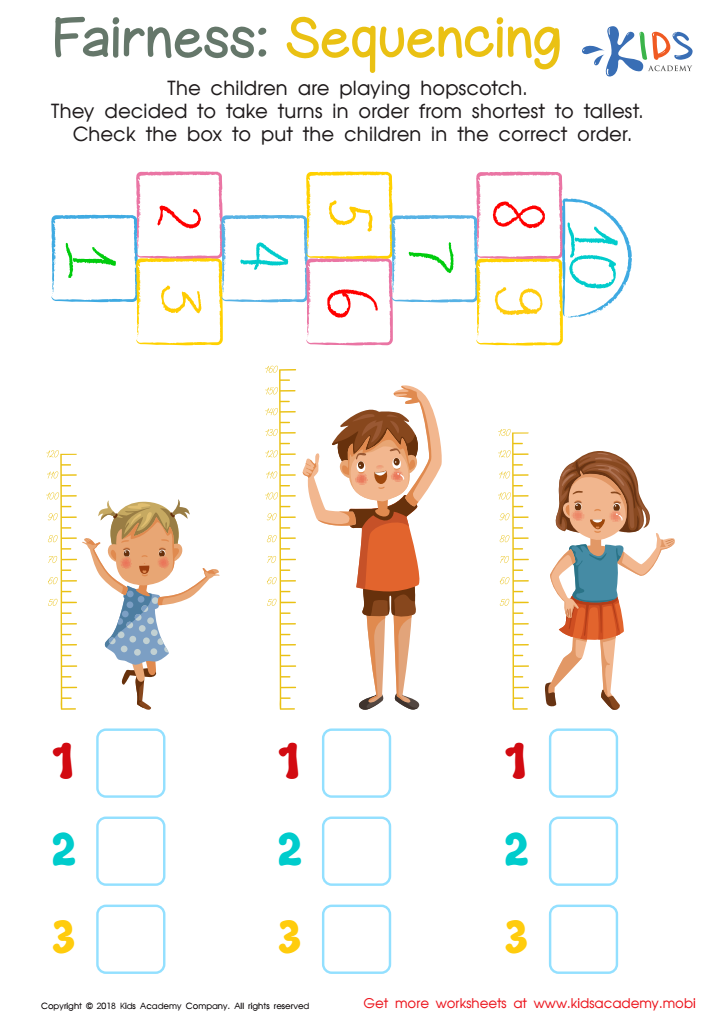
Fairness: Sequencing Worksheet
Kids likely already know how to play hopscotch. Ask them to show you the shortest, tallest and middle child in the worksheet. Then, help them order them from shortest to tallest by checking the boxes.
Fairness: Sequencing Worksheet
Worksheet
Join Kids Academy for Free
Who is primarily going to use this learning content?







Logical reasoning in social studies for ages 3-4 is crucial for laying a strong foundation for children's cognitive and social development. During this age, children are naturally curious about their world. Engaging in logical reasoning activities helps them make sense of their surroundings, enhancing critical thinking skills essential for problem-solving and decision-making.
As children explore concepts of community, relationships, and basic social structures, logical reasoning enables them to connect ideas, understand cause and effect, and develop a sense of empathy. For instance, when discussing various occupations or community helpers, children learn to categorize information, fostering analytical skills.
Additionally, incorporating logical reasoning in social studies nurtures verbal skills and promotes collaboration through discussions and group activities. It fuels children's imagination and encourages them to ask questions, paving the way for deeper inquiries about their environment.
For parents and teachers, prioritizing logical reasoning in social studies prepares children for more complex learning experiences. It empowers them to become active participants in society, cultivating respectful and informed future citizens. Ultimately, investing in these foundational skills contributes to enhancing children's overall academic success and social awareness as they grow.








