Verb identification Writing Worksheets for Ages 3-4
3 filtered results
-
From - To
Boost your child's grammar skills with our "Verb Identification Writing Worksheets for Ages 3-4". These engaging worksheets are designed to help young learners recognize and understand verbs within sentences, enhancing their early literacy and language skills. Our fun, colorful exercises include adorable illustrations and simple instructions that make learning enjoyable and effective. Perfect for preschoolers, these activities support cognitive development and prepare little ones for more advanced grammar concepts. Ideal for both classroom and home use, explore our collection today and watch your child confidently master verbs while enjoying the learning journey.
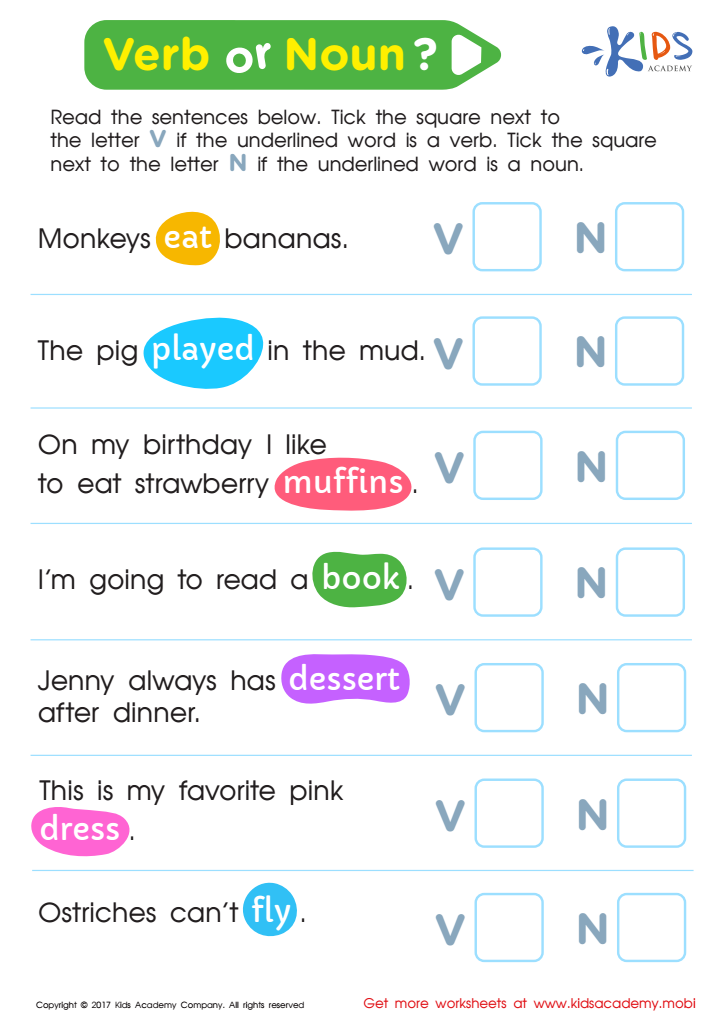
Verb or Noun Worksheet
 Assign to My Students
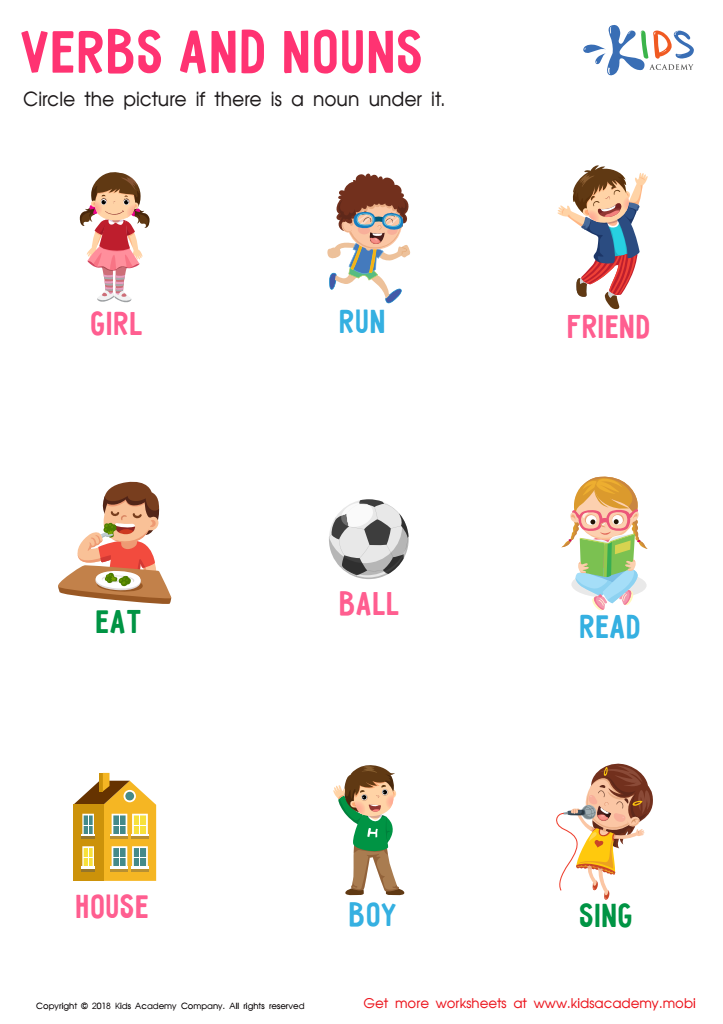
Verbs and Nouns Worksheet
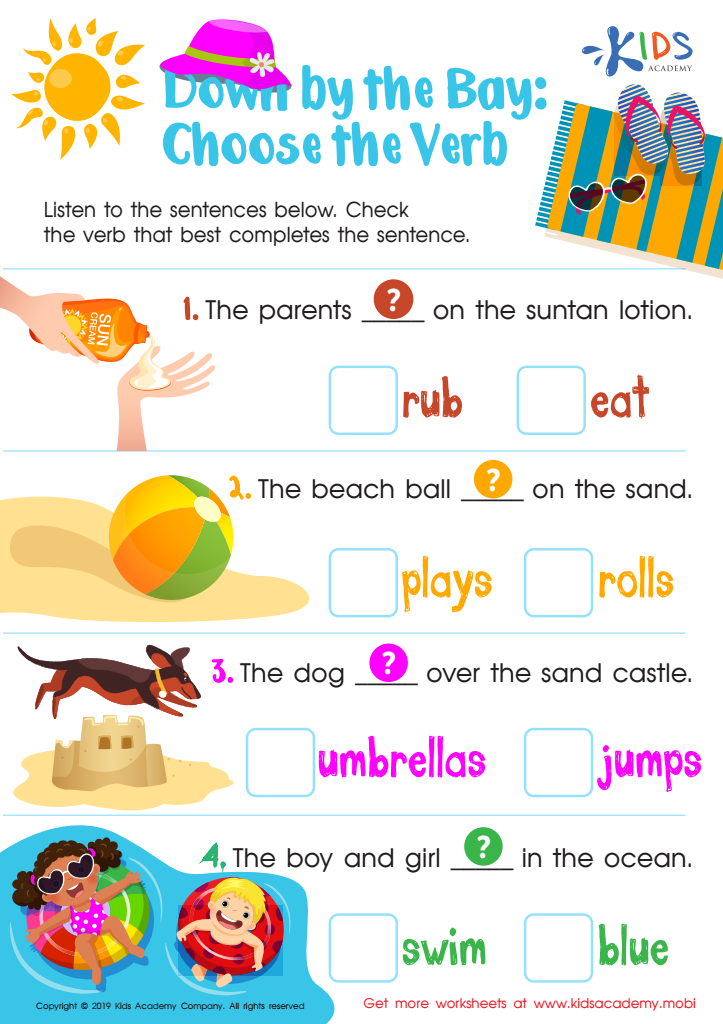
Down by the Bay: Choose the Verb Worksheet








Introducing verb identification to children aged 3-4 is essential because it lays a foundational stone for language development and literacy skills. At this developmental stage, children experience rapid growth in their ability to communicate and understand language. Recognizing and using verbs—words that express actions and occurrences—enables young learners to construct meaningful and coherent sentences. For instance, understanding verbs helps children articulate their needs and describe their surroundings, fostering more effective communication.
Verb identification also ignites cognitive development. By recognizing action words, children begin to understand cause-and-effect relationships, sequencing of actions, and the basics of grammar. This awareness primes them for more complex language skills as they advance.
Furthermore, early verb identification supports social-emotional development. Clear communication through proper verb usage enhances a child's ability to share ideas, express emotions, and participate in social interactions, fostering both their self-confidence and interpersonal skills.
For parents and teachers, investing time in verb identification at this tender age ensures the child gains a head start in their academic journey. Engaging, playful activities—like reading action-packed stories or playing interactive games that highlight verbs—can make this learning process enjoyable and effective. Consequently, solid early language skills pave the way for future academic success and lifelong learning.








