Vocabulary development Writing Worksheets for Ages 3-4
3 filtered results
-
From - To
Enhance your child’s language skills with our Vocabulary Development Writing Worksheets, specifically designed for ages 3-4. These engaging worksheets provide fun and interactive activities that help young learners expand their vocabulary while developing essential writing skills. Through exciting illustrations and simple prompts, children will explore new words and practice expressing their thoughts. Our resources foster creativity and comprehension, making learning enjoyable. Perfect for at-home practice or classroom use, these worksheets are a valuable tool for parents and educators aiming to lay a strong foundation for future learning. Start nurturing your child's love for language today!
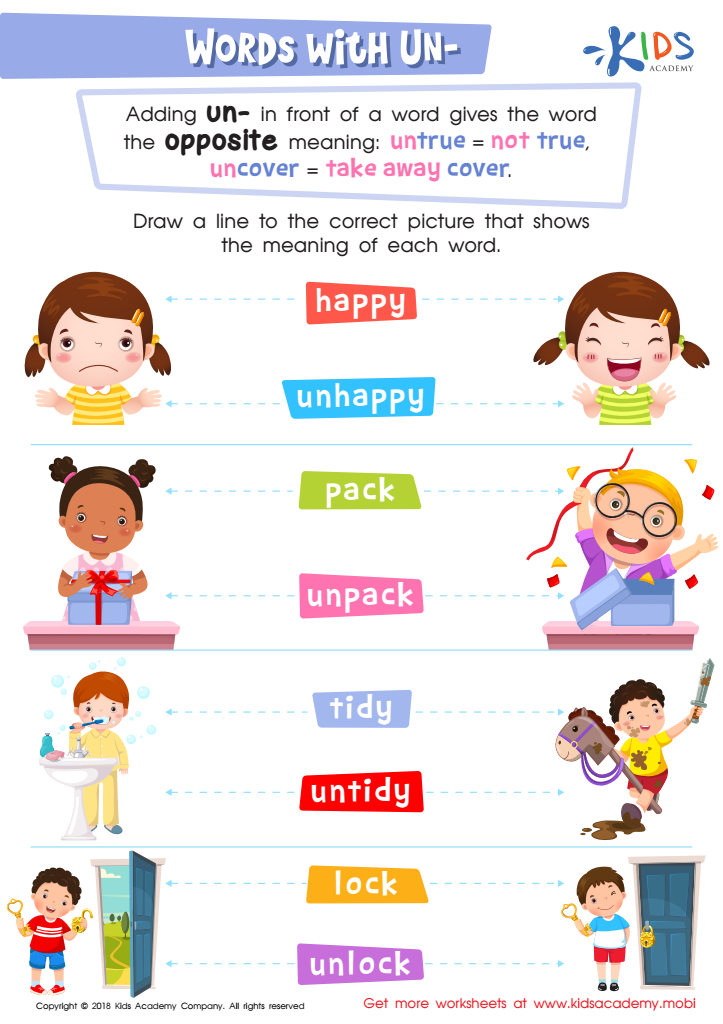
Words with Un– Worksheet
 Assign to My Students
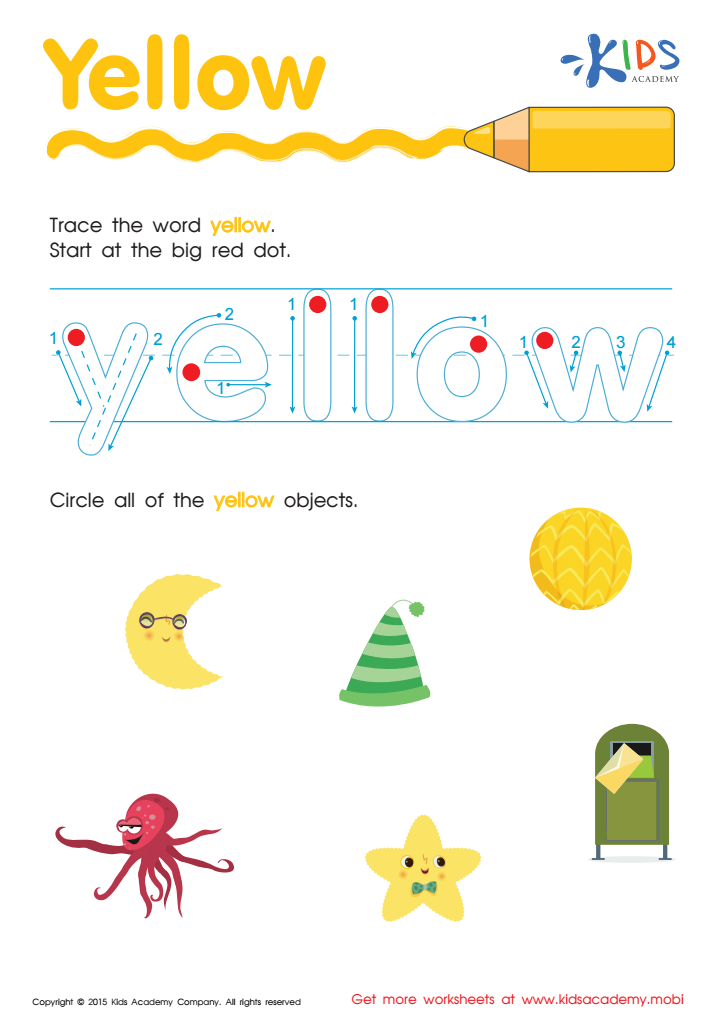
Yellow Tracing Color Words Worksheet
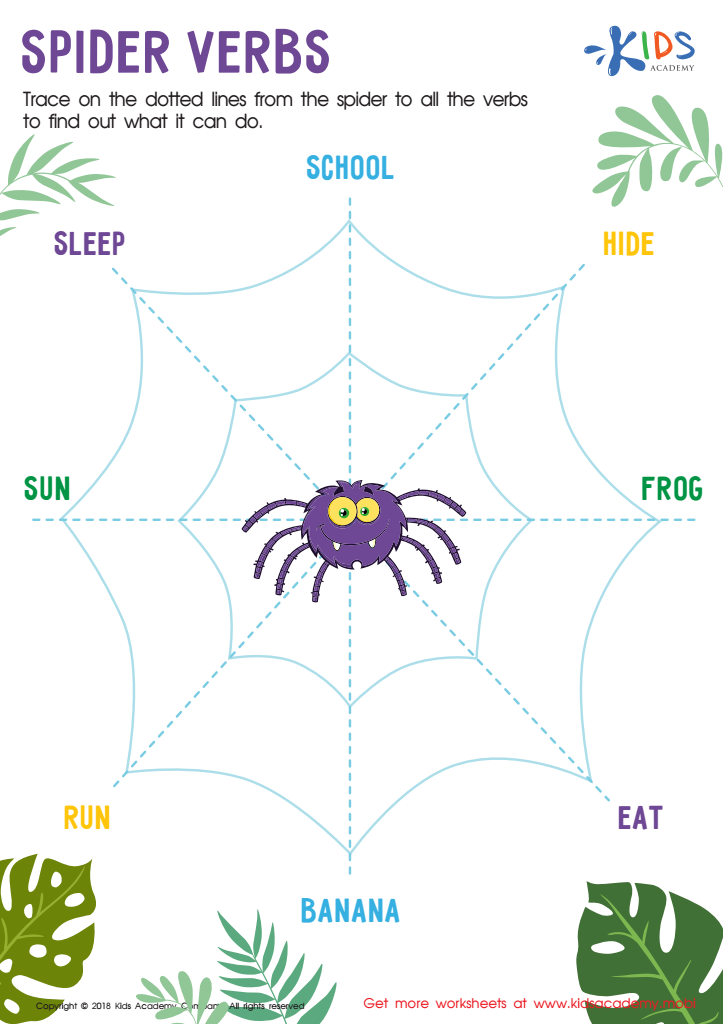
Spider Verbs Worksheet








Vocabulary development in children aged 3-4 is crucial for their overall growth and academic success. At this stage, children are rapidly learning language skills and making connections between words, concepts, and their environment. A robust vocabulary supports effective communication, allowing children to express their thoughts, needs, and emotions clearly. When parents and teachers invest in vocabulary development, they empower children to engage in conversations, participate in social interactions, and develop self-confidence.
Moreover, vocabulary serves as the foundation for literacy skills. As children progress through preschool and into kindergarten, a strong vocabulary aids in reading comprehension and writing abilities. When children encounter new words, they can better understand stories, follow instructions, and even approach problem-solving with more insight.
Engaging young learners in vocabulary-rich activities, such as storytelling, singing, and interactive games, fosters irresistible joy in learning. By collaborating in this development, parents and teachers create a nurturing educational environment. Encouraging and modeling rich language in everyday conversations allows children to absorb new words naturally.
In summary, focusing on vocabulary development in early childhood helps shape articulate, confident, and curious learners who are better prepared for future academic challenges and lifelong success.








