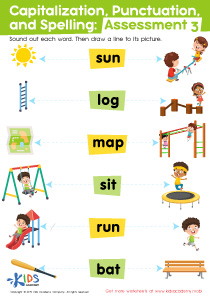
Reading comprehension Punctuation Worksheets for Ages 3-4
4 filtered results
-
From - To
Discover our engaging Reading Comprehension Punctuation Worksheets designed specifically for ages 3-4! These worksheets introduce young learners to essential punctuation marks, fostering early literacy skills in a fun, interactive way. With vibrant illustrations and simple exercises, children will enhance their understanding of sentence structure while improving their reading comprehension. Our carefully crafted activities encourage kids to recognize punctuation, enabling them to express thoughts clearly. Ideal for parents and educators, these resources create a strong foundation for a lifelong love of reading and writing. Dive into our collection and watch your little ones thrive as they embark on their literacy journey!
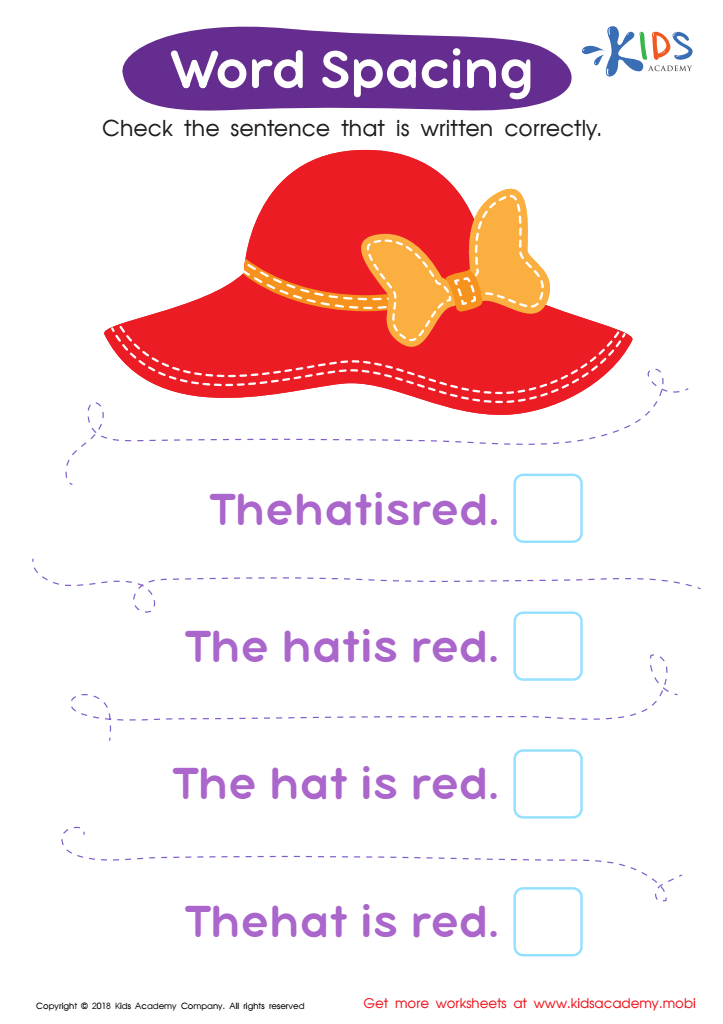
Word Spacing Worksheet
 Assign to My Students
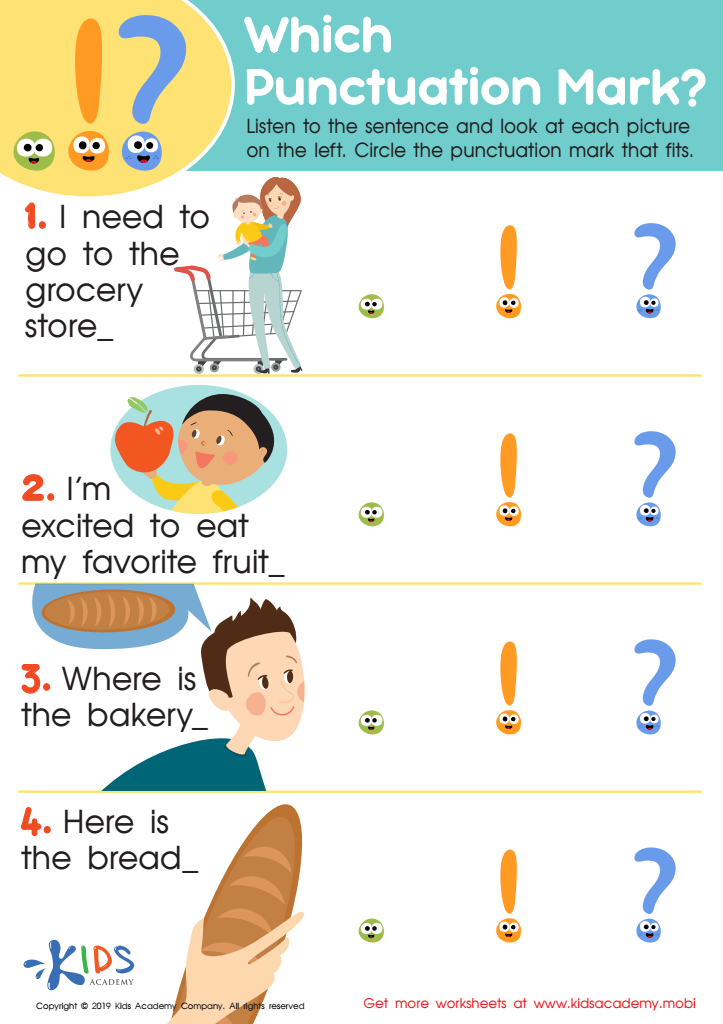
Which Punctuation Mark Worksheet
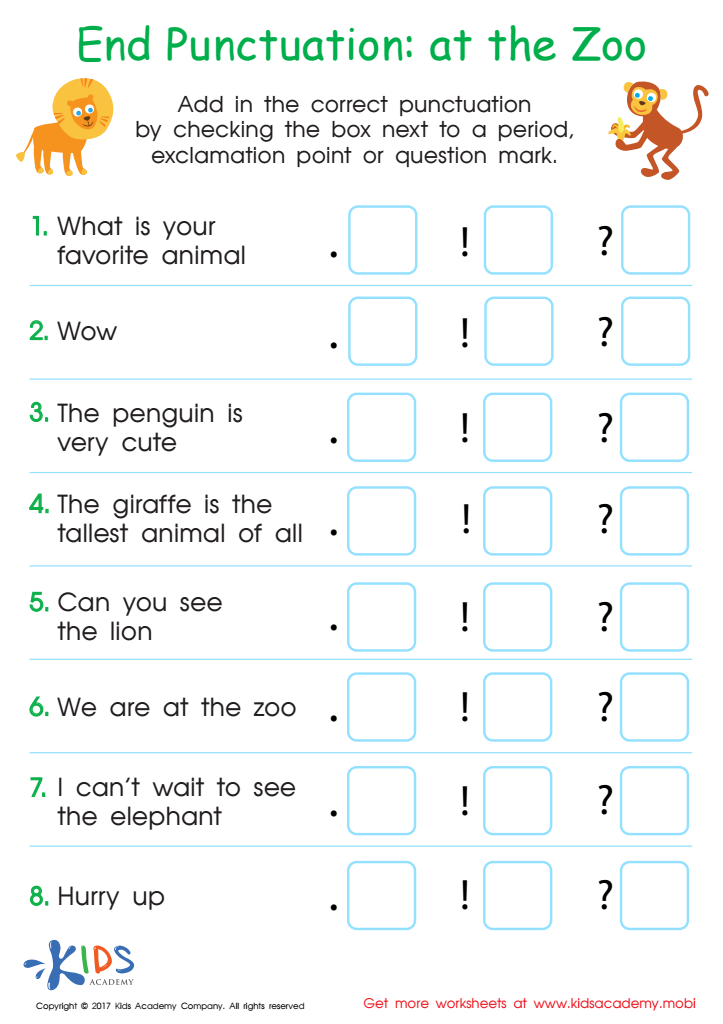
End Punctuation: At the Zoo Worksheet
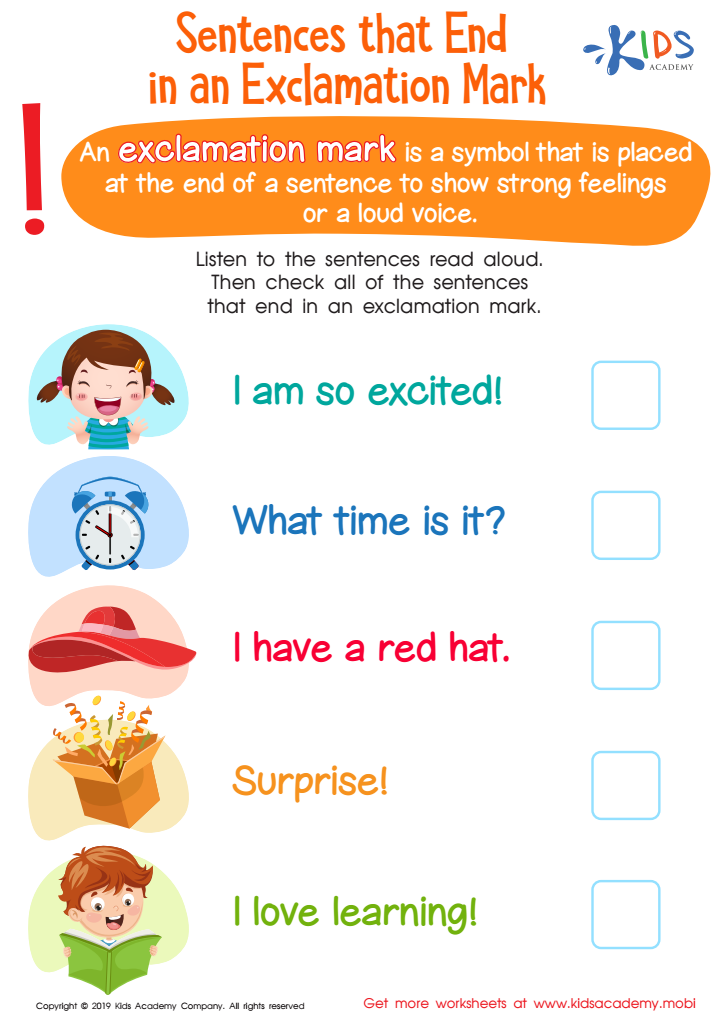
Sentences That End in an Exclamation Mark Worksheet







Reading comprehension and punctuation are essential skills that significantly benefit children aged 3-4. At this young stage, children are sponges, eagerly absorbing language and literacy concepts. Fostering reading comprehension helps them understand not just what they read but also the meaning behind words and phrases, building a foundation for critical thinking and vocabulary development.
Punctuation plays a crucial role in conveying emotions, pauses, and emphasis within a story. Teaching the basics of punctuation, such as periods, commas, and question marks, during storytime introduces children to the rhythm of reading, allowing them to interpret and enjoy texts on a deeper level. Knowing when a sentence ends or when to pause makes reading interactive and engaging.
Moreover, early exposure to reading comprehension and punctuation nurtures a love for storytelling. Children learn to anticipate outcomes, ask questions, and express their thoughts about stories, enhancing their communication skills. For parents and teachers, dedicating time to these elements during reading activities fosters a scaffold for future literacy skills. Ultimately, an understanding of reading comprehension and punctuation sets the stage for a successful transition to more advanced reading, writing, and thinking skills as children grow.