Letter-sound correlation Alphabet Worksheets for Ages 3-5
6 filtered results
-
From - To
Our Letter-sound Correlation Alphabet Worksheets for ages 3-5 are designed to build early reading skills. These engaging and interactive worksheets help young learners connect letters with their corresponding sounds. Designed to be fun and educational, they feature colorful images and simple exercises for kids to complete. By practicing with these worksheets, children enhance their phonemic awareness, laying a strong foundation for future reading success. Each worksheet is tailored to captivate your child's interest and foster a love for learning. Perfect for preschool and kindergarten, these resources make the first steps towards literacy enjoyable and effective.
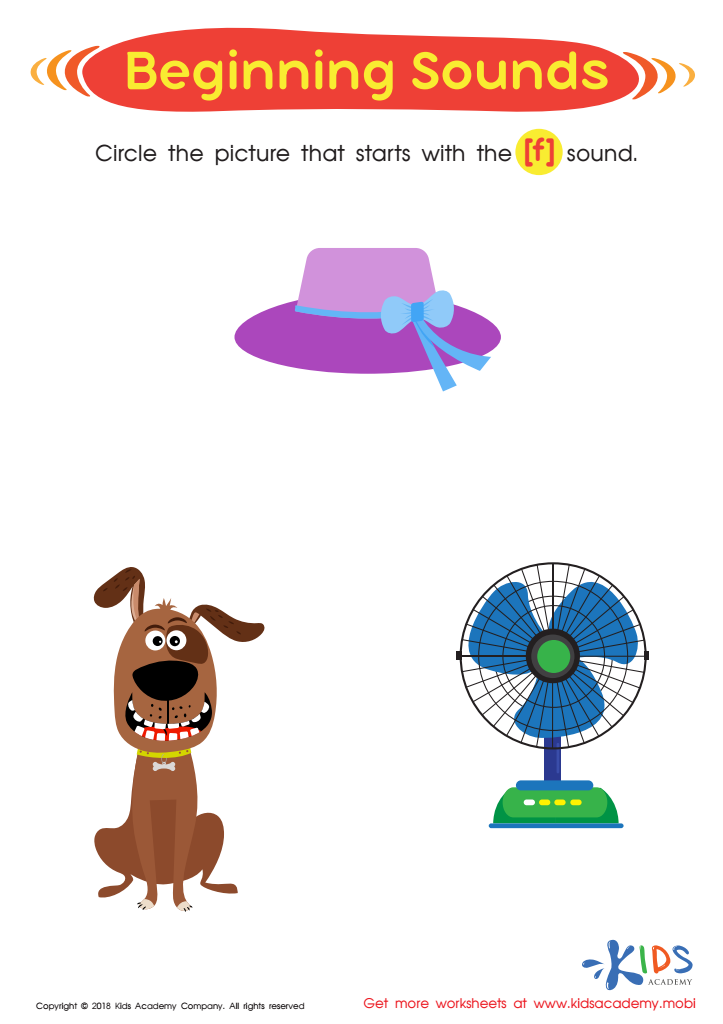
Beginning Sounds Assessment Printable
 Assign to My Students
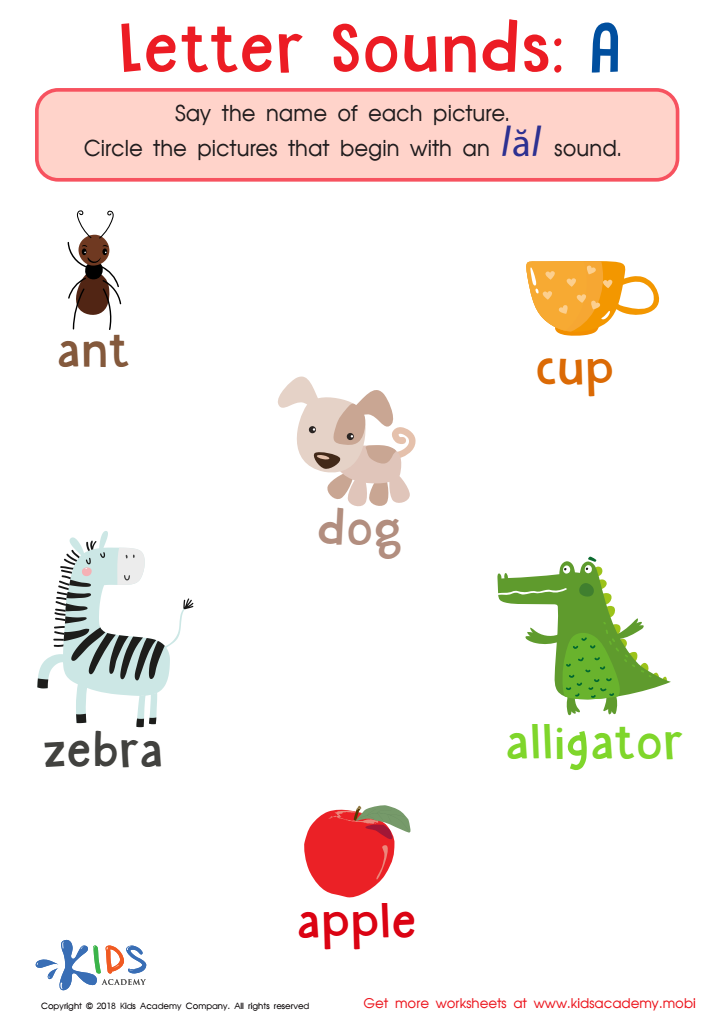
Letter A Sounds Worksheet
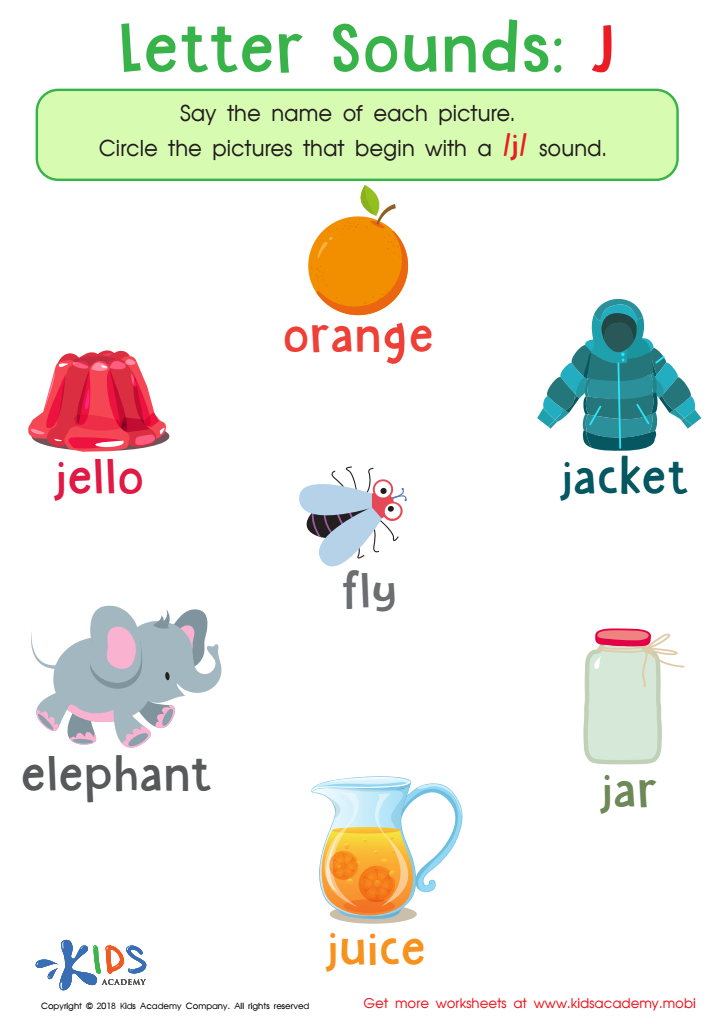
Letter Sounds: J Printable Worksheet
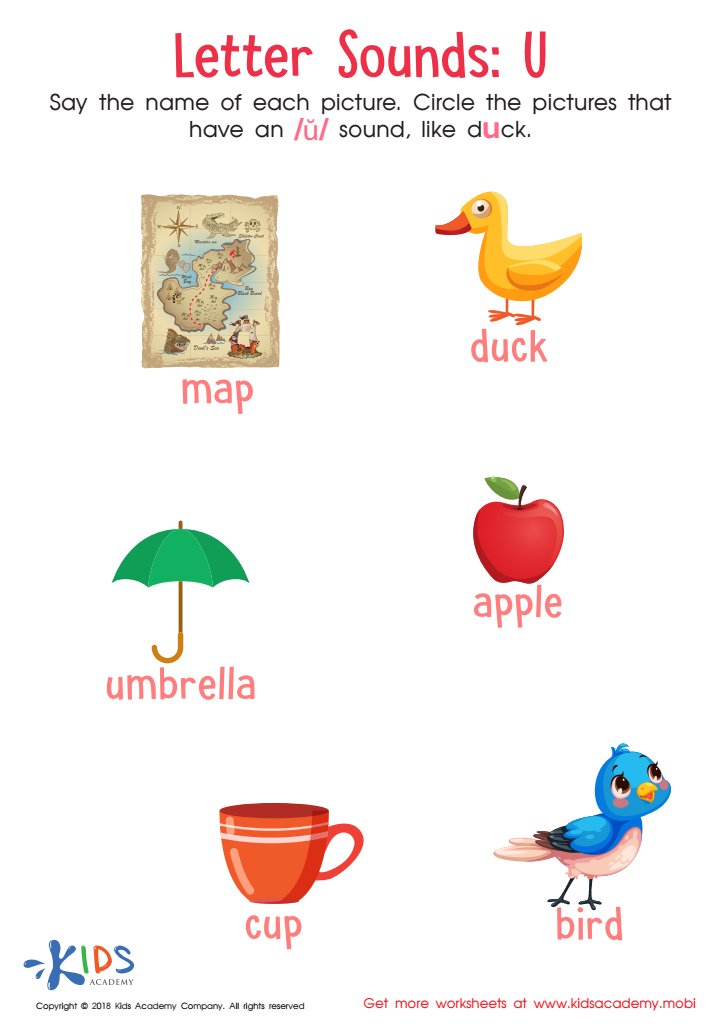
Letter U Sounds Worksheet
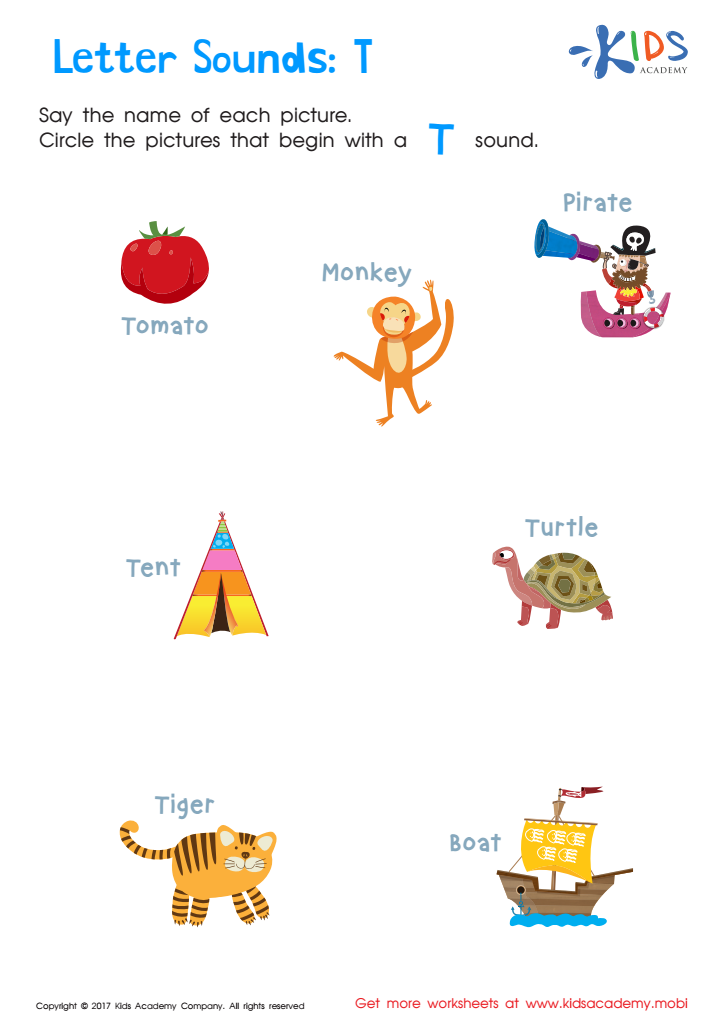
Letter T Sounds Worksheet
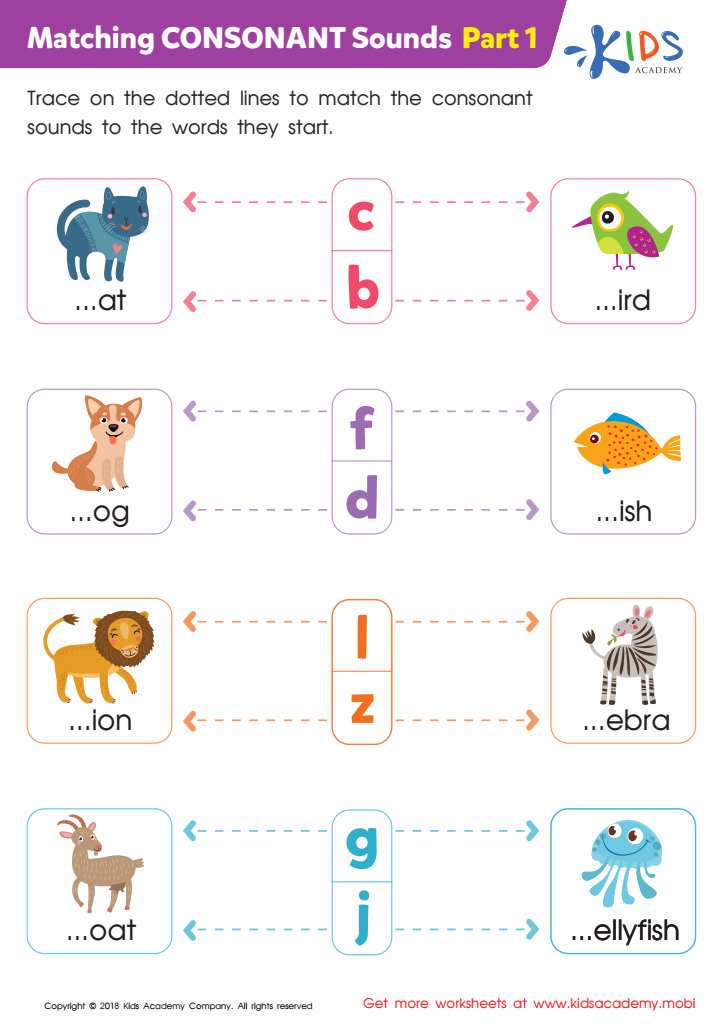
Matching Consonant Sounds: Part 1 Worksheet








Letter-sound correlation, often referred to as phonics, is a foundational aspect of early childhood literacy that is crucial for children aged 3-5. During these formative years, young children are rapidly developing their cognitive and language skills. Understanding the relationship between letters and sounds—how each letter or combination of letters makes a specific sound—is essential for developing reading and writing abilities.
For parents and teachers, focusing on letter-sound correlation helps children decode words, an essential skill for reading. When children understand that letters represent sounds and that these sounds blend together to form words, they can begin to read independently. This skill not only builds literacy but also enhances a child’s overall ability to learn across subjects, including math, science, and social studies.
Moreover, early literacy skills are closely linked to future academic success. Children who grasp letter-sound correlations early on tend to perform better in school. They display greater confidence, a love for reading, and better communication skills. Engaging children in activities that highlight letter-sound relationships—such as songs, games, and storytelling—makes learning enjoyable and sets a positive tone for lifelong learning.
Therefore, parents and teachers investing time and effort into teaching letter-sound correlation provide children with the critical tools they need for educational success and intellectual development.







