
Matching skills Alphabet Worksheets for Ages 3-5
3 filtered results
Difficulty Level
Grade
Age
-
From - To
Subject
Activity
Standards
Discover our "Matching Skills Alphabet Worksheets for Ages 3-5," designed to enhance early learners' recognition and cognitive abilities. These engaging worksheets encourage children to match letters with corresponding images, making learning both fun and interactive. With colorful illustrations and age-appropriate activities, kids will build their vocabulary while developing essential matching skills. Perfect for parents and educators, these worksheets provide a fantastic resource for reinforcing letter recognition and honing fine motor skills. Incorporate these activities into your classroom or home learning routine and watch your little ones grow more confident in their early literacy skills! Start their alphabet adventure today!
Favorites
With answer key
Interactive
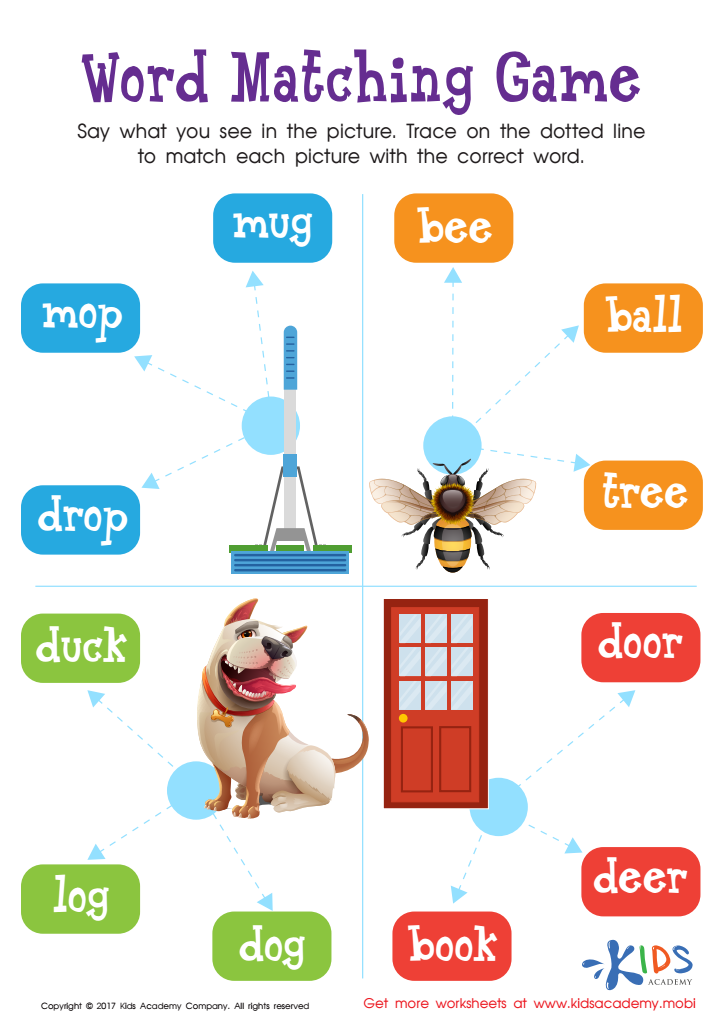
Word Matching Game Worksheet
Help your early reader develop prereading skills with this fun matching worksheet! Visual cues help them learn sight words, decode words in word families, and identify phonetic patterns. They'll practice discerning sounds past initial consonants while saying the name of the picture and finding the matching word - and reading at the same time!
 Assign to My Students
Word Matching Game Worksheet
Worksheet
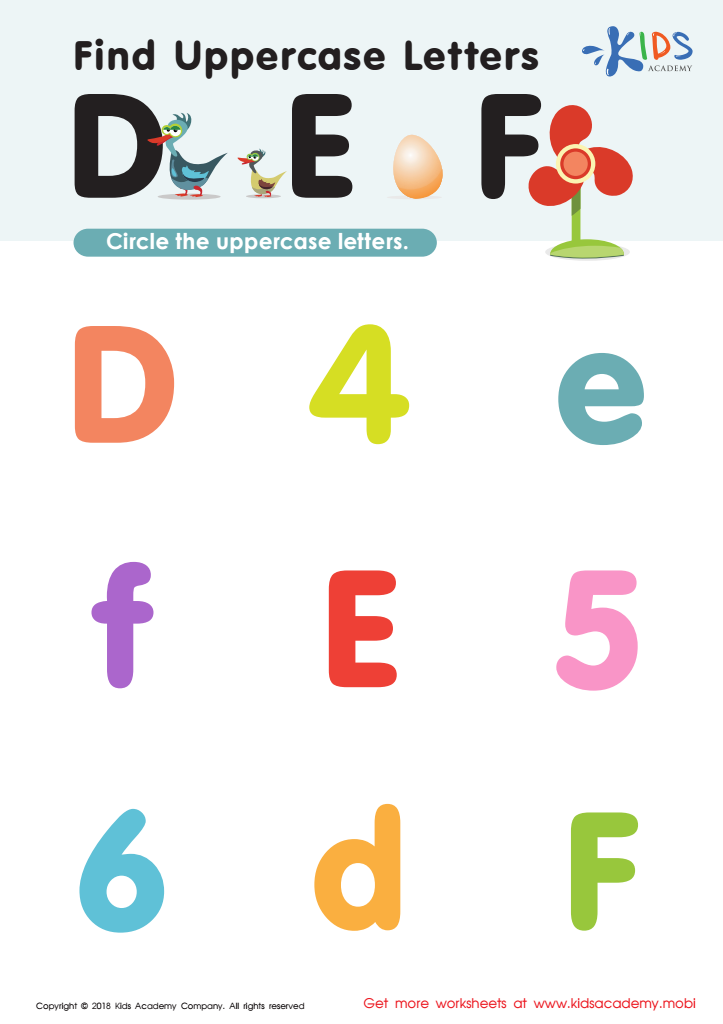
Find Uppercase Letters D, E, and F Worksheet
Follow the duckling and mom to find the capital letters D, E and F on this fun alphabet worksheet! Kids learn to read and recognize letters, while differentiating them from numbers. For extra challenge, don't let the numbers fool them. The pictures above remind them of each letter's sound. Have fun and get letter-savvy!
Find Uppercase Letters D, E, and F Worksheet
Worksheet
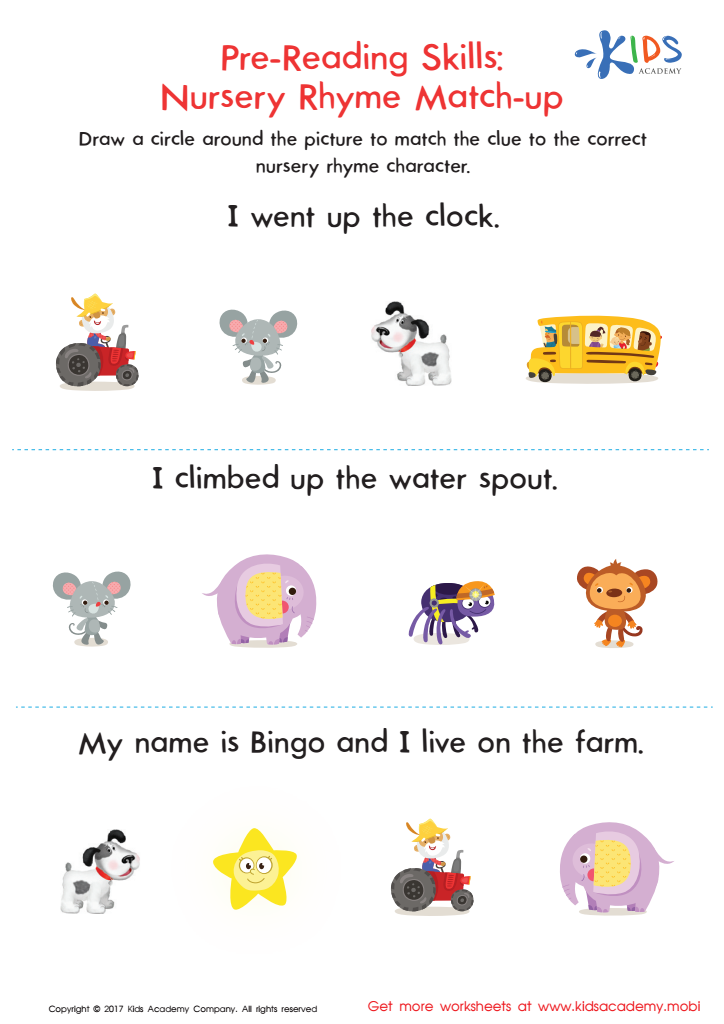
Nursery Rhyme Match–Up Worksheet
This worksheet helps kids build pre-reading skills using stories they know and love! By connecting with prior knowledge, kids can develop ideas about characters and set the stage for reading strategies.
Nursery Rhyme Match–Up Worksheet
Worksheet
Join Kids Academy for Free
Who is primarily going to use this learning content?







Matching skills are fundamental for children's cognitive development and early literacy, especially for kids aged 3-5. These skills involve recognizing similarities and differences, which contributes to language acquisition, problem-solving, and critical thinking. For parents and teachers, focusing on matching skills can enhance a child’s understanding of letters, shapes, and patterns, laying the groundwork for reading and writing.
In this crucial developmental stage, matching activities—such as letter matching games—help reinforce letter recognition and phonemic awareness. These skills are essential for children to later decode words and comprehend texts. Engaging children in matching exercises not only makes learning interactive and enjoyable but also fosters social skills as they collaborate with peers or caregivers.
Moreover, consistency in practicing matching skills promotes memory retention and increases confidence in young learners as they master their alphabet. As early childhood educators and parents play a key role in shaping children's foundational skills, they should prioritize these activities. Enhanced matching skills build a sense of accomplishment and encourage a positive attitude toward learning, ultimately giving children a head start in their educational journey. Thus, investing time in these activities is crucial for developing well-rounded, literate individuals.







