Reading practice Alphabet Worksheets for Ages 3-5
4 filtered results
-
From - To
Boost early literacy skills with our "Reading Practice Alphabet Worksheets" designed specifically for children ages 3-5. These engaging worksheets introduce young learners to letter recognition, phonetics, and the foundational skills needed for reading. Each worksheet is carefully crafted to promote fun learning through interactive activities, including tracing letters and matching letters with pictures. Our resources are perfect for parents and educators alike, ensuring children develop confidence as they embark on their reading journey. With colorful illustrations and age-appropriate tasks, these worksheets foster a love for learning and help set the stage for future academic success. Start your child’s reading adventure today!
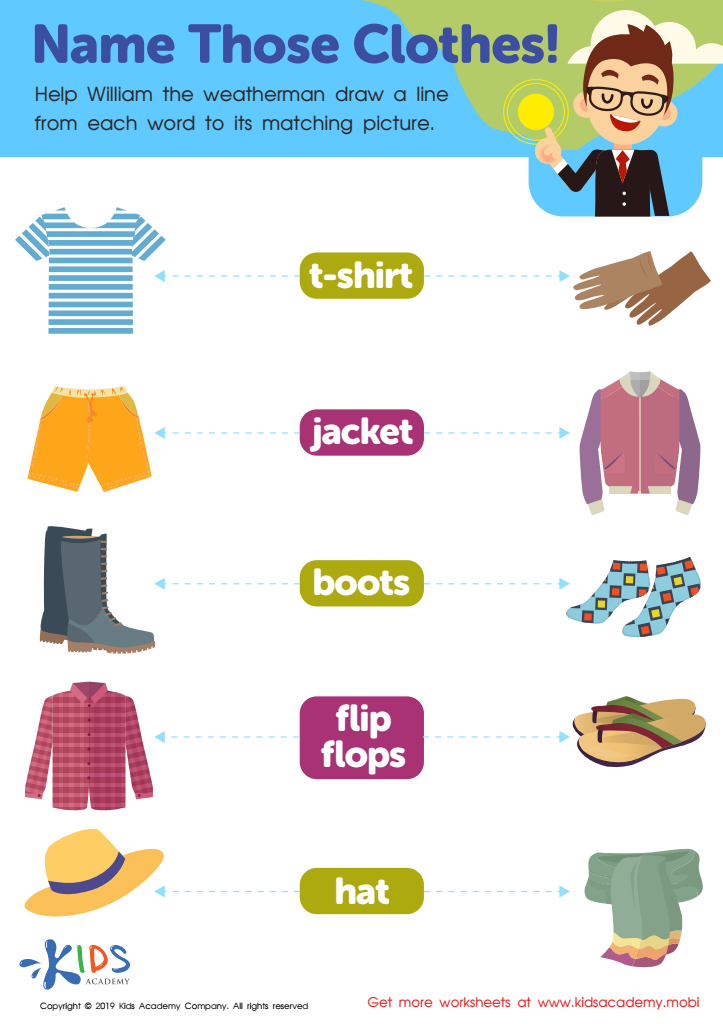
Name Those Clothes Worksheet
 Assign to My Students
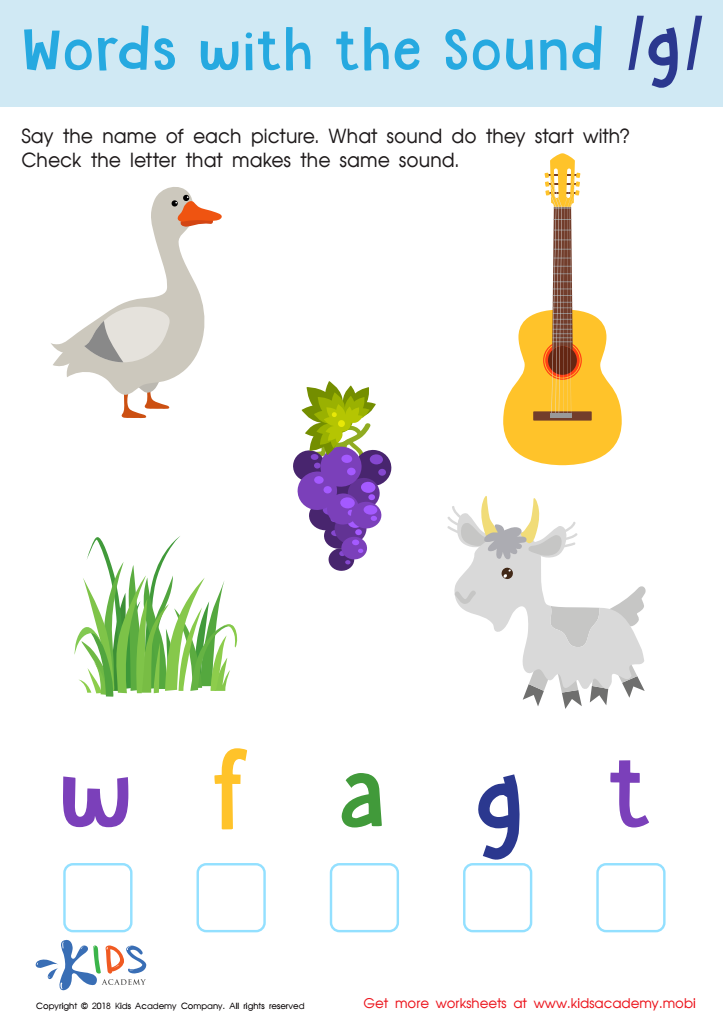
Words with sound g Reading Worksheet
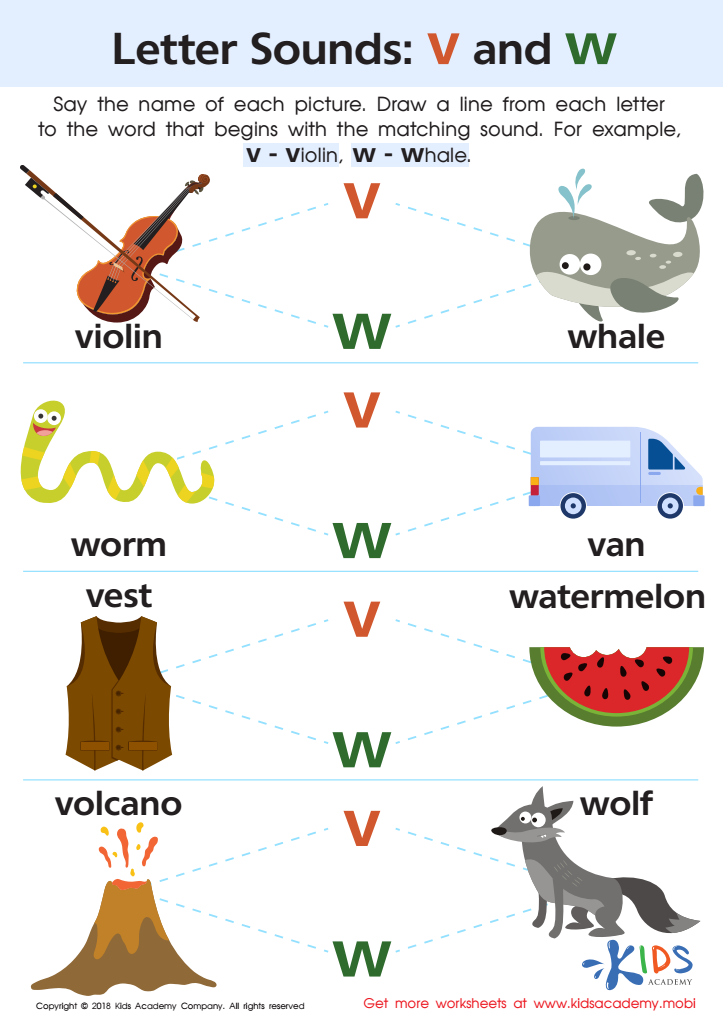
Letter V and W Sounds Worksheet
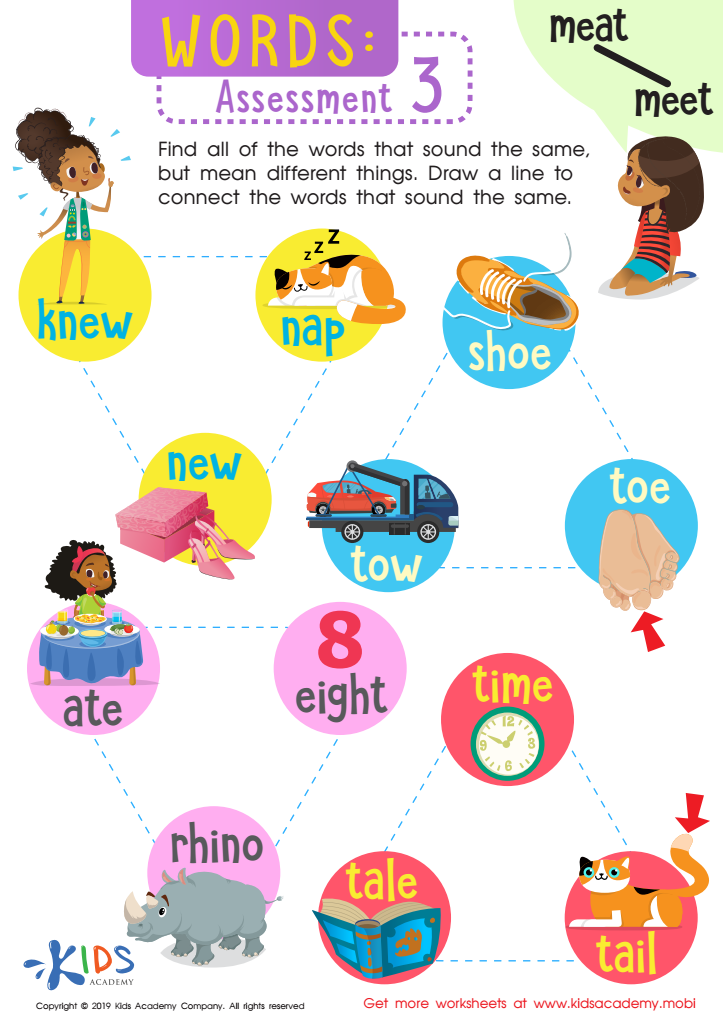
Words: Asessment 3 Worksheet





Reading practice of the alphabet for ages 3-5 is crucial for early literacy development, setting the foundation for a child's educational journey. At this age, children are naturally curious and receptive, making it an ideal time to introduce letters and sounds through engaging activities. Mastering the alphabet helps children recognize letters, understand their shapes, and comprehend the sounds they make, skills that are essential when they progress to reading words and sentences.
Parents and teachers should care about this practice because it boosts cognitive skills and enhances vocabulary, enabling children to express themselves more effectively. Additionally, early exposure to reading fosters a love for books and instills a lifelong appreciation for learning. When children recognize letters and sounds, they gain confidence in their reading abilities, paving the way for academic success.
Moreover, involving parents in this practice creates a supportive learning environment. It not only strengthens the parent-child bond but also encourages consistency in reading habits at home. Overall, alphabet reading practice is a fundamental step in developing critical thinking, communication, and social skills, making it essential for both parents and educators to prioritize early literacy activities in children's routines.







