
Sound-letter association Alphabet Worksheets for Ages 3-5
3 filtered results
Difficulty Level
Grade
Age
-
From - To
Subject
Activity
Standards
Introduce your little ones to the magical world of letters with our Sound-Letter Association Alphabet Worksheets, designed specifically for ages 3-5! These engaging and interactive worksheets help young learners connect sounds to their corresponding letters, fostering essential pre-reading skills. With colorful illustrations and fun activities, kids will enjoy practicing letter recognition and phonemic awareness while enhancing their vocabulary. Perfect for home or classroom use, our worksheets encourage lively learning and creative expression. Start your child's journey to reading success today with these exciting and educational sound-letter association activities! Discover his or her love for letters and sounds in a playful and imaginative way!
Favorites
With answer key
Interactive
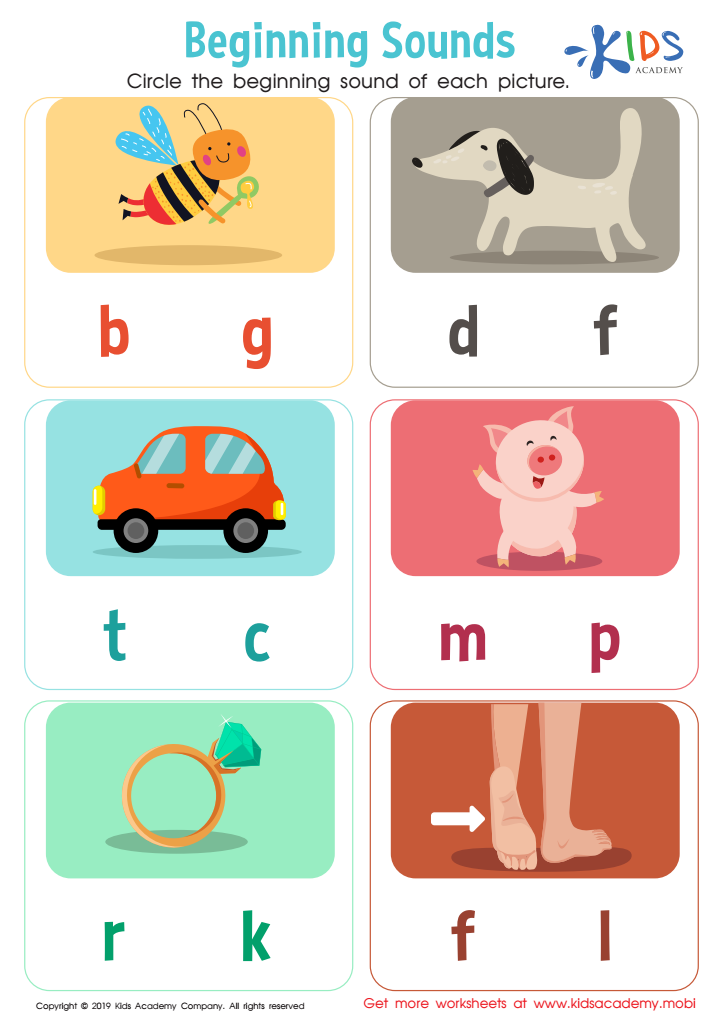
Beginning Sounds Worksheet
Test your child's knowledge with this colorful worksheet! Before beginning, have your kids recite the alphabet and sound them off. Give examples and ask them to do the same, then help them circle the beginning sound of each picture to complete the exercise.
Beginning Sounds Worksheet
Worksheet
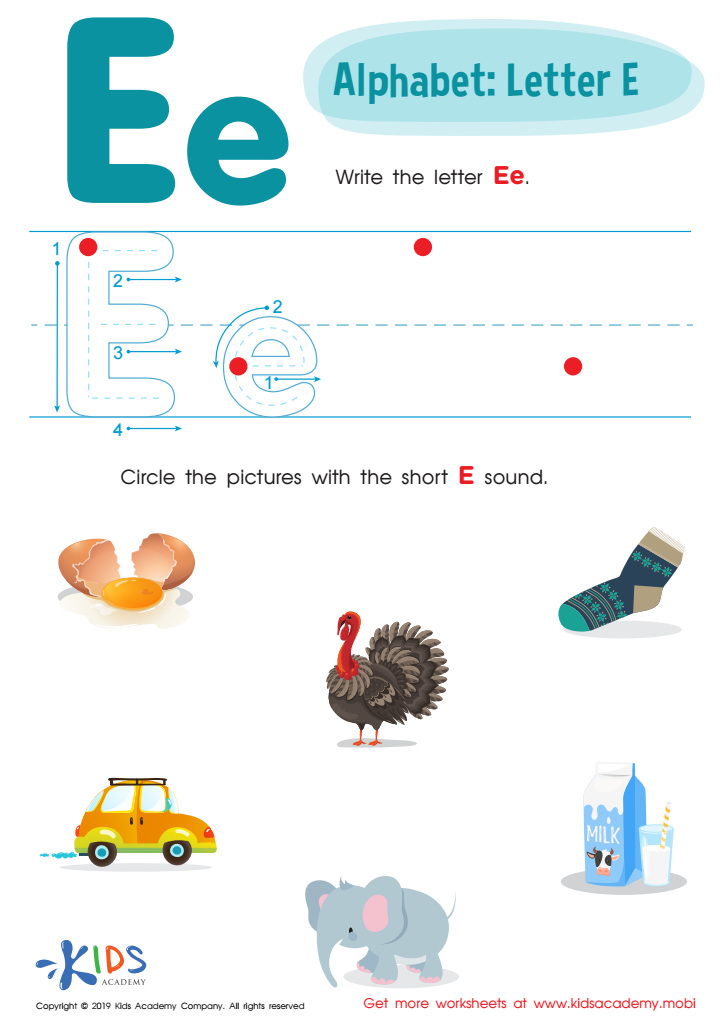
Letter E Tracing Worksheet
Students trace and write uppercase and lowercase letter E. They sound out "E" words, choosing those with short "E" sounds. Preschoolers identify the difference between the 'E' sounds in words like "egg" and "turkey." A tracing sheet helps them to understand.
Letter E Tracing Worksheet
Worksheet
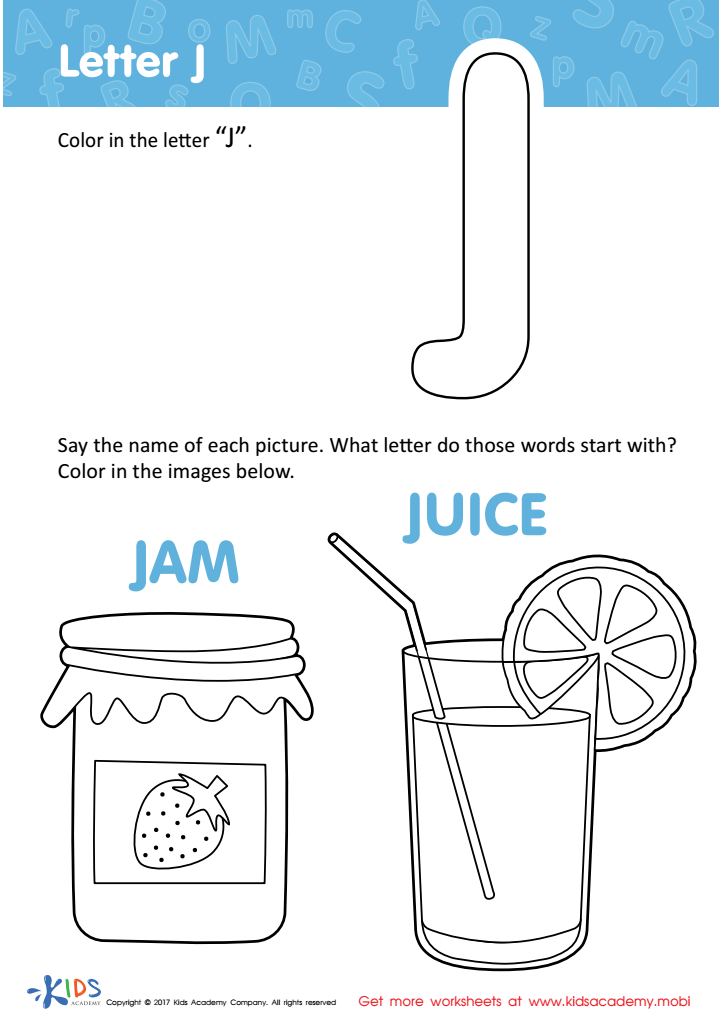
Letter J Coloring Sheet
Practice the letter 'J' with your little one with this fun coloring page! Pictures of jar, juice, jam and jelly make it an enjoyable experience for kids. Learning the letter and coloring is fun for even the youngest learners.
Download (PDF)
 Assign to My Students
Assign to My Students
Letter J Coloring Sheet
Worksheet
Join Kids Academy for Free
Who is primarily going to use this learning content?








Sound-letter association is a foundational skill for early literacy, particularly for children aged 3-5. Understanding how sounds relate to letters is crucial for developing reading and writing abilities. Parents and teachers should prioritize this concept for several reasons.
Firstly, it aids in phonemic awareness, enabling children to recognize and manipulate sounds in words, foundational skills for decoding written language. This awareness contributes to improved reading fluency and comprehension later on.
Secondly, by learning sound-letter associations, children build confidence in their ability to approach new words. This confidence can foster a love for reading, encouraging exploration of literature that expands their knowledge and imagination.
In addition, early mastery of sound-letter associations provides a smoother transition to formal schooling. Children who are familiar with these concepts often engage better in phonics instruction, which is vital for structured learning.
Moreover, this ability also strengthens vocabulary skills. As children connect letters with sounds, they can begin to spell and write their thoughts.
Ultimately, by nurturing sound-letter associations, parents and teachers lay the groundwork for success in literacy, ensuring children are well-equipped for future academic challenges and enriching their overall communication skills.







