Lowercase identification Letter Recognition Worksheets for Ages 3-5
5 filtered results
-
From - To
Help your little learners master lowercase letter recognition with our engaging worksheets designed for ages 3-5! These printable activities enhance early literacy skills, making learning fun and interactive. Each worksheet is crafted to strengthen recognition of lowercase letters through colorful illustrations and playful exercises. Children will enjoy activities like tracing, matching, and identifying letters in context, fostering both visual discrimination and motor skills. Perfect for preschool and kindergarten settings, these worksheets support ongoing development and boost confidence in young readers. Explore our diverse range of lowercase identification worksheets to inspire a love for letters and prepare your child for future reading success!
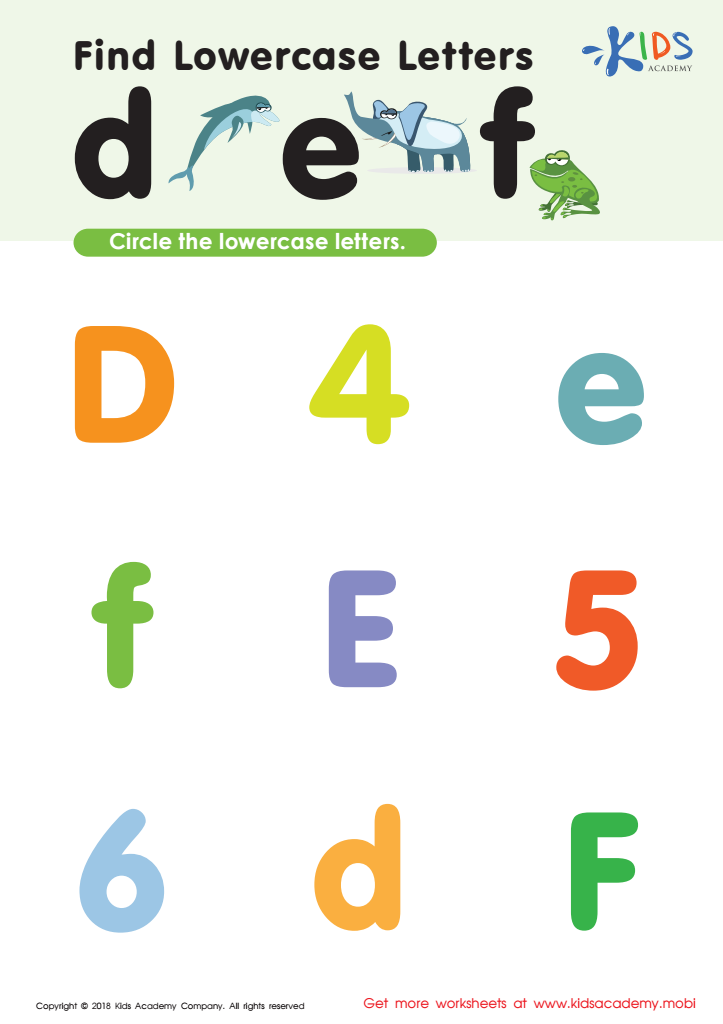
Find Lowercase Letters d e f Worksheet
 Assign to My Students
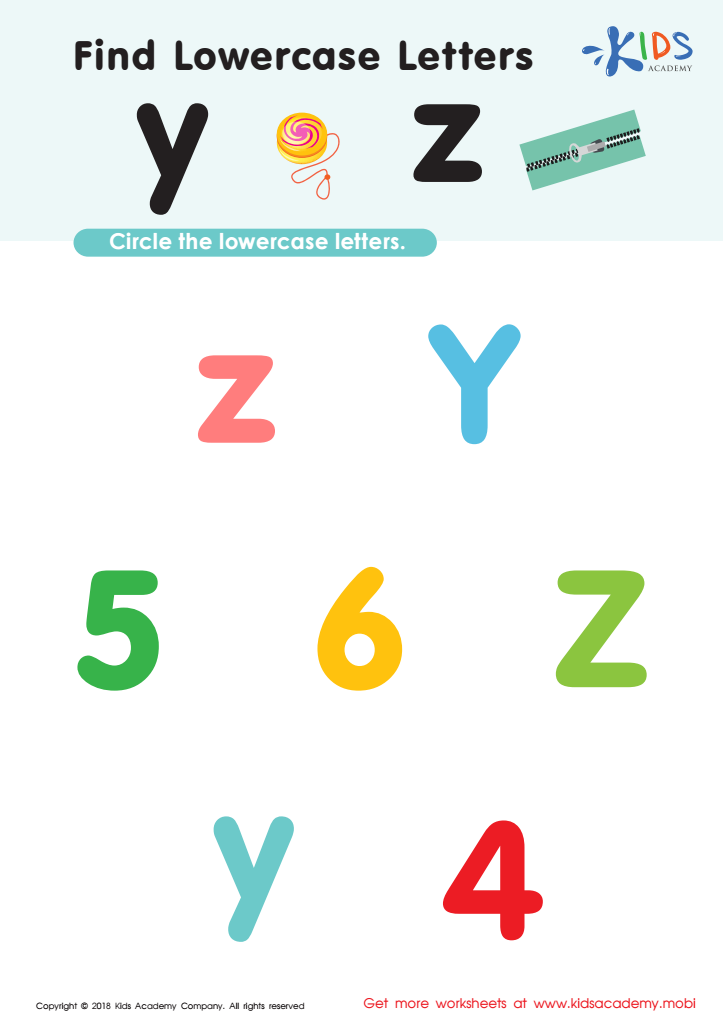
Find Lowercase Letters y z Worksheet
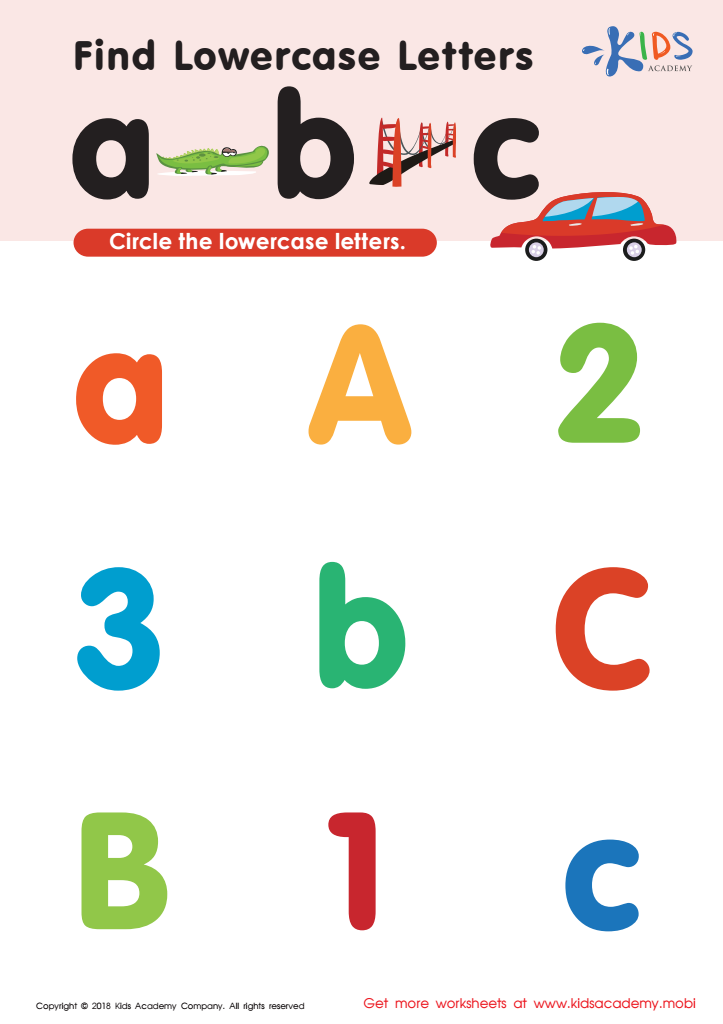
Find lowercase letters a b c Worksheet
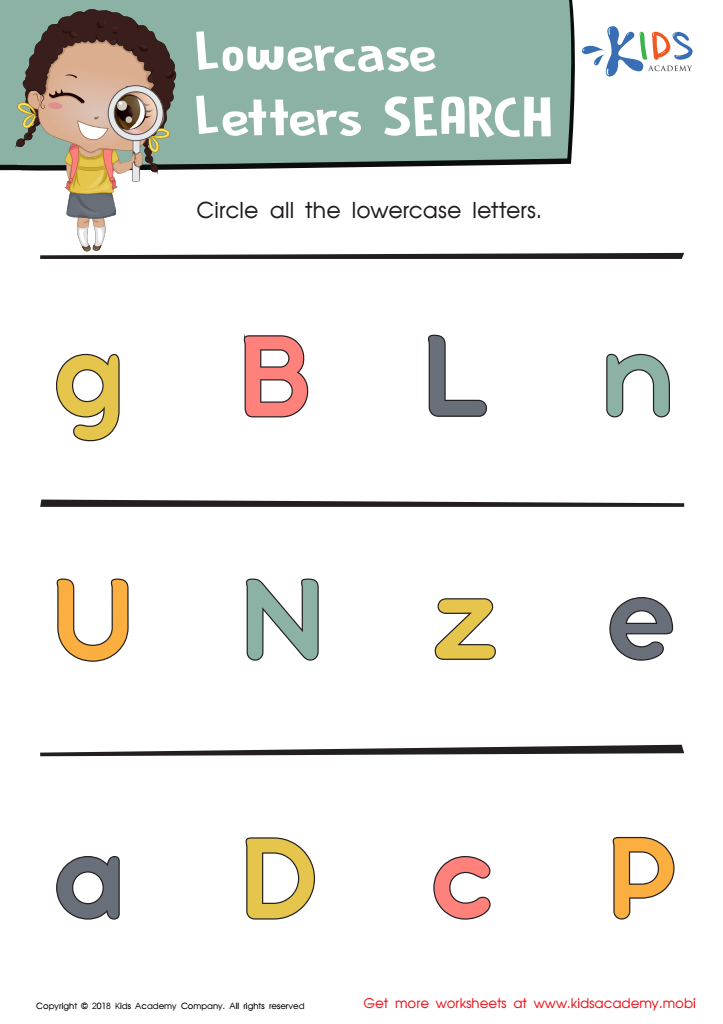
Lowercase Letters Search: Assessment Worksheet
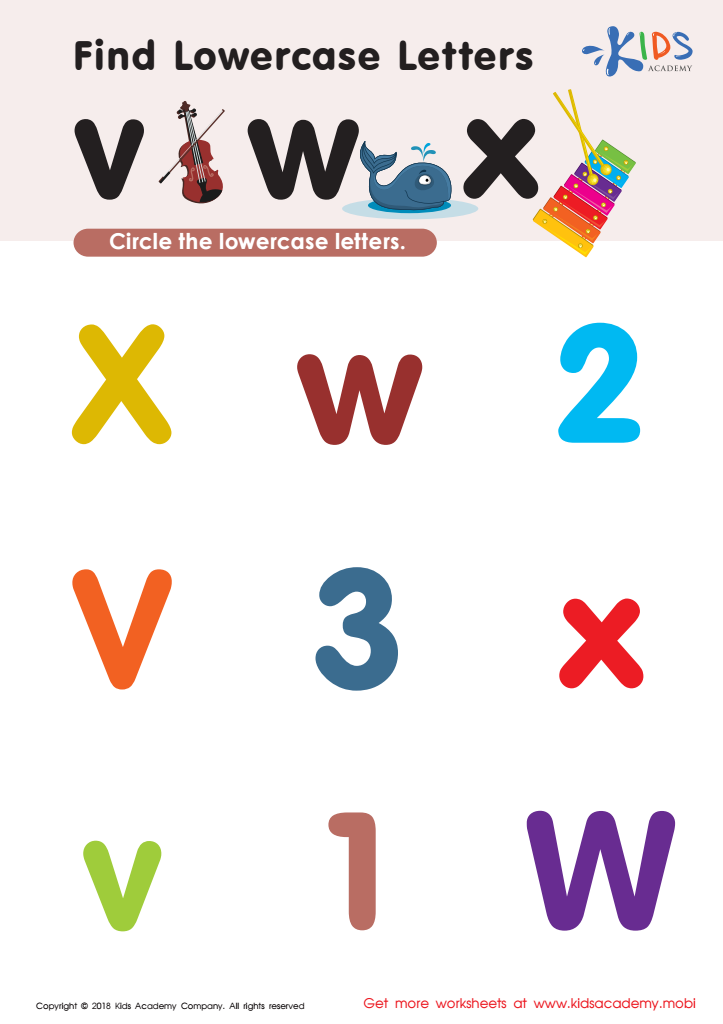
Find Lowercase Letters v w x Worksheet








Lowercase letter recognition is a crucial developmental skill for preschool-aged children (ages 3-5) and holds significant importance for both parents and teachers. First, children are surrounded by printed text in their everyday environments, including books, labels, and signs. Familiarity with lowercase letters can enhance their ability to decode and understand this text, laying the groundwork for effective reading and writing skills.
Moreover, recognizing lowercase letters helps bridge the gap between oral language and written communication. As children learn to spell their names and write short words, they need to identify these letters accurately. Early mastery of lowercase letter identification fosters confidence and encourages active participation in literacy activities.
Additionally, recognizing lowercase letters promotes cognitive development. It engages children in visual discrimination, memory retention, and language skills, all of which are foundational for future learning. Moreover, reinforcing lowercase letter recognition through playful activities nurtures a positive attitude toward literacy.
For parents and teachers, supporting lowercase letter identification is not just about academic success; it promotes a lifelong love for learning and reading. This, in turn, impacts their overall literacy journey, enhancing their ability to communicate and thrive socially and academically in later years.







