Letter recognition Letter V Worksheets for Ages 3-5
4 filtered results
-
From - To
Discover our engaging "Letter Recognition Letter V Worksheets" designed for children ages 3-5. These vibrant, fun worksheets are perfect for introducing young learners to the Letter V, enhancing their early literacy skills. Each activity encourages recognition, phonetic awareness, and handwriting practice, blending education with playful illustrations. Ideal for both classroom and home settings, our expertly crafted worksheets help children familiarize themselves with the Letter V’s shape and sound while building a strong alphabet foundation. Foster your child's love for learning with these innovative, age-appropriate resources from Kids Academy!
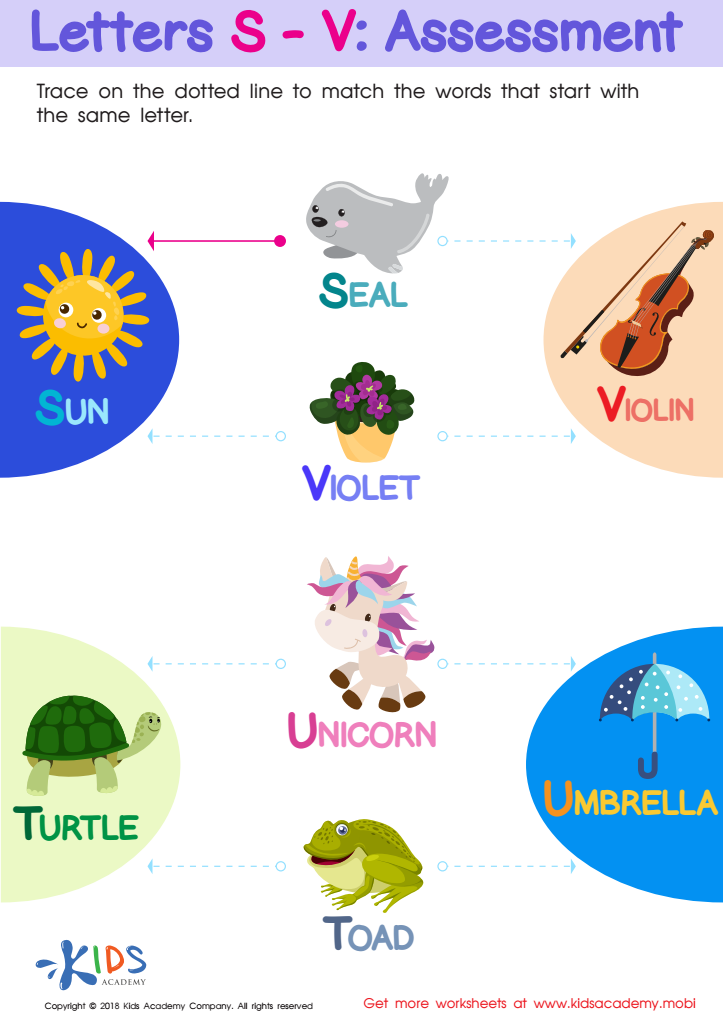
Letters S - V Tracing Worksheet
 Assign to My Students
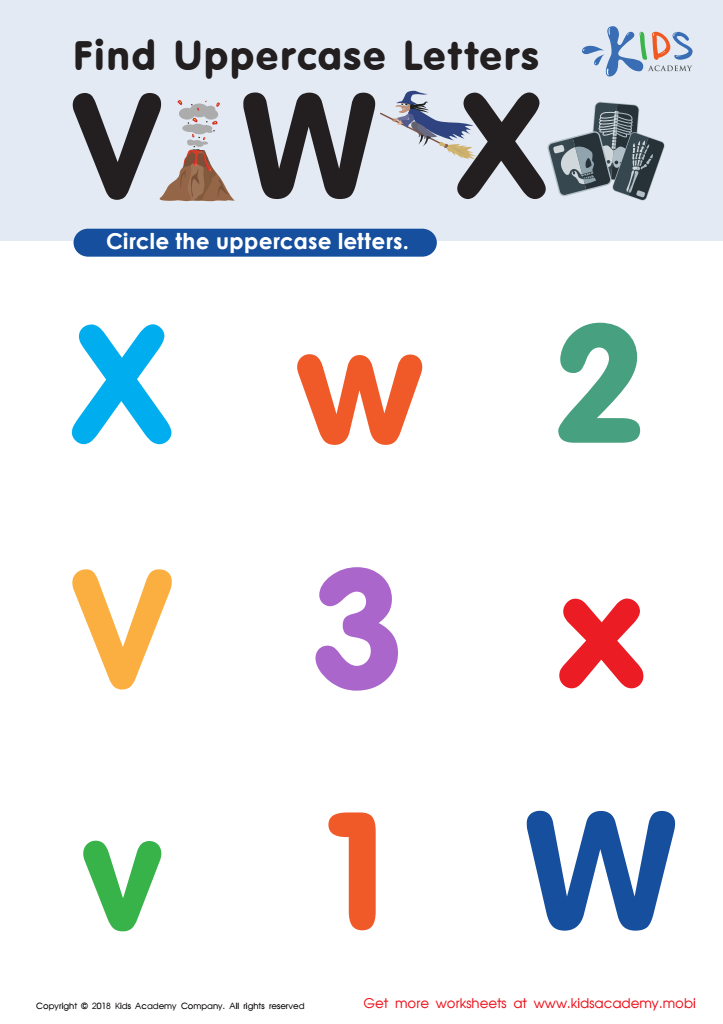
Find Uppercase Letters V, W, X Worksheet
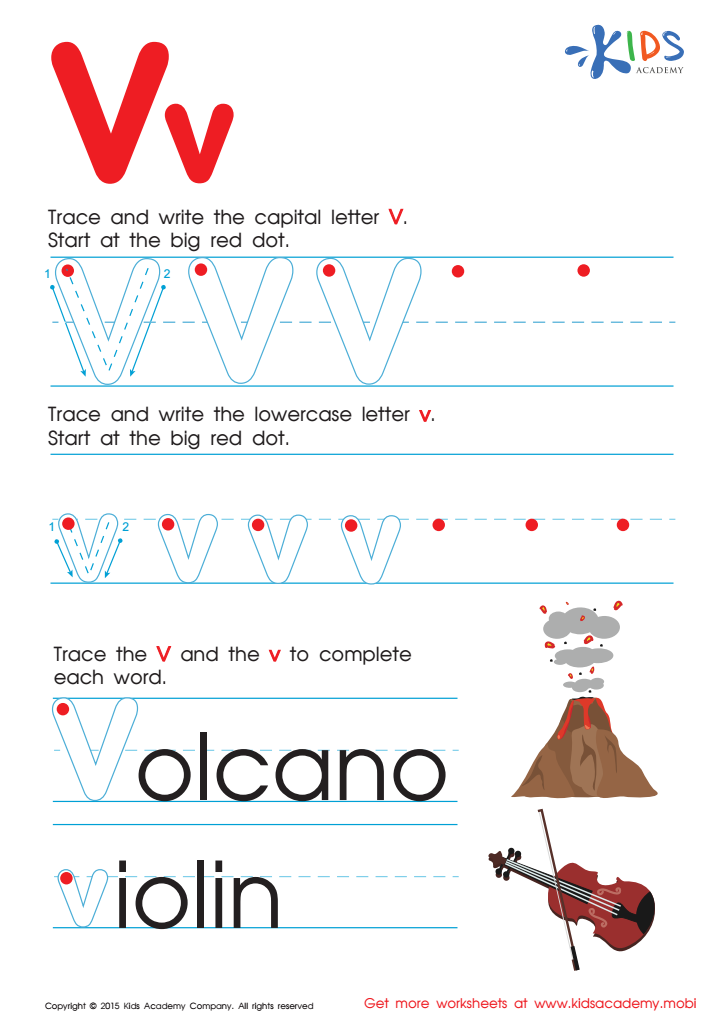
Letter V Tracing Page
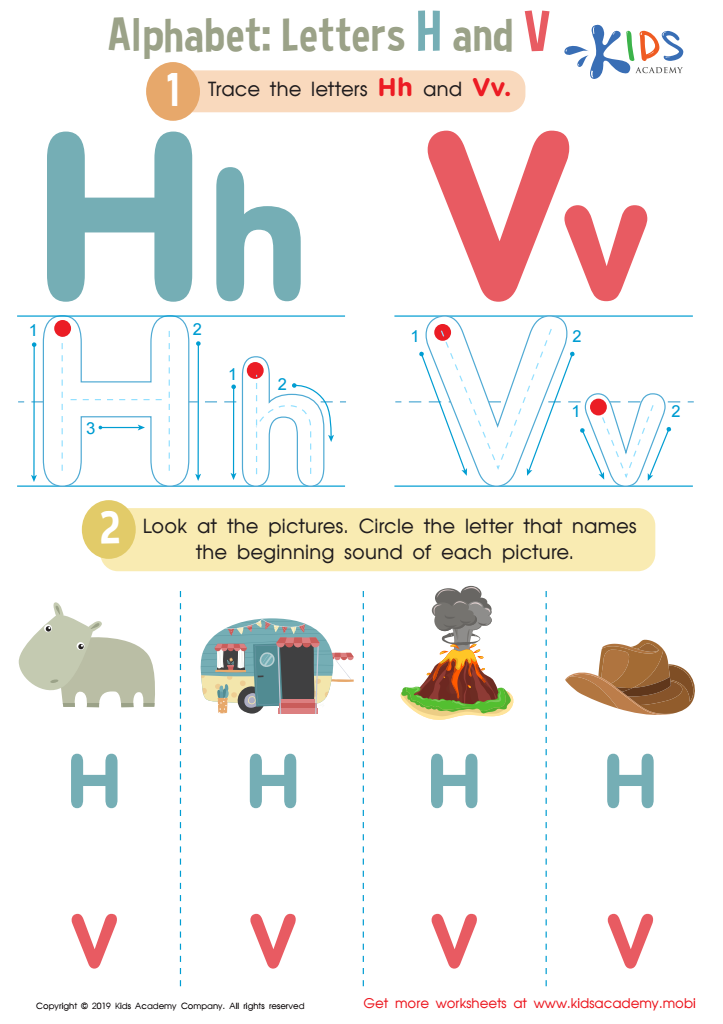
Letters H and V Tracing Worksheet




Letter recognition, specifically for the letter V, is a crucial building block in early literacy development for children aged 3-5. Parents and teachers should care about teaching the letter V because it helps form the foundation for reading and writing skills. Recognizing the shape and sound of V not only improves a child's ability to identify alphabet letters but also plays a role in phonemic awareness—the understanding that letters represent sounds in spoken language.
At this age, children's brains are highly receptive to new information, and identifying the letter V can enhance cognitive abilities such as memory, visual differentiation, and linguistic pattern recognition. Additionally, mastery of the letter V contributes to a child’s confidence in handling other letters, thereby easing the learning process when tackling more complex words and reading tasks in the future.
Focusing on the letter V also encourages fine motor skills when children practice writing it. Activities such as tracing or crafting letters familiarize them with proper letter formation and control. Furthermore, including the letter V in playful and interactive learning settings—through songs, stories, and games—makes the learning experience enjoyable and more meaningful, fostering a lifelong interest in reading and education. Parents and teachers who emphasize letter recognition provide children with a strong start in language development and academic success.