Sound identification Phonics Worksheets for Ages 3-5
4 filtered results
-
From - To
Discover our engaging Sound Identification Phonics Worksheets designed specifically for ages 3-5! These fun and interactive resources help young learners enhance their phonemic awareness by focusing on sound recognition. Each worksheet offers playful exercises, including matching sounds to images and identifying initial sounds in words. Ideal for preschool and kindergarten settings, our worksheets promote early literacy skills in a joyful and stimulating way. With colorful illustrations and age-appropriate activities, children will enjoy learning while developing essential phonics skills. Perfect for teachers and parents alike, these worksheets are a fantastic way to lay a strong foundation for reading success! Explore now!
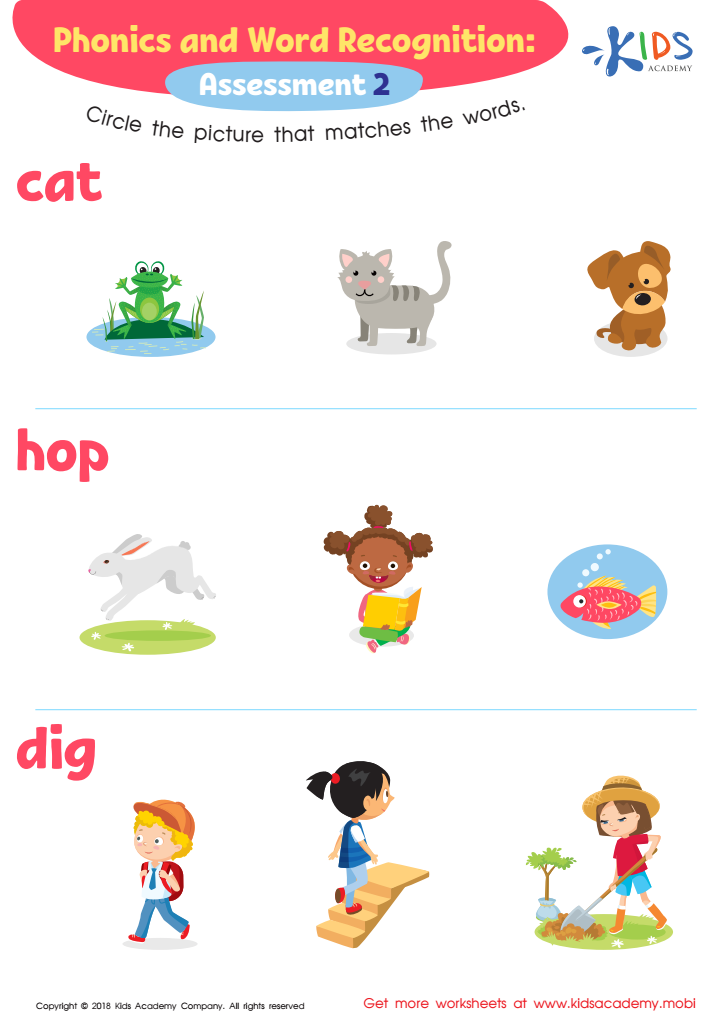
Phonological Awareness: Assessment 2 ELA Worksheet
 Assign to My Students
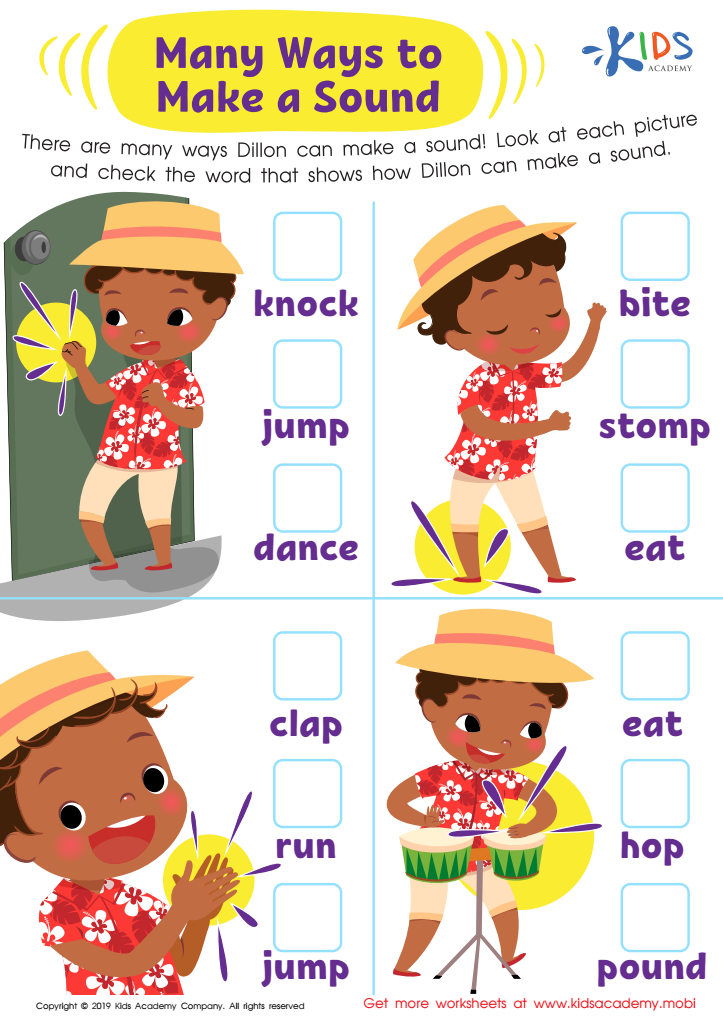
Many Ways to Make a Sound Worksheet
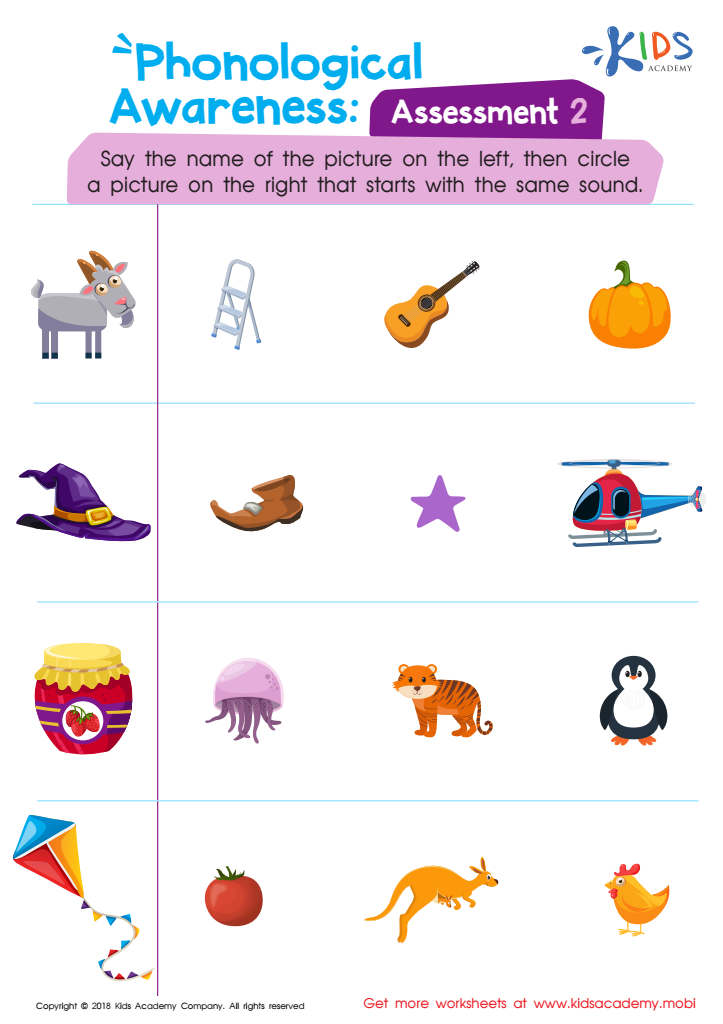
Phonological Awareness: Assessment 2 Worksheet
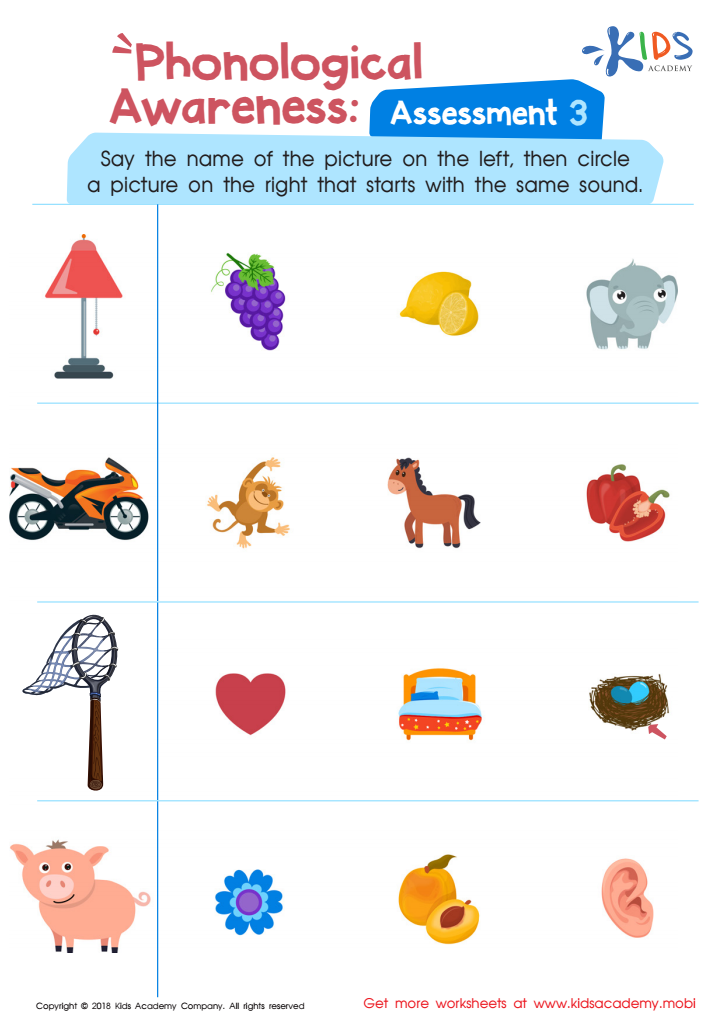
Phonological Awareness: Assessment 3 Worksheet








Sound identification phonics is crucial for children aged 3-5 as it lays the foundation for early literacy development. During these formative years, young learners begin to connect sounds with letters, enabling them to decode words. This connection not only enhances reading skills but also fosters better listening and speech abilities, creating a strong communication base.
When parents and teachers focus on sound identification, it promotes phonemic awareness—an essential skill allowing children to recognize and manipulate sounds in spoken words. Enhanced phonemic awareness has been linked to improved reading comprehension and vocabulary, setting up a positive trajectory for academic success.
Moreover, engaging in phonics activities at this age is fun and interactive, sparking joy in learning. It provides opportunities for playful exploration through songs, games, and storytelling, making learning both enjoyable and effective. Children who grasp phonics concepts early tend to demonstrate more confidence in their reading and writing skills, leading to lifelong literacy habits.
Ultimately, investing time in sound identification phonics equips young children with essential skills that not only aid their academic experiences but also enroll them in the lifelong journey of learning and self-expression. Thus, it is a vital area that deserves attention from parents and teachers alike.







