Phonics skills development Short Vowels Worksheets for Ages 3-5
3 filtered results
Difficulty Level
Grade
Age
-
From - To
Subject
Activity
Standards
Unlock your child's reading potential with our engaging Short Vowels Worksheets designed specifically for ages 3-5. These phonics skill development resources introduce young learners to essential short vowel sounds through fun activities and interactive learning. Each worksheet offers colorful illustrations and playful exercises that motivate children to practice vowel recognition, sound articulation, and early word formation. Perfect for homeschooling or supplementing classroom learning, our materials foster a love of reading while building foundational literacy skills. Help your little one master short vowels with playful, hands-on worksheets that make learning exciting and effective! Start your phonics journey today!
Favorites
With answer key
Interactive
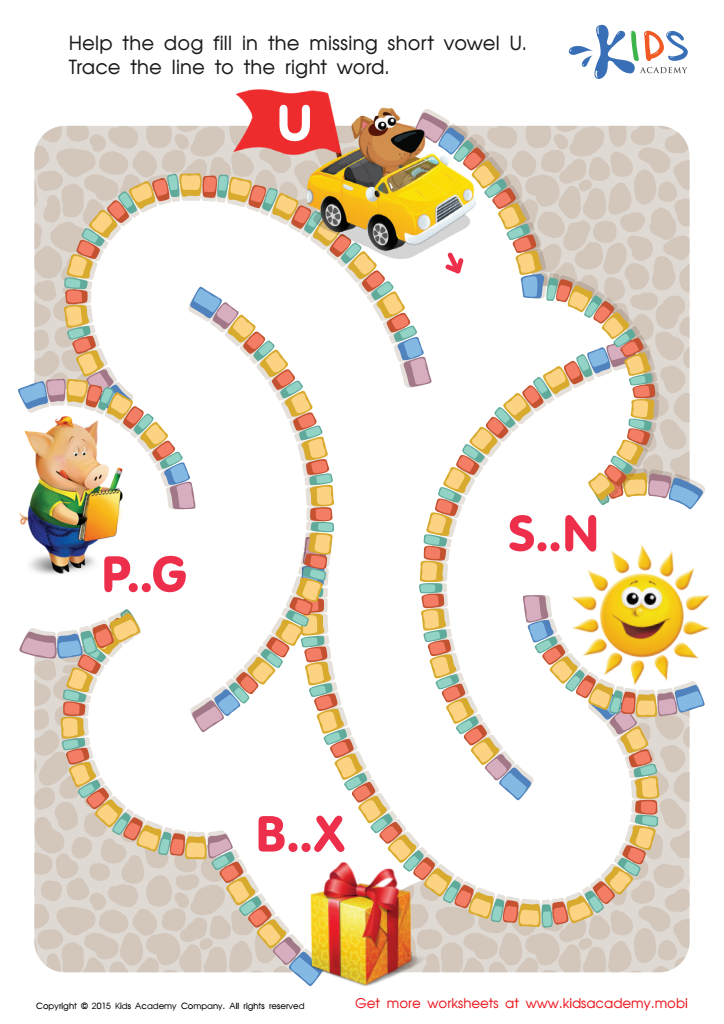
Short Vowel Sound U Worksheet
Practice abc phonics to help young learners link sounds to letters. This free printable phonics worksheet helps your kid learn the short vowel sound U. Guide them through the maze to help the dog complete the word "sun". Make sure they say the word out loud to emphasize the short U sound. Check out more phonics worksheets with mazes here.
Short Vowel Sound U Worksheet
Worksheet
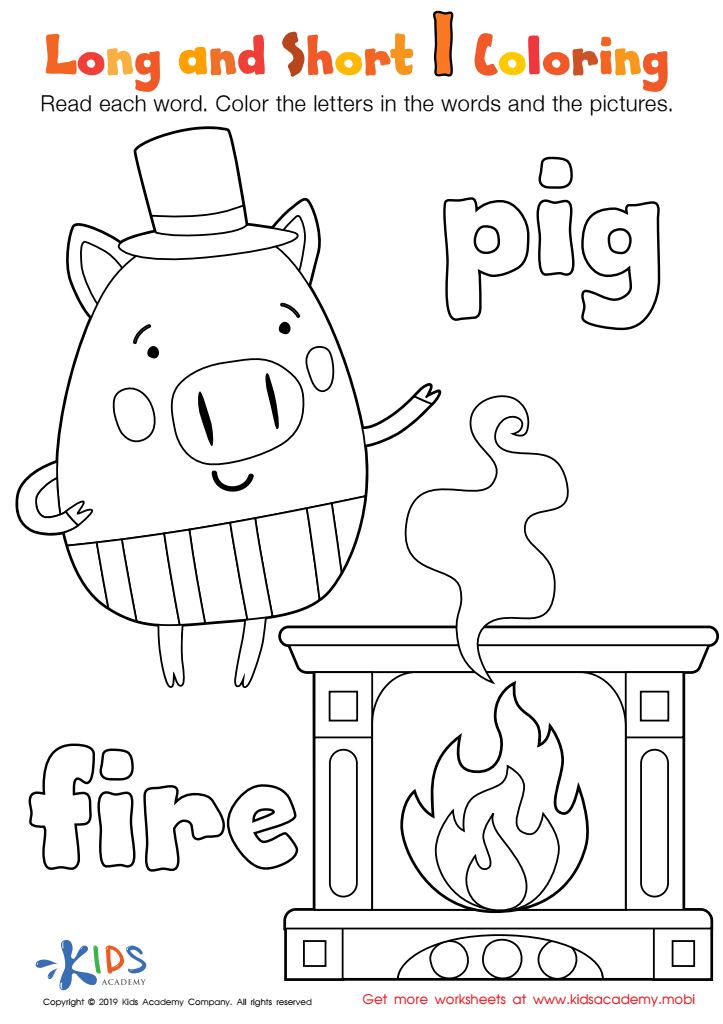
Long and Short I Worksheet
Print the worksheet and have the students read "pig" and "fire". Check for understanding the difference between long and short vowels. Color in words and pictures to make learning phonics fun! This exercise is perfect for introducing the topic to your students.
Download (PDF)
 Assign to My Students
Assign to My Students
Long and Short I Worksheet
Worksheet
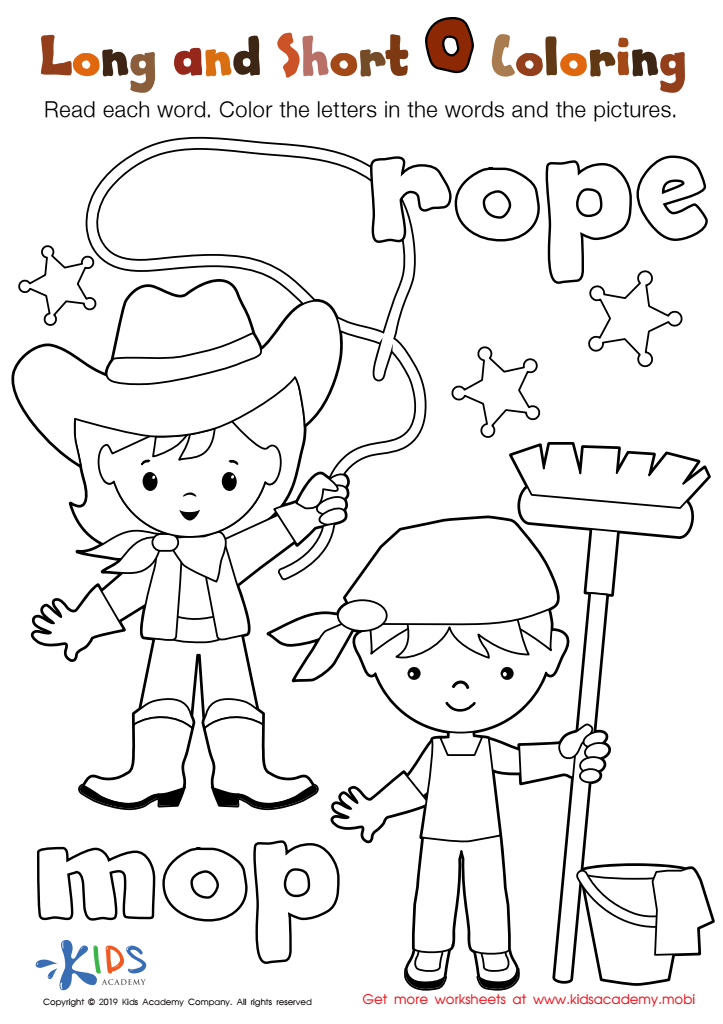
Long and Short O Worksheet
Help your students recognize the difference between long and short «Os» with this fun printout. Let them read and color-in "rope" and "mop" simultaneously. Listen to the different sounds, then color the words and pictures. Great for classes, it'll make your phonics lesson memorable and enjoyable.
Download (PDF)
Assign to My Students
Assign to My Students
Long and Short O Worksheet
Worksheet
Join Kids Academy for Free
Who is primarily going to use this learning content?



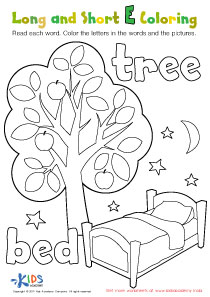
Phonics skills development, particularly short vowels, is crucial for children aged 3-5 as it lays the foundation for reading and language proficiency. At this age, children are in a critical period of language acquisition, and introducing them to short vowels helps them understand the building blocks of words. Short vowels, such as "a" in "cat," "e" in "bed," and "i" in "pig," are essential sounds that frequently appear in early vocabulary.
Developing phonics skills fosters phonemic awareness, enabling children to recognize and manipulate sounds, which is key for word recognition and spelling. This awareness boosts confidence and motivation in young learners as they start to decode words independently, paving the way for fluent reading. Furthermore, mastery of short vowels enhances literacy skills, cognitive development, and overall communication abilities critical for school readiness.
By emphasizing phonics and short vowel sounds, parents and educators can instill a lifelong love for reading and learning. Facilitating engaging activities with stories, songs, and games that focus on short vowels creates a rich, interactive environment that benefits children's development and prepares them for academic success. Nurturing these skills early ensures children are equipped for future literacy challenges.