Handwriting practice Tracing Letters Worksheets for Ages 3-5 - Page 2
28 filtered results
-
From - To
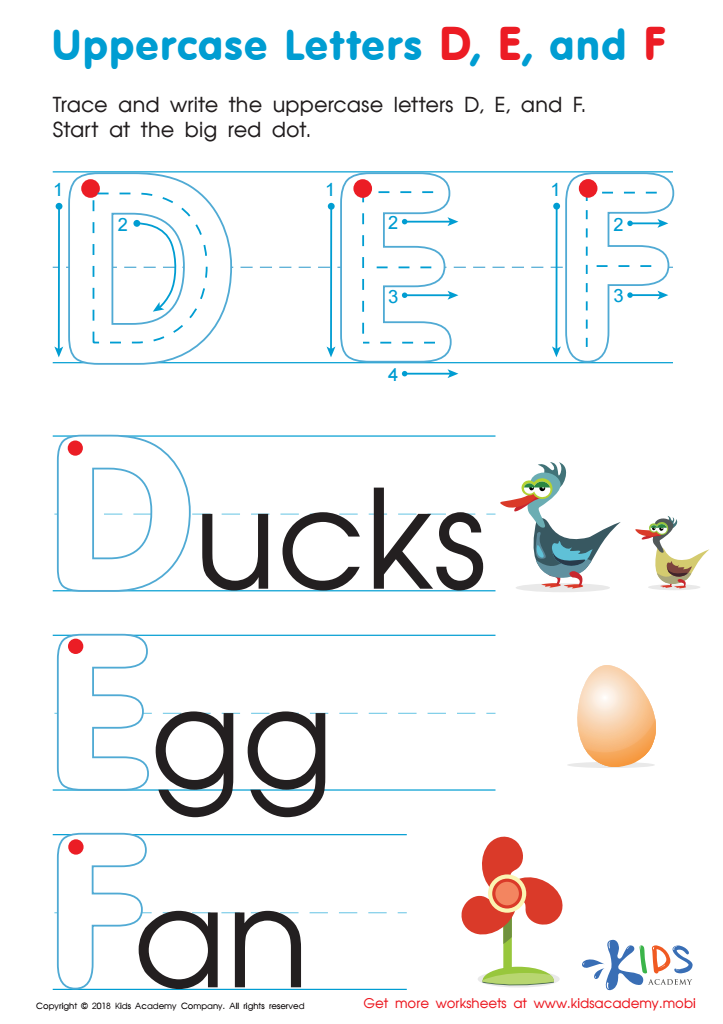
Uppercase Letters D, E, and F Worksheet
 Assign to My Students

Uppercase Letters Y Z Worksheet
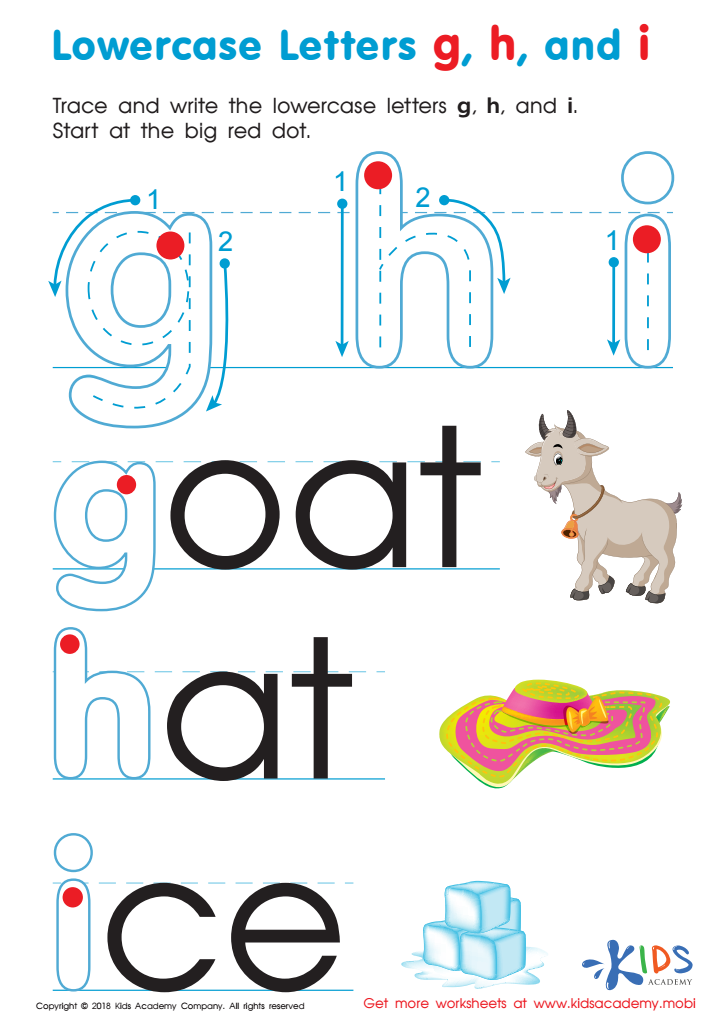
Lowercase Letters g h i Worksheet
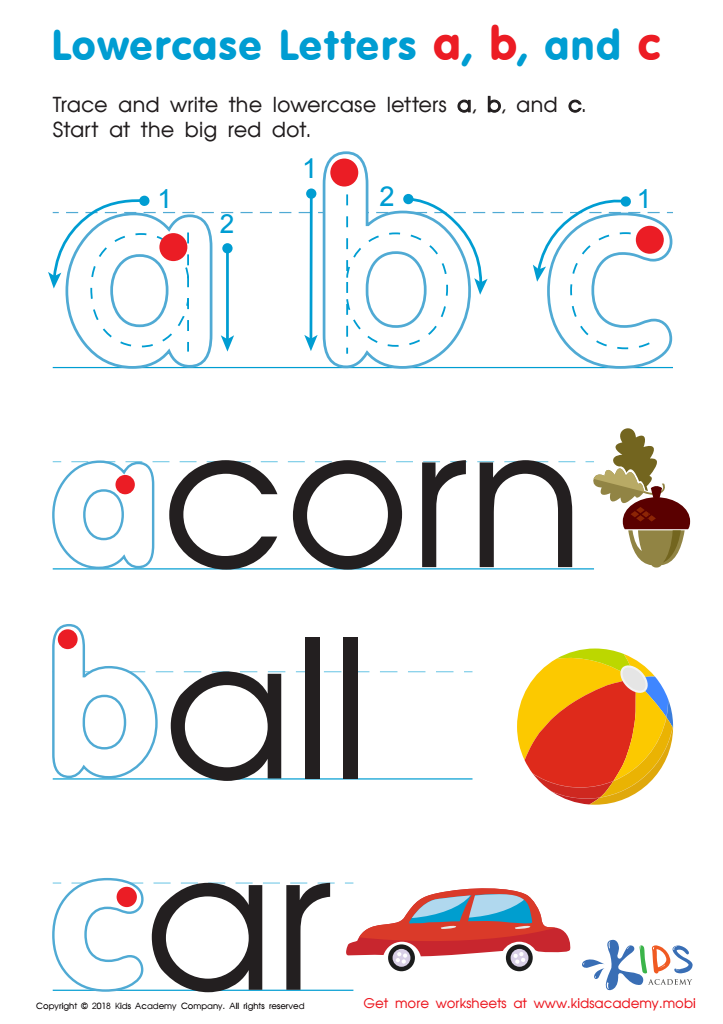
Lowercase Letters a b c Worksheet







Handwriting practice, particularly tracing letters, is a crucial developmental activity for children aged 3-5. This stage marks significant cognitive and motor skill advancements, making it an ideal time for early handwriting education. Engaging in tracing helps children strengthen their fine motor skills, critical for tasks beyond writing, such as using scissors or buttoning clothing.
Additionally, letter tracing familiarizes young learners with letter formation and enhances their understanding of phonetic sounds, forming a foundation for reading and literacy. It allows children to develop proper grip and control of writing utensils, which is essential for later writing proficiency.
Tracing also boosts concentration and focus, as it requires children to pay close attention to the shapes and forms of letters. This practice fosters patience and diligence, skills that are valuable in both academic and life contexts.
Moreover, the tangible connection between what children see and their physical action in tracing promotes brain development. It's not merely about letters; it's an early introduction to structured learning. Parents and teachers should prioritize handwriting practice to support children's overall development, laying the groundwork for future academic success and self-confidence.








