Letter tracing skills Upper & Lowercase Letters Worksheets for Ages 3-5
3 filtered results
-
From - To
Unlock the joy of learning with our Letter Tracing Skills Upper & Lowercase Letters Worksheets designed for children aged 3-5. These engaging sheets make alphabet mastering fun, combining both uppercase and lowercase letter practice with simple tracing exercises. Ideal for preschoolers and kindergarteners, they promote essential fine motor skills and penmanship development in young learners. Each worksheet is crafted to captivate a child’s attention, stimulating their interest in writing and reading. Help your child embark on a fantastic literacy journey with our expert-designed tracing worksheets, making early education enjoyable and effective. Start tracing and watch them bloom!
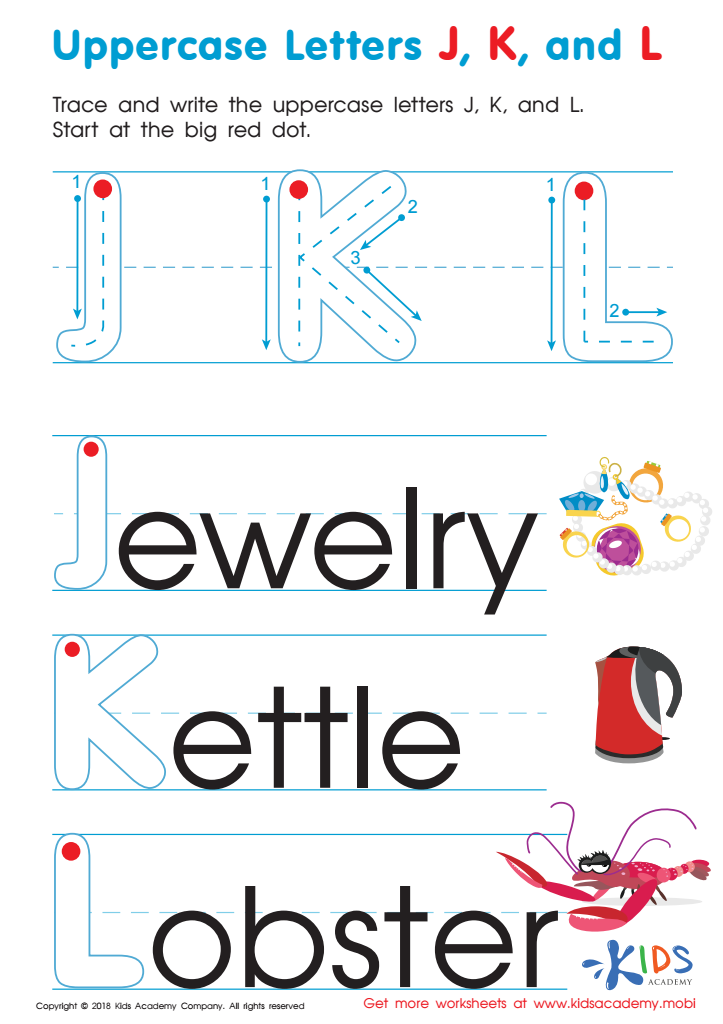
Uppercase Letters J, K, and L Worksheet
 Assign to My Students





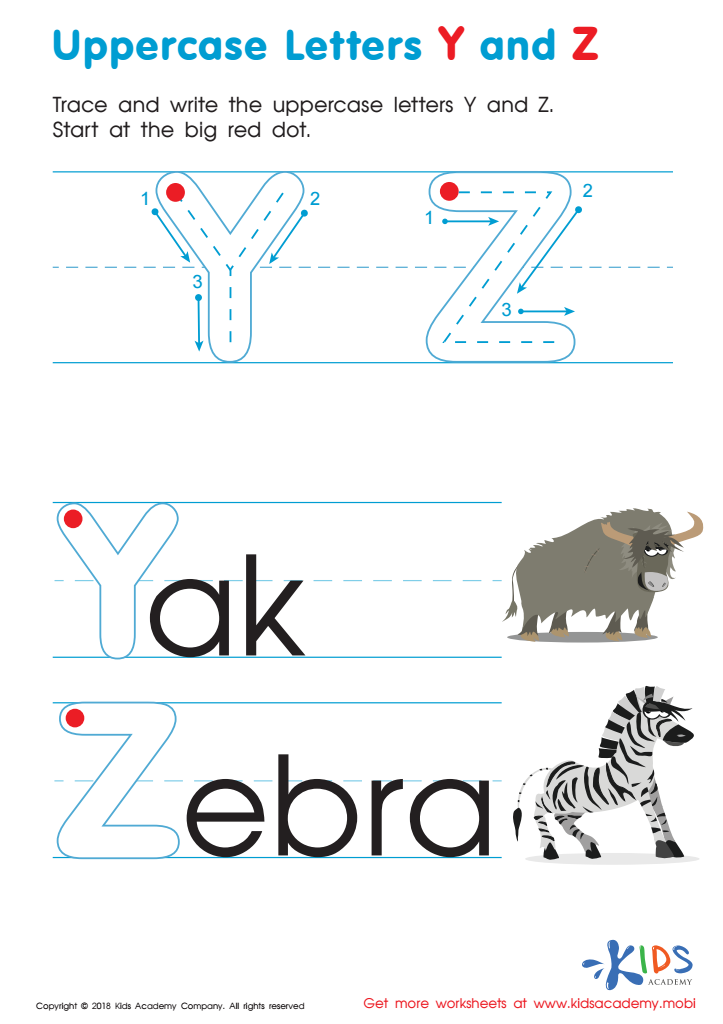
Uppercase Letters Y Z Worksheet
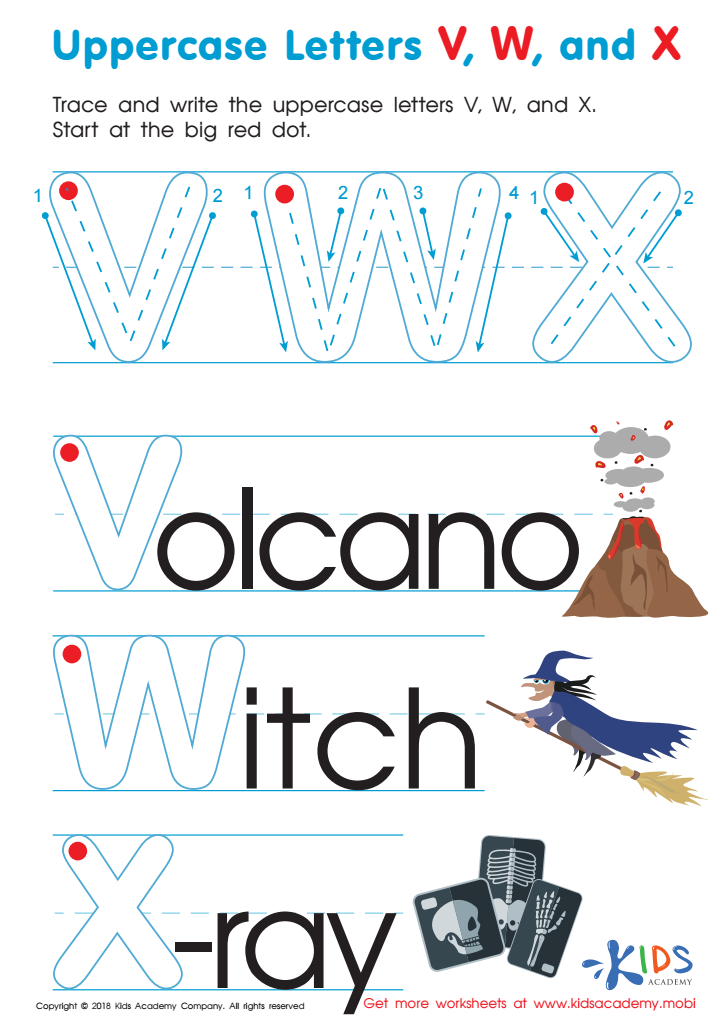
Uppercase Letters V, W, and X Worksheet






For ages 3-5, developing letter tracing skills for both uppercase and lowercase letters lays a crucial foundation for early literacy. At the heart of this foundational practice is the enhancement of fine motor skills. Young children need to refine the small muscles in their hands and fingers to gain control over writing tools like pencils and crayons. By tracing letters, they develop strength and coordination, essential for more advanced writing tasks.
Simultaneously, letter tracing activities introduce children to alphabetic principles and phonetics. Recognizing and practicing letter shapes solidifies their understanding of letter-sound relationships, an essential aspect of reading. Familiarity with both uppercase and lowercase letters ensures that children are adaptable readers, as they will encounter both forms in print materials.
Engaging in letter tracing also enriches visual-spatial skills by teaching children to pay attention to letter sizes, orientations, and proportions. These skills are necessary for clear, legible handwriting. Moreover, achieving proficiency in tracing fosters self-confidence and a sense of accomplishment in young learners.
Overall, parents and teachers should invest time in these activities due to their multi-faceted benefits: bolstering fine motor development, building literacy, improving visual-spatial awareness, and nurturing confidence—all vital ingredients for academic success.







