Lowercase identification Upper & Lowercase Letters Worksheets for Ages 3-5
5 filtered results
-
From - To
Unlock your child's potential with our engaging Lowercase Identification Worksheets designed for ages 3-5! These interactive resources help young learners master the recognition of lowercase letters through fun activities tailored to spark curiosity and enhance literacy skills. Each worksheet provides a variety of exercises, including tracing, matching, and coloring, fostering both fine motor skills and letter identification. Perfect for homeschooling or classroom use, our worksheets encourage independent learning while making education enjoyable. Nurture your child's love for reading and writing from an early age as they explore the world of letters—download these invaluable materials today!
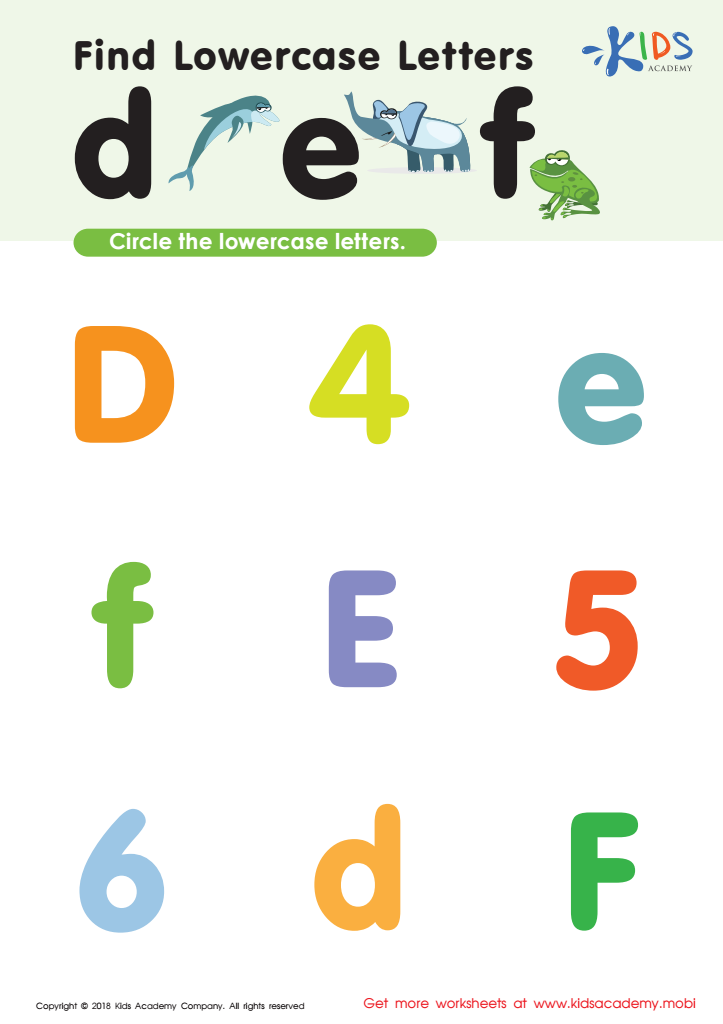
Find Lowercase Letters d e f Worksheet
 Assign to My Students


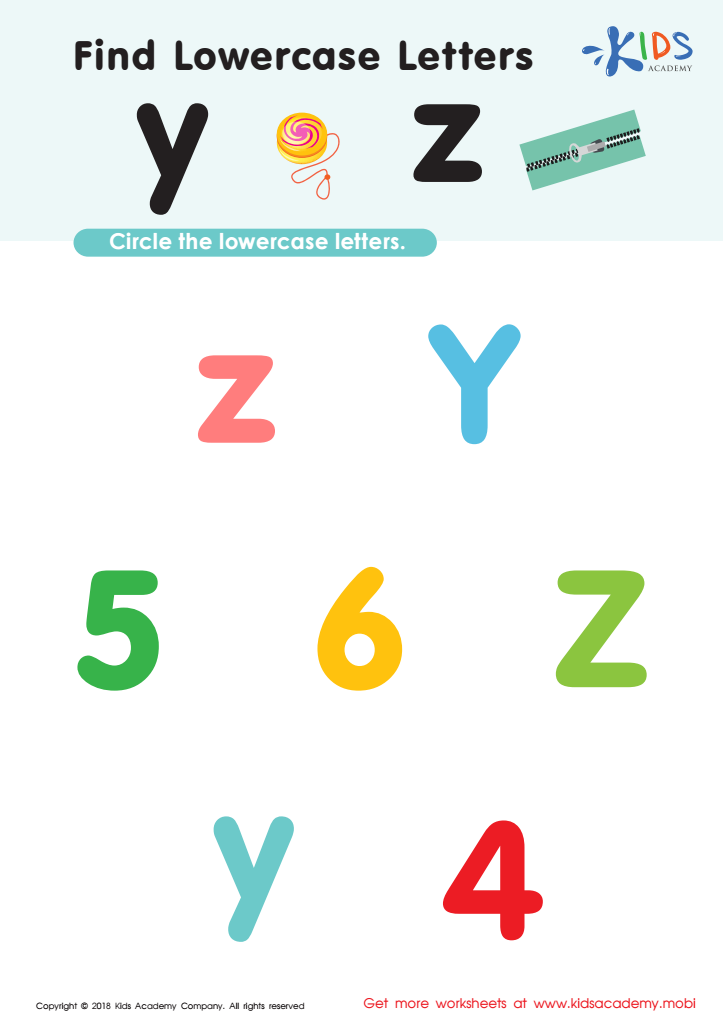
Find Lowercase Letters y z Worksheet
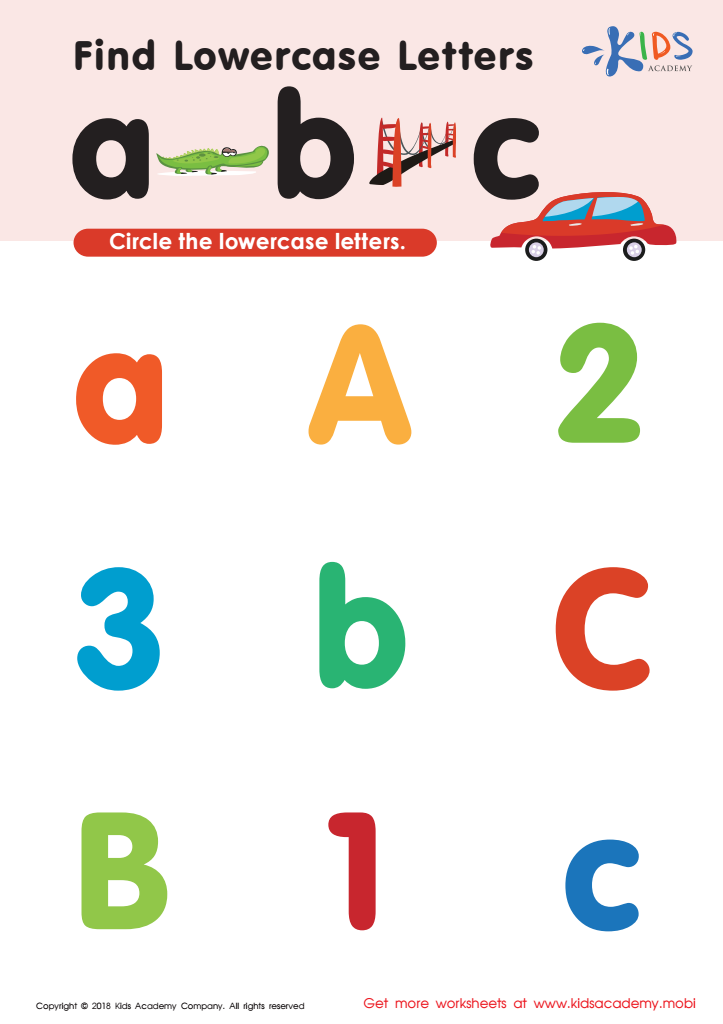
Find lowercase letters a b c Worksheet
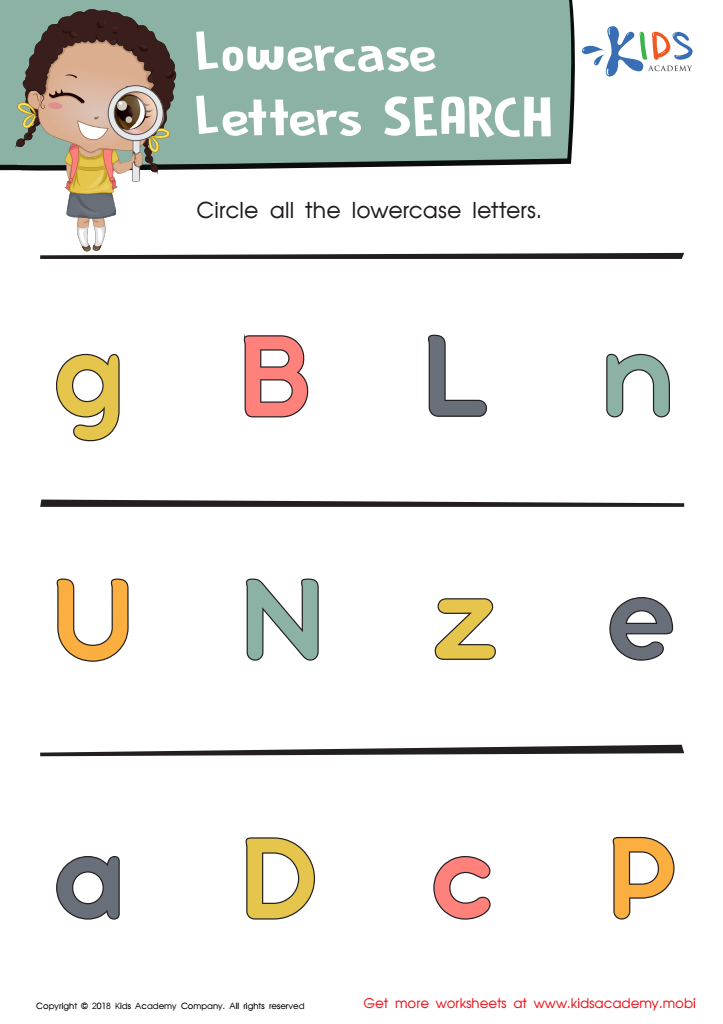
Lowercase Letters Search: Assessment Worksheet
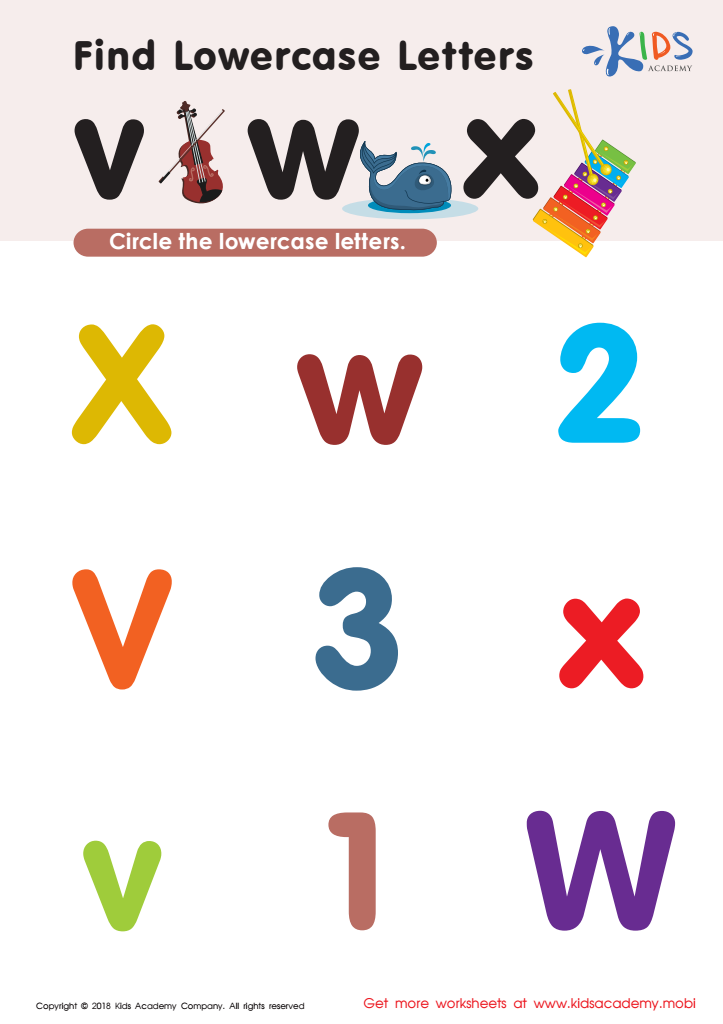
Find Lowercase Letters v w x Worksheet






Lowercase and uppercase letter identification is a crucial foundation for early literacy development in children aged 3 to 5. Parents and teachers should care about this aspect of learning because it significantly impacts children's reading and writing skills. Understanding the distinction between uppercase and lowercase letters helps children develop phonemic awareness and prepares them for the complex relationship between letters and sounds.
At this age, children are naturally curious and absorb information rapidly. Introducing them to lowercase letters fosters their recognition skills, which are essential for reading. Most text is composed predominately of lowercase letters, so familiarity with these characters is crucial for fluency and comprehension in reading.
Moreover, lowercase letters often appear in everyday life, through signs, books, and labels. Helping children differentiate between upper and lower case helps them navigate written language more effectively.
Additionally, identifying letters is linked to fine motor skills. Writing both uppercase and lowercase letters enhances coordination and promotes early writing readiness. In essence, nurturing letter recognition is not just about letters; it’s a pathway to independence in literacy, setting the stage for future academic success and fostering a love for reading that can last a lifetime.







