Check out this FREE "Basic Addition Skills" Trial Lesson for age 3-5!

Adding with 4's

Favorites
With answer key
Interactive
  • 3-5
  • Basic Addition Skills
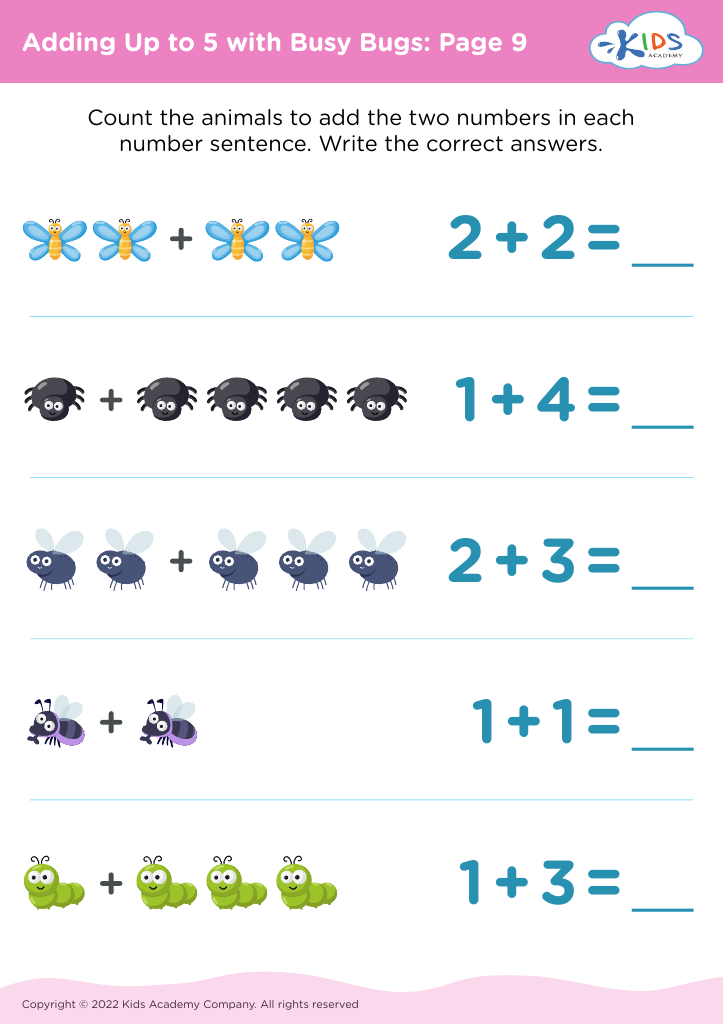
Adding Up to 5 with Busy Bugs: Page 9
Worksheet
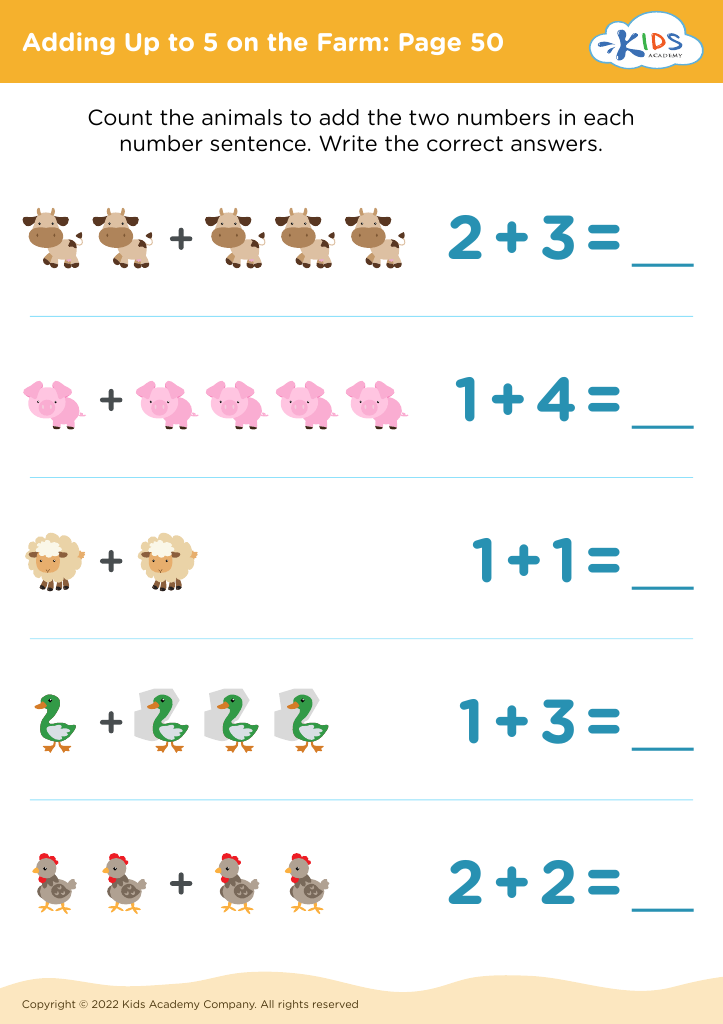
Adding Up to 5 on the Farm: Page 50
Worksheet
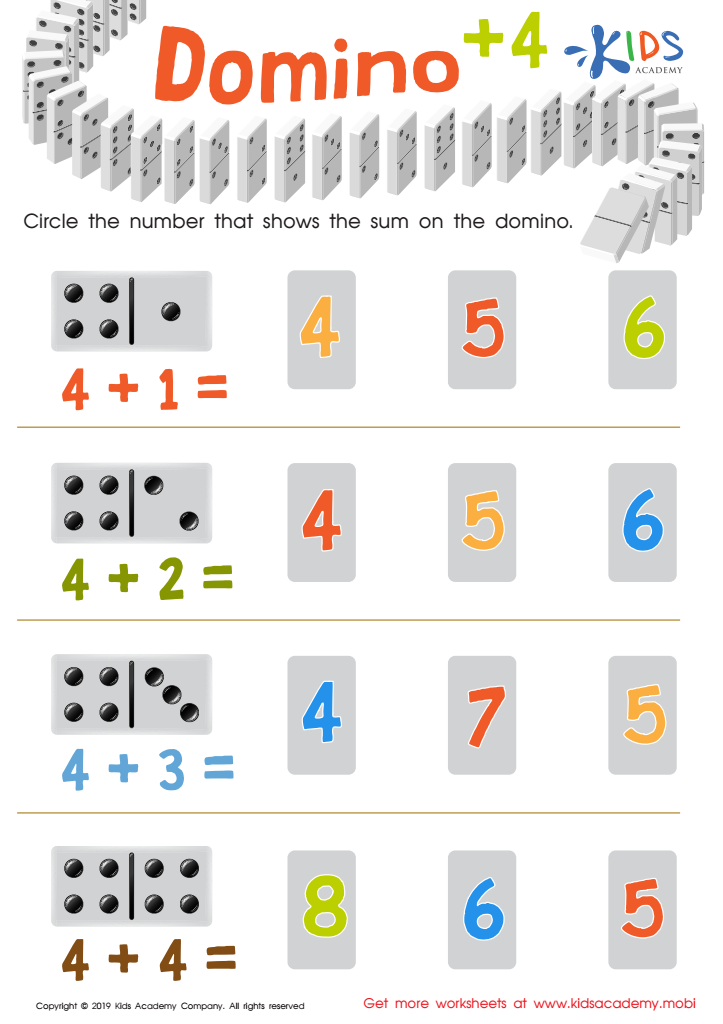
Domino +4 Worksheet
Domino +4 Worksheet

Domino +4 Worksheet

Ask your kids if they know what a domino is. Explain, then move on to solving the four simple equations on this printout, adding a number to 4. Help them find the sum and circle the number.
Domino +4 Worksheet
Worksheet
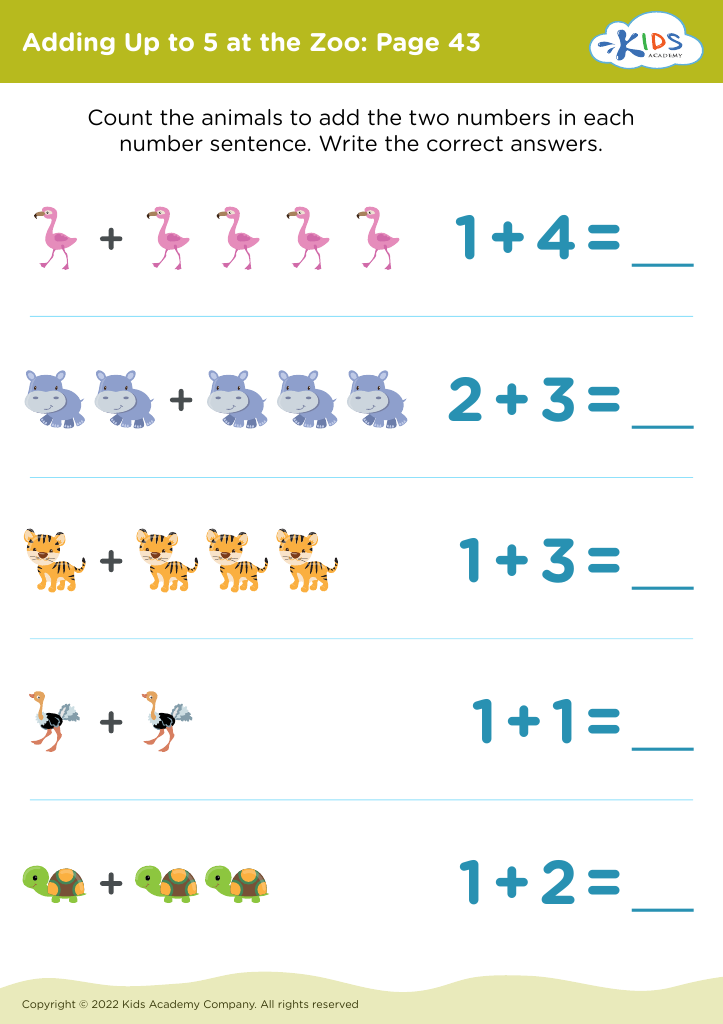
Adding Up to 5 at the Zoo: Page 43
Worksheet
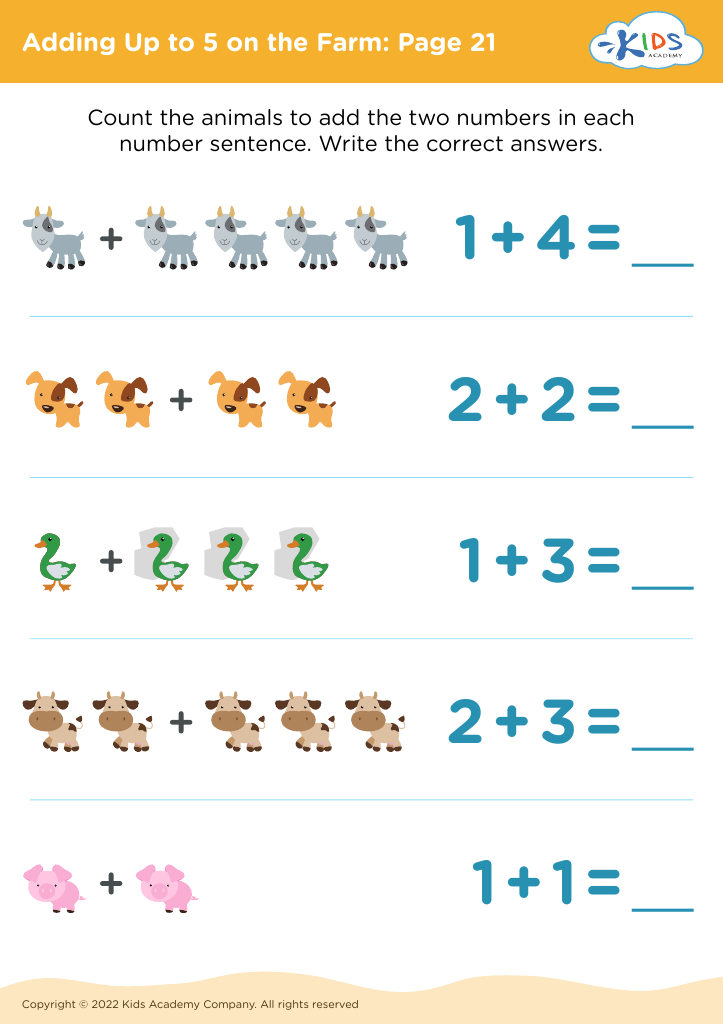
Adding Up to 5 on the Farm: Page 21
Worksheet
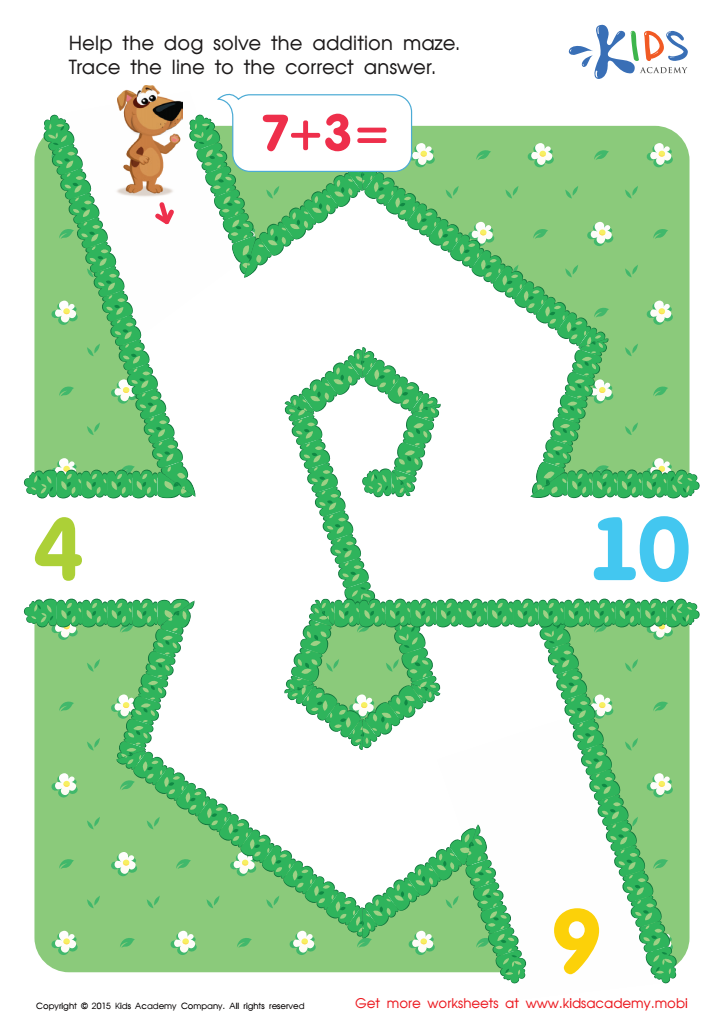
Math: Seven Plus Three PDF Worksheet

Seven Plus Three Worksheet
Practice addition and subtraction with your kids, help them out and make learning math an enjoyable activity.
Seven Plus Three Worksheet
Worksheet
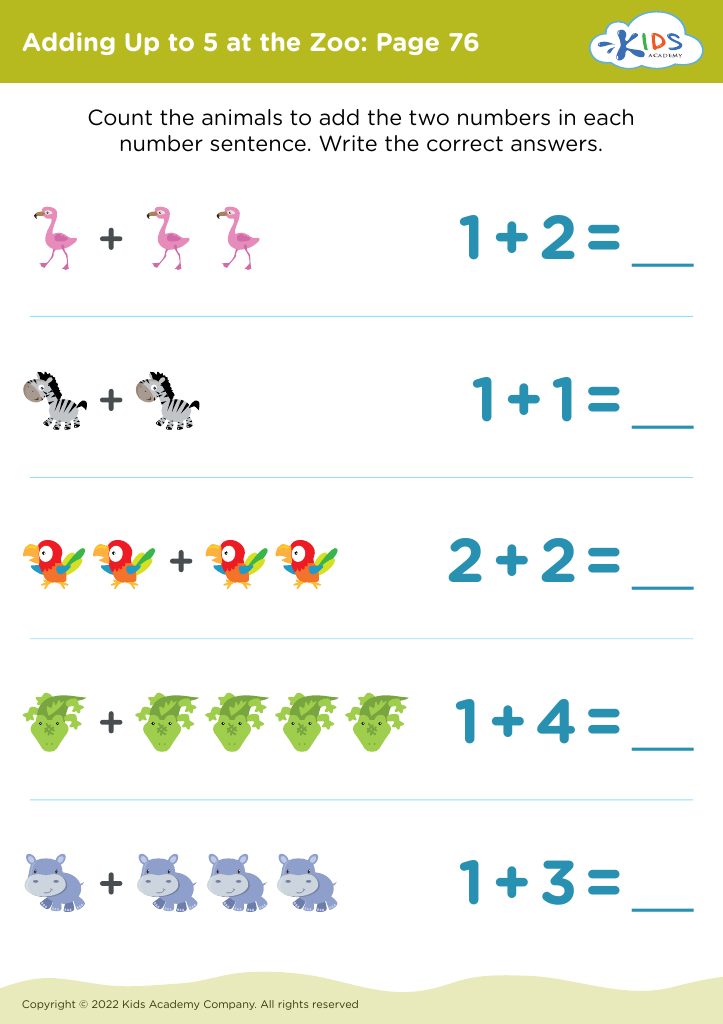
Adding Up to 5 at the Zoo: Page 76
Worksheet
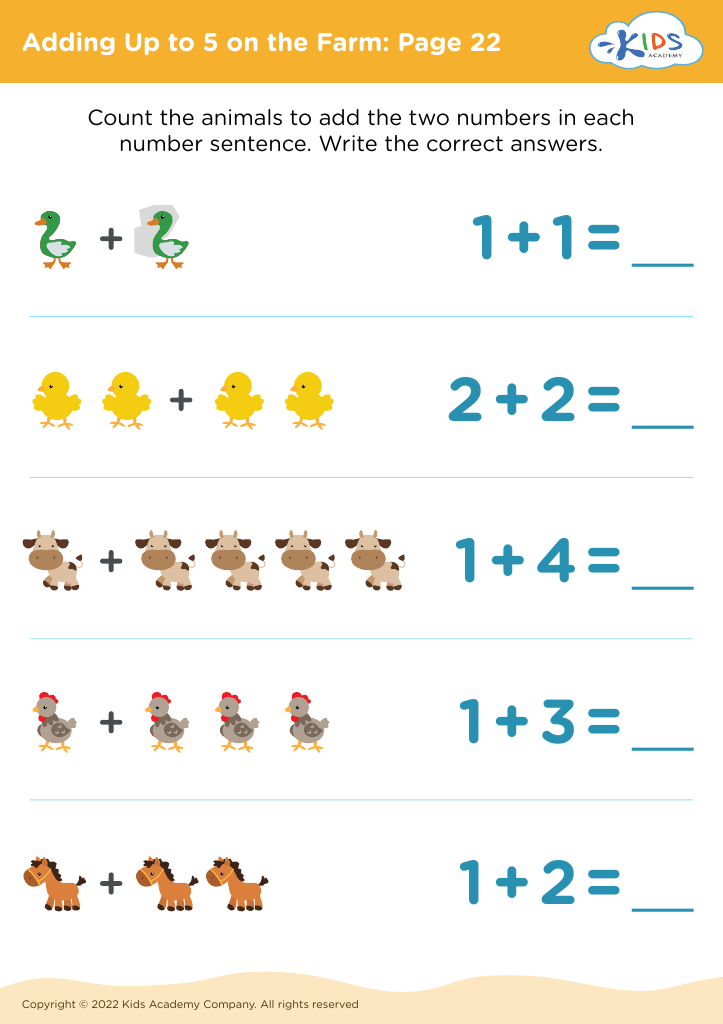
Adding Up to 5 on the Farm: Page 22
Worksheet
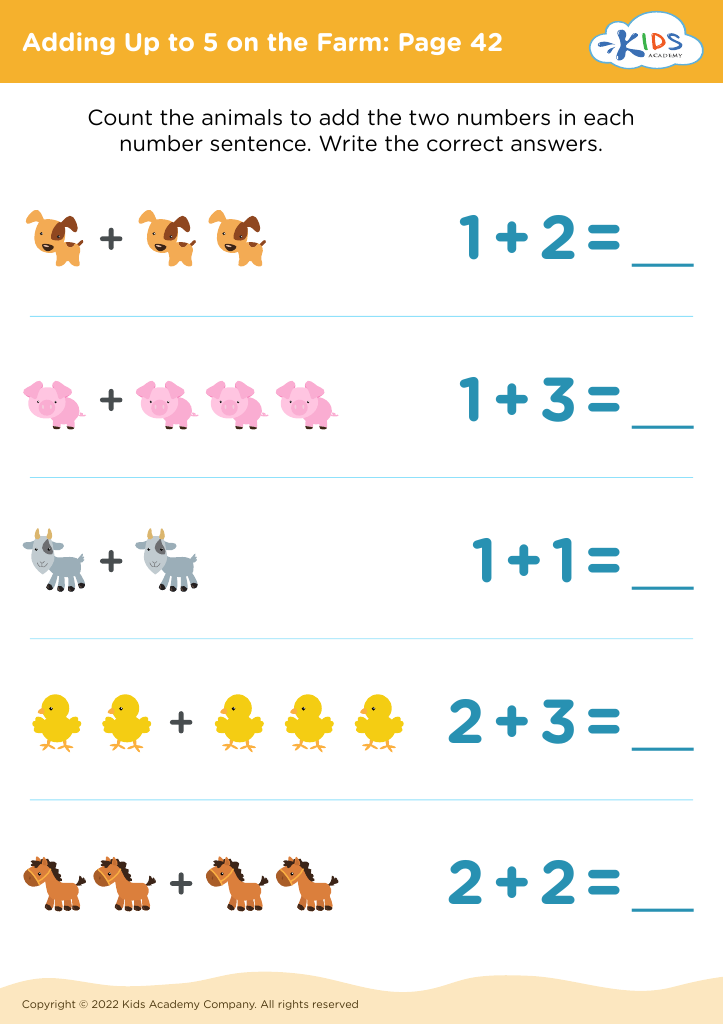
Adding Up to 5 on the Farm: Page 42
Worksheet
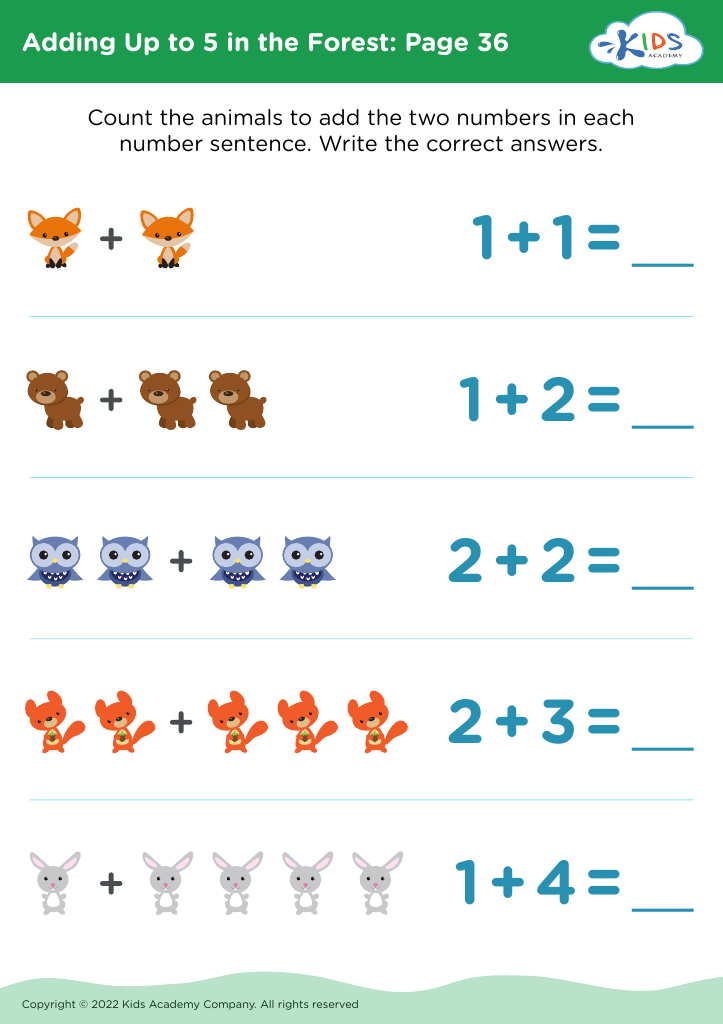
Adding Up to 5 in the Forest: Page 36
Worksheet
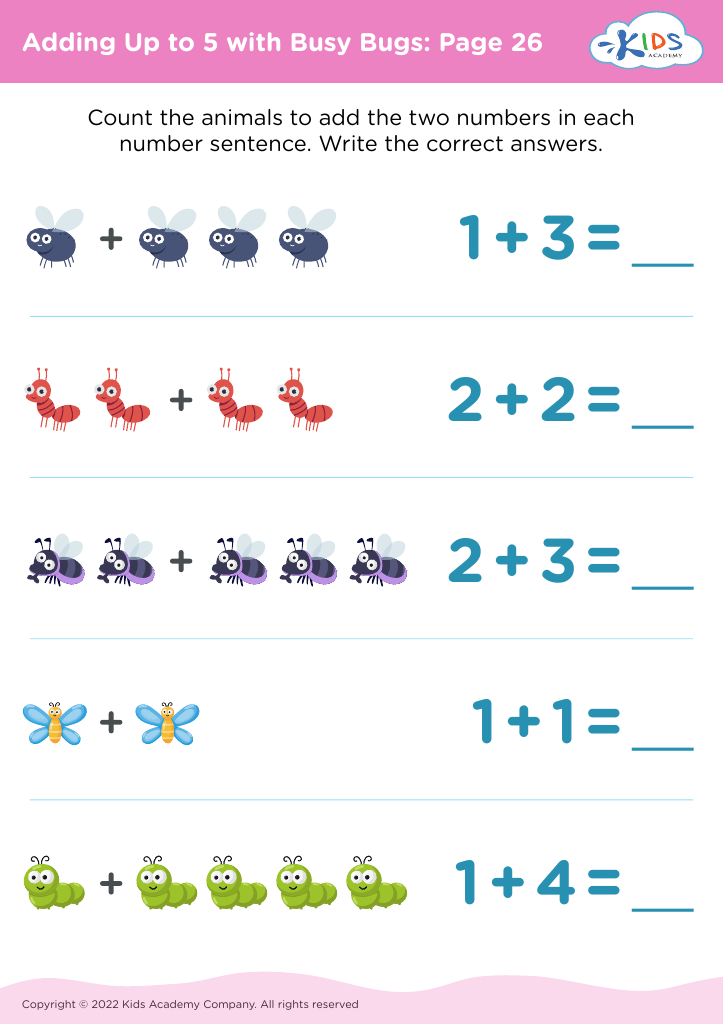
Adding Up to 5 with Busy Bugs: Page 26
Worksheet
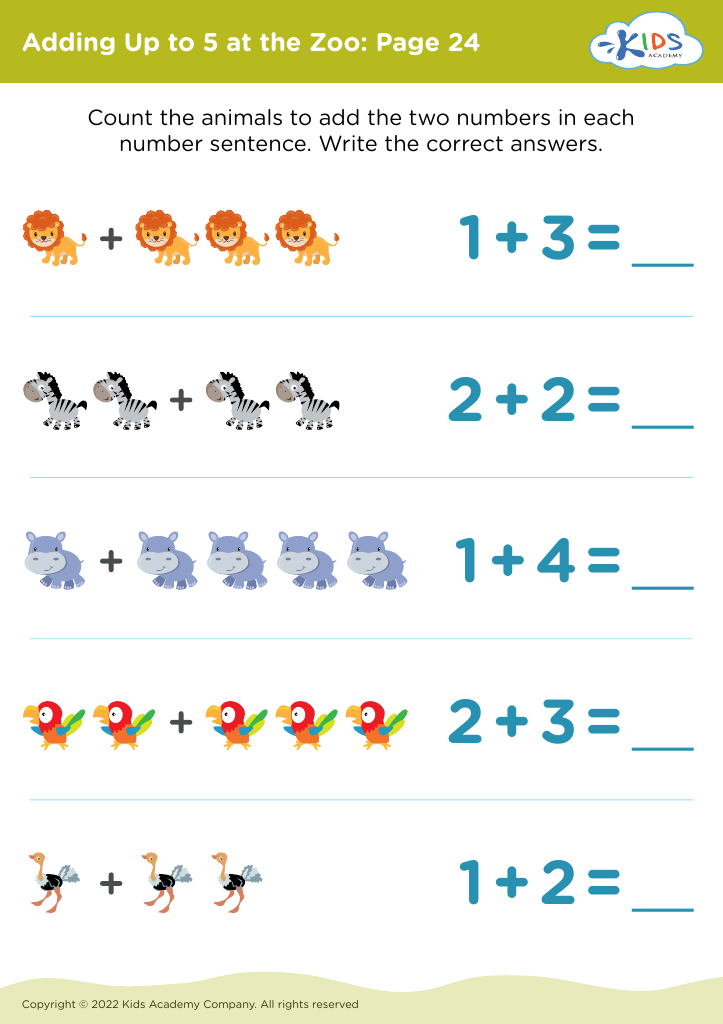
Adding Up to 5 at the Zoo: Page 24
Worksheet
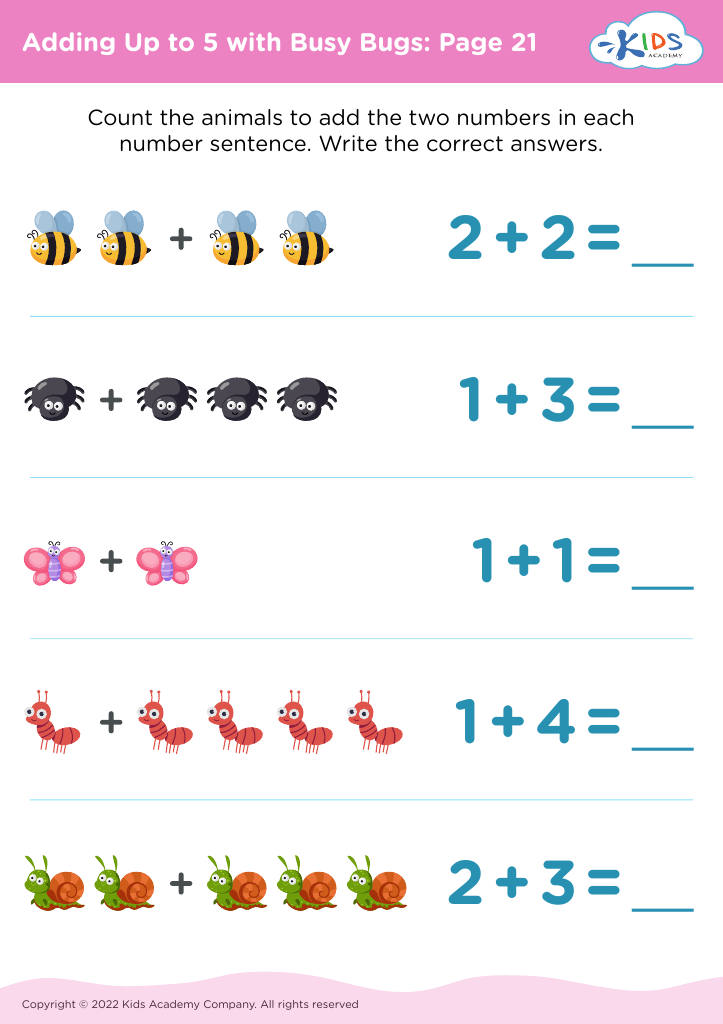
Adding Up to 5 with Busy Bugs: Page 21
Worksheet
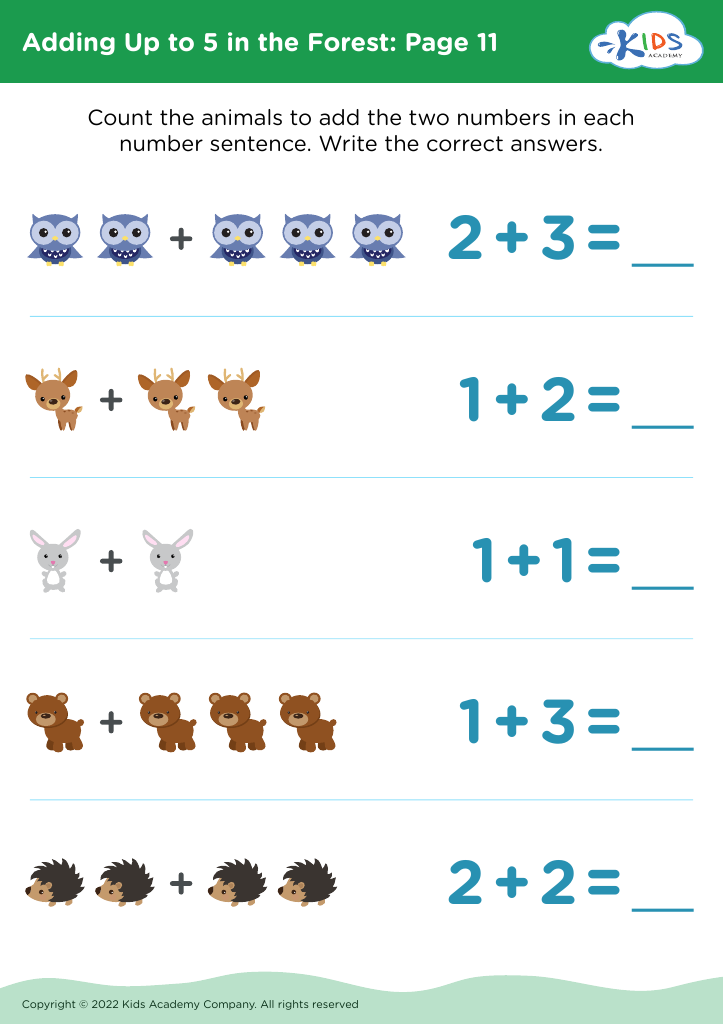
Adding Up to 5 in the Forest: Page 11
Worksheet
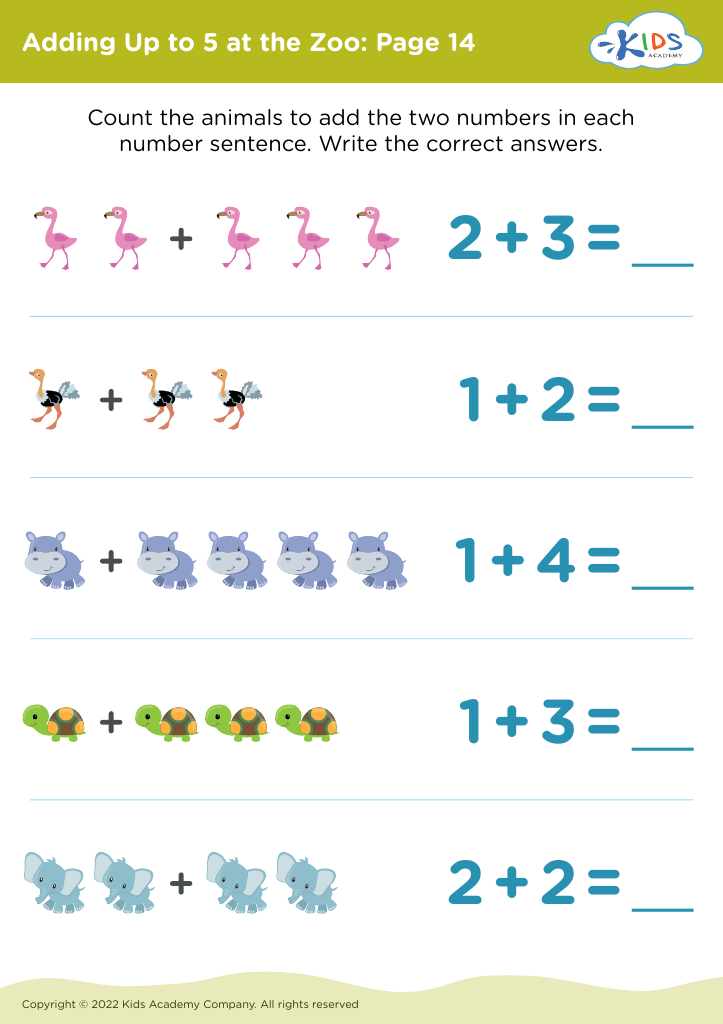
Adding Up to 5 at the Zoo: Page 14
Worksheet
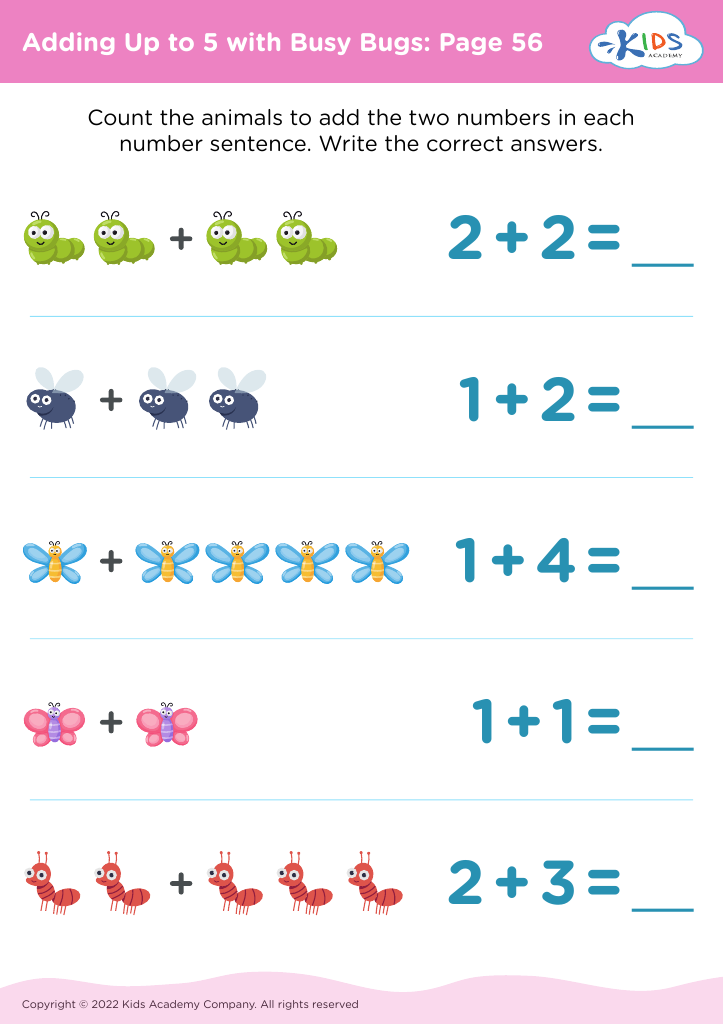
Adding Up to 5 with Busy Bugs: Page 56
Worksheet
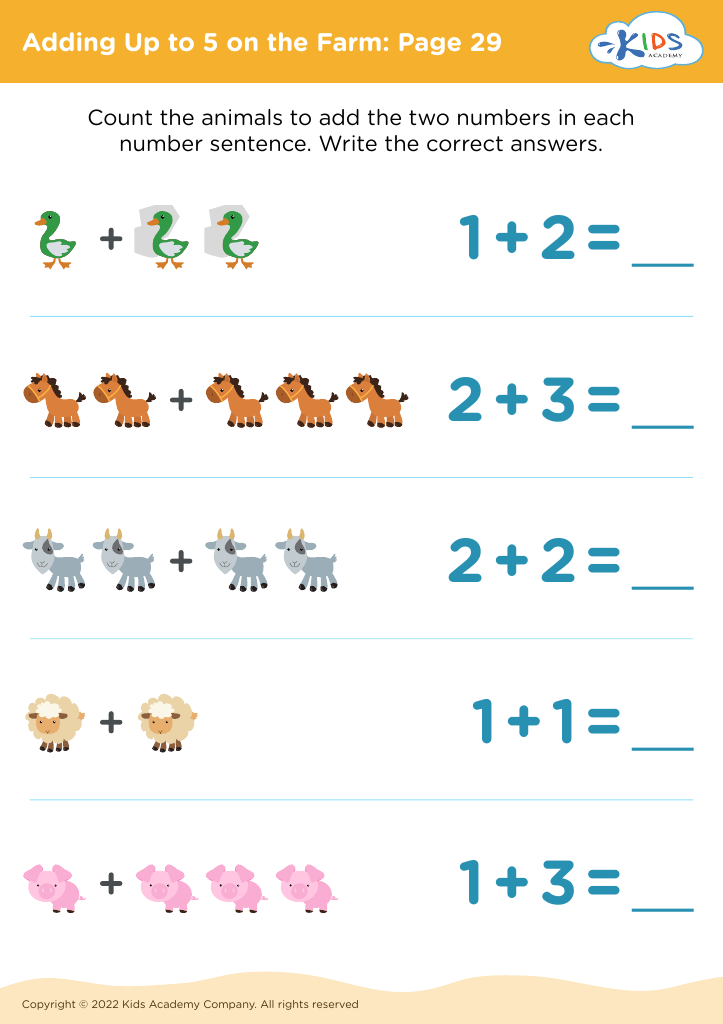
Adding Up to 5 on the Farm: Page 29
Worksheet
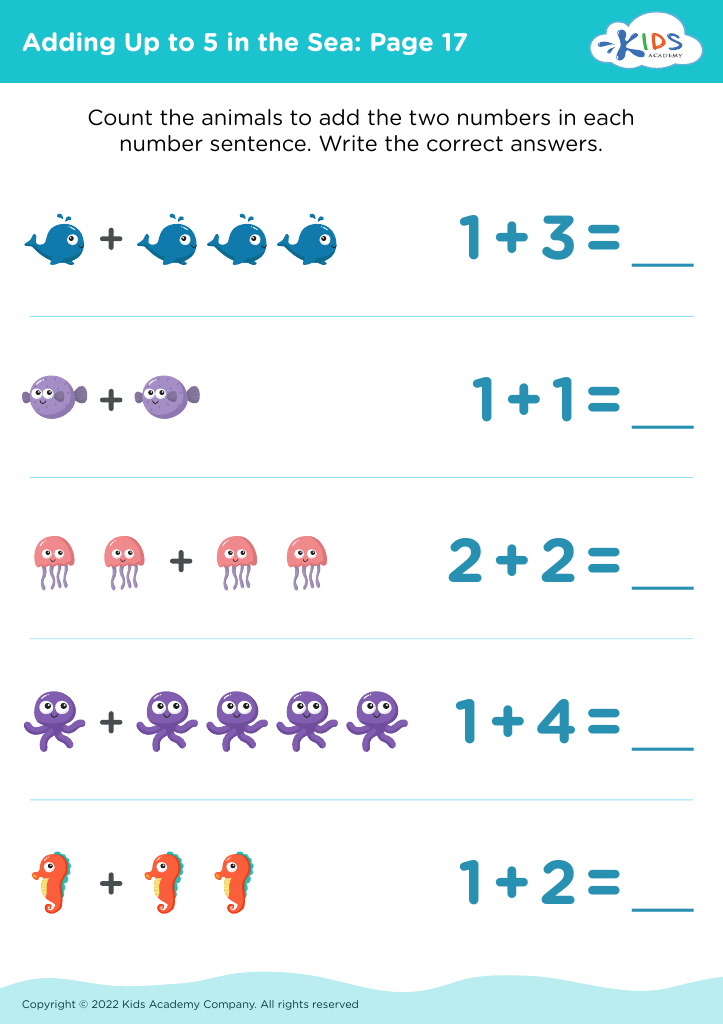
Adding Up to 5 in the Sea: Page 17
Worksheet
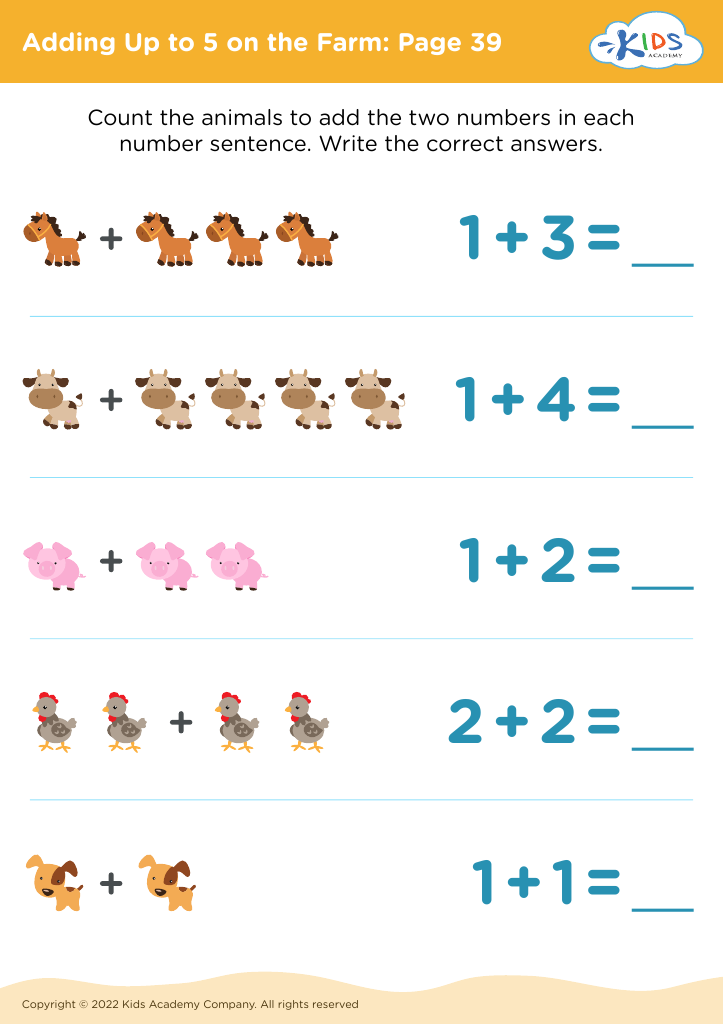
Adding Up to 5 on the Farm: Page 39
Worksheet
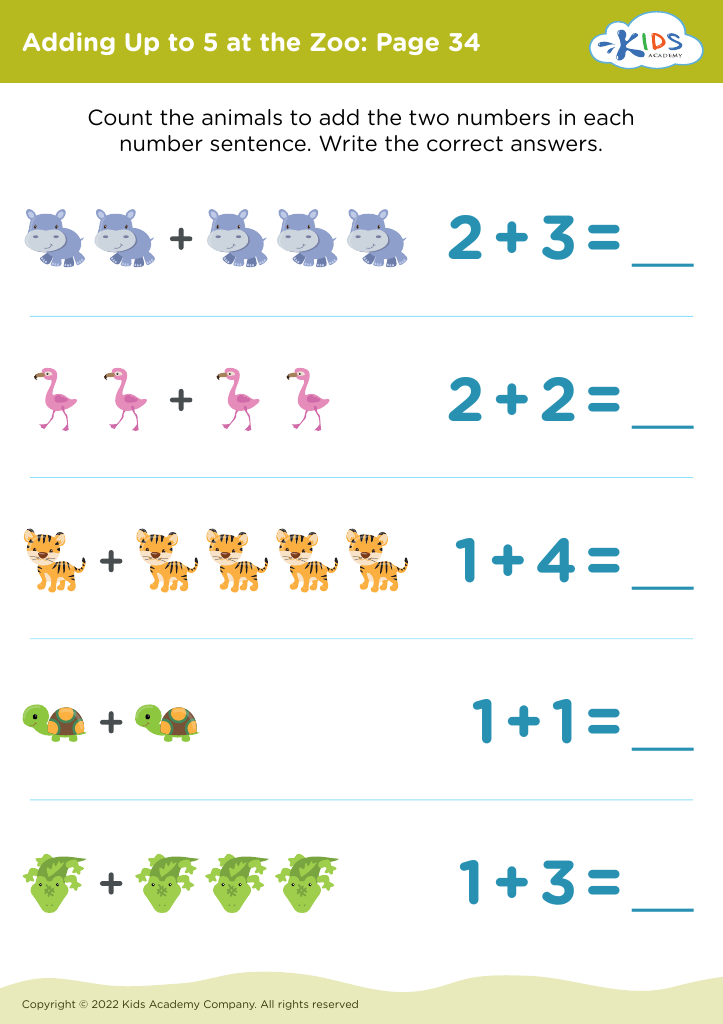
Adding Up to 5 at the Zoo: Page 34
Worksheet
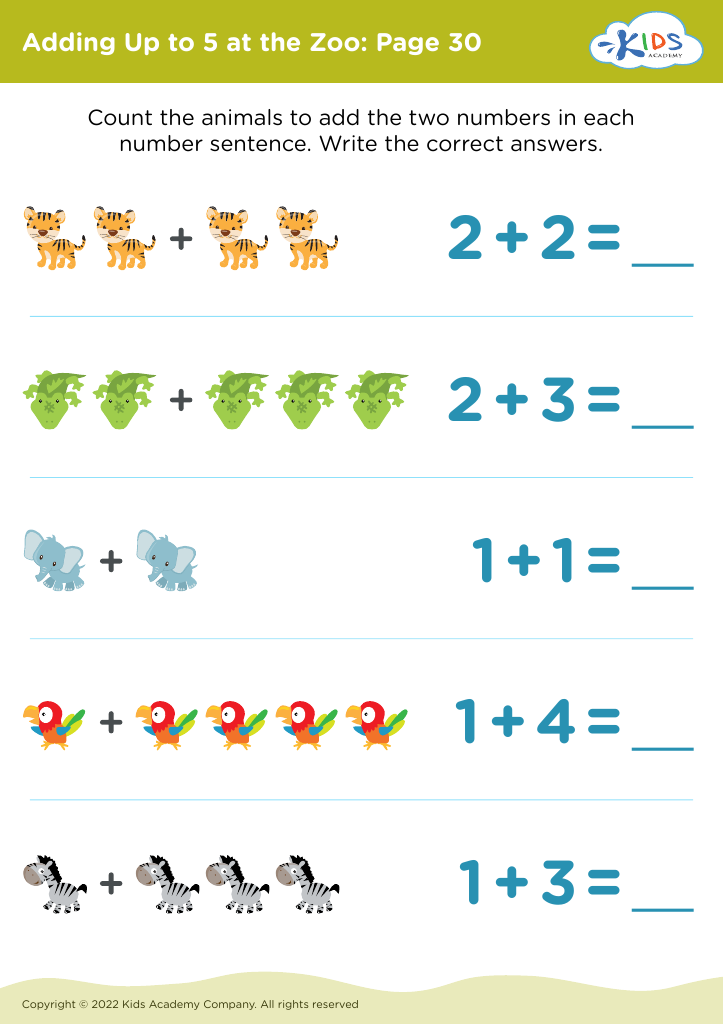
Adding Up to 5 at the Zoo: Page 30
Worksheet
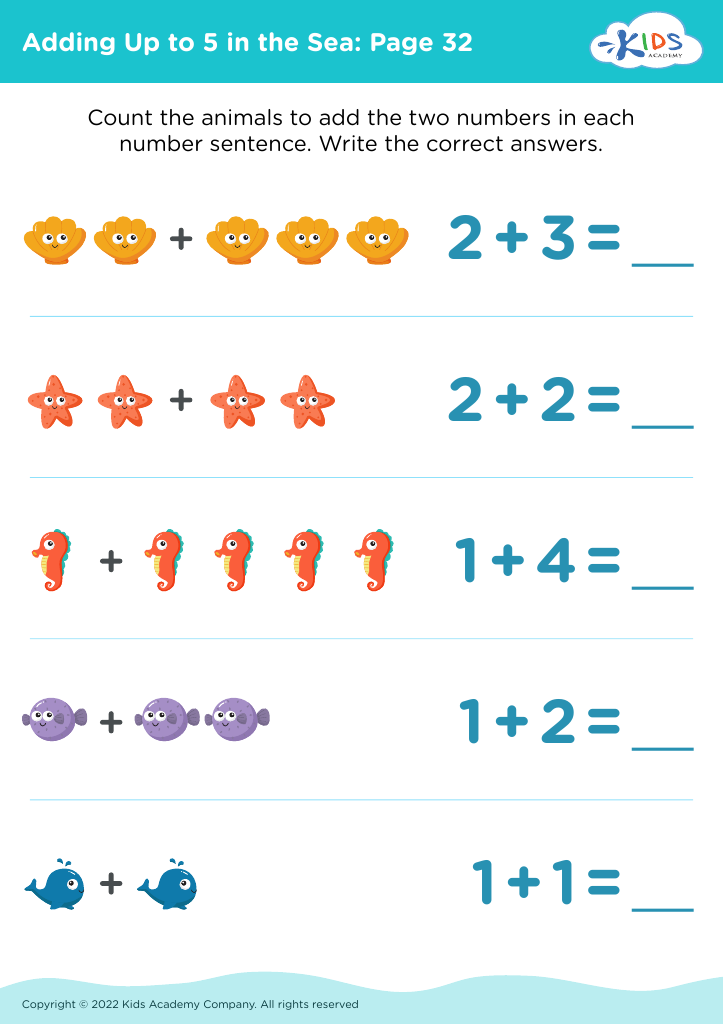
Adding Up to 5 in the Sea: Page 32
Worksheet
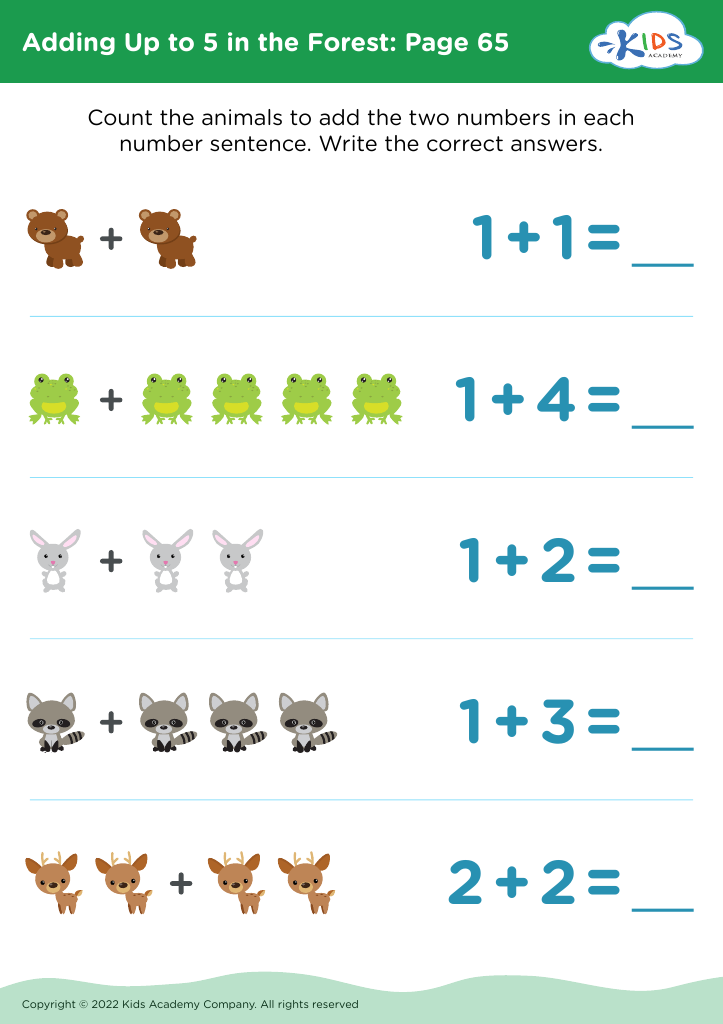
Adding Up to 5 in the Forest: Page 65
Worksheet
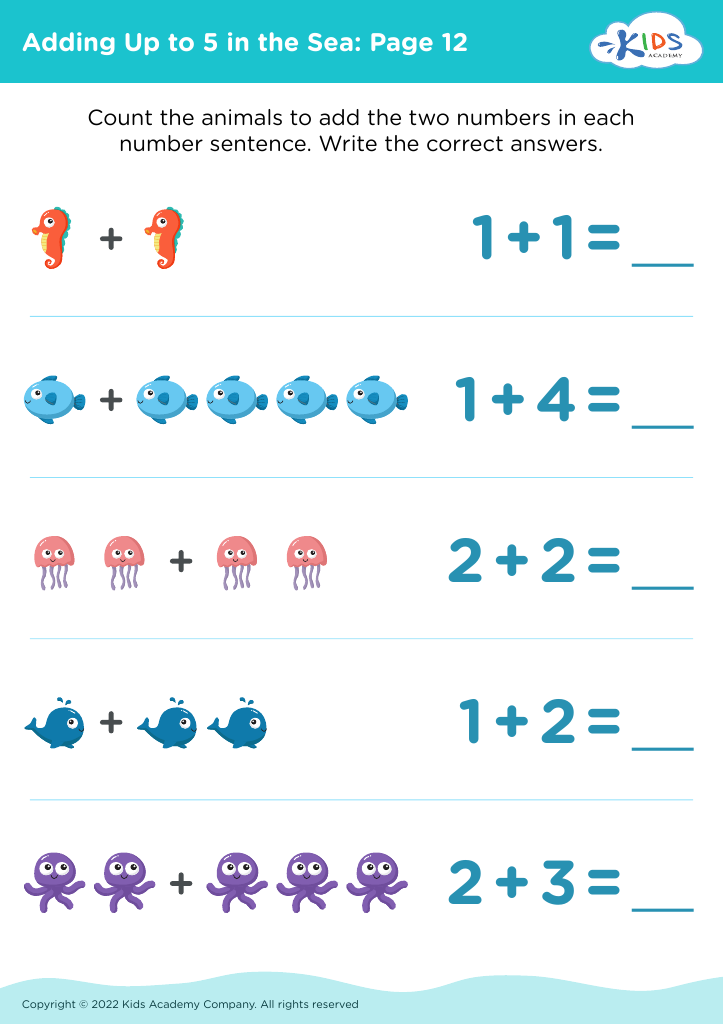
Adding Up to 5 in the Sea: Page 12
Worksheet


Basic addition skills are foundational for young learners aged 3-5, and both parents and teachers should prioritize them for several reasons. First, mastering addition promotes early math literacy, setting the stage for future mathematical concepts and problem-solving. At this age, children develop cognitive skills rapidly, and engaging them in simple addition activities fosters their critical thinking and reasoning abilities.

Additionally, learning basic addition builds confidence. When young children grasp simple math concepts, they feel a sense of achievement that motivates them to explore more challenging tasks. This positive reinforcement boosts their self-esteem and creates a positive attitude towards learning.

Moreover, basic addition skills enhance a child's ability to understand everyday situations, such as sharing toys or counting snacks, making math relevant and fun in daily life. Engaging in playful and interactive activities with numbers, like using blocks or songs, enriches their social skills and promotes family bonding through shared learning experiences.

Ultimately, equipping children with these fundamental skills at an early age lays a strong educational groundwork that supports lifelong learning, critical thinking, and adaptability in an increasingly complex world. Therefore, the involvement of both parents and teachers is essential to nurturing these skills in early childhood.