Cognitive Development Worksheets for Ages 3-5 - Page 9
197 filtered results
-
From - To

Night Sky Numbers Worksheet
 Assign to My Students
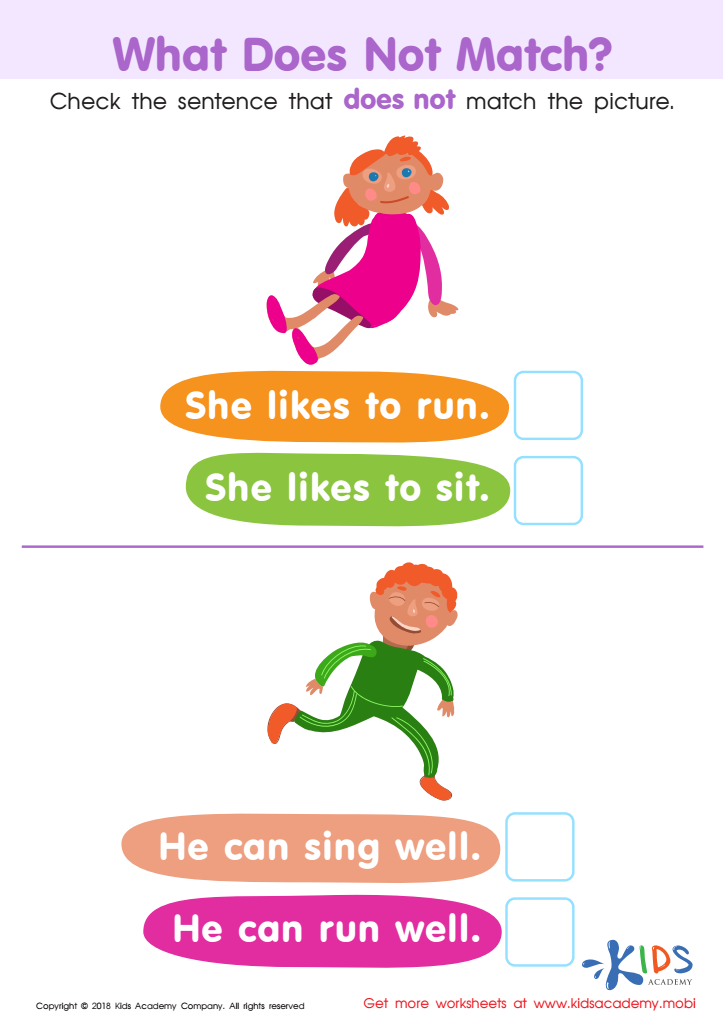
What Does Not Match? Worksheet








Cognitive development in children aged 3-5 is foundational for their future learning and overall growth. During these formative years, children's brains are highly plastic, making them incredibly receptive to new experiences and information. This period is crucial for developing essential skills such as problem-solving, critical thinking, and language. Parents and teachers play an essential role in fostering an environment that promotes exploration and intellectual curiosity.
Engaging children in activities that stimulate their cognitive skills—like interactive storytelling, imaginative play, and hands-on learning—can significantly impact their ability to achieve academic success later on. Research shows that strong cognitive foundations lead to better performance in school and improved emotional and social skills.
Furthermore, understanding cognitive development helps parents and teachers tailor their interactions, support individual learning styles, and create age-appropriate expectations. When children feel encouraged and challenged in a supportive setting, it enhances their self-esteem and motivation to learn.
In summary, investing in cognitive development during these early years not only prepares children for school but also equips them with lifelong skills that are crucial for their personal and social development. Thus, both parents and teachers should prioritize activities that nurture a child's cognitive growth.








