Filters

304 filtered results

Clear all filters
Favorites
With answer key
Interactive

304 filtered results

Difficulty Level

Grade


Check out this FREE "Counting practice" Trial Lesson for age 3-5!

Arrange up to 9 Objects

Favorites
With answer key
Interactive
  • 3-5
  • Counting practice
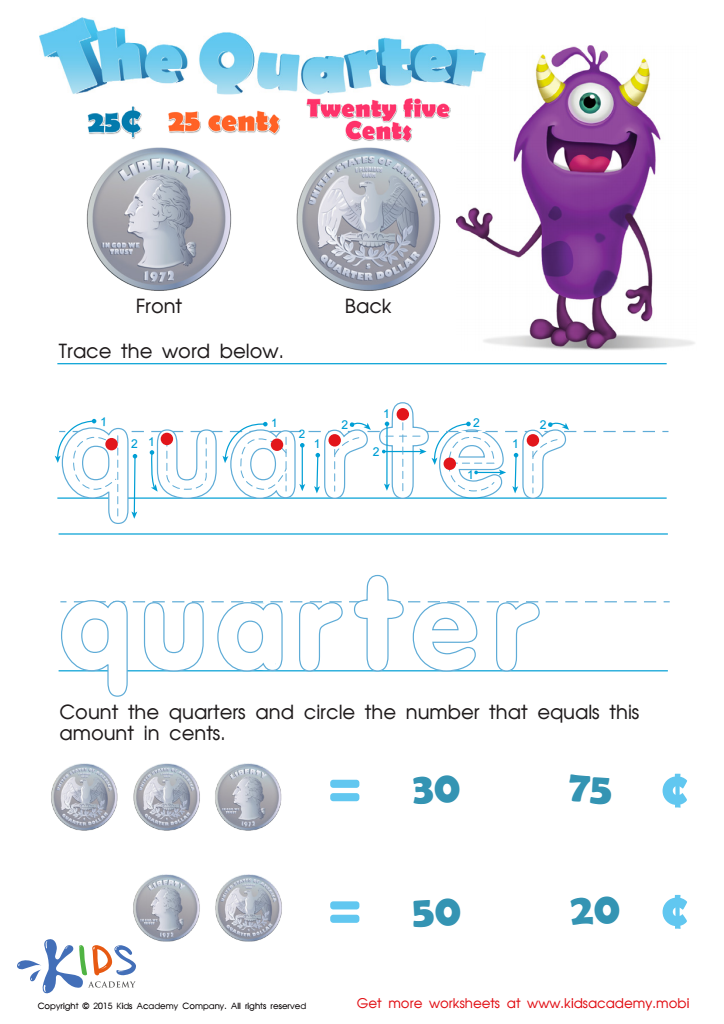
Printable Money Games and PDF Worksheets: Twenty Five Cents or the Quarter

Twenty Five Cents or the Quarter Money Worksheet

Check out our new printable money games - learn to count money easily! With quarters, trace the word, count them and calculate the amount in cents. More worksheets at our website. Give it a try!
Twenty Five Cents or the Quarter Money Worksheet
Worksheet
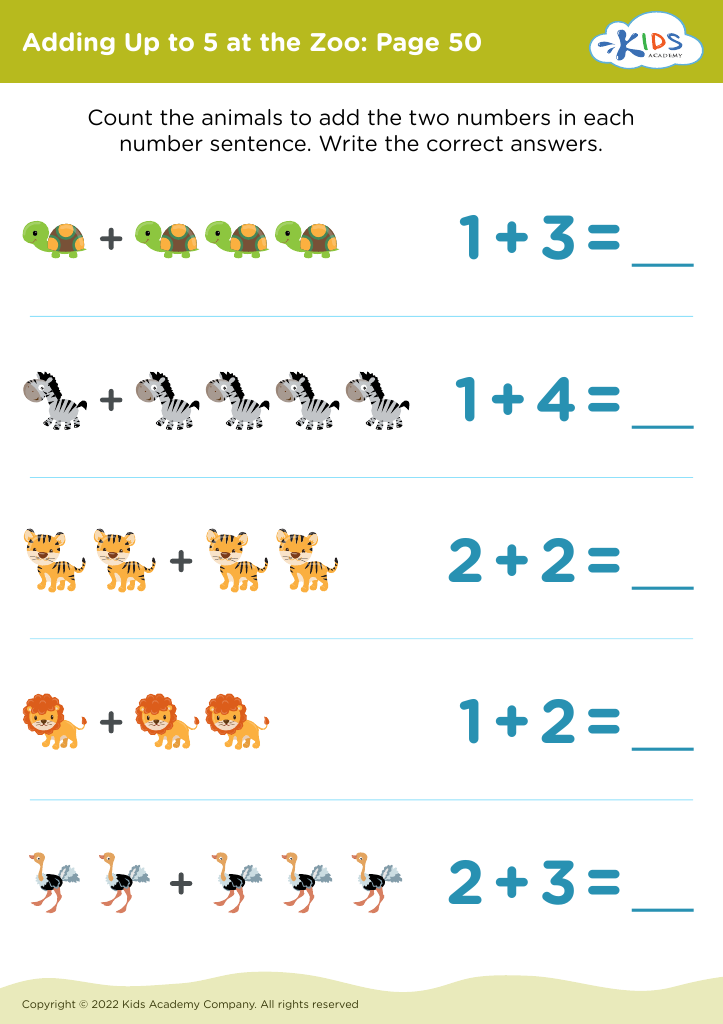
Adding Up to 5 at the Zoo: Page 50
Worksheet
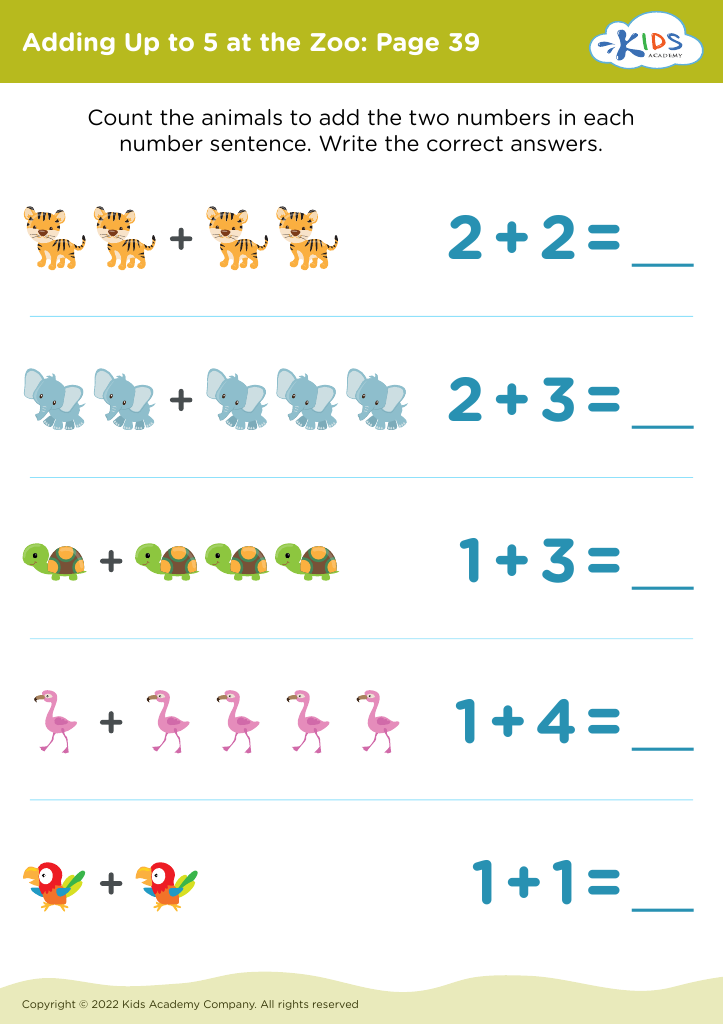
Adding Up to 5 at the Zoo: Page 39
Worksheet
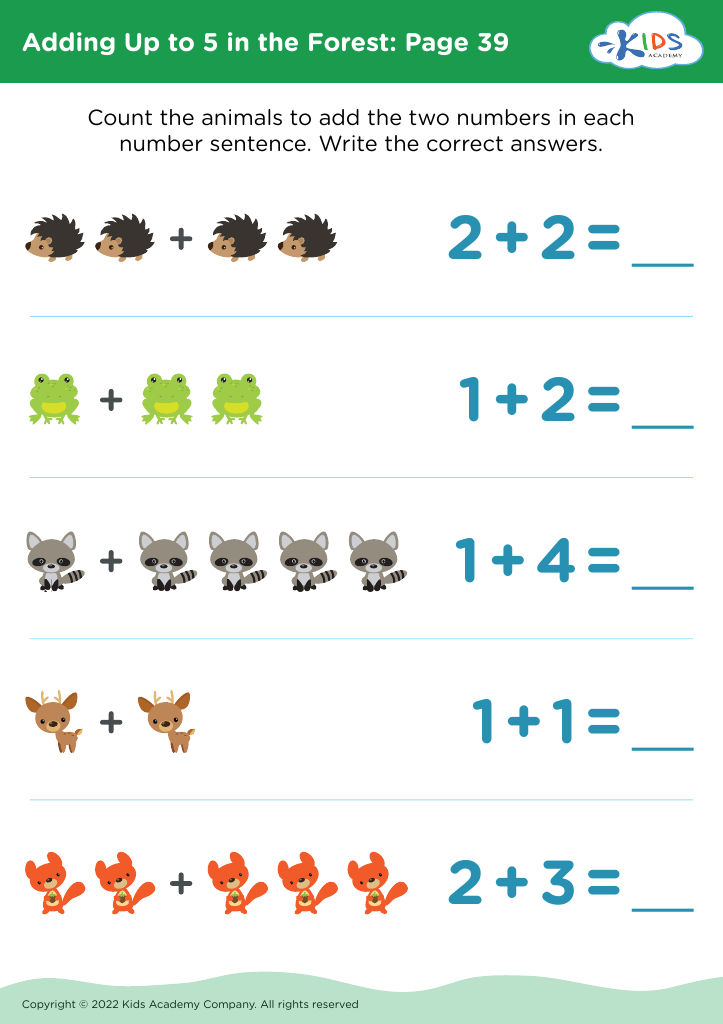
Adding Up to 5 in the Forest: Page 39
Worksheet
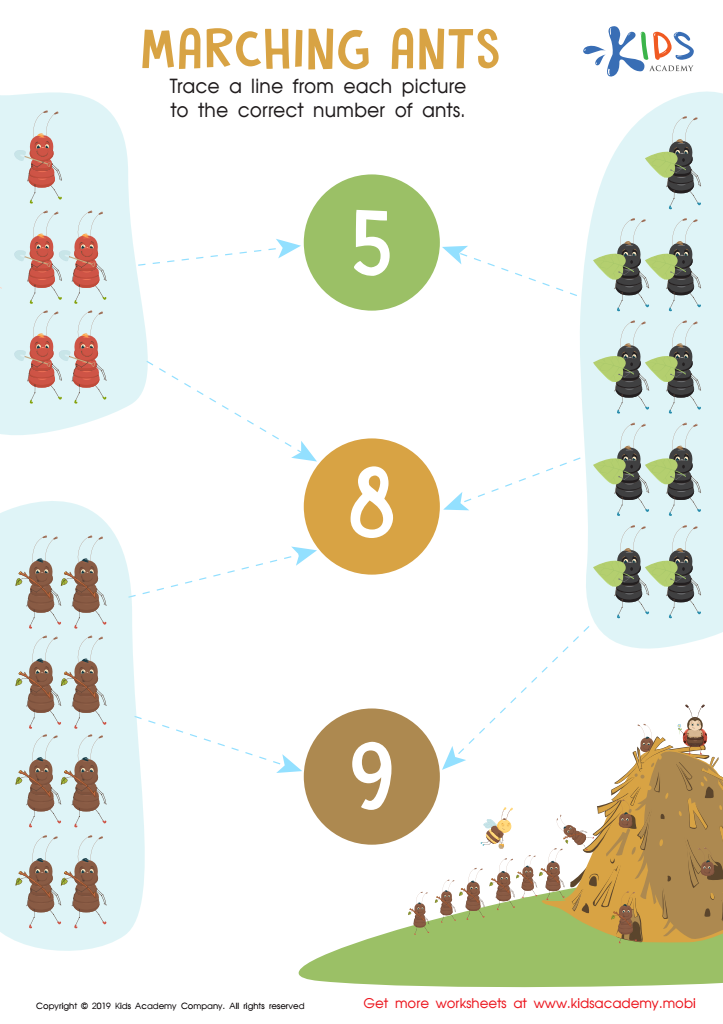
Marching Ants Worksheet

Marching Ants Worksheet

Assess and help your kids practice counting with this worksheet. Ask them to identify the four groups of ants in the picture. Guide them as they count each group and trace the lines to the corresponding number.
Marching Ants Worksheet
Worksheet
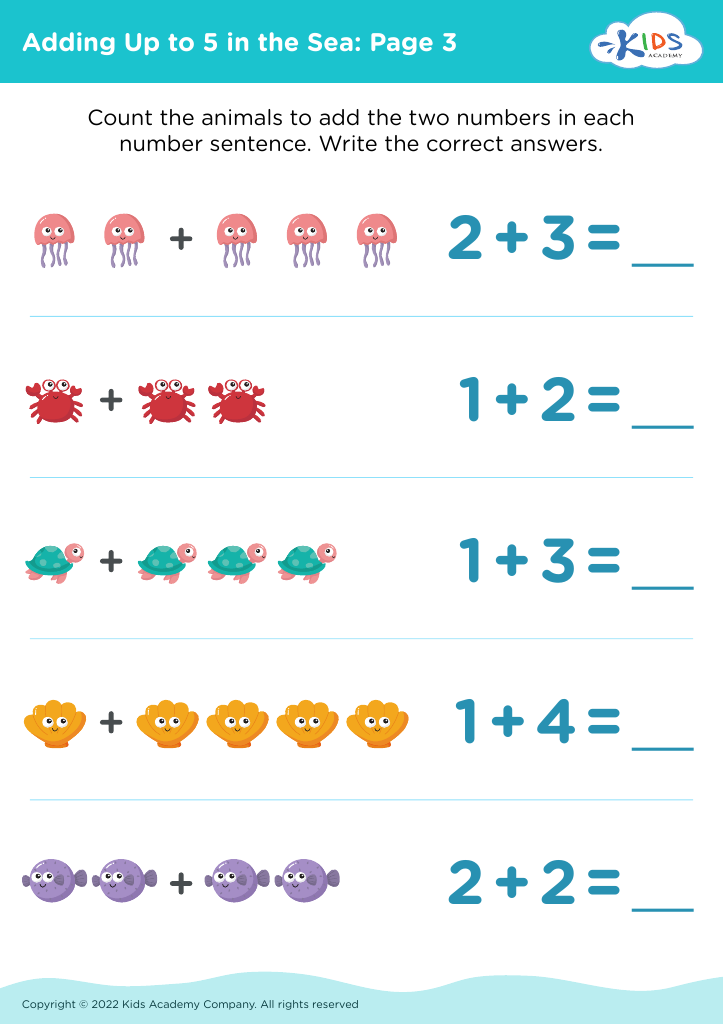
Adding Up to 5 in the Sea: Page 3

Adding Up to 5 in the Sea: Page 3

Adding Up to 5 in the Sea: Page 3
Worksheet
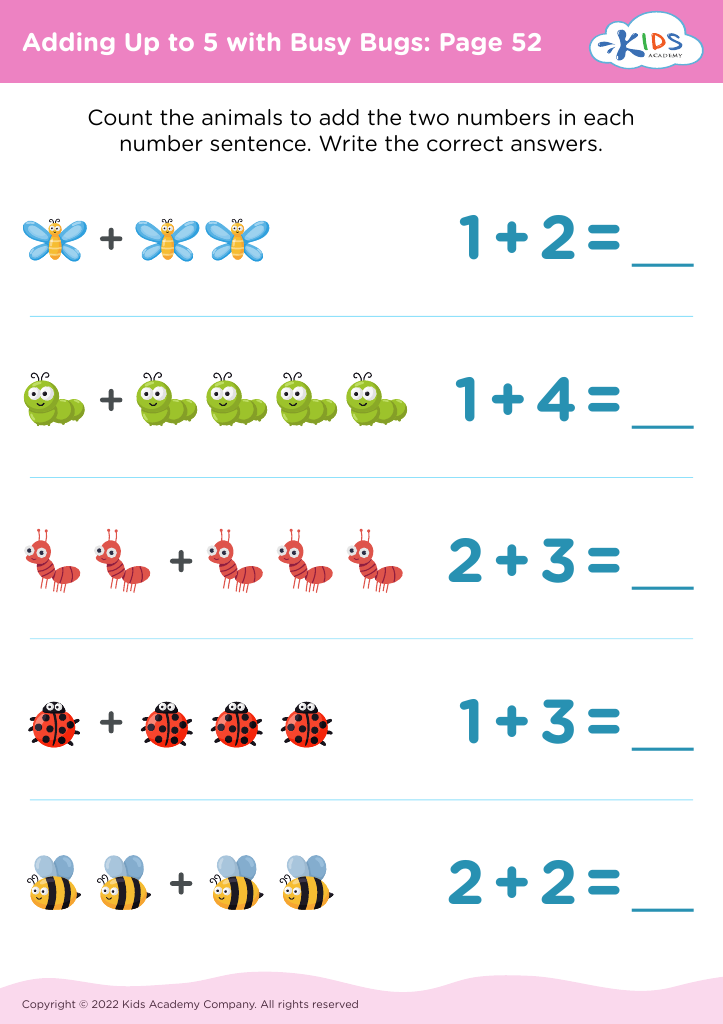
Adding Up to 5 with Busy Bugs: Page 52
Worksheet
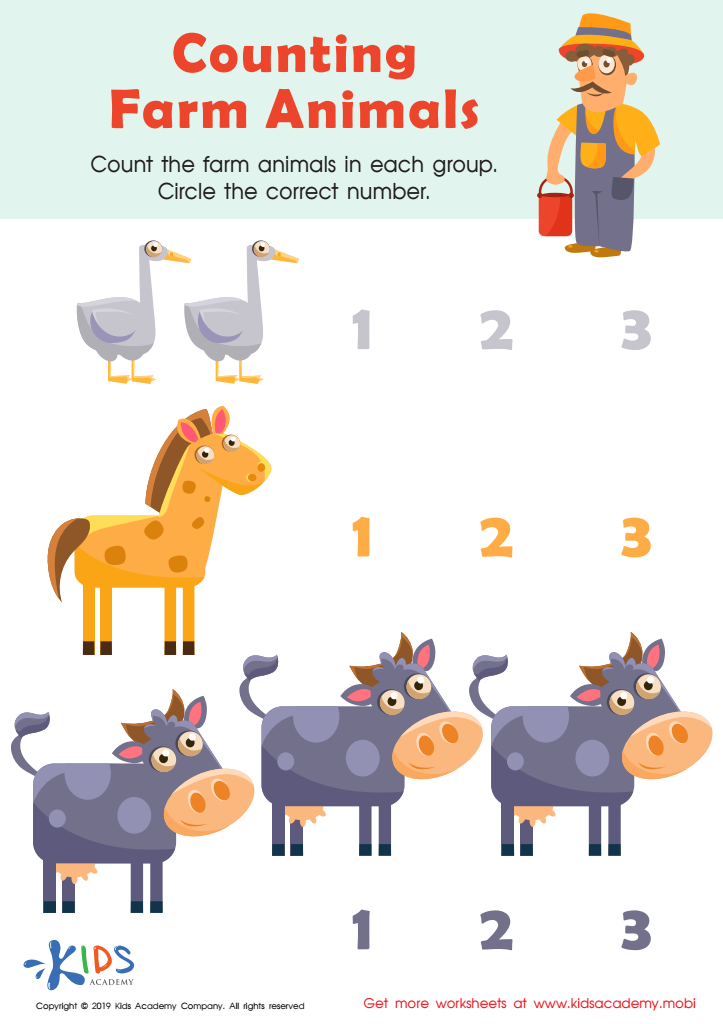
Counting Farm Animals Worksheet

Counting Farm Animals Worksheet

Kids love farms! That's why this free farm animals counting worksheet is great for building number sense and counting skills. Have your young mathematician count the pictures, then circle the corresponding number. It's a fun and meaningful way to practice counting.
Counting Farm Animals Worksheet
Worksheet
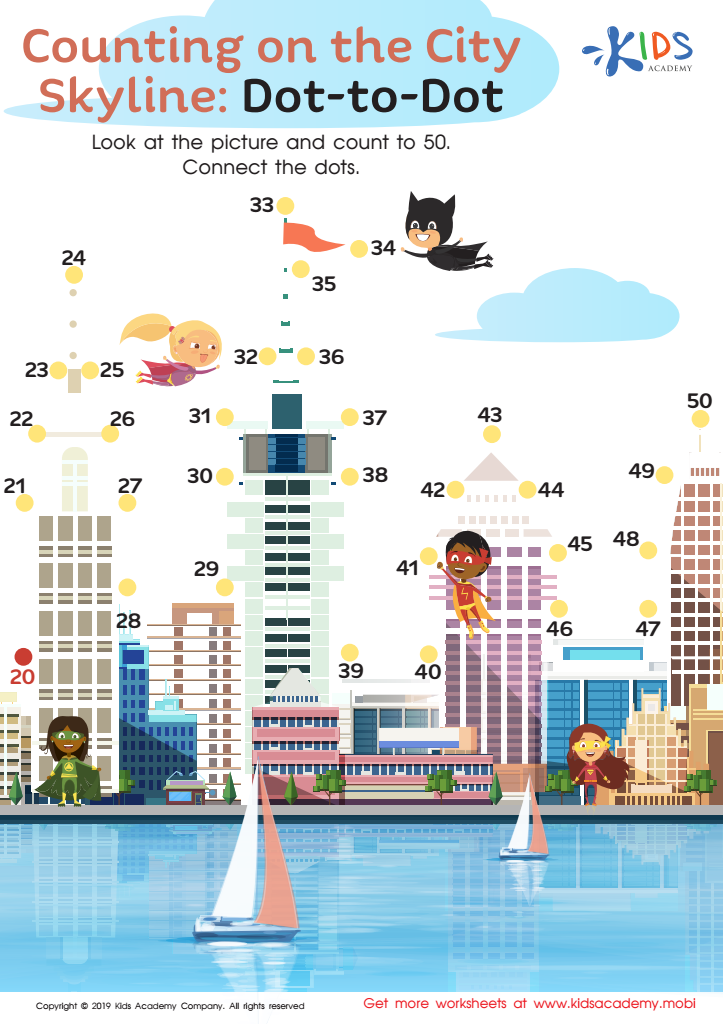
Counting on the City Skyline: Dot-to-Dot Worksheet
Counting on the City Skyline: Dot-to-Dot Worksheet
Kids will love connecting the dots to make a superhero skyline! They'll reinforce their number line thinking and number sense while building fine-motor skills. Watch them beam with pride as the cityscape reveals itself, all thanks to some math practice.
Counting on the City Skyline: Dot-to-Dot Worksheet
Worksheet
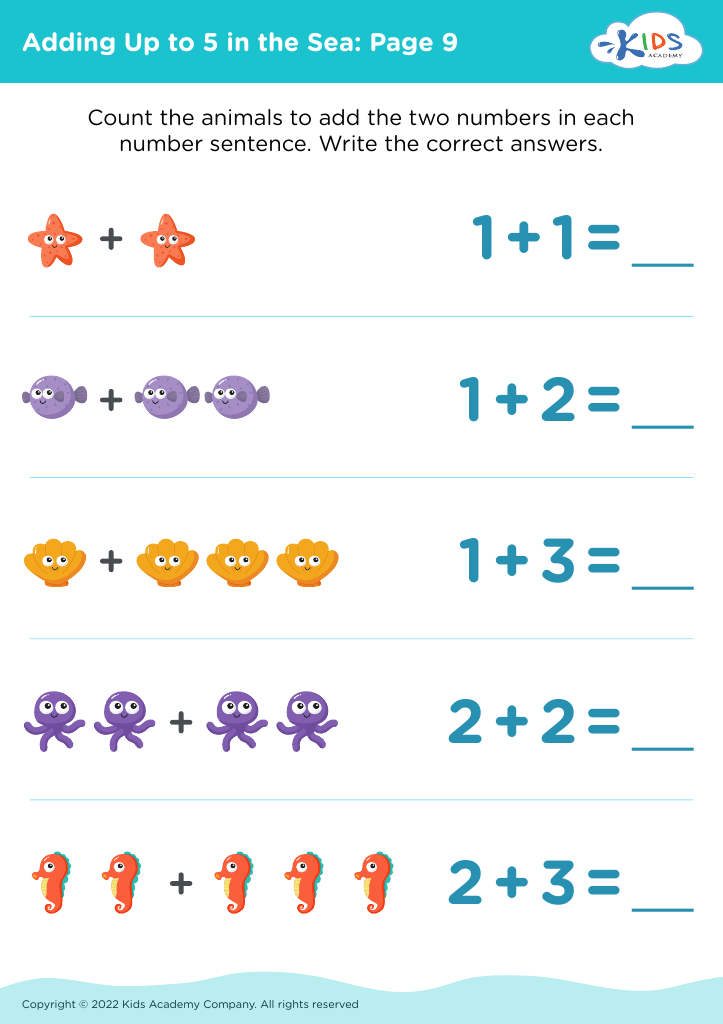
Adding Up to 5 in the Sea: Page 9

Adding Up to 5 in the Sea: Page 9

Adding Up to 5 in the Sea: Page 9
Worksheet
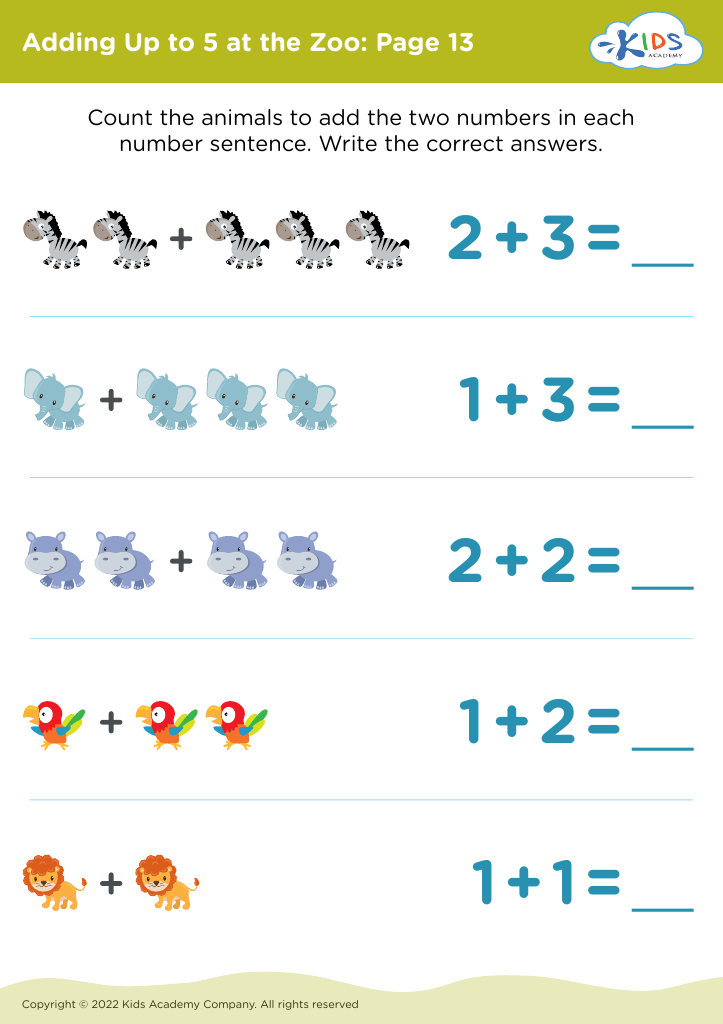
Adding Up to 5 at the Zoo: Page 13
Worksheet
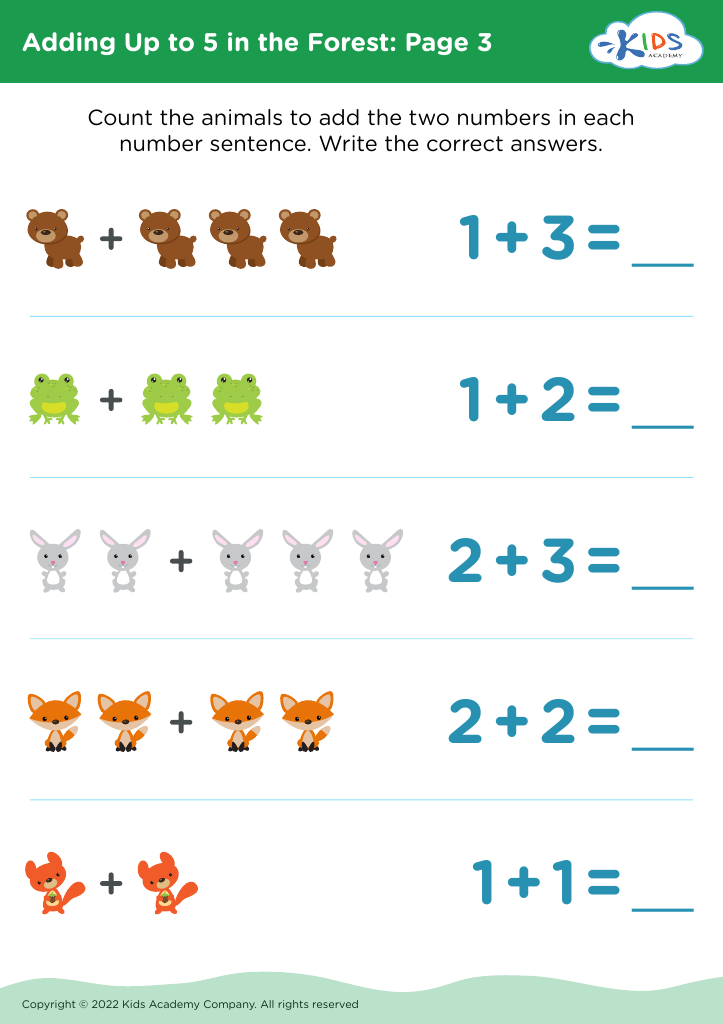
Adding Up to 5 in the Forest: Page 3
Worksheet
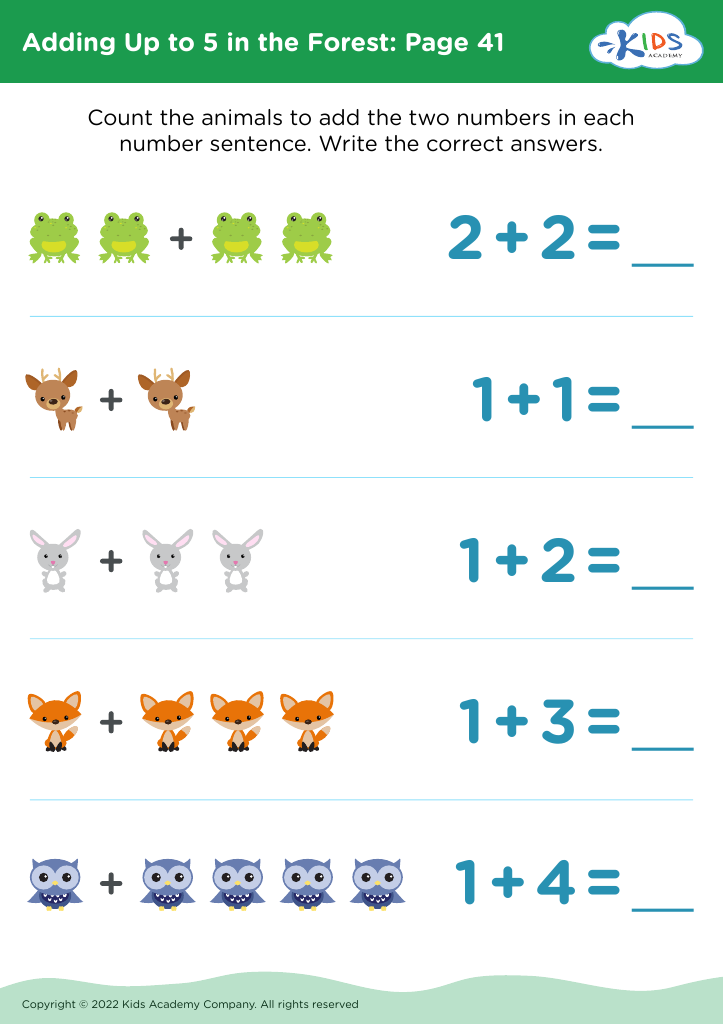
Adding Up to 5 in the Forest: Page 41
Worksheet
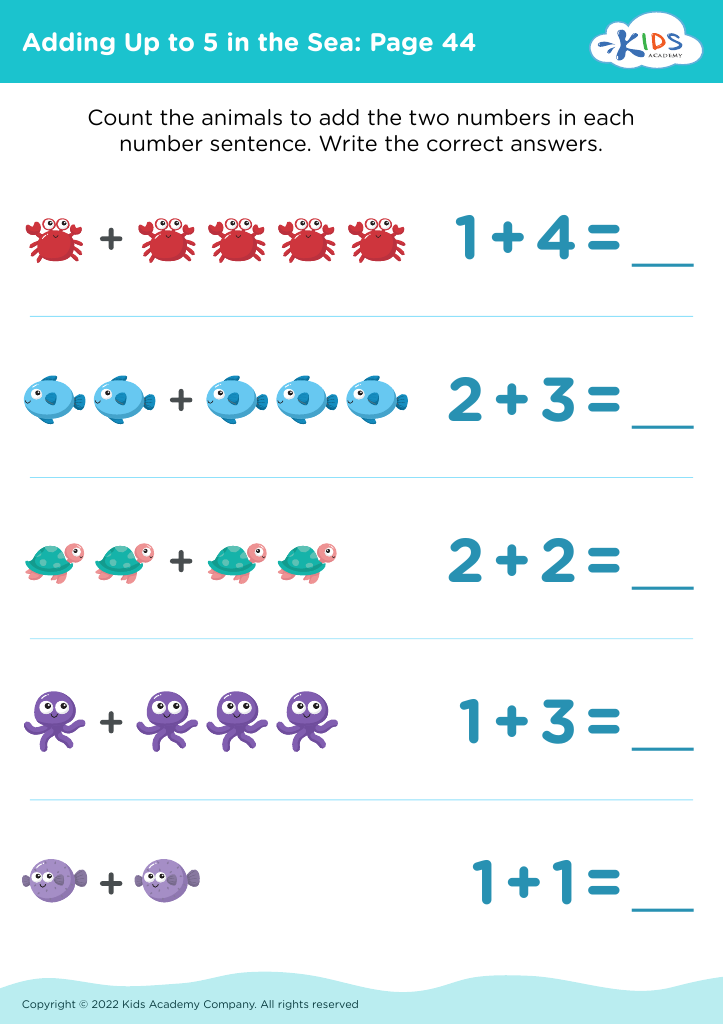
Adding Up to 5 in the Sea: Page 44
Worksheet
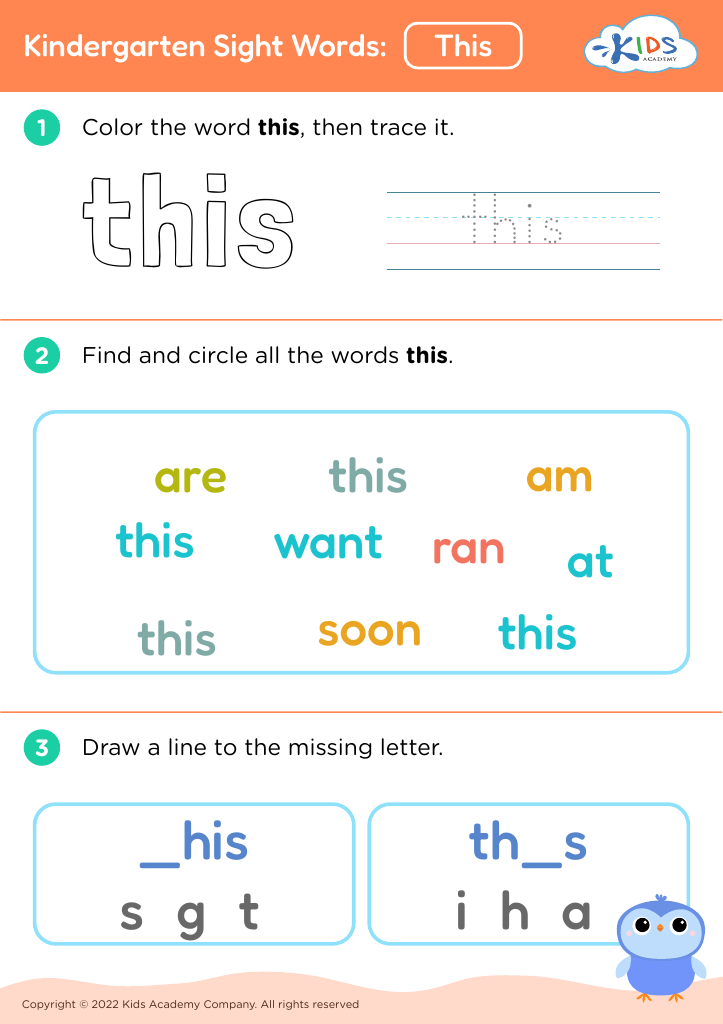
Kindergarten Sight Words: This

Kindergarten Sight Words: This

Kindergarten Sight Words: This
Worksheet
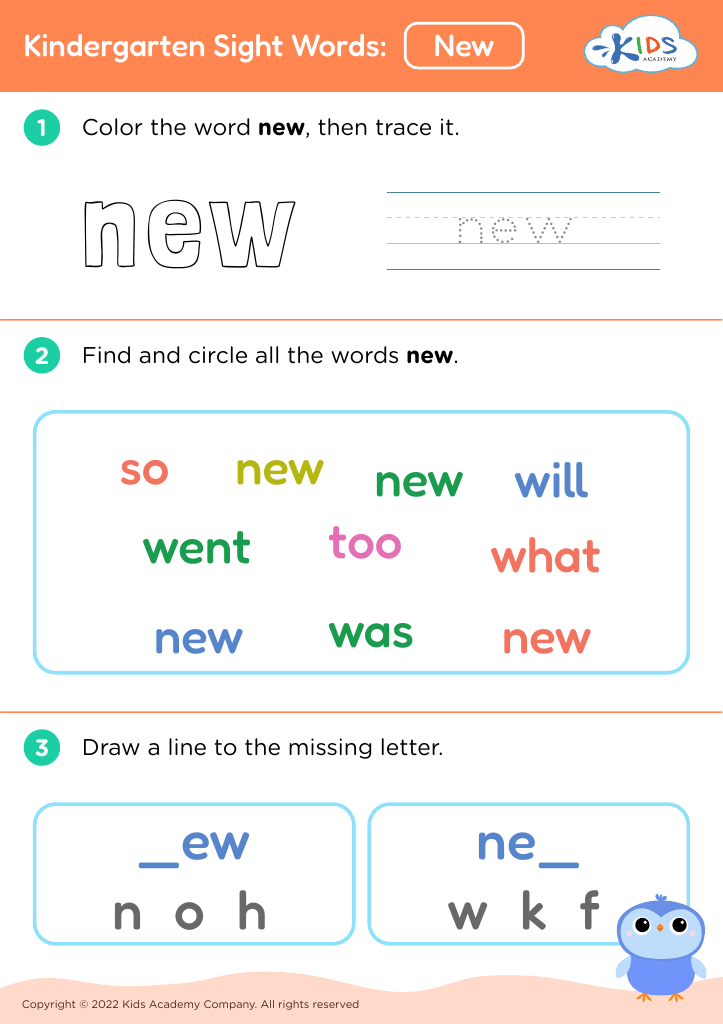
Kindergarten Sight Words: New

Kindergarten Sight Words: New

Kindergarten Sight Words: New
Worksheet


... 12 13

Counting practice for children aged 3 to 5 is essential for their cognitive development and foundational learning. First, it lays the groundwork for mathematical concepts that are vital in later education, such as addition, subtraction, and number recognition. At this age, children are naturally curious and absorb information quickly, making counting a fun and engaging activity.

Moreover, counting fosters critical thinking skills and enhances problem-solving abilities. As children learn to count objects, they begin to understand one-to-one correspondence, which helps them grasp the concept of quantity and sets the stage for future mathematical learning.

Countless everyday situations can include counting, whether it's counting fingers, toys, steps, or even snacks. This makes counting a practical skill that integrates seamlessly into daily life, promoting a love for learning.

Parents and teachers have a vital role in this process by creating a rich learning environment, as their involvement encourages children's enthusiasm and builds their confidence. Ultimately, early counting practice supports not only mathematical intelligence but also overall cognitive development, ensuring children are prepared for the challenges of formal education as they grow. Investing time in these early counting experiences is a crucial step toward a child's successful academic journey.