Filters

36 filtered results

Clear all filters
Favorites
With answer key
Interactive

36 filtered results

Difficulty Level

Grade


Check out this FREE "Logical Reasoning" Trial Lesson for age 3-5!

2 Step Word Problems Writing Equations to Match

Favorites
With answer key
Interactive
  • 3-5
  • Logical Reasoning
The Circle Maze Worksheet

The Circle Maze Worksheet

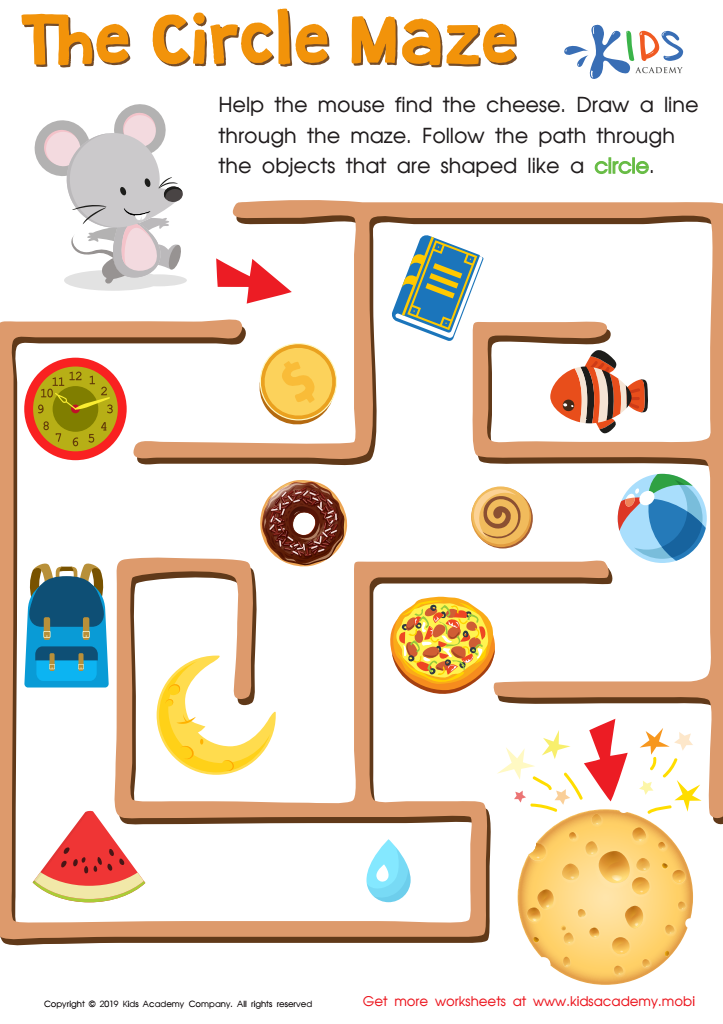
Kids can have fun learning shapes with this maze worksheet. They can help the mouse find its cheese by tracing the path of a circle through the maze. This printable is great for classroom learning or as an activity at home.
The Circle Maze Worksheet
Worksheet
Word Problems: Assessment 2 Worksheet

Word Problems: Assessment 2 Worksheet

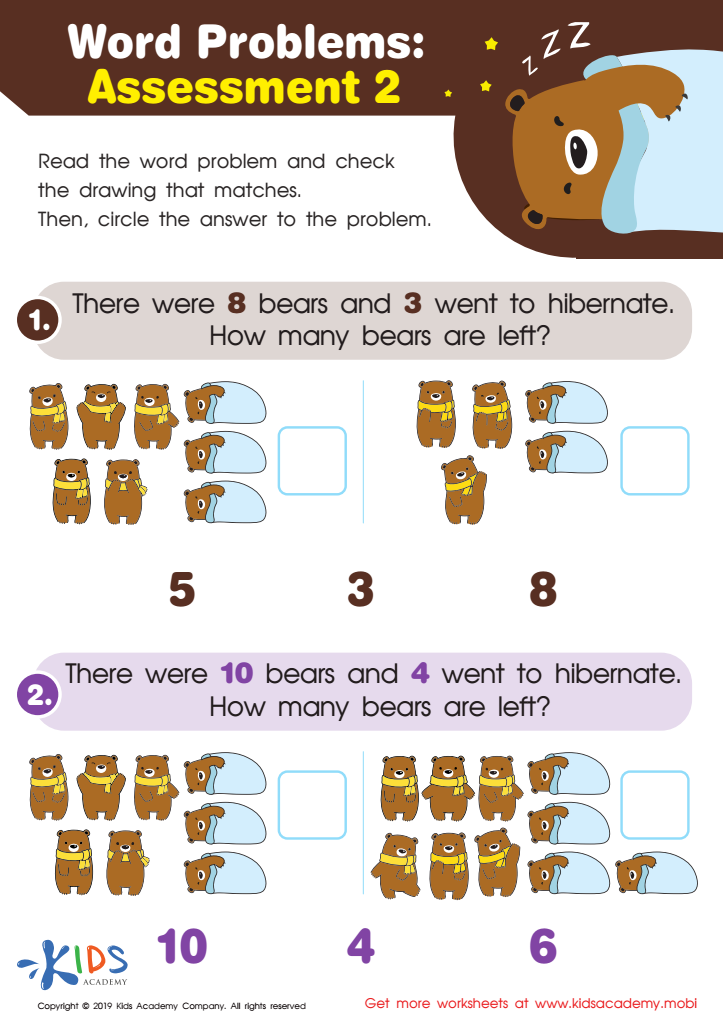
This bear-themed worksheet is a great way to test subtraction skills. Have your child read the word problems and match the correct drawing with the answer. It's a fun way to quiz them without them even knowing. Enjoy counting cute snoozing bears! (80 words)
Word Problems: Assessment 2 Worksheet
Worksheet
Addition and subtraction word problem worksheet for 3rd grade

Addition and Subtraction: Word Problems Worksheet
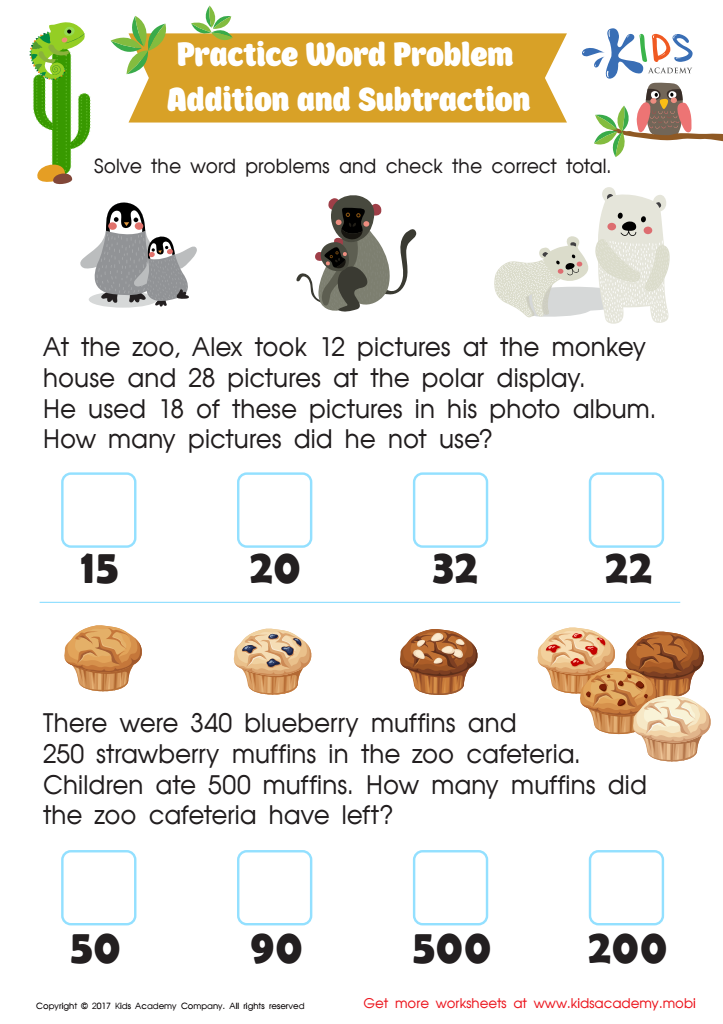
Word problems can be difficult, but they offer another way to understand math. Our 3rd grade worksheet takes your child to the zoo; two intriguing word problems will test their thinking skills and help them find the total.
Addition and Subtraction: Word Problems Worksheet
Worksheet
Help the Bee Find 16 Flowers Worksheet

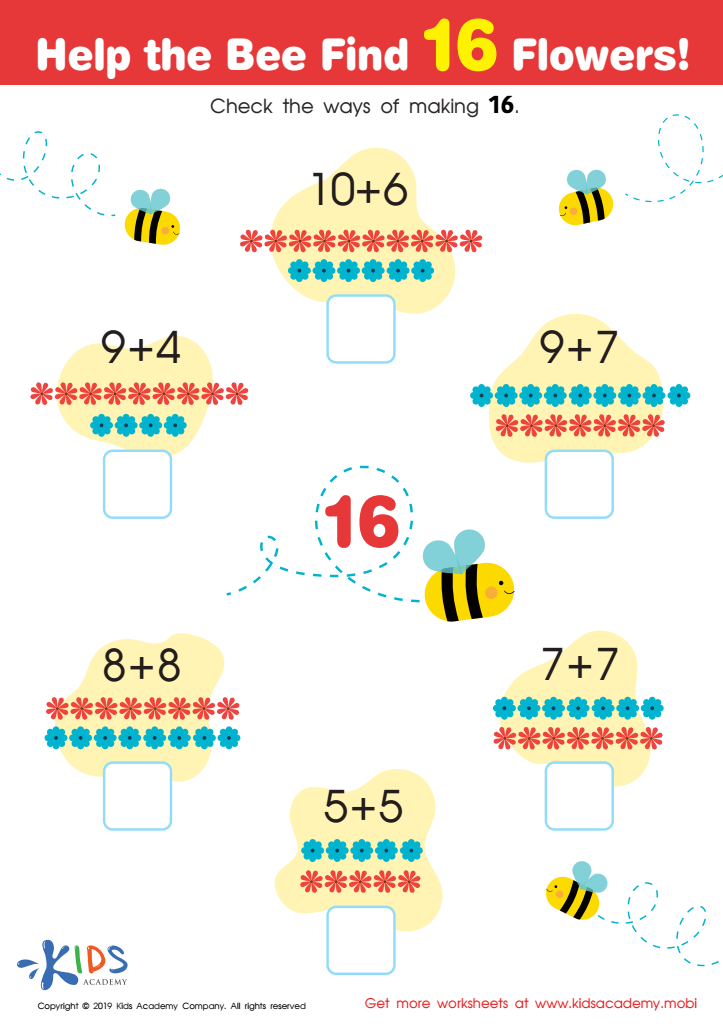
Help the Bee Find 16 Flowers Worksheet

Ask your students to count as high as they can. Show them that different numbers can equal the same figure with examples like 2+2=4 and 3+1=4. Ask for more examples, then help the bees find 16 flowers by checking the ways of making 16.
Help the Bee Find 16 Flowers Worksheet
Worksheet
Run, Protect or Capture Worksheet

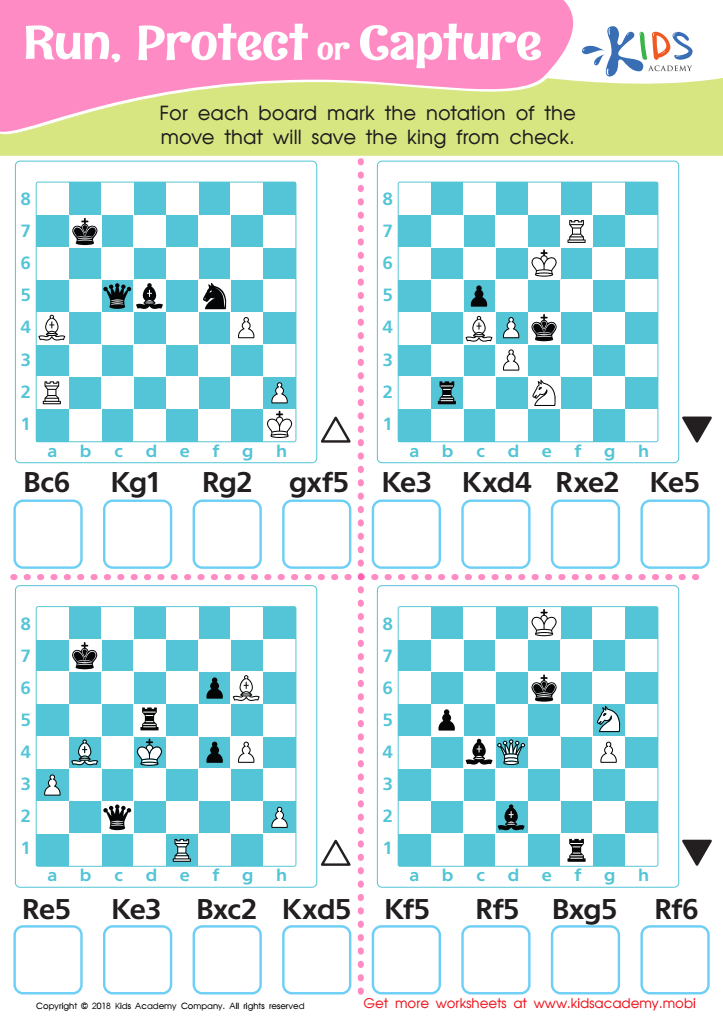
Run, Protect or Capture Worksheet

When kids play chess, they're not only striving to win - they're sharpening their critical thinking and problem-solving prowess. With this free PDF worksheet, they learn how to protect their king from check, whether it's running away, shielding it or capturing the checking piece. Sample boards offer them the chance to practice.
Run, Protect or Capture Worksheet
Worksheet
Who Does It Belong To? Worksheet

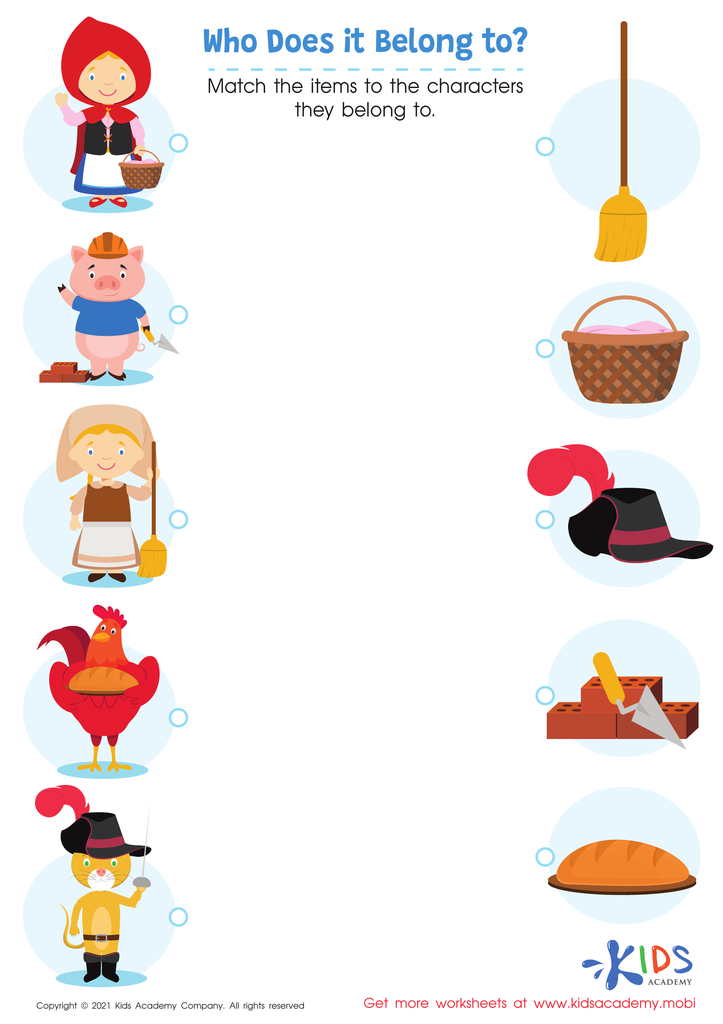
Who Does It Belong To? Worksheet

The summer season is here, and with it comes a variety of activities that can help you beat the heat. Going to the beach, taking a dip in the pool, and having a picnic in the park are some popular choices. Summer is here! Beat the heat with activities like going to the beach, swimming, and picnicking in the park. Enjoy!
Who Does It Belong To? Worksheet
Worksheet
Helpful Health Worksheet

Helpful Health Worksheet

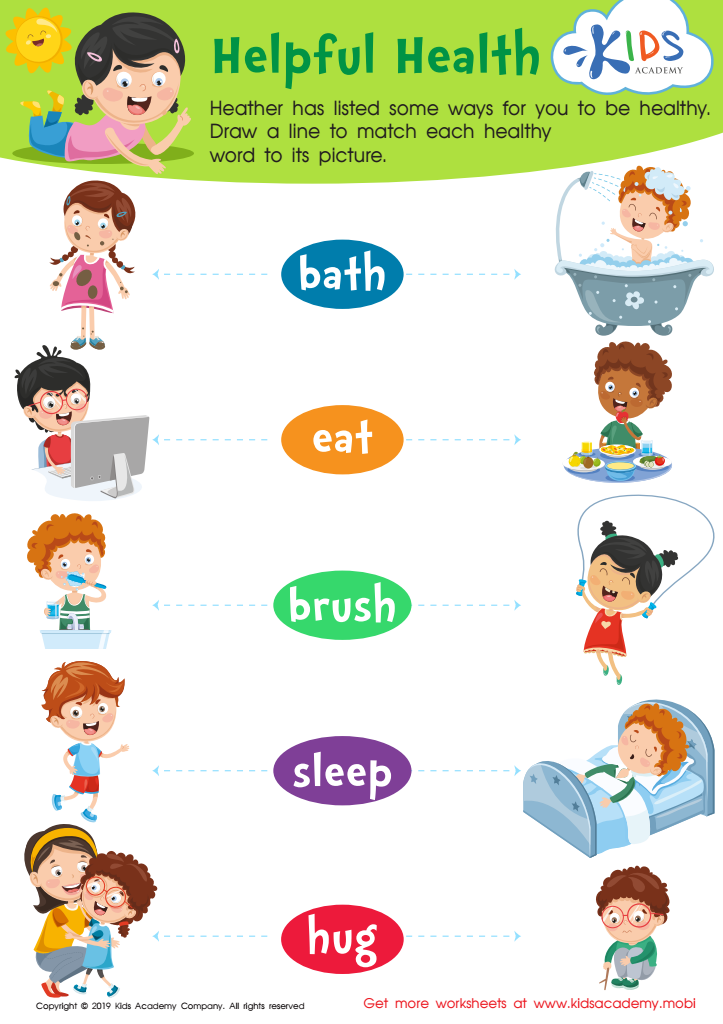
Kids can learn healthy habits with this free worksheet! With their pal Heather, they'll trace lines to connect health words with pictures like brushing teeth, hugging, and getting enough sleep. It's a great way to help young ones understand healthy activities.
Helpful Health Worksheet
Worksheet
Fairness: Sequencing Worksheet

Fairness: Sequencing Worksheet

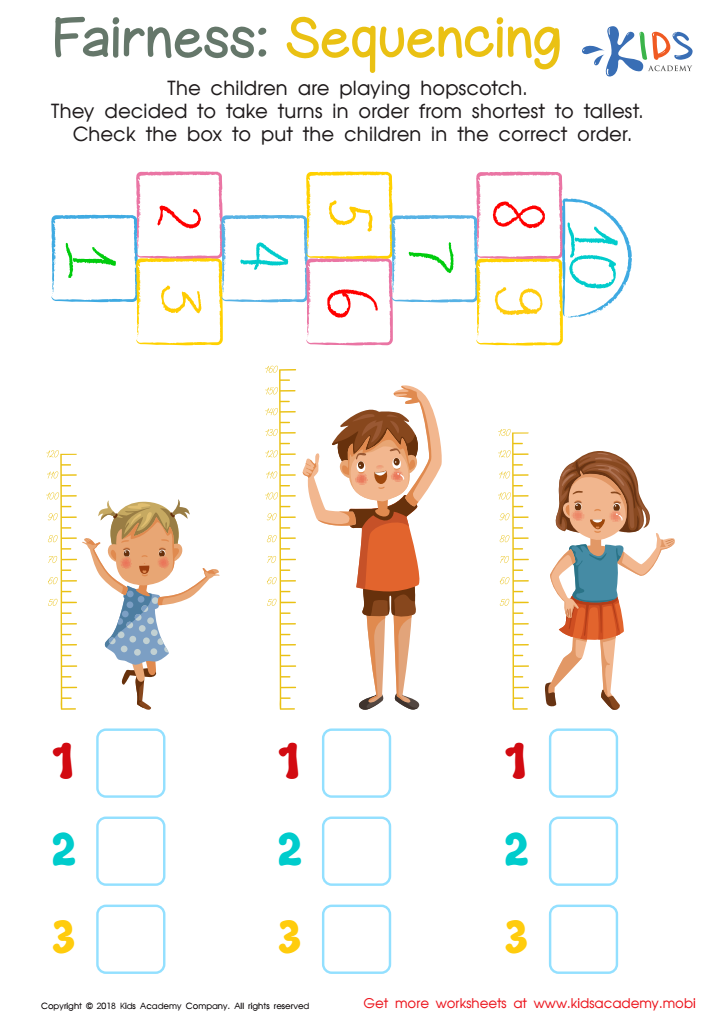
Kids likely already know how to play hopscotch. Ask them to show you the shortest, tallest and middle child in the worksheet. Then, help them order them from shortest to tallest by checking the boxes.
Fairness: Sequencing Worksheet
Worksheet
What Does Not Match? Worksheet
What Does Not Match? Worksheet
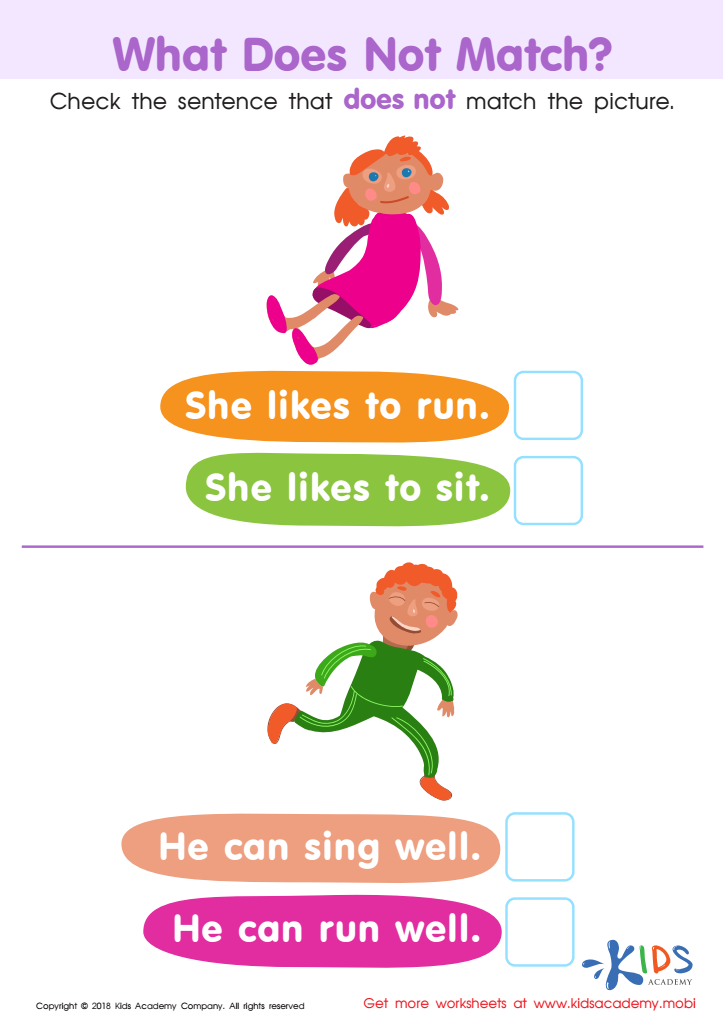
Emerging readers need to practice using visual cues and repetitive text. This colorful PDF provides them with an opportunity to look at pictures, use discrimination and discern which phrase does not match. It also enables them to gain familiarity with high-frequency words to aid decoding longer sentences.
What Does Not Match? Worksheet

Worksheet
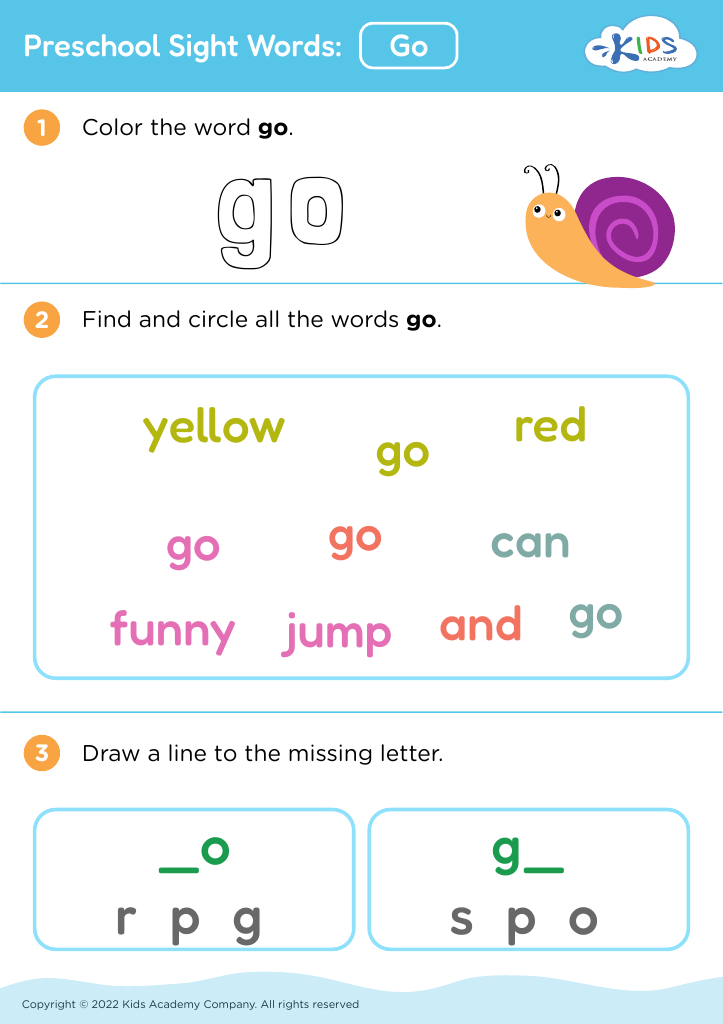
Preschool Sight Words: Go

Preschool Sight Words: Go

Preschool Sight Words: Go
Worksheet
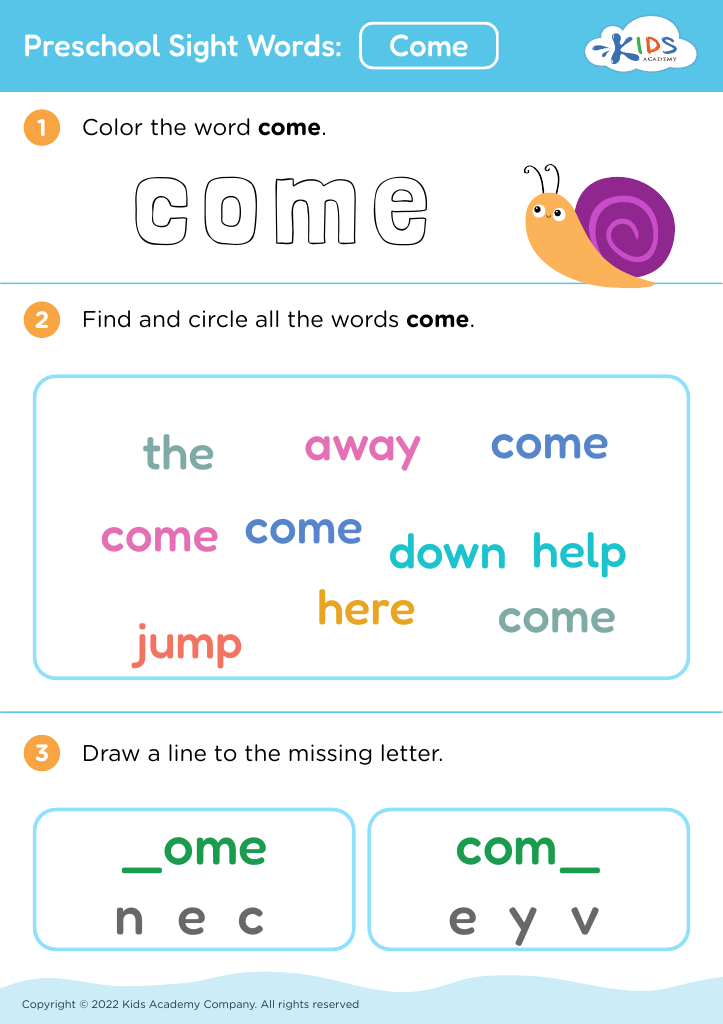
Preschool Sight Words: Come

Preschool Sight Words: Come

Preschool Sight Words: Come
Worksheet
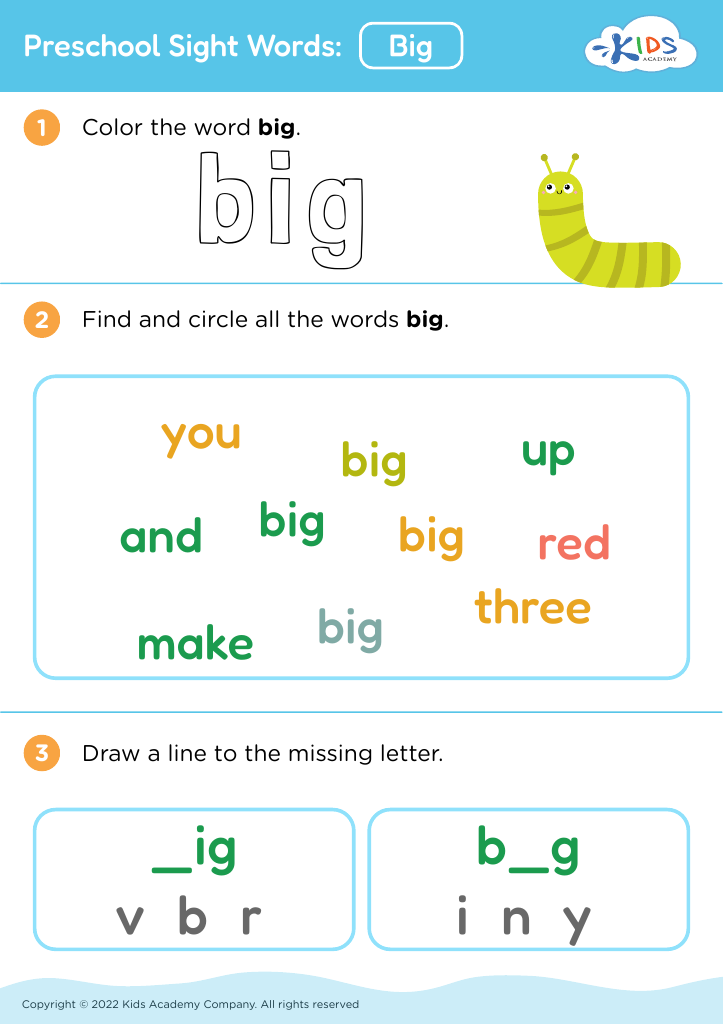
Preschool Sight Words: Big

Preschool Sight Words: Big

Preschool Sight Words: Big
Worksheet


Logical reasoning is a fundamental cognitive skill that provides the foundation for critical thinking and problem-solving abilities. For children aged 3-5, the development of these skills is crucial as they navigate early learning experiences. Parents and teachers should emphasize logical reasoning for several compelling reasons.

Firstly, logical reasoning helps young children make sense of the world around them. By understanding cause and effect, patterns, and relationships, they can approach new situations with confidence and curiosity. Questioning and drawing conclusions foster analytical thinking, which is beneficial beyond academic settings. For instance, a child who understands sequences can better predict daily routines, enhancing their sense of security and independence.

Secondly, early development of logical reasoning aids in language acquisition and communication skills. When children learn to categorize objects, recognize patterns, and build sequences, their vocabulary expands, and their ability to express complex ideas improves.

Lastly, nurturing these skills early contributes significantly to future academic success. Math, science, and reading comprehension all rely heavily on logical processes. Early exposure ensures that children are not just passive learners but active thinkers who can apply their knowledge in practical ways.

Parents and teachers play pivotal roles in creating environments rich in opportunities for puzzles, questions, and exploratory play, thus laying the groundwork for well-rounded thinkers.