Lowercase identification Worksheets for Ages 3-5
5 filtered results
-
From - To
Introduce your child to the world of letters with our Lowercase Identification Worksheets, designed specifically for ages 3-5. These engaging printable sheets from Kids Academy are perfect for preschoolers and kindergarteners to recognize, trace, and practice lower case letters. Each activity captivates young learners with vibrant illustrations and fun exercises, helping them master their ABCs effortlessly. Developed by educators, these worksheets boost letter recognition, fine motor skills, and early literacy foundations, providing a solid start for your child's educational journey. Explore our collection and watch them blossom into confident readers and writers! Visit Kids Academy now to download and start learning today!
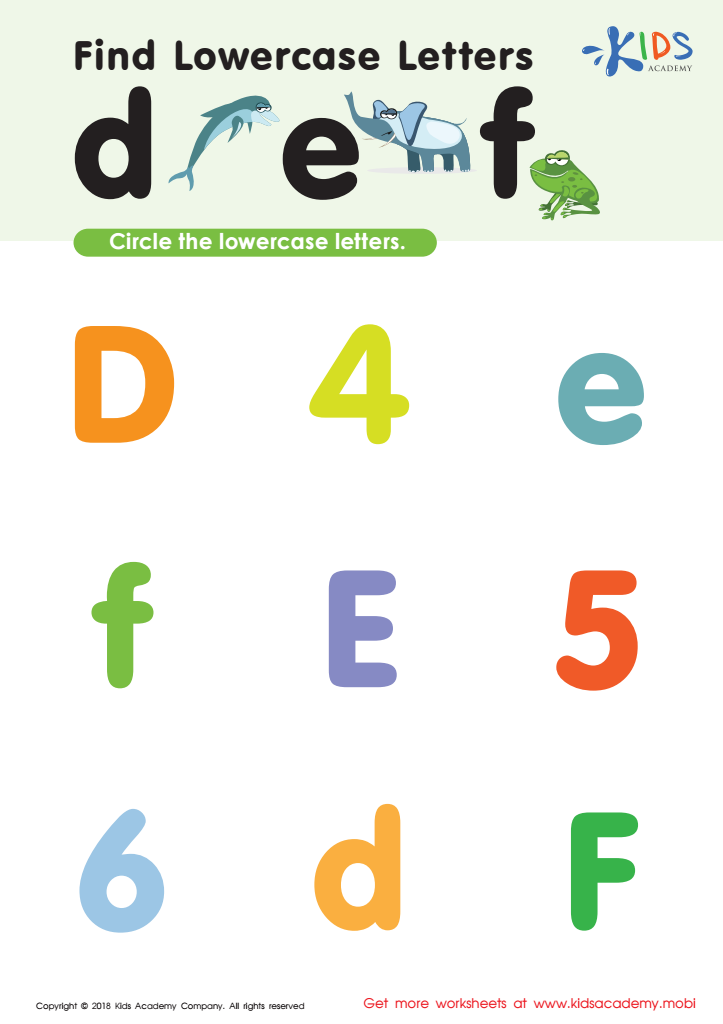
Find Lowercase Letters d e f Worksheet
 Assign to My Students
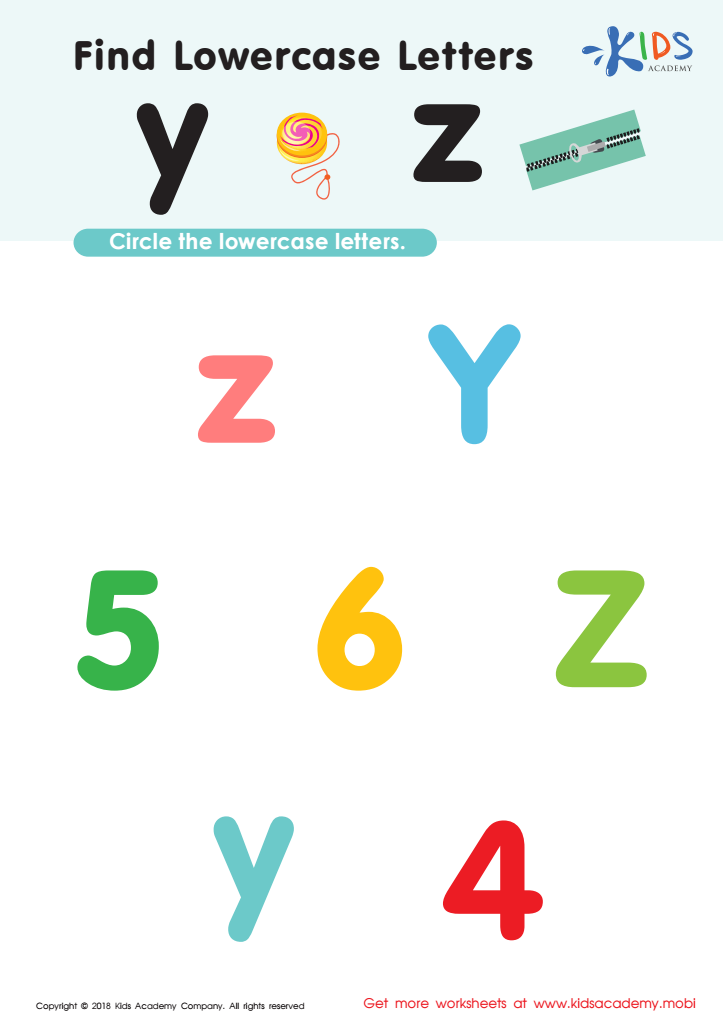
Find Lowercase Letters y z Worksheet
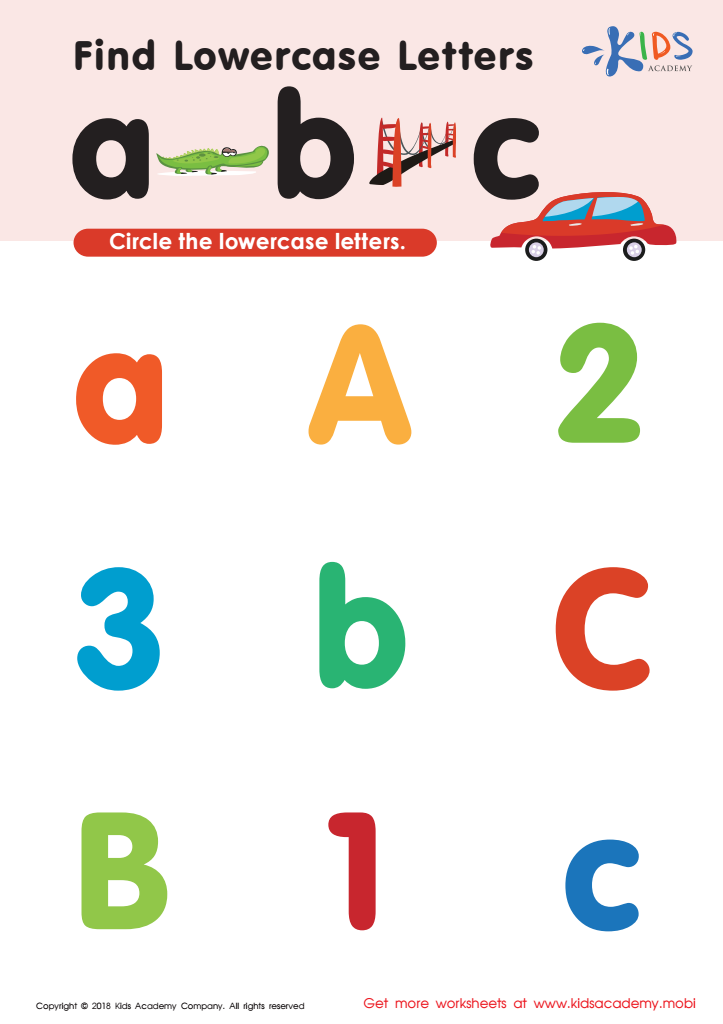
Find lowercase letters a b c Worksheet
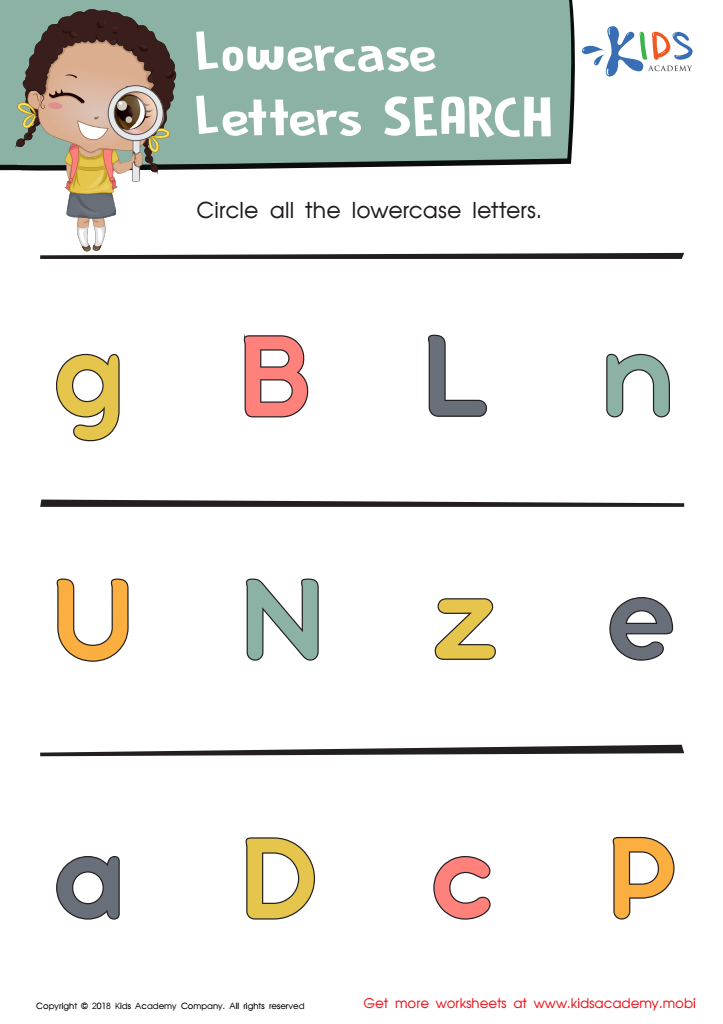
Lowercase Letters Search: Assessment Worksheet
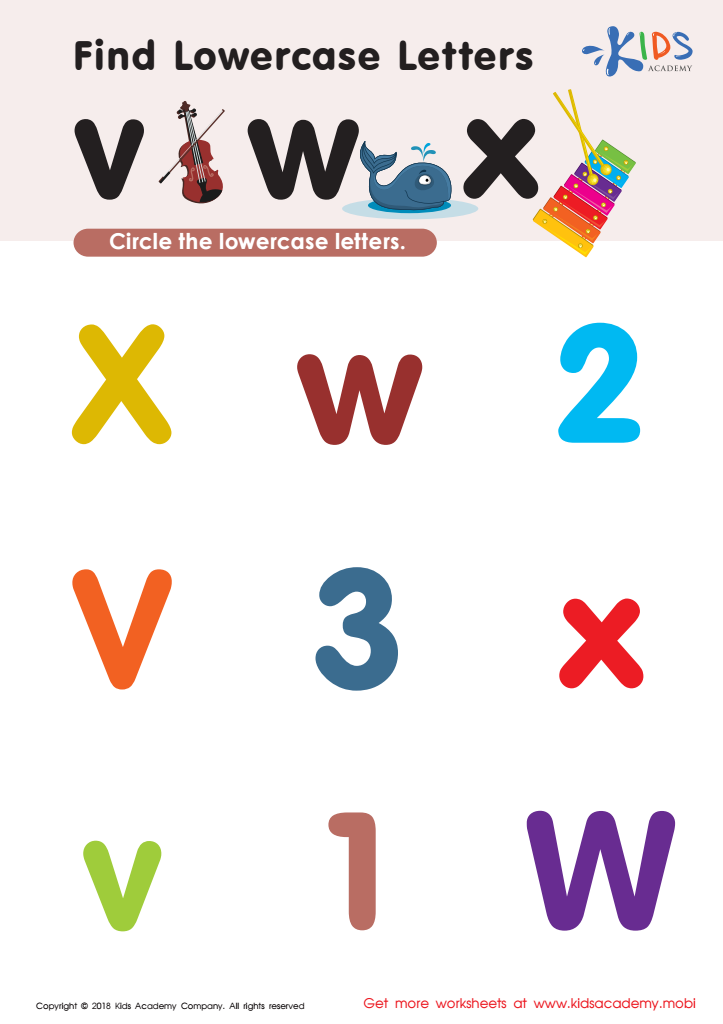
Find Lowercase Letters v w x Worksheet








Lowercase identification is a crucial skill for young children, and it's essential for both parents and teachers to prioritize it for children ages 3-5. During these formative years, children’s brains are exceptionally receptive to learning new concepts and building foundational skills for future academic success. Lowercase letters are frequently used in reading and writing, significantly more so than uppercase letters. By recognizing lowercase letters, children enhance their reading fluency and comprehension, which are vital for their overall literacy development.
Furthermore, familiarity with lowercase letters makes the transition to elementary school smoother, as most educational materials and instructions in the early grades use lowercases extensively. This early understanding can boost a child’s confidence and encourage a positive attitude towards learning. Improved letter recognition also supports their writing skills, enabling smoother and more legible handwriting.
Parents and teachers can incorporate fun, engaging activities involving lowercase letters, such as alphabet games, storytime focus, and sing-along songs, to encourage children’s interest. Such early intervention in emphasizing lowercase identification engages children in a manner that feels like play rather than study, fostering both a love for learning and essential educational skills.Getting a strong start with lowercase letter recognition sets the stage for successful reading, writing, and communication throughout their schooling years.








