Practical math application Worksheets for Ages 3-5
6 filtered results
-
From - To
Discover our engaging "Practical Math Application Worksheets for Ages 3-5," designed to introduce young learners to essential math concepts through fun and interactive activities. These worksheets help reinforce foundational skills such as counting, sorting, and pattern recognition, all tailored to promote early mathematical thinking. Each worksheet includes colorful visuals and relatable scenarios that make learning enjoyable and effective. With a focus on real-life applications, children will develop a strong understanding of numbers while enhancing their problem-solving abilities. Perfect for home or classroom use, our worksheets provide teachers and parents with valuable resources to foster a love for math in their children.
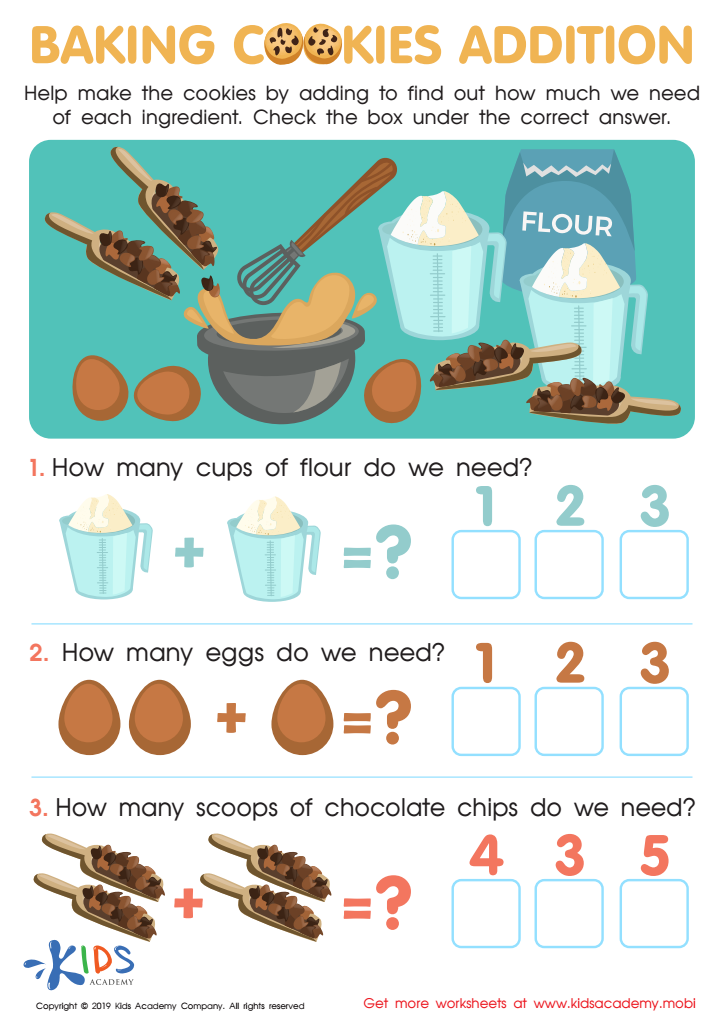
Baking Cookies Addition Worksheet
 Assign to My Students
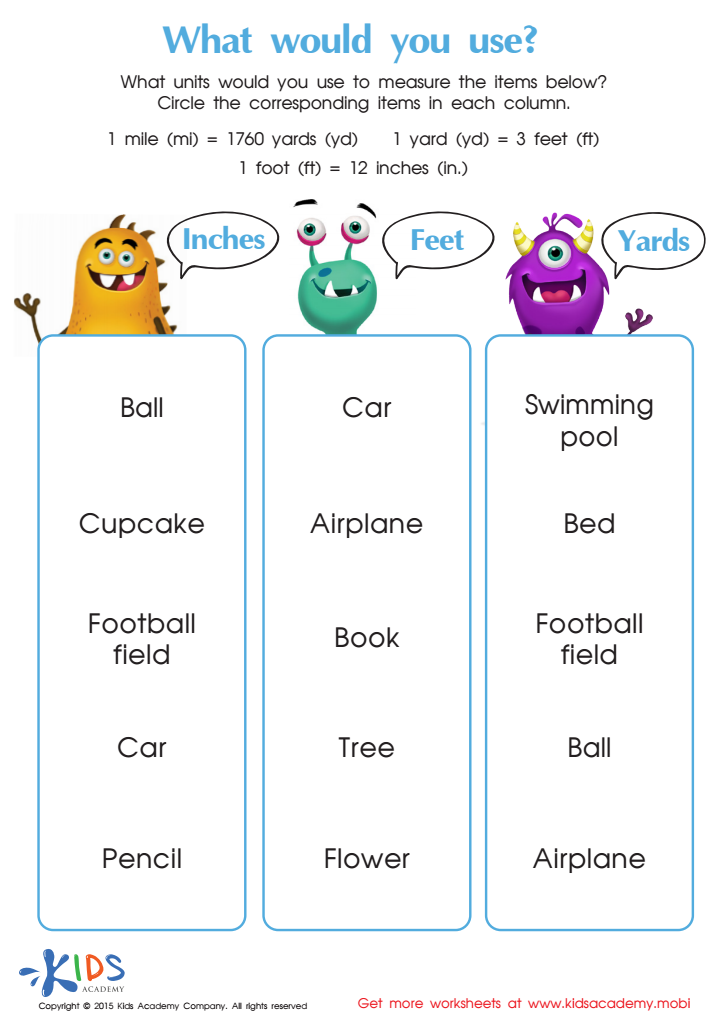
Learning about measuring objects in inches, feet and yards Worksheet
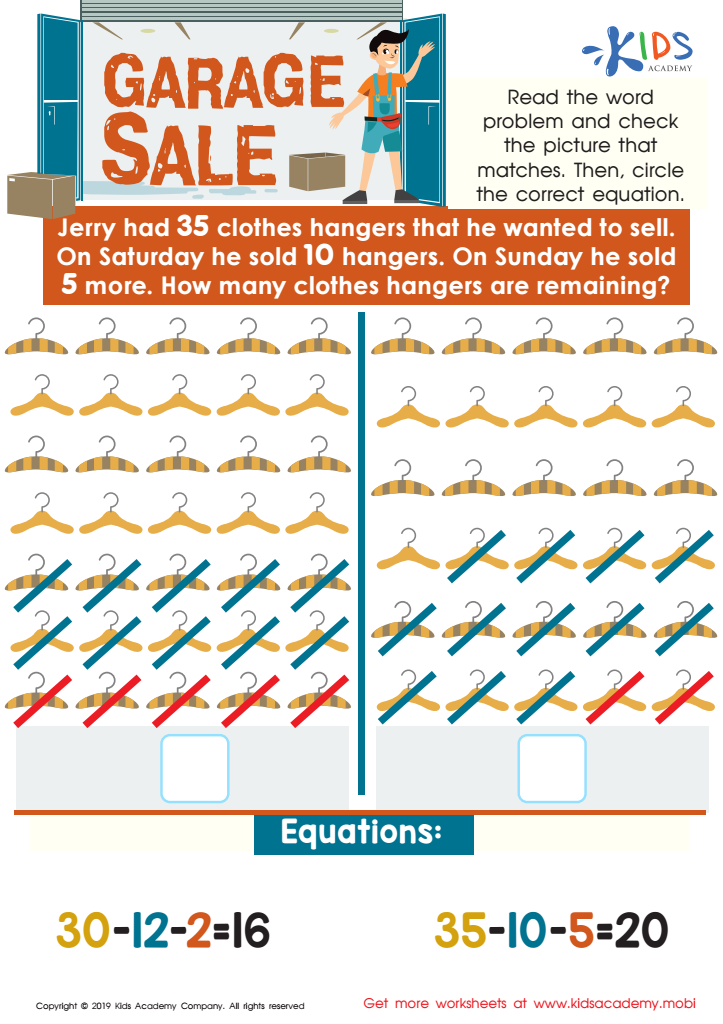
Garage Sale Worksheet
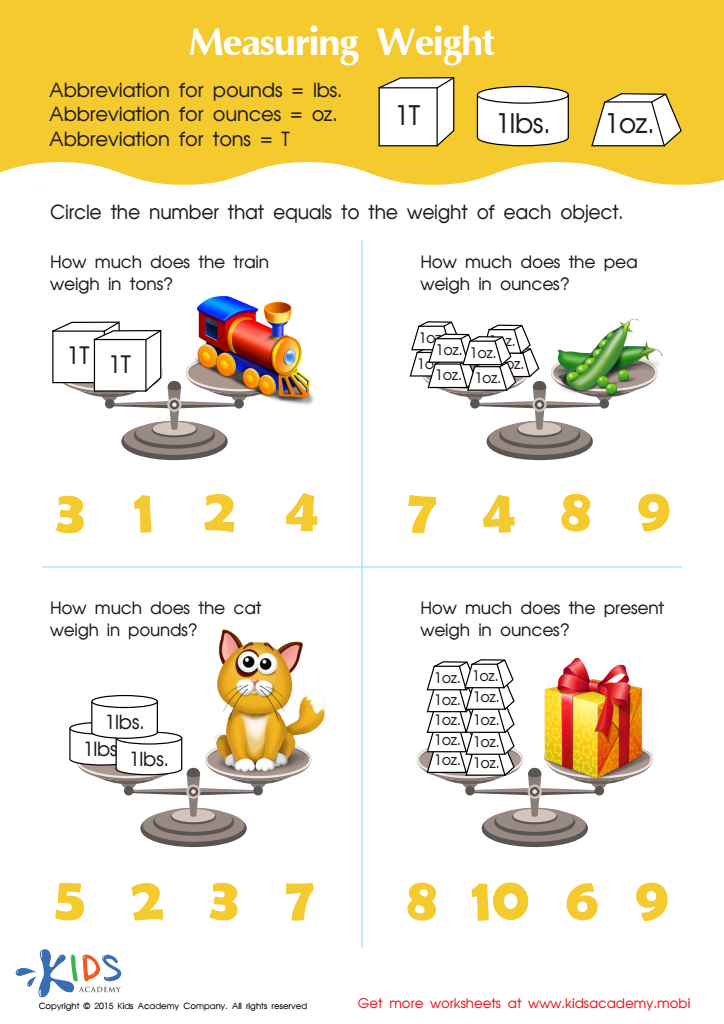
Measuring Weight in Ounces, Pounds and Tons Worksheet
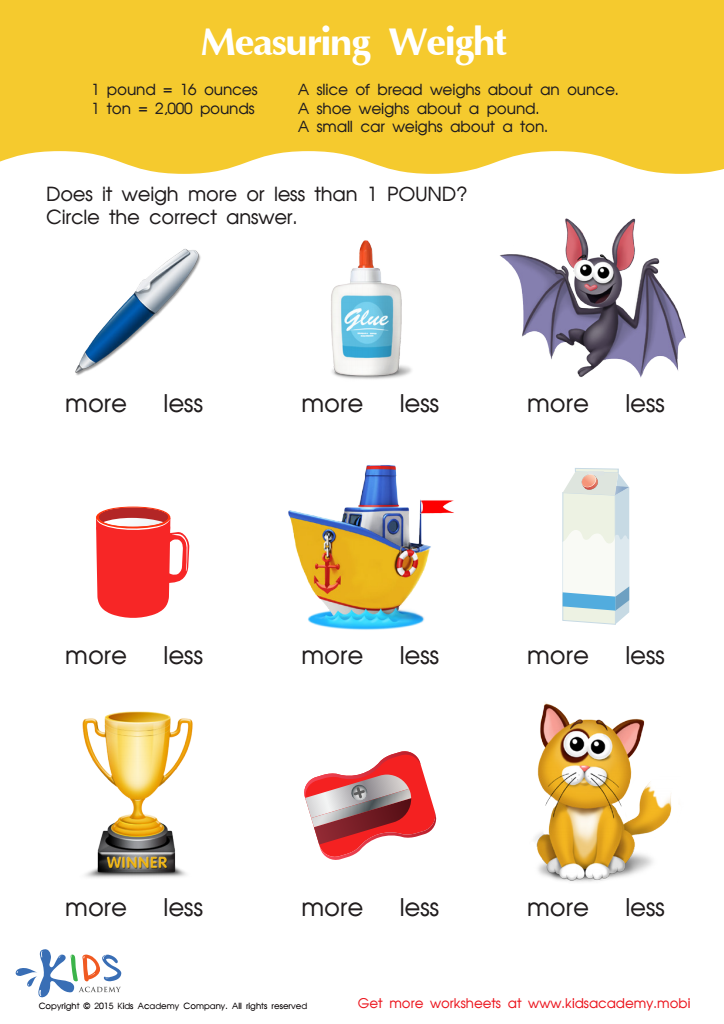
Measuring weight in pounds Worksheet
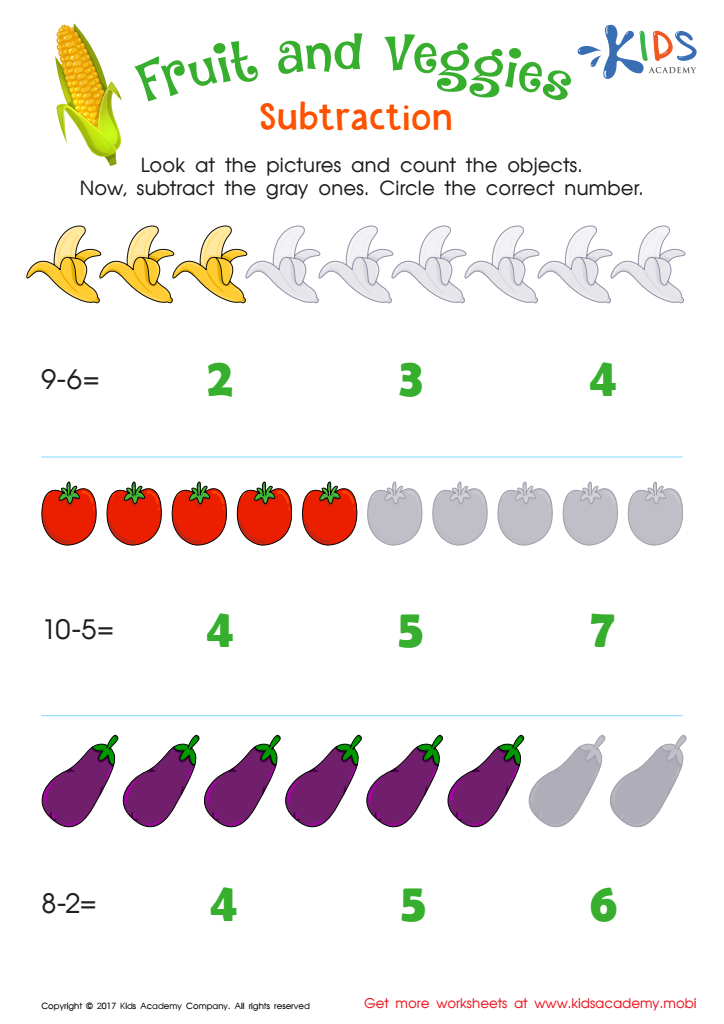
Fruit and Veggies Subtraction Worksheet








Practical math application for children ages 3-5 is crucial for early development and sets a strong foundation for lifelong learning. At this age, children are naturally curious and eager to explore their environment, making it an ideal time to introduce basic mathematical concepts through play and everyday activities. Engaging in practical math—such as counting objects during playtime, measuring ingredients when cooking, or sorting and comparing shapes—helps children develop essential skills like number recognition, sequencing, and problem-solving.
Such interactive experiences not only promote cognitive growth but also enhance children's social-emotional skills by encouraging cooperation and communication during group activities. Parents and teachers nurturing practical math moments enhance children’s critical thinking abilities and foster a love for learning. Furthermore, these activities can be seamlessly integrated into daily routines, making learning fun and relevant.
Additionally, early exposure to math in practical contexts helps reduce anxiety towards the subject as children grow, enabling them to approach math with confidence. By recognizing the importance of practical math applications, parents and teachers can create enriching environments that support holistic development, ensuring that children are well-prepared for future educational challenges. Ultimately, this attention to early math education equips children with the skills needed for their academic journeys and everyday life.








