Predicting outcomes Worksheets for Ages 3-5
3 filtered results
-
From - To
Discover our engaging Predicting Outcomes Worksheets designed for children aged 3-5! These interactive activities encourage young learners to develop essential critical thinking skills by helping them anticipate the results of various scenarios. Ideal for parents and teachers alike, these worksheets are not only fun but also educational, aiding in the development of reasoning and comprehension skills. Each worksheet features colorful illustrations and age-appropriate tasks that make learning enjoyable. As your child explores cause and effect through play, they enhance their understanding of the world around them. Start fostering their predictive abilities today with our thoughtfully crafted materials!
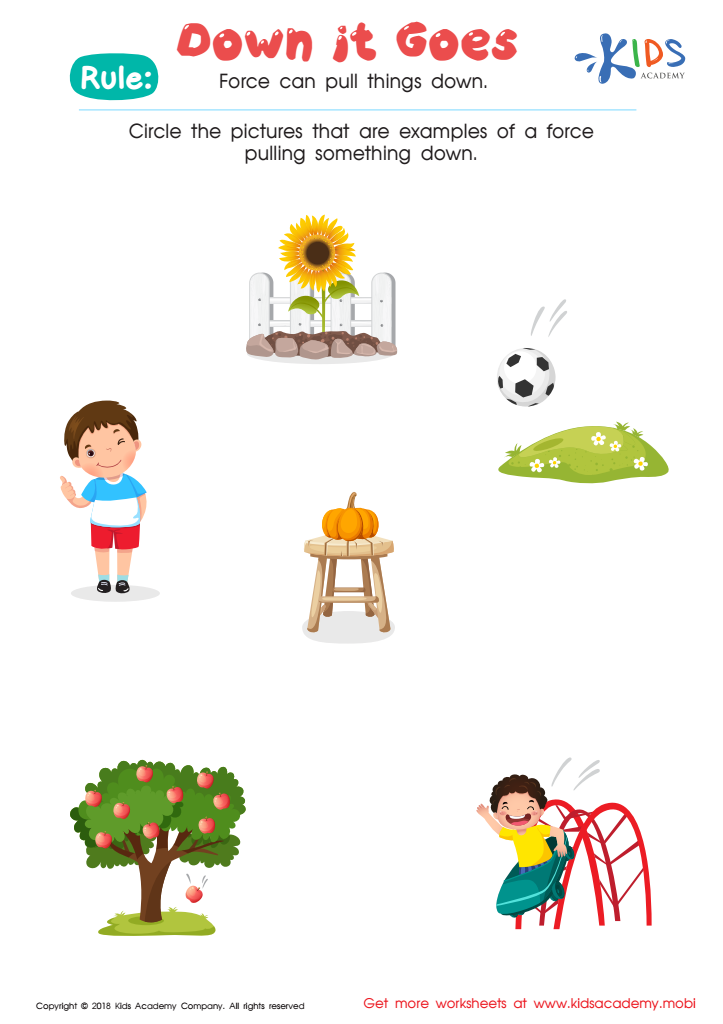
Down it Goes Worksheet
 Assign to My Students
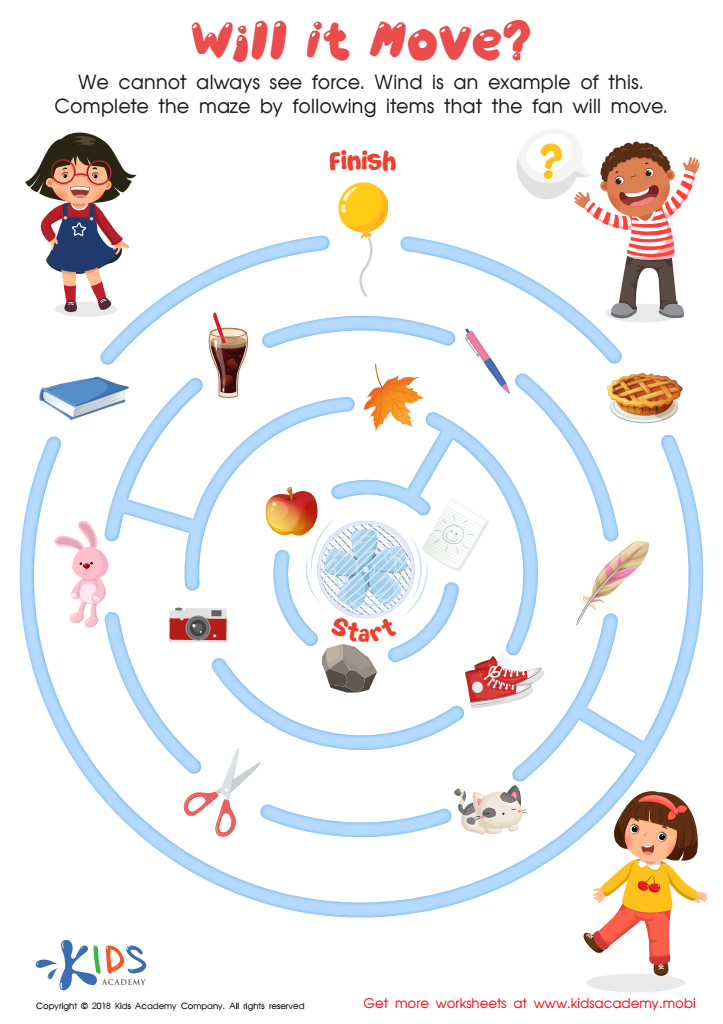
Will it Move? Worksheet

Race Car Ramp Worksheet







Predicting outcomes for children ages 3-5 is essential for both parents and teachers, as this period is crucial for early development and learning. At this age, children are rapidly gaining cognitive, social, and emotional skills. Understanding potential outcomes helps caregivers cultivate environments that support individual growth, fostering confidence and a love for learning.
Predictive assessments can identify strengths and areas needing support. This aids in early intervention strategies, ensuring that children receive the necessary resources when they can still make significant progress. For instance, identifying language delays early allows for targeted activities to enhance communication skills, shaping a child's social interactions and academic readiness.
Moreover, predicting outcomes equips parents and teachers with the knowledge to personalize educational approaches. Understanding each child's unique needs enables the development of tailored learning experiences that engage their interests and aptitudes, promoting better outcomes.
Also, such predictions help establish benchmarks for successful learning and development, easing the transition to structured educational settings. Ultimately, caring about predicting outcomes aligns with the primary goal of nurturing well-rounded, successful individuals who are prepared academically and socially for future challenges.








