Sentence structuring Worksheets for Ages 3-5
3 filtered results
-
From - To
Set the foundation for strong communication skills with our Sentence Structuring Worksheets for ages 3-5! Designed specifically for early learners, these colorful and engaging worksheets help young children understand the basics of forming coherent sentences. Through various activities, your child will learn to identify subjects, verbs, and objects, and begin to understand how words come together to convey meaning. Perfect for both classroom and home use, these exercises make learning fun and interactive, fostering early literacy and language development. Give your little ones a head start on their educational journey with these essential tools for sentence structuring!
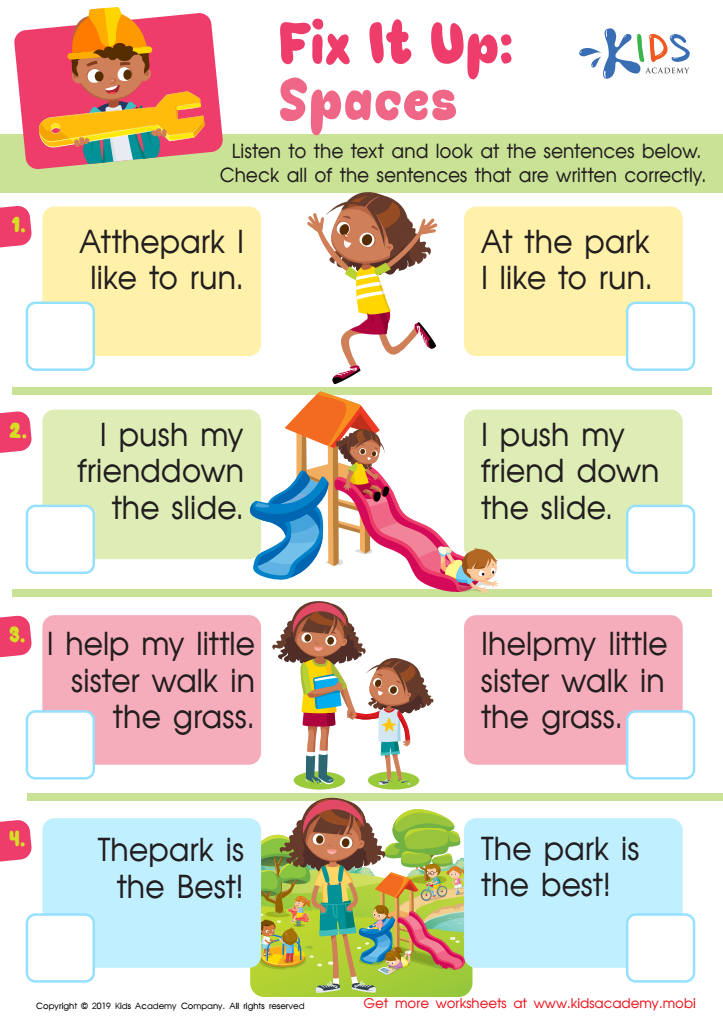
Fix Spaces Worksheet
 Assign to My Students
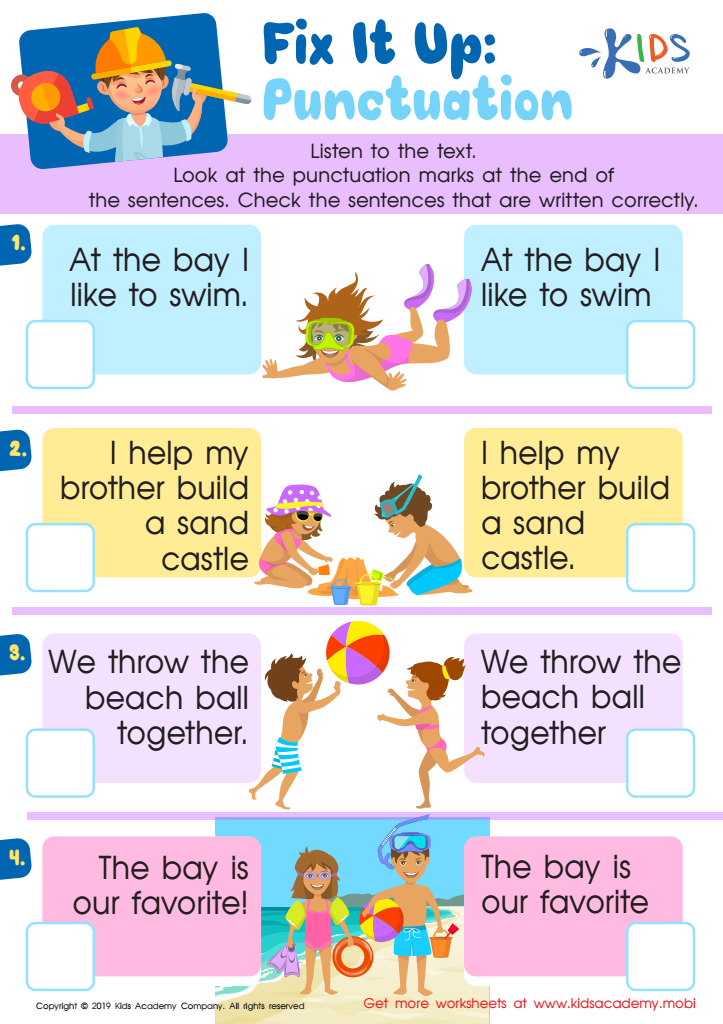
Fix Punctuation Worksheet








Sentence structuring for children aged 3-5 is crucial for their overall language development—a fundamental aspect of early education. At this age, children are in a critical period for language acquisition, rapidly expanding their vocabularies and learning how to piece words together to form meaningful sentences. Parents and teachers who prioritize sentence structuring foster cognitive development, aiding children in understanding and expressing complex ideas.
Strong sentence structuring skills lay the groundwork for future literacy. Children who grasp basic grammatical patterns and sentence components are better equipped to succeed in reading and writing as they progress through school. This foundational skill aids in listening comprehension as well, as well-structured sentences make spoken language easier to follow and understand.
Moreover, the ability to structure sentences enhances social communication skills. Proper sentence formation helps young children articulate their feelings, needs, and experiences more clearly, which in turn reduces frustration and encourages positive social interactions.
Engagement in activities like storytelling, reading aloud, and interactive dialogues promote sentence structuring. Focus on these skills cultivates a supportive language-rich environment, leading to some important long-term benefits, including better academic performance, improved emotional well-being, and stronger social connections.
In summary, emphasizing sentence structuring for ages 3-5 enormously contributes to their linguistic, cognitive, and social development, setting them up for continuous learning and achievement.








