Understanding subtraction Worksheets for Ages 3-5
5 filtered results
-
From - To
Explore our Understanding Subtraction Worksheets designed for children ages 3-5, perfect for building foundational math skills! These engaging and interactive worksheets introduce young learners to the concept of subtraction through fun visuals and hands-on activities. With brightly colored illustrations and simple math problems, kids will enjoy practicing their subtraction skills while developing critical thinking abilities. Our resources support early childhood education by fostering numerical understanding in an enjoyable way. Join us in nurturing a love for math as your child embarks on their learning journey with these thoughtfully crafted worksheets. Download and print today for fun-filled learning experiences!
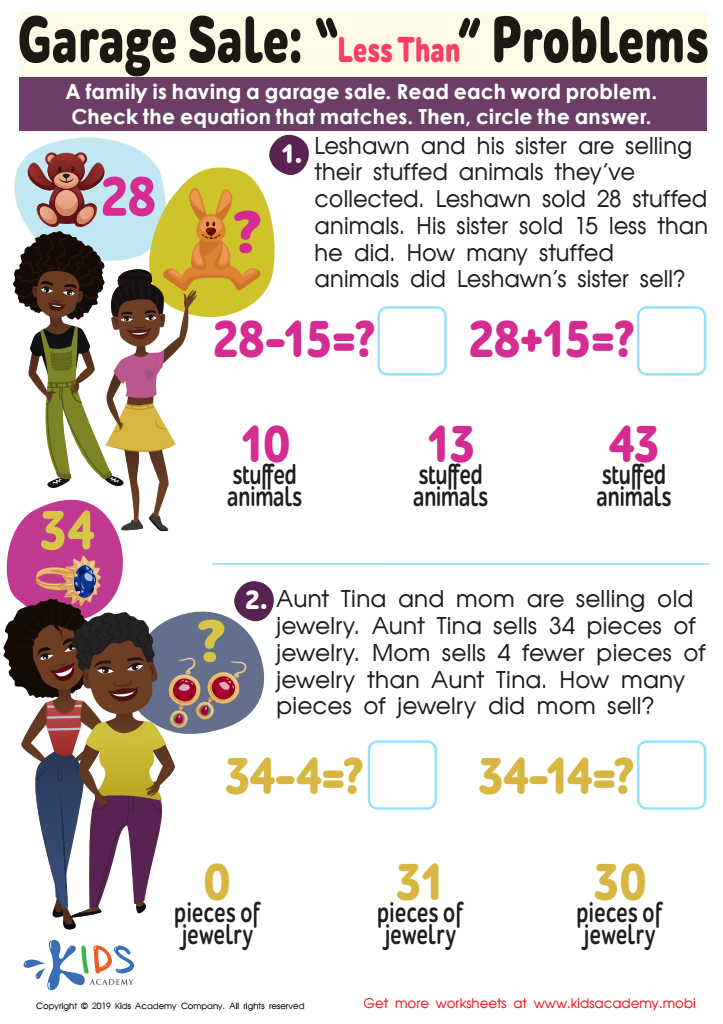
Garage Sale Less Than Worksheet
 Assign to My Students
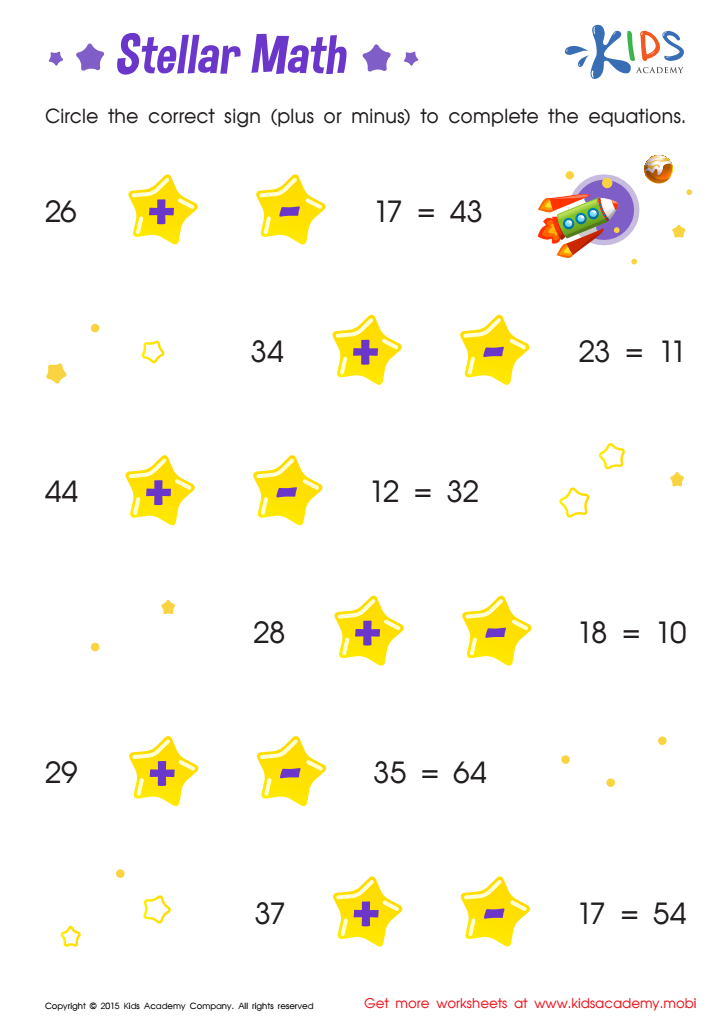
Stellar Math Substraction Worksheet
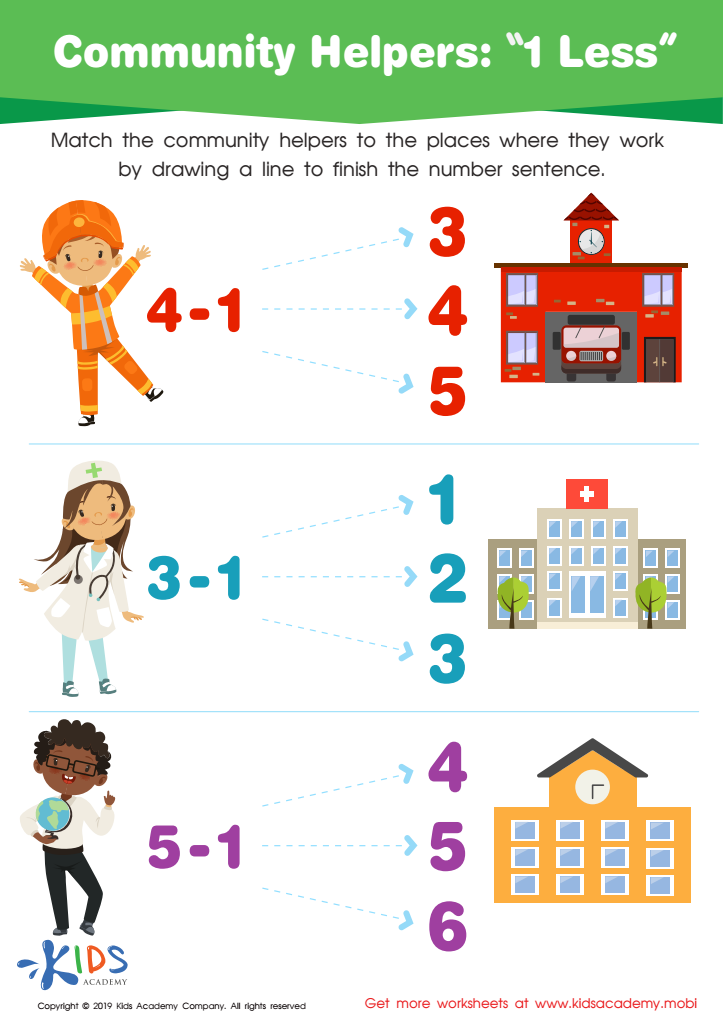
Community Helpers: 1 less Worksheet
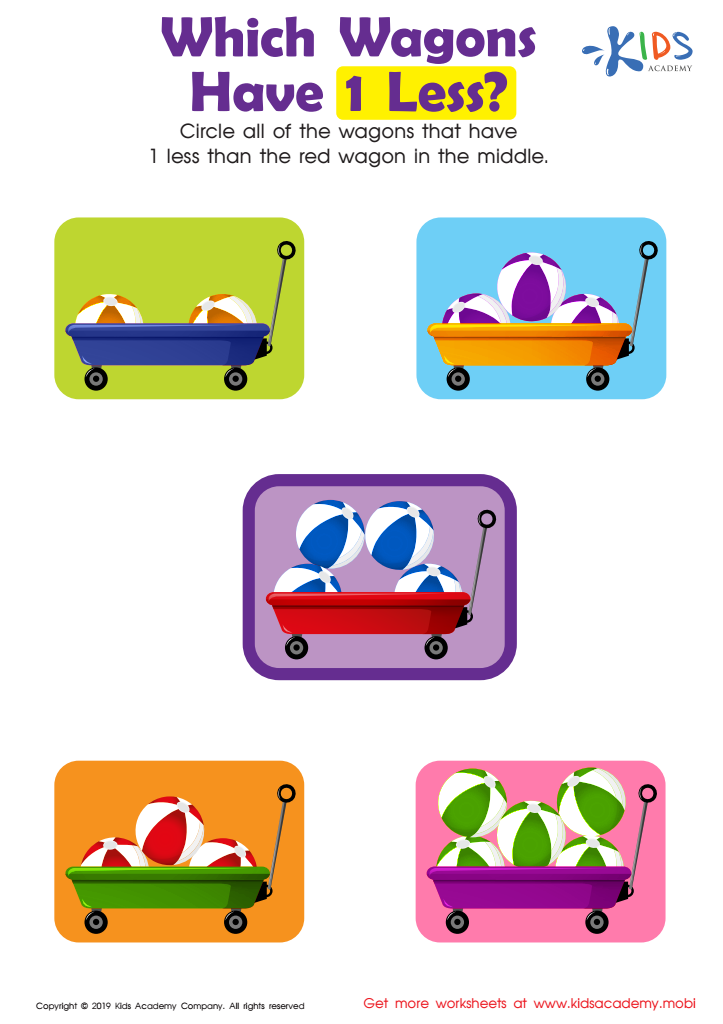
Which Wagons Have 1 Less? Worksheet


.jpg)




Understanding subtraction is a foundational skill that serves as a stepping stone for children's overall mathematical development. For children aged 3-5, grasping the concept of subtraction fosters critical cognitive skills. When parents and teachers prioritize this understanding, they help children learn not just to count backwards, but also to comprehend the relationship between numbers and the concept of "taking away."
This basic skill enhances problem-solving abilities and nurtures logical thinking. As children engage with subtraction through hands-on activities—like sharing snacks or playing with blocks—they encounter real-world applications of math. Such experiences make learning enjoyable and relevant, allowing young learners to see subtraction in action, which reinforces comprehension.
Moreover, early subtraction knowledge supports inevitable future learning, including addition and more complex math operations. By solidifying a strong numerical foundation, parents and teachers equip children with the tools needed to excel in later stages of education.
Lastly, fostering a positive attitude toward math at an early age sets the stage for lifelong learning. As children feel more confident in their abilities, they are more likely to embrace challenges, remain curious, and develop a love for math that positively impacts their academic journey. Investing time and effort into understanding subtraction is crucial for nurturing well-rounded learners.








