Uppercase identification Worksheets for Ages 3-5
5 filtered results
-
From - To
Discover our engaging Uppercase Identification Worksheets, designed specifically for children aged 3-5. These fun, interactive worksheets help young learners recognize and master uppercase letters, building a strong foundation for reading and writing. Featuring colorful illustrations and creative activities, our resources capture children’s attention while promoting active participation. Each worksheet encourages essential skills like letter recognition, fine motor development, and critical thinking. Perfect for home or classroom use, these worksheets support early literacy in an enjoyable way. Download our Uppercase Identification Worksheets today and watch your little ones become confident in their understanding of letters as they learn through play!
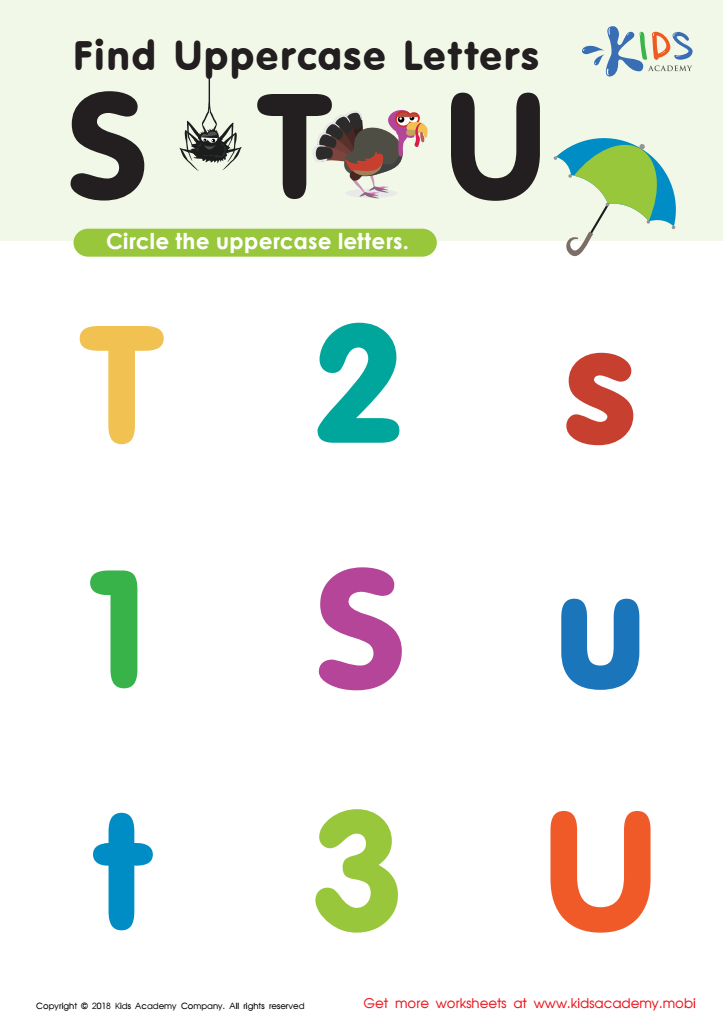
Find Uppercase Letters Worksheet
 Assign to My Students
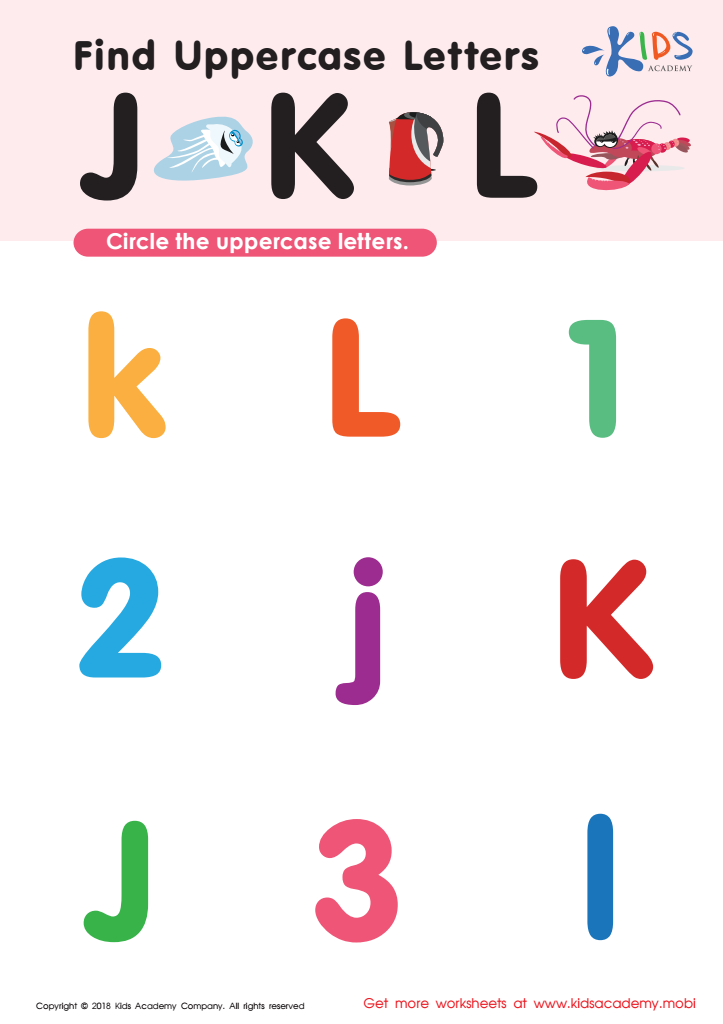
Find Uppercase Letters J, K, and L Worksheet
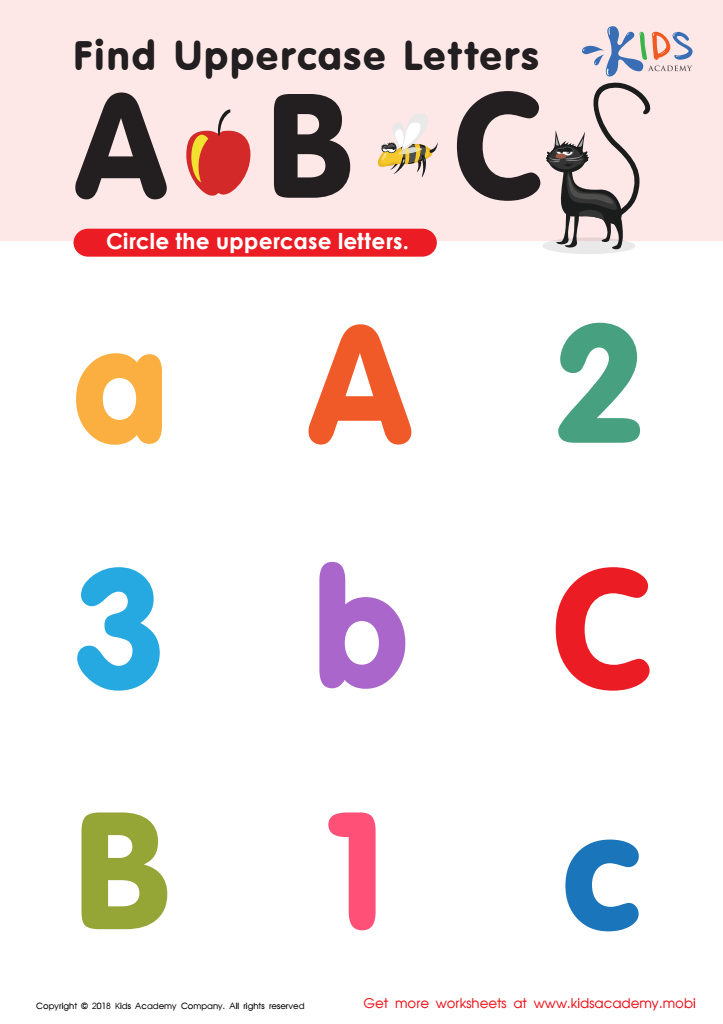
Find Uppercase Letters A, B, and C Worksheet
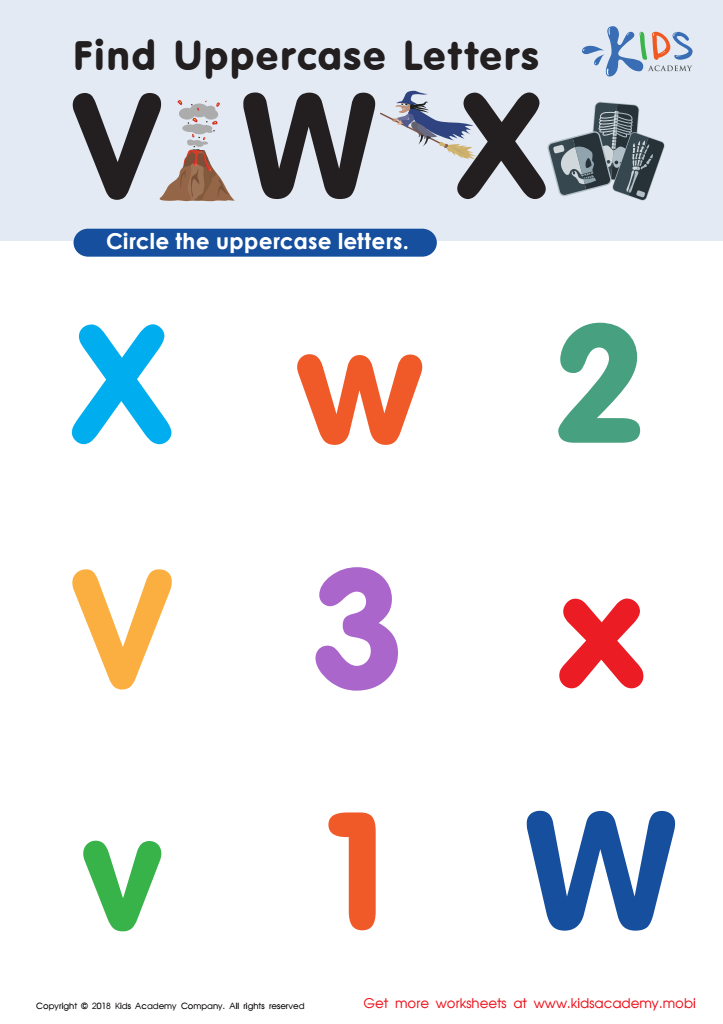
Find Uppercase Letters V, W, X Worksheet
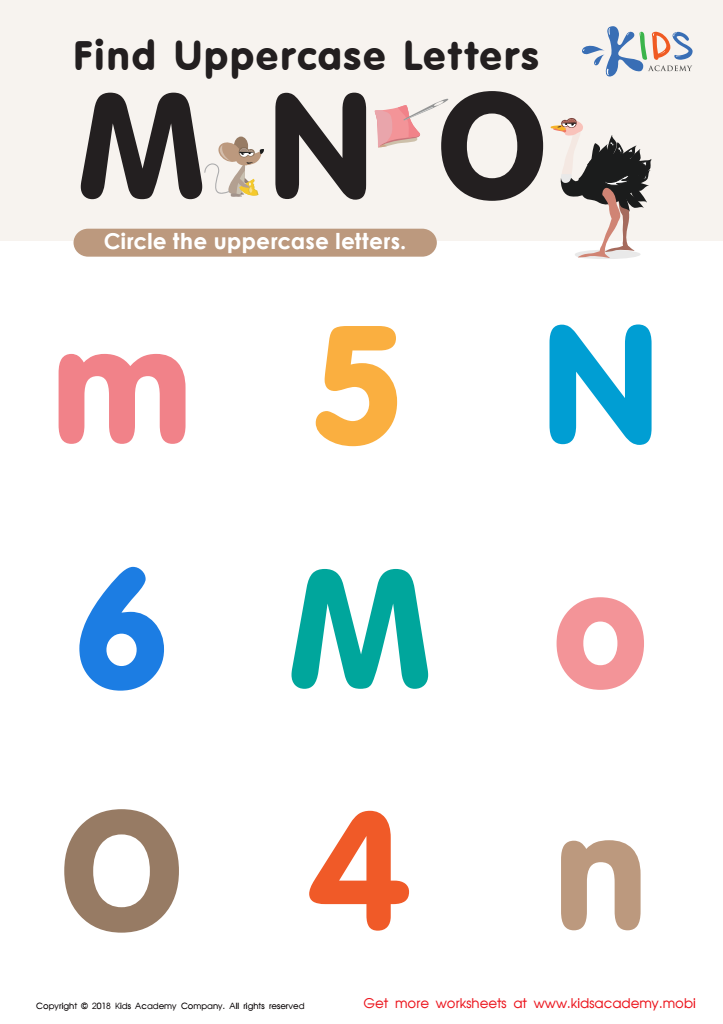
Find Uppercase Letters M, N, and O Worksheet






Uppercase letters identification is crucial for children aged 3-5 as it lays the foundation for literacy development. At this stage, children are in the critical early learning phase, where they begin to understand the mechanics of language. Recognizing uppercase letters is significant for several reasons.
Firstly, uppercase letters are commonly used in everyday life, such as in names, signs, labels, and sentences. Familiarity with these letters helps children navigate their environment and enhances their reading skills. Secondly, uppercase letters often represent beginnings—like the start of names or sentences—which is an essential concept for understanding grammar and punctuation later on.
Moreover, recognizing uppercase letters contributes to a child's confidence in reading and writing. When children are able to identify these letters, they feel more empowered to engage in literacy activities, leading to a lifelong love for reading. Teachers and parents can foster this identification through fun and interactive games focusing on letter recognition, thereby integrating learning into play.
Incorporating uppercase identification in daily routines creates a rich literacy environment, promoting cognitive development and communication skills. By prioritizing this early literacy skill, parents and teachers actively support children's academic success and foster a strong foundation for future learning.








