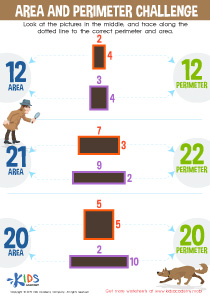
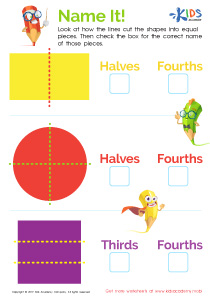
Basic geometry understanding 2D Shapes Worksheets for Ages 3-5
3 filtered results
Difficulty Level
Grade
Age
-
From - To
Subject
Activity
Standards
Discover our "Basic Geometry Understanding 2D Shapes Worksheets" designed for children ages 3-5. These engaging worksheets help young learners explore fundamental geometric concepts through fun activities tailored to their developmental stage. Children will identify, compare, and classify an array of 2D shapes, such as circles, squares, and triangles, fostering essential math skills early on. Our resources are crafted to enhance visual recognition and problem-solving abilities while providing an enjoyable learning experience. Perfect for parents and educators alike, these worksheets are a fantastic way to introduce basic geometry and ignite a lifelong love for math. Download and start exploring today!
Favorites
With answer key
Interactive
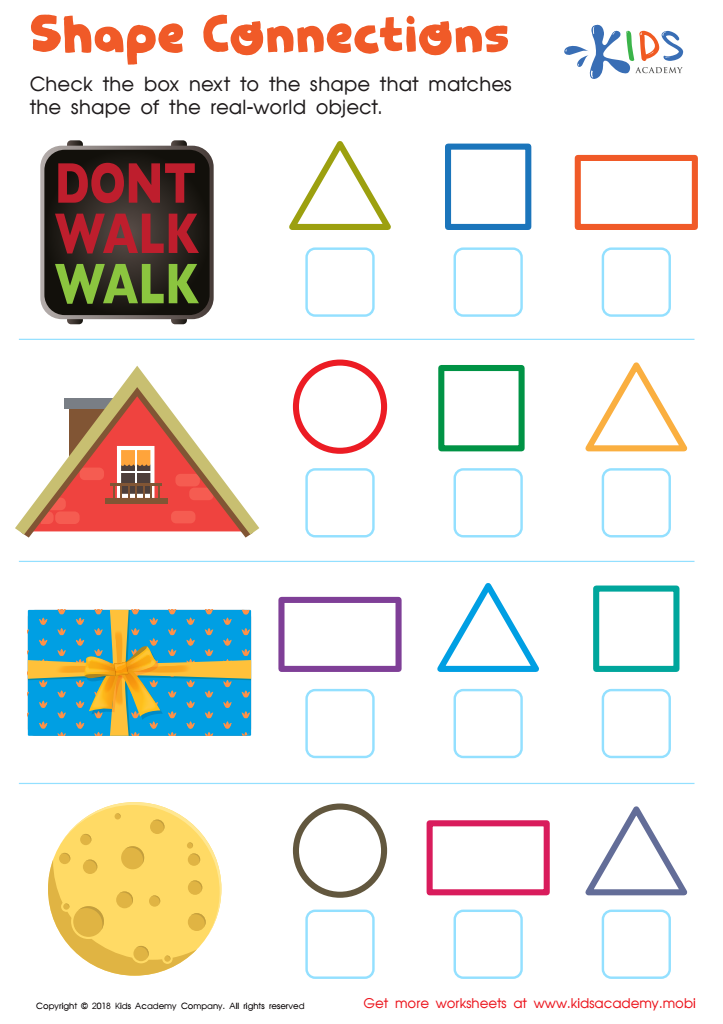
Shape Connections Worksheet
Geometric shapes are all around us and this fun worksheet brings it to life. Kids will match real-world pictures with the corresponding basic shapes, connecting how math is used in various aspects of daily life. A great way to reinforce these concepts!
 Assign to My Students
Shape Connections Worksheet
Worksheet











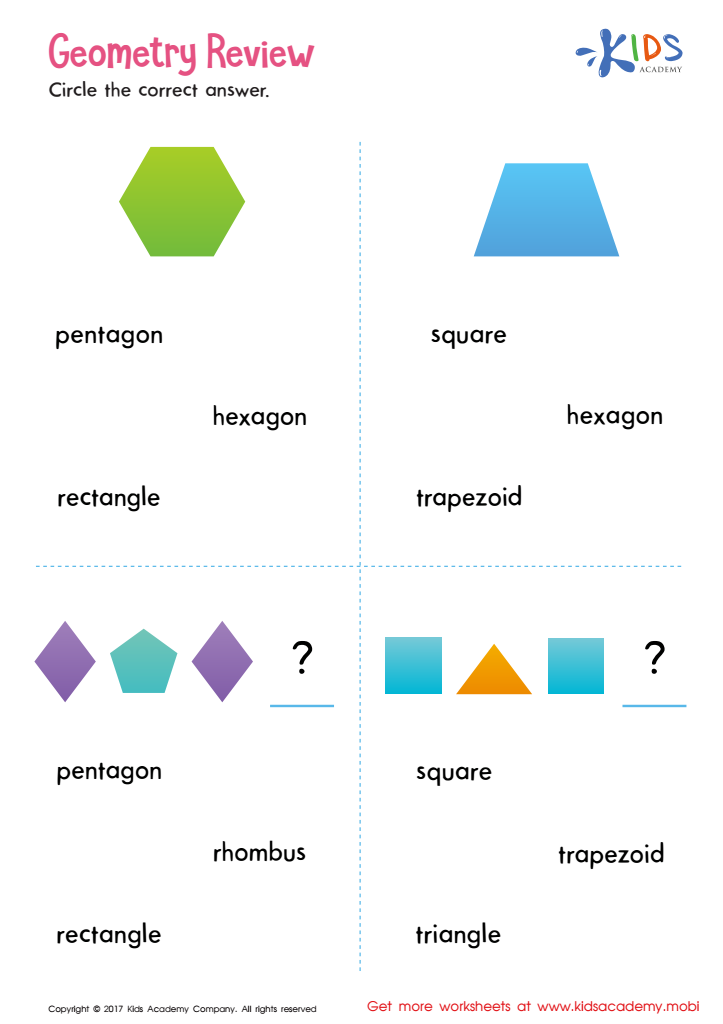
Geometry Review Printable
Repetition is key to success; give your child the practice they need with this geometry worksheet.
Geometry Review Printable
Worksheet
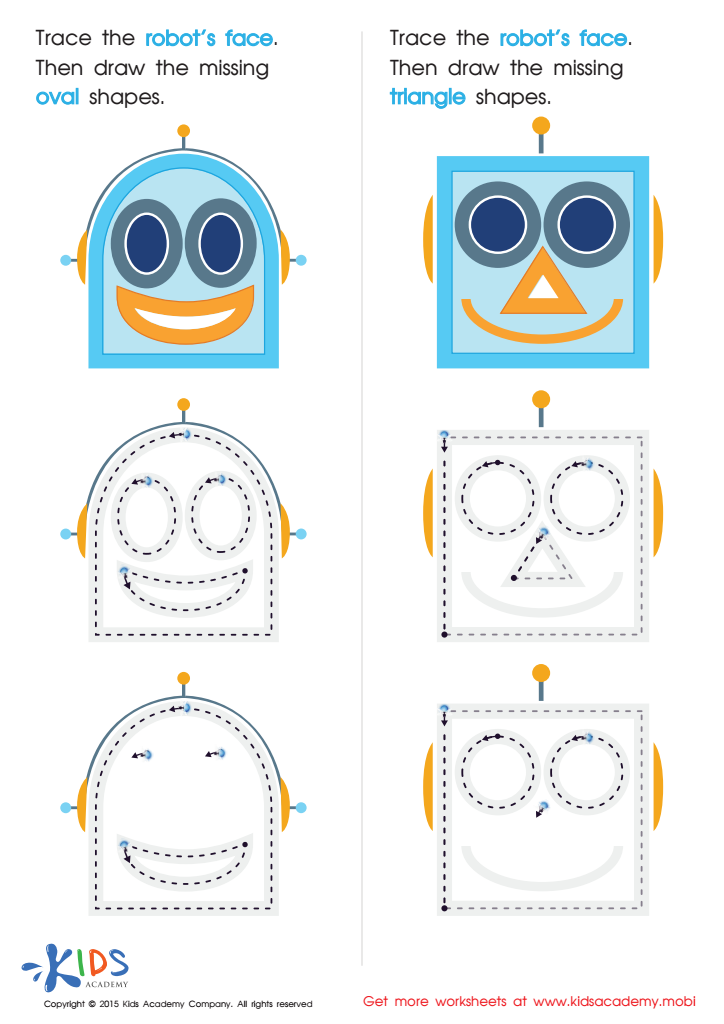
Drawing Ovals And Triangles with Fun Printable
Trace the face and draw missing ovals and triangles. Test your memory and recall shapes' names. Check if you remember how to draw them!
Drawing Ovals And Triangles with Fun Printable
Worksheet
Join Kids Academy for Free
Who is primarily going to use this learning content?








Understanding basic geometry, particularly 2D shapes, is crucial for children aged 3-5 for several reasons. First, early geometry skills lay the foundation for mathematical understanding. Recognizing and categorizing shapes like circles, squares, and triangles helps children develop spatial awareness and promotes logical thinking, which is essential for problem-solving later in life.
Second, learning about 2D shapes encourages observational skills. Young learners begin to identify shapes in their environment, which enhances their ability to categorize and make sense of the world around them. Interacting with shapes through play, art, and everyday activities fosters creativity and expression.
Furthermore, shape recognition aids language development. As teachers and parents introduce new vocabulary related to shapes, children expand their language skills while learning to communicate their thoughts and discoveries.
Finally, these concepts support social-emotional development. Activities involving shapes, such as cooperative games or group projects, encourage teamwork and communication.
In summary, a strong grasp of 2D shapes not only enriches children's cognitive abilities but also supports their emotional and social growth, making it a vital focus for parents and educators alike during these formative years.