Pattern recognition 2D Shapes Worksheets for Ages 3-5
3 filtered results
-
From - To
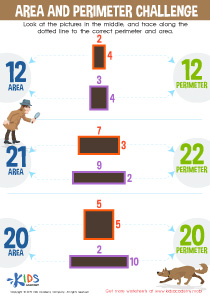
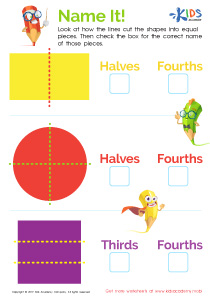
Spark your child's curiosity and enhance their cognitive skills with our engaging Pattern Recognition 2D Shapes Worksheets for Ages 3-5. Designed to introduce young learners to the world of shapes, these fun and colorful worksheets promote critical thinking and problem-solving. Kids will identify, differentiate, and predict patterns using circles, triangles, squares, and more, all while enjoying a hands-on learning experience. Perfect for preschool and kindergarten children, these printable activities help lay a strong foundation in math and visual perception. Make learning exciting and effective with our educational 2D shape pattern recognition worksheets!
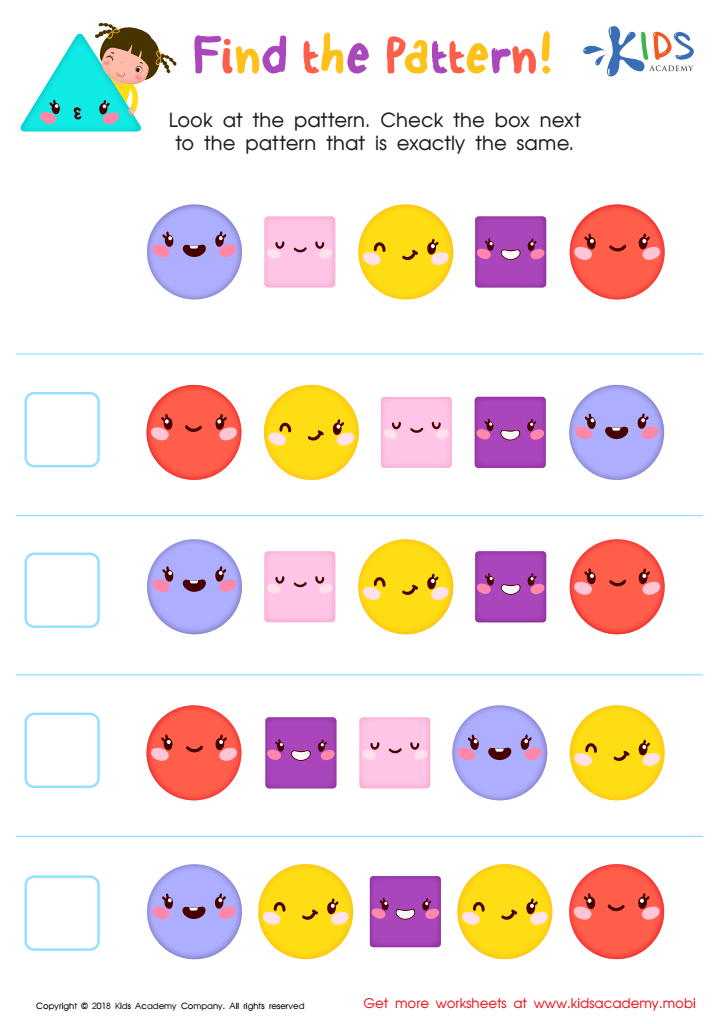
Find the Pattern Worksheet
 Assign to My Students











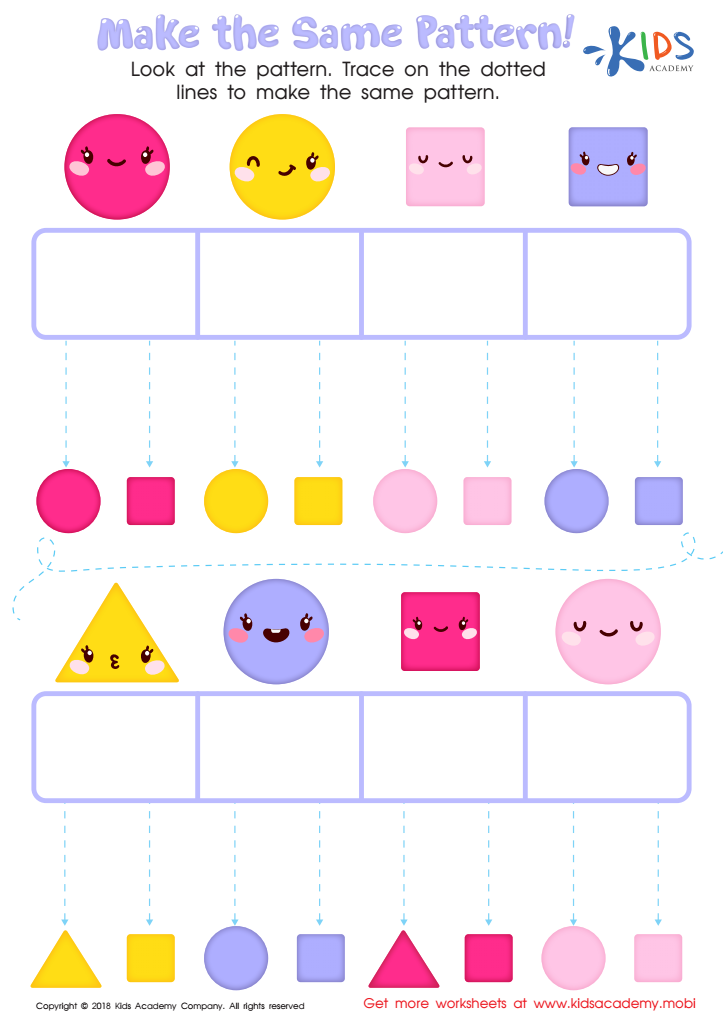
Make the Same Pattern Worksheet
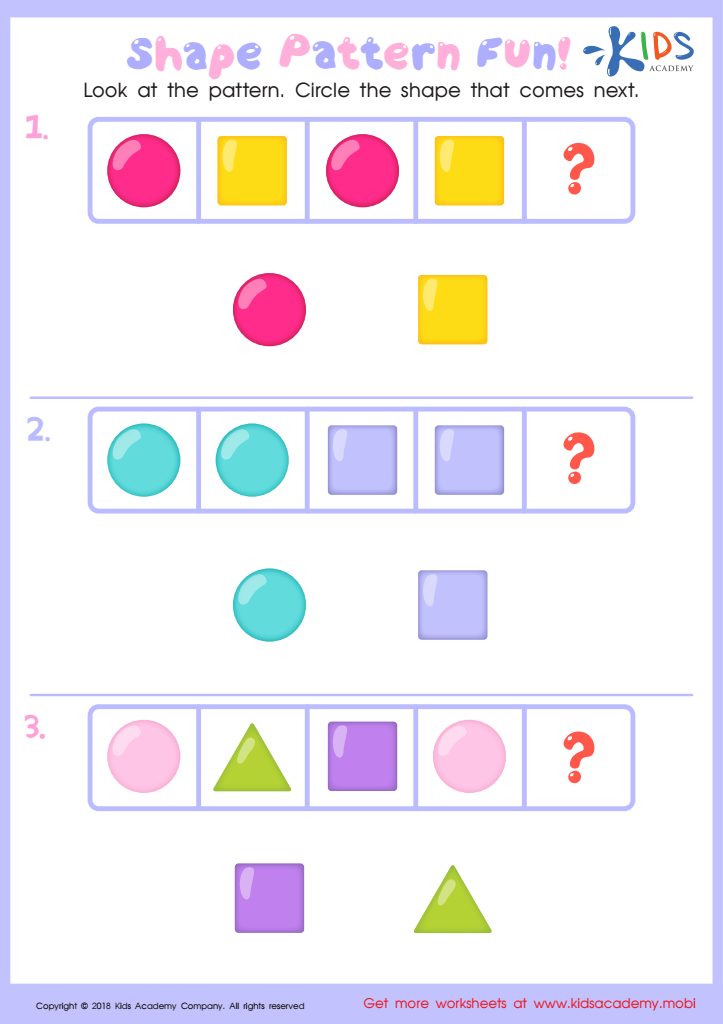
Shape Pattern Fun Worksheet








Pattern recognition and understanding 2D shapes are fundamental skills that serve as building blocks for more advanced concepts in math and critical thinking. For ages 3-5, these foundational skills are crucial for several reasons:
Cognitive Development: Engaging with patterns and shapes helps young children develop logical thinking, reasoning, and problem-solving skills. Recognizing and completing patterns involves identifying repetition, symmetry, and sequences, all of which strengthen cognitive abilities.
Math Skills: Early knowledge of 2D shapes sets the groundwork for geometry. Familiarity with shapes like circles, squares, and triangles helps children understand more complex geometric and spatial concepts as they grow older.
Language Development: Learning the names and properties of 2D shapes expands children's vocabulary. Discussing similarities, differences, and attributes of shapes fosters language skills and encourages detailed descriptive abilities.
Fine Motor Skills: Activities involving shapes, such as drawing or sorting, improve fine motor skills and hand-eye coordination. Managing small manipulatives or drawing shapes fine-tunes these essential skills.
Creativity and Art: Recognizing and creating patterns enhances creativity. Understanding shapes fosters an appreciation for art and design, as children recognize shapes in the world around them, leading to imaginative and artistic expression.
Emotional and Social Skills: Working on patterns and shapes often involves group activities, teaching children cooperation, patience, and sharing.
Overall, promoting pattern recognition and 2D shapes in early childhood lays the groundwork for lifelong learning and critical academic skills.