Filters

22 filtered results

Clear all filters
Favorites
With answer key
Interactive

22 filtered results

Difficulty Level

Grade


Discover the "Counting Skills Adding in the Sea Worksheets" designed for young learners aged 3-5! These engaging and colorful worksheets make learning fundamental math concepts fun and interactive. With a playful underwater theme, children will enjoy counting sea creatures and practicing addition in an exciting way. Each activity encourages hands-on exploration, helping children build a strong foundation in numeracy while enhancing fine motor skills. Ideal for both classroom and home use, these worksheets support early math development through enjoyable and educational exercises. Dive into learning and watch your child’s counting and adding skills flourish in the vibrant world beneath the sea!
Check out this FREE Trial Lesson on Adding in the Sea for age 3-5!

Exactly the Same, or Not

Favorites
With answer key
Interactive
  • 3-5
  • Counting skills
  • Adding in the Sea
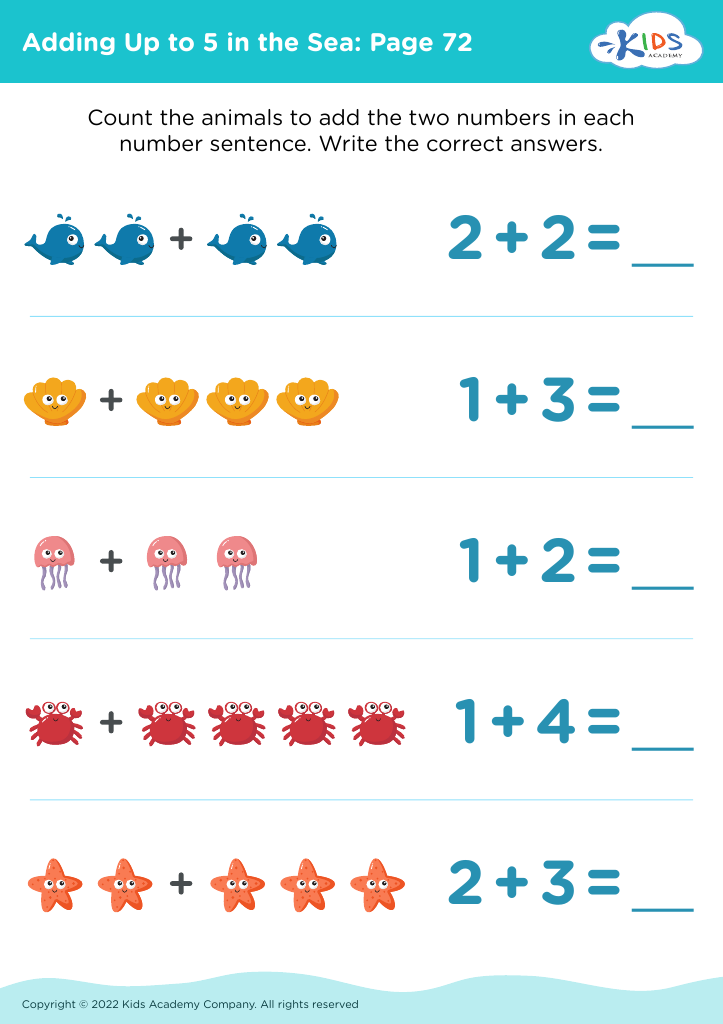
Adding Up to 5 in the Sea: Page 72
Worksheet
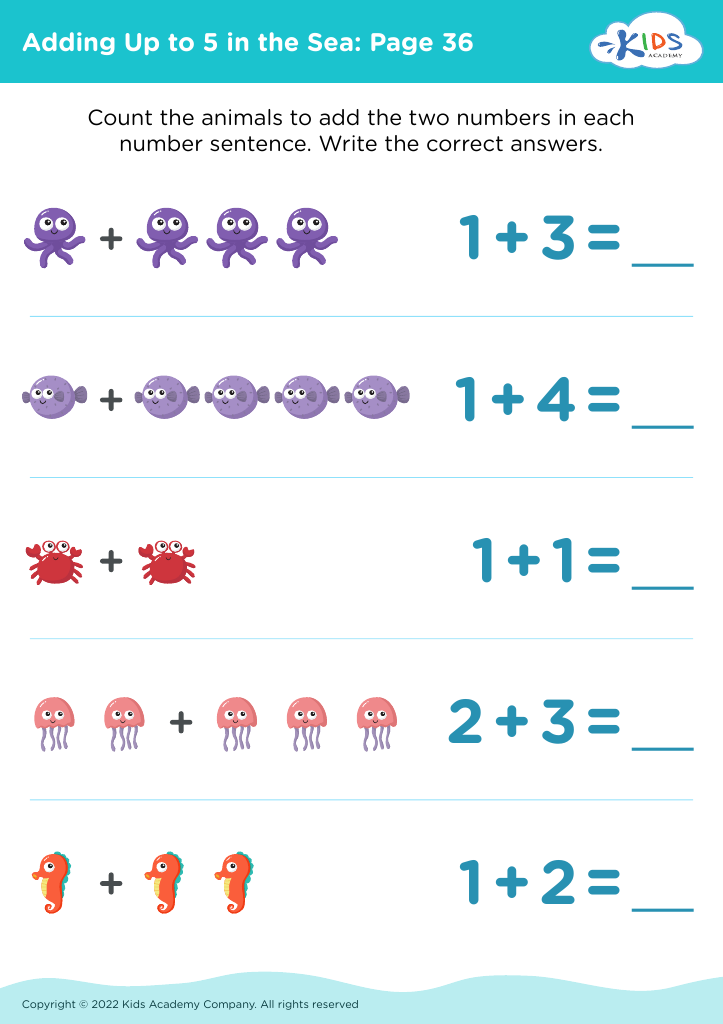
Adding Up to 5 in the Sea: Page 36
Worksheet
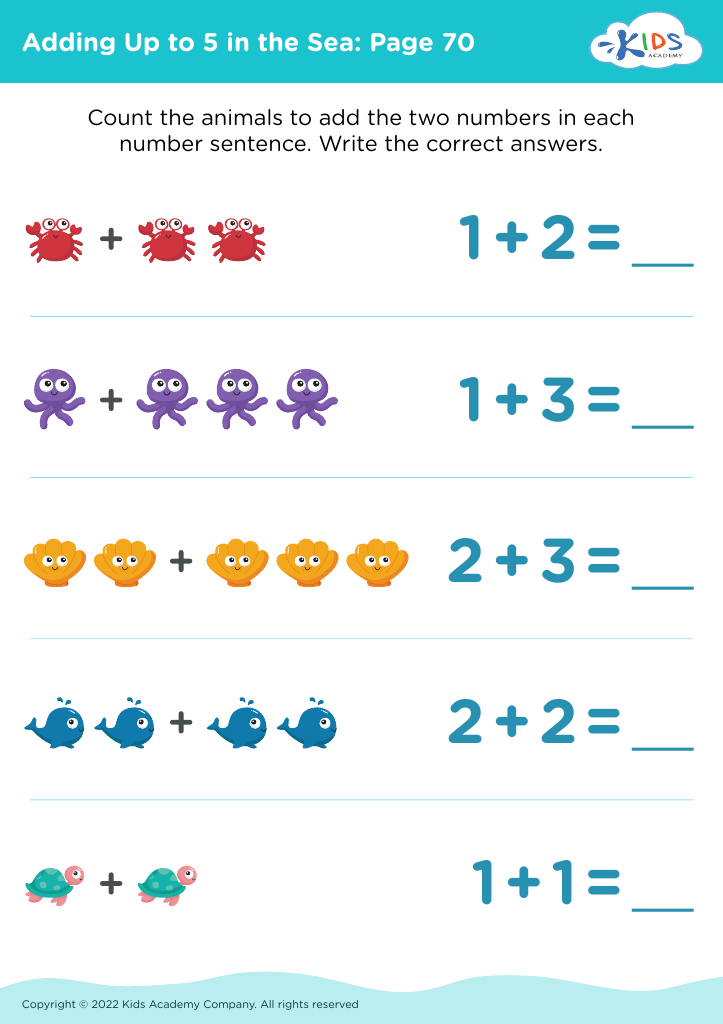
Adding Up to 5 in the Sea: Page 70
Worksheet
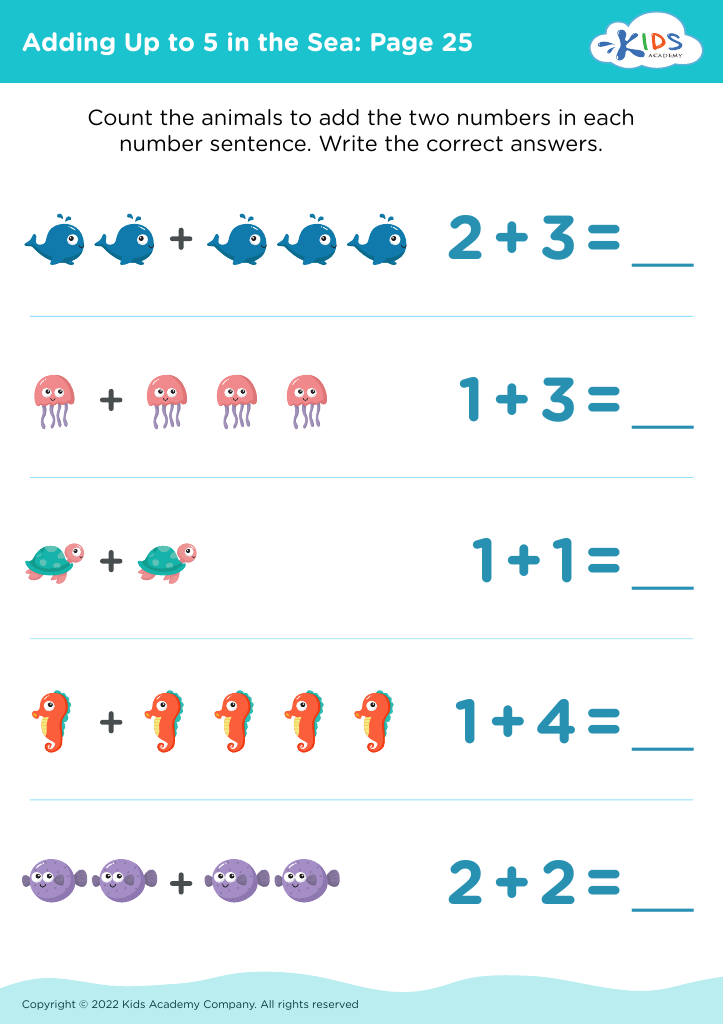
Adding Up to 5 in the Sea: Page 25
Worksheet
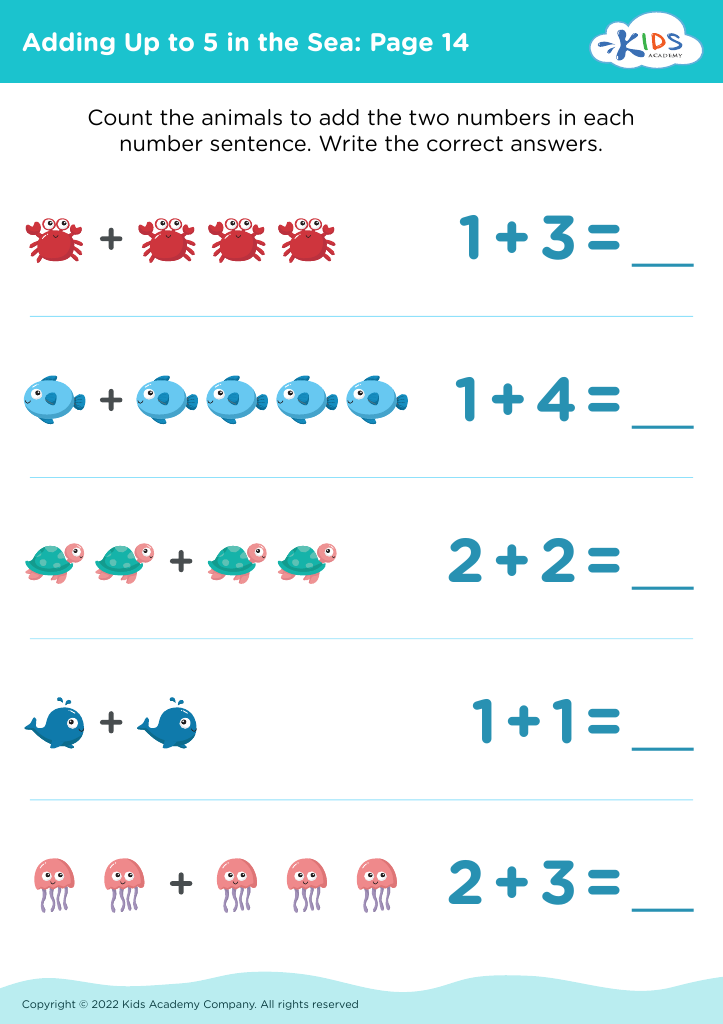
Adding Up to 5 in the Sea: Page 14
Worksheet
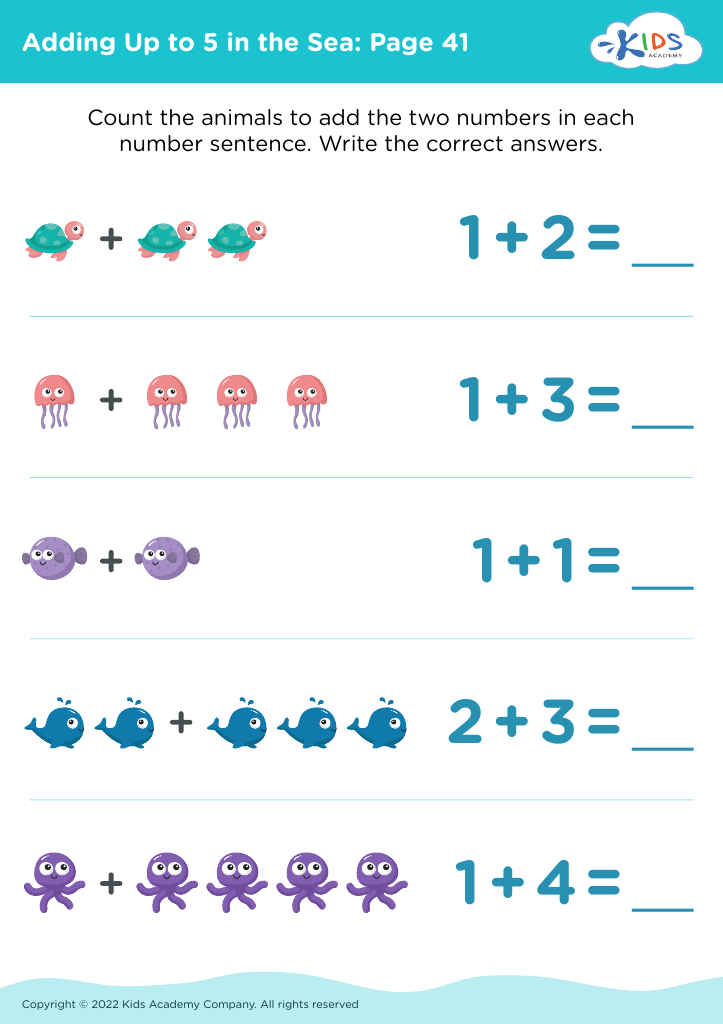
Adding Up to 5 in the Sea: Page 41
Worksheet
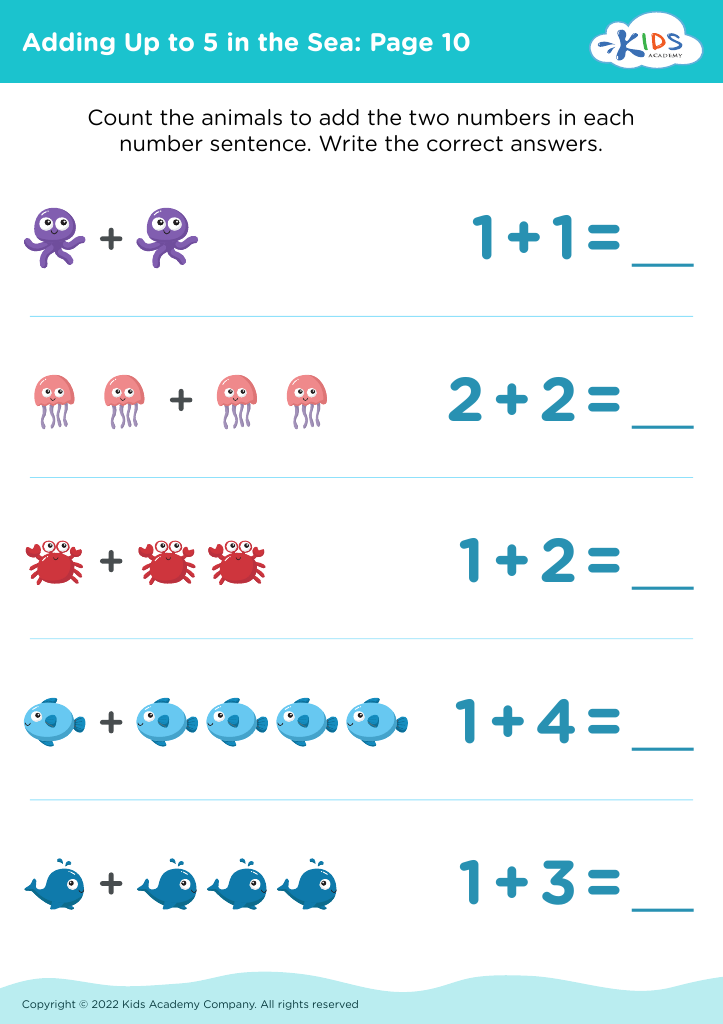
Adding Up to 5 in the Sea: Page 10
Worksheet
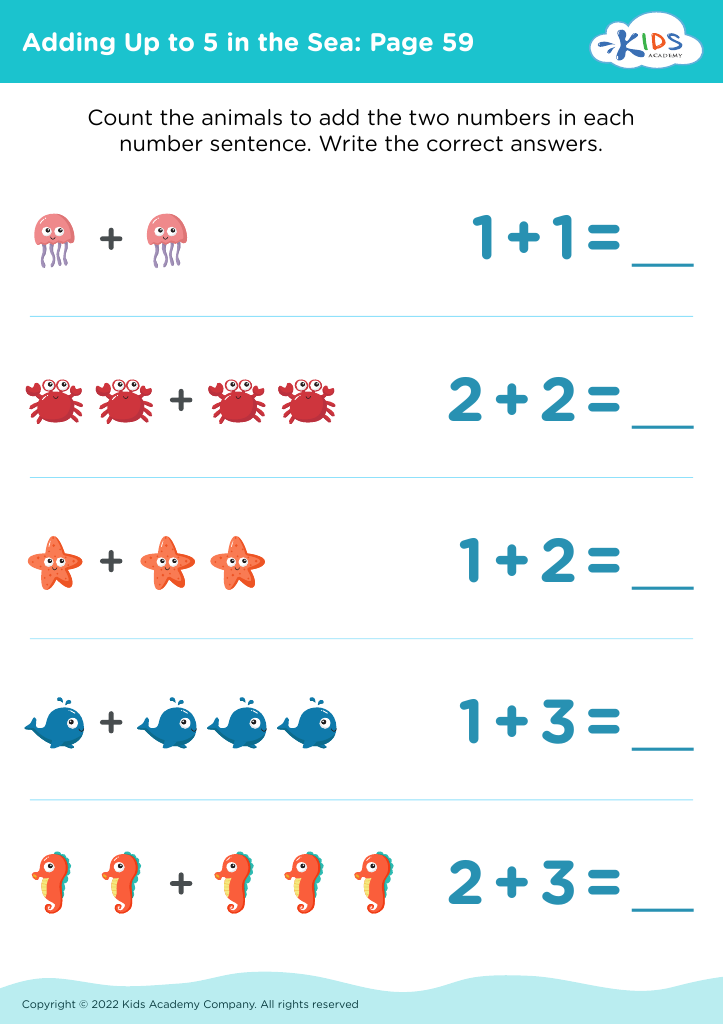
Adding Up to 5 in the Sea: Page 59
Worksheet
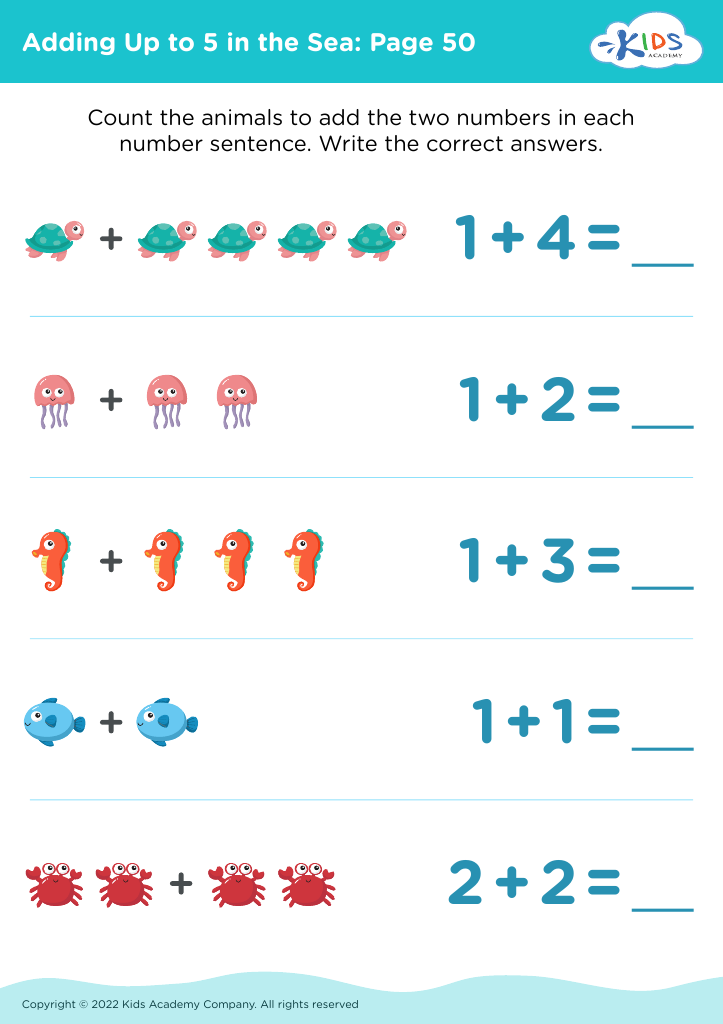
Adding Up to 5 in the Sea: Page 50
Worksheet
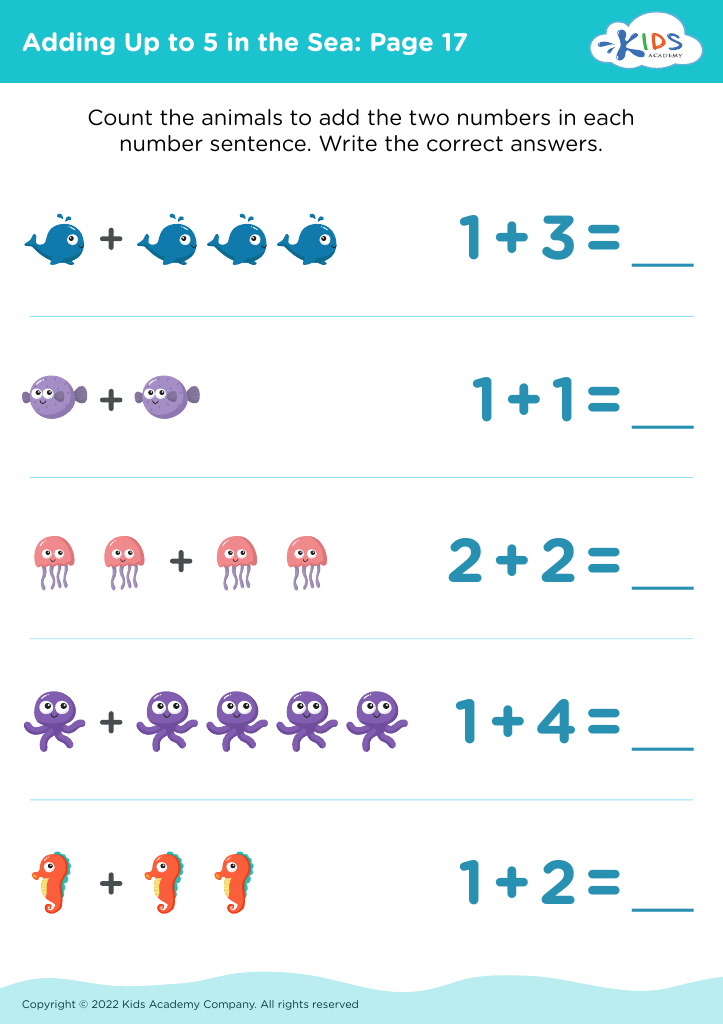
Adding Up to 5 in the Sea: Page 17
Worksheet
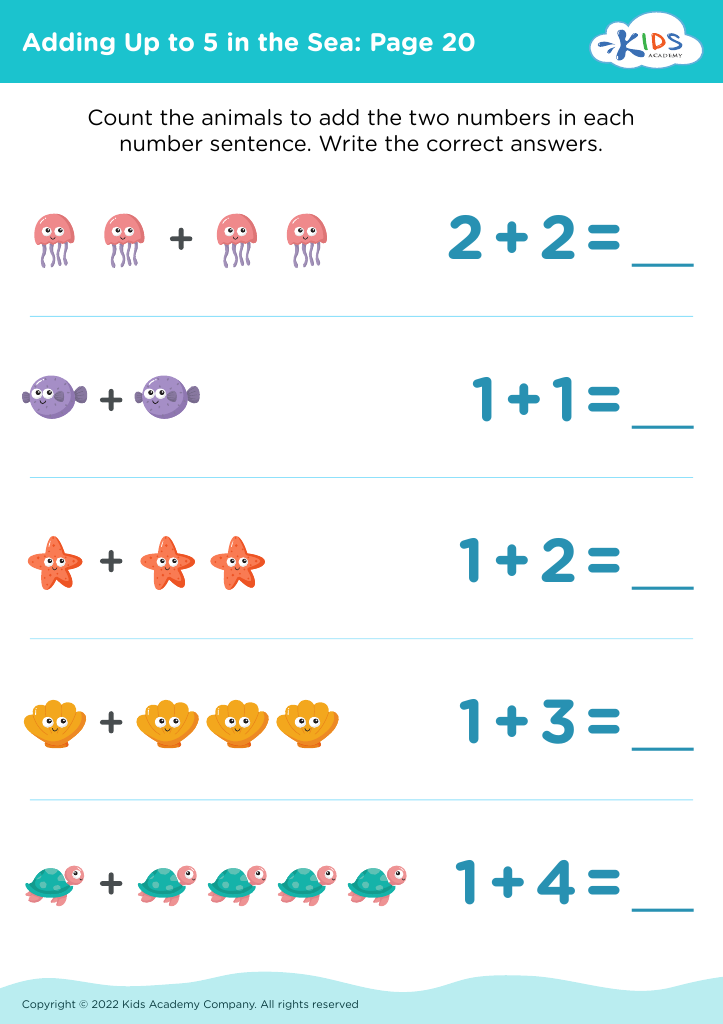
Adding Up to 5 in the Sea: Page 20
Worksheet
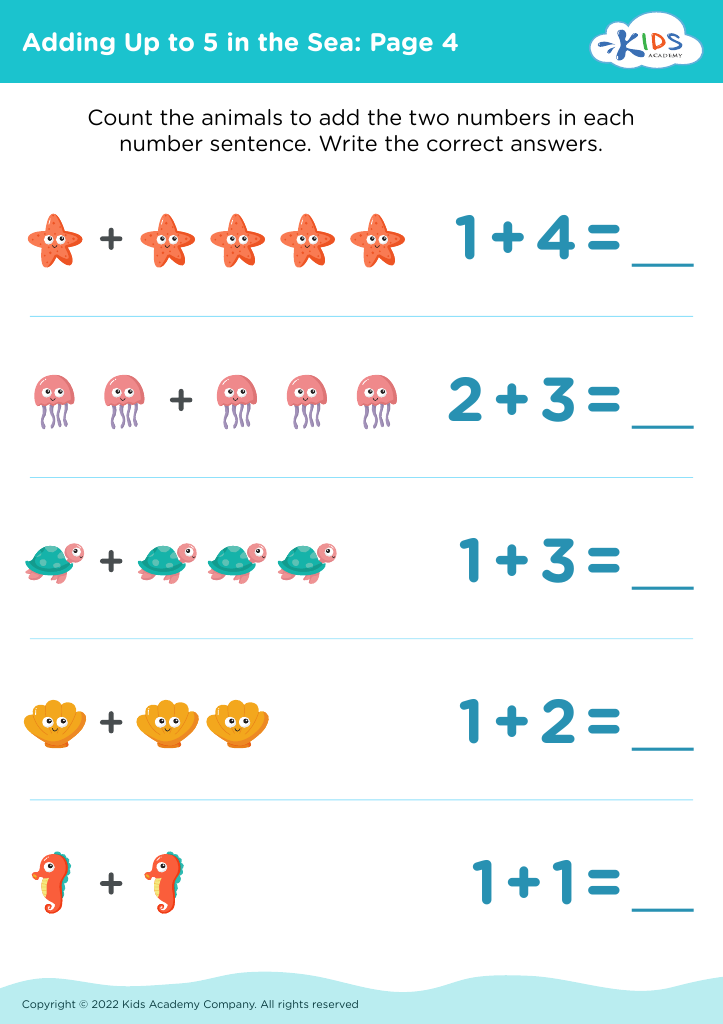
Adding Up to 5 in the Sea: Page 4

Adding Up to 5 in the Sea: Page 4

Adding Up to 5 in the Sea: Page 4
Worksheet
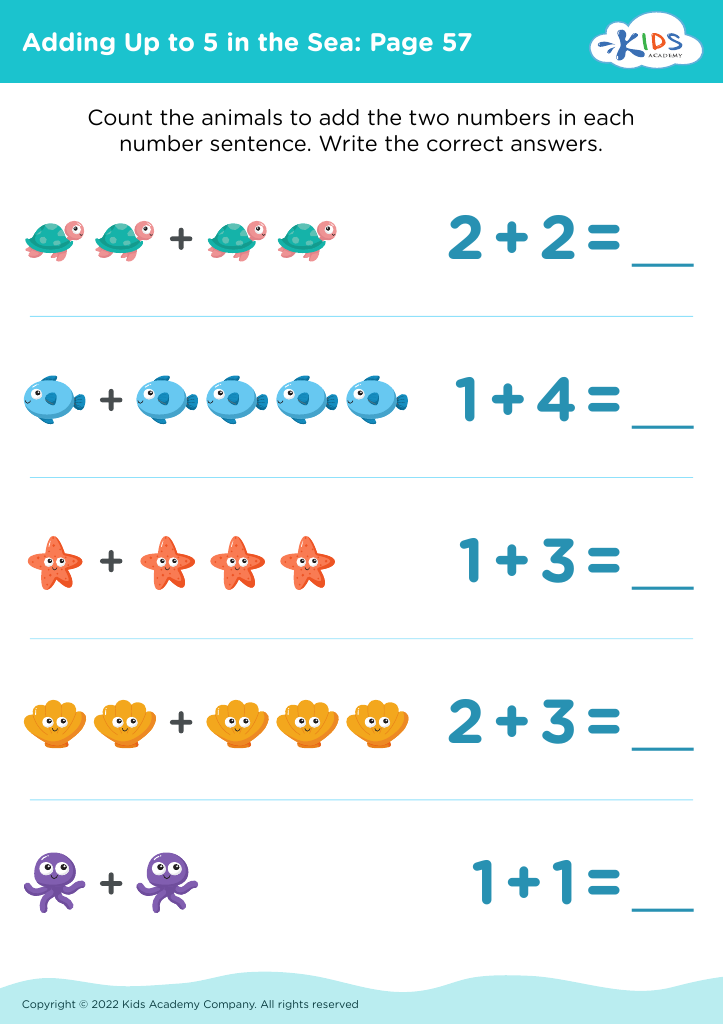
Adding Up to 5 in the Sea: Page 57
Worksheet
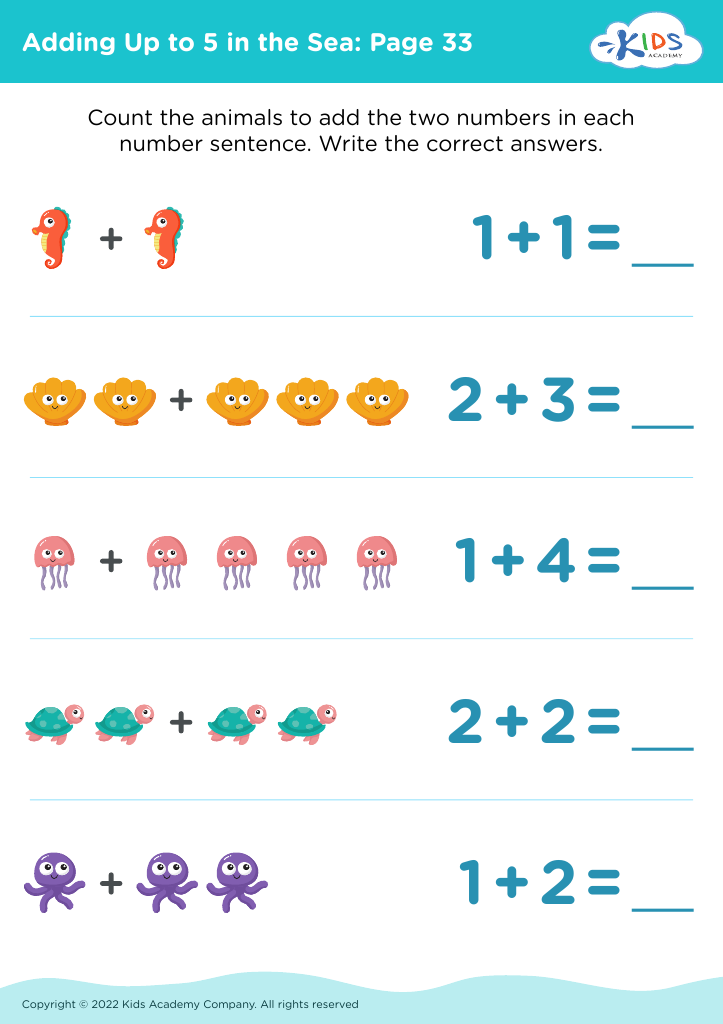
Adding Up to 5 in the Sea: Page 33
Worksheet
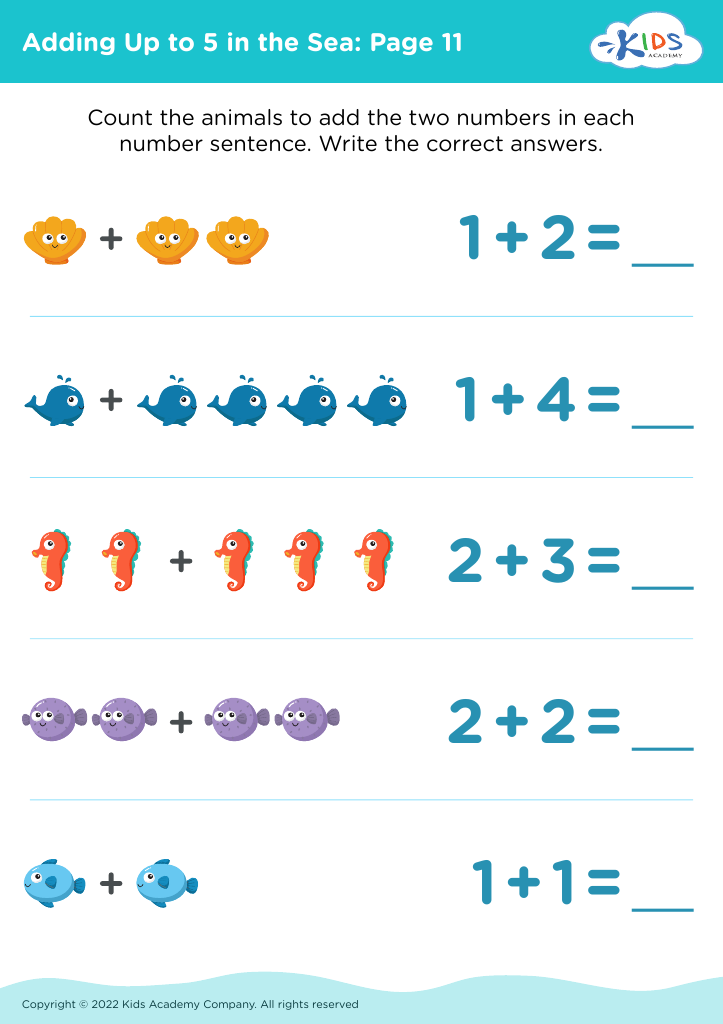
Adding Up to 5 in the Sea: Page 11
Worksheet
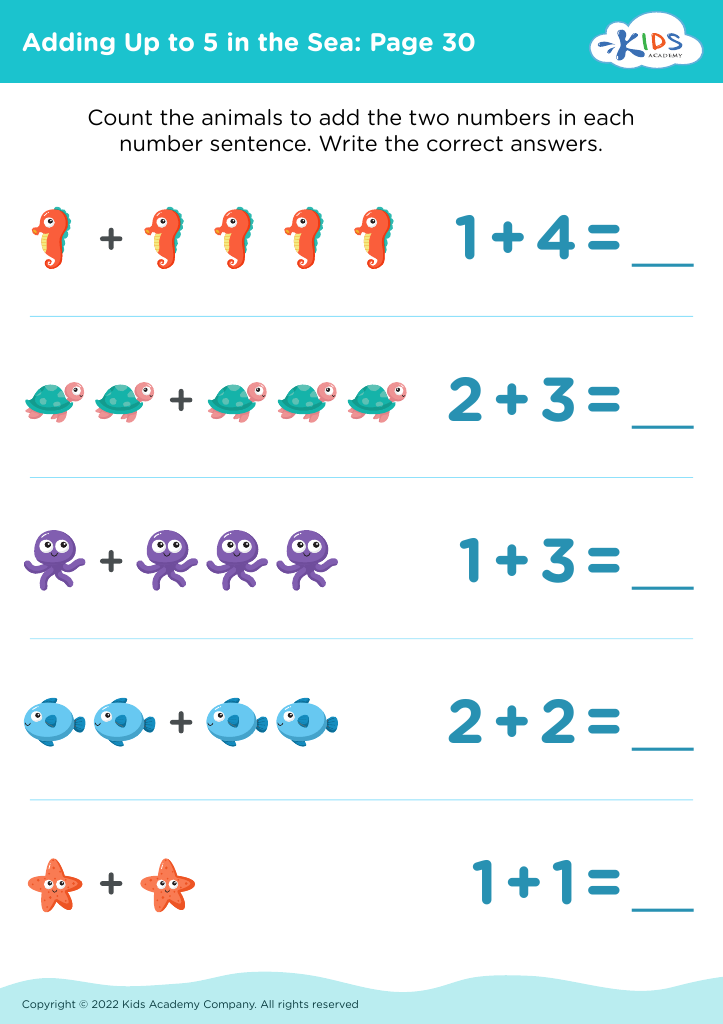
Adding Up to 5 in the Sea: Page 30
Worksheet
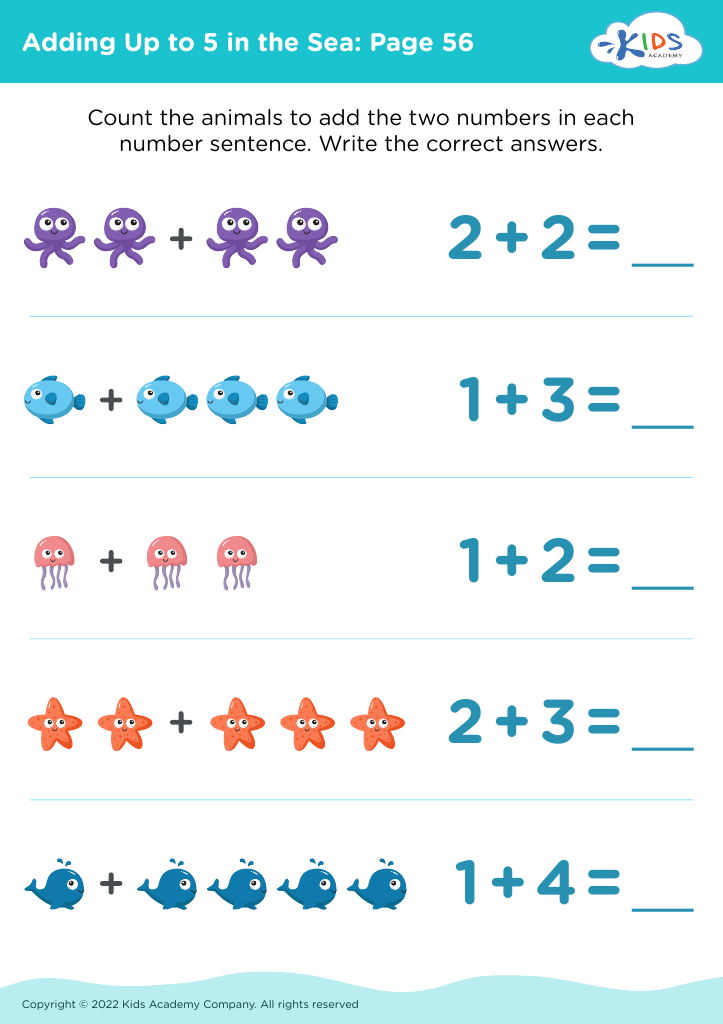
Adding Up to 5 in the Sea: Page 56
Worksheet
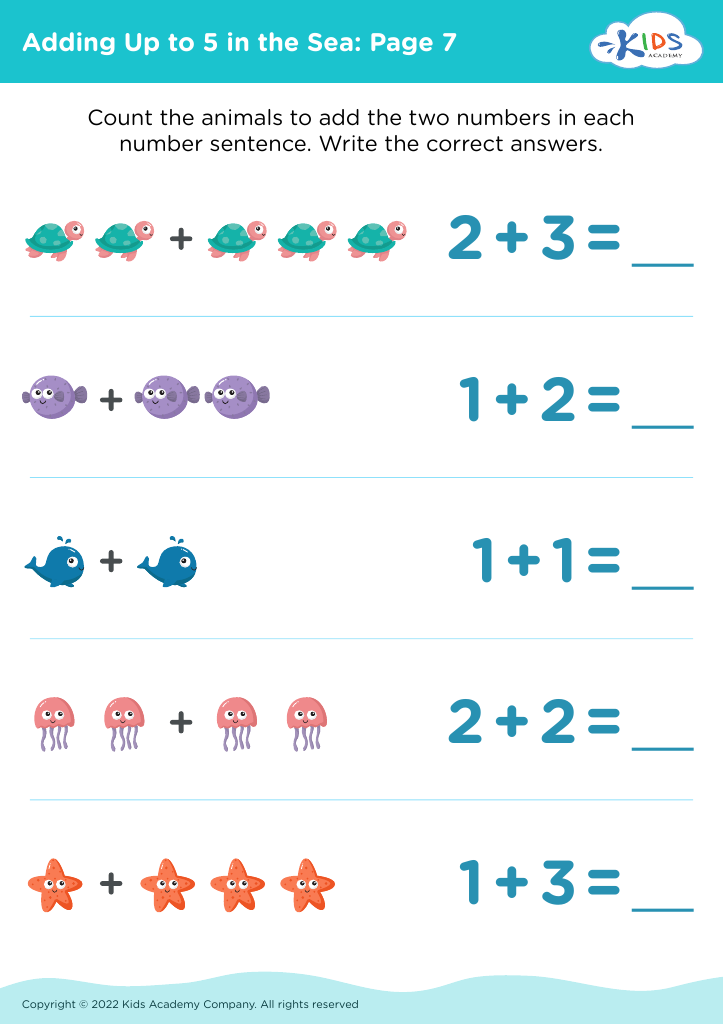
Adding Up to 5 in the Sea: Page 7

Adding Up to 5 in the Sea: Page 7

Adding Up to 5 in the Sea: Page 7
Worksheet
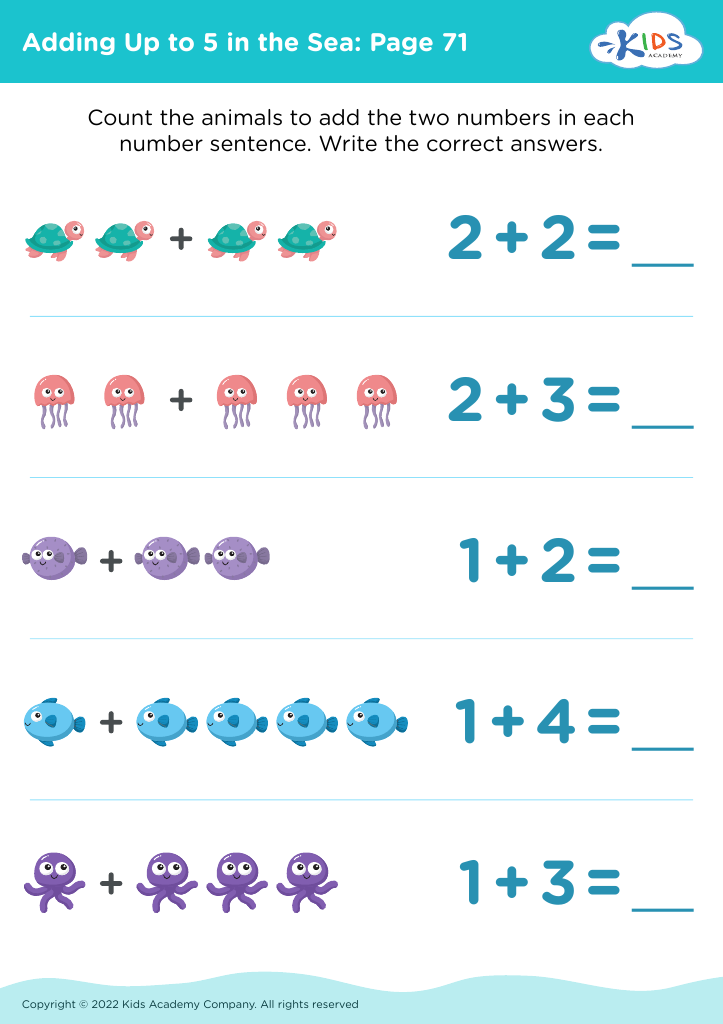
Adding Up to 5 in the Sea: Page 71
Worksheet
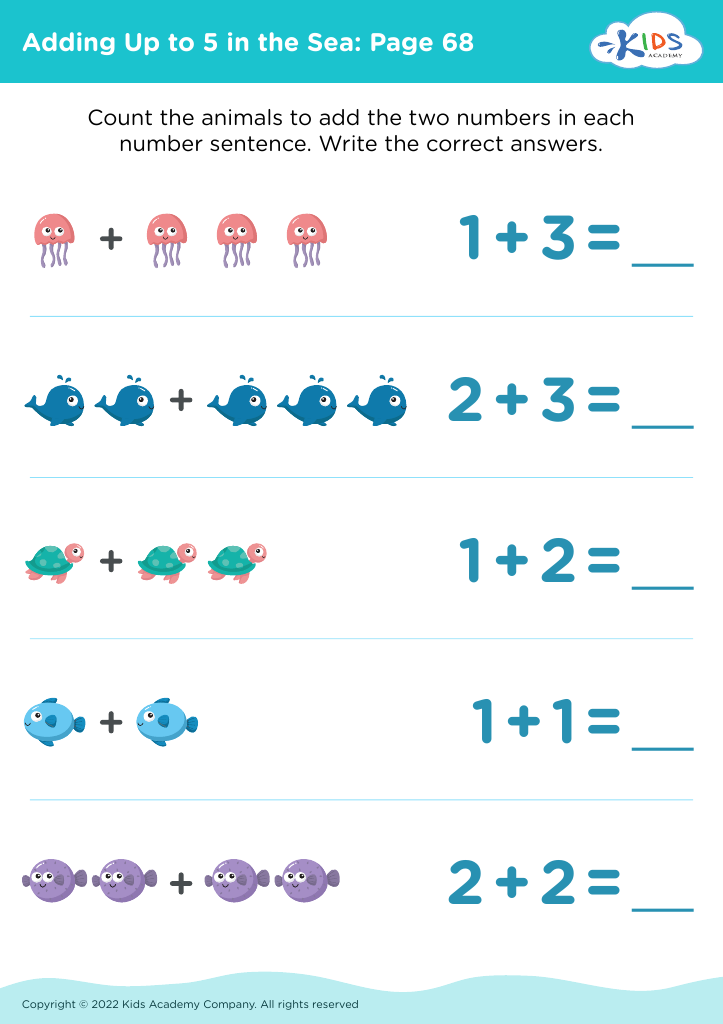
Adding Up to 5 in the Sea: Page 68
Worksheet
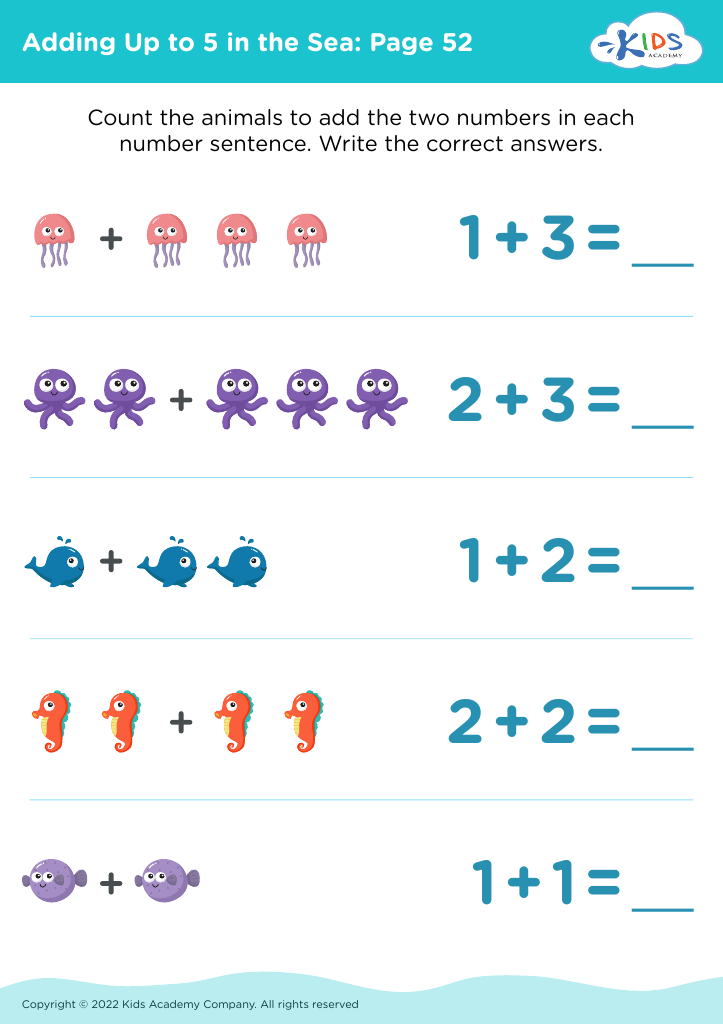
Adding Up to 5 in the Sea: Page 52
Worksheet
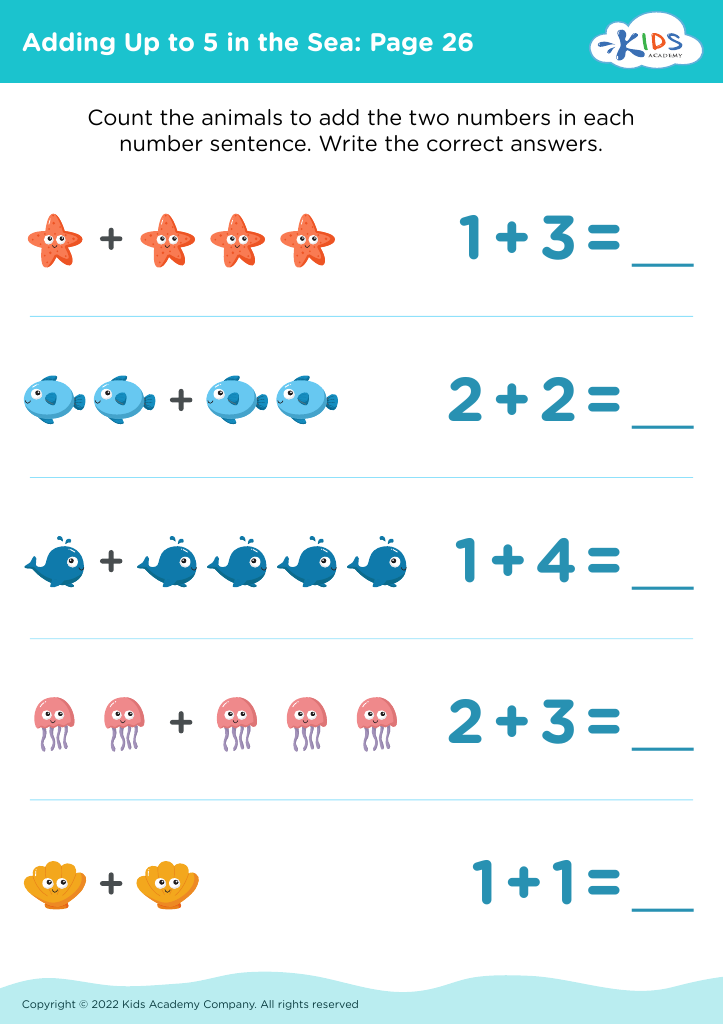
Adding Up to 5 in the Sea: Page 26
Worksheet


Counting skills, particularly in engaging formats like "Adding in the Sea," are pivotal for children aged 3-5 as they lay the foundation for mathematical understanding and cognitive development. At this early stage, children are immensely impressionable, and playful approaches to learning, such as counting games and interactive storytelling, make the acquisition of skills enjoyable and memorable.

Firstly, counting practice promotes number recognition, an essential core aspect of early numeracy. It helps children understand the concept of quantity and fosters logical thinking. Secondly, by incorporating themes like the sea, which many kids find fascinating, learning becomes more relatable and stimulating, enhancing their motivation.

Additionally, counting in a fun context encourages fine motor skills through hands-on activities, reinforcing coordination alongside cognitive growth. Collaborative counting games also foster social skills, as children learn to take turns and share—all within a supportive environment.

Lastly, these early experiences in counting shape future academic success. Developing a robust foundation in numerical skills will benefit children as they progress to more complex math concepts in later years. Parents and teachers should prioritize counting skills not merely as academic benefits, but as vital steps in holistic child development.