Addition Practice Adding Up to 5 Worksheets for Ages 3-5 - Page 2
50 filtered results
-
From - To
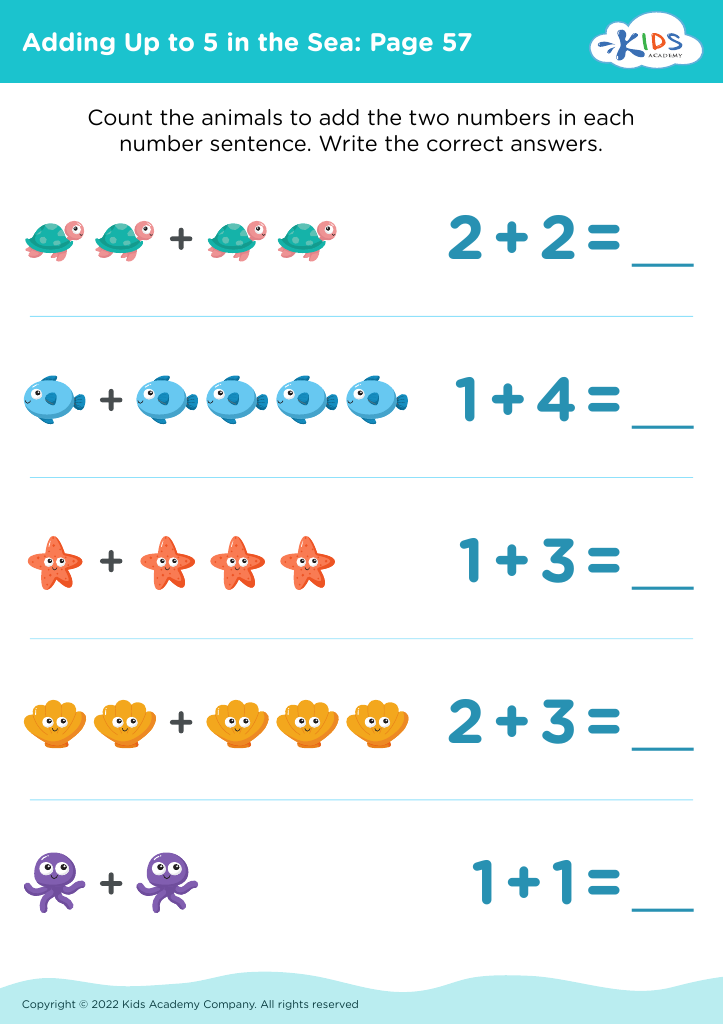
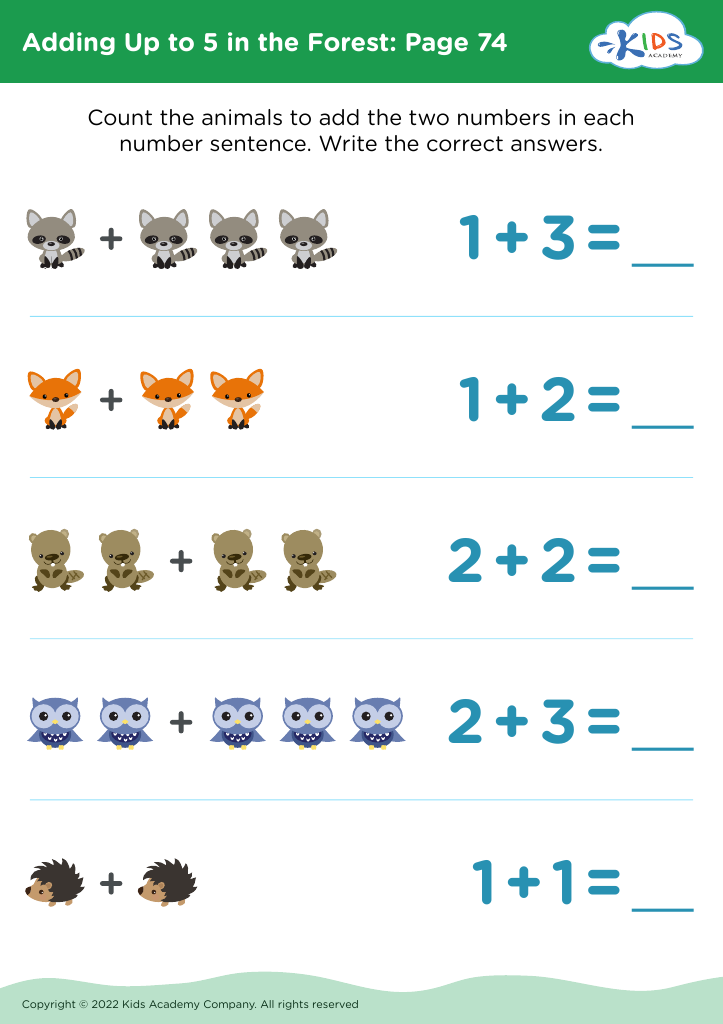
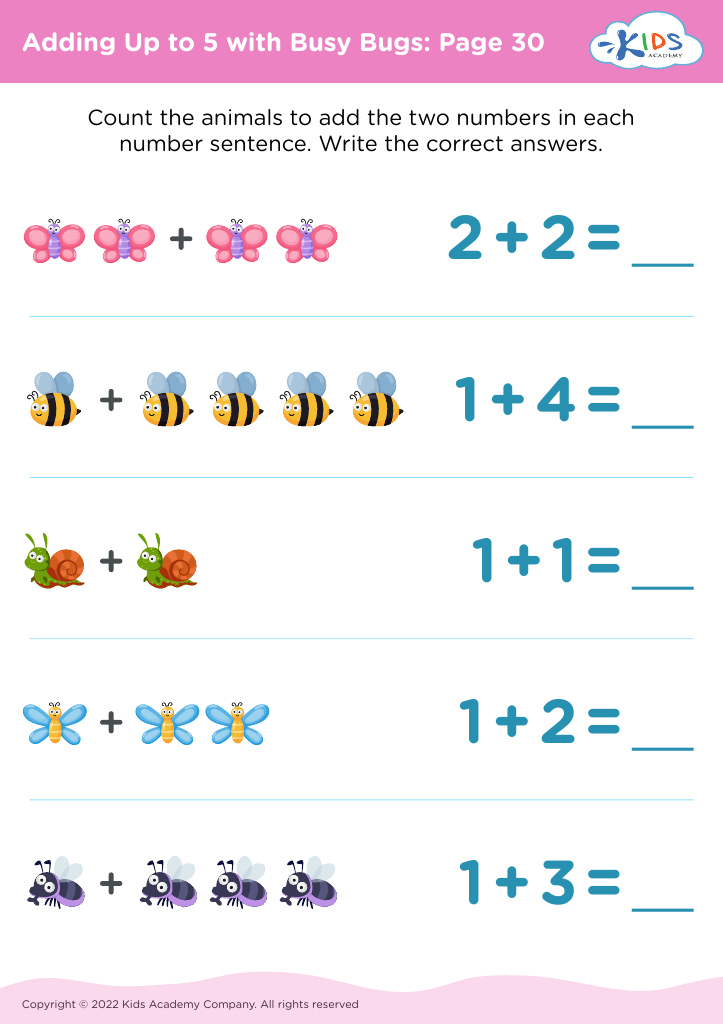
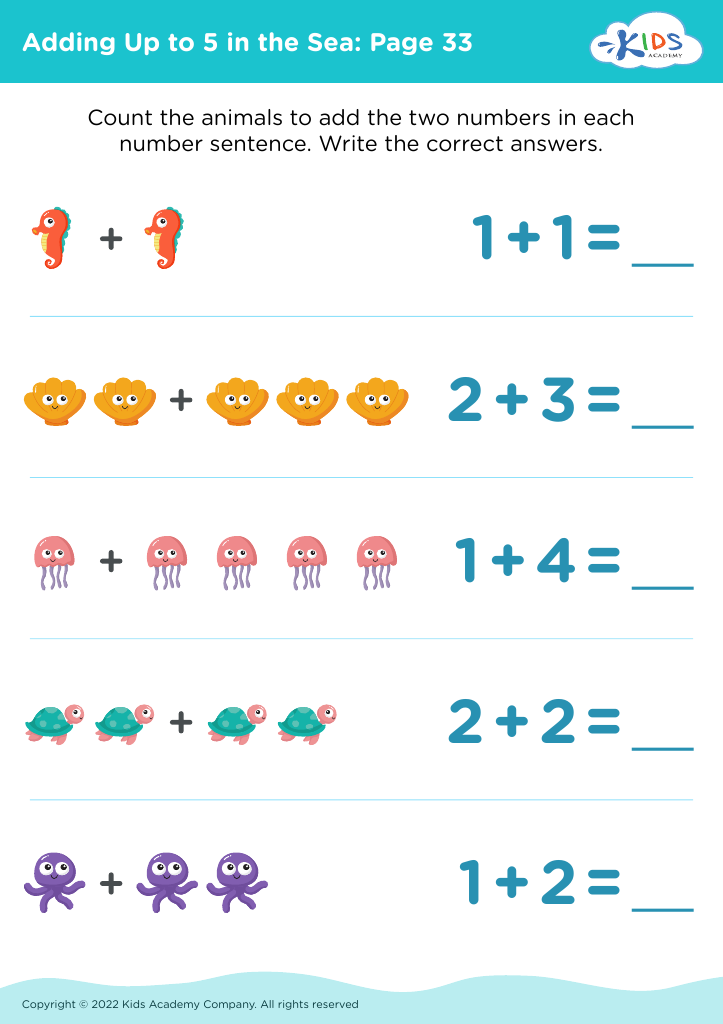
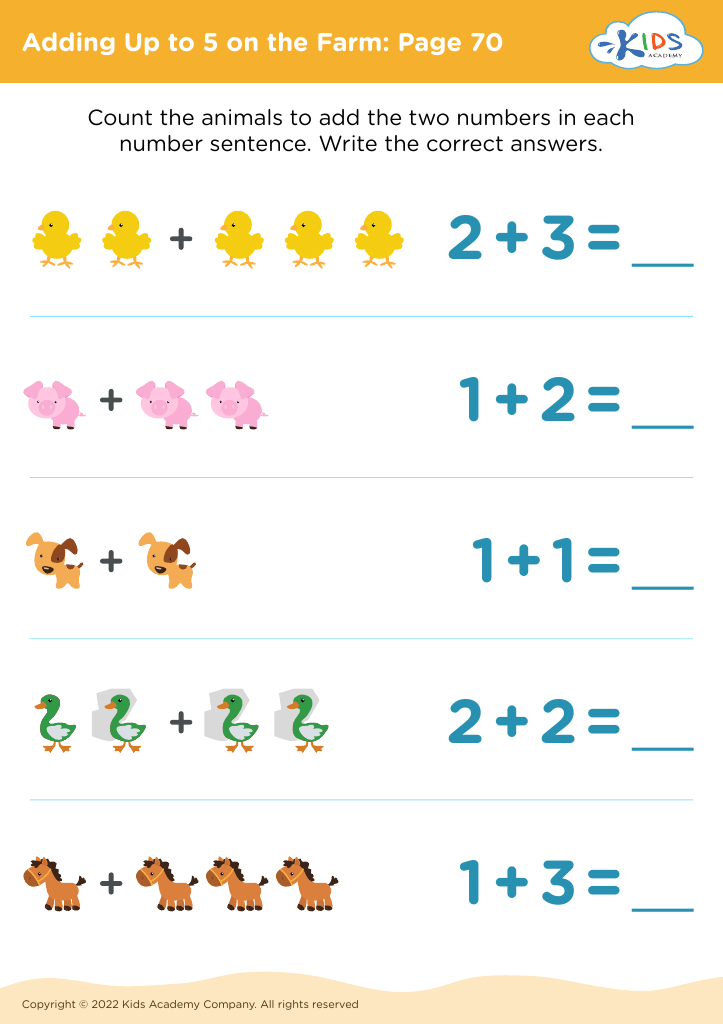
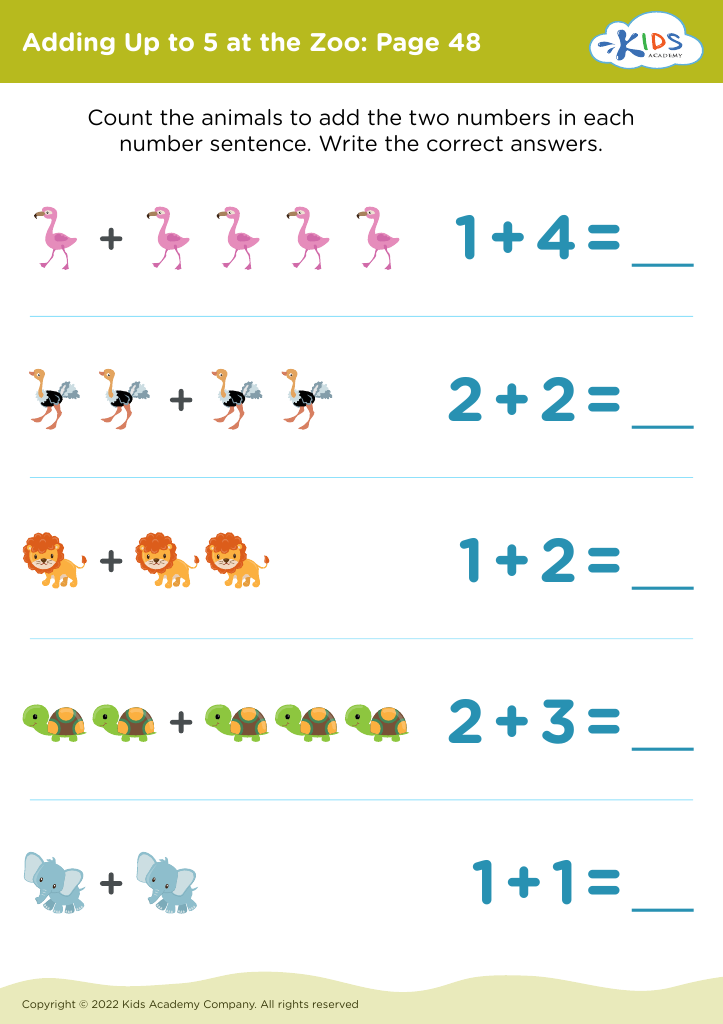
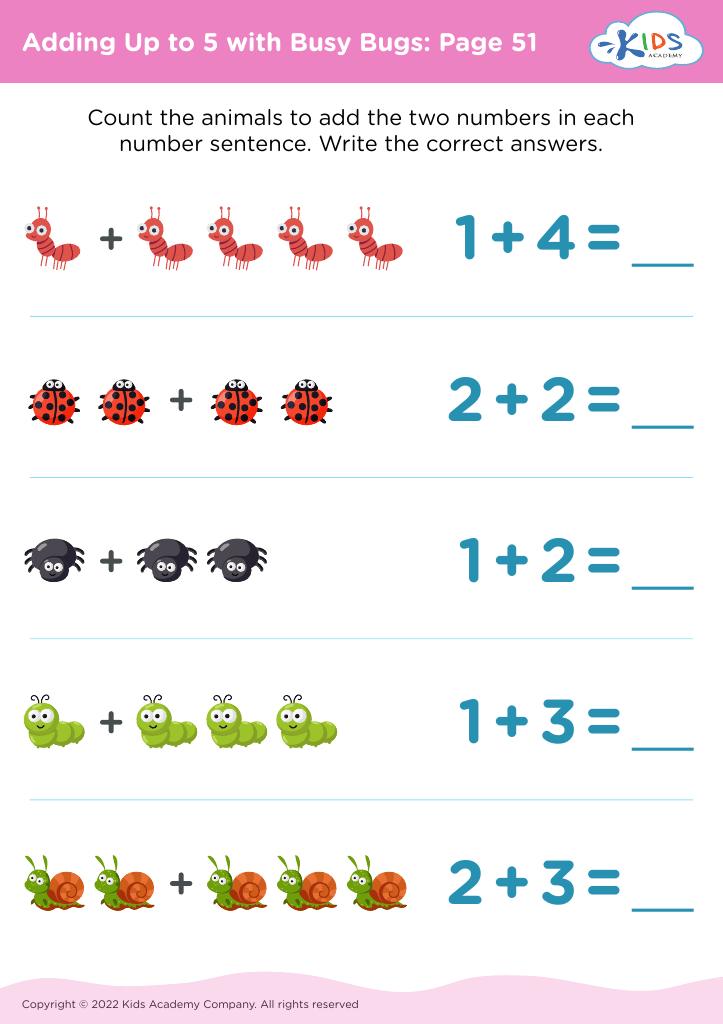
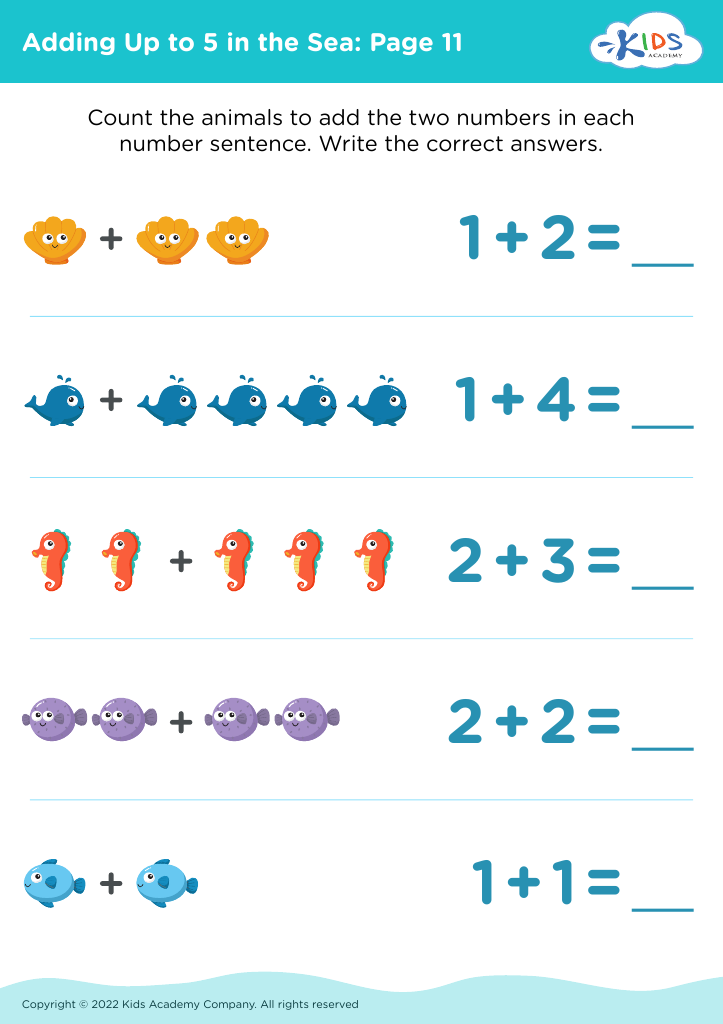
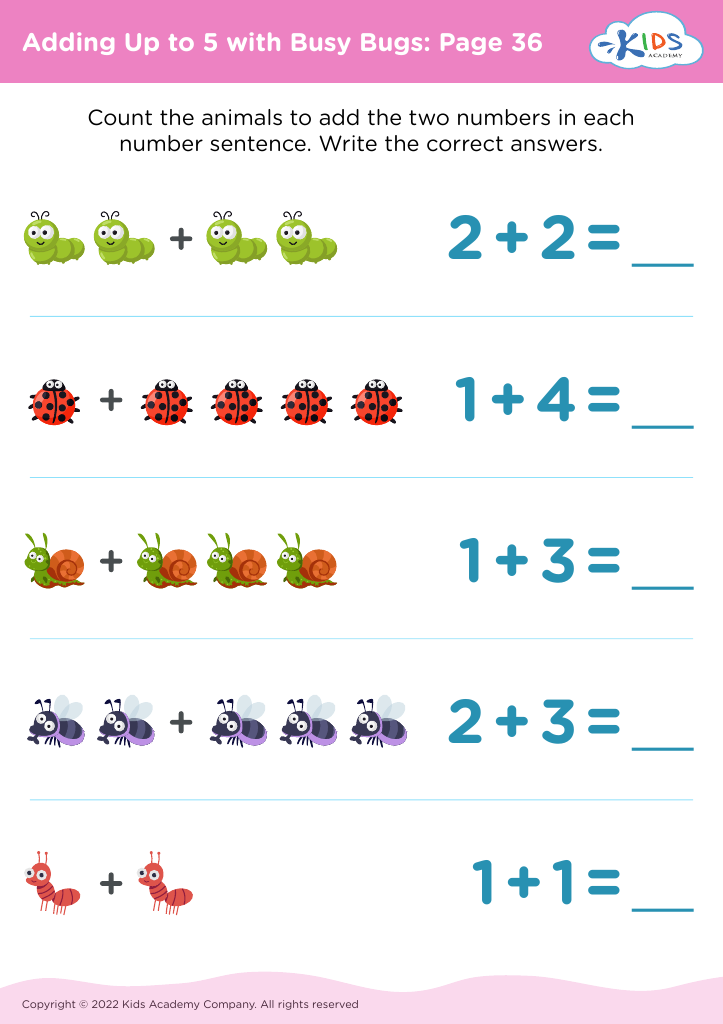
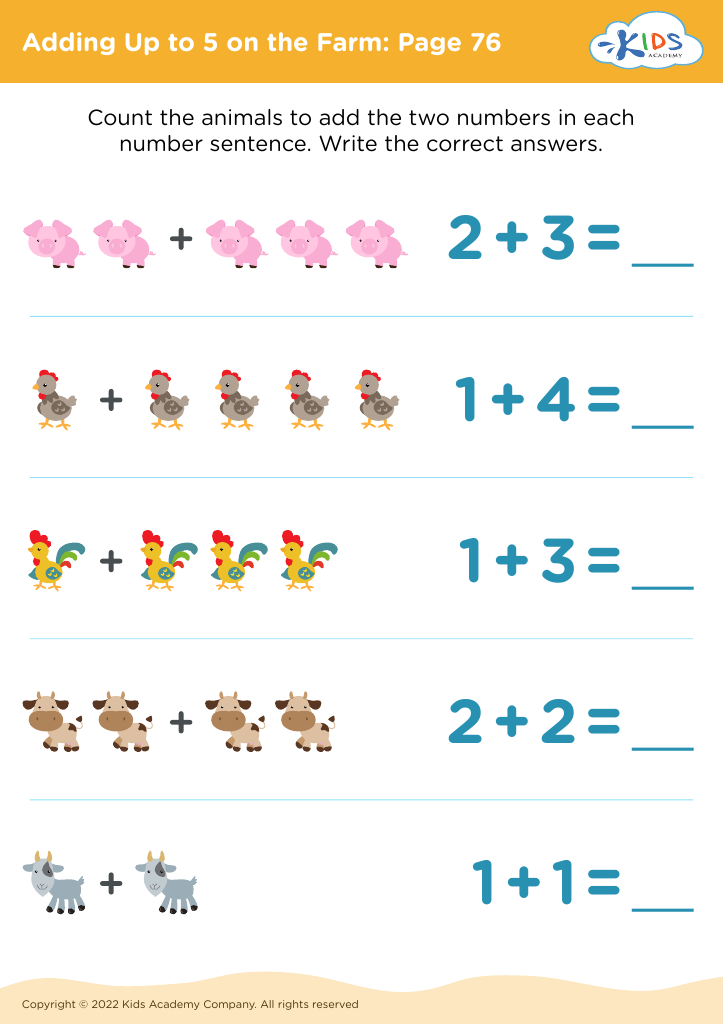
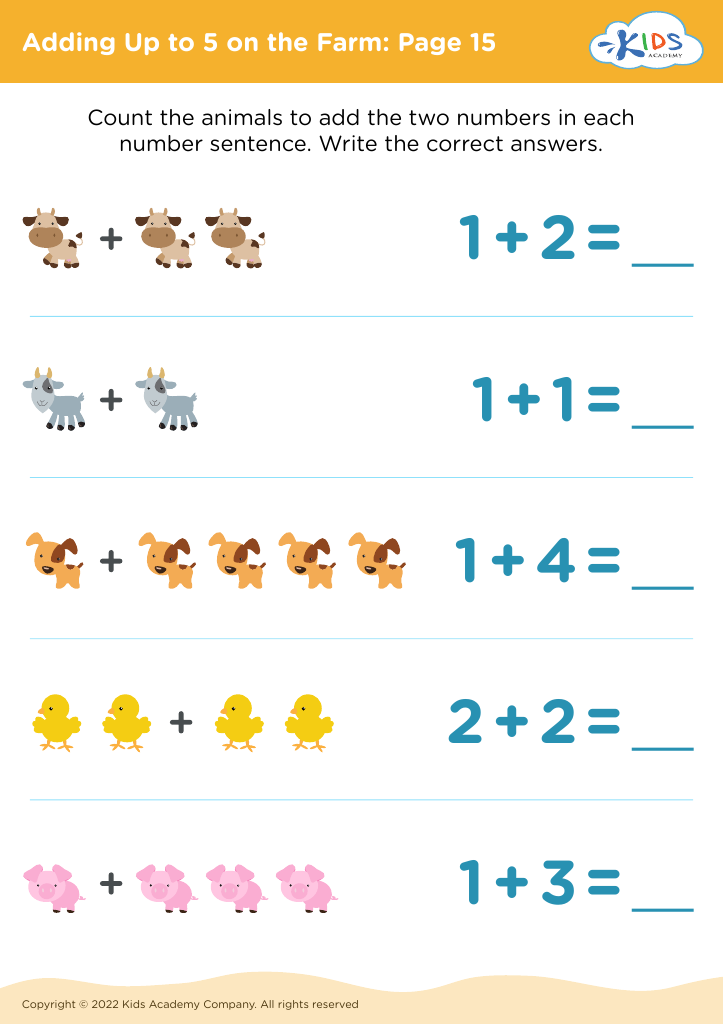
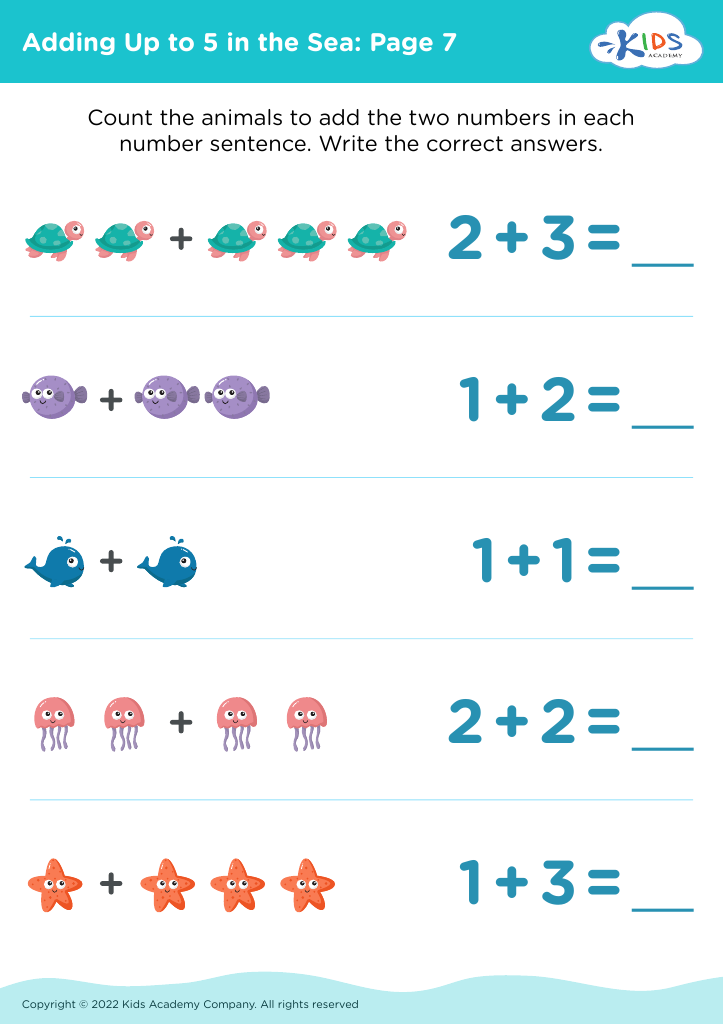
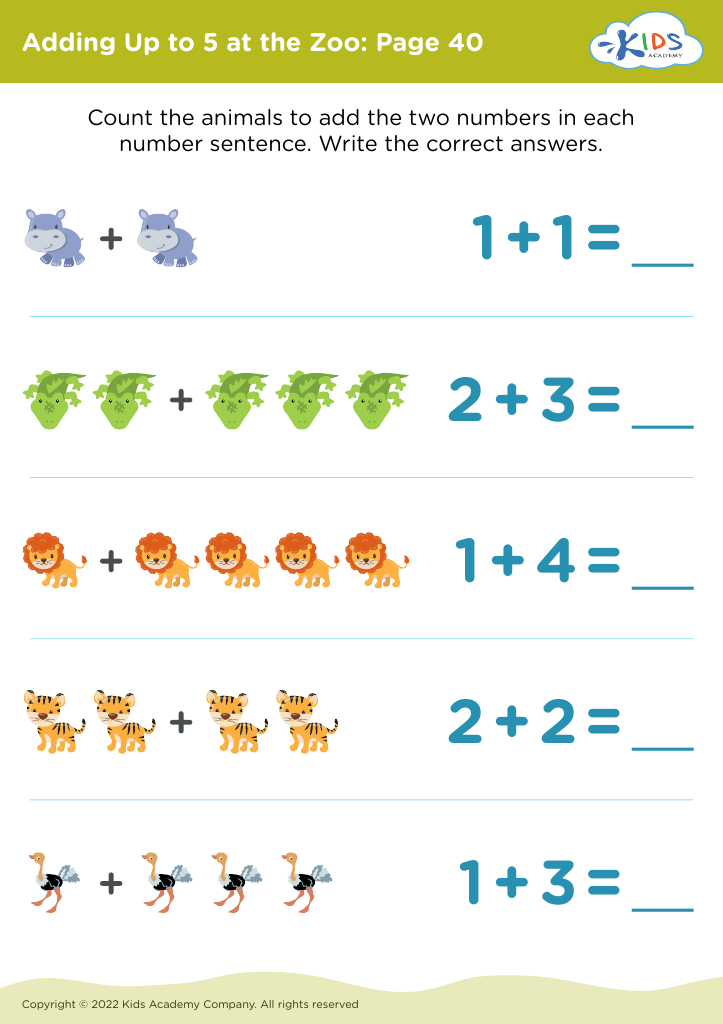
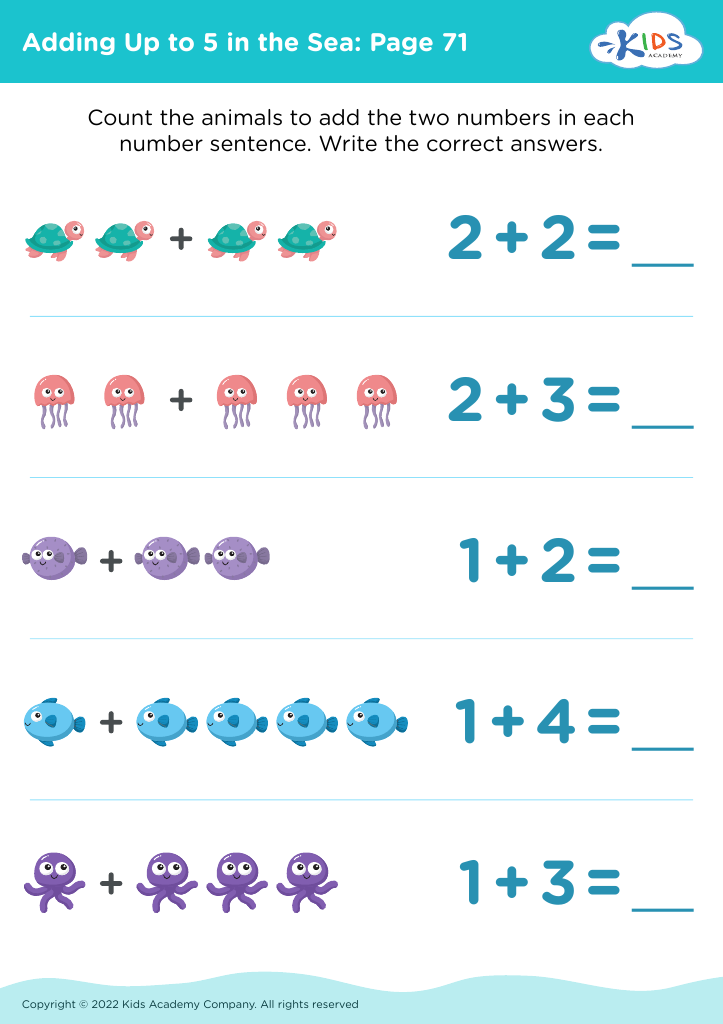
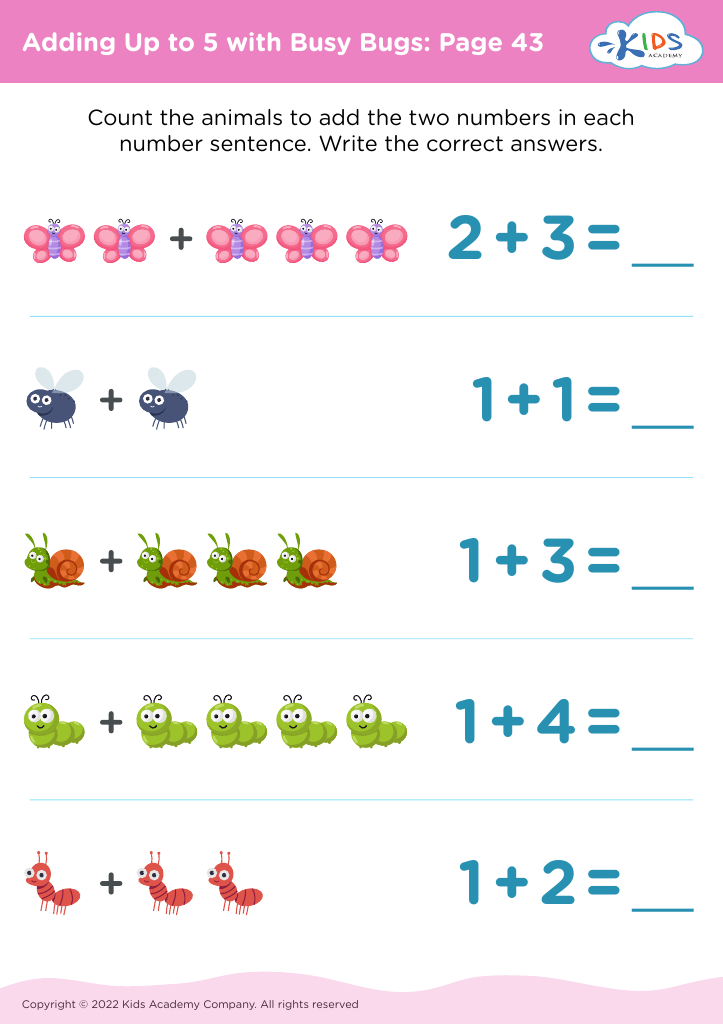
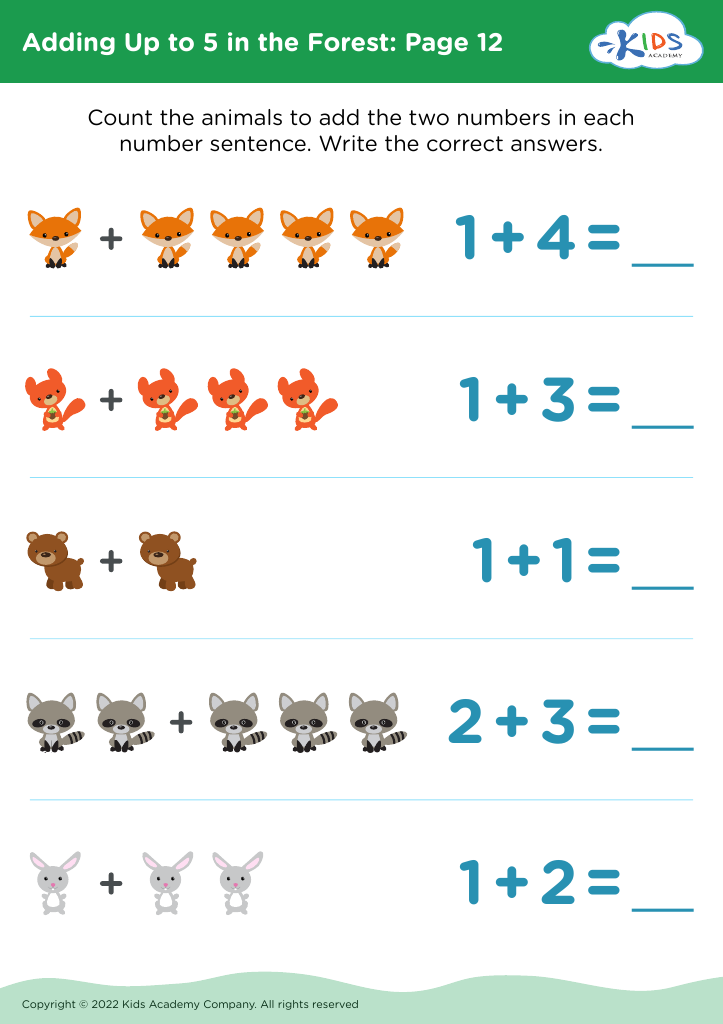
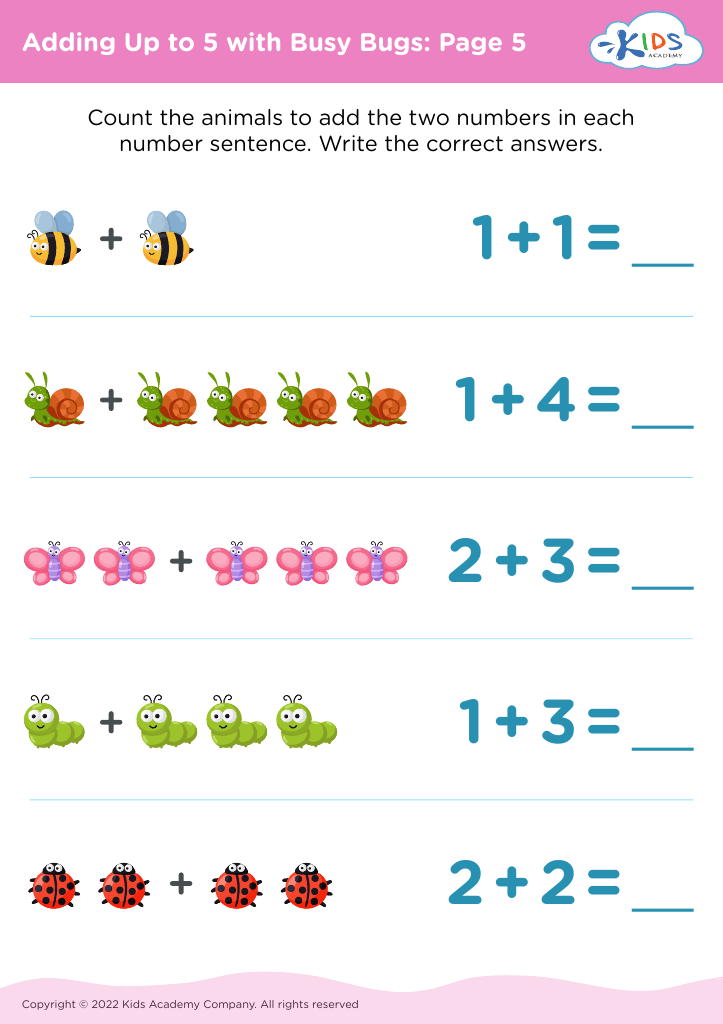
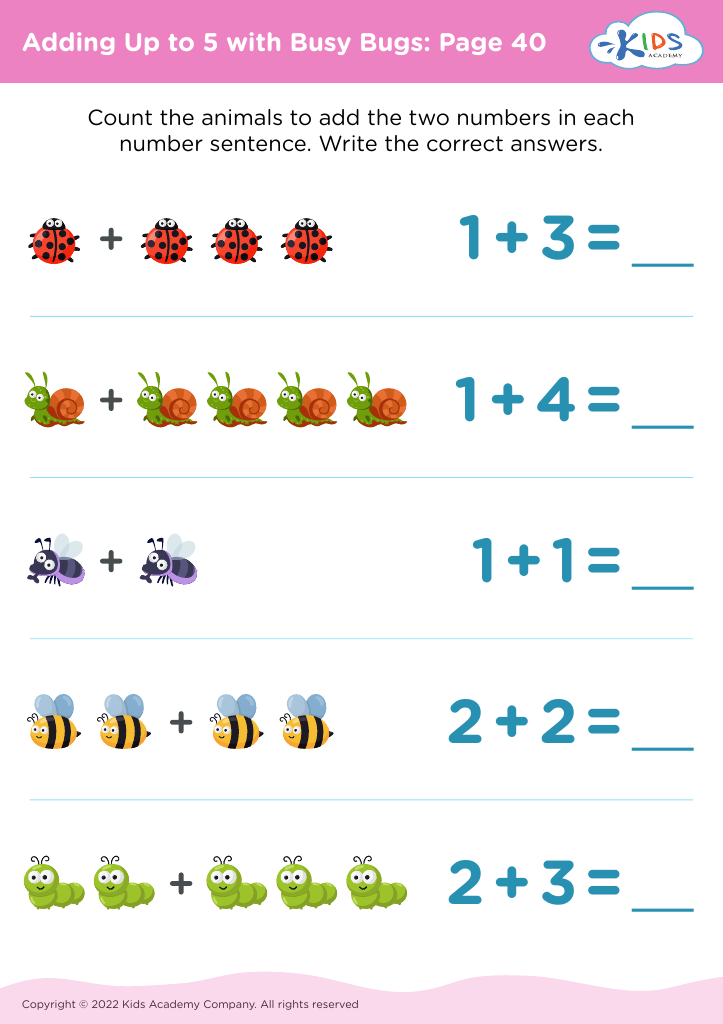
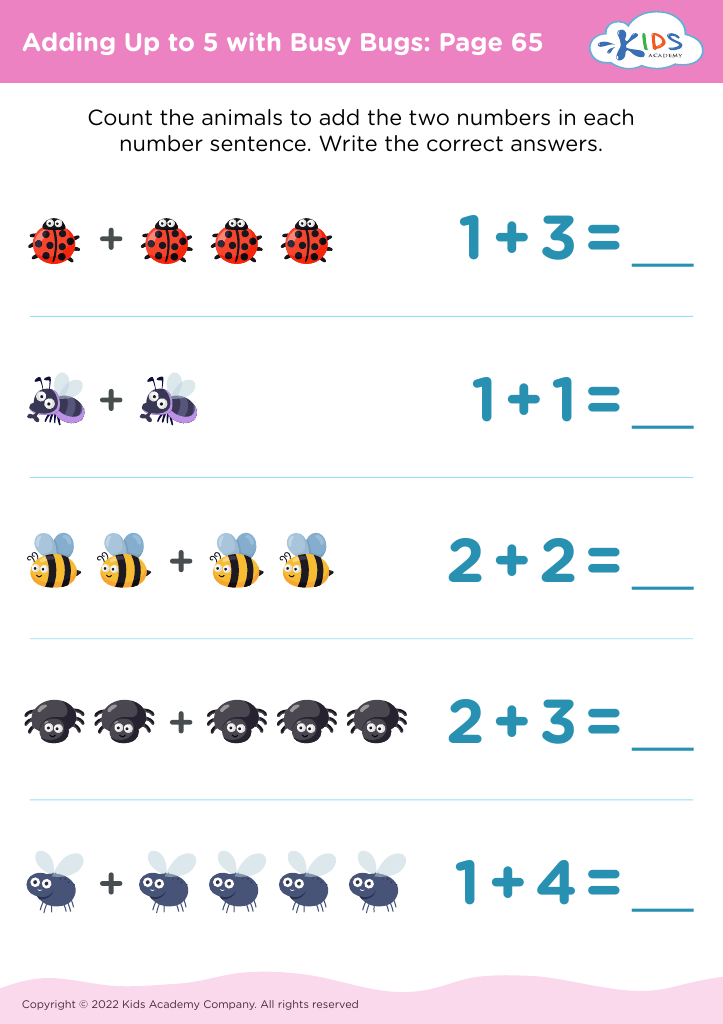
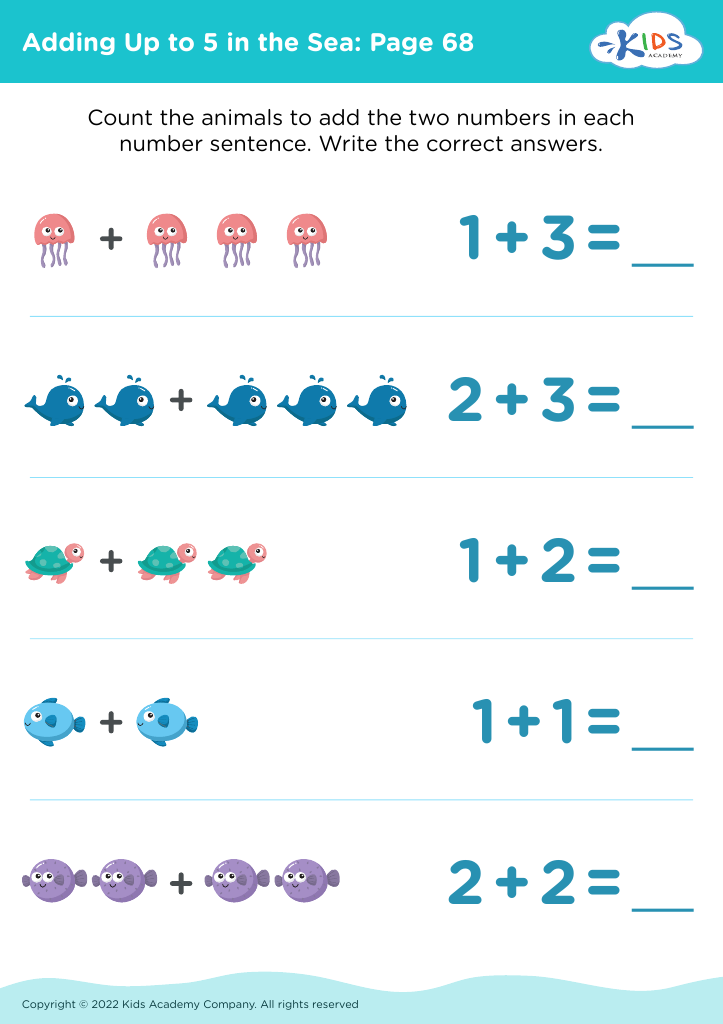
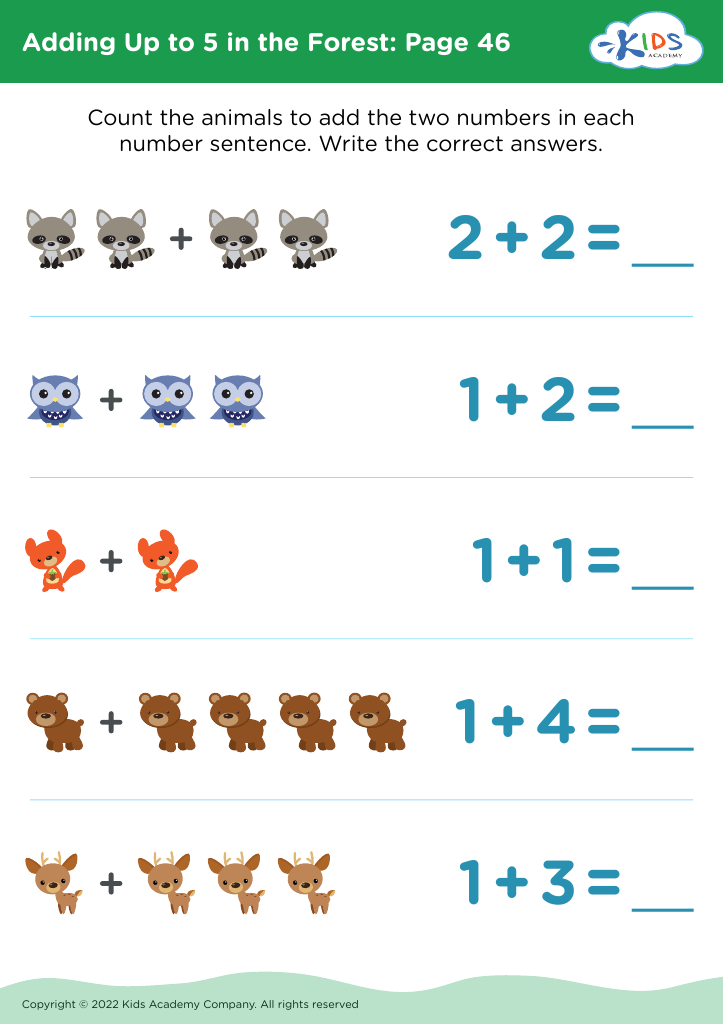
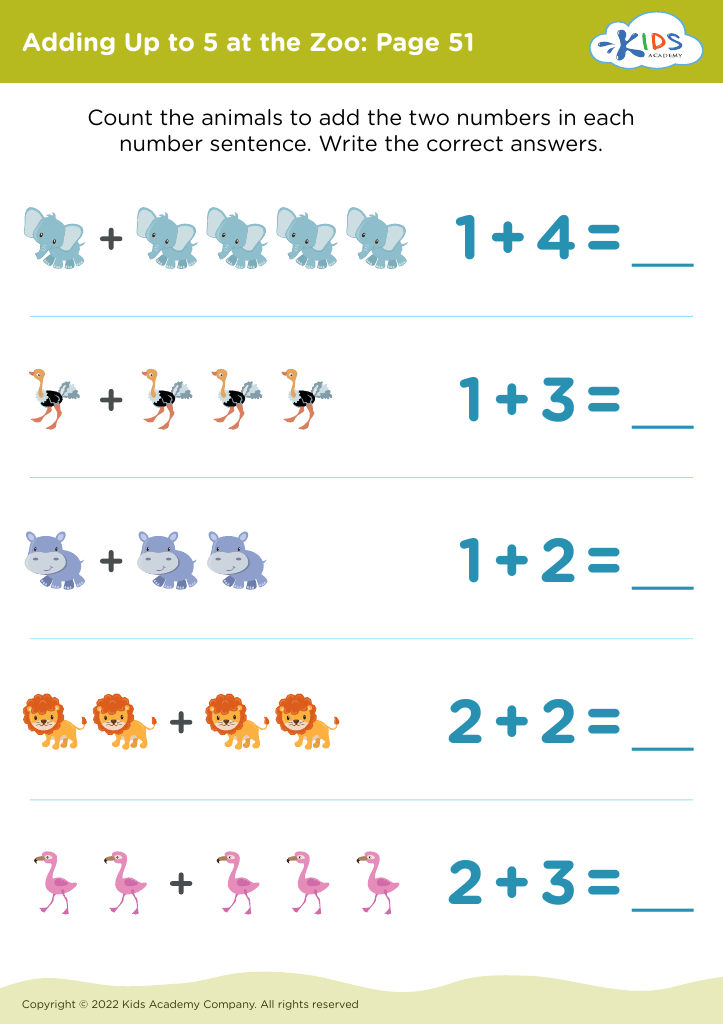
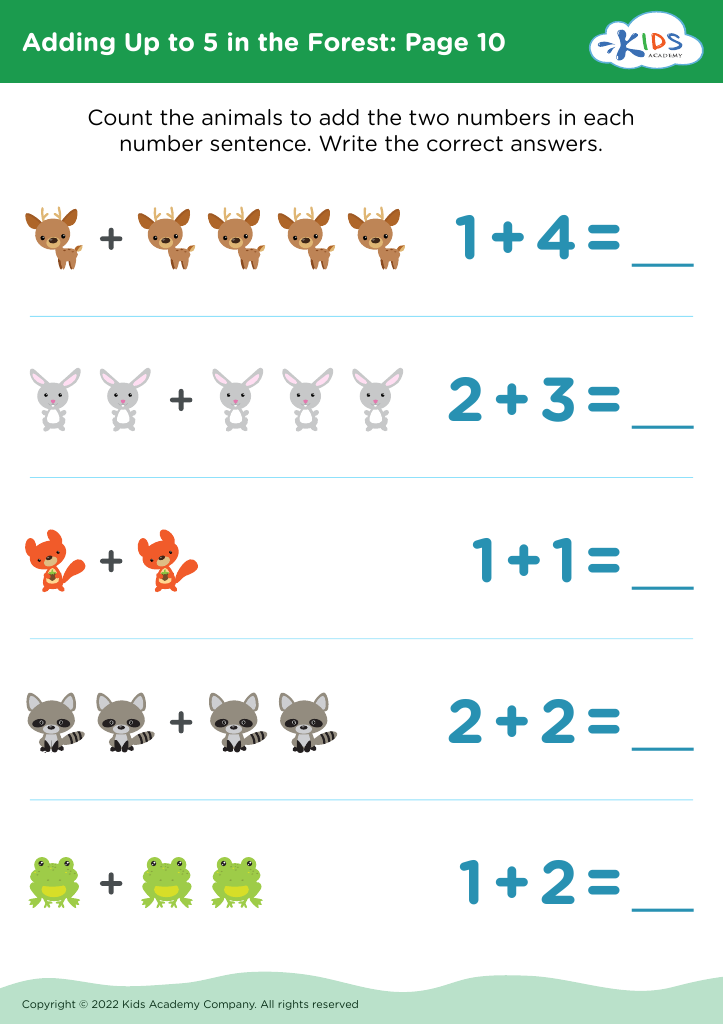
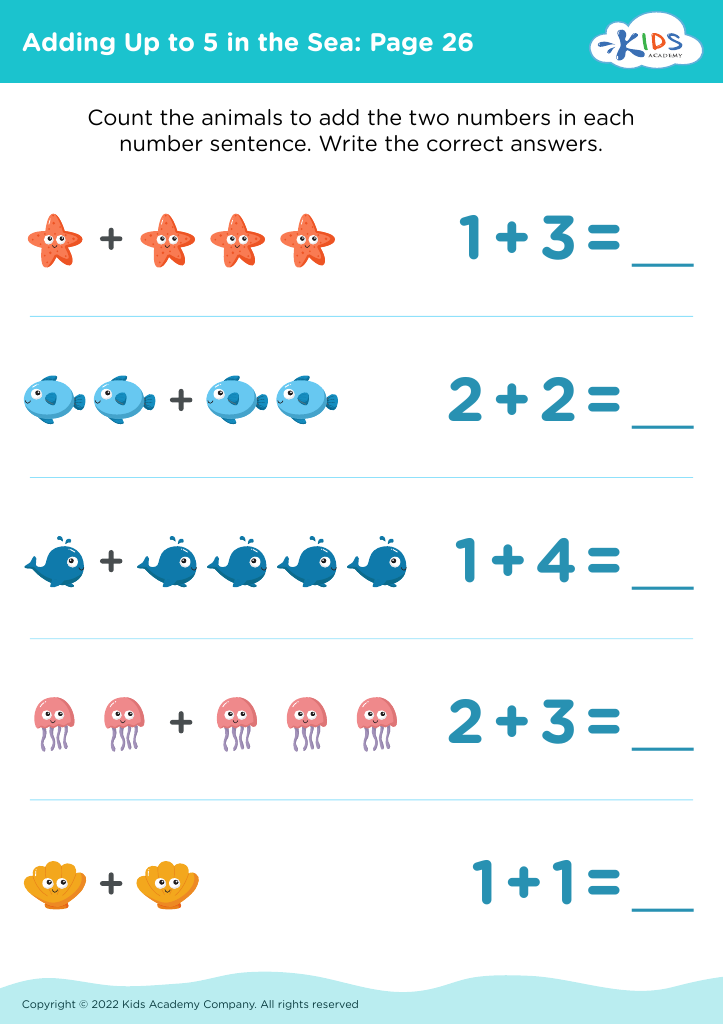








Parents and teachers should care about Addition Practice Adding Up to 5 for children aged 3-5 as it plays a critical role in laying the foundation for their future mathematical success and cognitive development. Introducing young learners to basic addition fosters essential numeracy skills, which are crucial for understanding more complex mathematical concepts in the future. These activities enhance a child's ability to recognize numbers, understand their values, and comprehend the concept of combining quantities to form a new total, which form the building blocks of math fluency.
At this age, children’s brains are highly adaptable and primed for learning. Engaging them in addition practice encourages the development of important skills like problem-solving, critical thinking, and logical reasoning. Moreover, hands-on addition activities, such as using physical objects or interactive games, can make learning fun and engaging, keeping young minds curious and motivated.
Early math practice also boosts confidence and sets a positive attitude toward learning. Children who develop strong math skills early are dispelling anxiety they might have about the subject later on. By focusing on addition up to 5, parents and teachers can ensure that children gain a comfortable and secure grasp of these fundamental skills in a stress-free and supportive environment, fostering a lifelong appreciation for math.








