Check out this FREE Trial Lesson on Adding Up to 5 for age 3-5!

Exactly the Same, or Not

Favorites
With answer key
Interactive
  • 3-5
  • Basic Addition Skills
  • Adding Up to 5
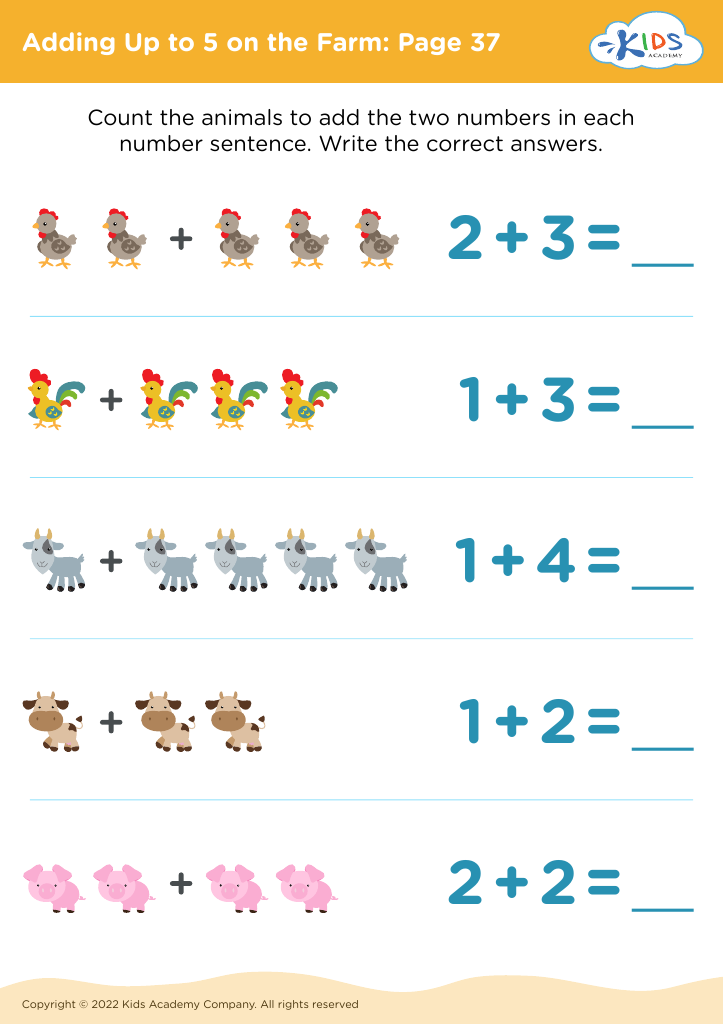
Adding Up to 5 on the Farm: Page 37
Worksheet
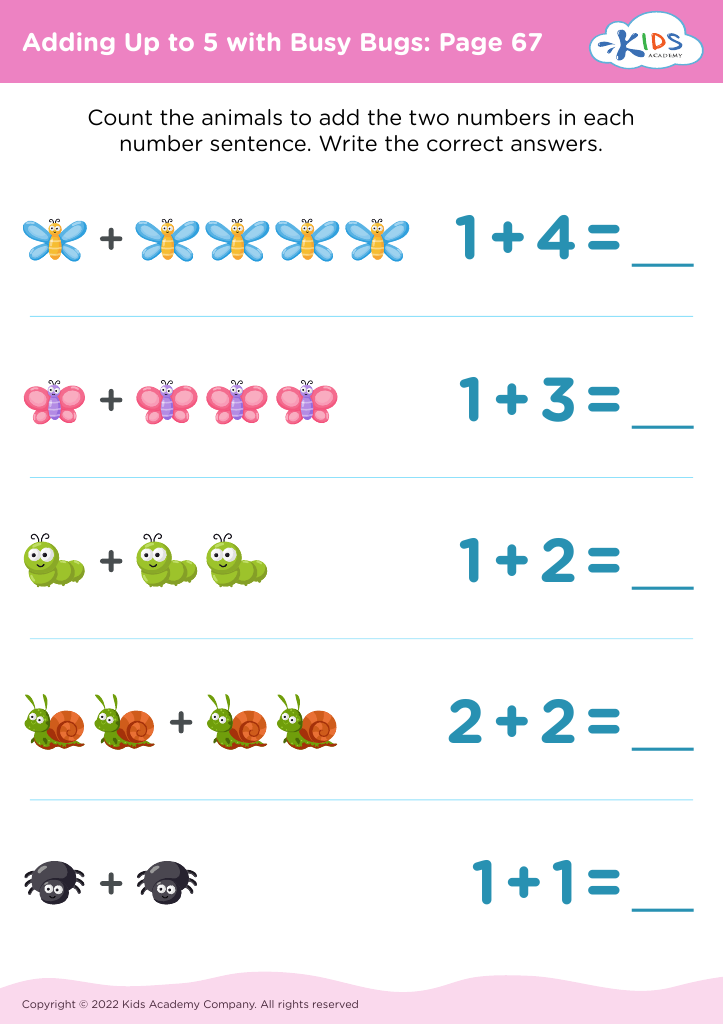
Adding Up to 5 with Busy Bugs: Page 67
Worksheet
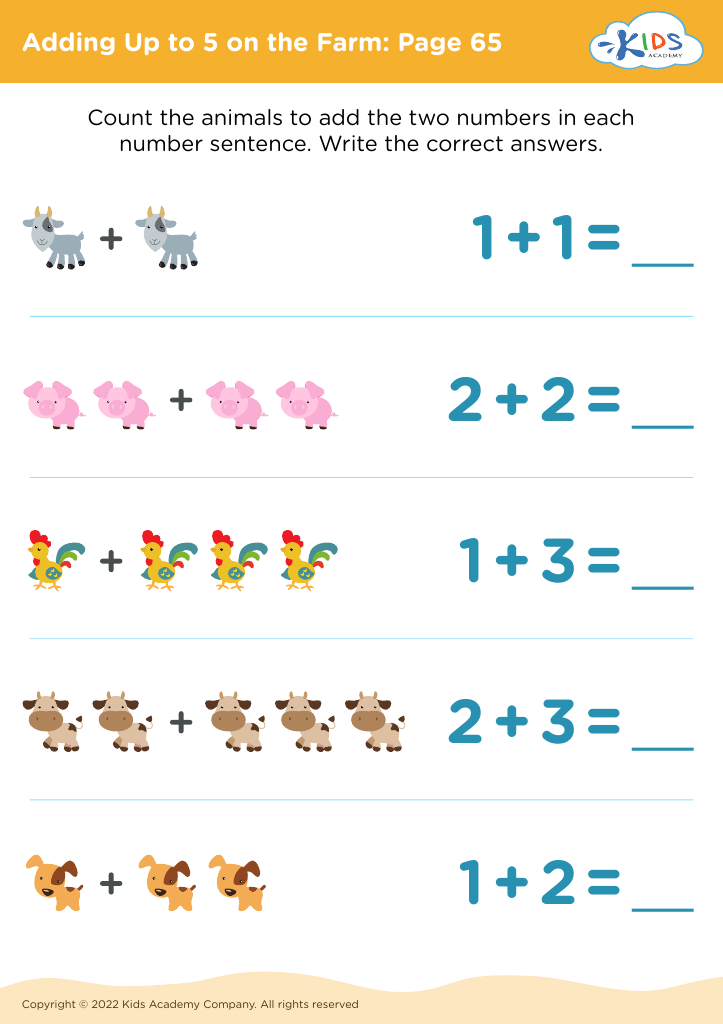
Adding Up to 5 on the Farm: Page 65
Worksheet
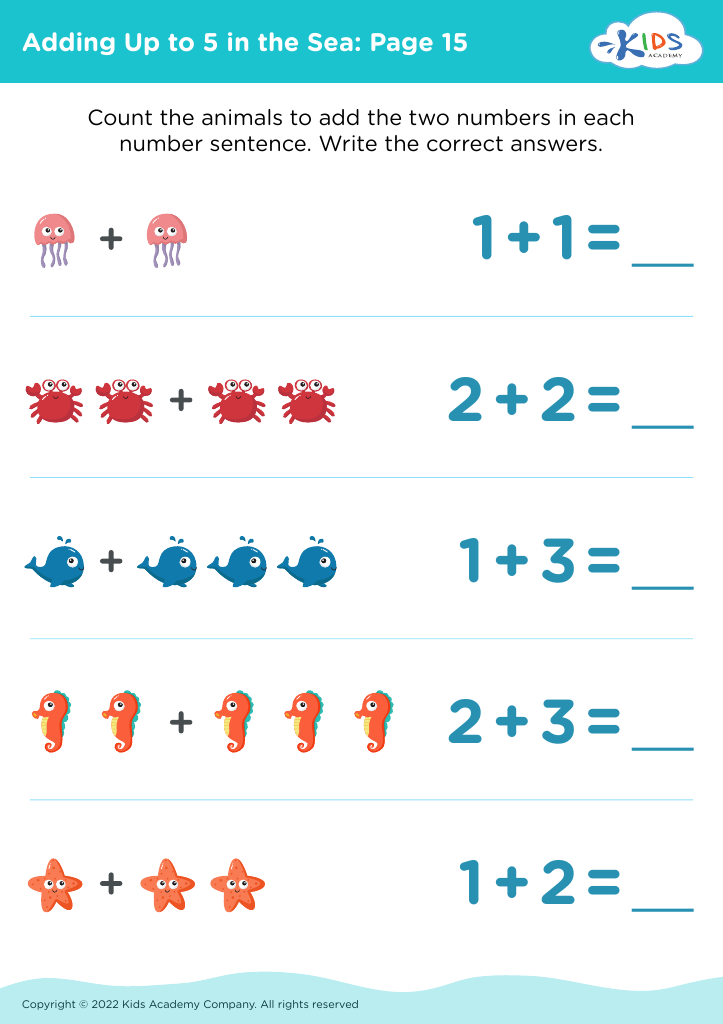
Adding Up to 5 in the Sea: Page 15
Worksheet
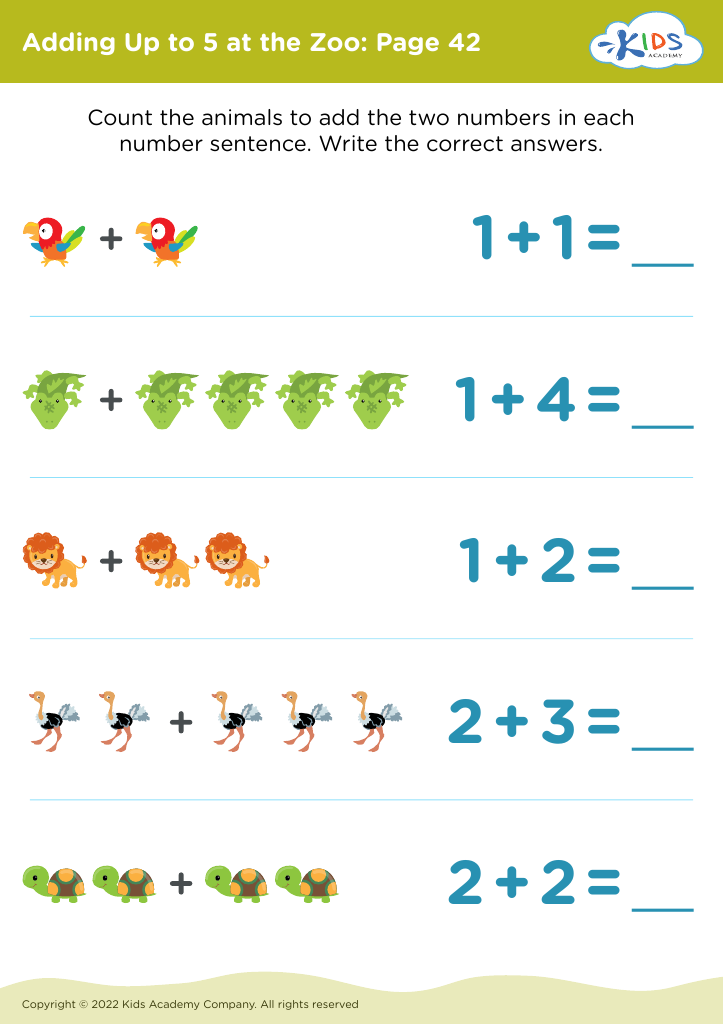
Adding Up to 5 at the Zoo: Page 42
Worksheet
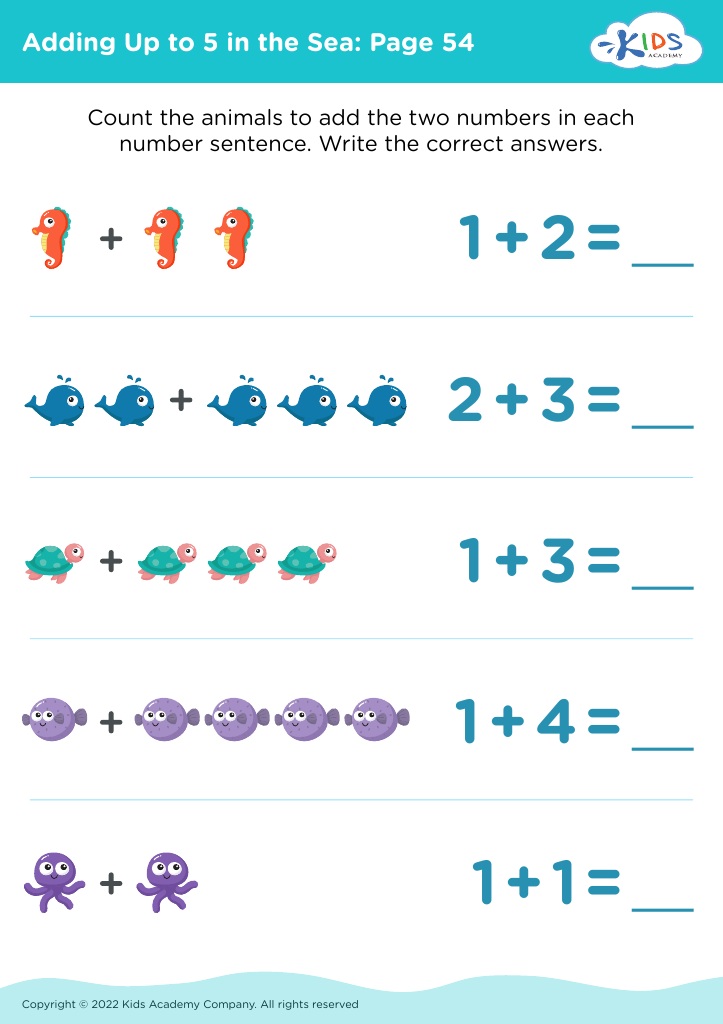
Adding Up to 5 in the Sea: Page 54
Worksheet
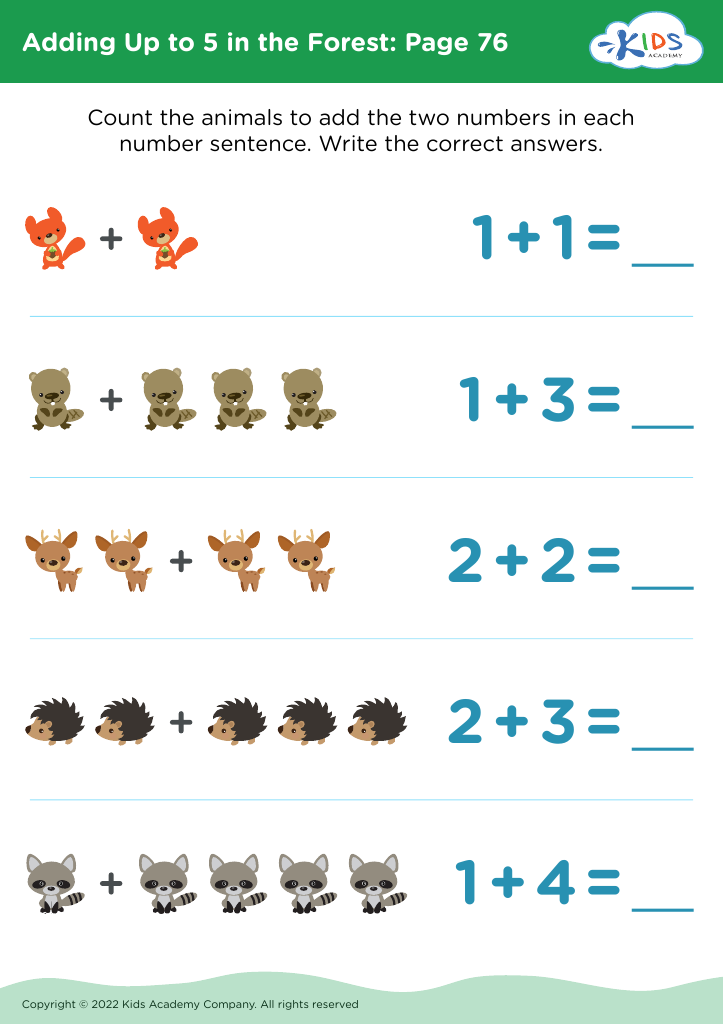
Adding Up to 5 in the Forest: Page 76
Worksheet
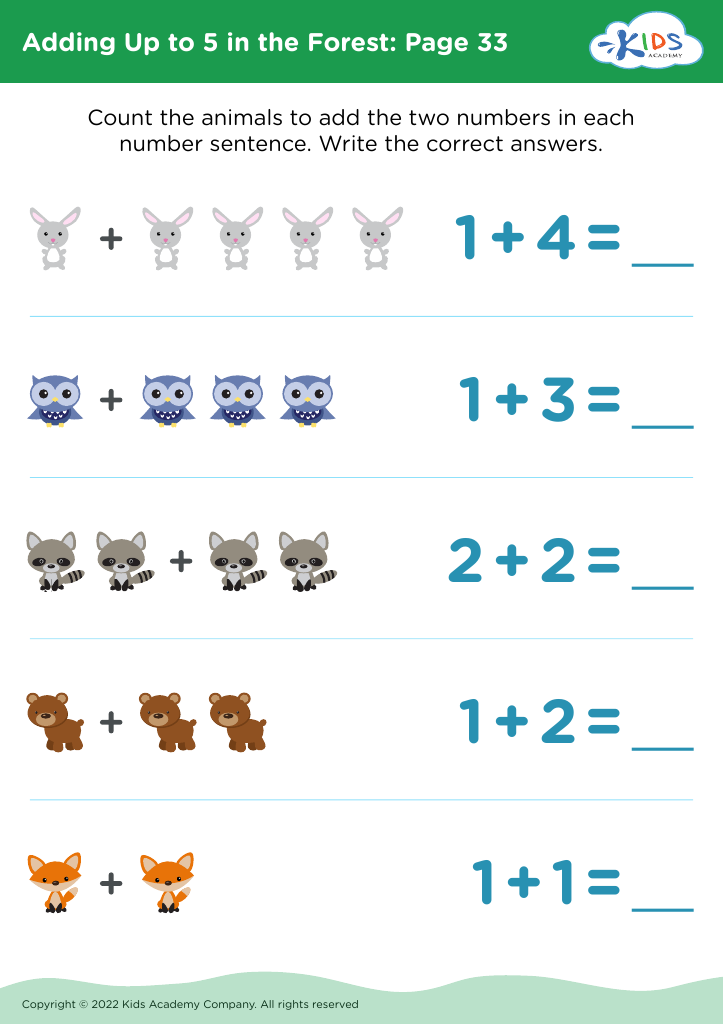
Adding Up to 5 in the Forest: Page 33
Worksheet
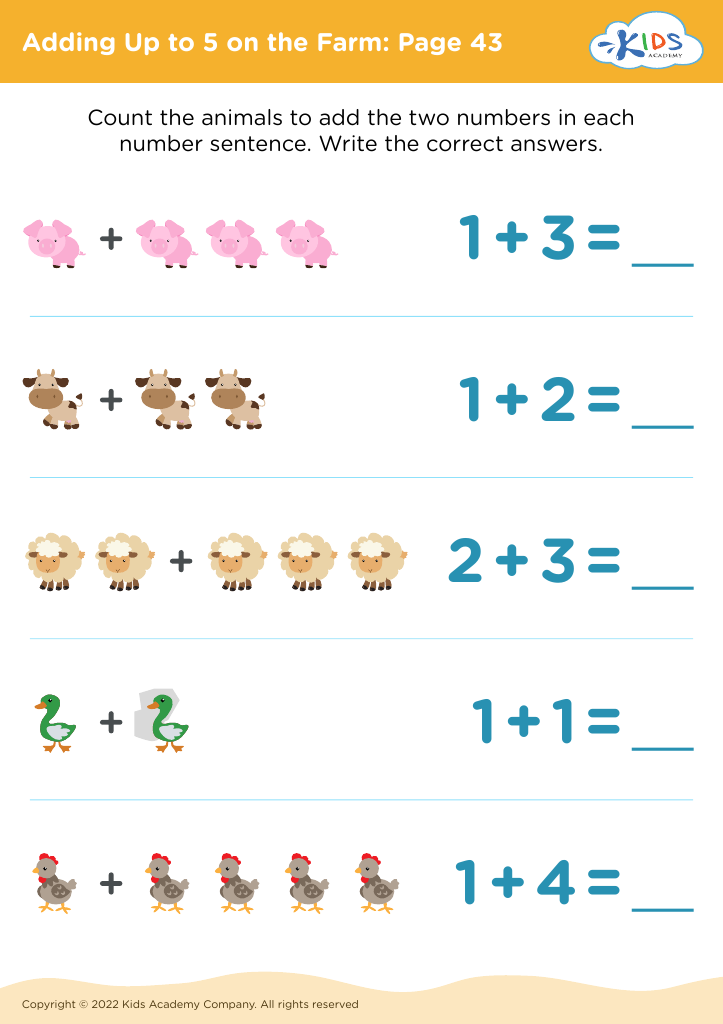
Adding Up to 5 on the Farm: Page 43
Worksheet
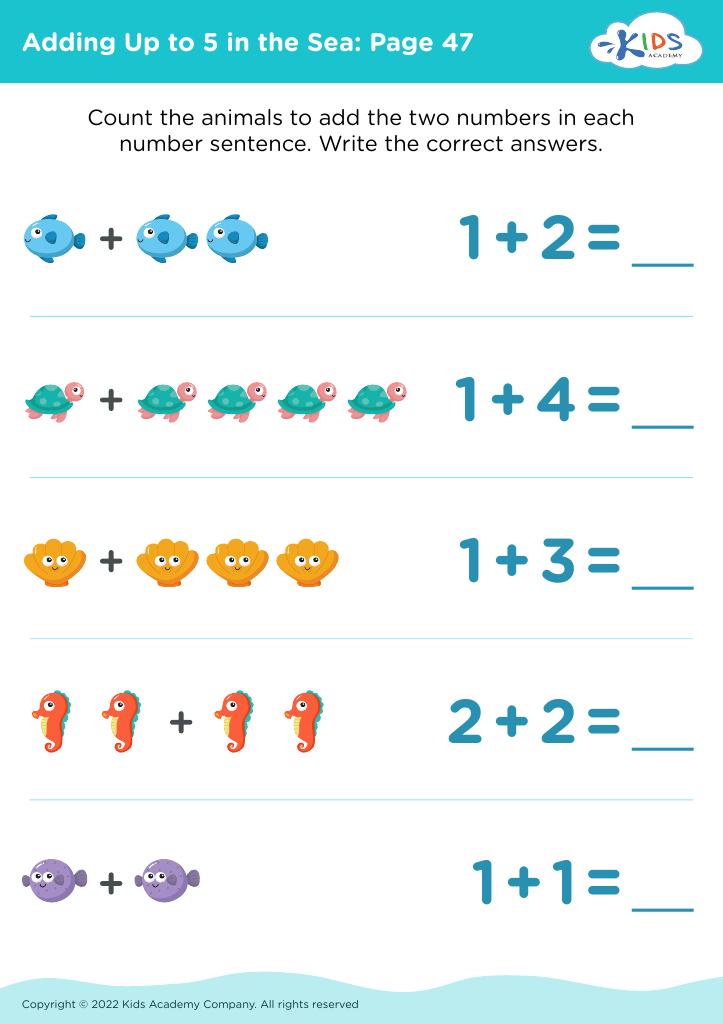
Adding Up to 5 in the Sea: Page 47
Worksheet
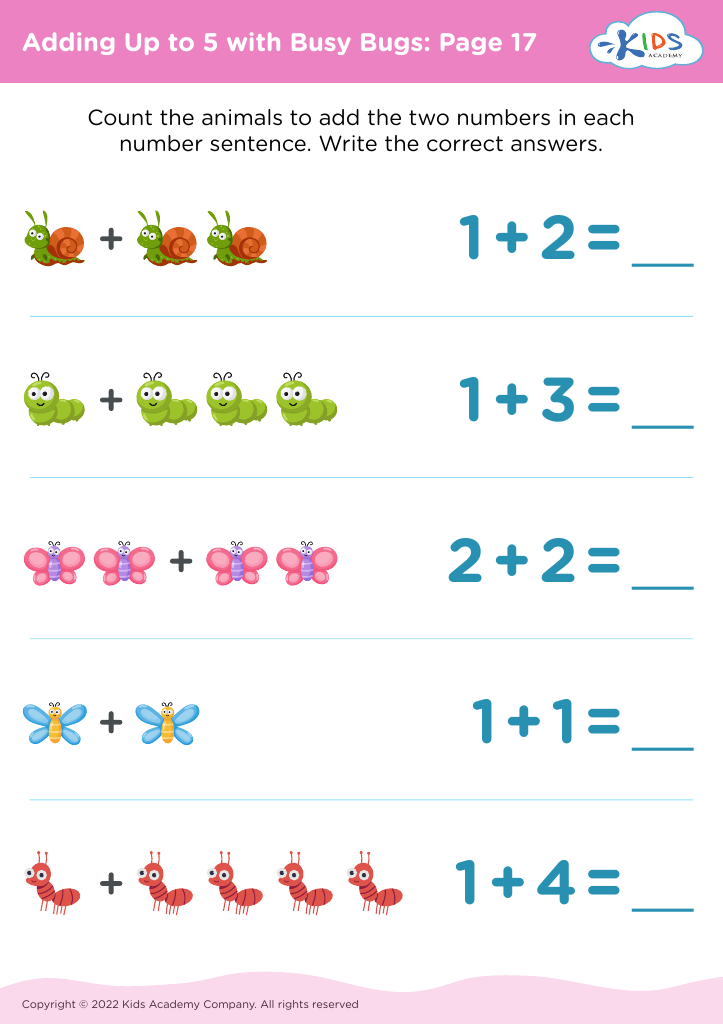
Adding Up to 5 with Busy Bugs: Page 17
Worksheet
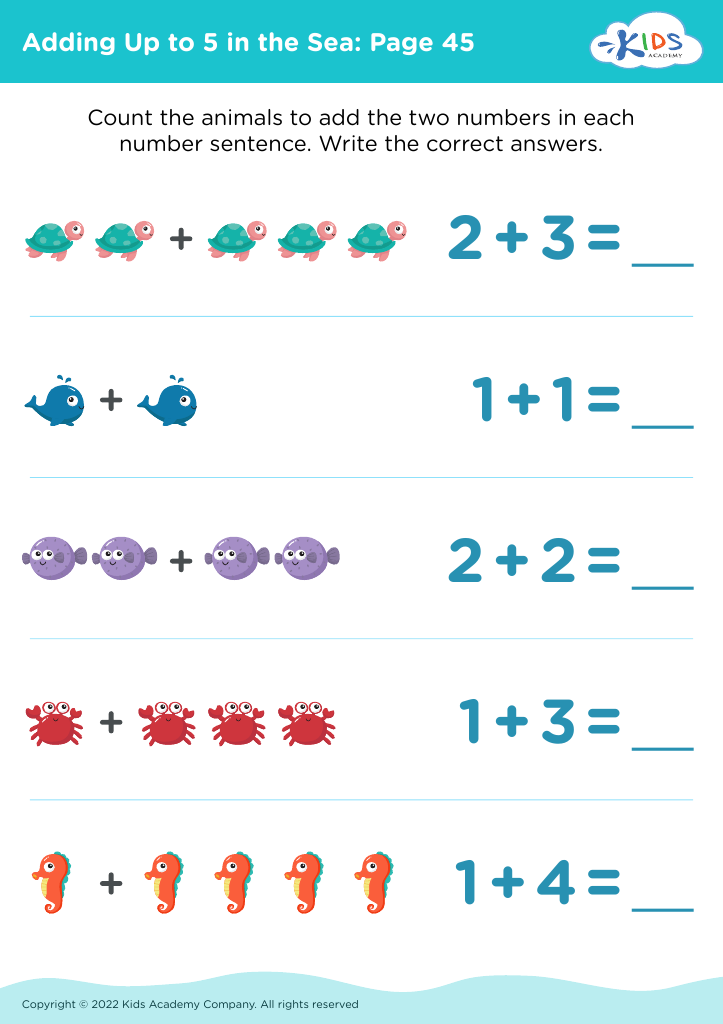
Adding Up to 5 in the Sea: Page 45
Worksheet
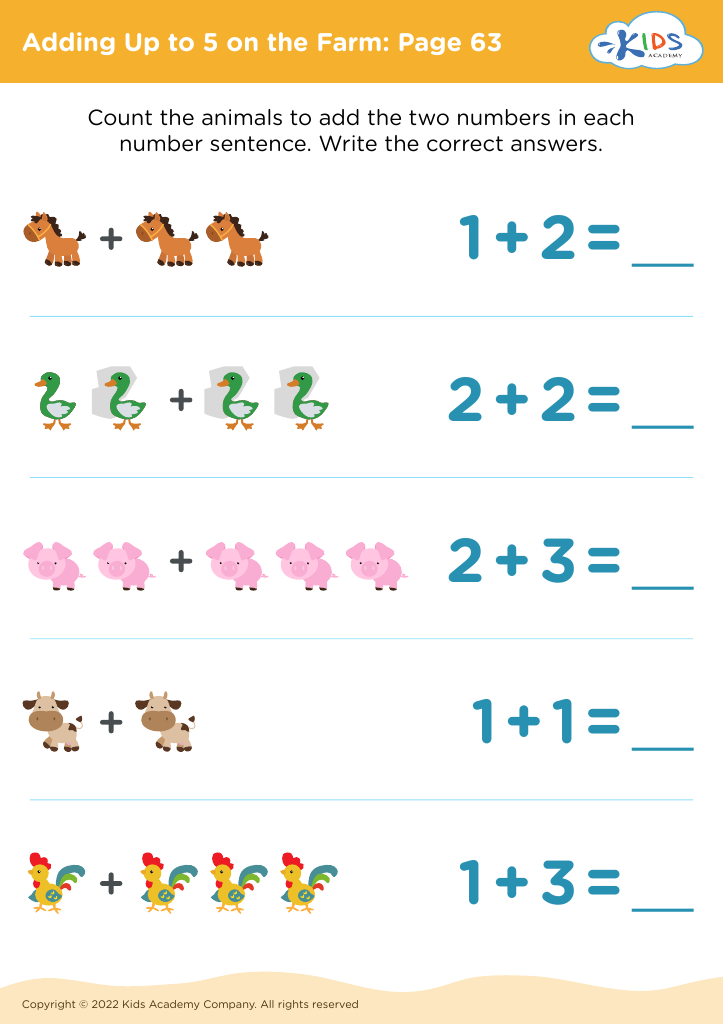
Adding Up to 5 on the Farm: Page 63
Worksheet
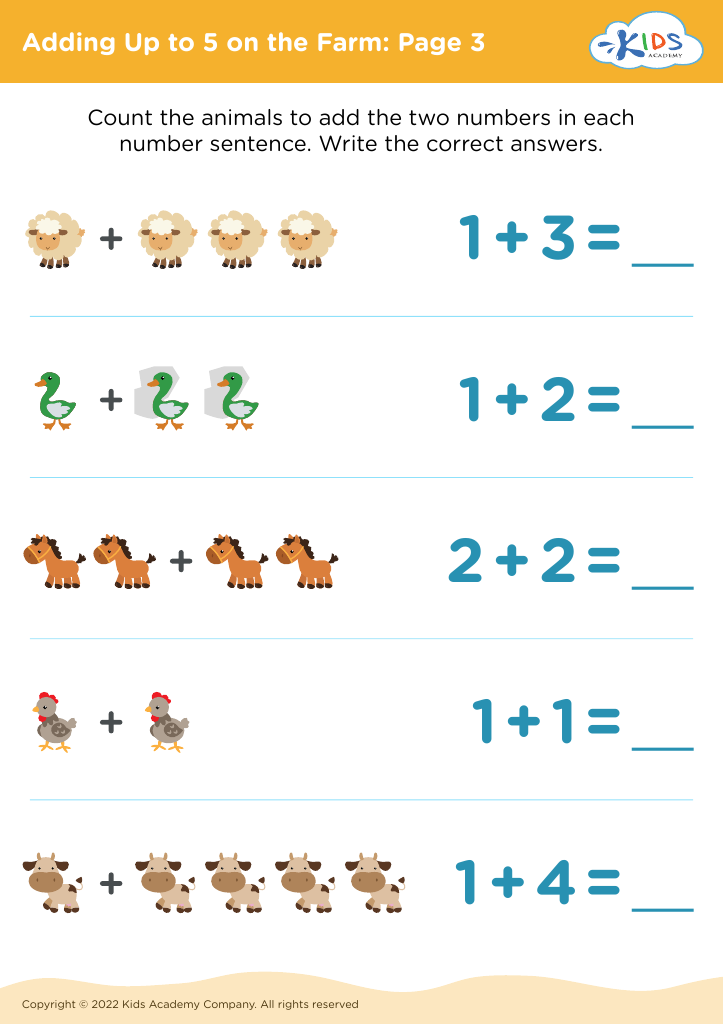
Adding Up to 5 on the Farm: Page 3
Worksheet
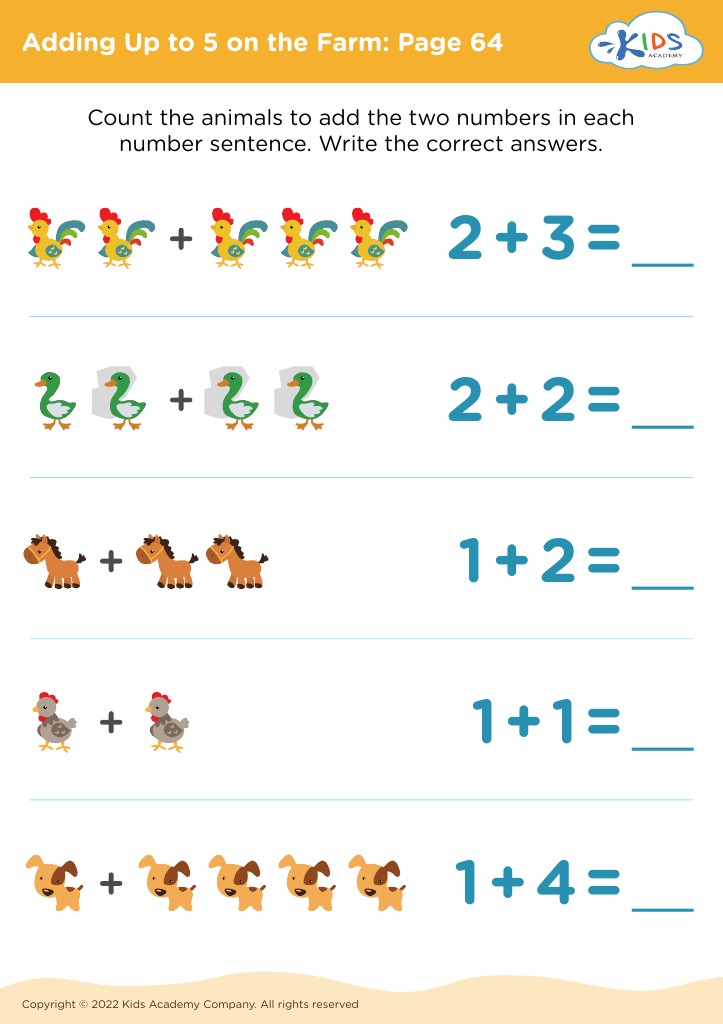
Adding Up to 5 on the Farm: Page 64
Worksheet
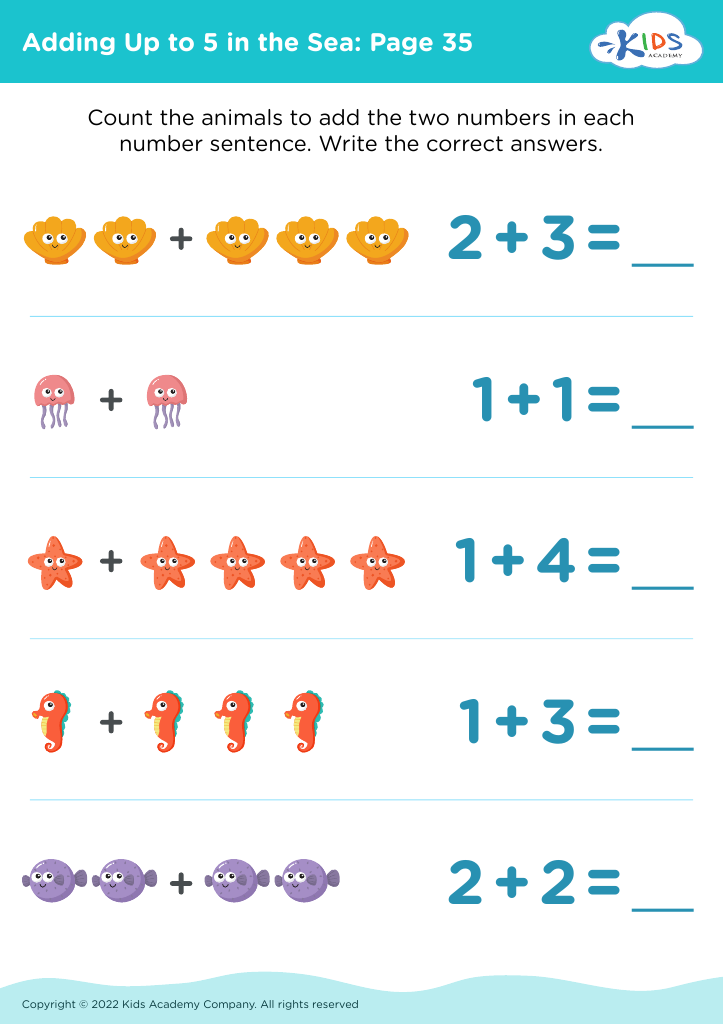
Adding Up to 5 in the Sea: Page 35
Worksheet
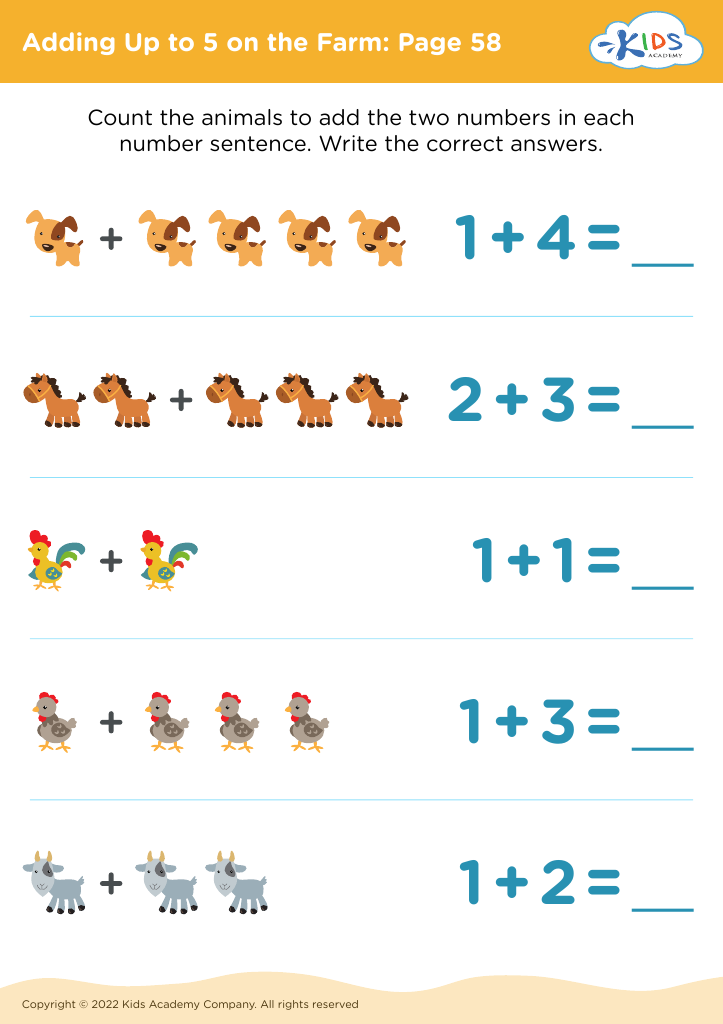
Adding Up to 5 on the Farm: Page 58
Worksheet
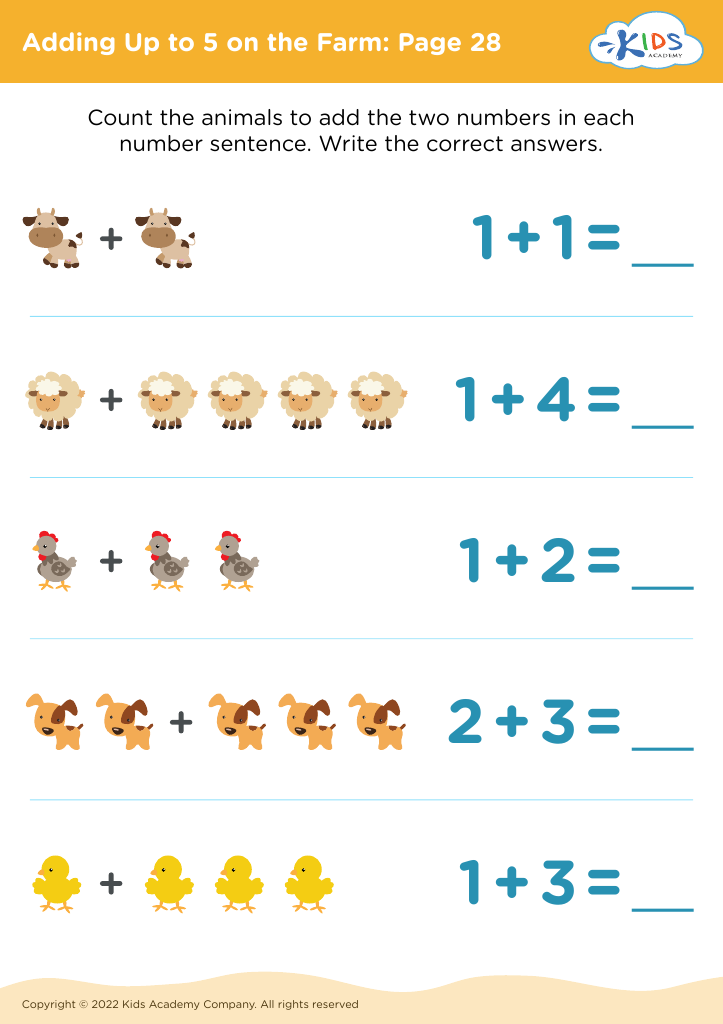
Adding Up to 5 on the Farm: Page 28
Worksheet
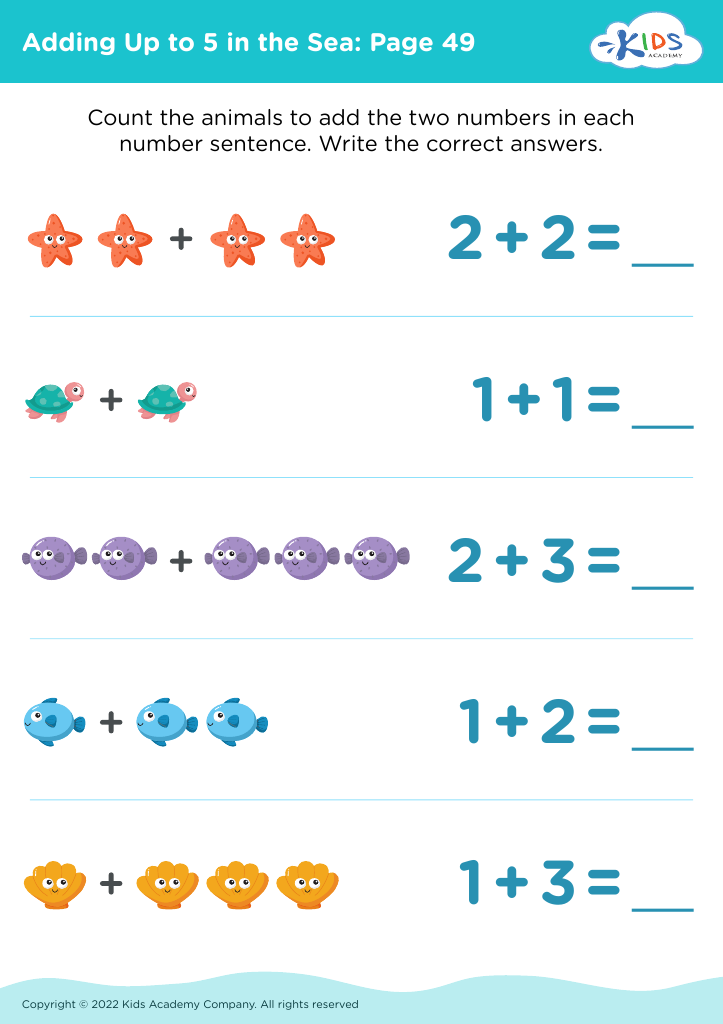
Adding Up to 5 in the Sea: Page 49
Worksheet
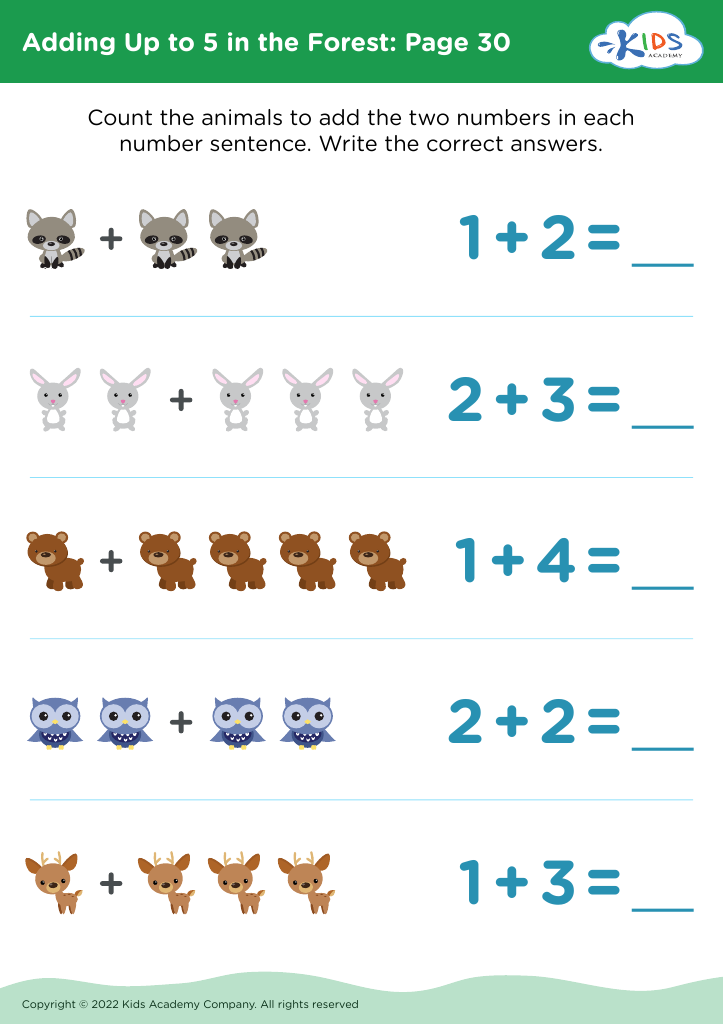
Adding Up to 5 in the Forest: Page 30
Worksheet
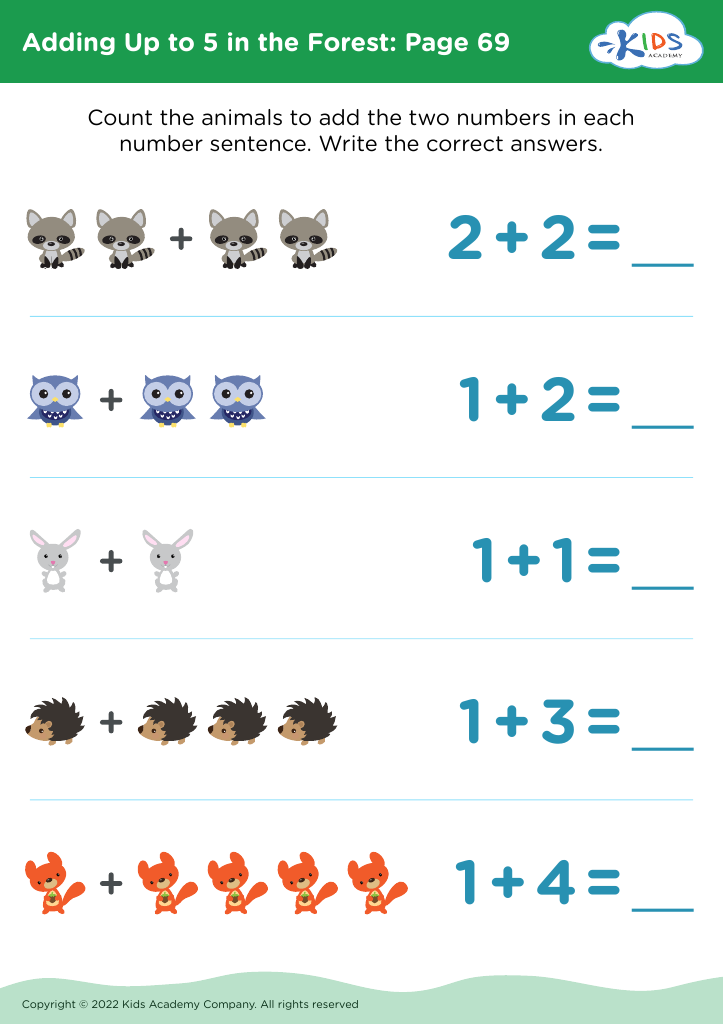
Adding Up to 5 in the Forest: Page 69
Worksheet
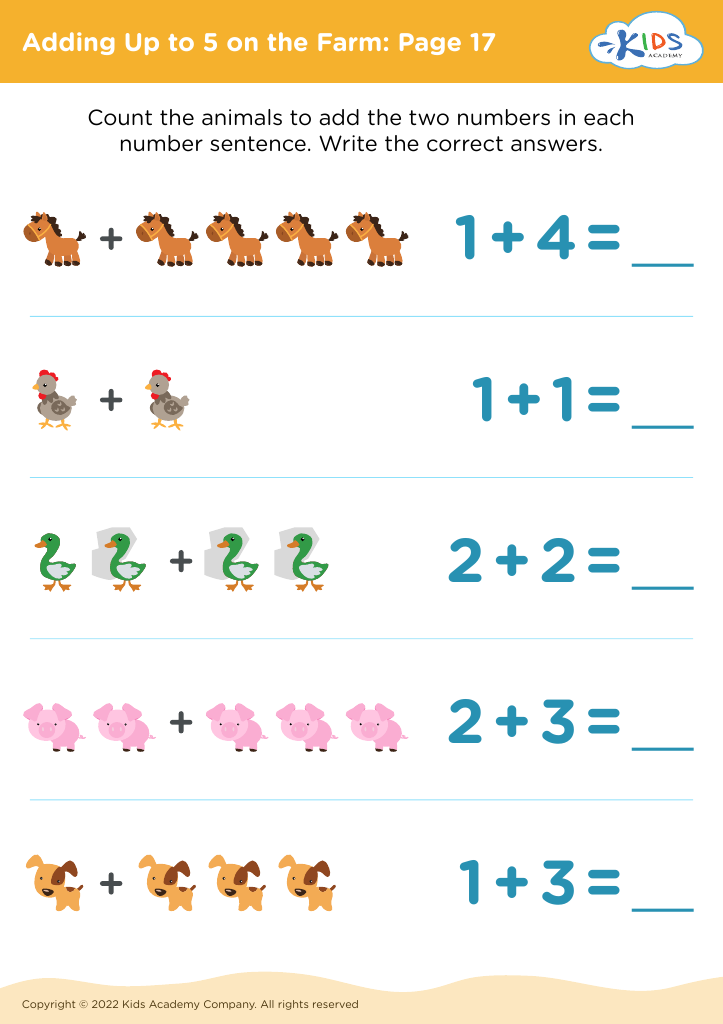
Adding Up to 5 on the Farm: Page 17
Worksheet
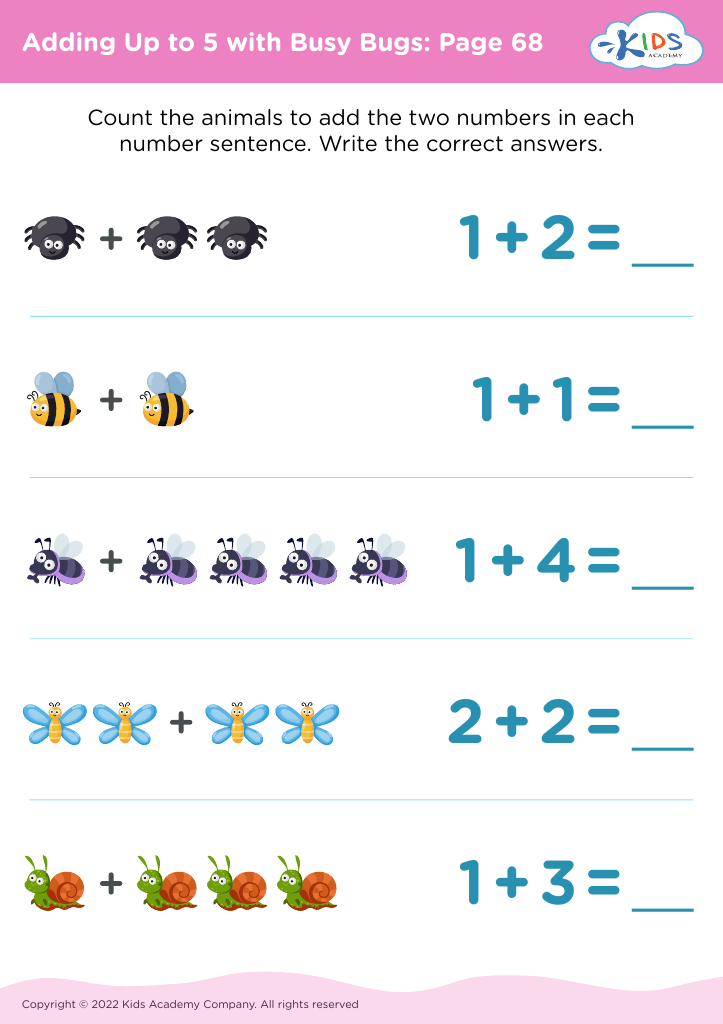
Adding Up to 5 with Busy Bugs: Page 68
Worksheet
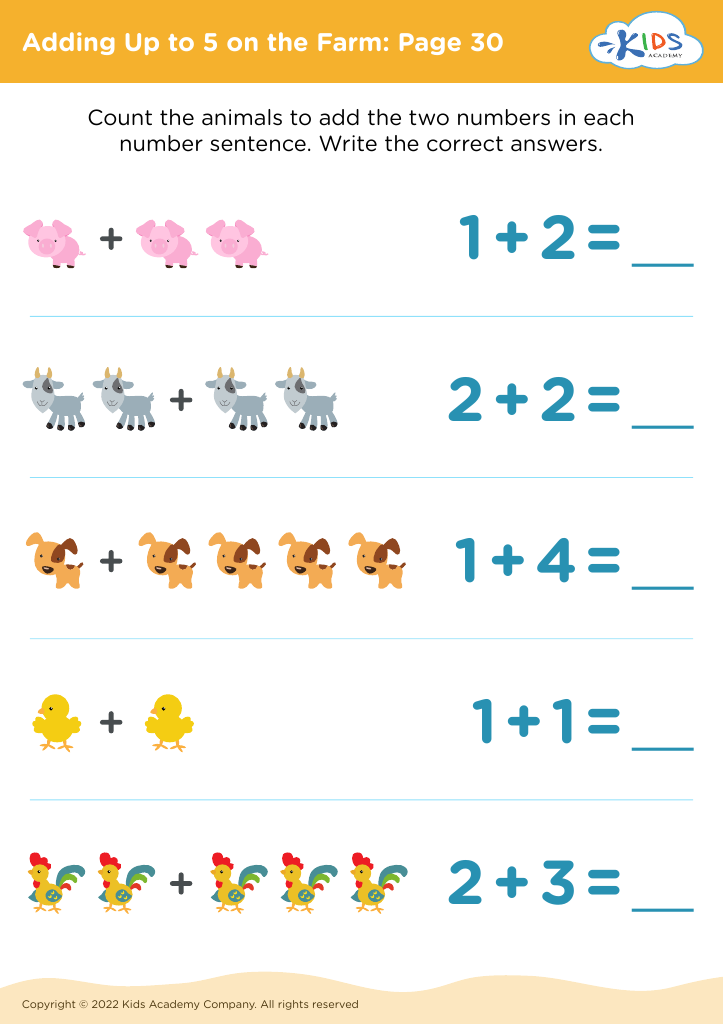
Adding Up to 5 on the Farm: Page 30
Worksheet


Basic addition skills for children aged 3-5 are crucial for their cognitive development and future academic success. At this tender age, children are like sponges, absorbing foundational concepts that will shape their learning. Understanding addition up to 5 helps develop foundational numeracy skills, setting the stage for more complex mathematics in later years.

When children grasp basic addition, they practice important cognitive skills such as counting, pattern recognition, and number sense. These skills are not only central to mathematics but also benefit other areas of learning, including problem-solving and logical thinking. Early proficiency in addition builds confidence and fosters a positive attitude toward learning new concepts.

Moreover, basic addition is a part of everyday life. Whether they are counting toys, snacks, or friends, children use these skills constantly. Parents and teachers can integrate playful learning activities such as counting games, stories involving numbers, or even integrating objects in their environment to make learning feel natural and exciting.

Involving parents in the process reinforces the learning at home and provides children with more practice opportunities. Ultimately, caring about basic addition for young children equips them with essential skills and a love for learning that lasts throughout their academic journeys and beyond.