Filters

232 filtered results

Clear all filters
Favorites
With answer key
Interactive

232 filtered results

Difficulty Level

Grade


Check out this FREE Trial Lesson on Adding Up to 5 for age 3-5!

Match Exactly the Same

Favorites
With answer key
Interactive
  • 3-5
  • Counting practice
  • Adding Up to 5
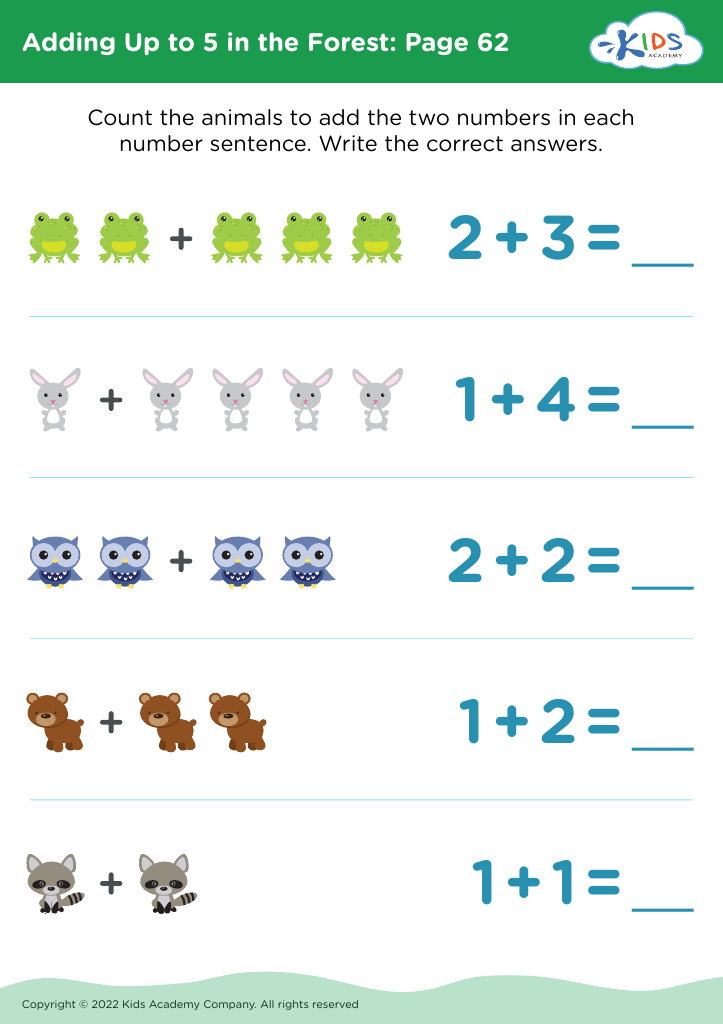
Adding Up to 5 in the Forest: Page 62
Worksheet
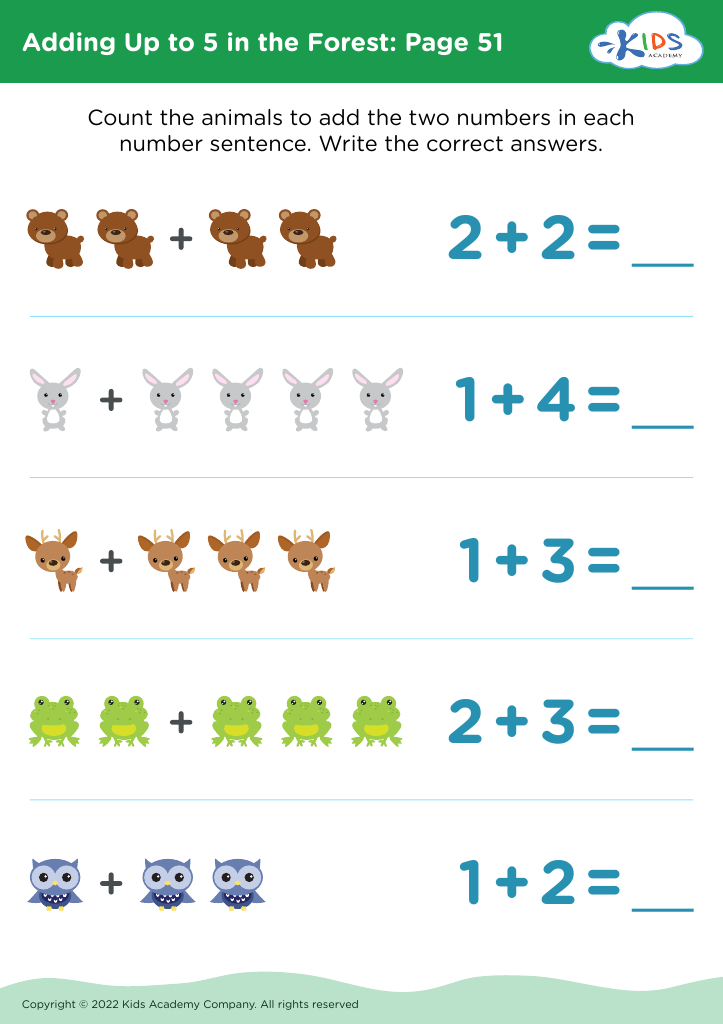
Adding Up to 5 in the Forest: Page 51
Worksheet
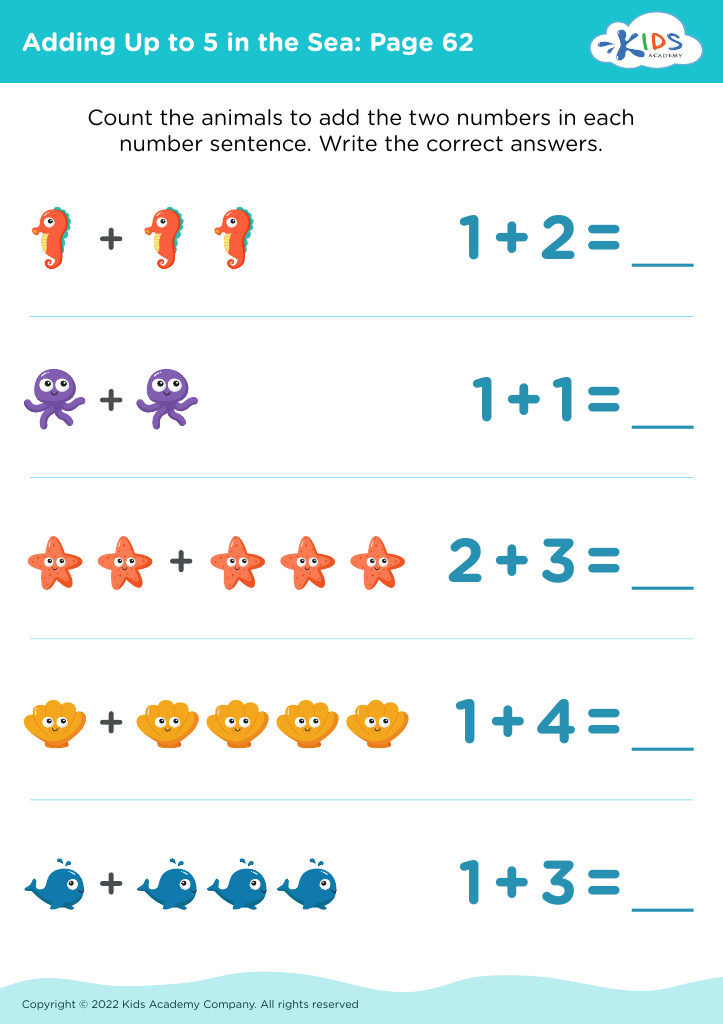
Adding Up to 5 in the Sea: Page 62
Worksheet
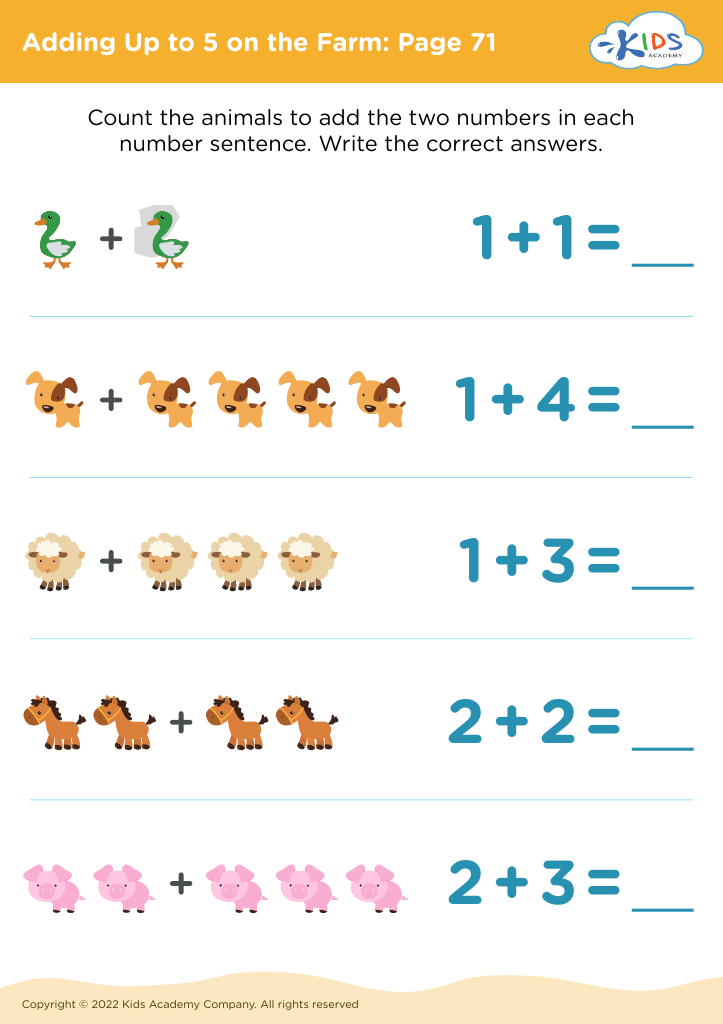
Adding Up to 5 on the Farm: Page 71
Worksheet
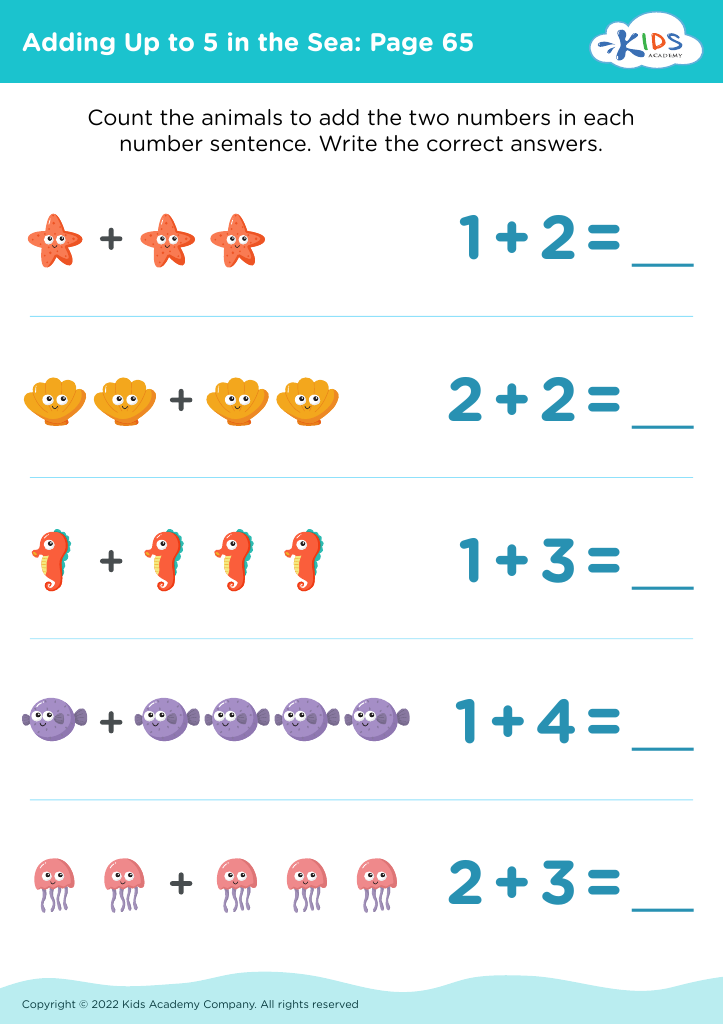
Adding Up to 5 in the Sea: Page 65
Worksheet
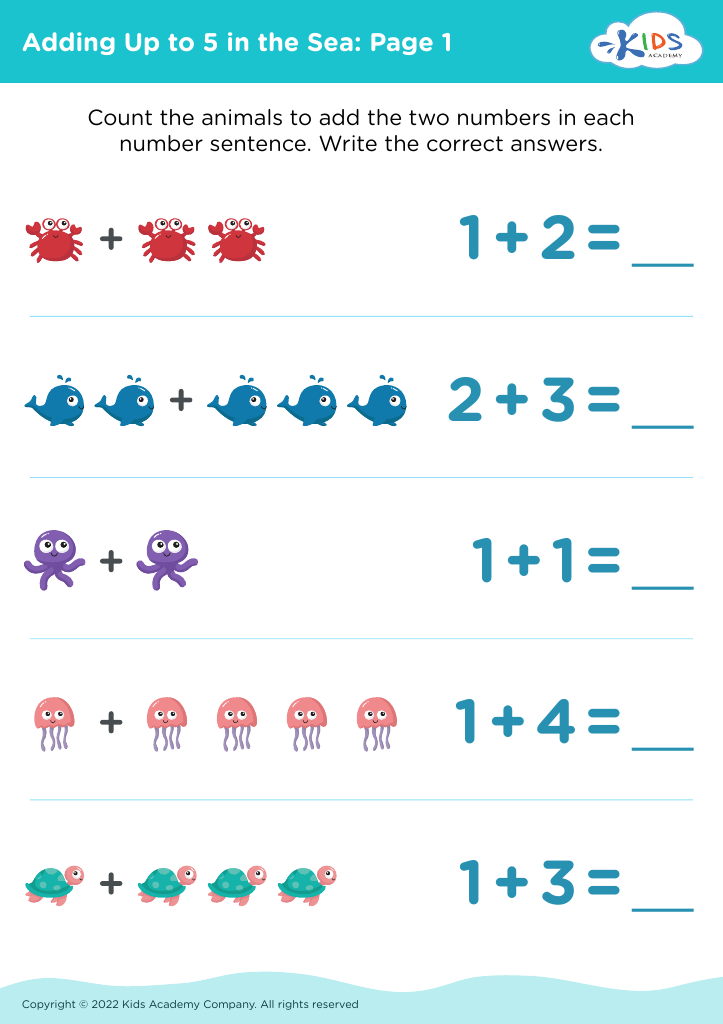
Adding Up to 5 in the Sea: Page 1

Adding Up to 5 in the Sea: Page 1

Adding Up to 5 in the Sea: Page 1
Worksheet
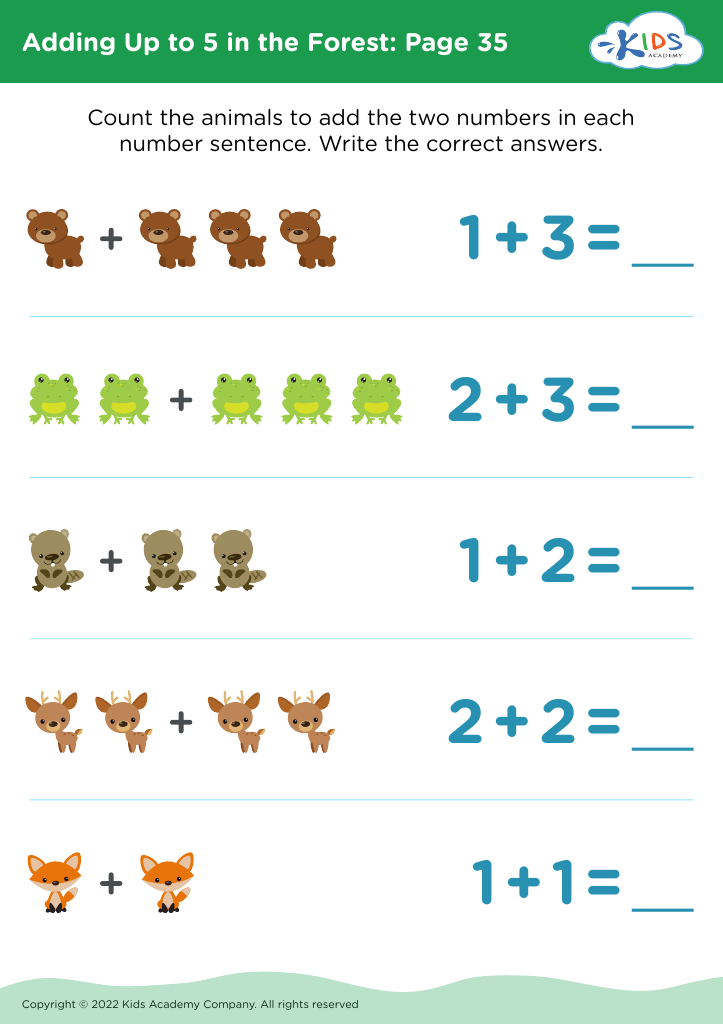
Adding Up to 5 in the Forest: Page 35
Worksheet
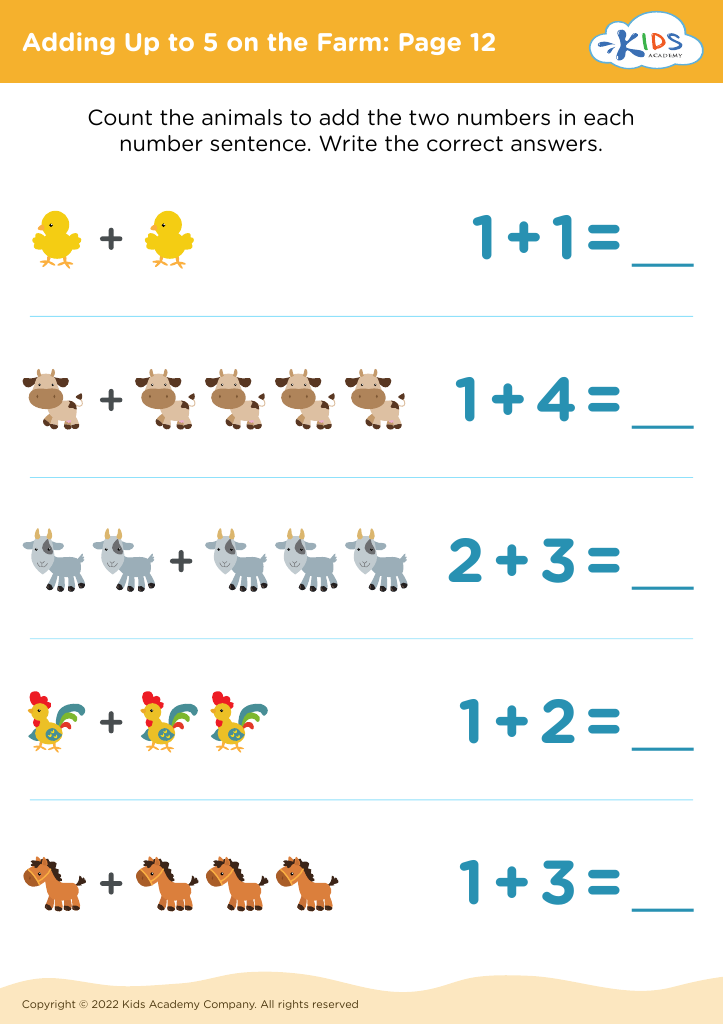
Adding Up to 5 on the Farm: Page 12
Worksheet
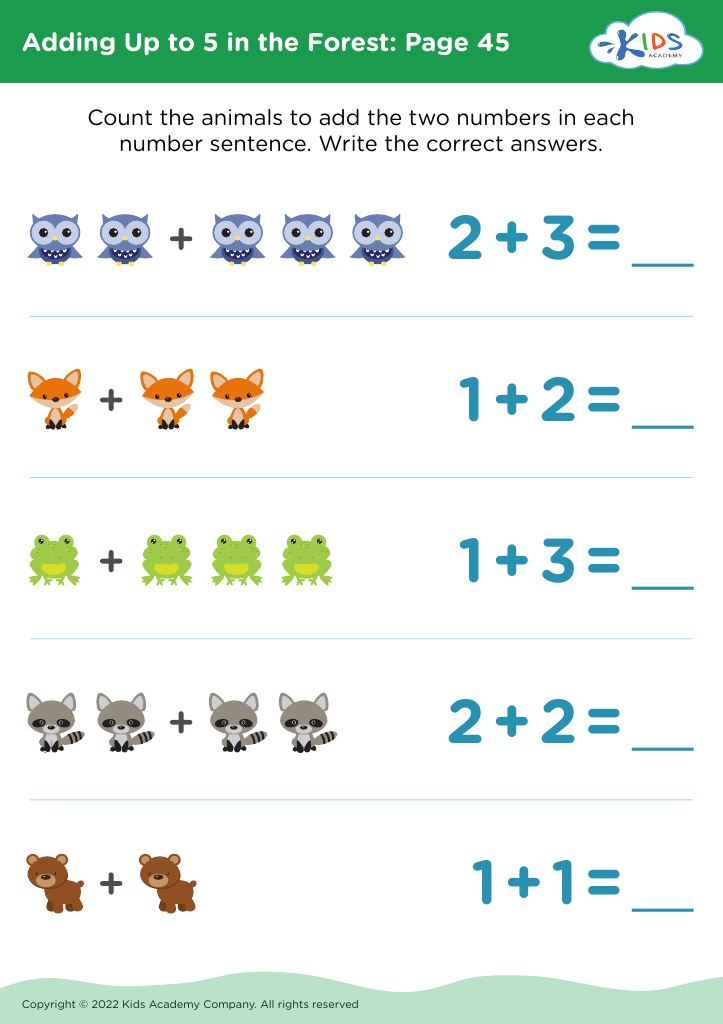
Adding Up to 5 in the Forest: Page 45
Worksheet
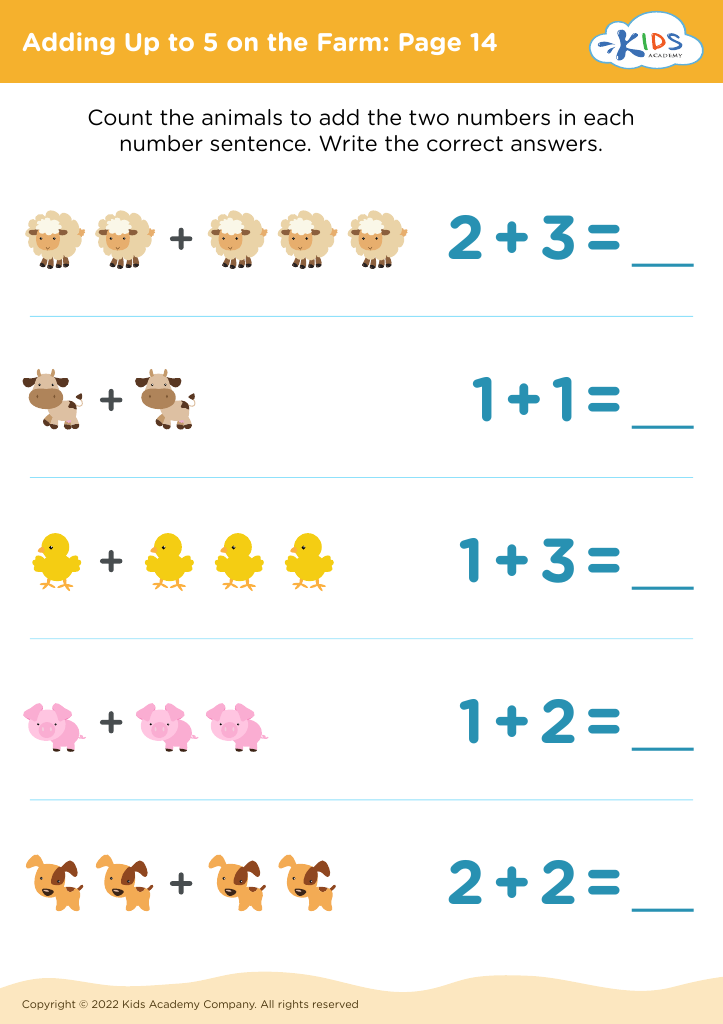
Adding Up to 5 on the Farm: Page 14
Worksheet
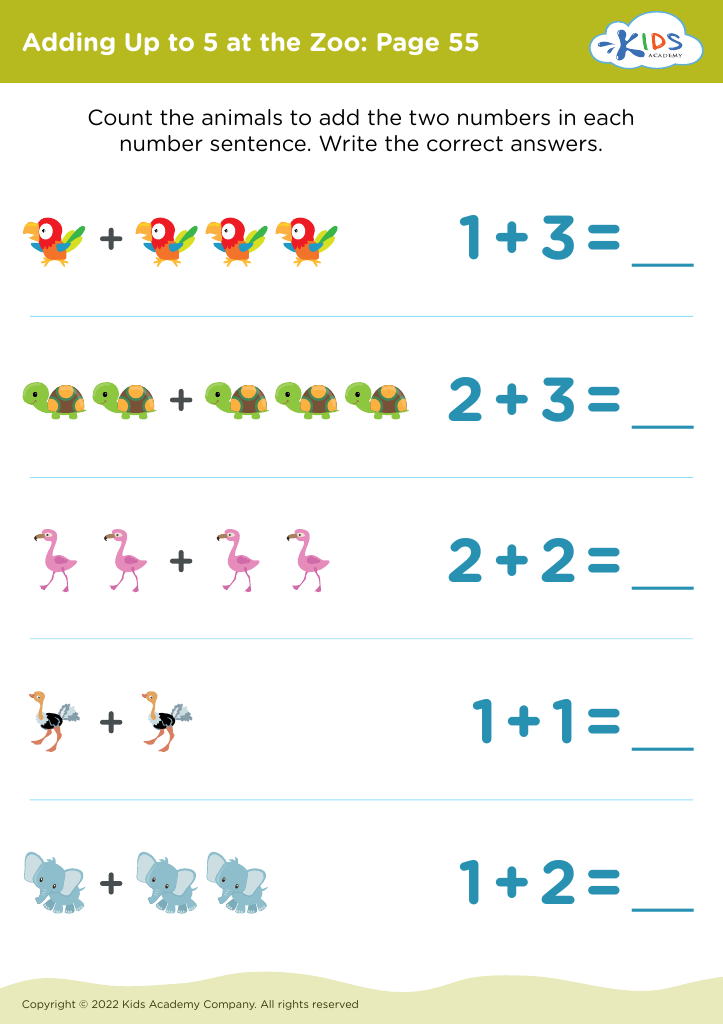
Adding Up to 5 at the Zoo: Page 55
Worksheet
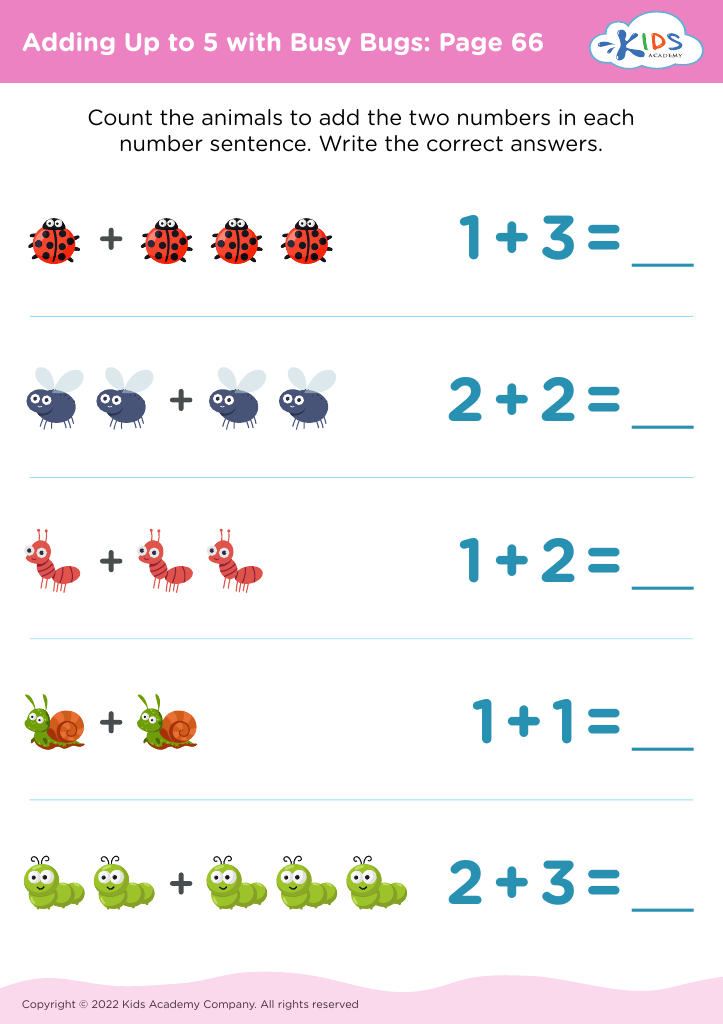
Adding Up to 5 with Busy Bugs: Page 66
Worksheet
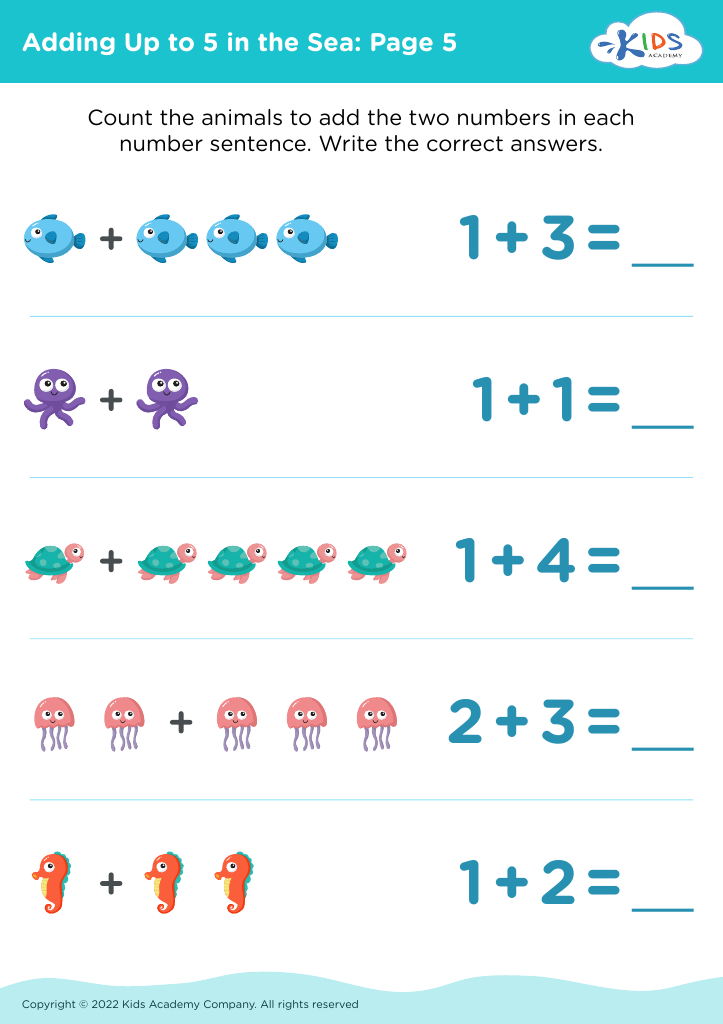
Adding Up to 5 in the Sea: Page 5

Adding Up to 5 in the Sea: Page 5

Adding Up to 5 in the Sea: Page 5
Worksheet
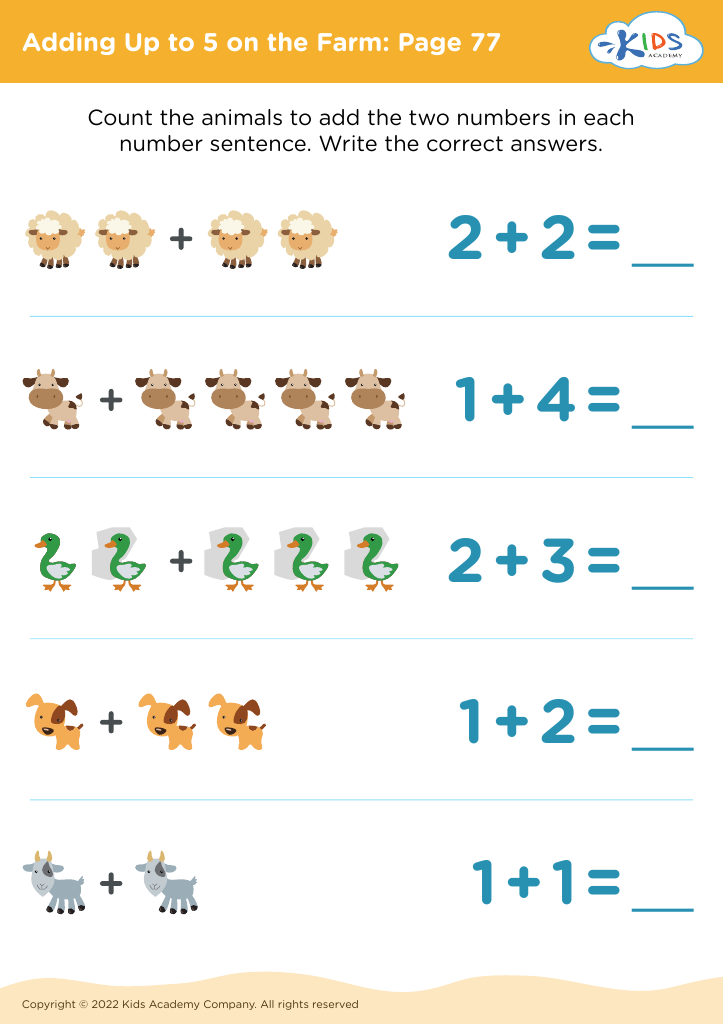
Adding Up to 5 on the Farm: Page 77
Worksheet
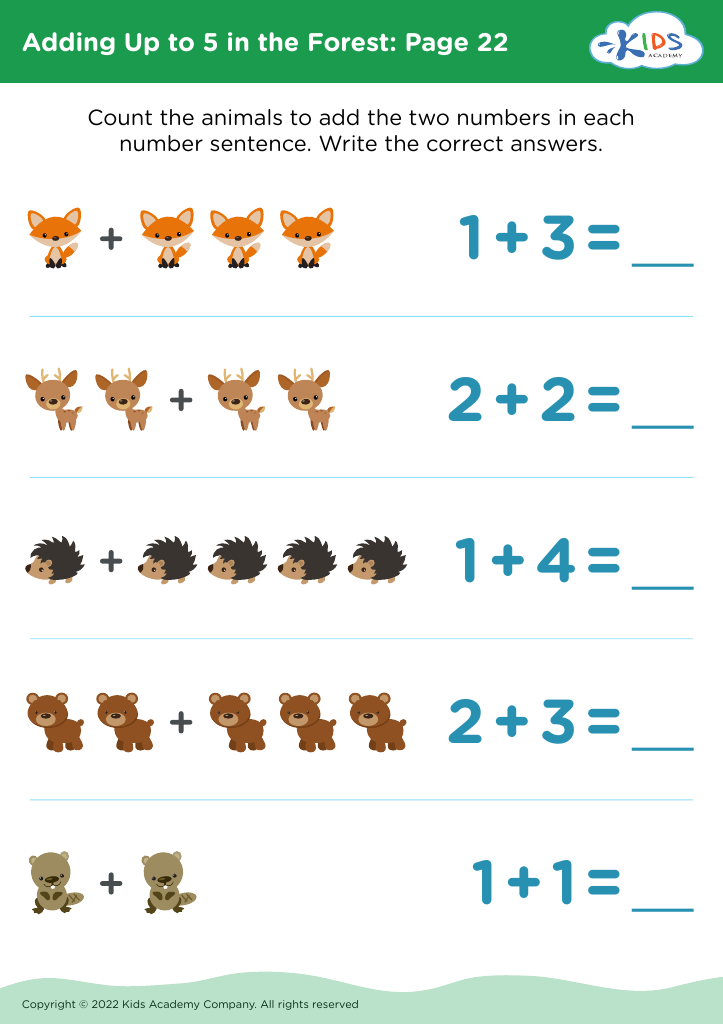
Adding Up to 5 in the Forest: Page 22
Worksheet
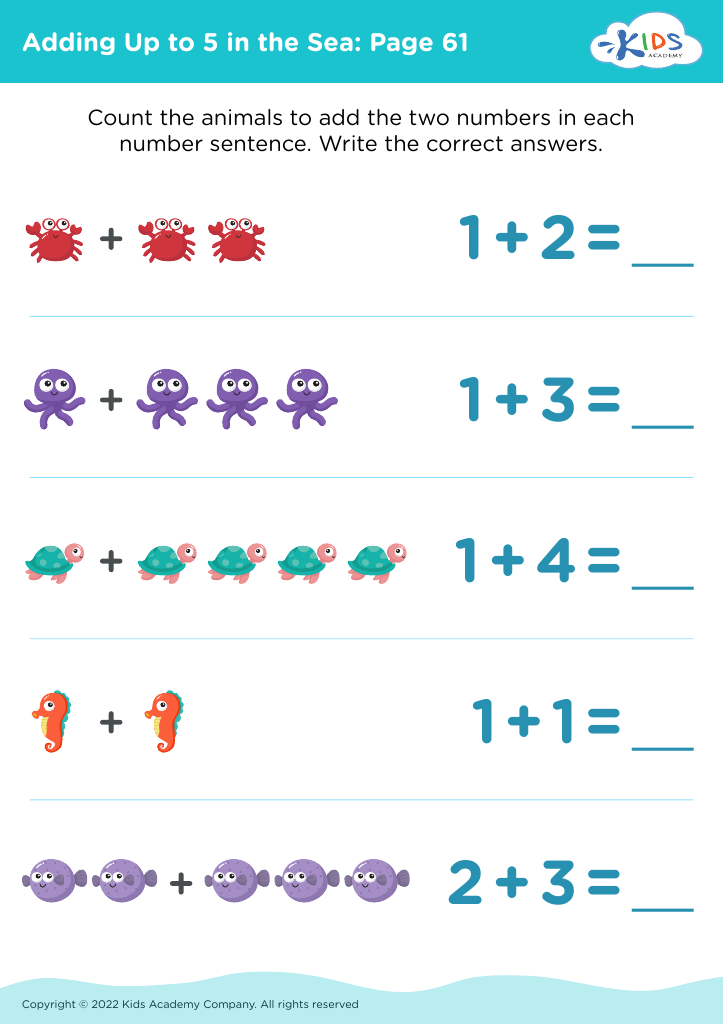
Adding Up to 5 in the Sea: Page 61
Worksheet
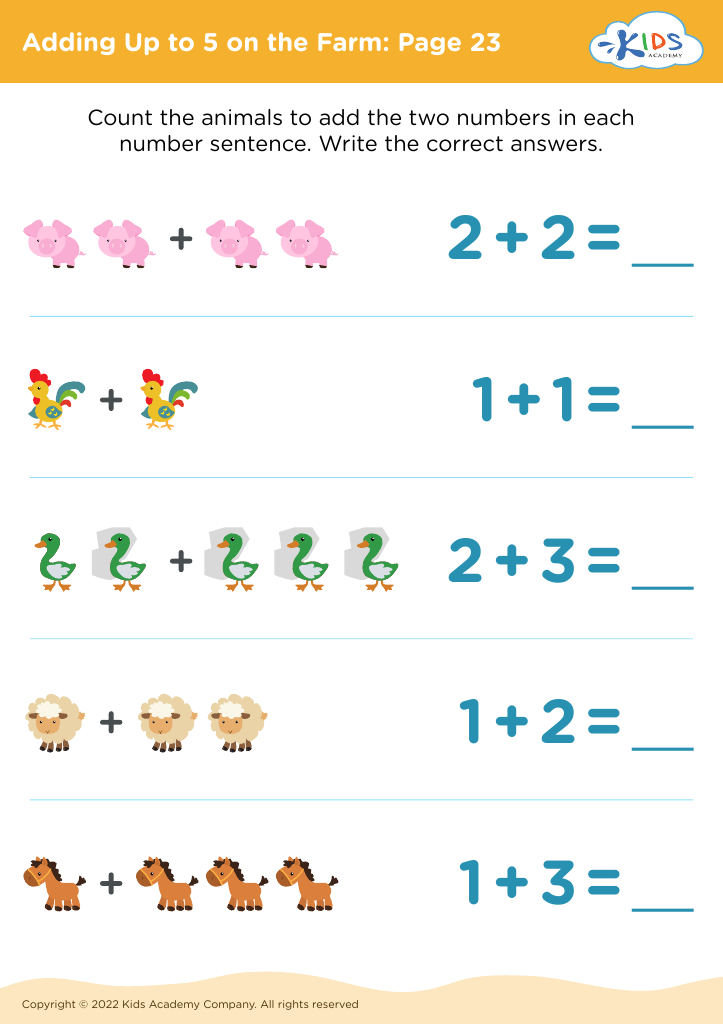
Adding Up to 5 on the Farm: Page 23
Worksheet
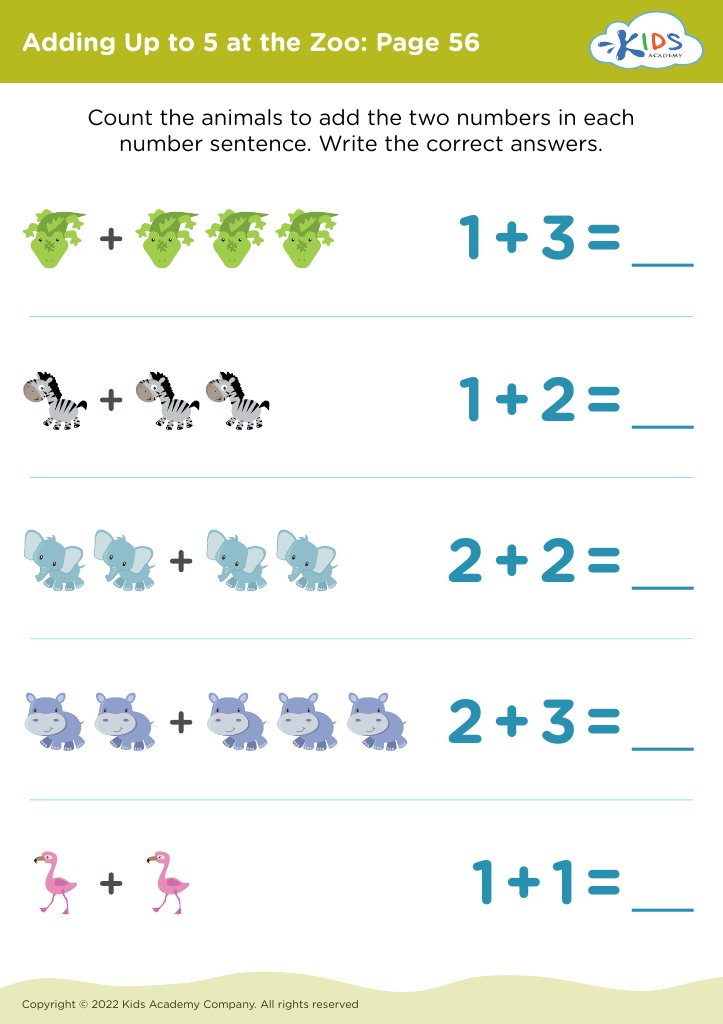
Adding Up to 5 at the Zoo: Page 56
Worksheet
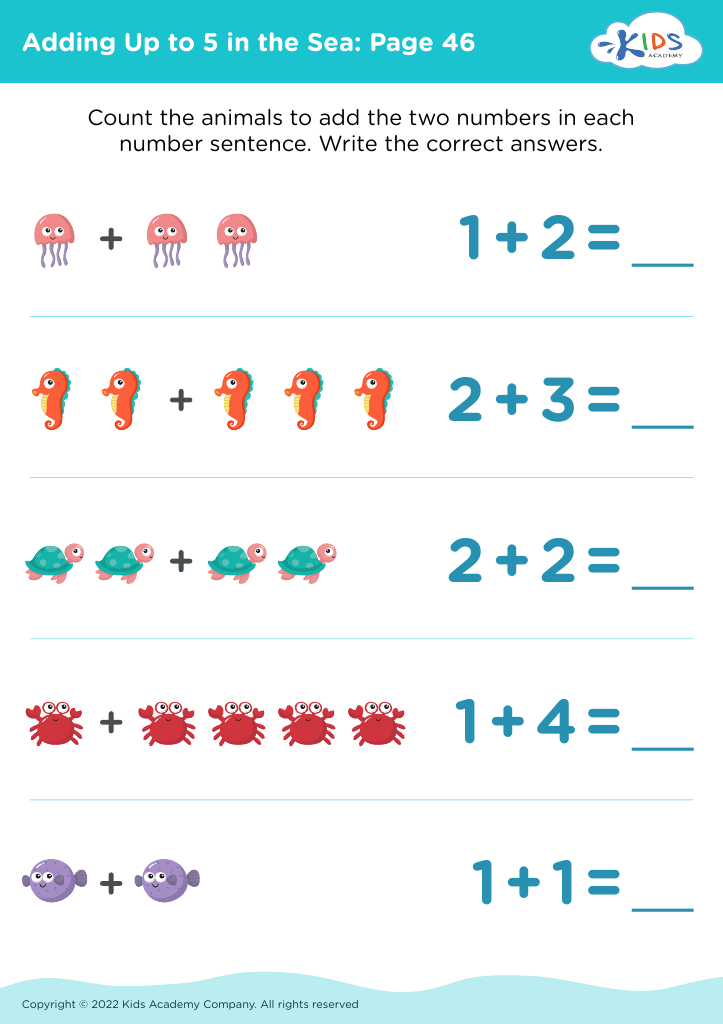
Adding Up to 5 in the Sea: Page 46
Worksheet
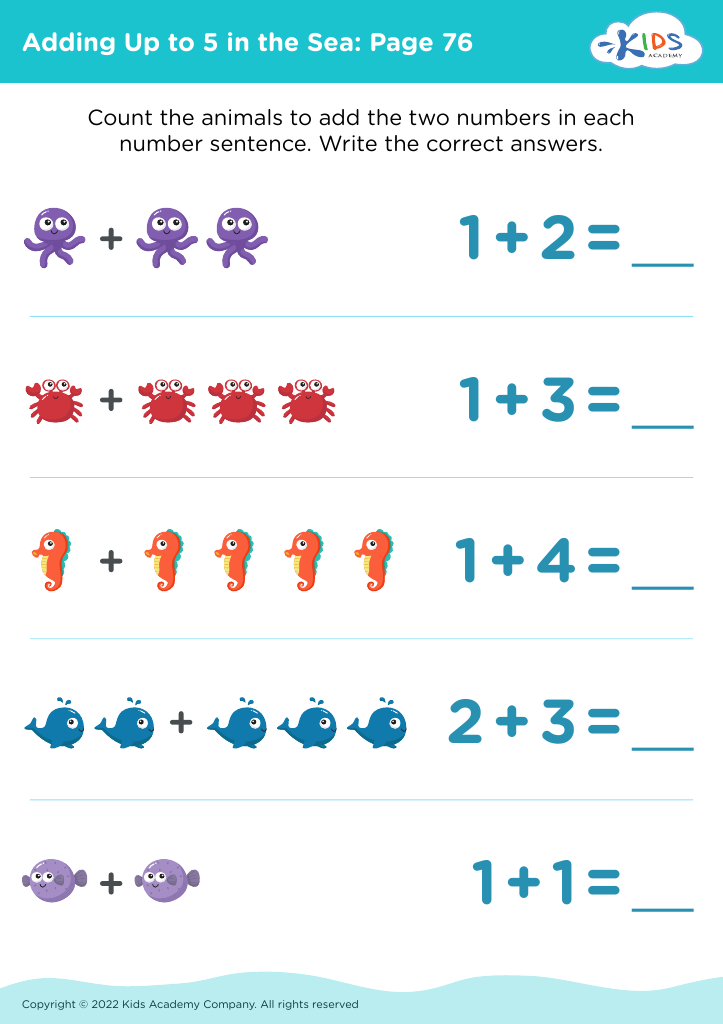
Adding Up to 5 in the Sea: Page 76
Worksheet
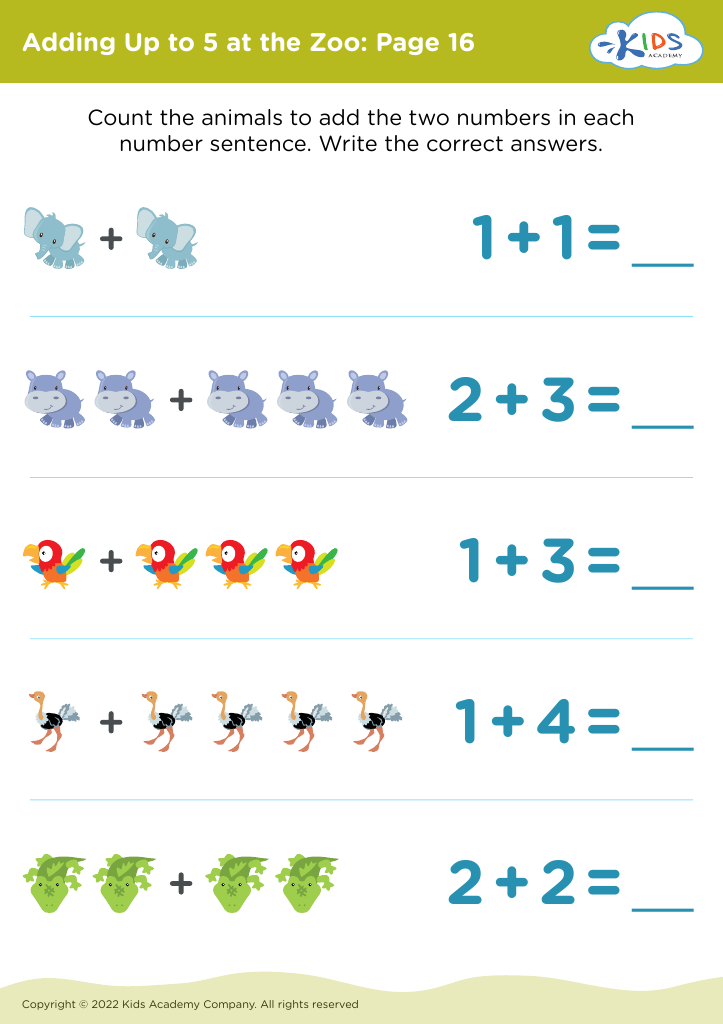
Adding Up to 5 at the Zoo: Page 16
Worksheet
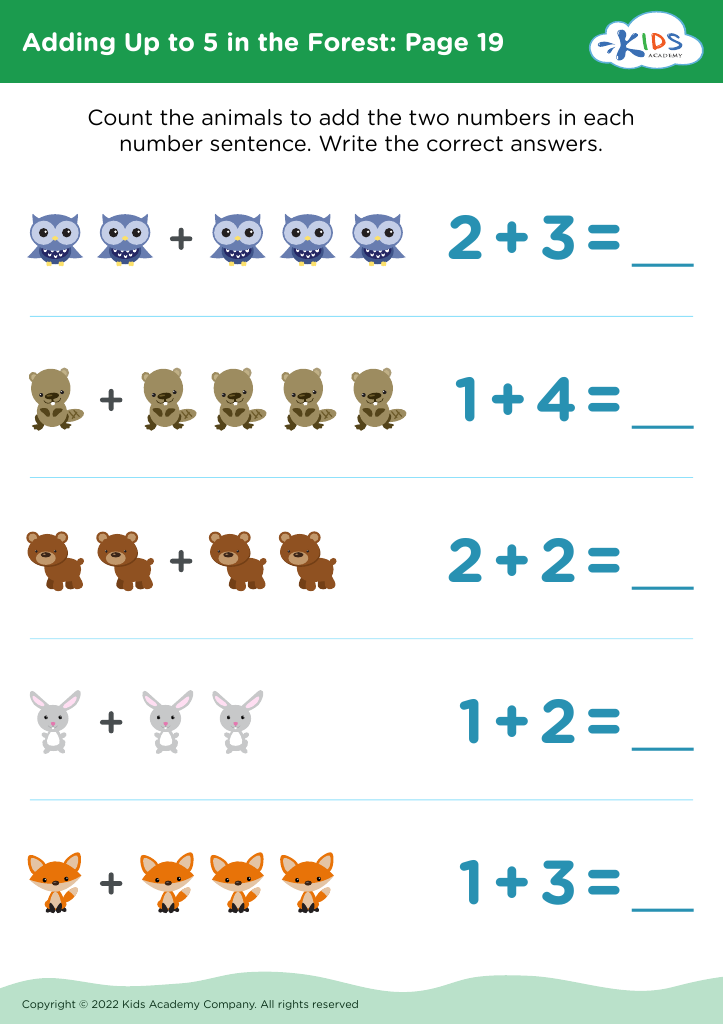
Adding Up to 5 in the Forest: Page 19
Worksheet
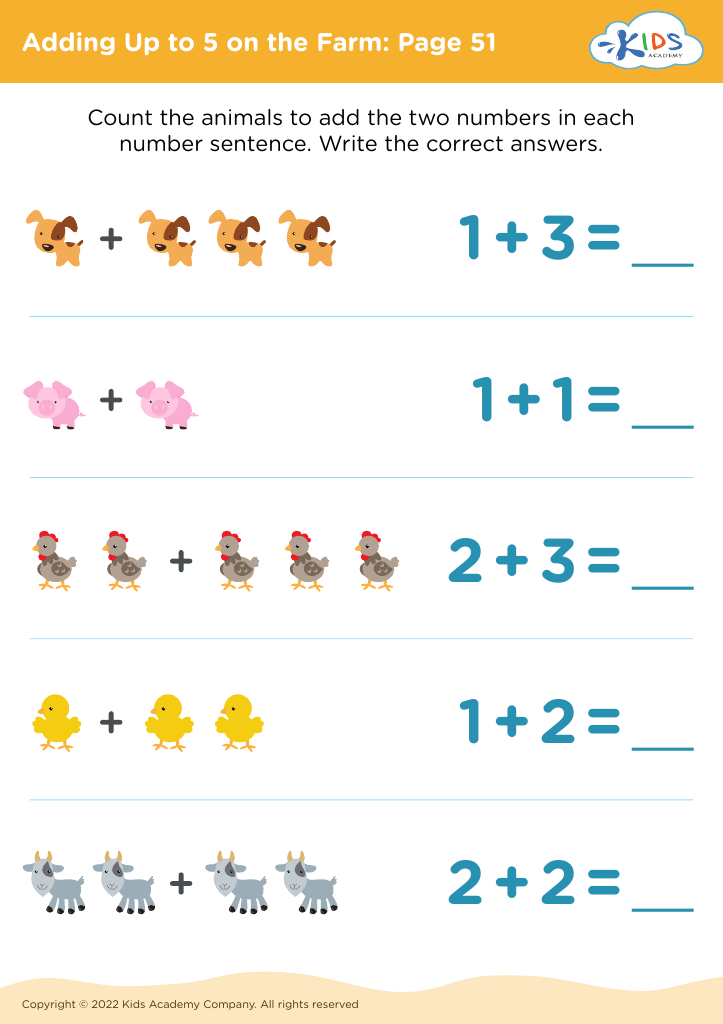
Adding Up to 5 on the Farm: Page 51
Worksheet
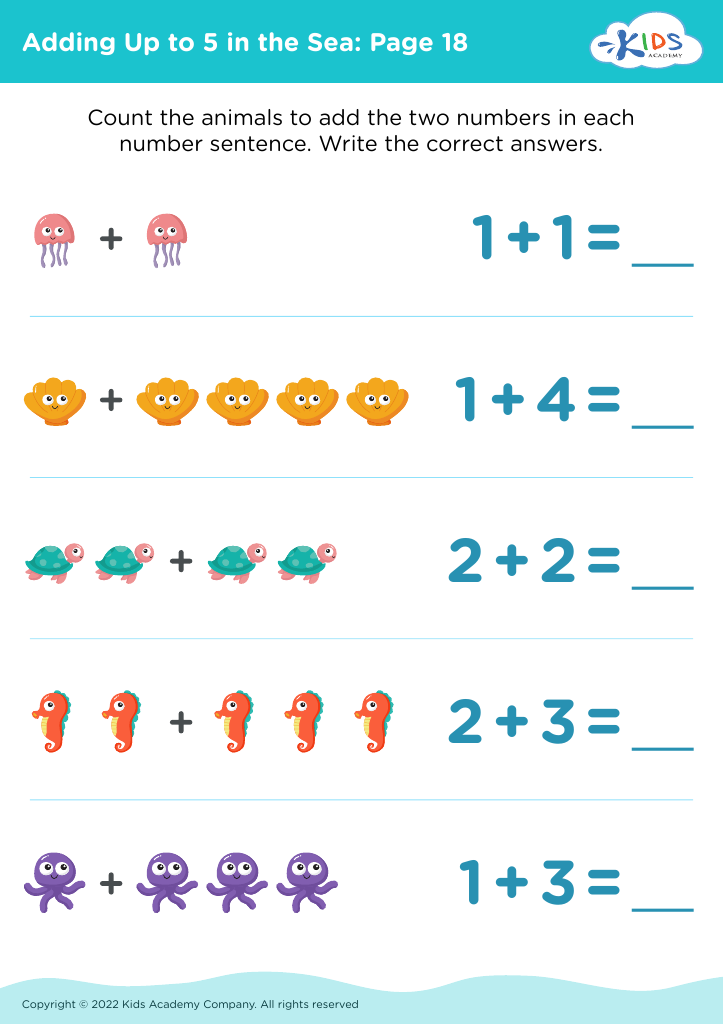
Adding Up to 5 in the Sea: Page 18
Worksheet


Counting practice and learning to add up to 5 for young children, ages 3-5, form the foundation for early math skills, which are critical for their overall academic development. At this formative age, children’s brains are exceptionally receptive to new concepts. Engaging in counting exercises helps develop number sense, which is the understanding of numbers and their relationships. This type of early math practice enhances cognitive functions, including logical thinking and problem-solving abilities.

Counting and simple addition also prepare children for more complex arithmetic operations they will encounter later in their academic journey. Furthermore, these activities can boost confidence and enthusiasm for learning, as children feel a sense of accomplishment when they successfully count or add small numbers.

From a social perspective, these skills encourage group activities where children count objects together, fostering teamwork and cooperative play. It also supports language development, as children learn to vocalize numbers and understand numerical concepts verbally.

For teachers and parents, investing time in teaching these basic math skills ensures they are setting a strong educational foundation and fostering positive learning attitudes in their children. This early start can have lasting effects, making future learning experiences more enjoyable and less daunting for young learners.