Filters

349 filtered results

Clear all filters
Favorites
With answer key
Interactive

349 filtered results

Difficulty Level

Grade


Check out this FREE Trial Lesson on Adding Up to 5 for age 3-5!

A

Favorites
With answer key
Interactive
  • 3-5
  • Number Recognition
  • Adding Up to 5
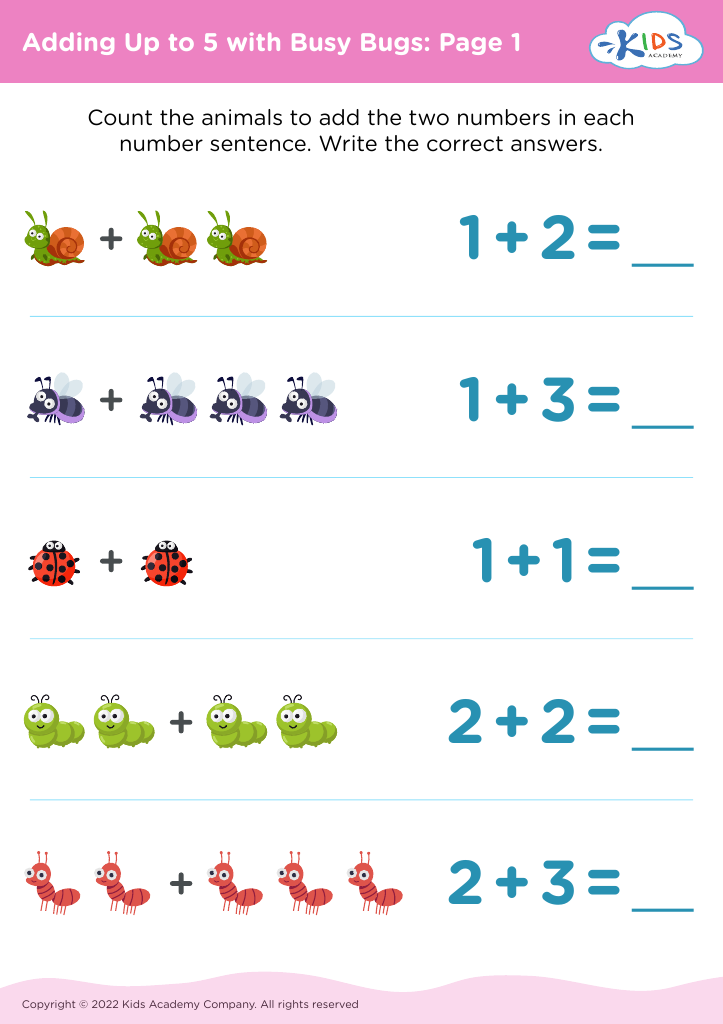
Adding Up to 5 with Busy Bugs: Page 1
Worksheet
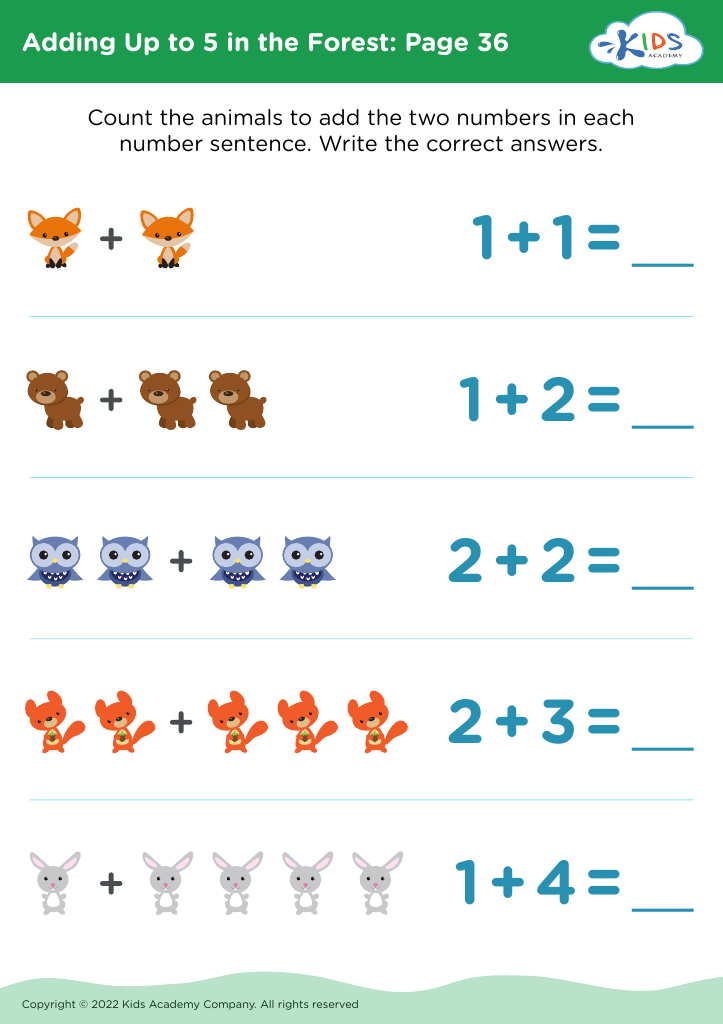
Adding Up to 5 in the Forest: Page 36
Worksheet
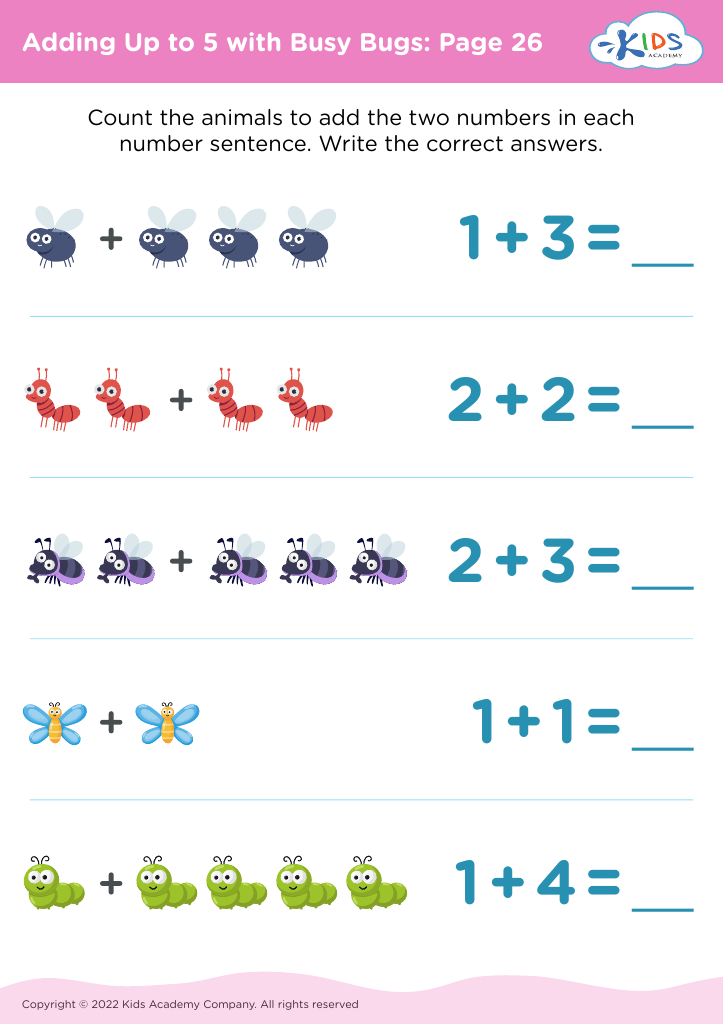
Adding Up to 5 with Busy Bugs: Page 26
Worksheet
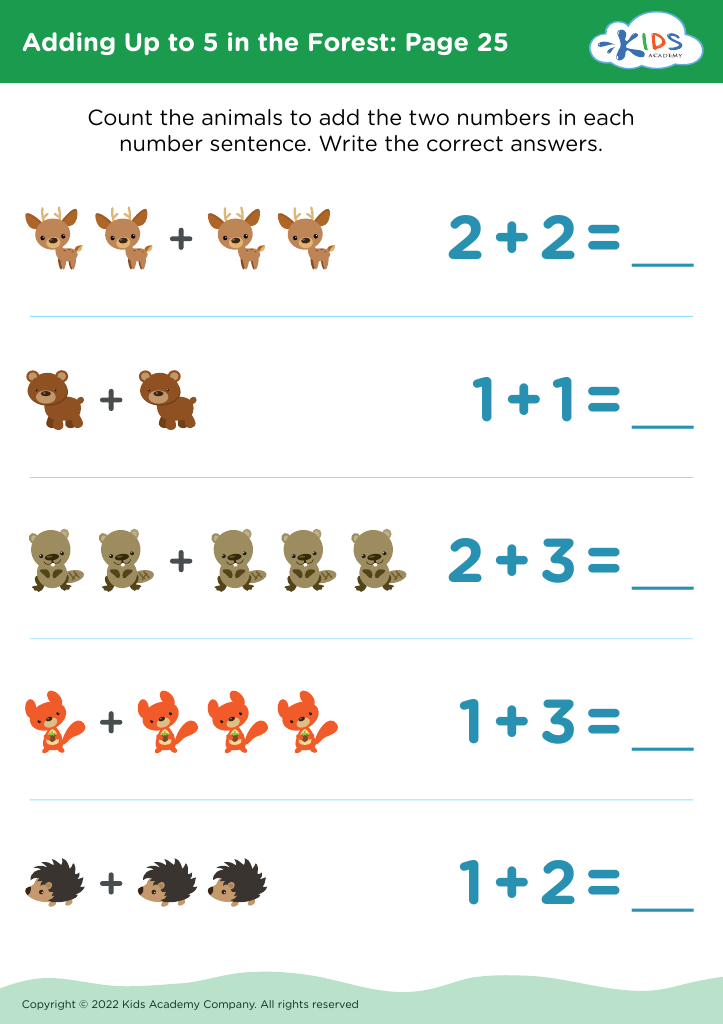
Adding Up to 5 in the Forest: Page 25
Worksheet
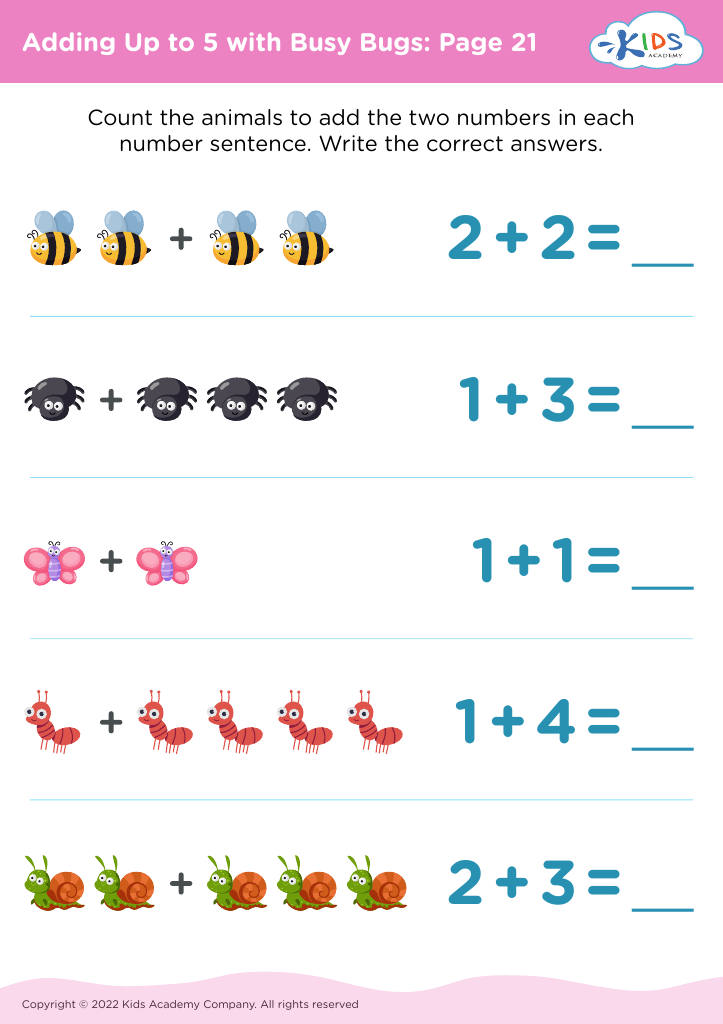
Adding Up to 5 with Busy Bugs: Page 21
Worksheet
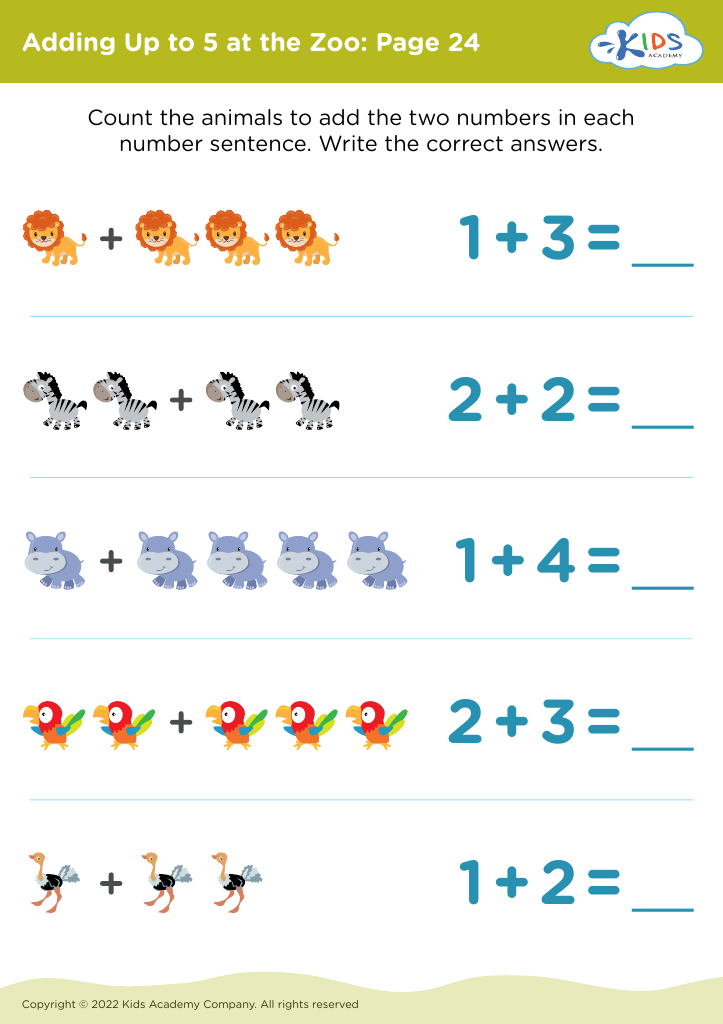
Adding Up to 5 at the Zoo: Page 24
Worksheet
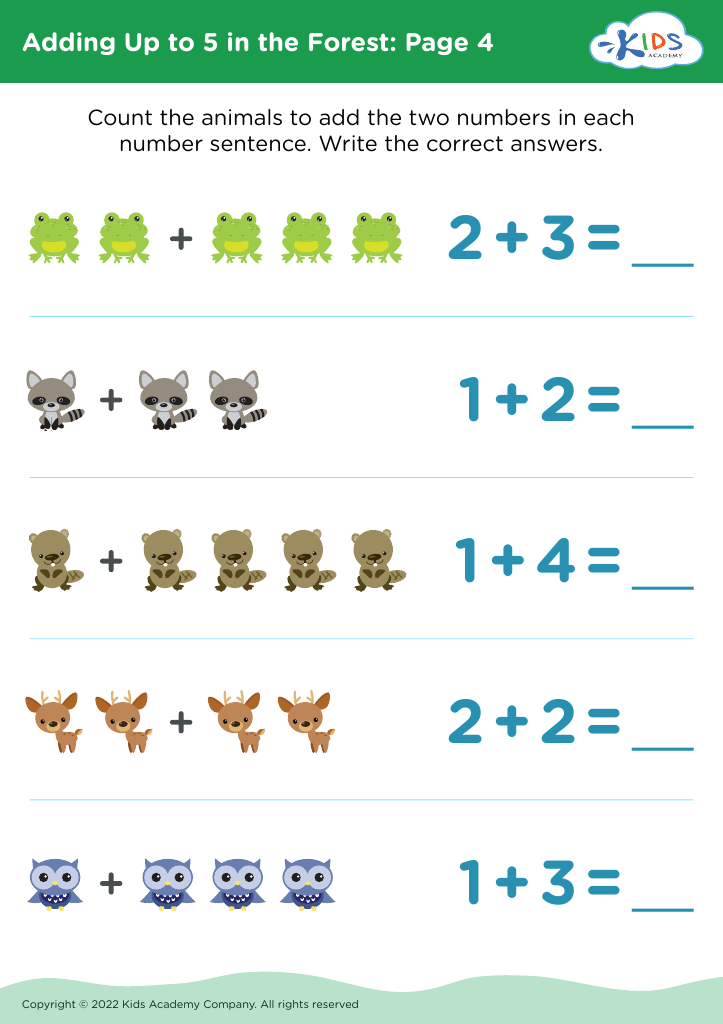
Adding Up to 5 in the Forest: Page 4
Worksheet
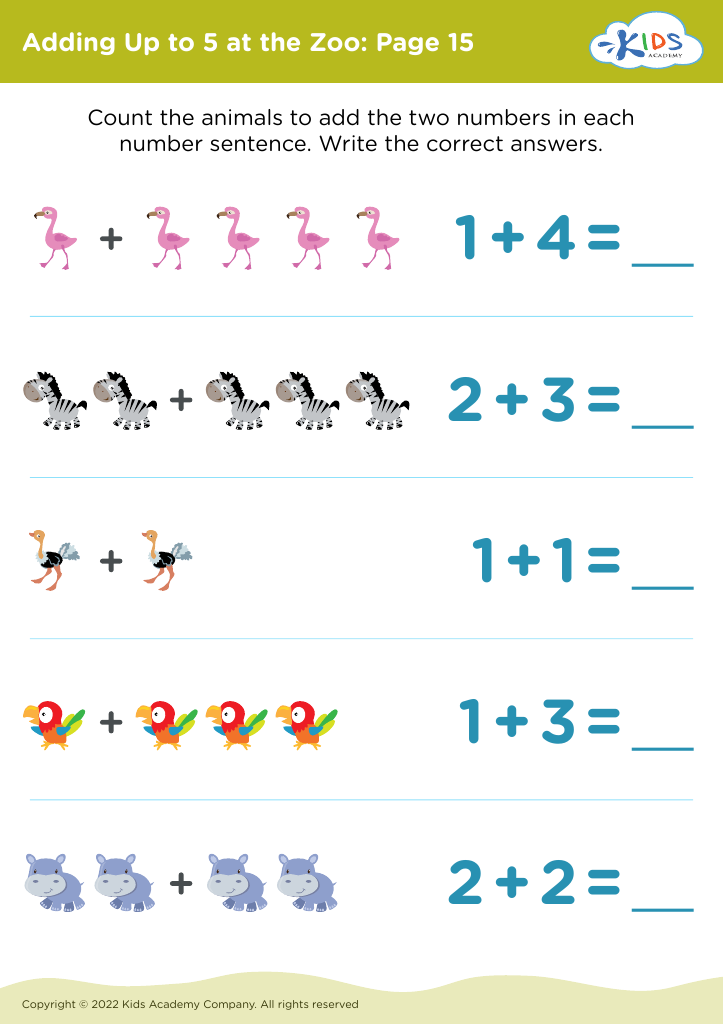
Adding Up to 5 at the Zoo: Page 15
Worksheet
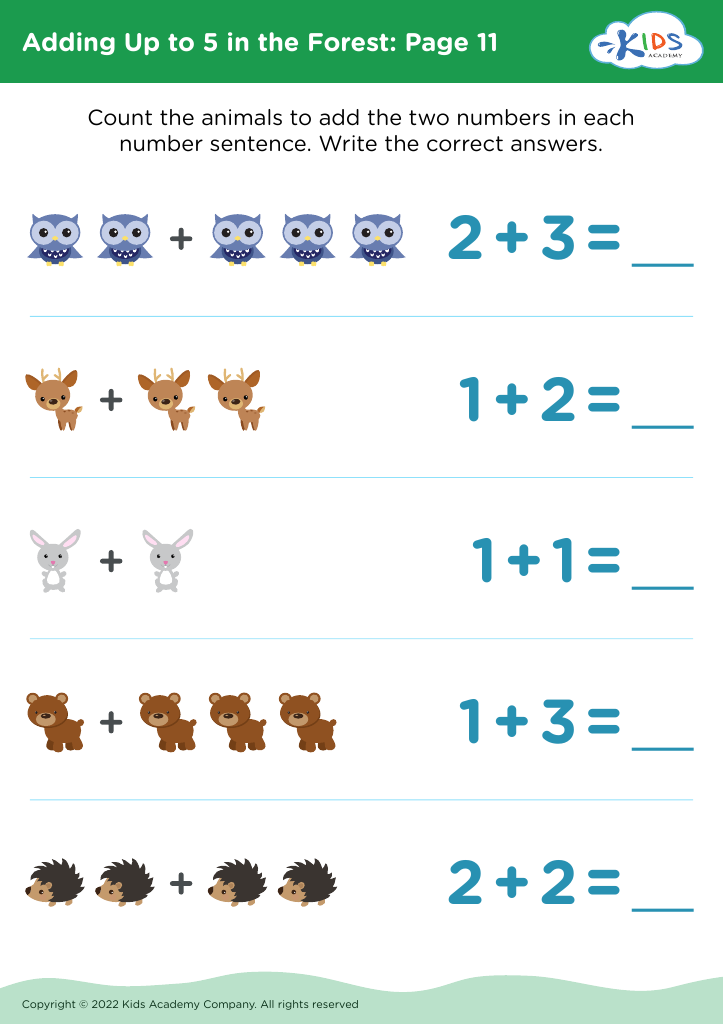
Adding Up to 5 in the Forest: Page 11
Worksheet
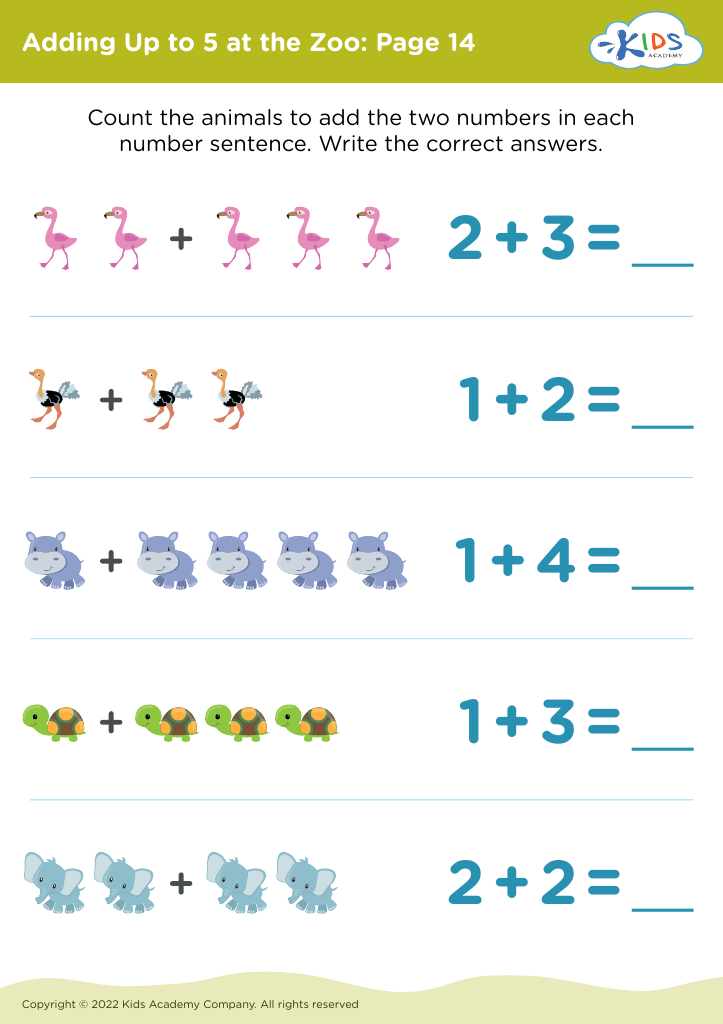
Adding Up to 5 at the Zoo: Page 14
Worksheet
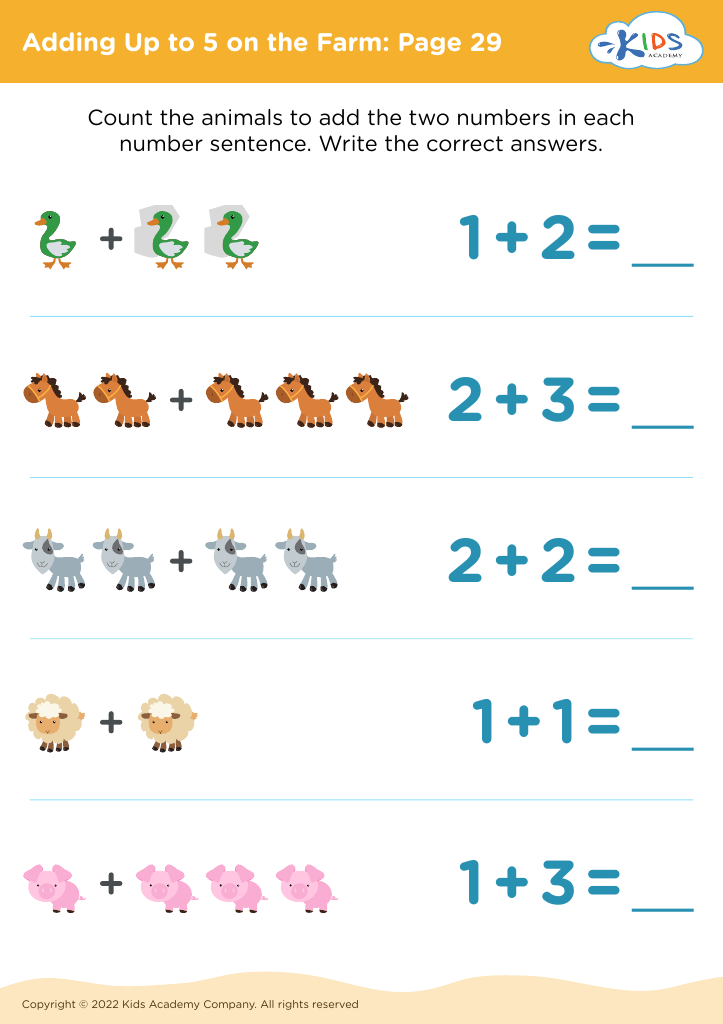
Adding Up to 5 on the Farm: Page 29
Worksheet
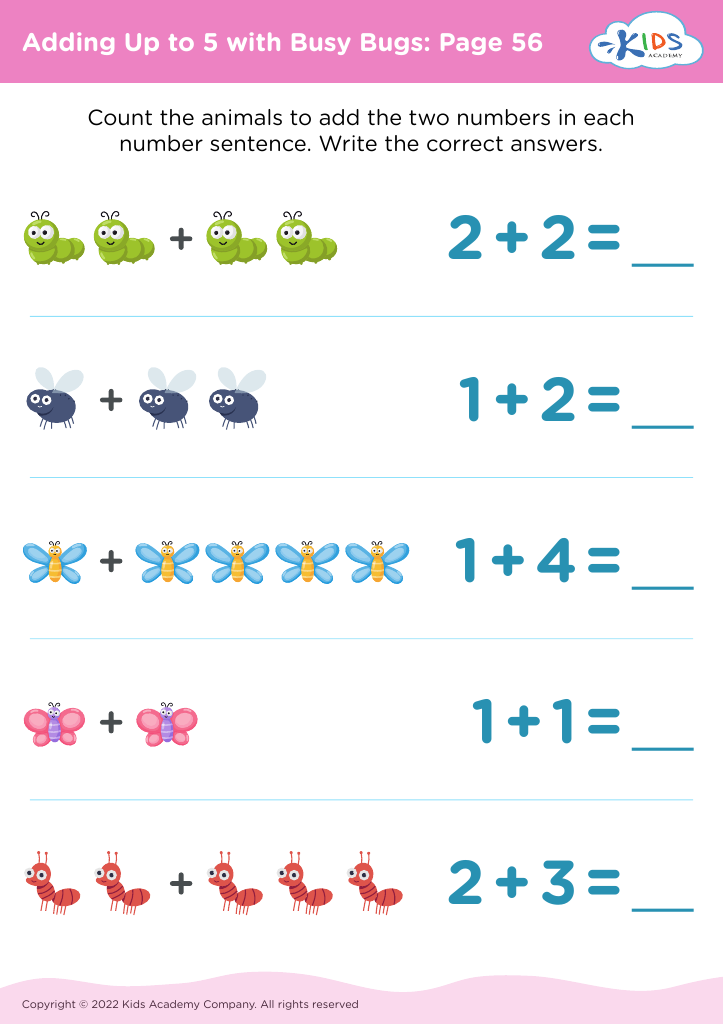
Adding Up to 5 with Busy Bugs: Page 56
Worksheet
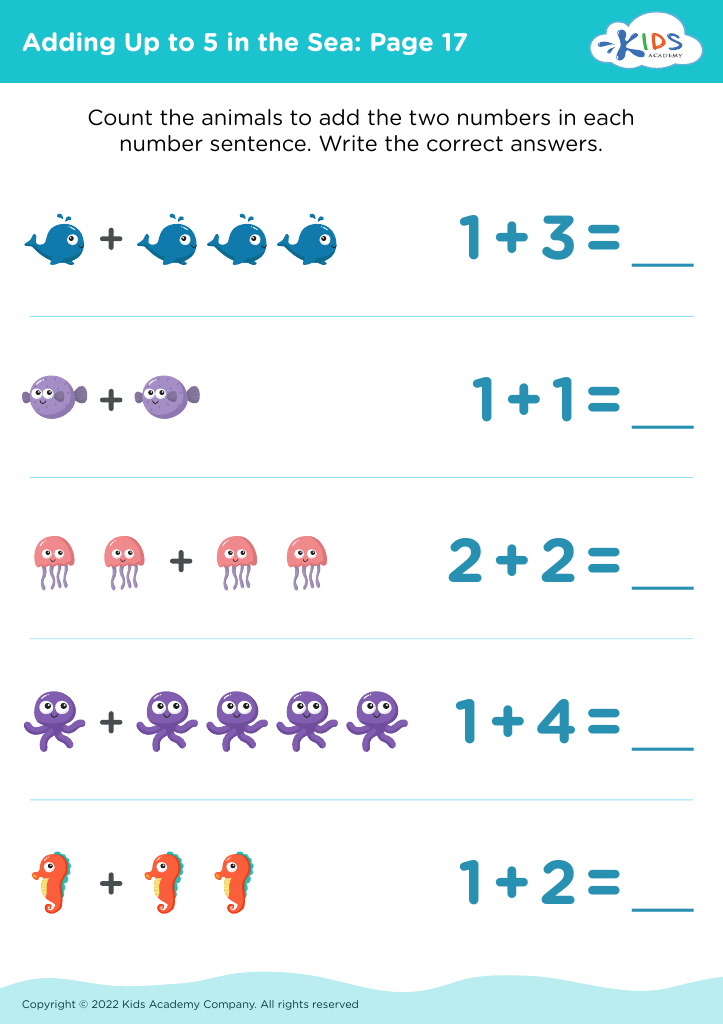
Adding Up to 5 in the Sea: Page 17
Worksheet
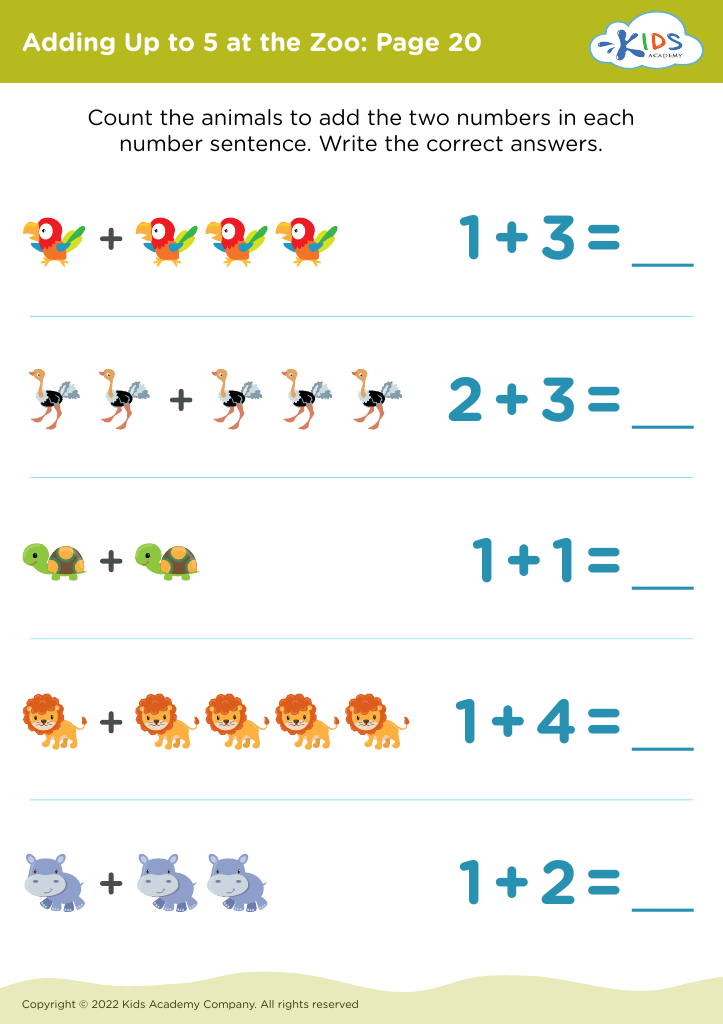
Adding Up to 5 at the Zoo: Page 20
Worksheet
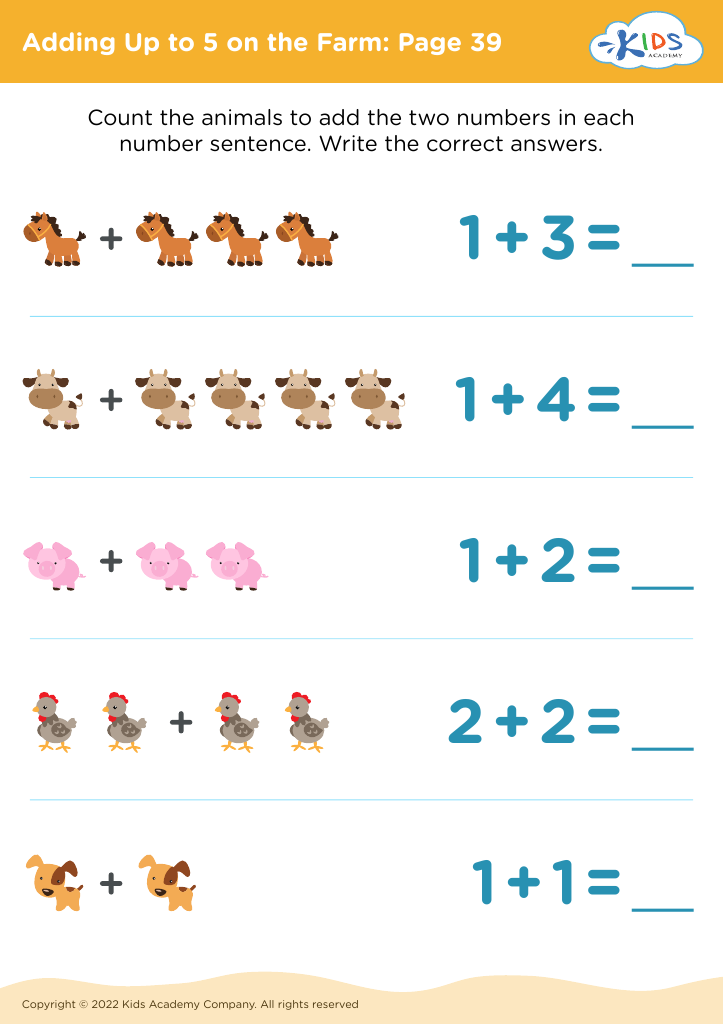
Adding Up to 5 on the Farm: Page 39
Worksheet
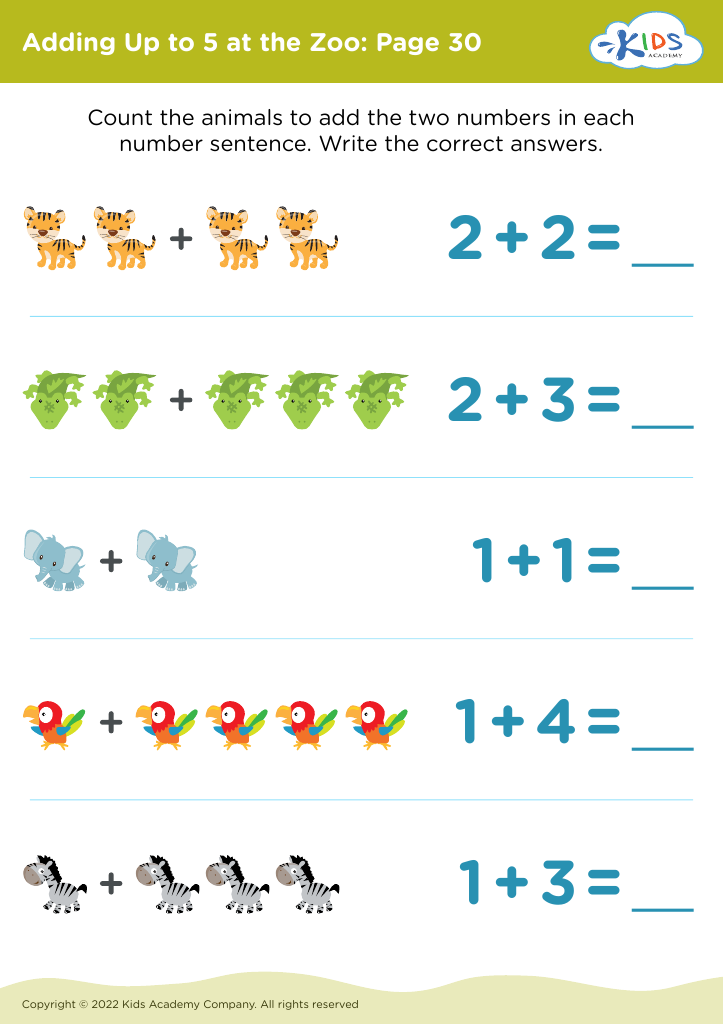
Adding Up to 5 at the Zoo: Page 30
Worksheet
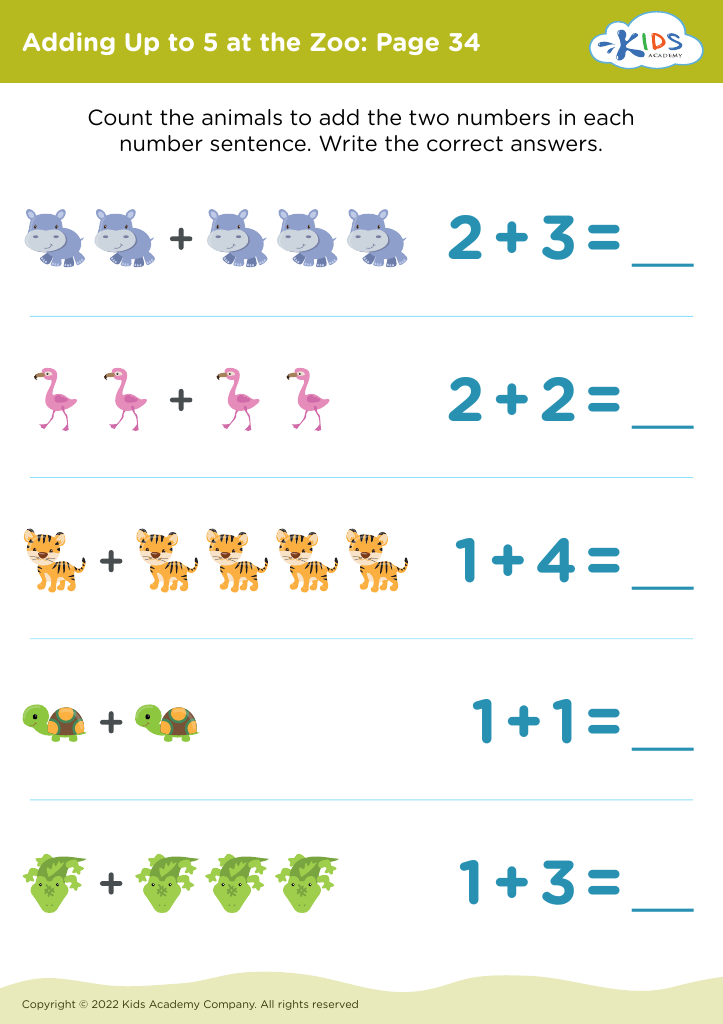
Adding Up to 5 at the Zoo: Page 34
Worksheet
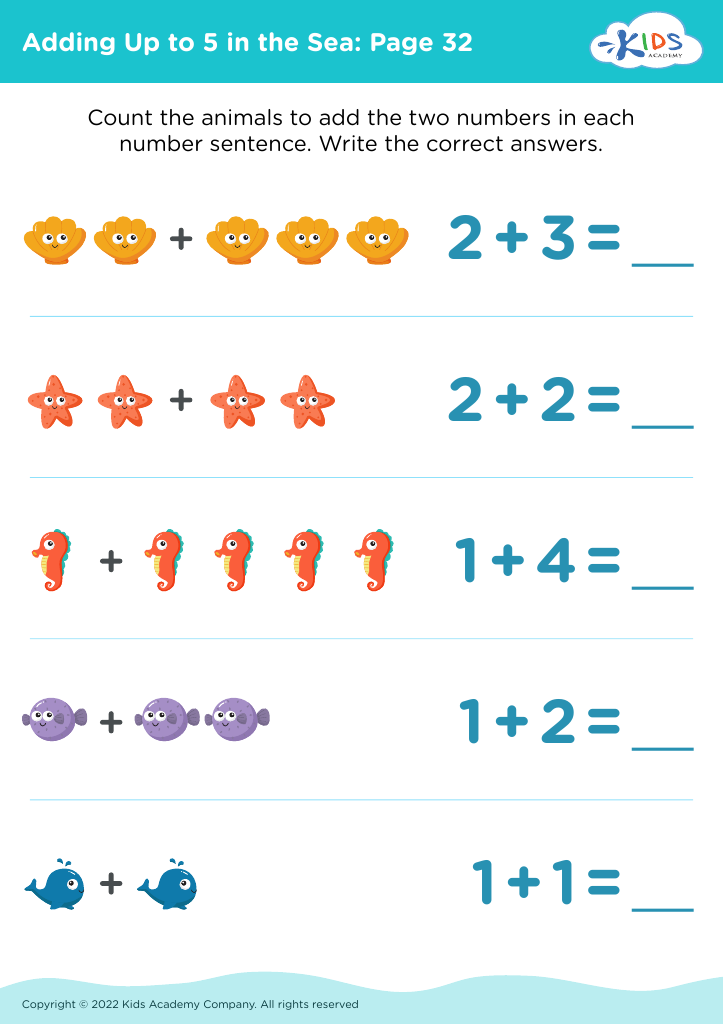
Adding Up to 5 in the Sea: Page 32
Worksheet
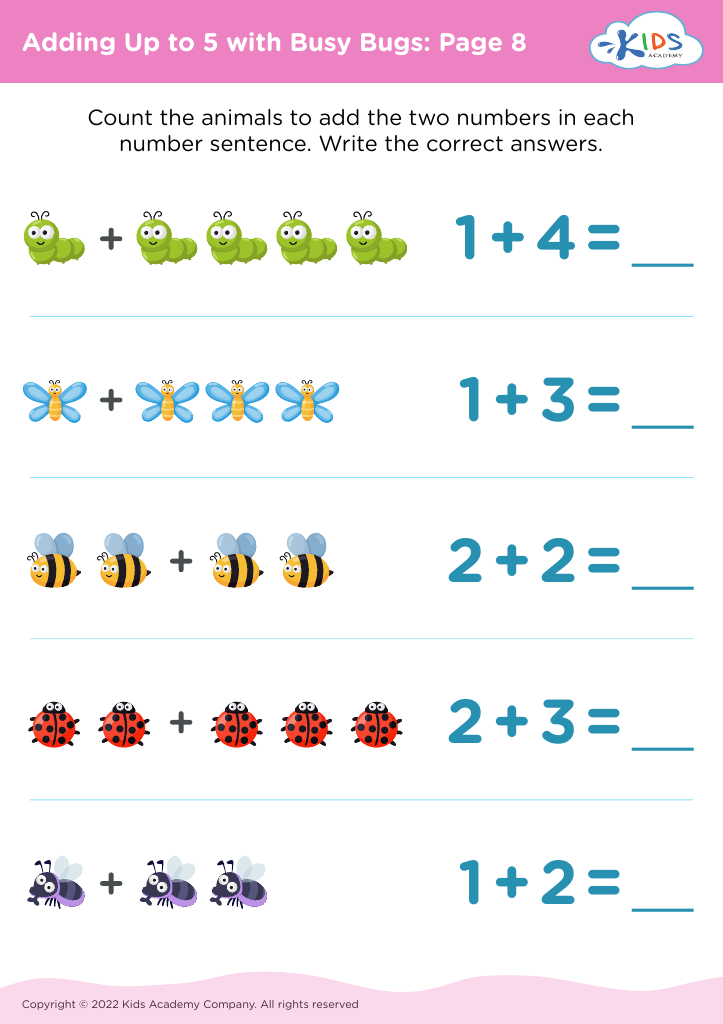
Adding Up to 5 with Busy Bugs: Page 8
Worksheet
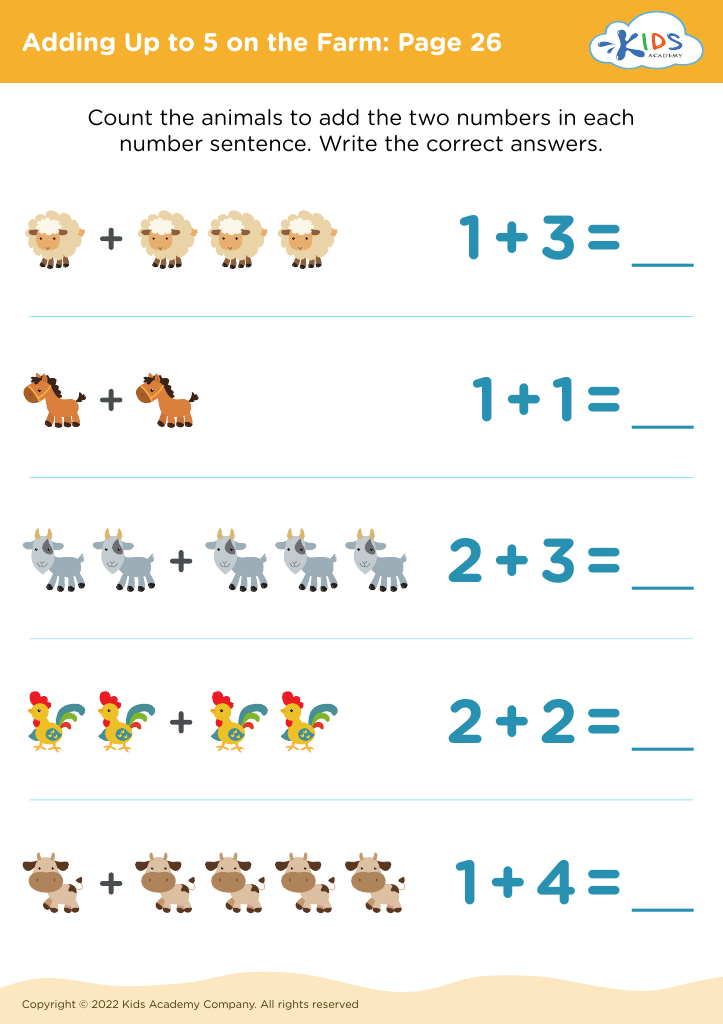
Adding Up to 5 on the Farm: Page 26
Worksheet
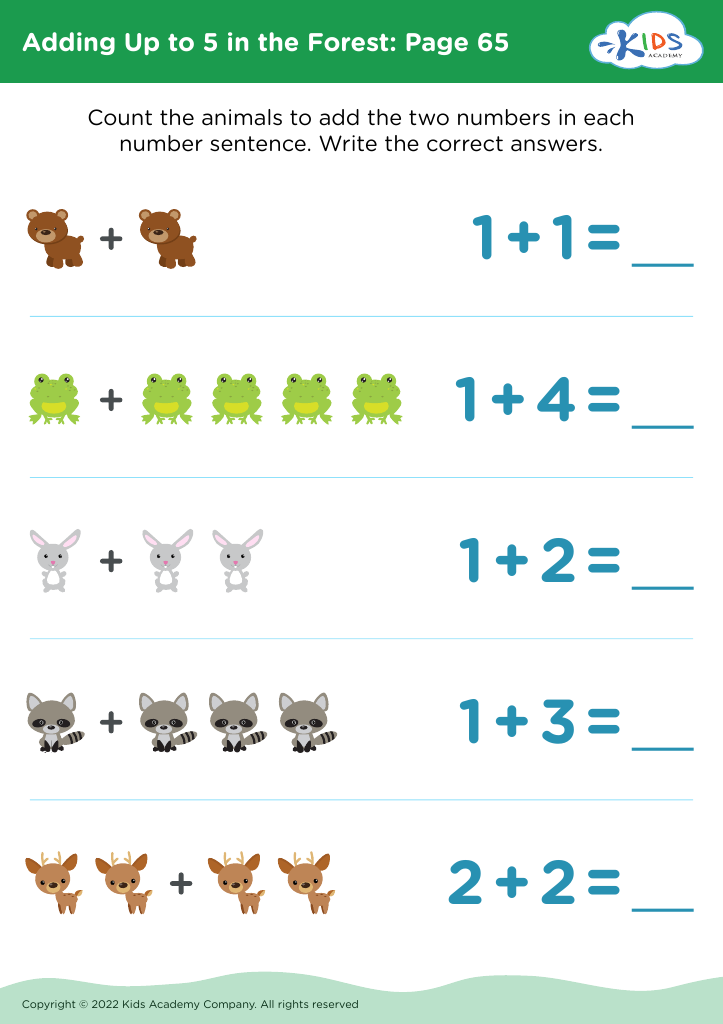
Adding Up to 5 in the Forest: Page 65
Worksheet
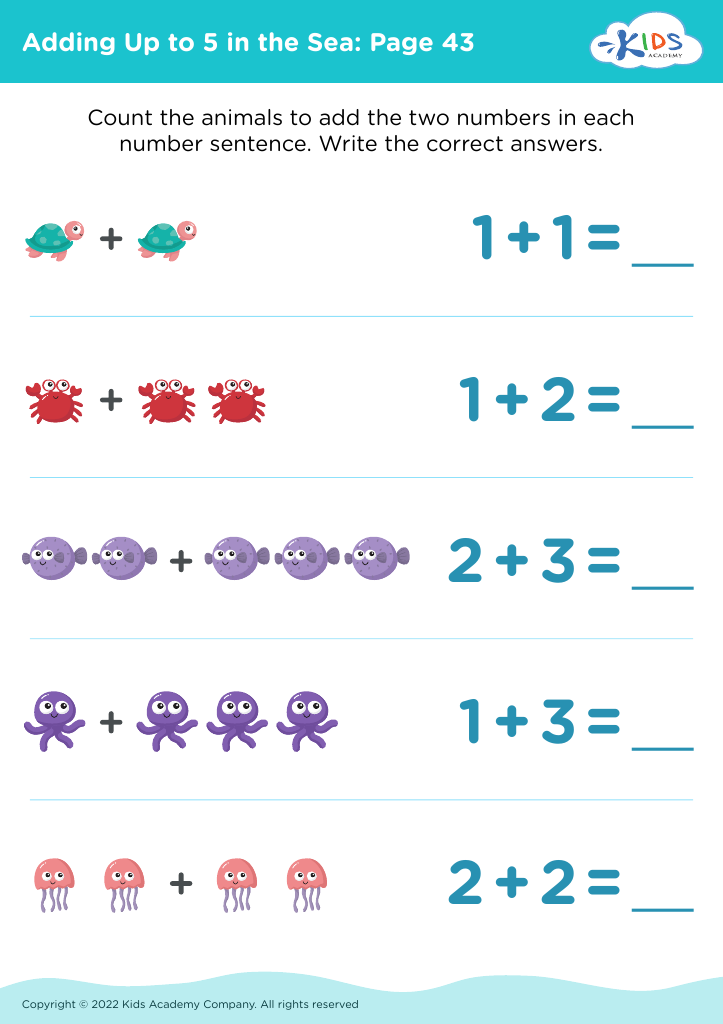
Adding Up to 5 in the Sea: Page 43
Worksheet
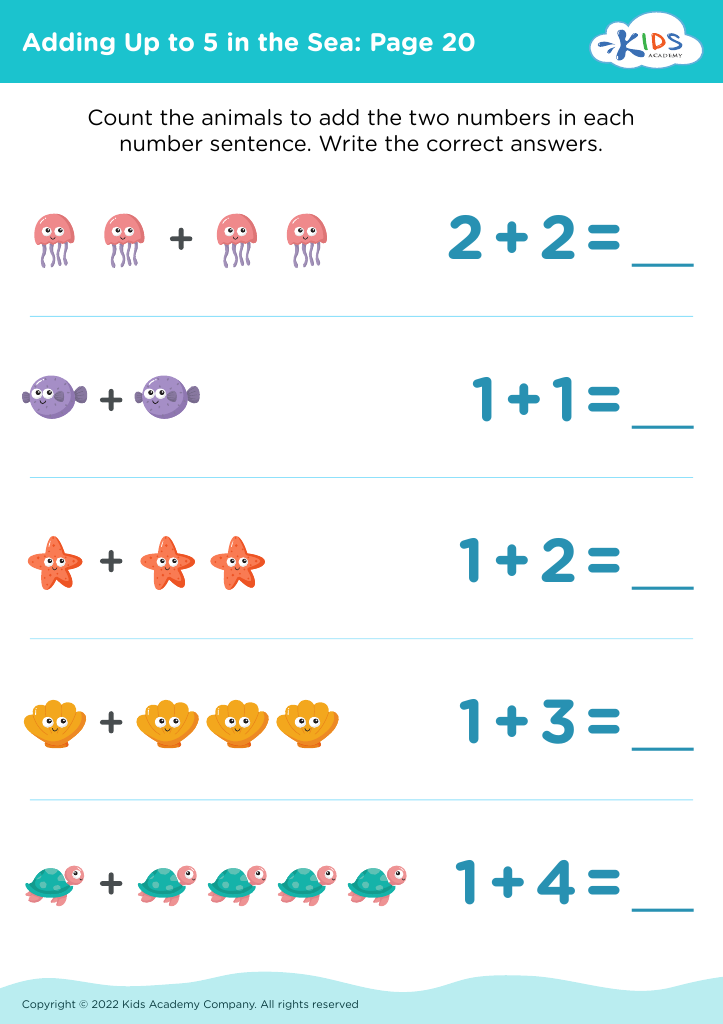
Adding Up to 5 in the Sea: Page 20
Worksheet
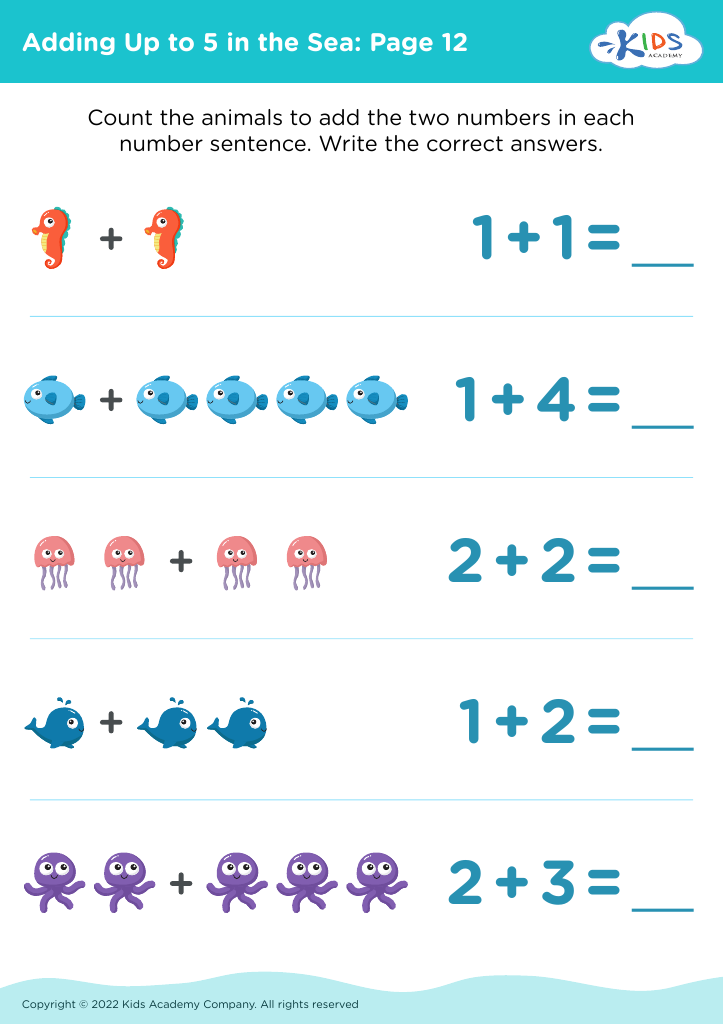
Adding Up to 5 in the Sea: Page 12
Worksheet


Number recognition and the ability to understand basic addition are foundational skills essential for young children's development. For children ages 3-5, learning to recognize numbers and learn to add up to 5 enhances not only their mathematical abilities but also critical cognitive skills.

First, number recognition fosters a strong sense of foundational numeracy, enabling children to identify numbers in their environment, which can lead to greater comfort with math in later years. Recognizing numbers and their relationships is the first step toward more complex mathematical concepts.

Moreover, learning to add small quantities, such as sums that total 5, helps young children develop problem-solving skills and logical thinking. These skills are crucial not only in mathematics but across a variety of subjects.

Additionally, engaging in activities that promote these skills often involves playful interactions, strengthening social and communication skills among peers. For teachers and parents, focusing on number recognition and addition offers meaningful opportunities to create positive learning experiences, setting the stage for academic success.

Overall, nurturing these abilities in children transforms them into confident learners and equipped individuals, bringing lifelong benefits well beyond early education.