Check out this FREE Trial Lesson on Adding Up to 5 for age 3-5!

Exactly the Same, or Not

Favorites
With answer key
Interactive
  • 3-5
  • Visual Learning
  • Adding Up to 5
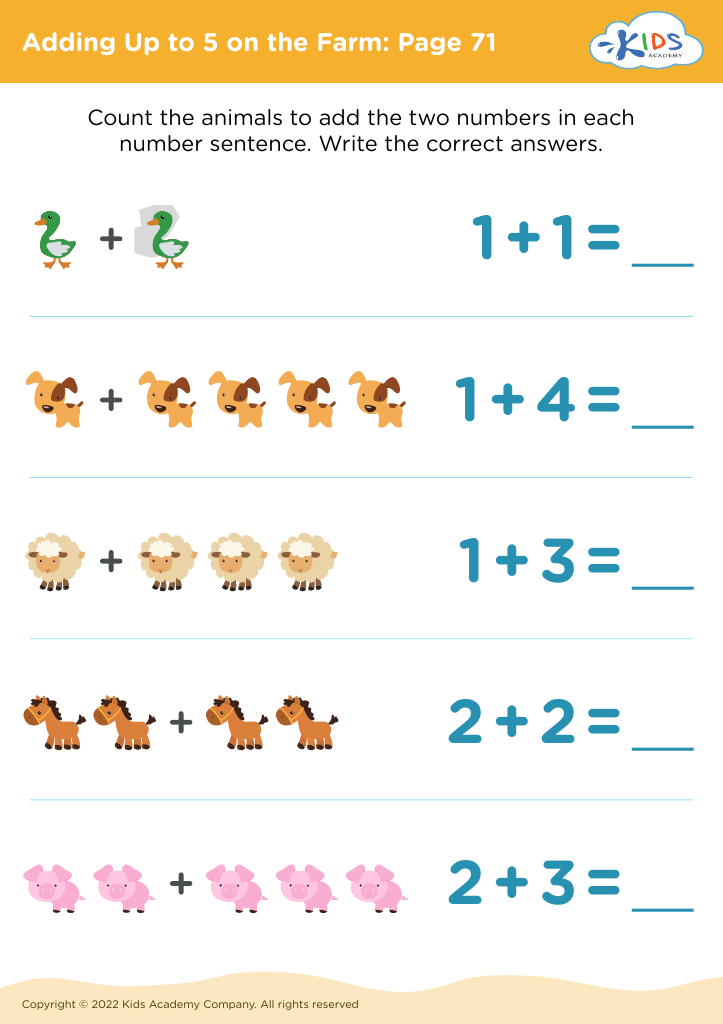
Adding Up to 5 on the Farm: Page 71
Worksheet
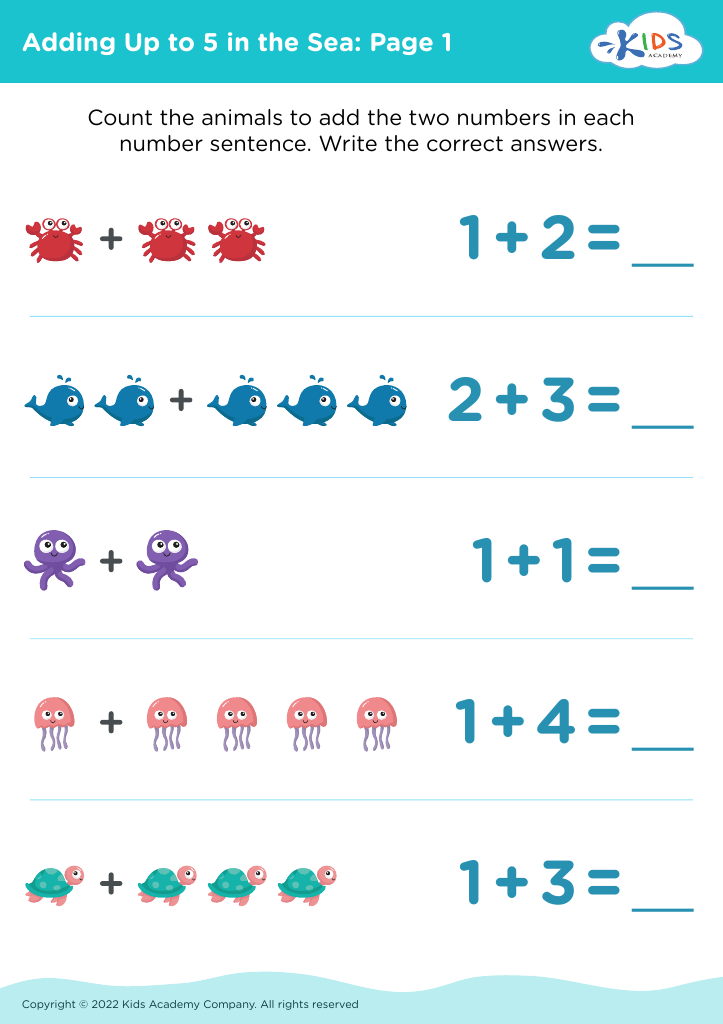
Adding Up to 5 in the Sea: Page 1

Adding Up to 5 in the Sea: Page 1

Adding Up to 5 in the Sea: Page 1
Worksheet
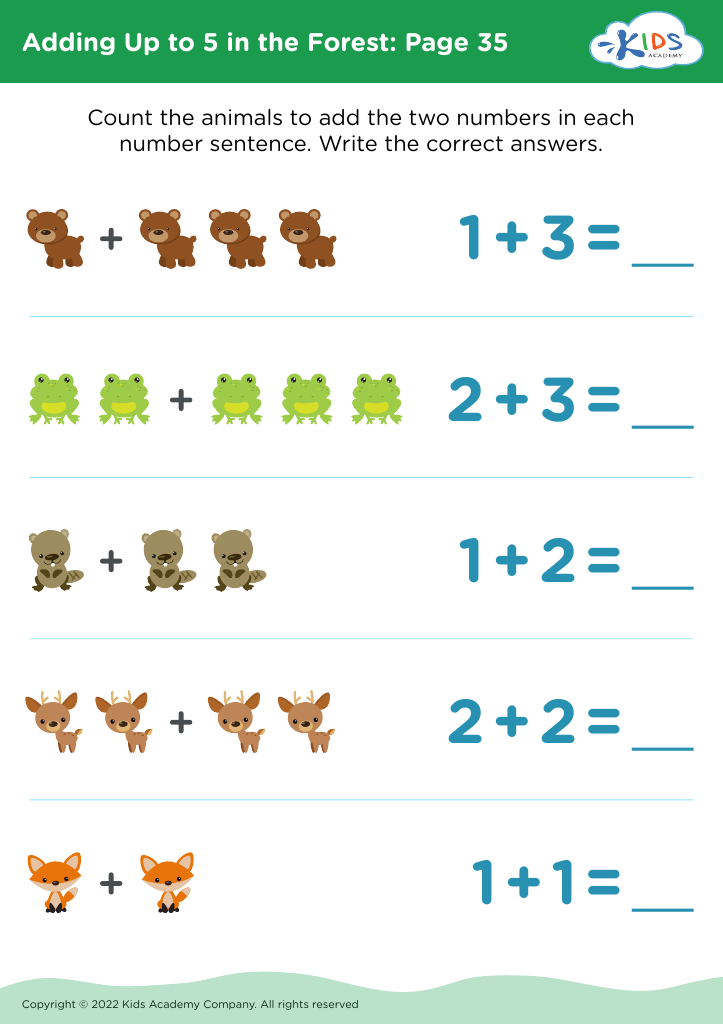
Adding Up to 5 in the Forest: Page 35
Worksheet
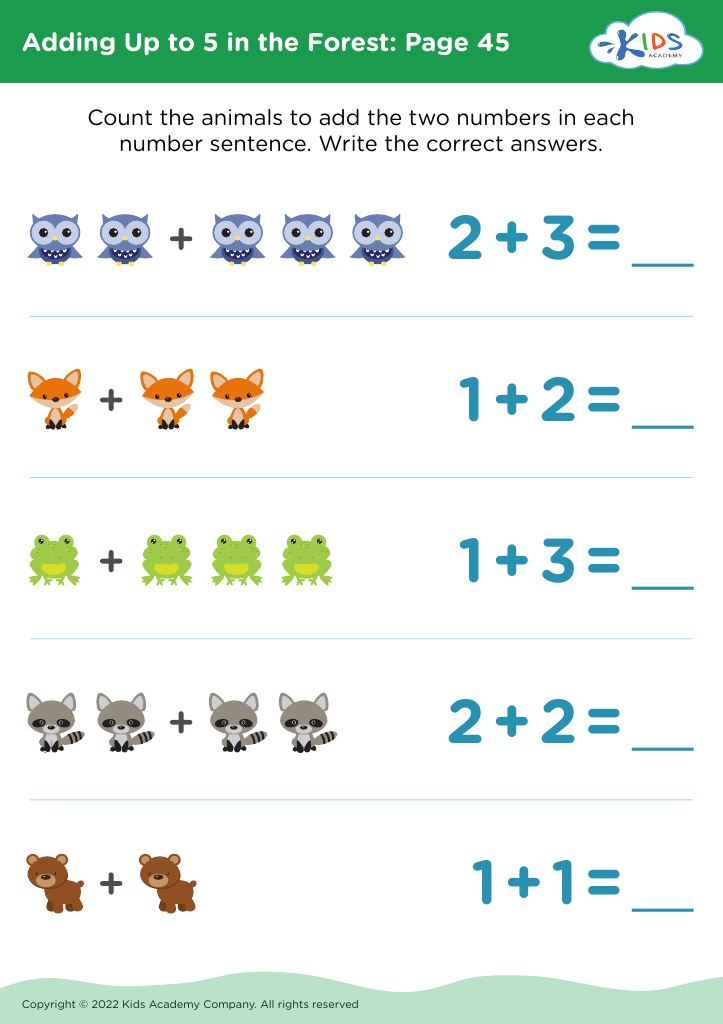
Adding Up to 5 in the Forest: Page 45
Worksheet
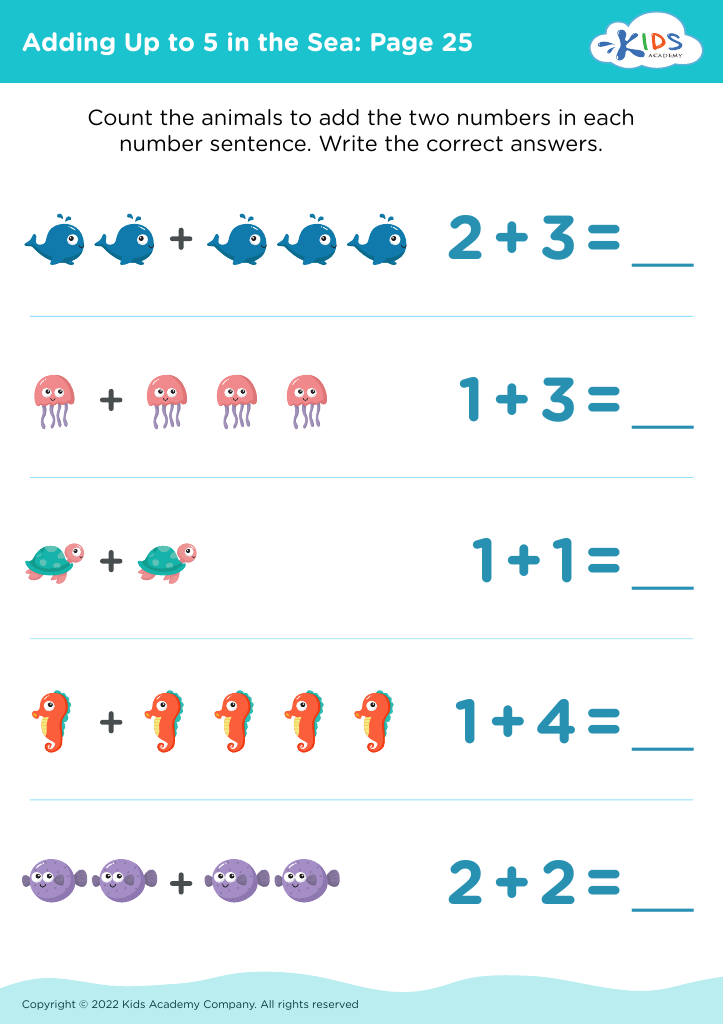
Adding Up to 5 in the Sea: Page 25
Worksheet
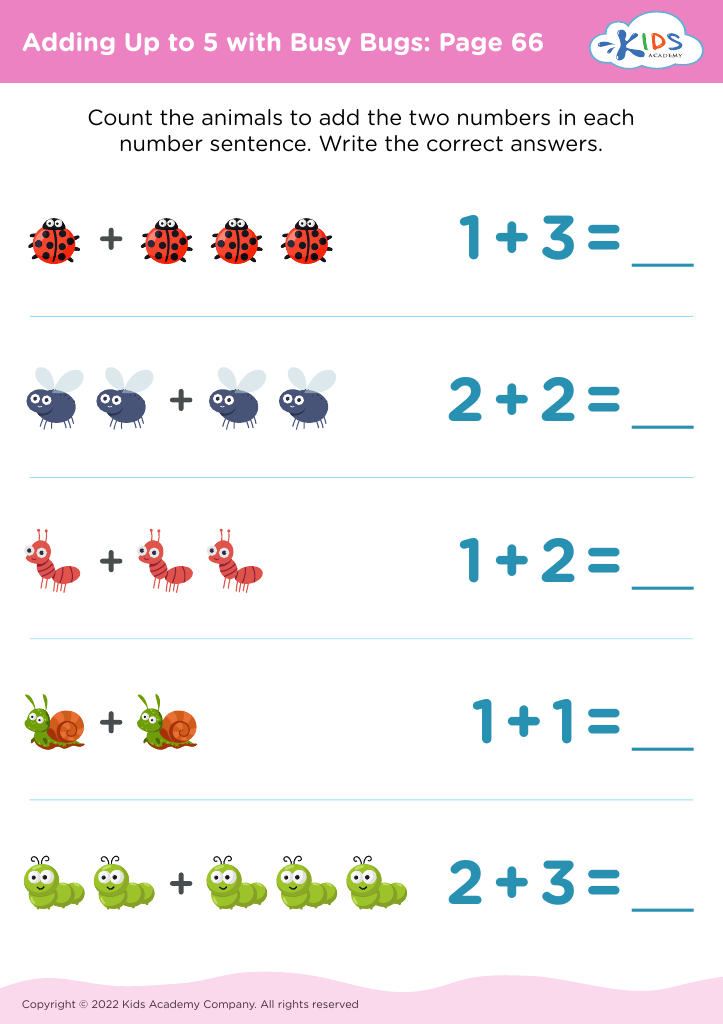
Adding Up to 5 with Busy Bugs: Page 66
Worksheet
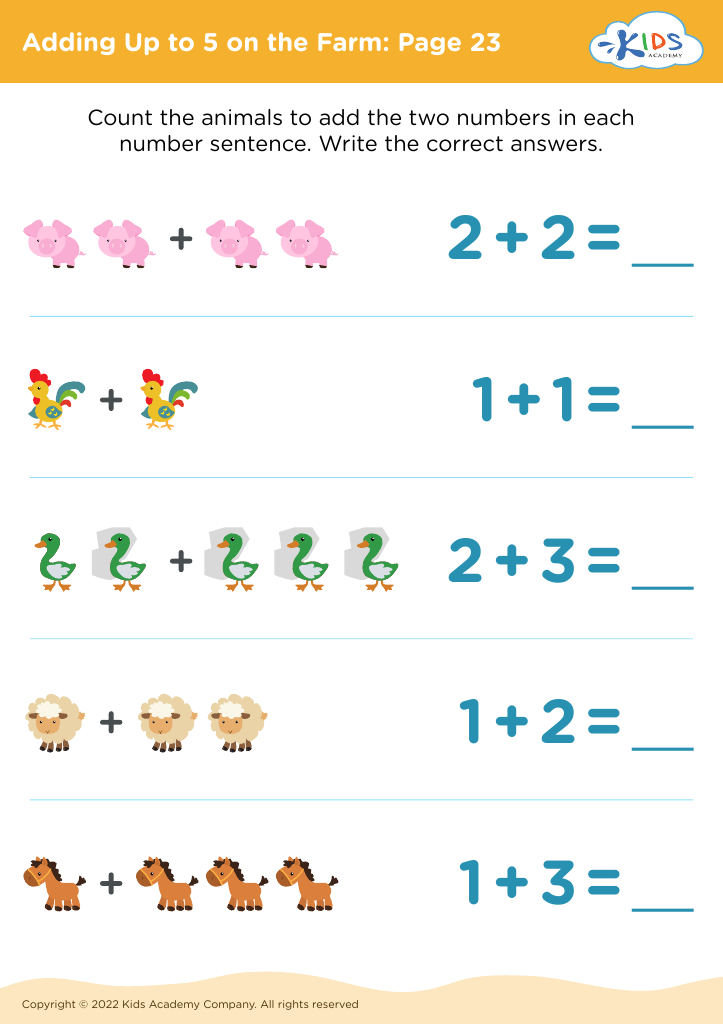
Adding Up to 5 on the Farm: Page 23
Worksheet
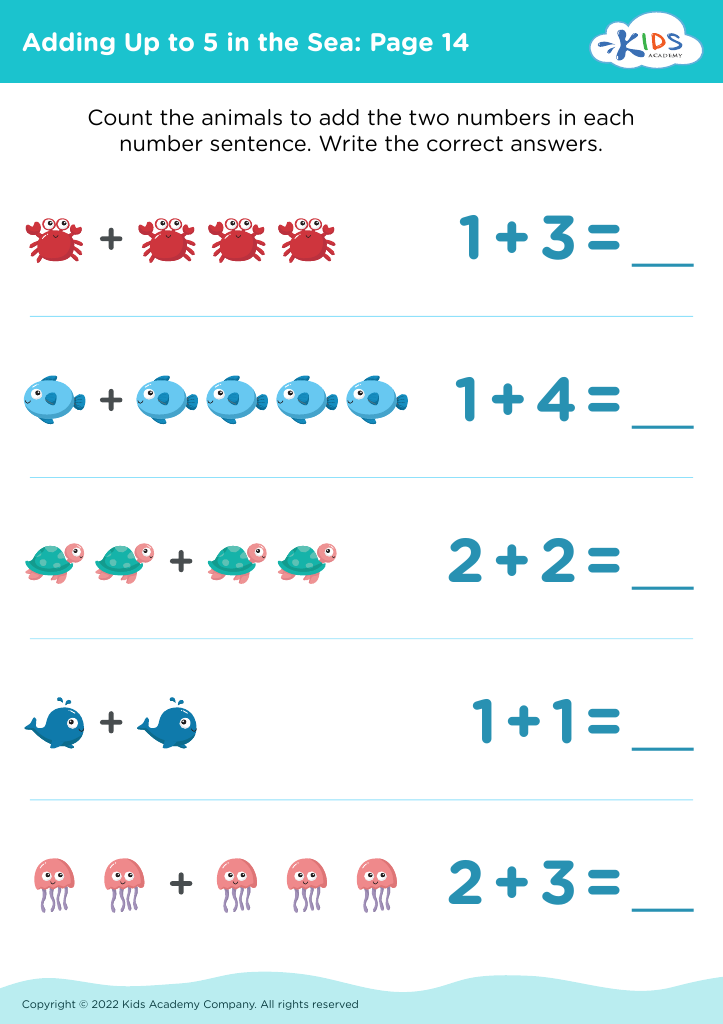
Adding Up to 5 in the Sea: Page 14
Worksheet
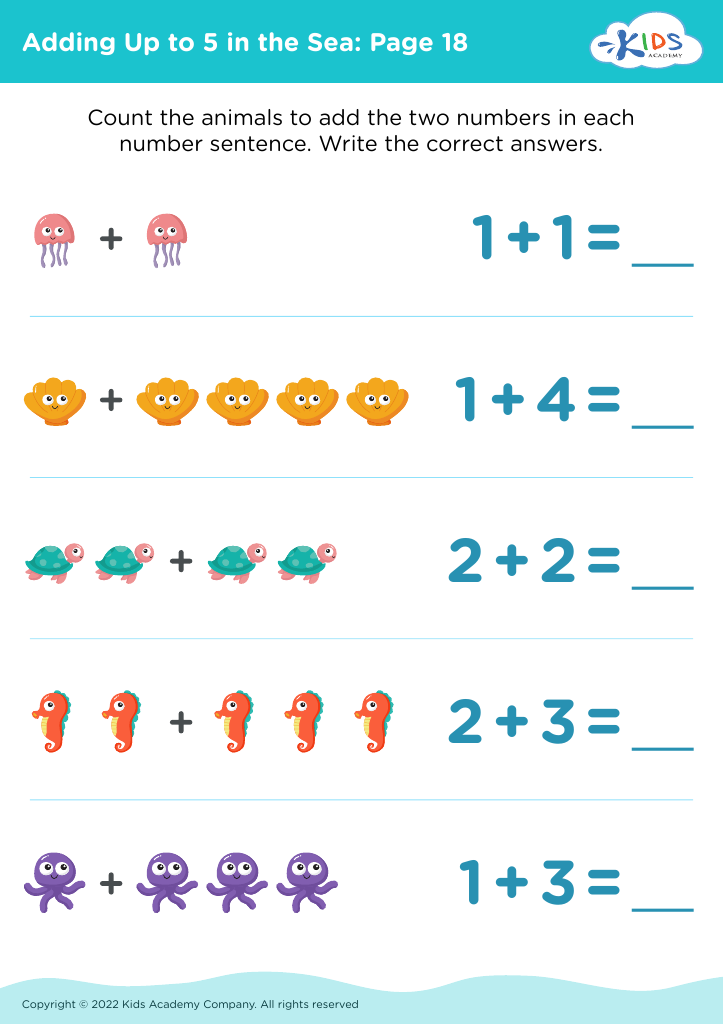
Adding Up to 5 in the Sea: Page 18
Worksheet
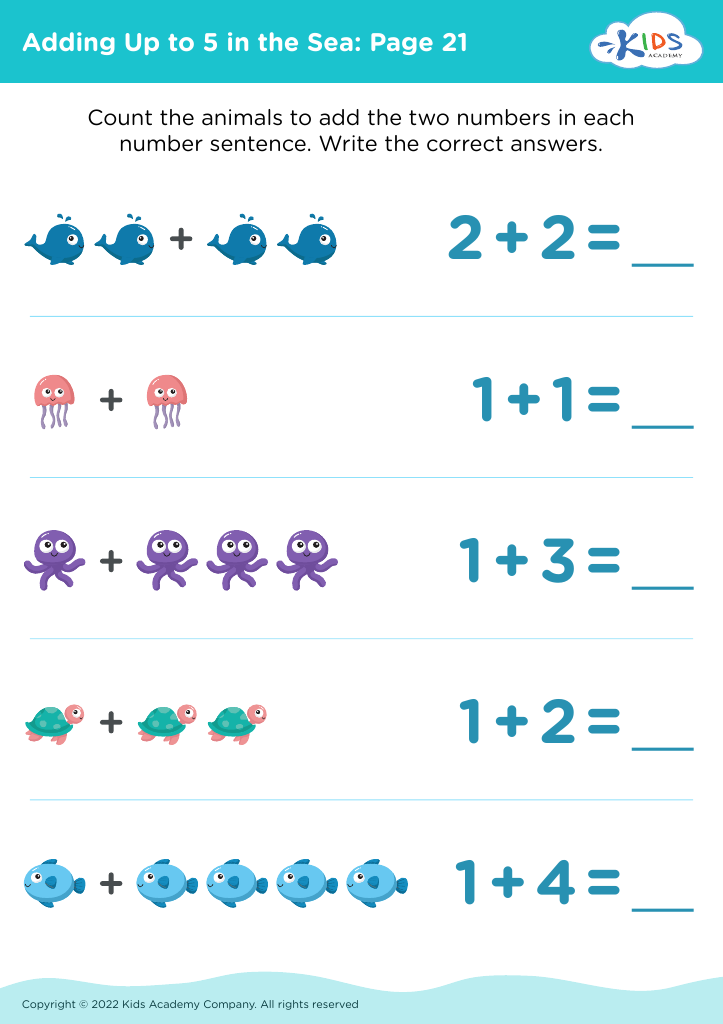
Adding Up to 5 in the Sea: Page 21
Worksheet
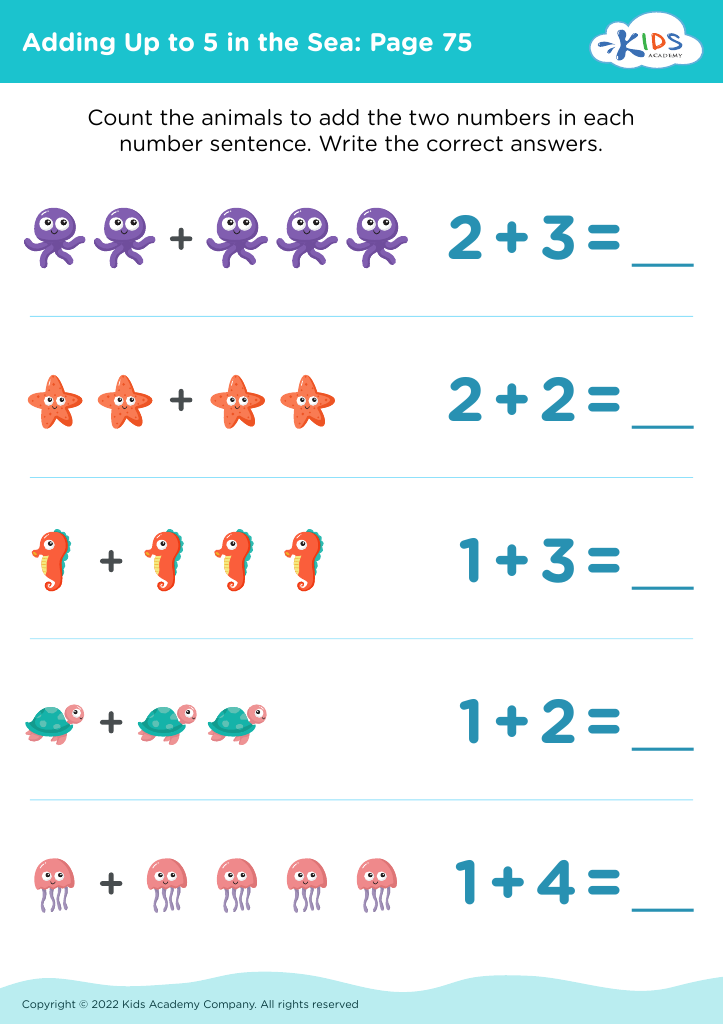
Adding Up to 5 in the Sea: Page 75
Worksheet
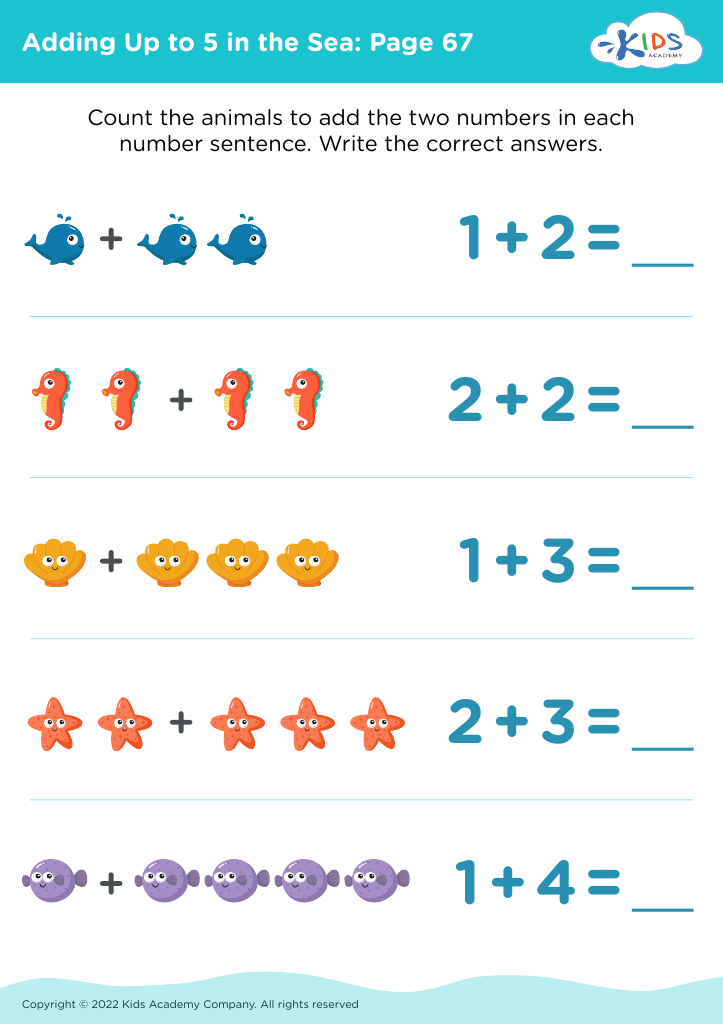
Adding Up to 5 in the Sea: Page 67
Worksheet
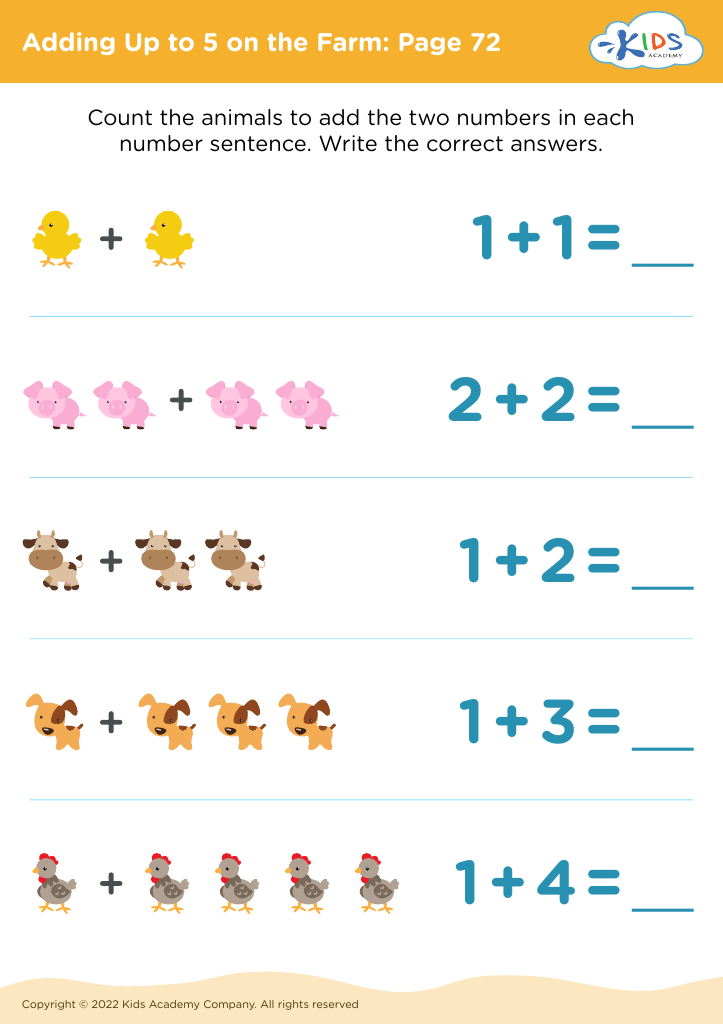
Adding Up to 5 on the Farm: Page 72
Worksheet
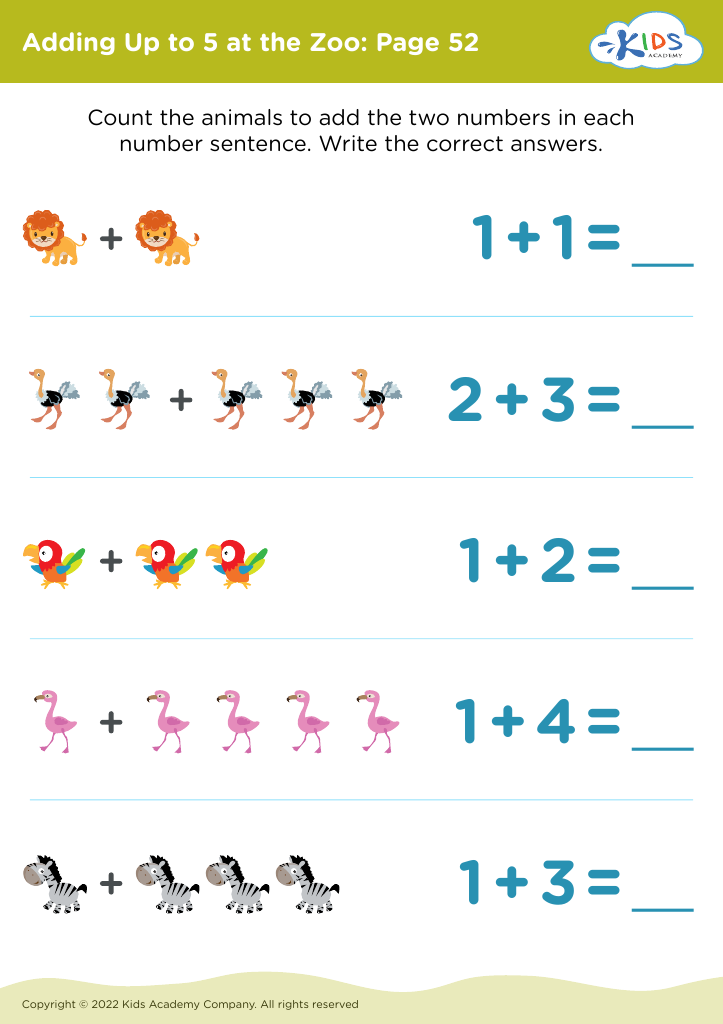
Adding Up to 5 at the Zoo: Page 52
Worksheet
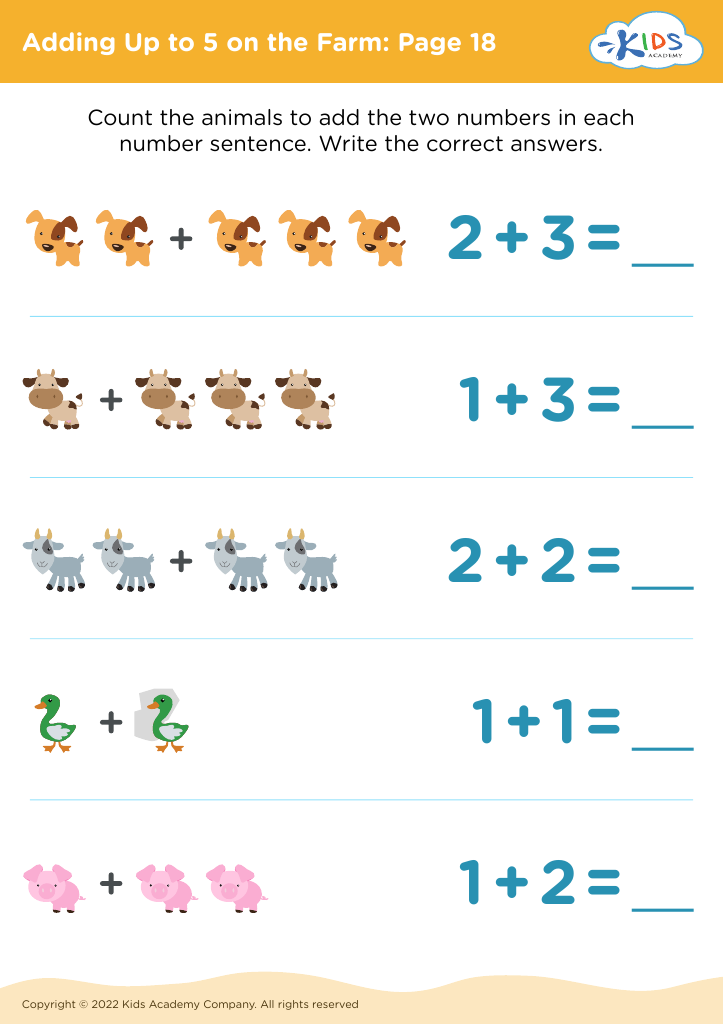
Adding Up to 5 on the Farm: Page 18
Worksheet
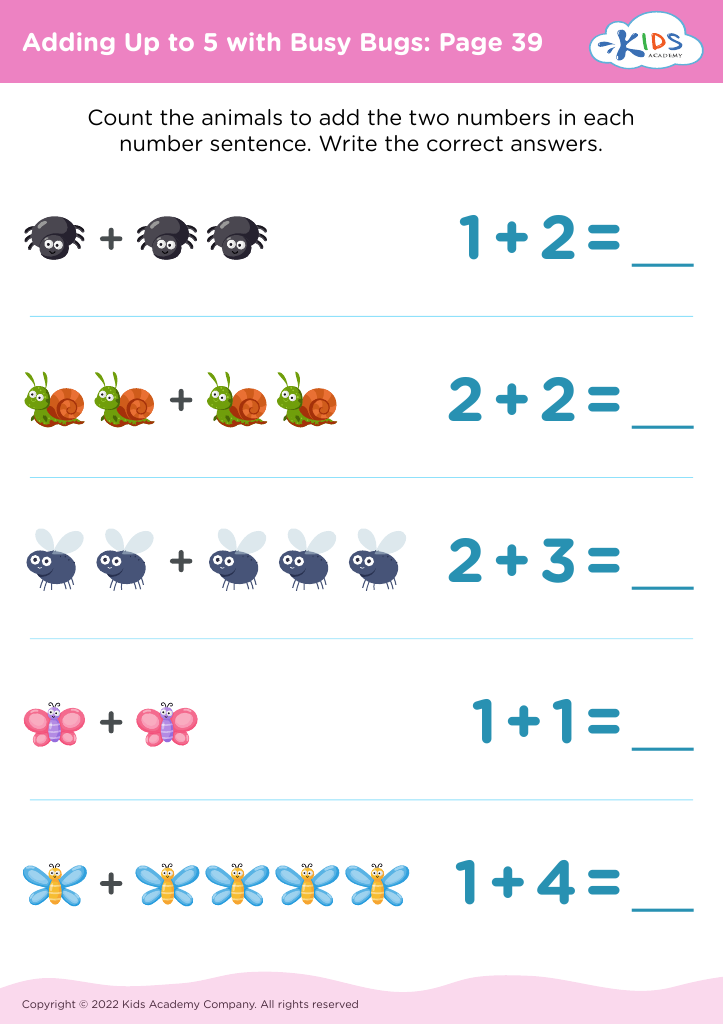
Adding Up to 5 with Busy Bugs: Page 39
Worksheet
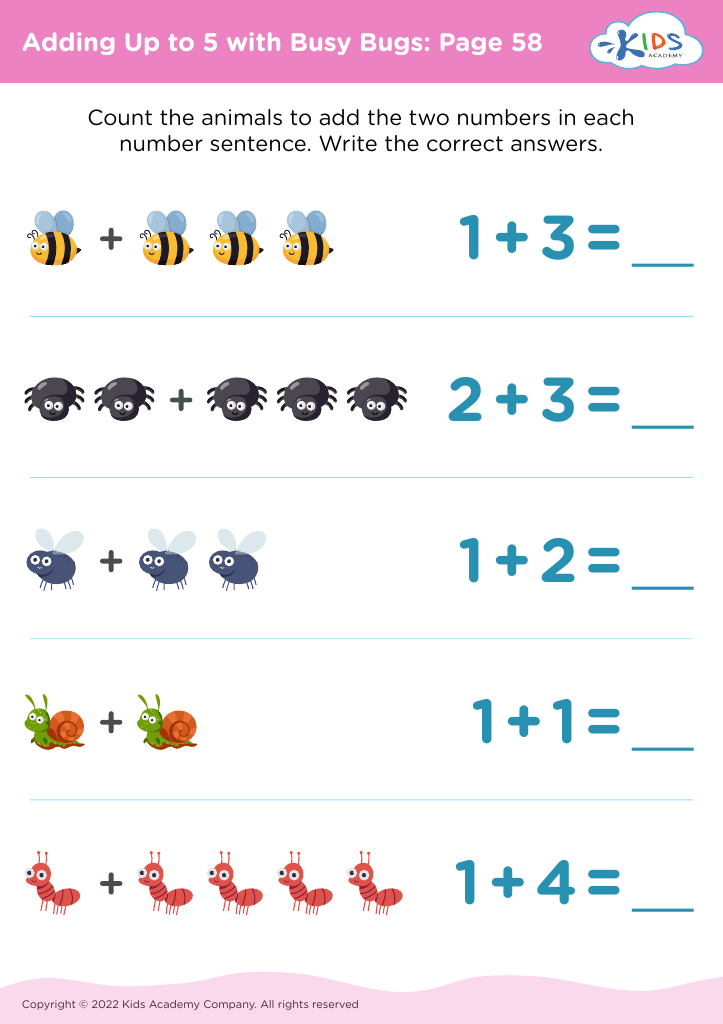
Adding Up to 5 with Busy Bugs: Page 58
Worksheet
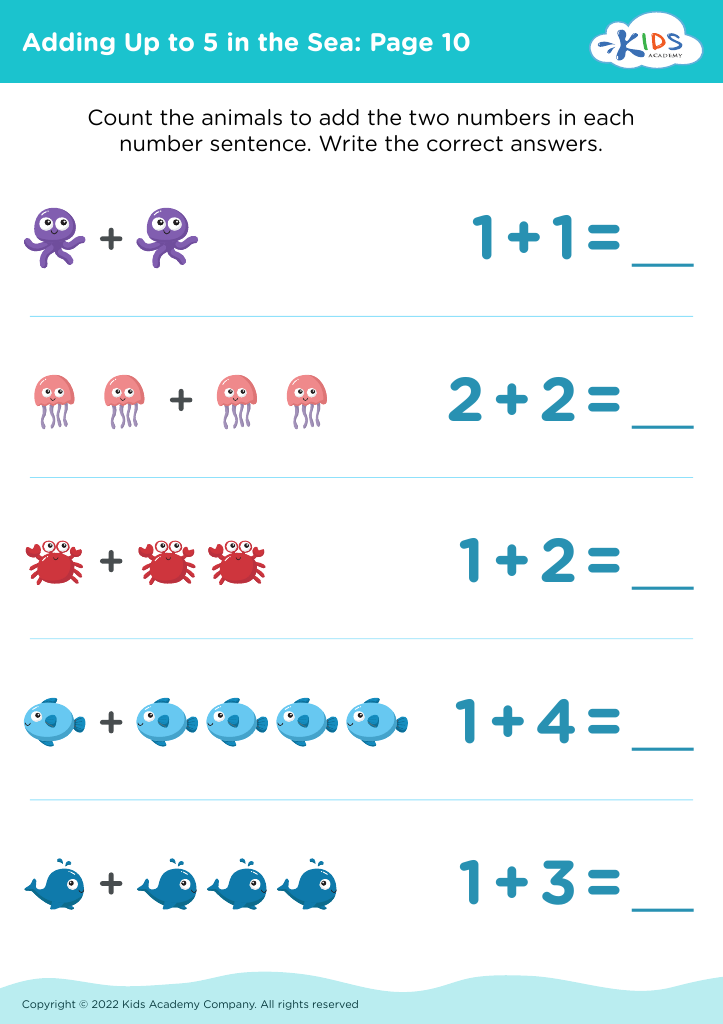
Adding Up to 5 in the Sea: Page 10
Worksheet
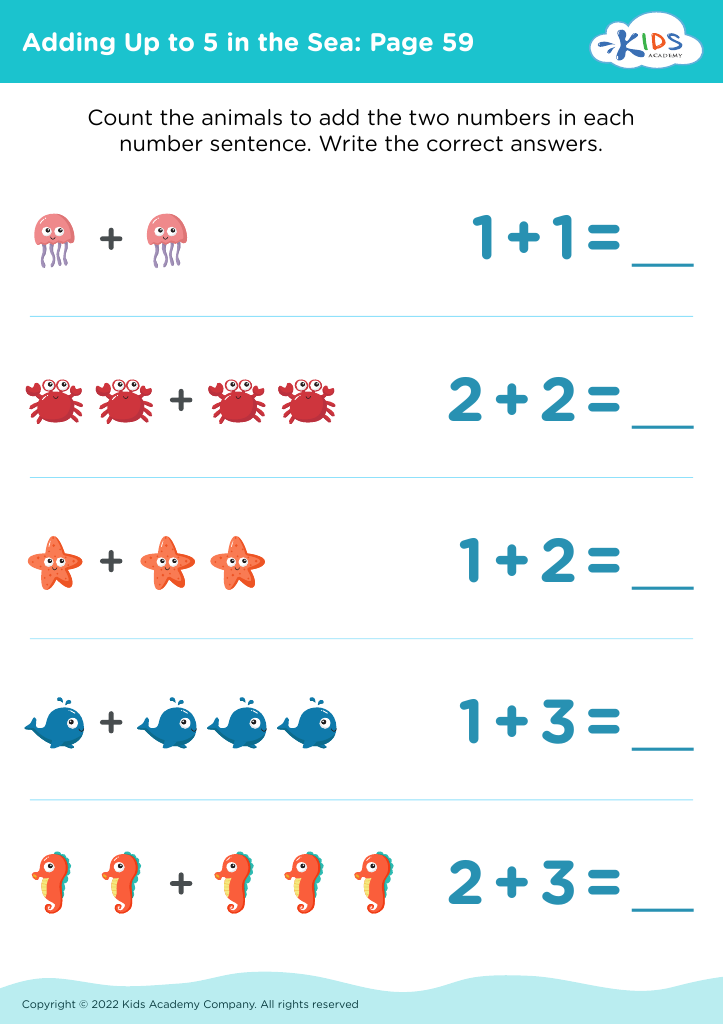
Adding Up to 5 in the Sea: Page 59
Worksheet
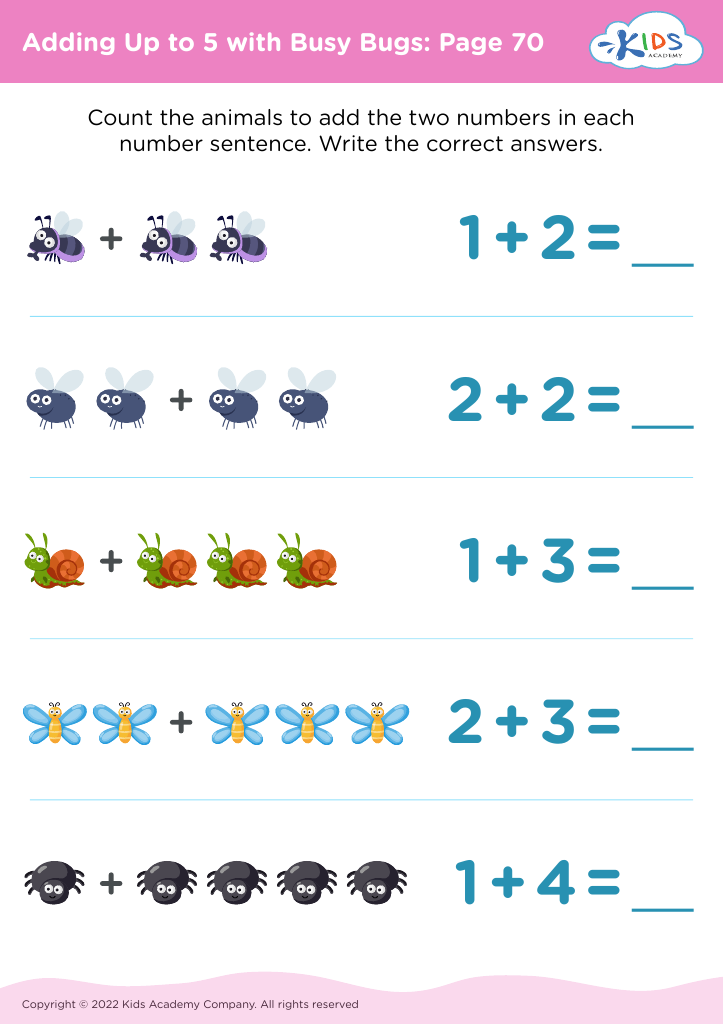
Adding Up to 5 with Busy Bugs: Page 70
Worksheet
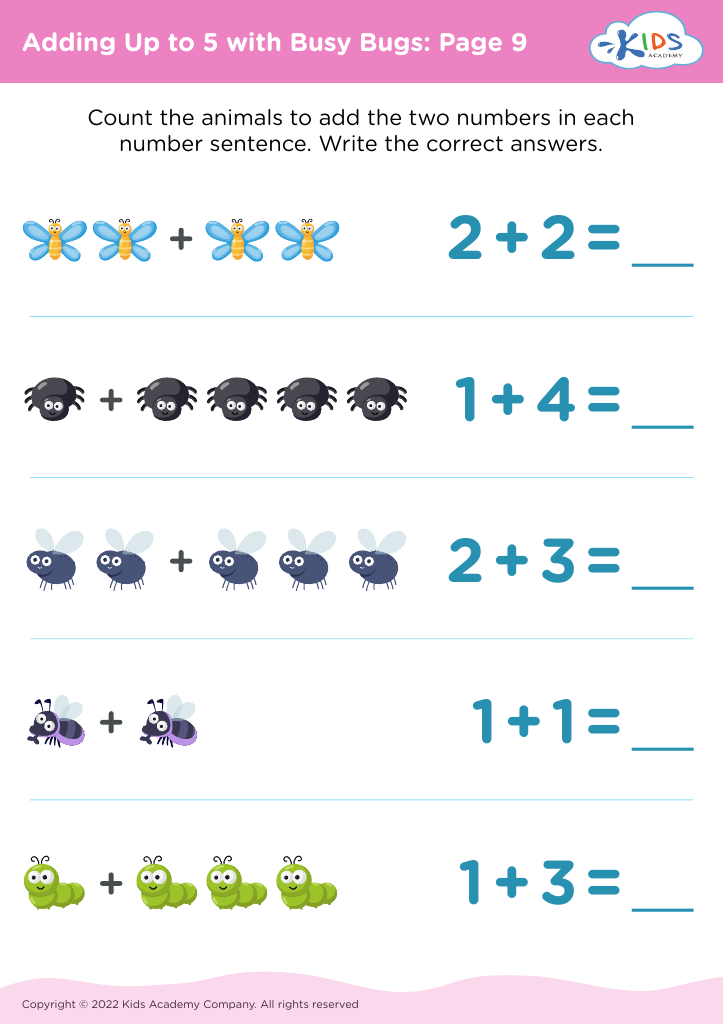
Adding Up to 5 with Busy Bugs: Page 9
Worksheet
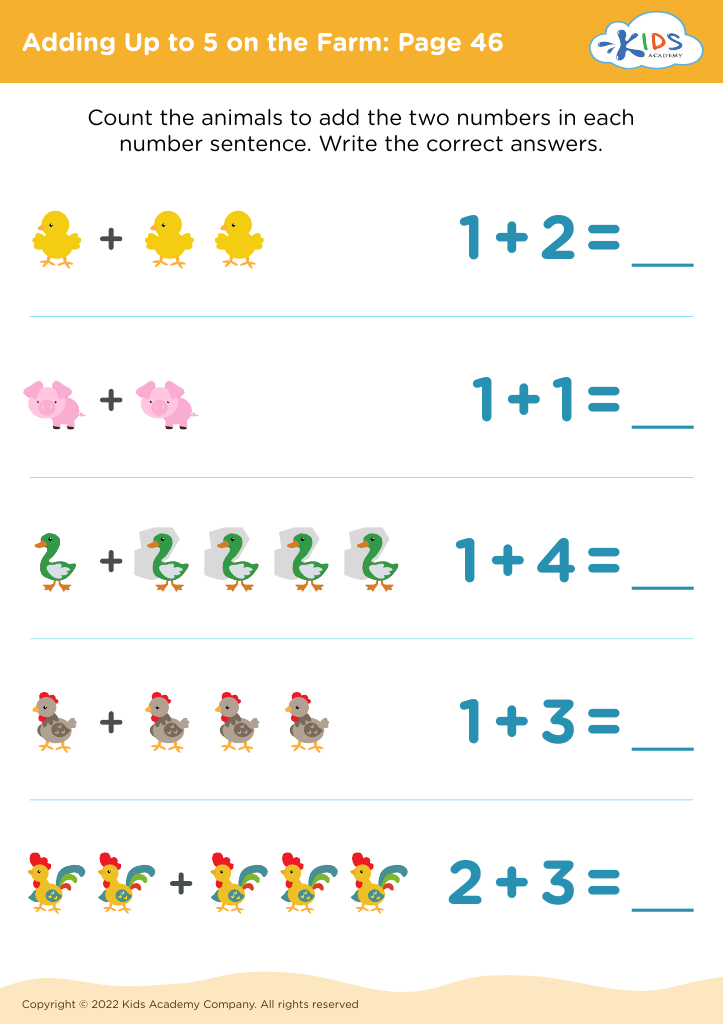
Adding Up to 5 on the Farm: Page 46
Worksheet
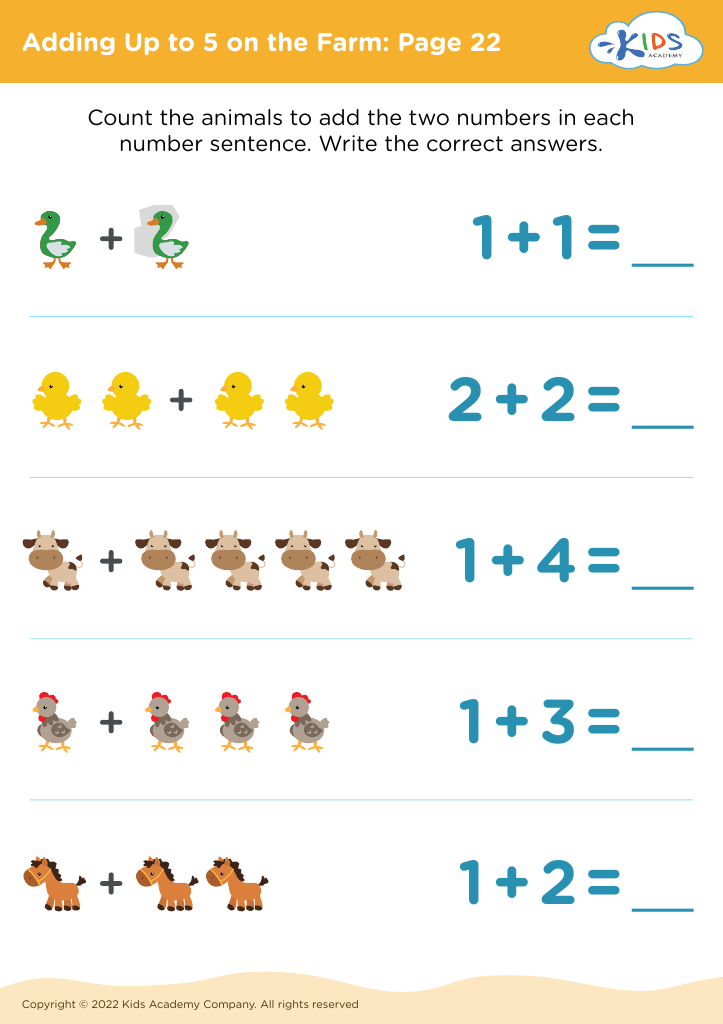
Adding Up to 5 on the Farm: Page 22
Worksheet
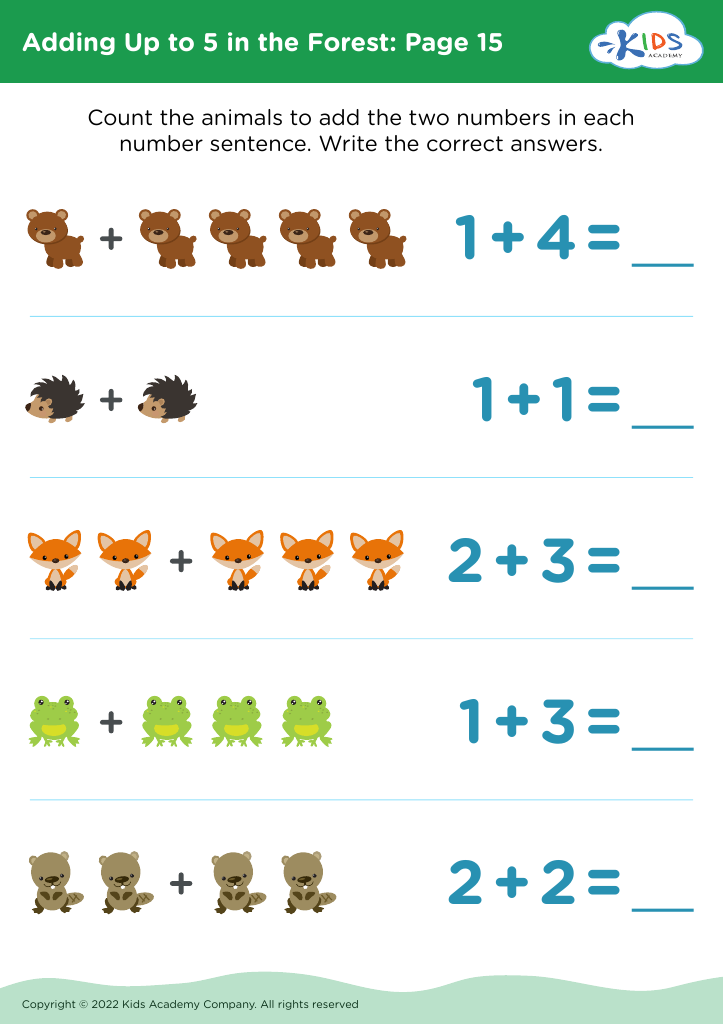
Adding Up to 5 in the Forest: Page 15
Worksheet


Visual learning is crucial for kids ages 3-5, especially when introducing concepts like adding up to 5. During these formative years, children's brains are highly receptive to visual stimuli. For early math concepts, like addition, using visual tools—such as pictures, counters, or story-based illustrations—helps make abstract ideas more concrete.

When children see visual representations of addition, they can physically count objects and better understand that adding means combining groups to make a larger one. This hands-on approach caters to various learning styles and can make math enjoyable and less intimidating.

Furthermore, early engagement with math sets a positive foundation for future learning. Young children, when encouraged and supported through visual tools, are more likely to develop confidence in their abilities. They learn to recognize patterns, construct meaning, and solve problems more efficiently.

Incorporating visual learning in simple addition also allows parents and teachers to identify and address any learning difficulties early on. Activities like using blocks, drawing pictures, and storytelling not only teach math skills but also support overall cognitive and motor development.

Therefore, fostering visual learning and focusing on adding up to 5 during these early years is an investment in a child's academic future, laying the groundwork for numeracy skills and a lasting love for learning.