Basic Addition Skills Adding with Busy Bugs Worksheets for Ages 3-5 - Page 2
34 filtered results
-
From - To
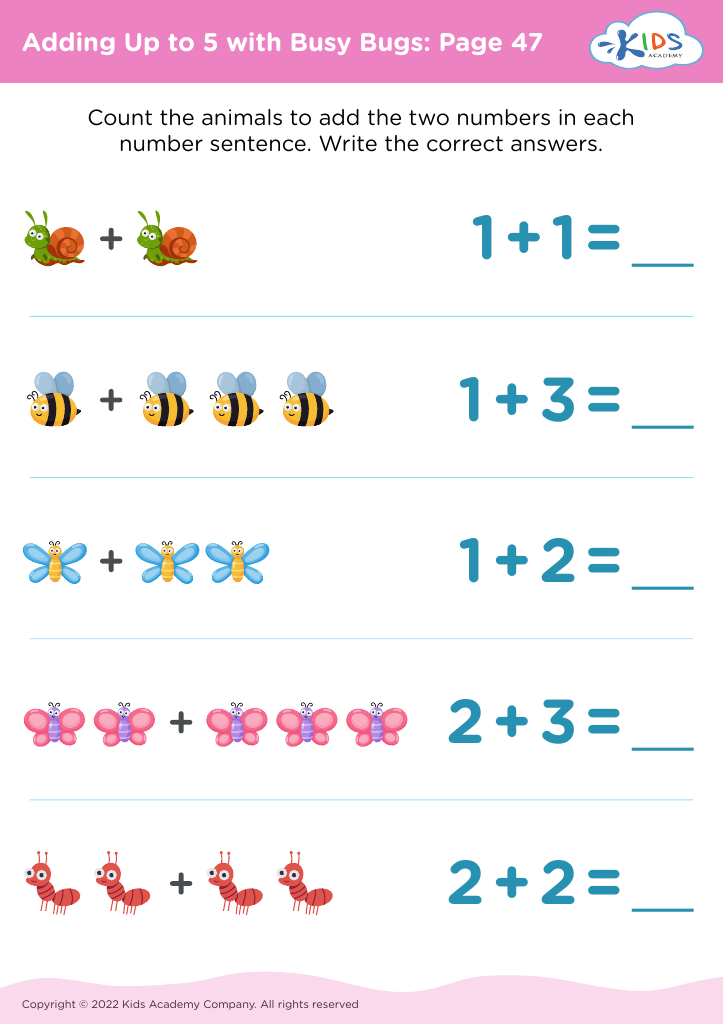
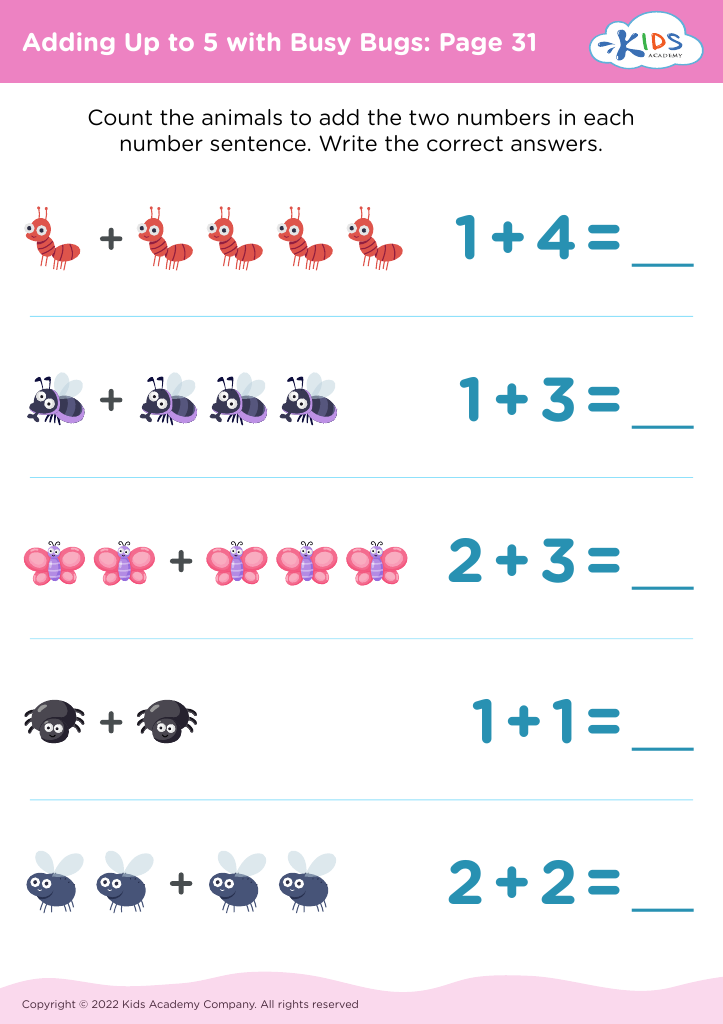
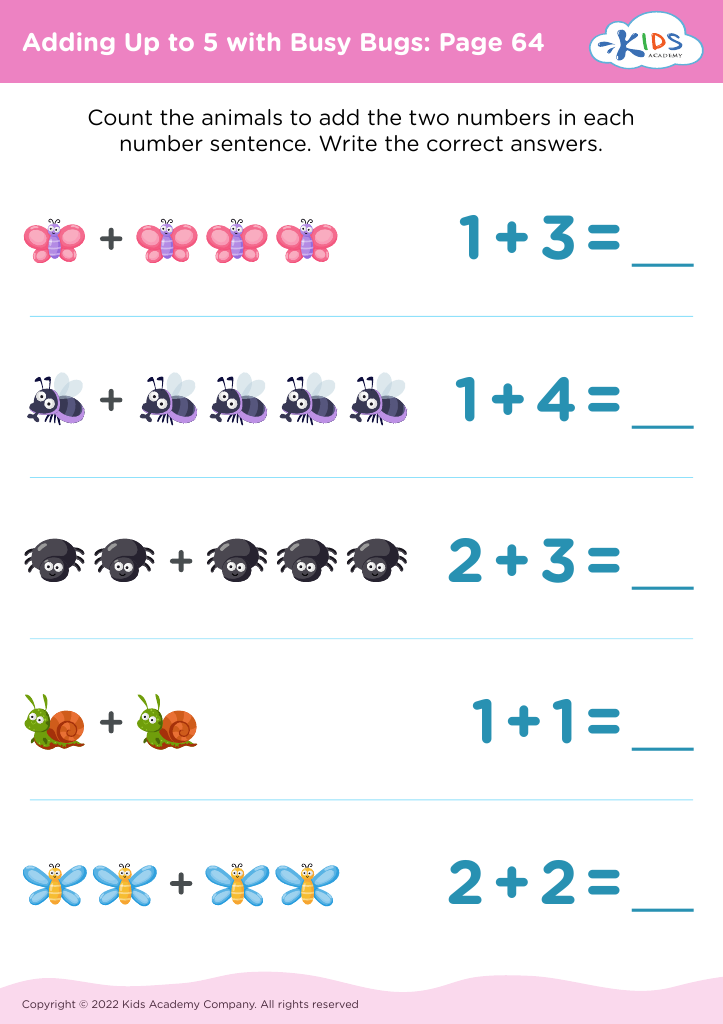
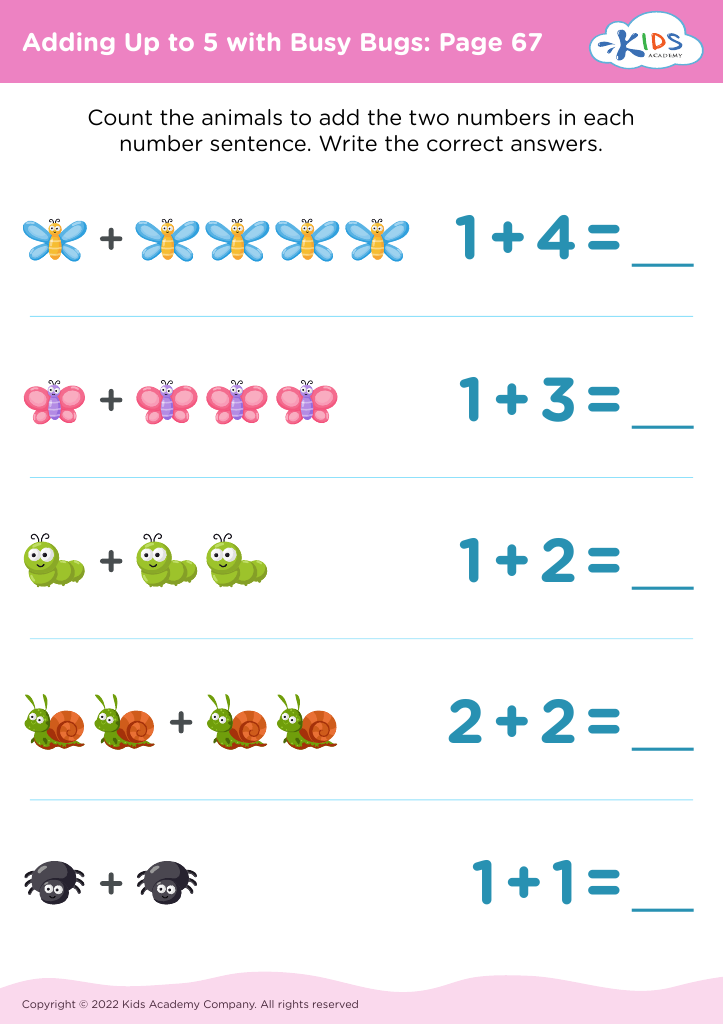
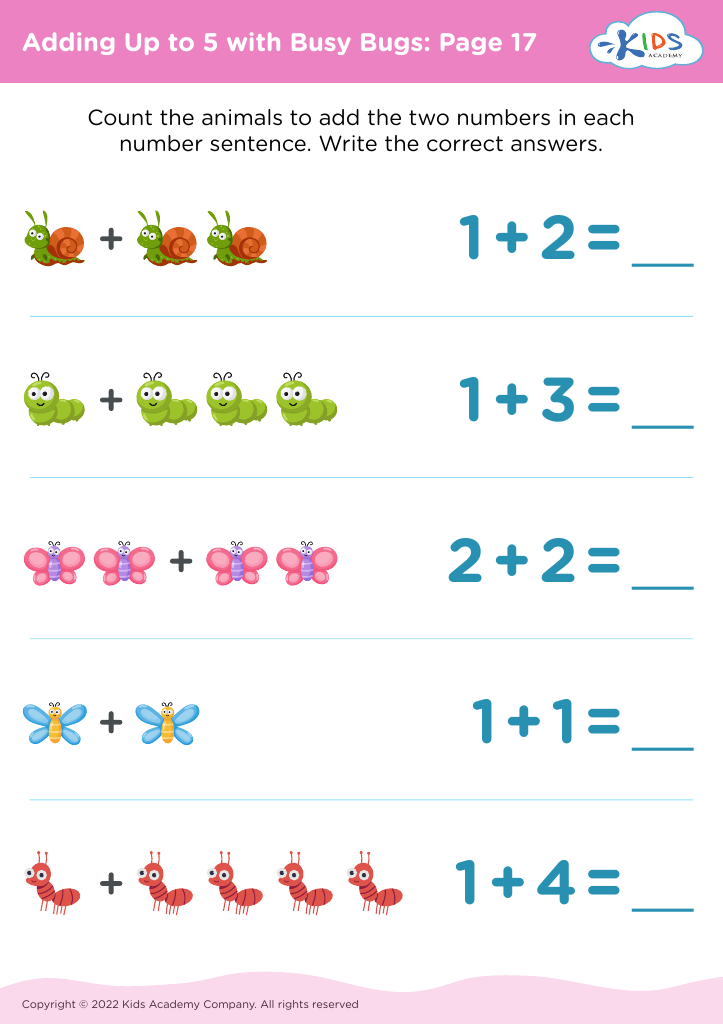
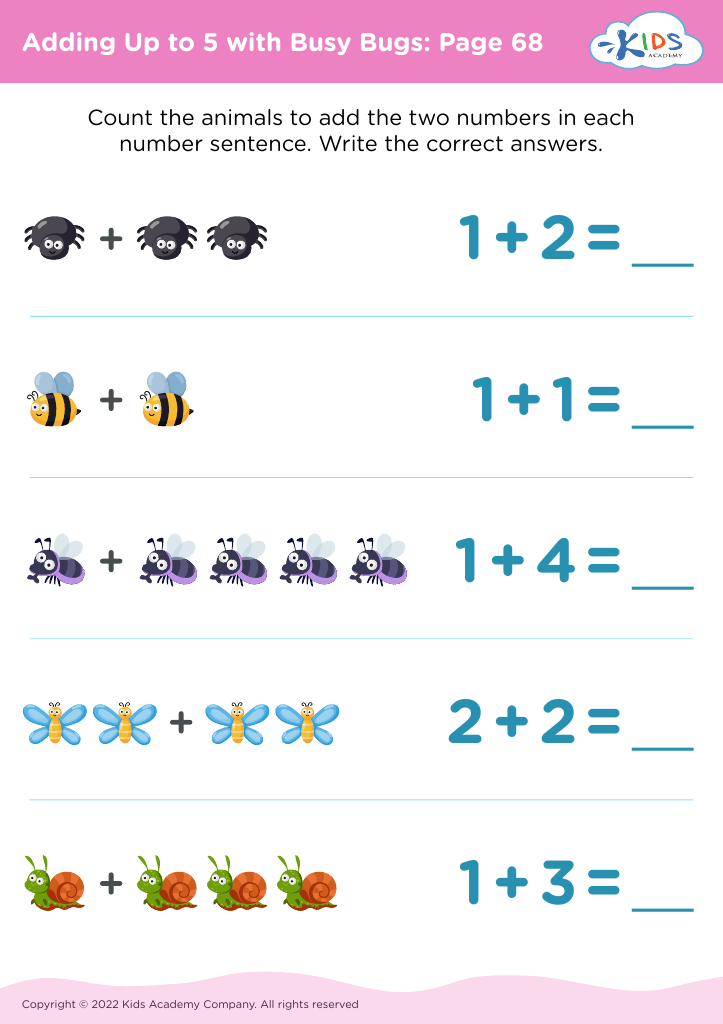
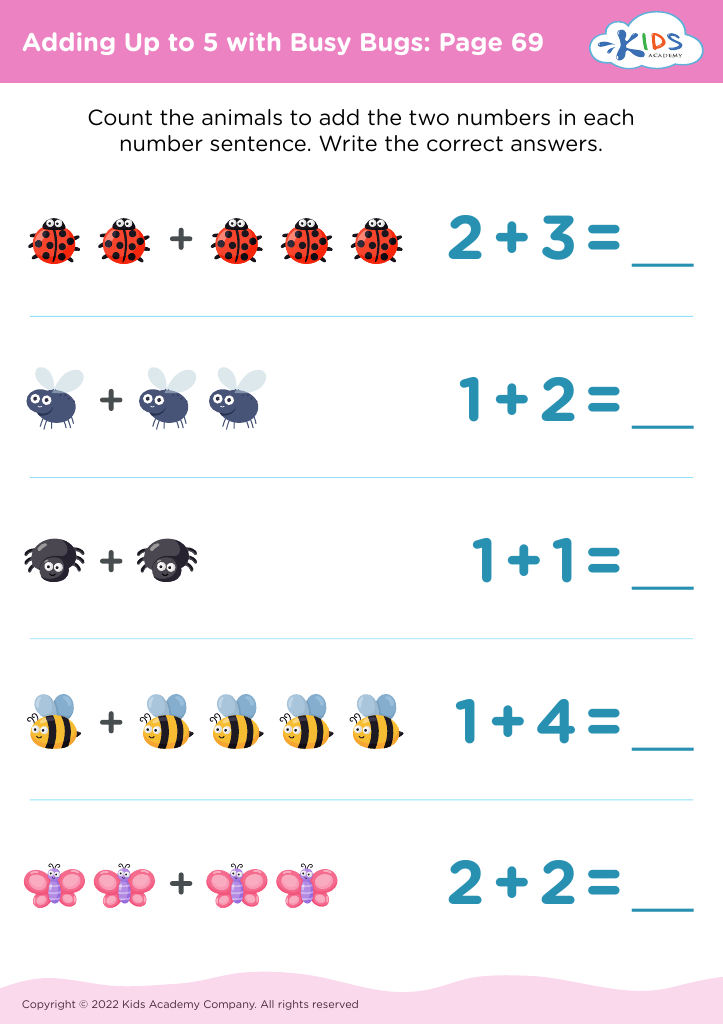
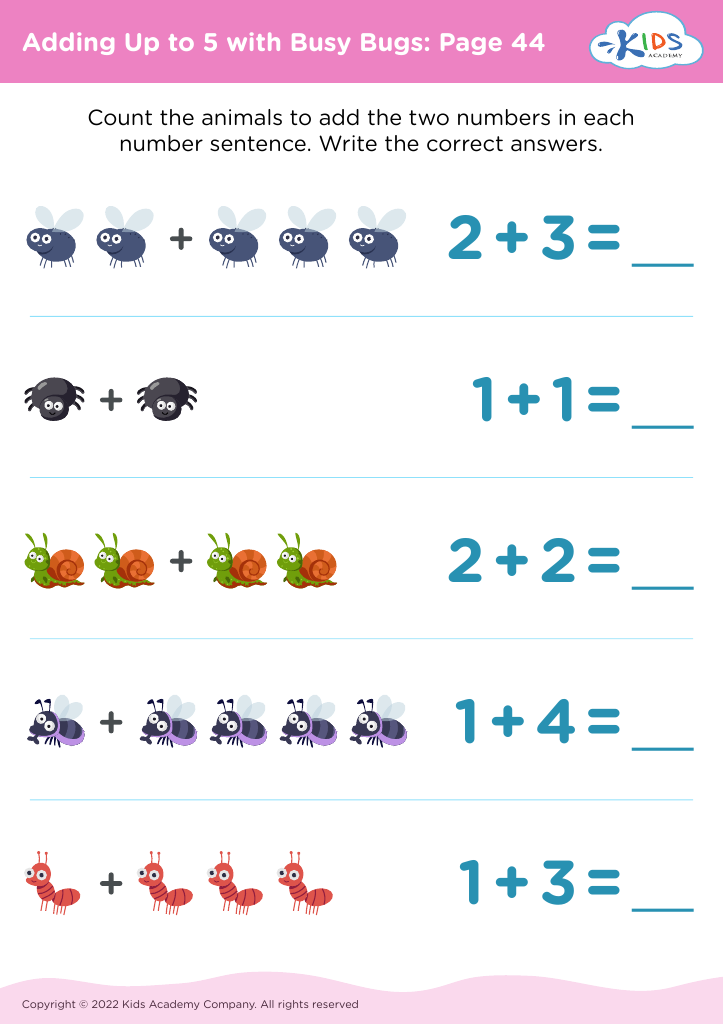
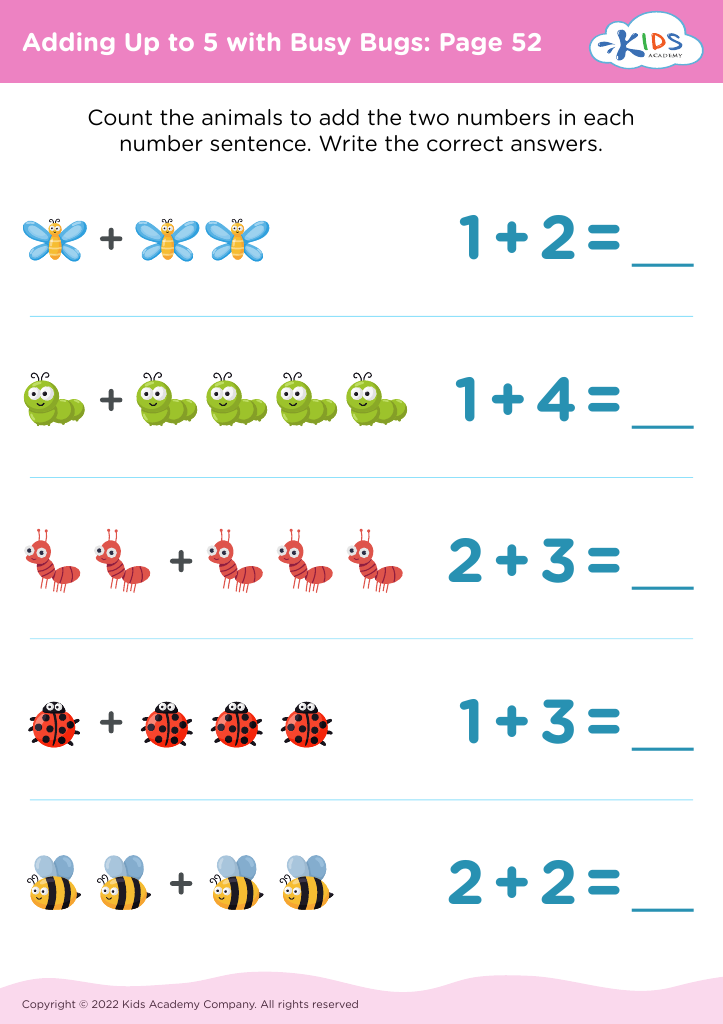
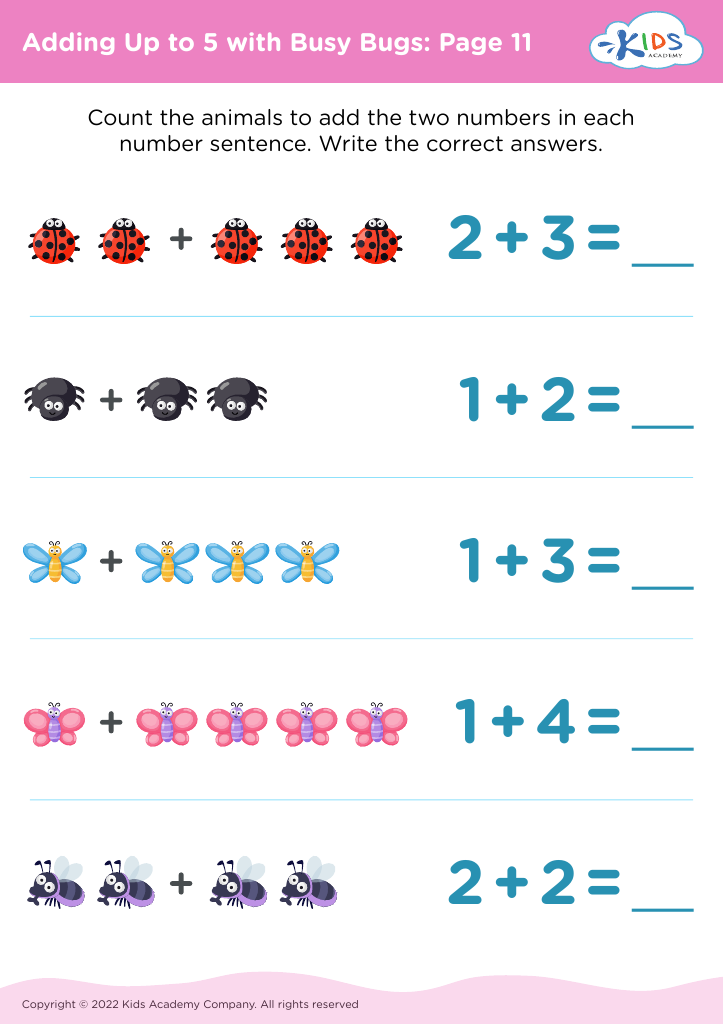



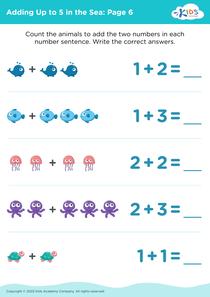
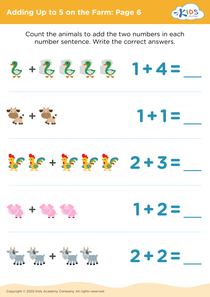
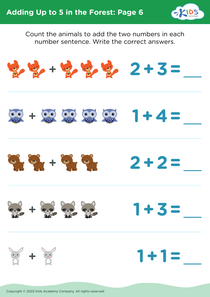
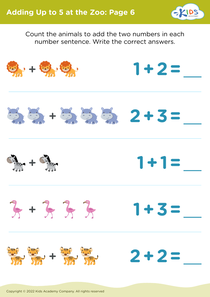
Parents and teachers should prioritize basic addition skills, such as those taught in "Adding with Busy Bugs" for ages 3-5, because these foundational math concepts lay the groundwork for future academic success. Early childhood is a critical period for developing essential numeracy skills, and engaging resources like Busy Bugs make learning enjoyable and interactive.
Games and hands-on activities associated with Busy Bugs capture young children's attention, making them more likely to engage with and retain mathematical concepts. These activities enhance cognitive development and can help boost problem-solving abilities as children learn to think quantitatively.
Furthermore, acquiring basic addition skills early fosters a positive attitude toward mathematics, reducing anxiety and building confidence as children progress to more complex concepts in later grades. Parents and teachers who support early math skill development set children up for a smoother educational journey.
Lastly, utilizing fun, thematic learning tools not only strengthens number sense but also encourages social interaction and teamwork when children work together, creating a collaborative learning environment. Thus, caring about basic addition skills for young learners is crucial in nurturing well-rounded, capable learners.