Counting practice Addition and Subtraction Word Problems Worksheets for Ages 3-5
5 filtered results
-
From - To
Introduce your little ones to the exciting world of math with our "Counting Practice Addition and Subtraction Word Problems Worksheets for Ages 3-5." Specially designed for preschoolers, these engaging worksheets help children develop fundamental arithmetic and counting skills. Through playful and relatable word problems, kids learn to add and subtract in a fun, supportive environment. Each worksheet is crafted to encourage critical thinking and problem-solving abilities while keeping learning enjoyable and stress-free. Perfect for both classroom and at-home learning, our worksheets lay the foundation for future math success. Equip your child today with essential numeracy skills!
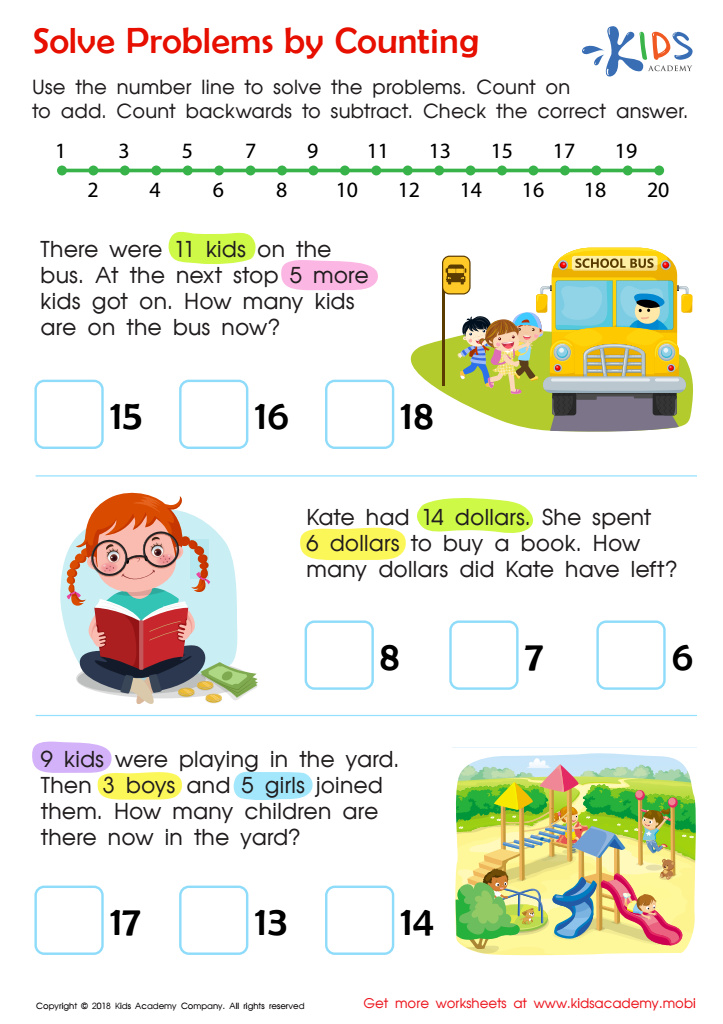
Solve Problems by Counting Worksheet
 Assign to My Students
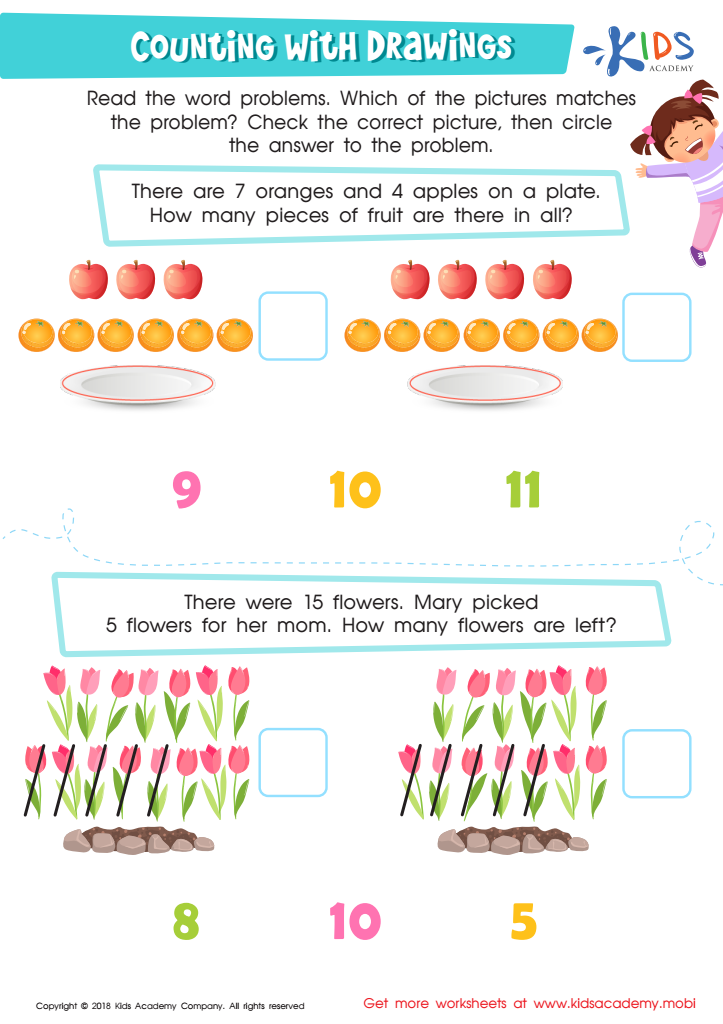
Counting with Drawings: Fruits & Chocolates Worksheet
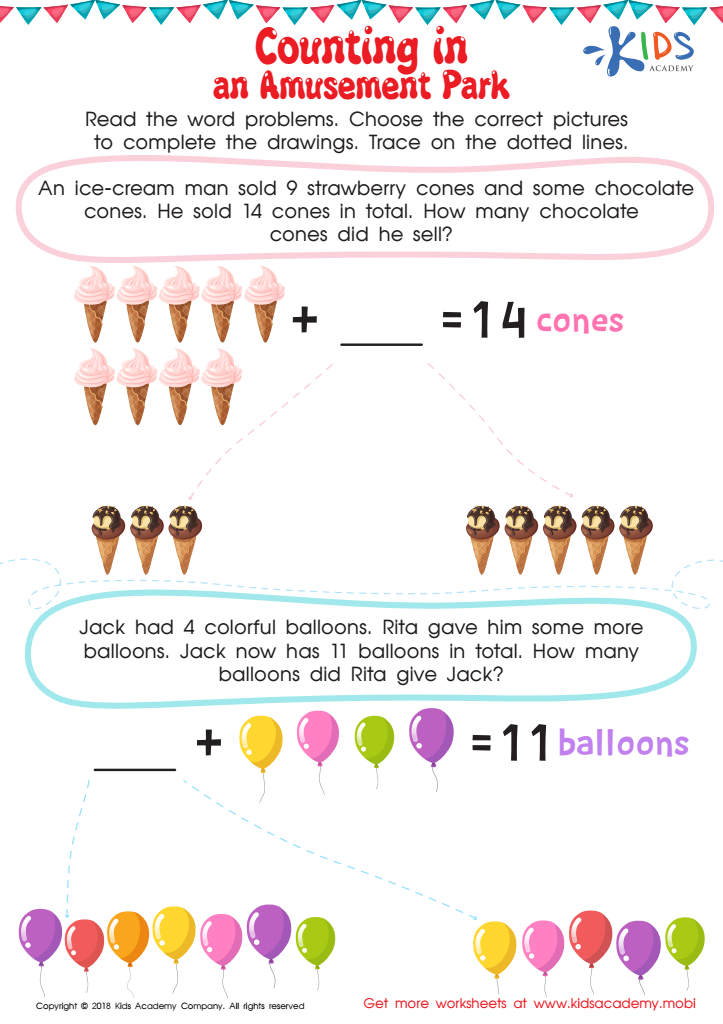
Counting in an Amusement Park Worksheet
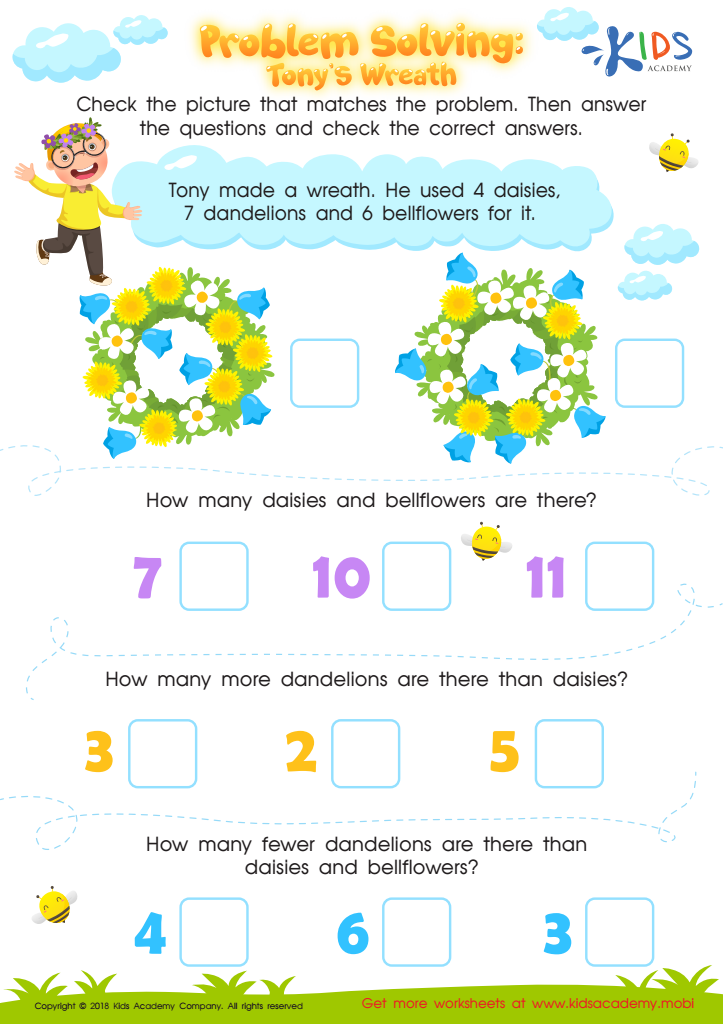
Problem Solving: Tony's Wreath Worksheet
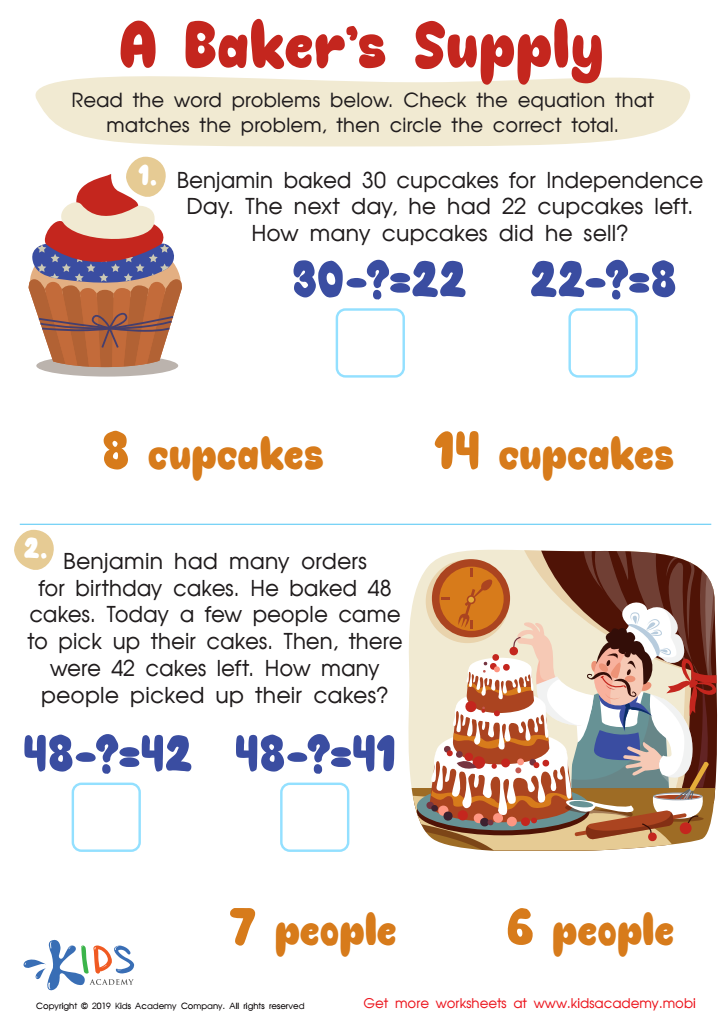
A Baker's Supply Worksheet








Counting and early arithmetic skills are foundational elements of a child's mathematical understanding. For ages 3-5, engaging in counting practice and solving addition and subtraction word problems is crucial for several reasons. Firstly, these activities develop basic number sense, helping children to understand concepts such as quantity, order, and simple calculations. A strong grasp of these ideas sets the stage for more advanced math topics in later schooling.
Secondly, solving word problems nurtures critical thinking and problem-solving abilities. When young children encounter number-based scenarios in a contextual format, they learn to apply mathematical concepts to real-world situations. This grounded approach helps reinforce understanding, making abstract numbers more relatable and meaningful.
Moreover, early success in mathematics can boost confidence and foster a positive attitude toward the subject. Enjoyable and interactive counting tasks, along with simple addition and subtraction problems, encourage a love for learning. This positive experience promotes perseverance and a growth mindset, crucial for belief in their ability to overcome academic challenges.
Lastly, involving parents in these early activities can strengthen the child’s learning environment and offer opportunities for bonding. Parental encouragement and participation can provide emotional support and make learning a joyous, collective experience, thus laying a robust foundation for future educational endeavors.