Enhancing Counting Skills Addition and Subtraction Word Problems Worksheets for Ages 3-5
3 filtered results
-
From - To
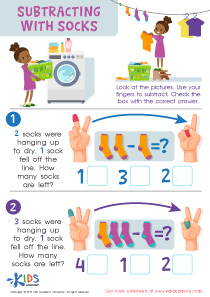
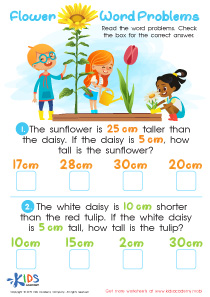
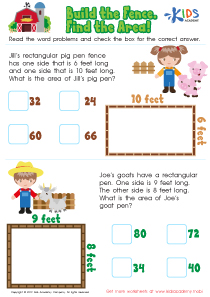
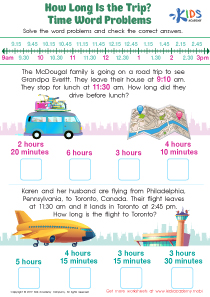
Enhance your child's counting skills with our engaging Addition and Subtraction Word Problems Worksheets designed for ages 3-5. These worksheets are perfect for fostering early math development through fun and interactive word problems that promote critical thinking. Each activity encourages kids to apply their counting skills in relatable scenarios, making math enjoyable and intuitive. Our worksheets are not only designed to reinforce basic addition and subtraction concepts but also to develop problem-solving abilities while building a strong foundation in mathematics. Ideal for parents and educators, these resources will captivate young learners and spark their enthusiasm for learning. Explore today!
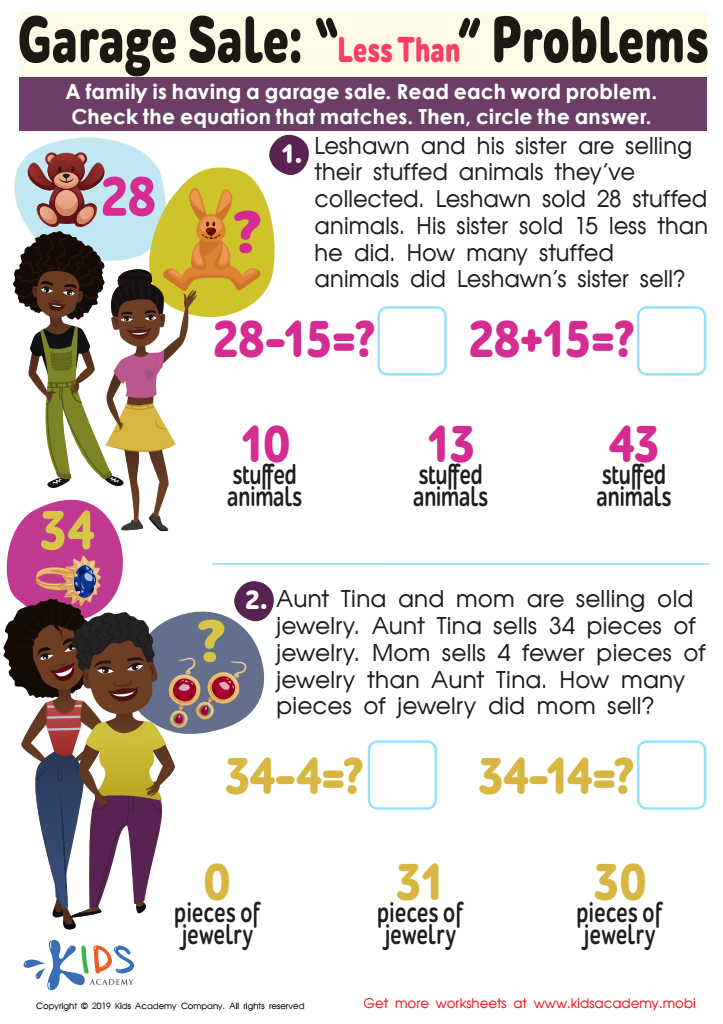
Garage Sale Less Than Worksheet
 Assign to My Students
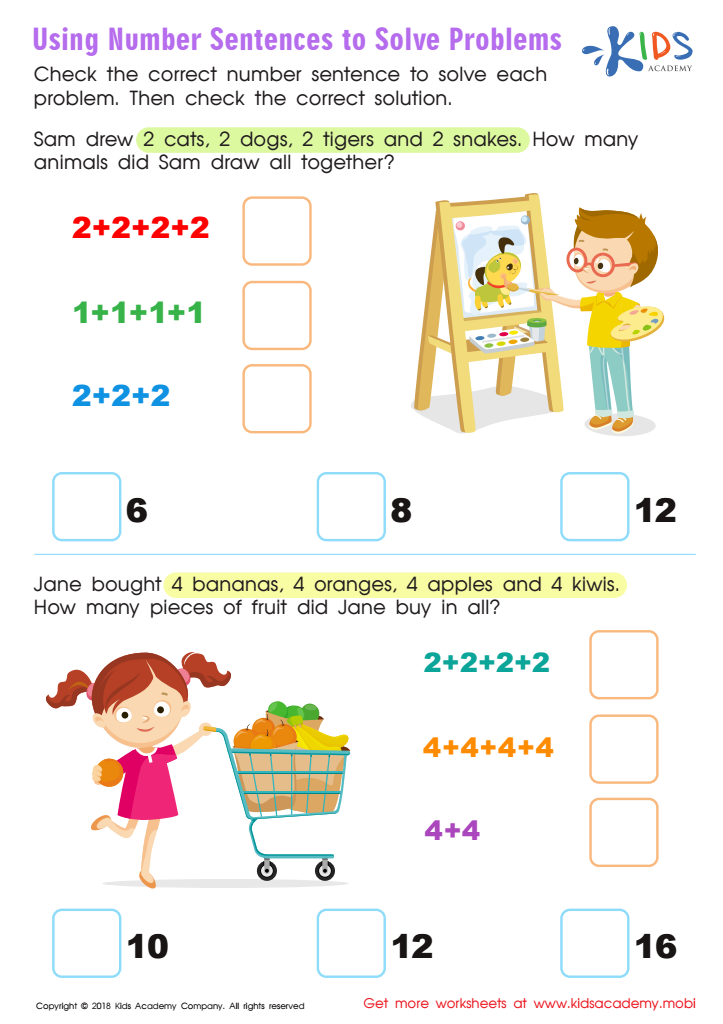
Using Number Sentences to Solve Problems Worksheet
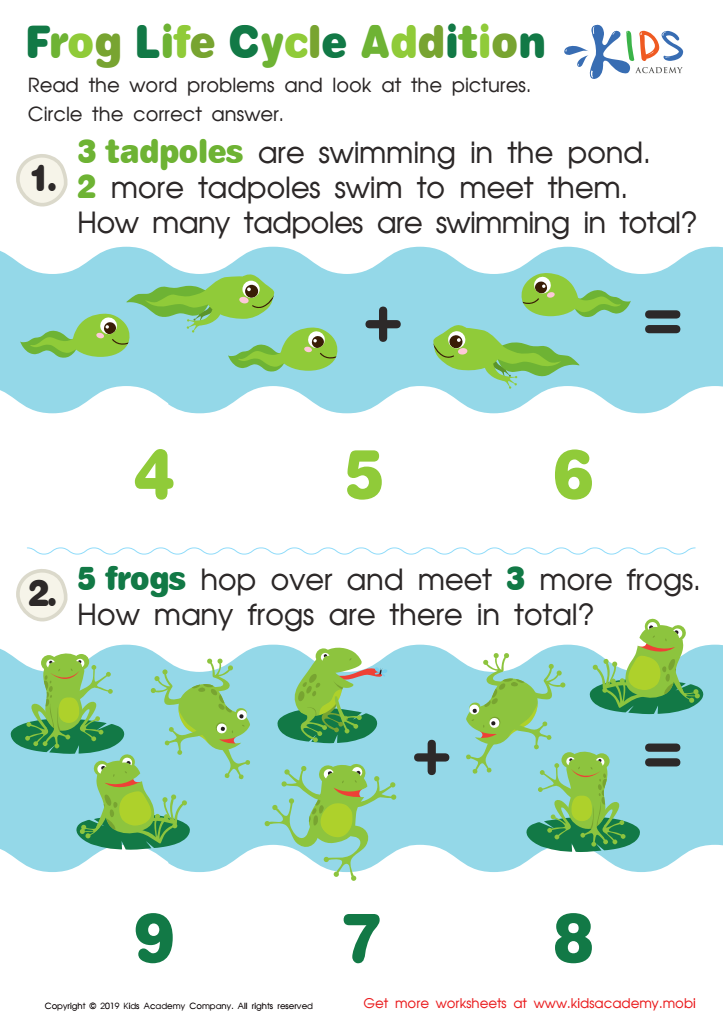
Frog Life Cycle Addition Worksheet








Enhancing counting skills and tackling addition and subtraction word problems for ages 3-5 is crucial for a child's early development. At this age, children are not just learning numbers; they are building foundational skills that set the stage for future math comprehension and problem-solving abilities.
Countless studies reveal that early mathematical skills are strongly correlated with later academic success. When parents and teachers actively engage children with word problems, they foster critical thinking skills and language development, enriching both math and literacy. Solving word problems helps young learners make connections between math concepts and real-life situations, making the subject more relatable and fun.
Furthermore, practicing counting, addition, and subtraction in dynamic ways can enhance a child’s cognitive abilities. The techniques used, such as storytelling or hands-on activities with objects, stimulate creativity and retention. Through interactive experiences, children develop not only numerical fluency but also perseverance, as they learn to approach challenges with a positive mindset.
Lastly, nurturing organizational skills prepares children for a structured learning environment. By investing in these early math experiences, parents and teachers lay a solid groundwork for confidence and eagerness to tackle more complex concepts as children progress in their education.