Mathematical reasoning Addition and Subtraction Word Problems Worksheets for Ages 3-5
5 filtered results
-
From - To
Discover engaging worksheets designed to boost mathematical reasoning in young learners aged 3-5! Our Addition and Subtraction Word Problems worksheets provide a fun and interactive way for children to develop essential math skills. Each worksheet features simple, relatable scenarios that encourage kids to think critically and solve problems using addition and subtraction. Perfect for early childhood education, these resources foster a love for math while enhancing cognitive abilities and reasoning skills. Ideal for home or classroom use, our worksheets help prepare your little ones for future learning success. Unlock their potential and make math enjoyable with our vibrant, hands-on activities today!
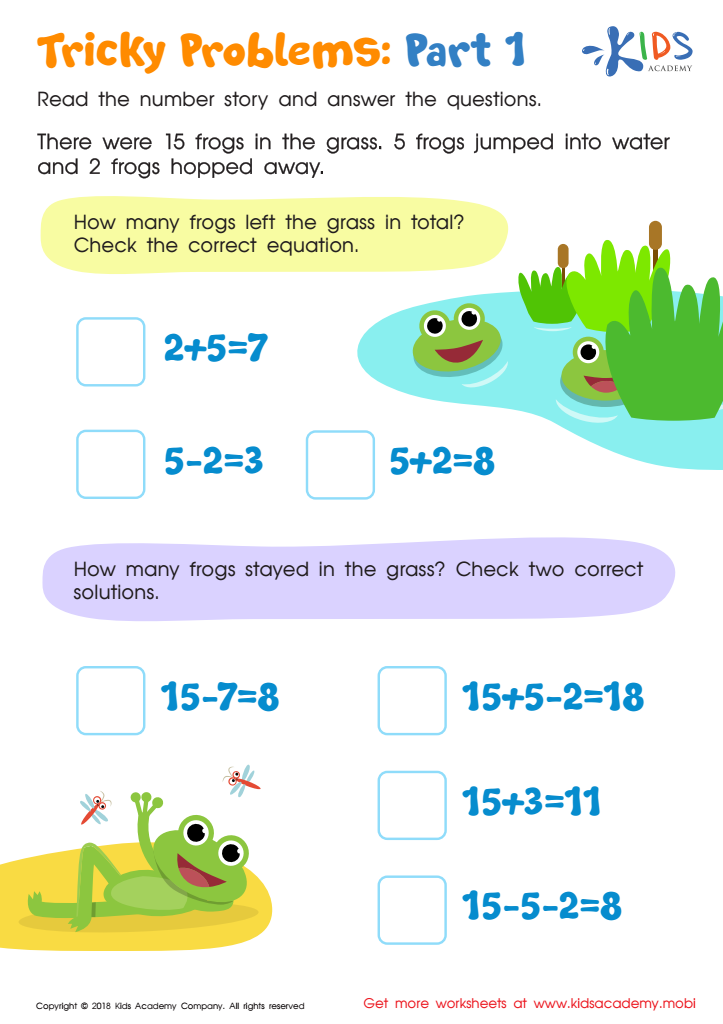
Tricky Problems Worksheet: Part 1
 Assign to My Students
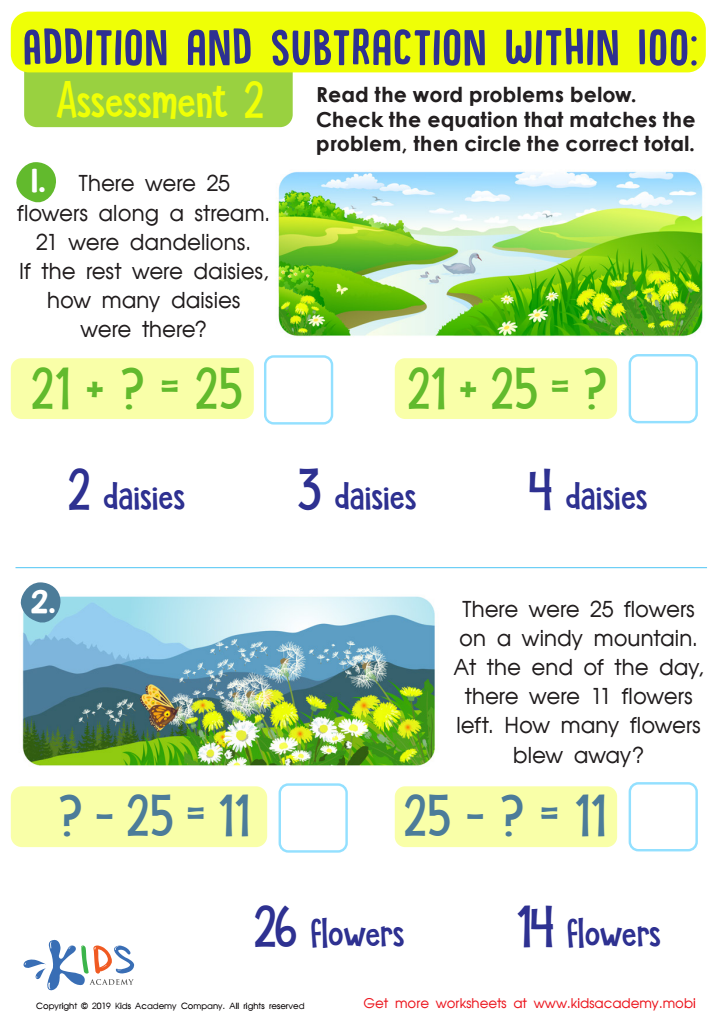
Assessment 2 Math Worksheet
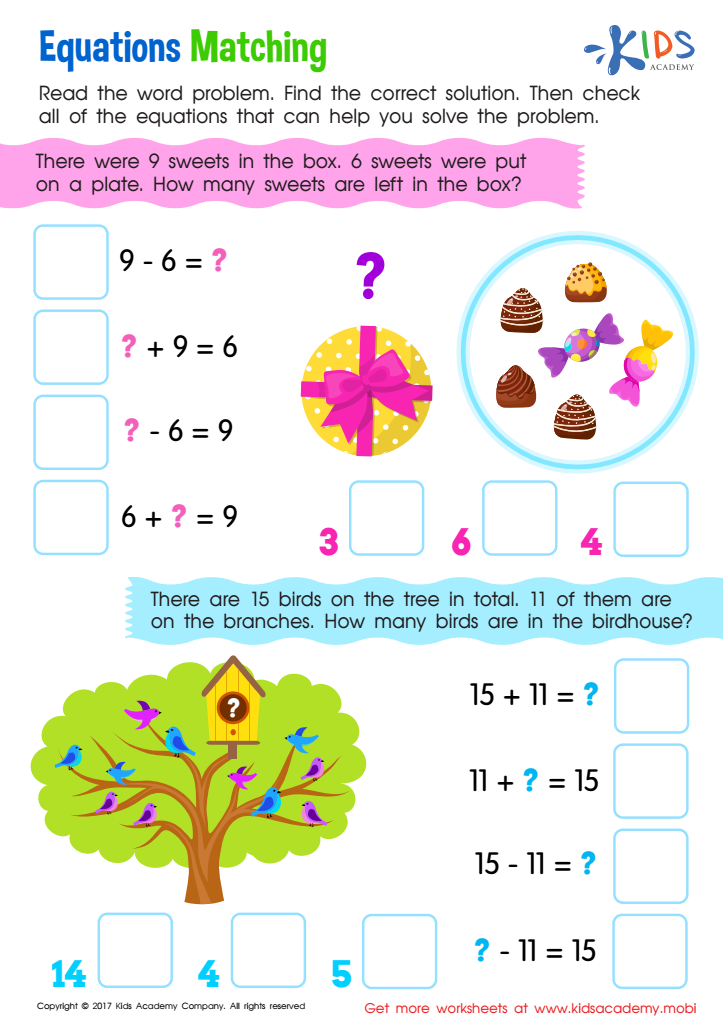
Equations Matching Word Problems Worksheet
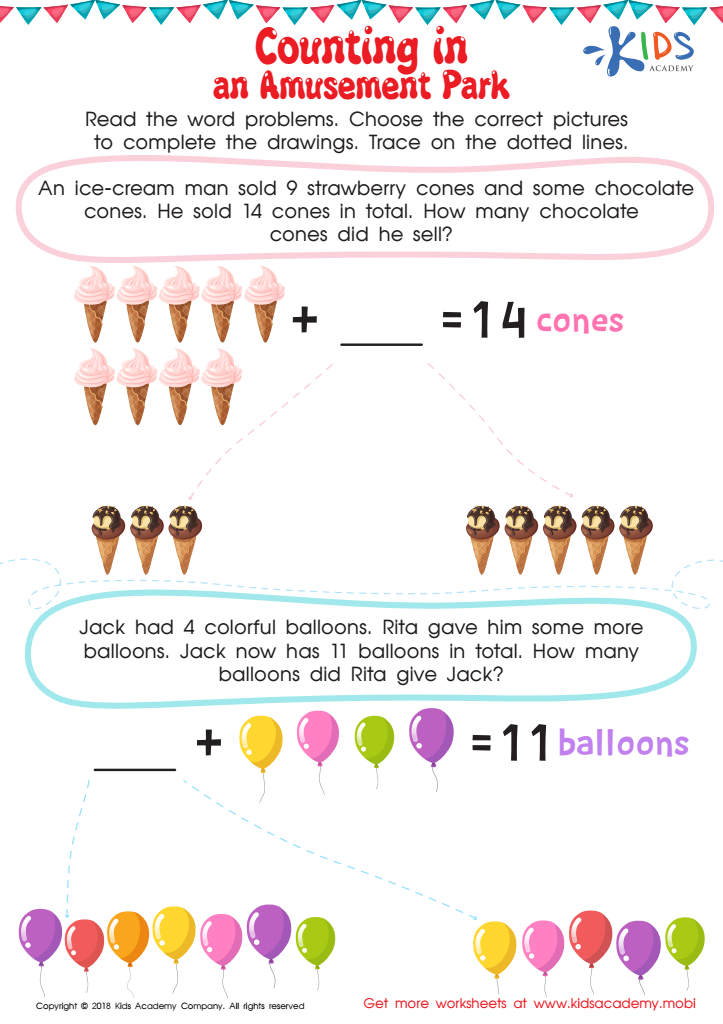
Counting in an Amusement Park Worksheet
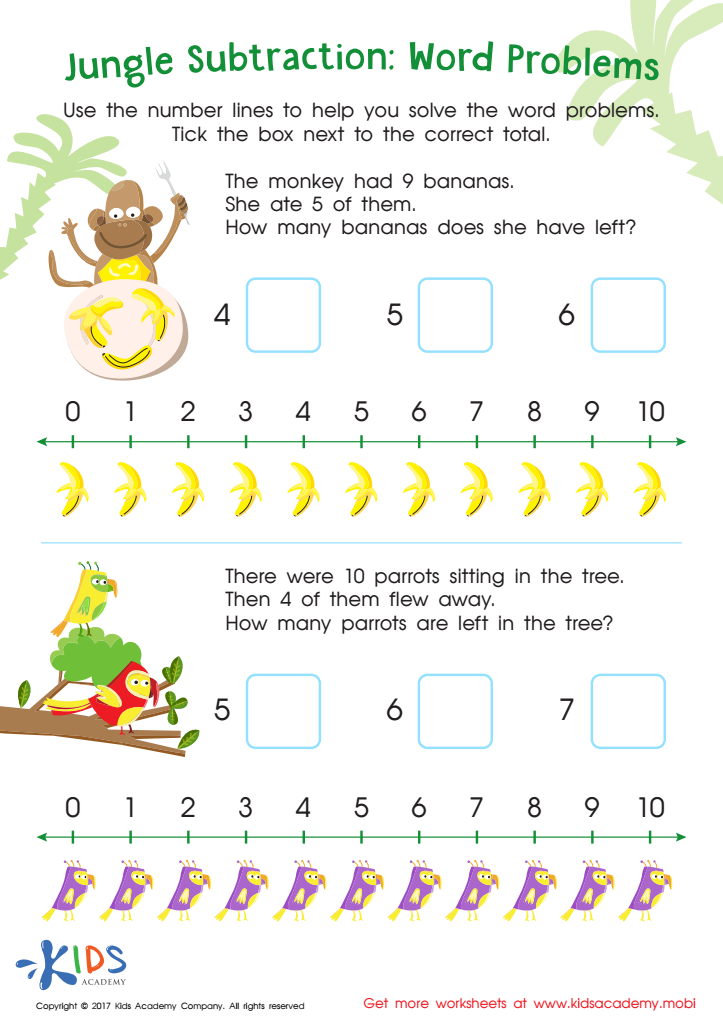
Jungle Subtraction Word Problems Substraction Worksheet








Mathematical reasoning, particularly through addition and subtraction word problems, is crucial for children aged 3-5. This foundational skill not only promotes numeracy but also fosters critical thinking and problem-solving abilities. By engaging with word problems, young learners start to understand the practical application of math in daily life, enhancing their ability to interpret information and make decisions.
When parents and teachers prioritize mathematical reasoning, they nurture children's cognitive development. Working through word problems encourages kids to verbalize their thought processes, enabling them to articulate their reasoning and solutions. This practice establishes a solid groundwork for more complex mathematical concepts they will encounter later in school.
Additionally, early exposure to these problem-solving activities can build confidence in young learners, increasing their motivation and enjoyment of math. It promotes a sense of accomplishment when they successfully navigate challenges, reinforcing perseverance in the face of difficulty.
Moreover, as parents and educators facilitate discussions around these problems, they help children develop language skills and expand their vocabulary. By consistently integrating addition and subtraction word problems into play and daily routines, caregivers can effectively support an essential aspect of early mathematics, ensuring children are better prepared for future academic success.