Problem-solving abilities Addition and Subtraction Word Problems Worksheets for Ages 3-5
4 filtered results
-
From - To
Discover our engaging Addition and Subtraction Word Problems Worksheets designed for children aged 3-5! These worksheets focus on developing crucial problem-solving abilities through fun, age-appropriate math scenarios. By using relatable characters and everyday situations, young learners will enhance their understanding of basic addition and subtraction concepts. Our interactive resources promote critical thinking, allowing children to explore different strategies and solutions. Perfect for early education, homeschooling, or supplementary practice, these worksheets not only help build math skills but also encourage a love for learning. Foster your child's confidence in math and watch them grow as little problem-solvers!
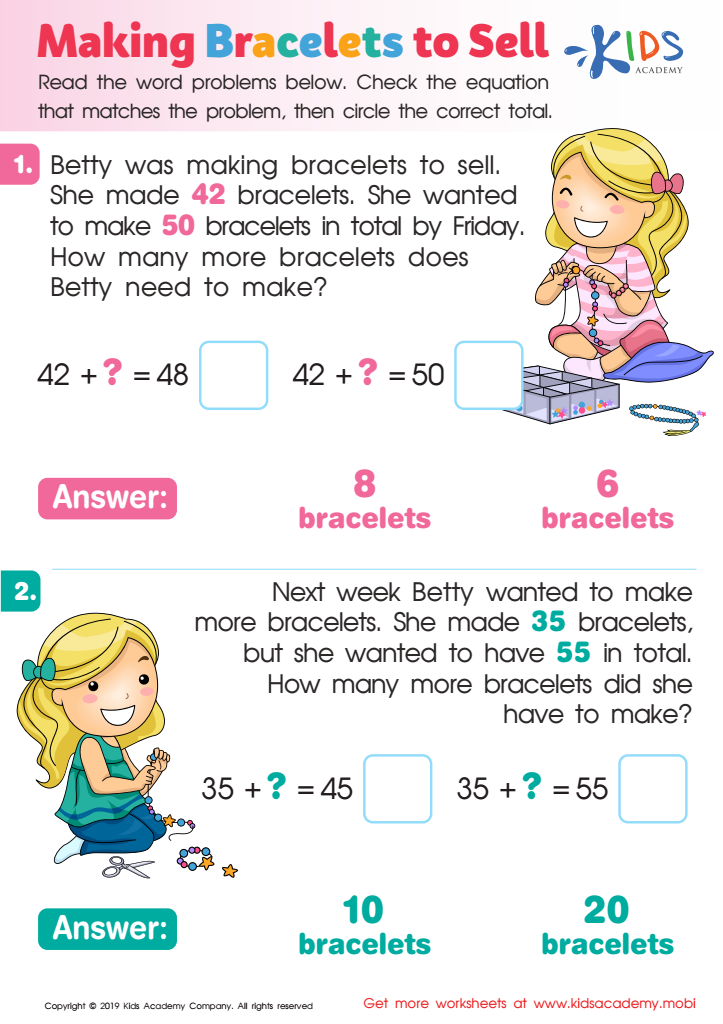
Making Bracelets to Sell Worksheet
 Assign to My Students
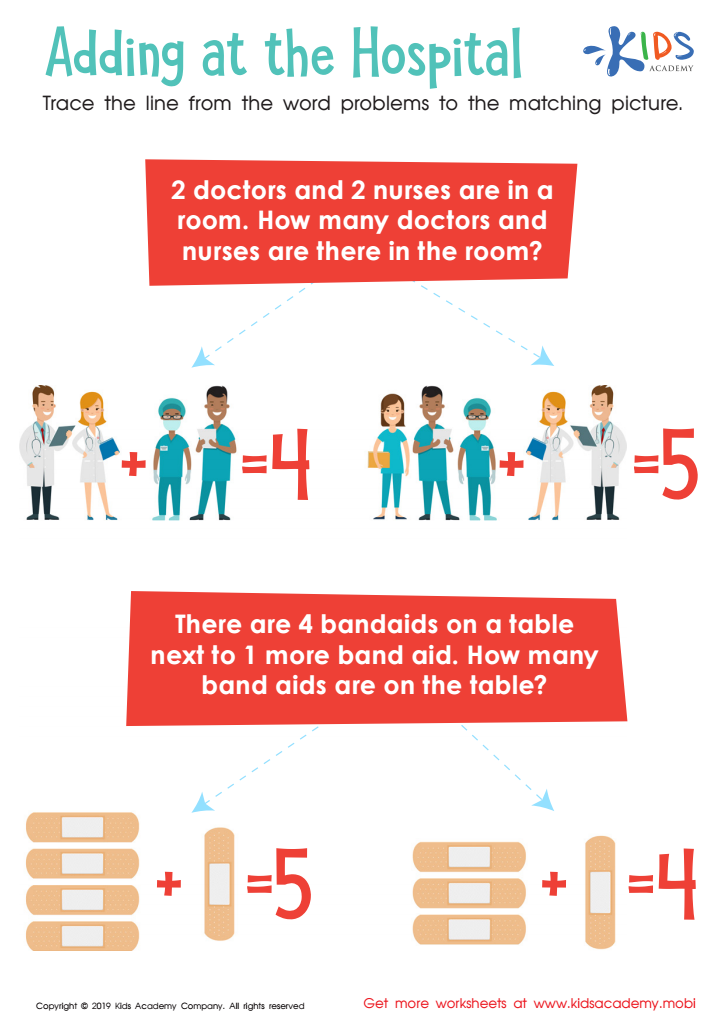
Adding at the Hospital Worksheet
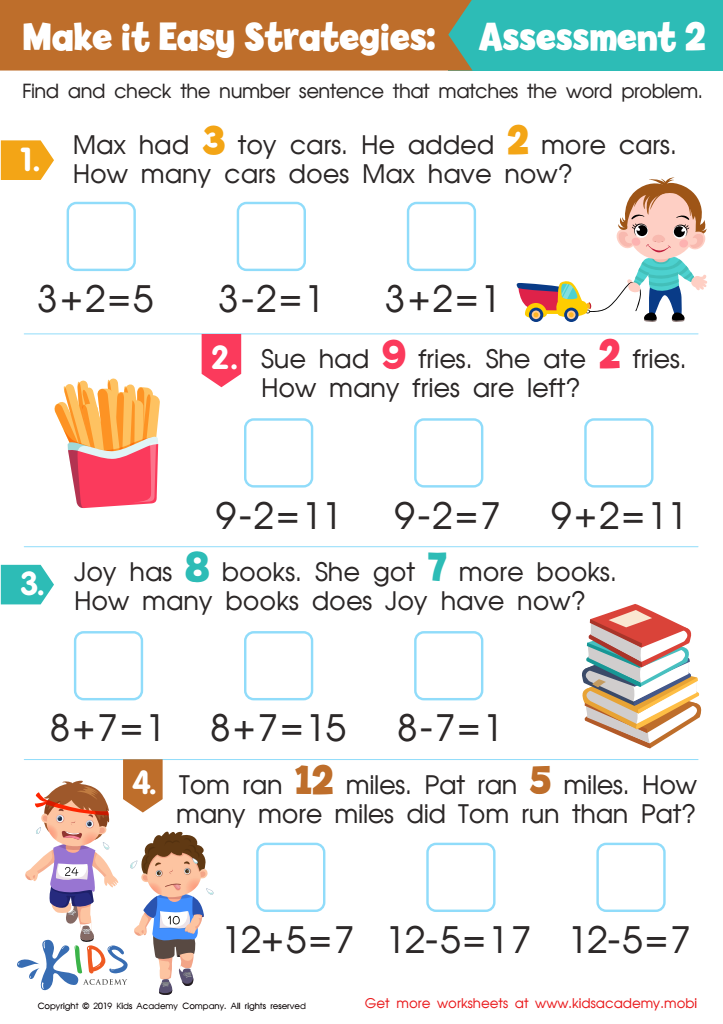
Make it Easy Strategies: Assessment 2 Worksheet
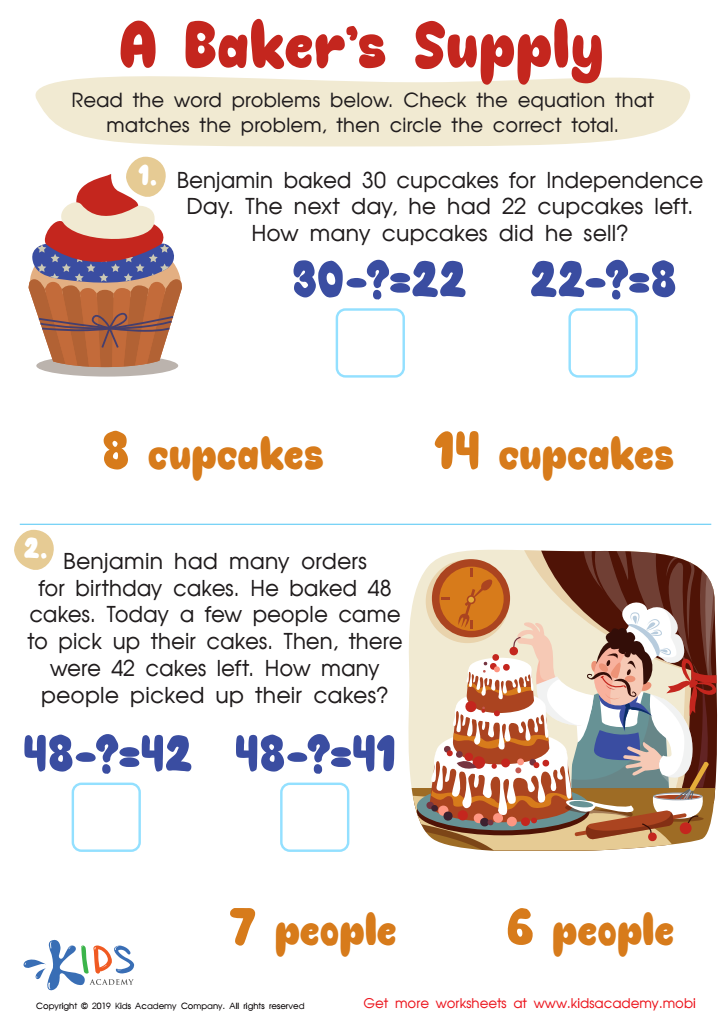
A Baker's Supply Worksheet








Parents and teachers play a crucial role in fostering problem-solving abilities, especially in the context of addition and subtraction word problems for children ages 3-5. Early problem-solving skills lay the foundation for future mathematical understanding and cognitive development. At this age, children are naturally curious and eager to explore concepts; engaging them in word problems nurtures critical thinking and reasoning skills.
Word problems encourage children to process language and math simultaneously, aiding in comprehension and vocabulary development. When children learn to translate everyday situations into mathematical expressions, they develop the ability to analyze and solve problems, linking real-world experiences to academic concepts.
Additionally, mastering addition and subtraction through word problems cultivates resilience and perseverance. Learning to tackle challenges builds confidence, empowering children to approach complex problems with a positive mindset. These skills are vital not only in math but across various disciplines and life situations.
Moreover, involving parents in this learning process can strengthen the home-school connection, allowing children to share their learning experiences and receive encouragement from caregivers. By prioritizing problem-solving abilities in early education, parents and teachers equip children with essential skills that will serve them throughout their academic journey and beyond.