Check out this FREE Trial Lesson on Addition & Subtraction for age 3-5!

Sorting Objects into 3 Categories

Favorites
With answer key
Interactive
  • 3-5
  • Basic Addition Skills
  • Addition & Subtraction
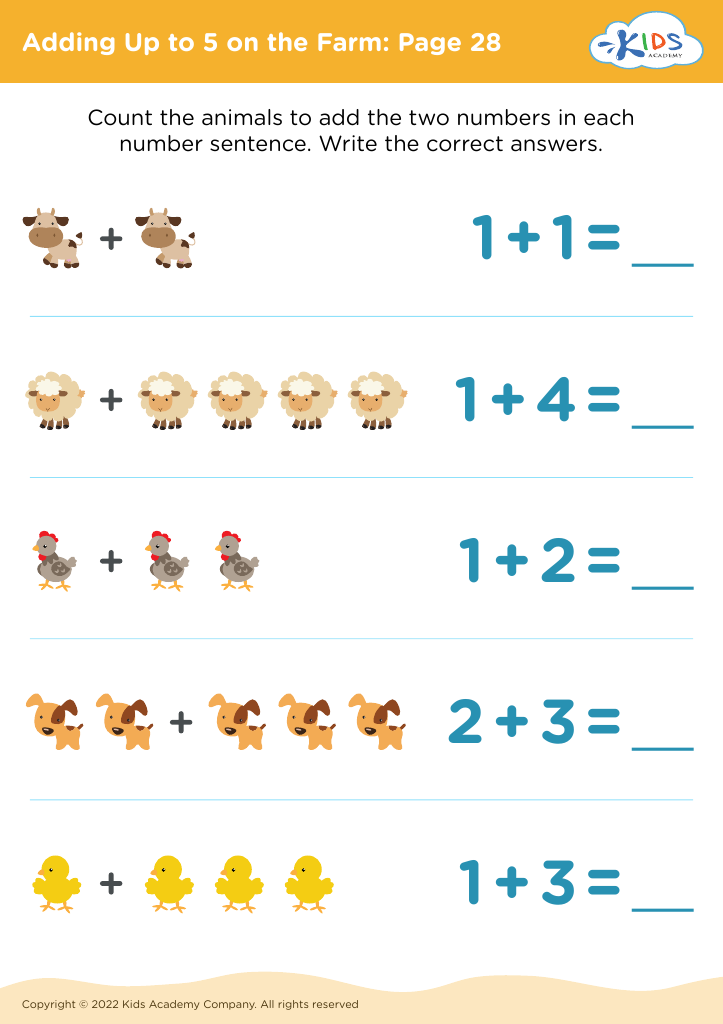
Adding Up to 5 on the Farm: Page 28
Worksheet
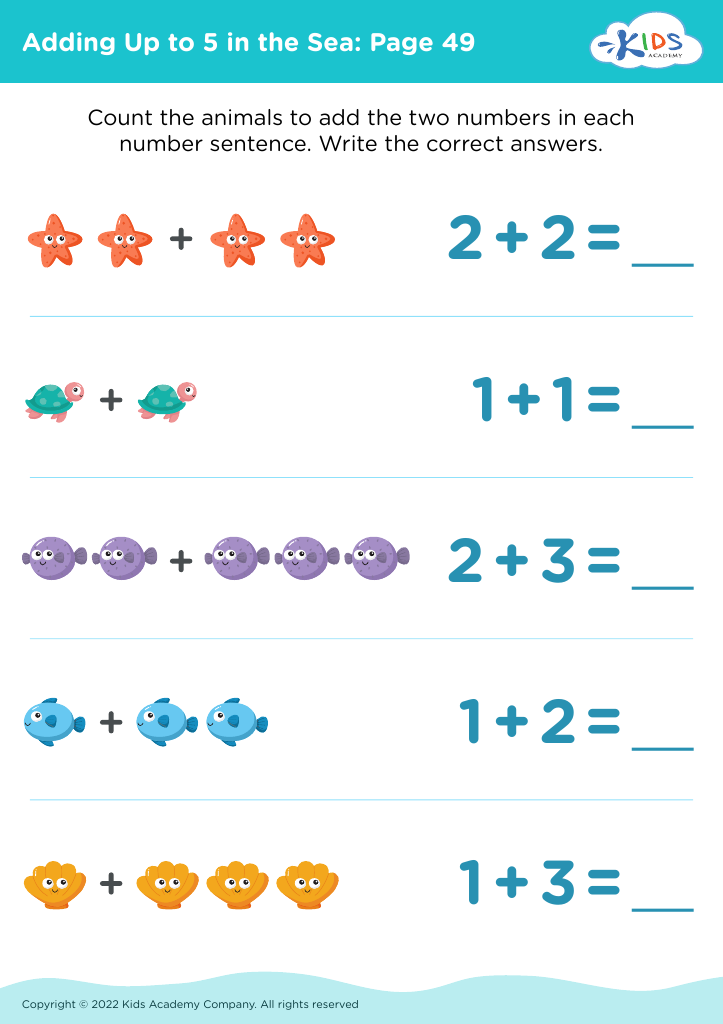
Adding Up to 5 in the Sea: Page 49
Worksheet
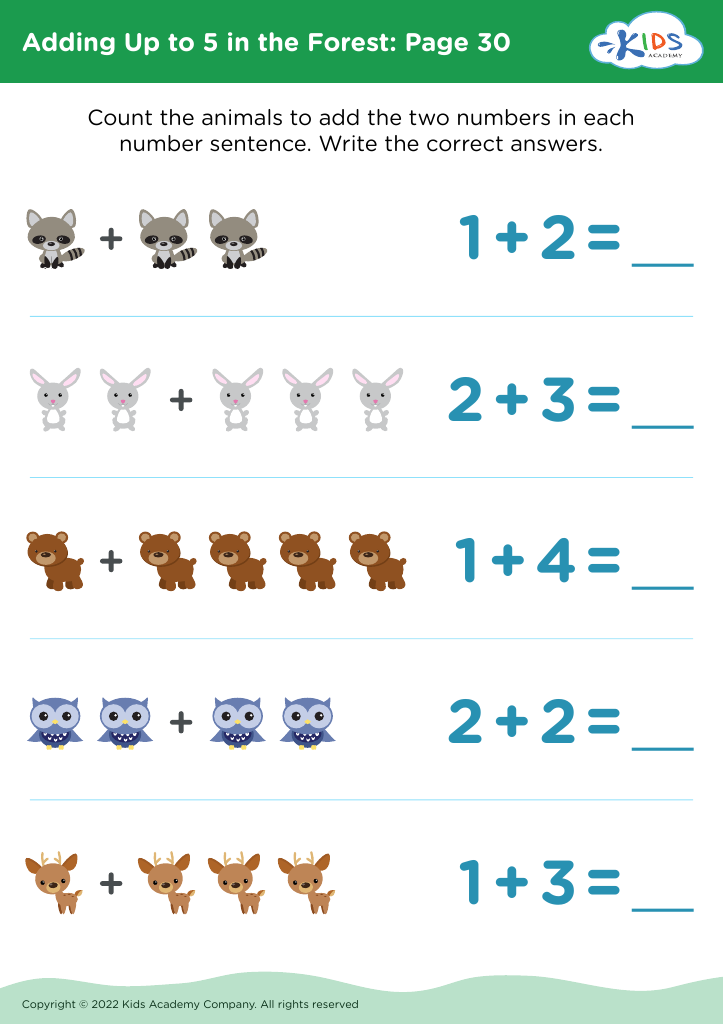
Adding Up to 5 in the Forest: Page 30
Worksheet
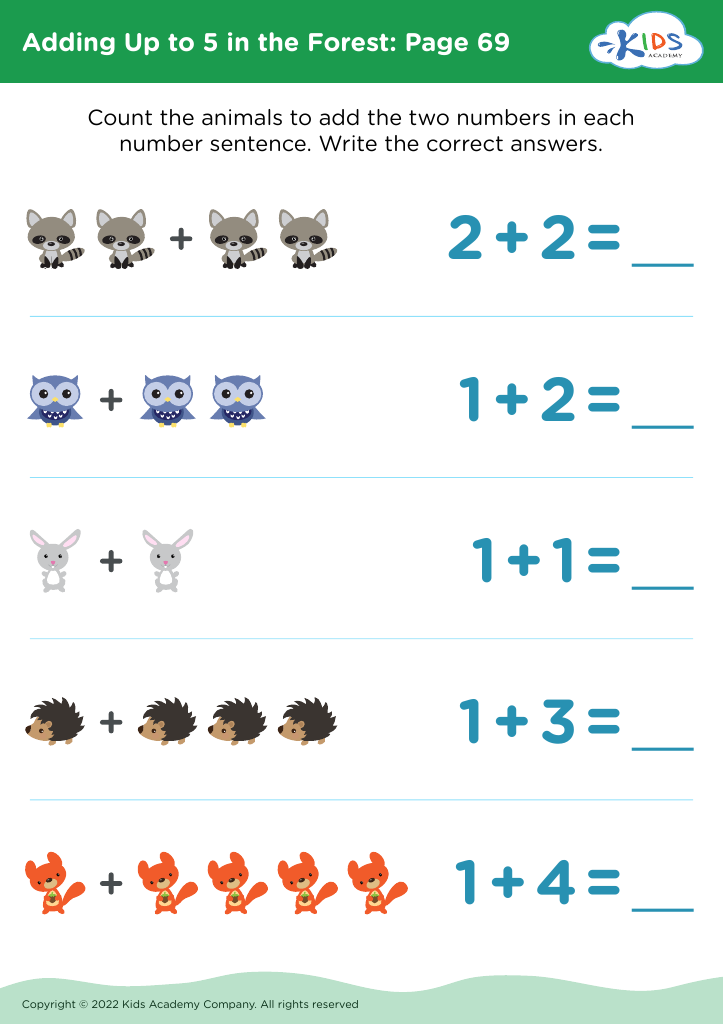
Adding Up to 5 in the Forest: Page 69
Worksheet
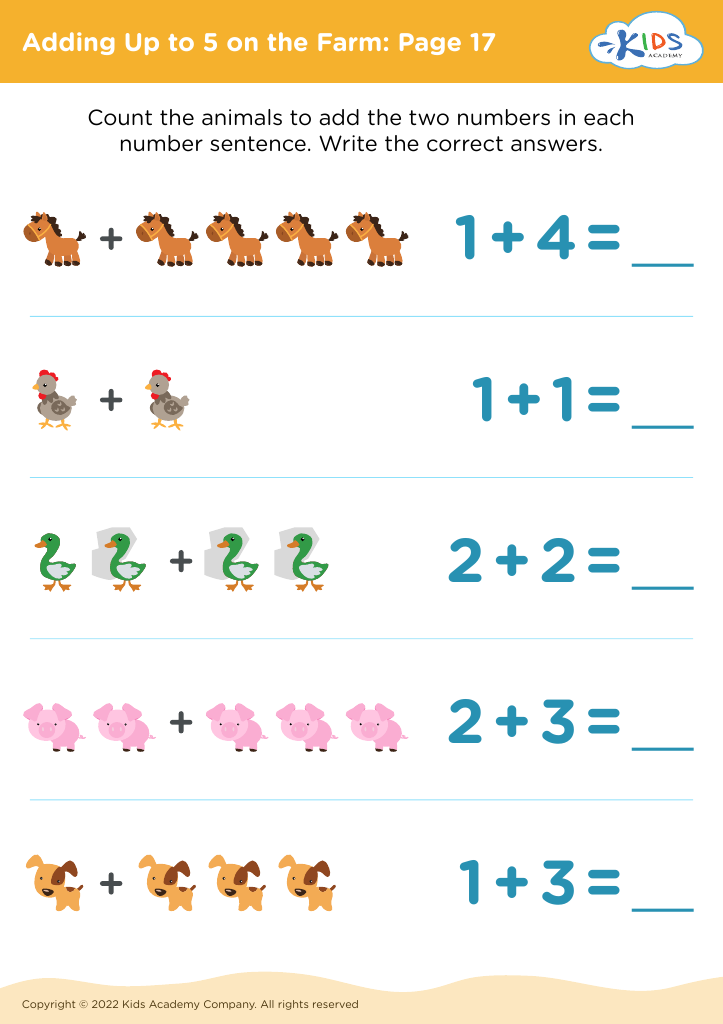
Adding Up to 5 on the Farm: Page 17
Worksheet
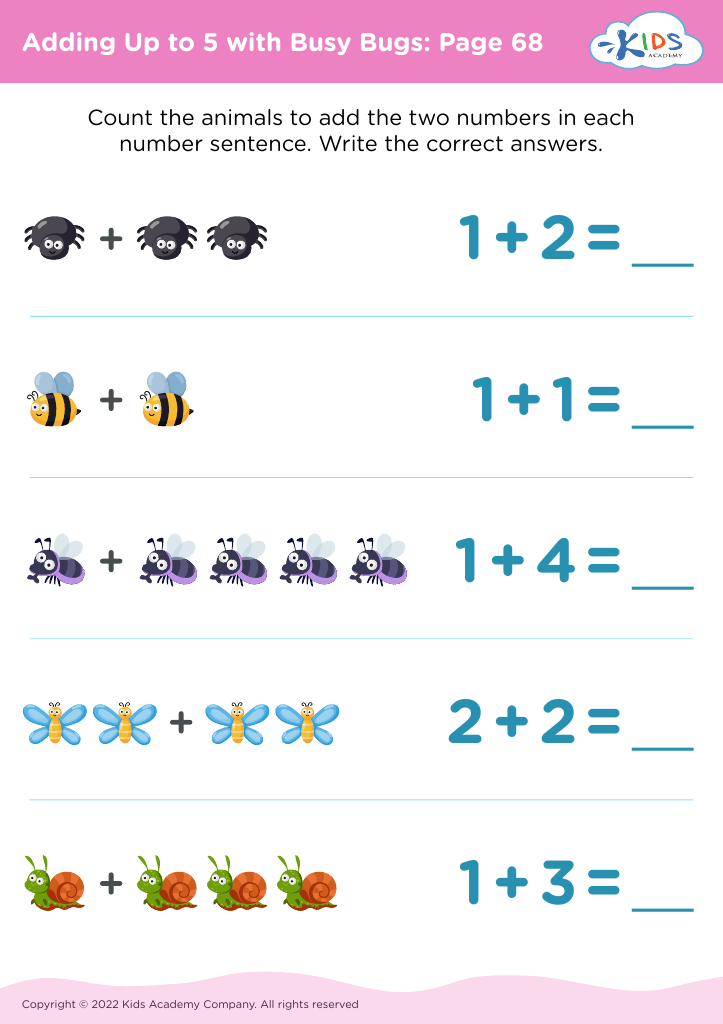
Adding Up to 5 with Busy Bugs: Page 68
Worksheet
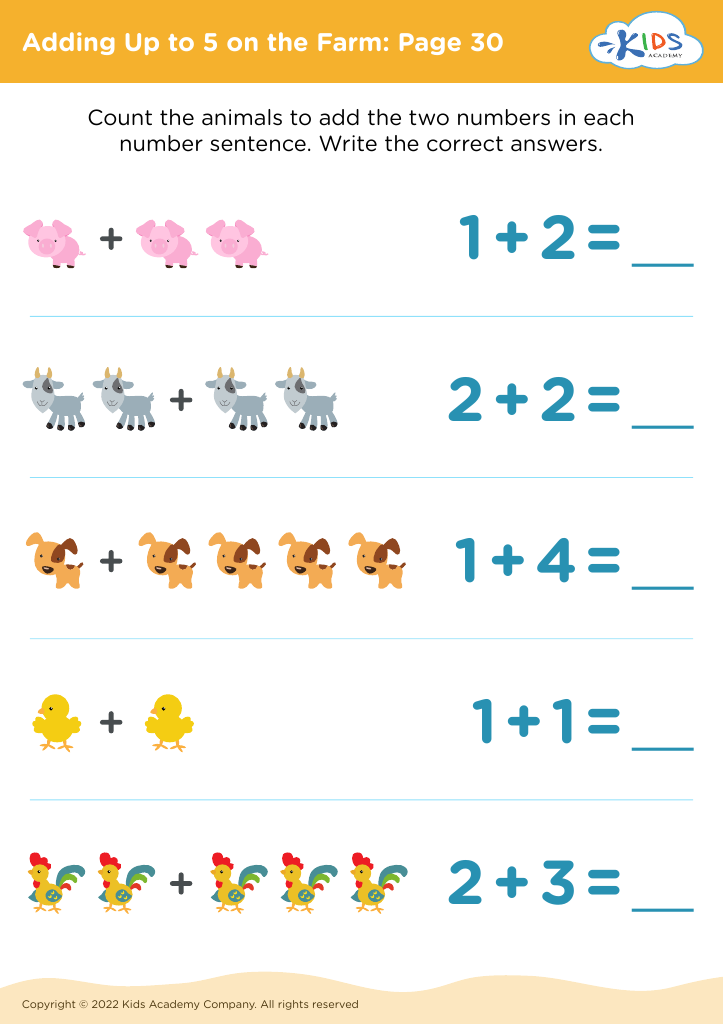
Adding Up to 5 on the Farm: Page 30
Worksheet
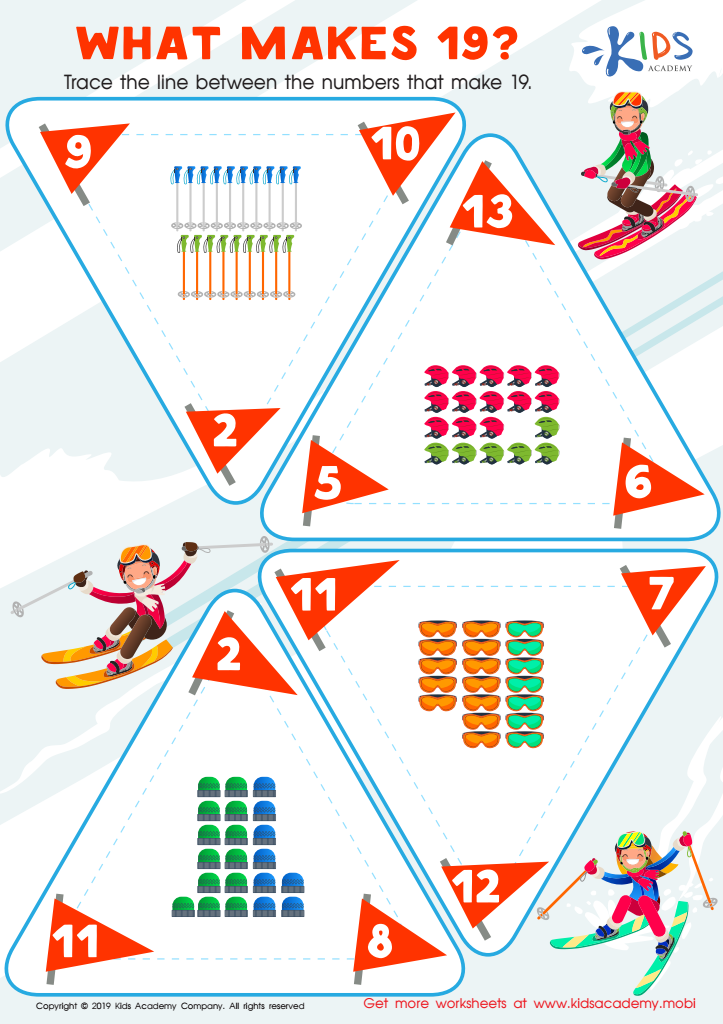
What Makes 19? Worksheet

What Makes 19? Worksheet

As a parent, it's your responsibility to help your kids learn. Put on the teacher hat and use this worksheet to teach them addition tricks. Help them count and add the objects, trace a line between the numbers that make 19, and take their learning a step further.
What Makes 19? Worksheet
Worksheet
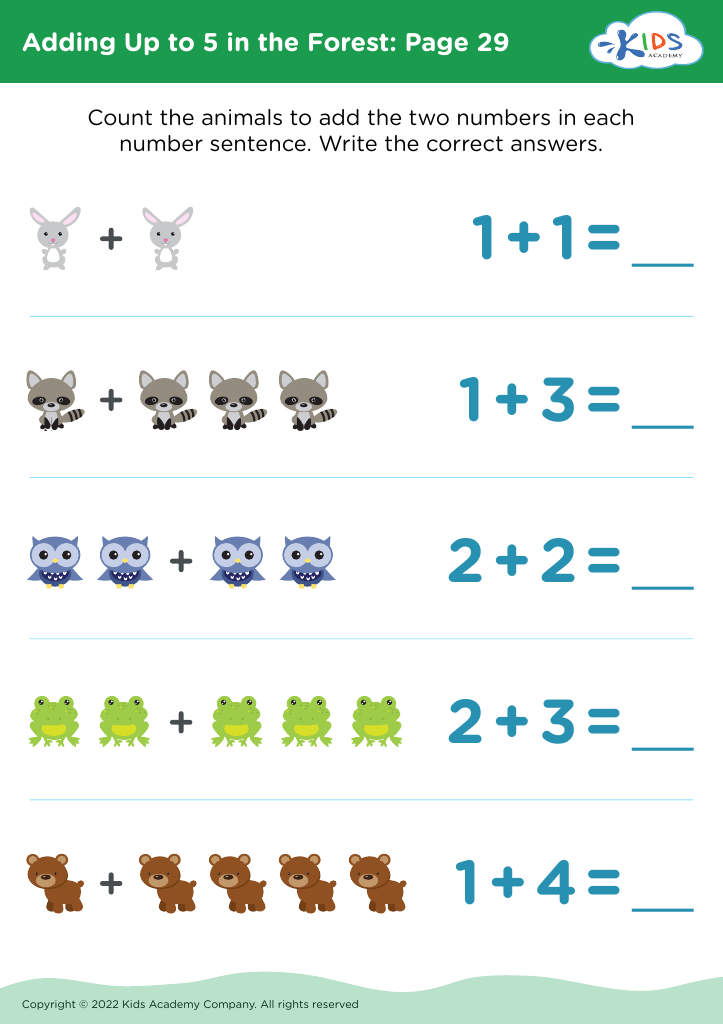
Adding Up to 5 in the Forest: Page 29
Worksheet
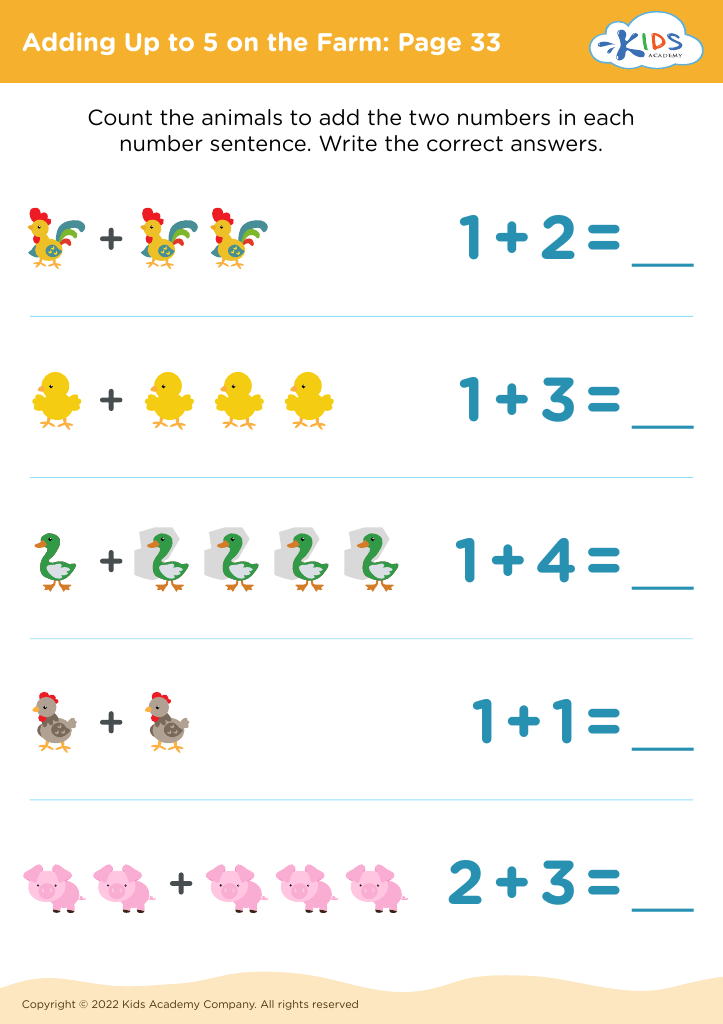
Adding Up to 5 on the Farm: Page 33
Worksheet
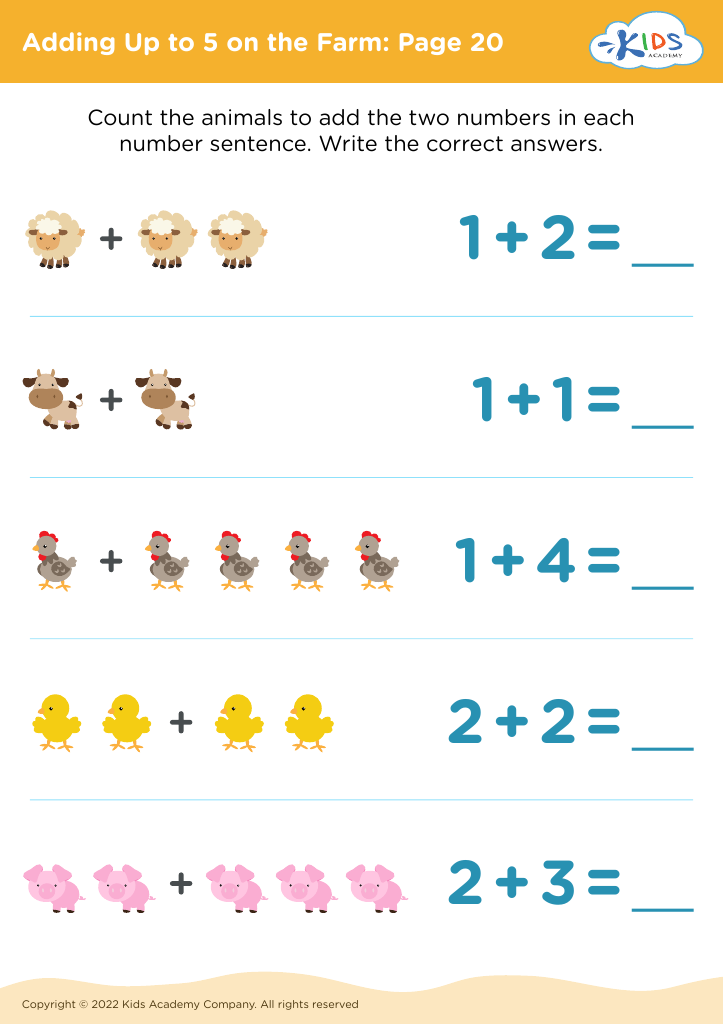
Adding Up to 5 on the Farm: Page 20
Worksheet
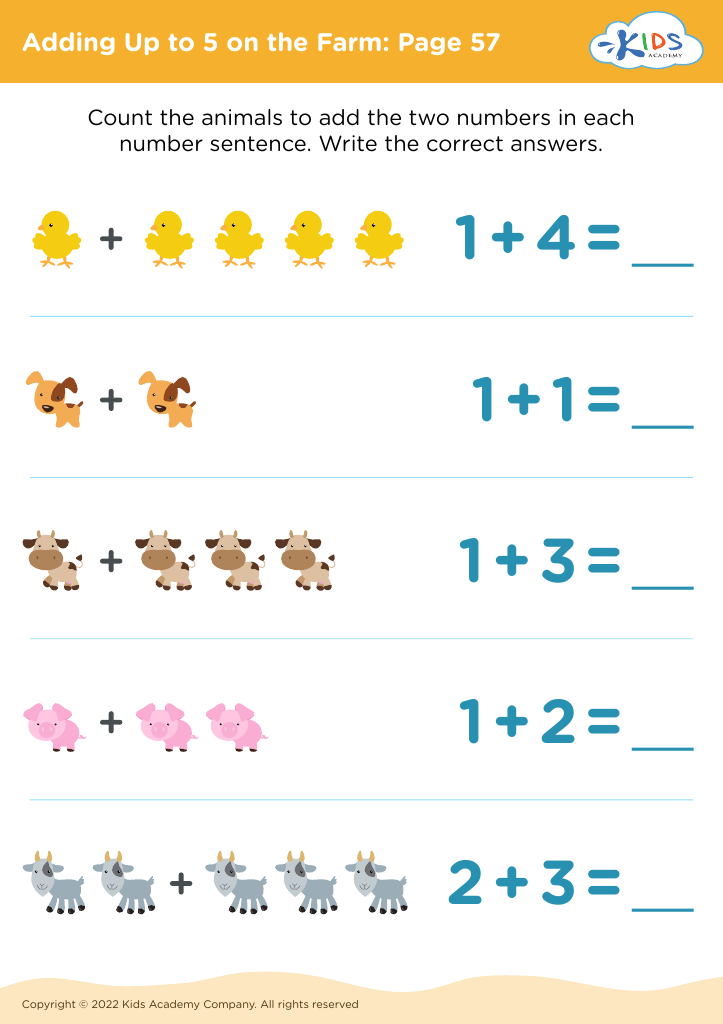
Adding Up to 5 on the Farm: Page 57
Worksheet
Build up to 13 Worksheet
Build up to 13 Worksheet

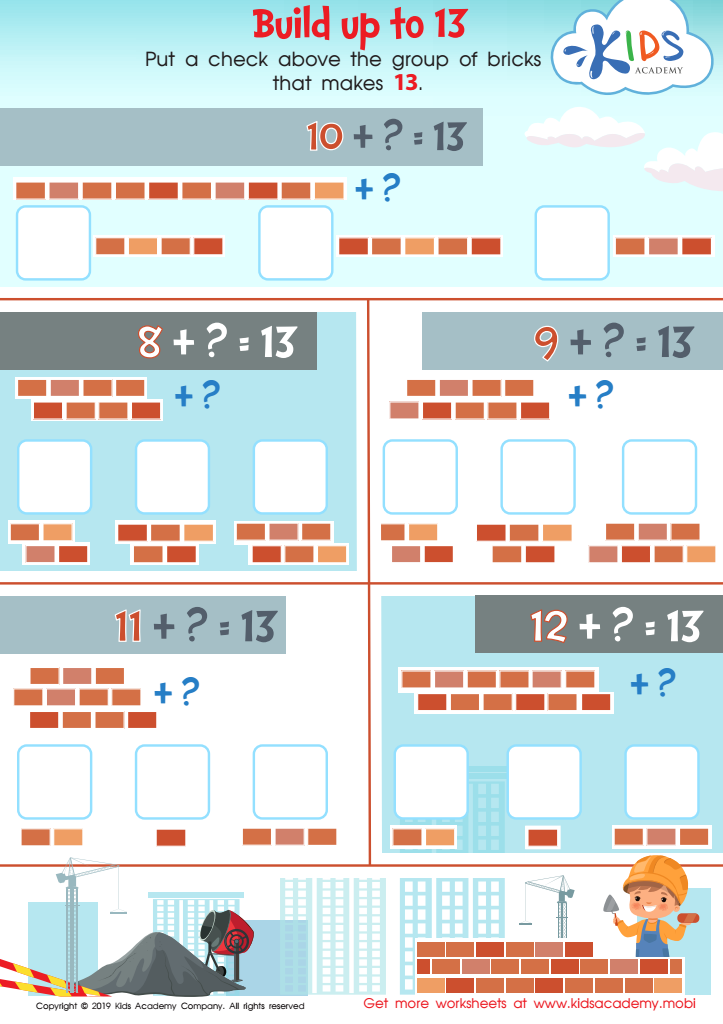
Help your kids master addition and subtraction with this worksheet! It'll help clear up any confusion they may have with adding different numbers. Have them add up the simple equations and mark the group of bricks that makes 13. It's a great way for them to get familiar with the basics.
Build up to 13 Worksheet

Worksheet
Adding Up to 5 in the Forest: Page 54
Worksheet
Adding Up to 5 in the Sea: Page 60
Worksheet
Adding Up to 5 on the Farm: Page 45
Worksheet
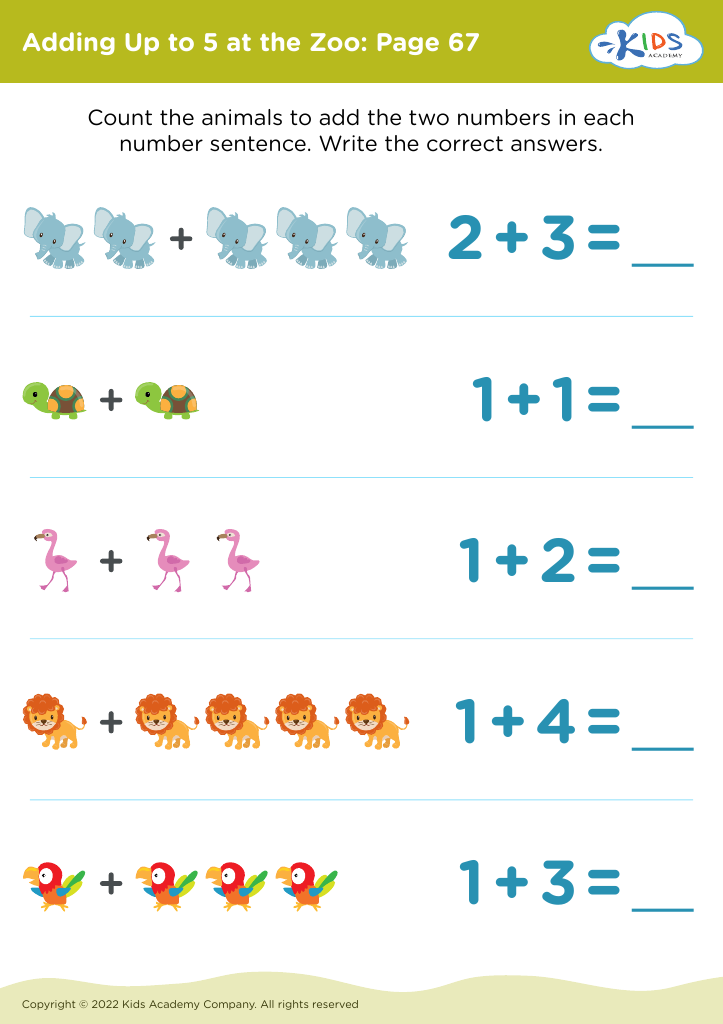
Adding Up to 5 at the Zoo: Page 67
Worksheet
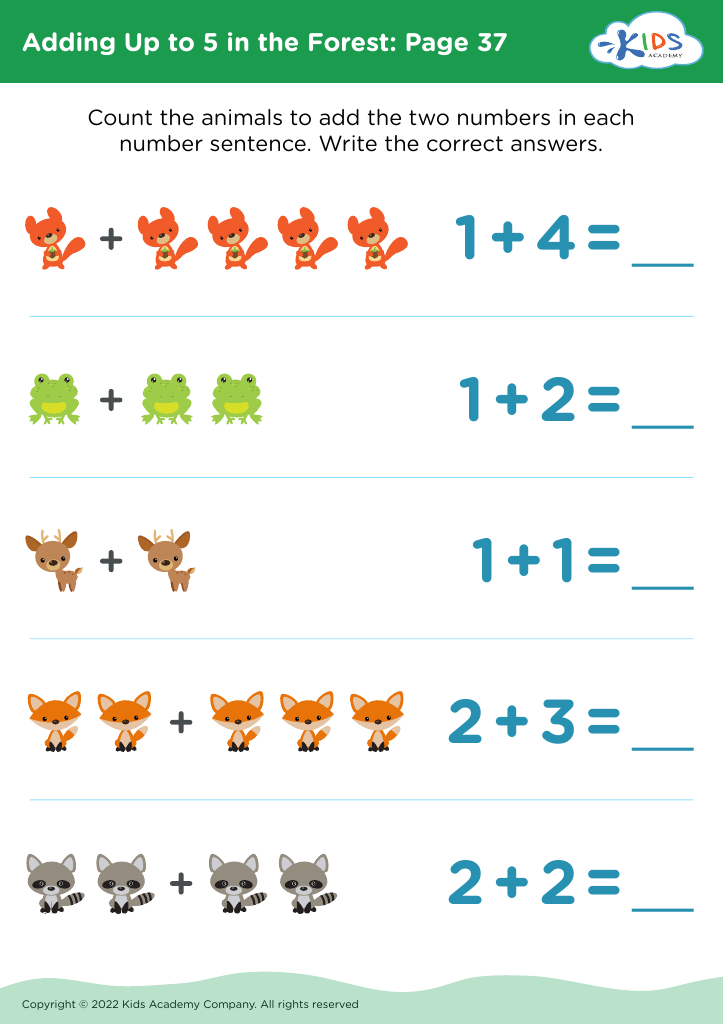
Adding Up to 5 in the Forest: Page 37
Worksheet
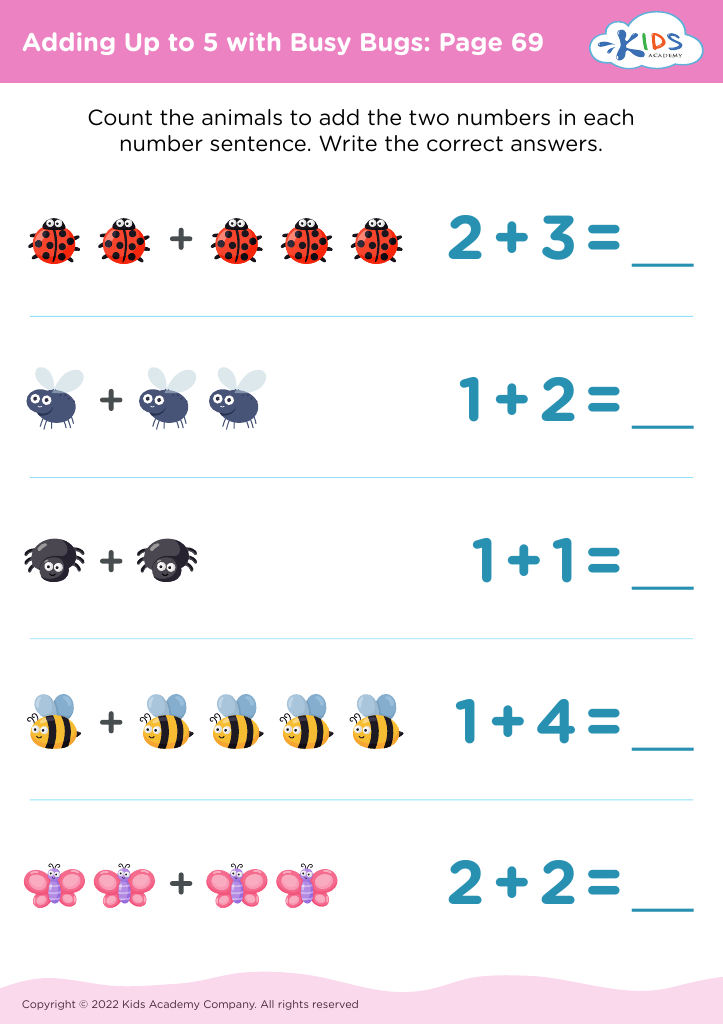
Adding Up to 5 with Busy Bugs: Page 69
Worksheet
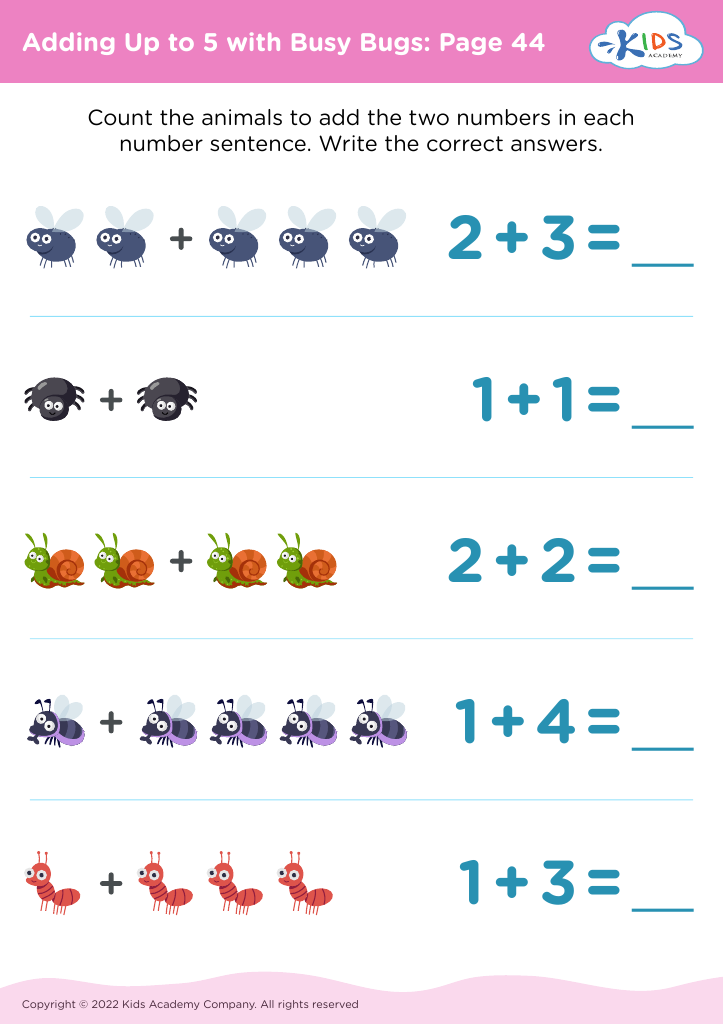
Adding Up to 5 with Busy Bugs: Page 44
Worksheet
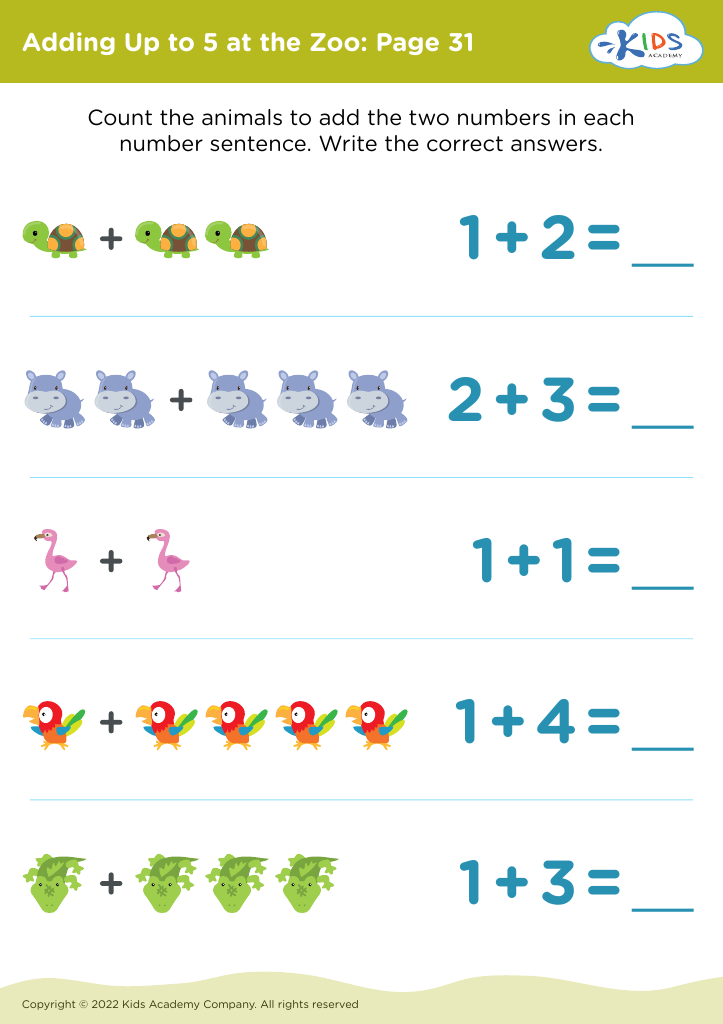
Adding Up to 5 at the Zoo: Page 31
Worksheet
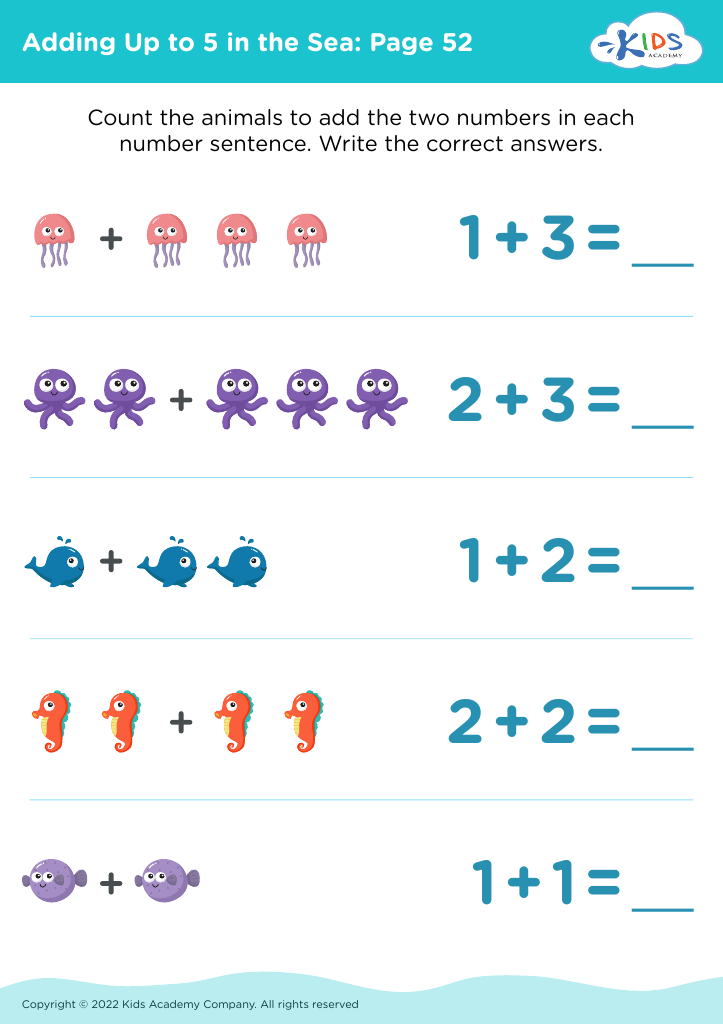
Adding Up to 5 in the Sea: Page 52
Worksheet
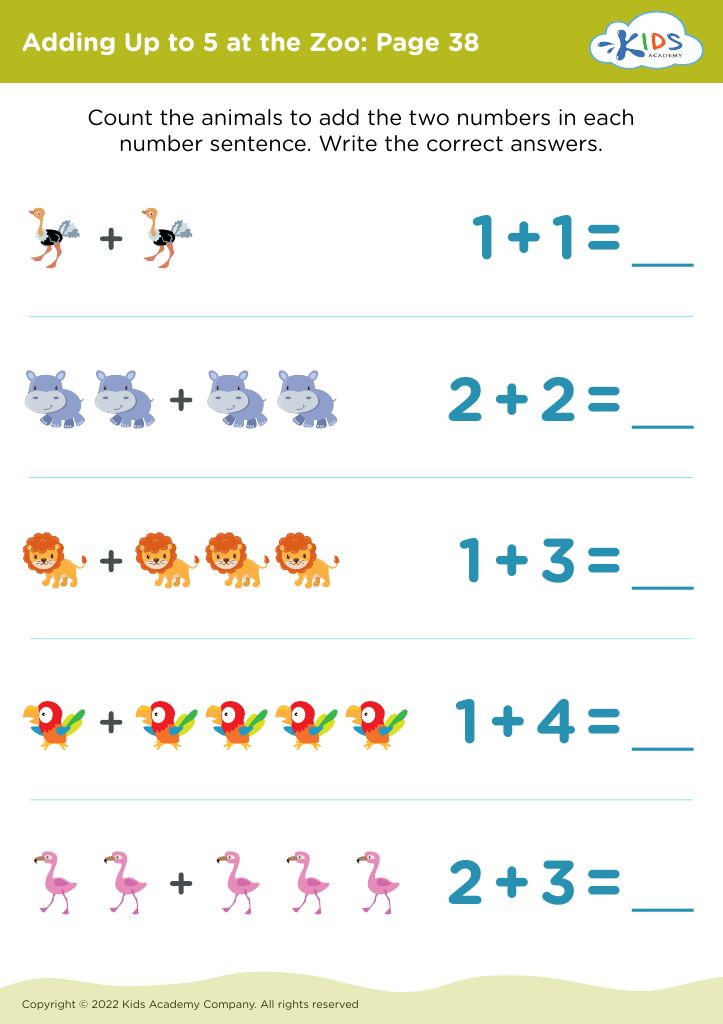
Adding Up to 5 at the Zoo: Page 38
Worksheet
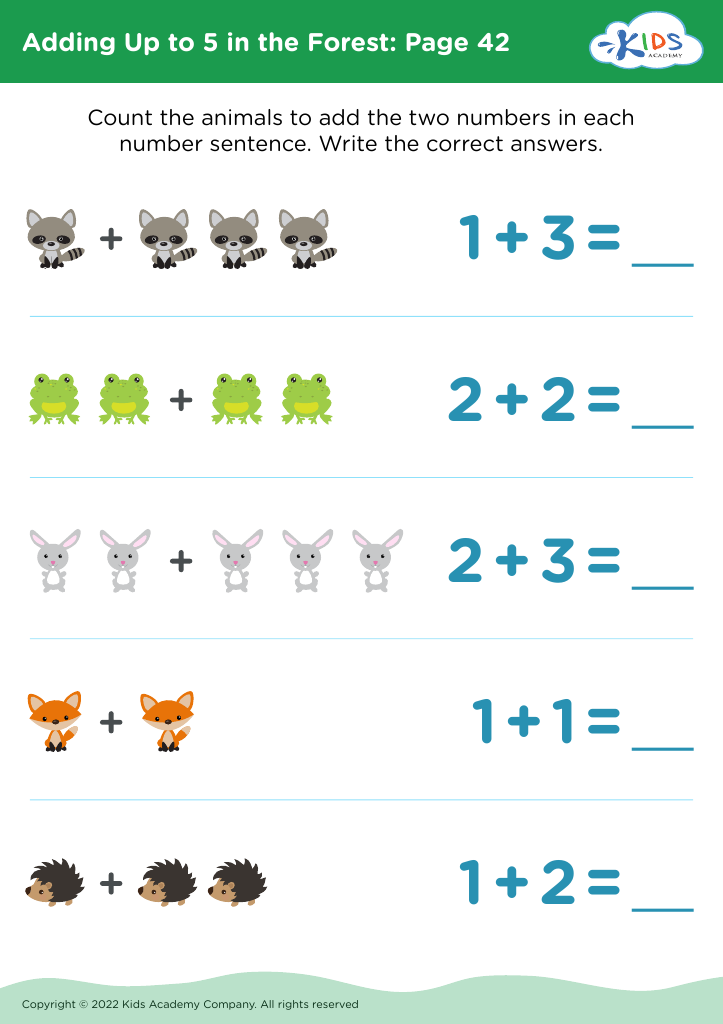
Adding Up to 5 in the Forest: Page 42
Worksheet


Basic addition and subtraction skills are foundational for early childhood development and set the stage for a child's future academic success. For children aged 3-5, understanding these concepts not only enhances numerical skills but also promotes cognitive development, critical thinking, and problem-solving abilities. Early math skills are closely linked to later success in mathematics, which is a cornerstone for subjects like science and technology. This knowledge builds confidence, enabling children to approach complex problems with a positive attitude.

Moreover, engaging children in activities that promote basic addition and subtraction enhances their social skills. Participating in group activities like counting games or sharing objects teaches collaboration, communication, and turn-taking—essential life skills. Parents and teachers can incorporate these concepts into daily routines through playful interaction, using everyday scenarios reinforcing math learning in a fun way.

Additionally, grasping addition and subtraction lays the groundwork for financial literacy in the future. By fostering these skills early, children will develop a more profound understanding of numbers, calculations, and logical reasoning, equipping them for academic challenges ahead. Therefore, investing effort in teaching these fundamental skills today has lasting benefits, encouraging a love for learning that extends beyond mathematics into all other facets of education.