Nature awareness Addition & Subtraction Worksheets for Ages 3-5
8 filtered results
-
From - To
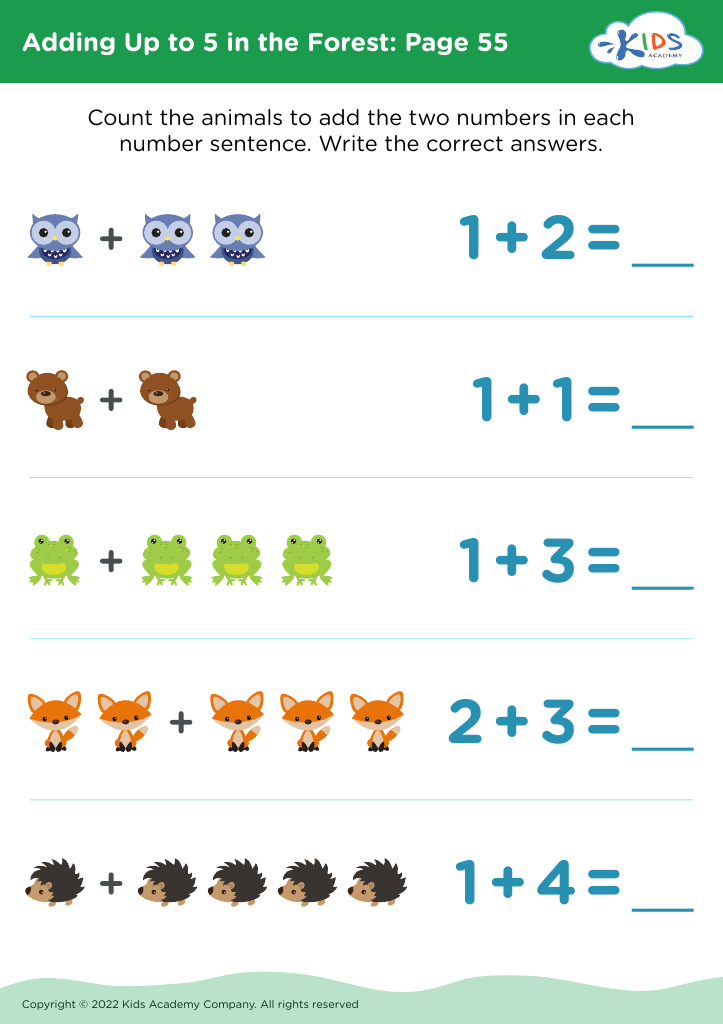
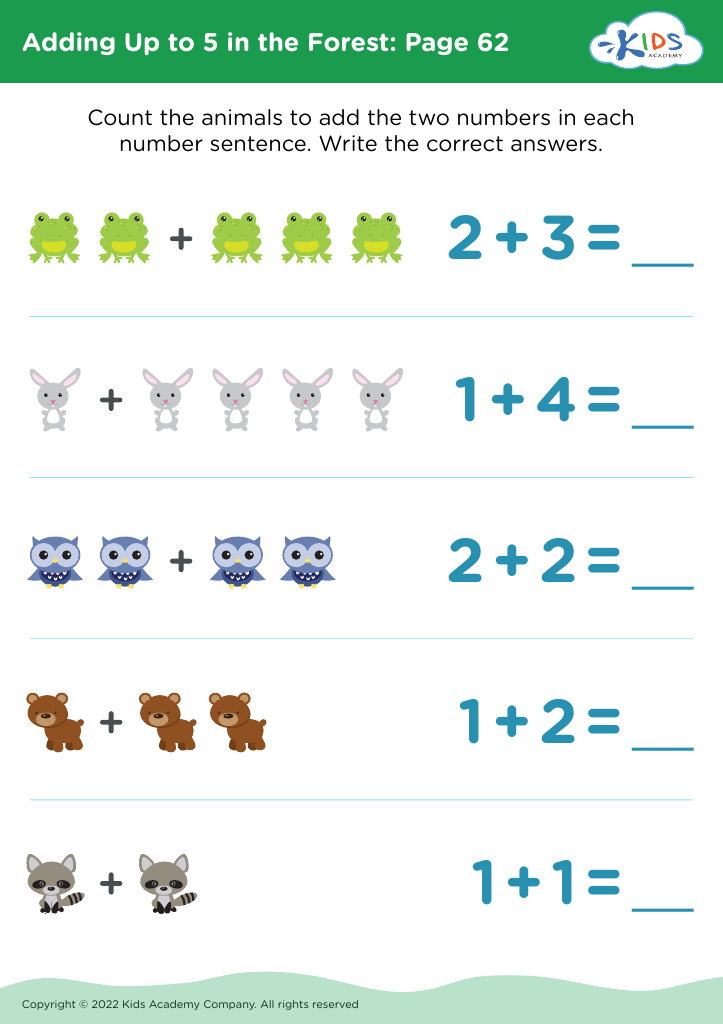
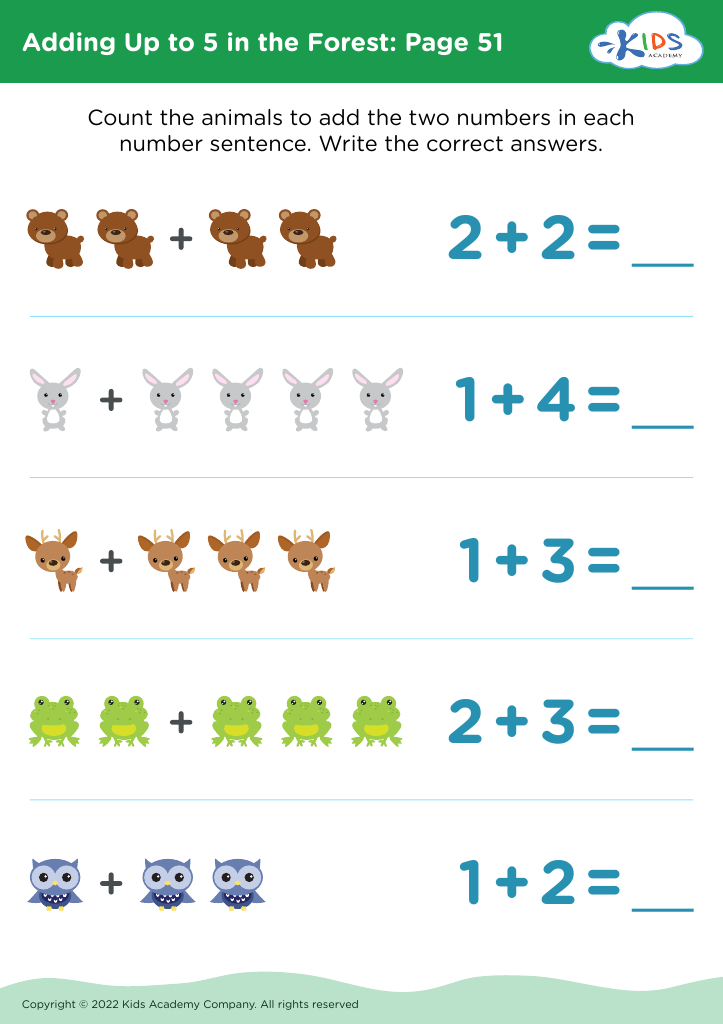
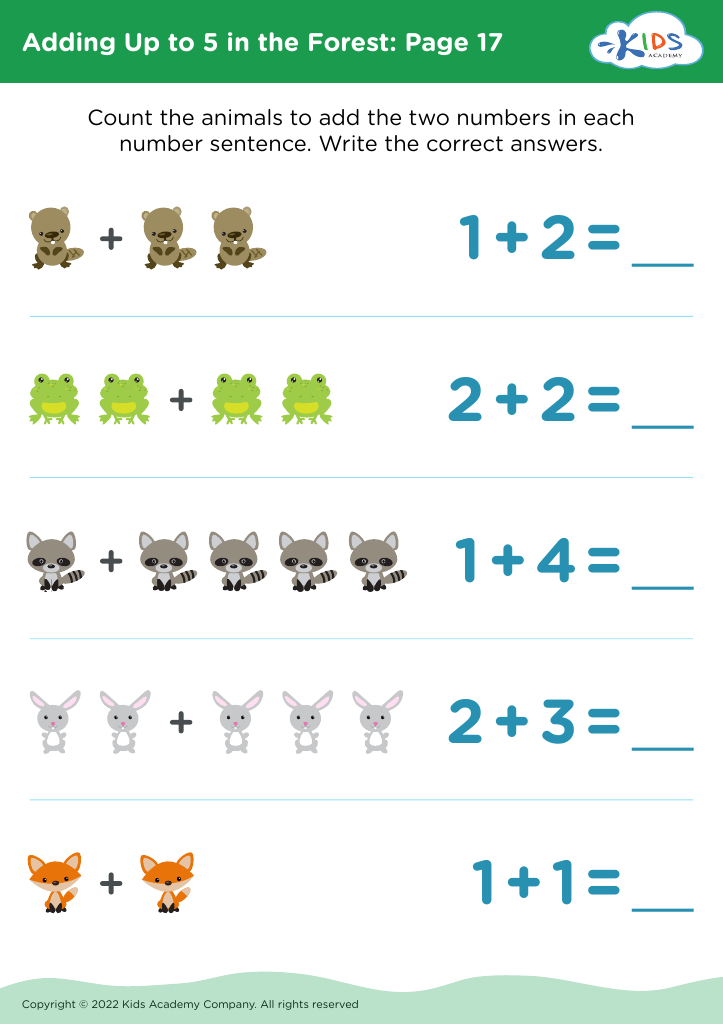
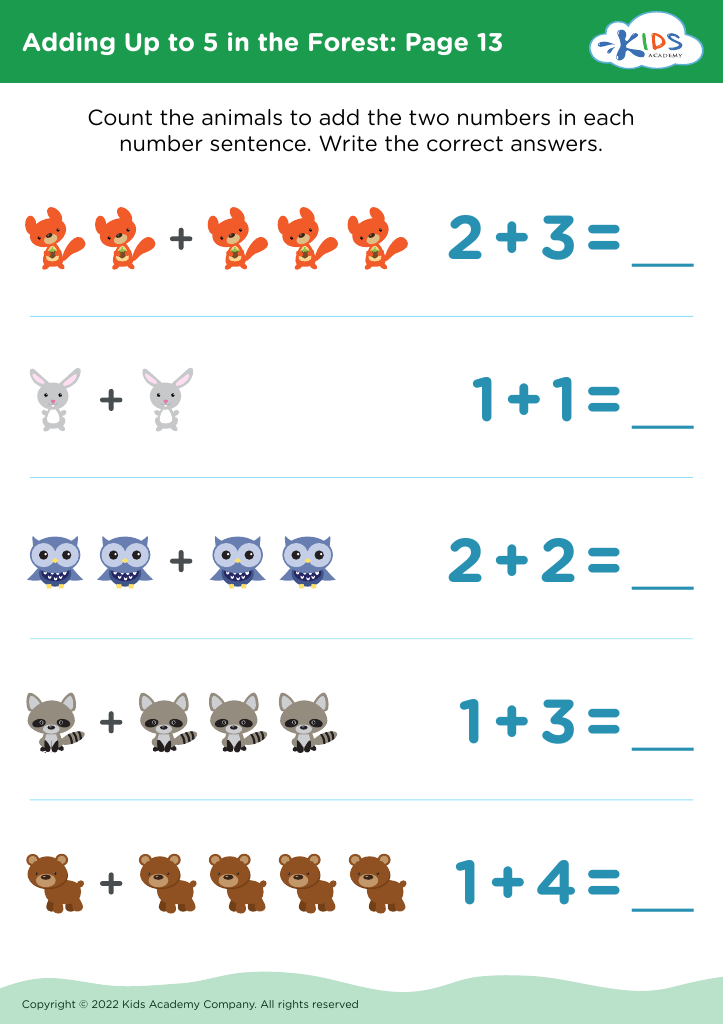
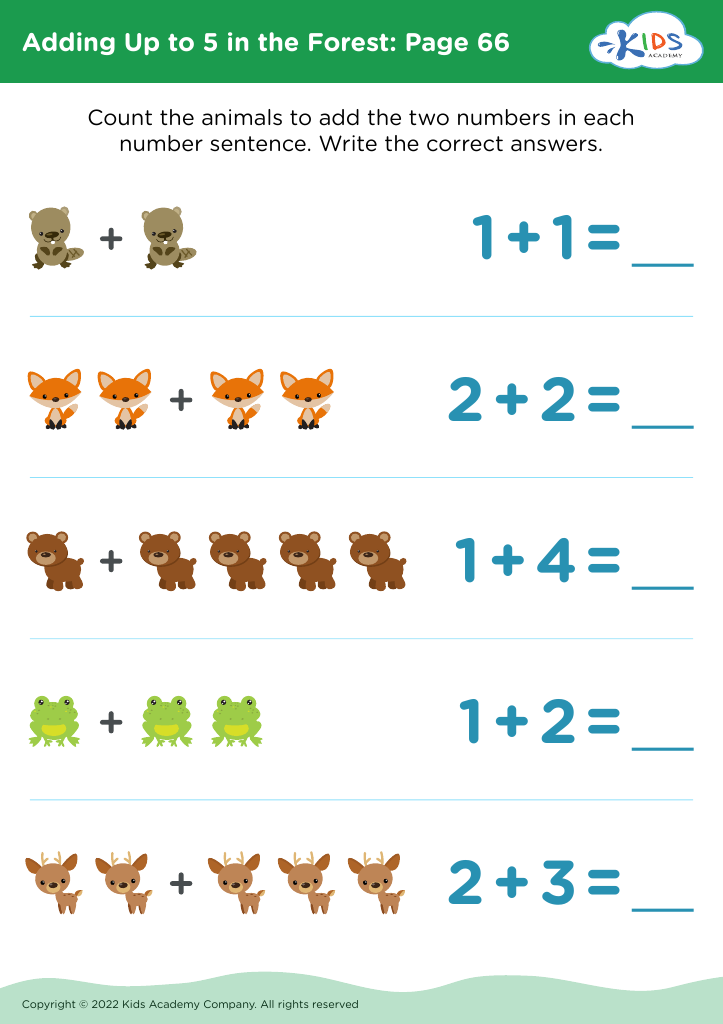
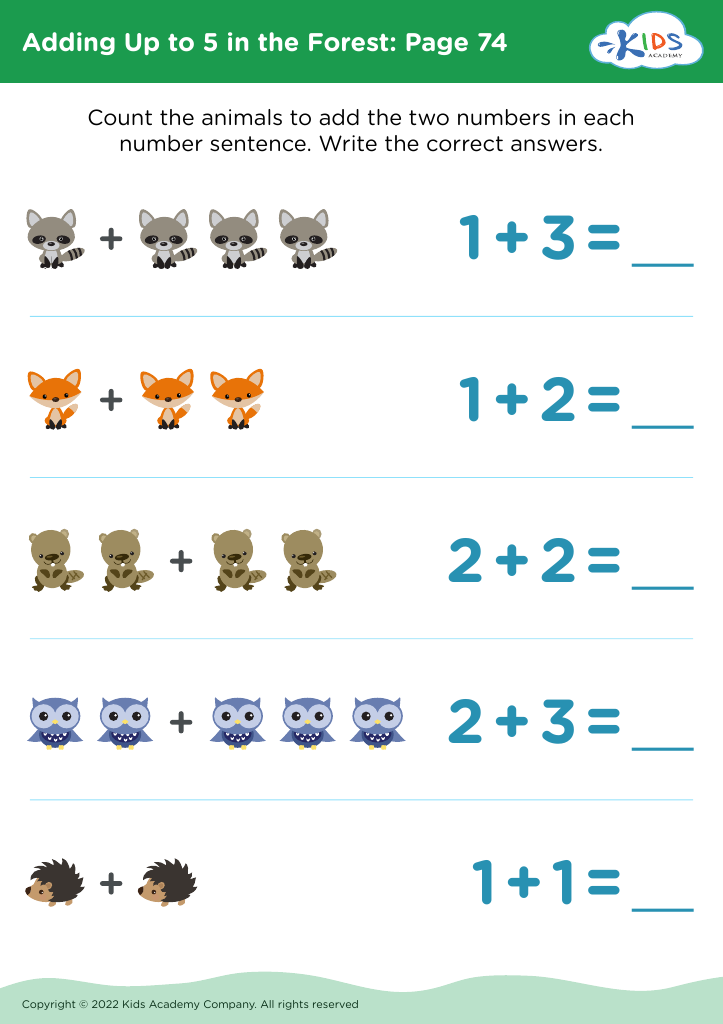
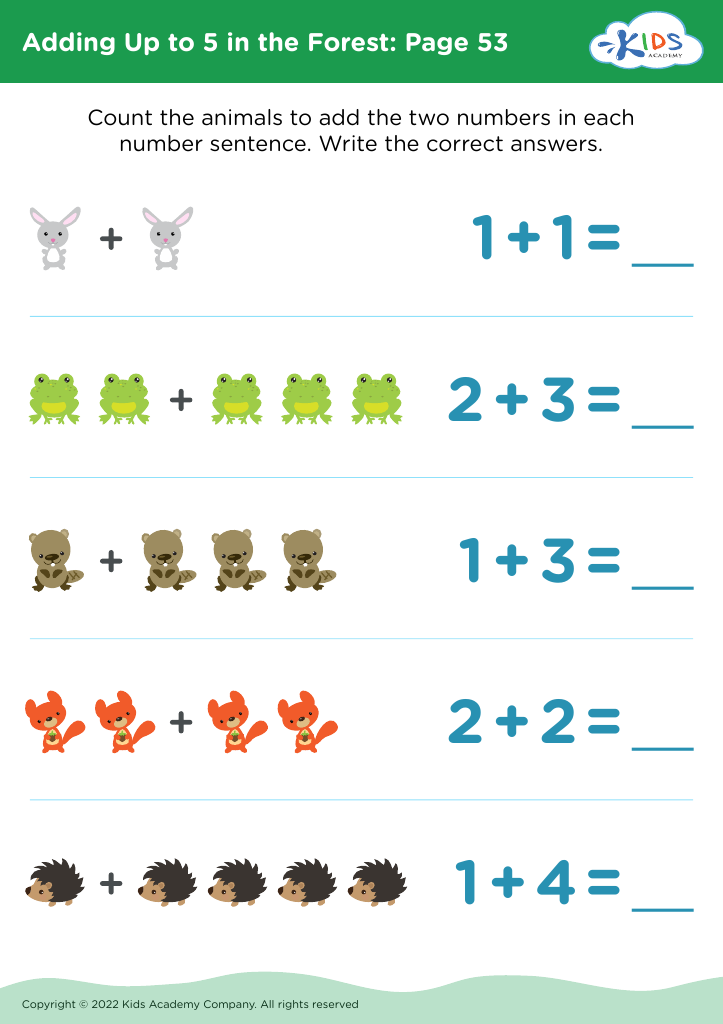
Explore the wonders of nature while boosting early math skills with our Nature Awareness Addition & Subtraction Worksheets designed specifically for children aged 3-5. These engaging worksheets incorporate delightful nature themes, helping young learners connect with their environment as they practice fundamental addition and subtraction concepts. Each worksheet features colorful illustrations and interactive activities that make learning fun and effective. Perfect for preschool and kindergarten settings, these resources encourage curiosity about the natural world while fostering essential mathematical skills. Help your child grow in both math proficiency and environmental appreciation with our thoughtfully crafted worksheets today!








Nature awareness combined with basic math skills such as addition and subtraction is crucial for children ages 3-5 for several reasons. First, early exposure to nature helps foster a sense of curiosity and wonder about the world around them. Engaging with the environment not only sparks interest but also provides tangible experiences that make learning more meaningful.
Integrating math skills in a nature context nurtures cognitive development while making learning fun. For example, counting leaves, adding butterflies spotted in the park, or subtracting the number of rocks collected fosters a practical understanding of numbers through hands-on experiences. This dual approach enhances problem-solving abilities and fosters critical thinking.
Moreover, learning in nature promotes physical activity, social skills, and emotional well-being. Children are more likely to absorb knowledge when exploring the natural world, as sensory experiences are directly linked to learning retention.
Incorporating nature into math lessons also emphasizes the importance of environmental stewardship. By understanding the interconnectedness of math and nature, young learners can develop a lifelong appreciation for both subjects. Ultimately, encouraging nature awareness with basic math lays a foundation for holistic learning that nurtures both the mind and spirit of young children.








