Understanding number values Addition & Subtraction Worksheets for Ages 3-5
3 filtered results
-
From - To
Welcome to our "Understanding Number Values: Addition & Subtraction Worksheets" for kids ages 3-5! These engaging and interactive worksheets are designed to help young learners grasp essential math concepts. Through colorful visuals and fun activities, children will explore number values, enhancing their counting skills while mastering basic addition and subtraction. Our worksheets not only promote mathematical understanding but also build confidence in young learners as they tackle math challenges in a playful way. Ideal for parents and educators, these resources support early childhood education by laying a solid foundation for future mathematical success. Start your child's math journey today!
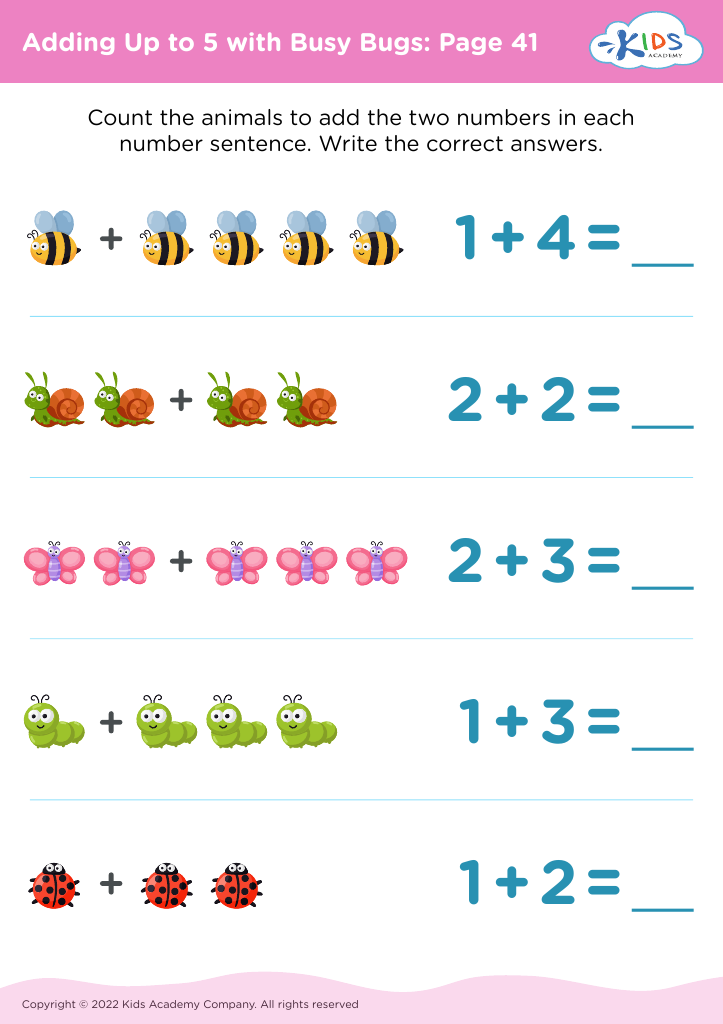
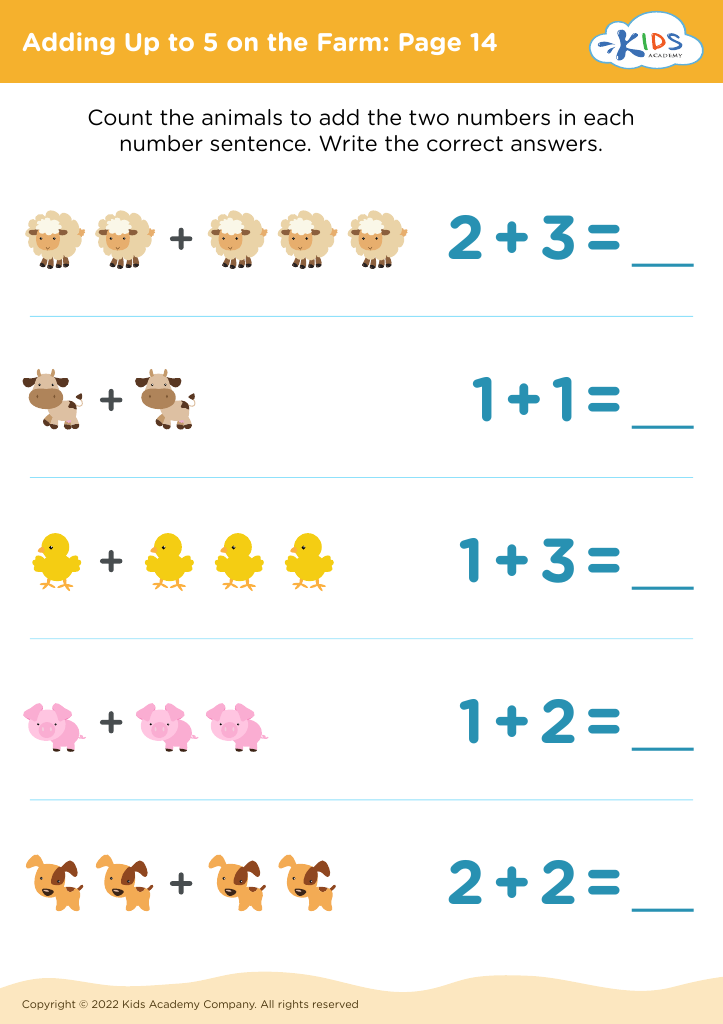
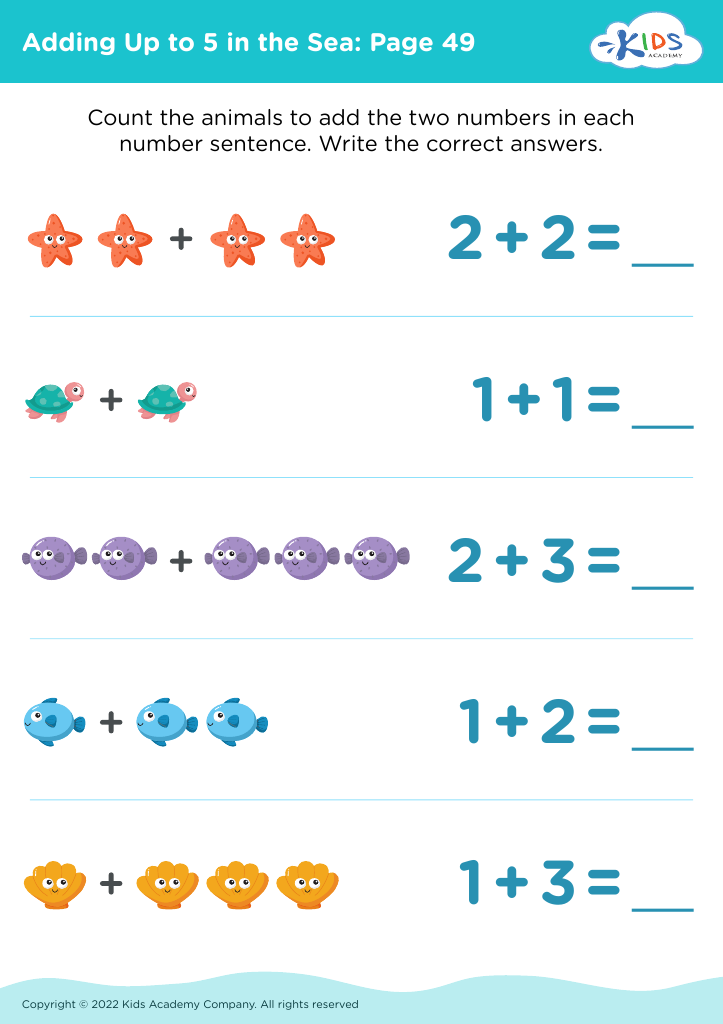








Understanding number values and mastering addition and subtraction are foundational skills for children aged 3-5 that significantly influence their future success in mathematics and overall cognitive development. At this formative age, children are naturally curious and capable of grasping essential concepts through play and interactive learning. This early exposure lays the groundwork for logical reasoning, problem-solving abilities, and mathematical fluency.
When parents and teachers focus on helping children understand number values, they facilitate a deeper comprehension of quantity and relationships between numbers. This understanding is crucial for executing addition and subtraction, as it helps children recognize how numbers interact in a fun and engaging manner, such as through games or counting objects. By using visual aids, manipulatives, and real-world examples, adults can make these concepts concrete.
Moreover, fostering these skills early can enhance children's confidence and enthusiasm towards math, reducing anxiety as they progress to more advanced topics in school. Emphasizing the importance of math in everyday life also encourages children to recognize the relevance of these concepts outside the classroom, ensuring that they appreciate the value of education from a young age. Overall, this investment in early numeracy skills prepares children for continued academic achievement and a positive attitude towards learning.








