Visual comprehension Addition & Subtraction Worksheets for Ages 3-5
7 filtered results
-
From - To
Enhance your child's early math skills with our engaging Visual Comprehension Addition and Subtraction Worksheets designed for ages 3-5. These worksheets focus on developing critical visual literacy, enabling children to better understand mathematical concepts through colorful and intuitive illustrations. As they interact with fun visuals, kids will learn to recognize numbers, solve simple addition and subtraction problems, and improve their reasoning abilities. Our resources are perfect for parents and educators looking to provide a solid foundation in math while keeping learning enjoyable. Download these printable worksheets today and watch your little ones thrive in their journey towards numeracy!
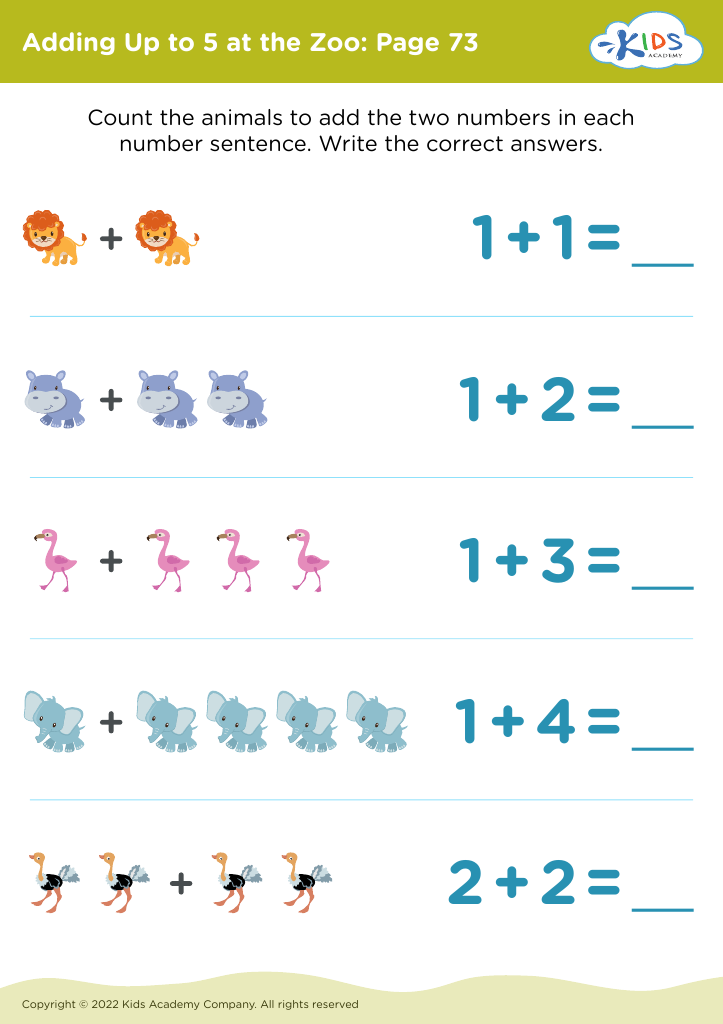
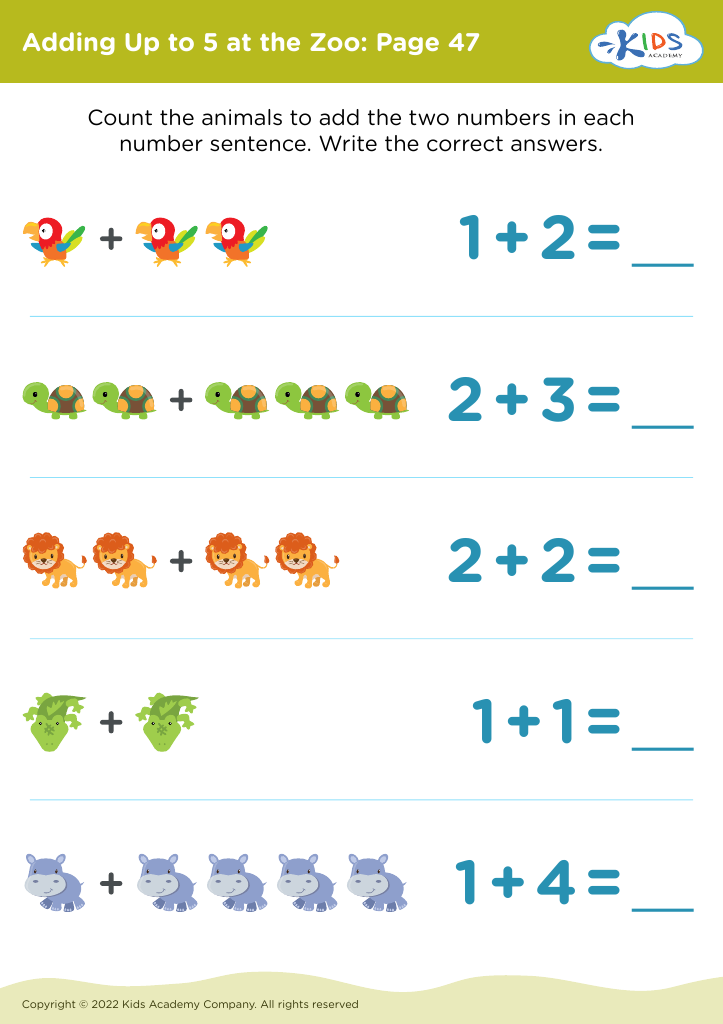
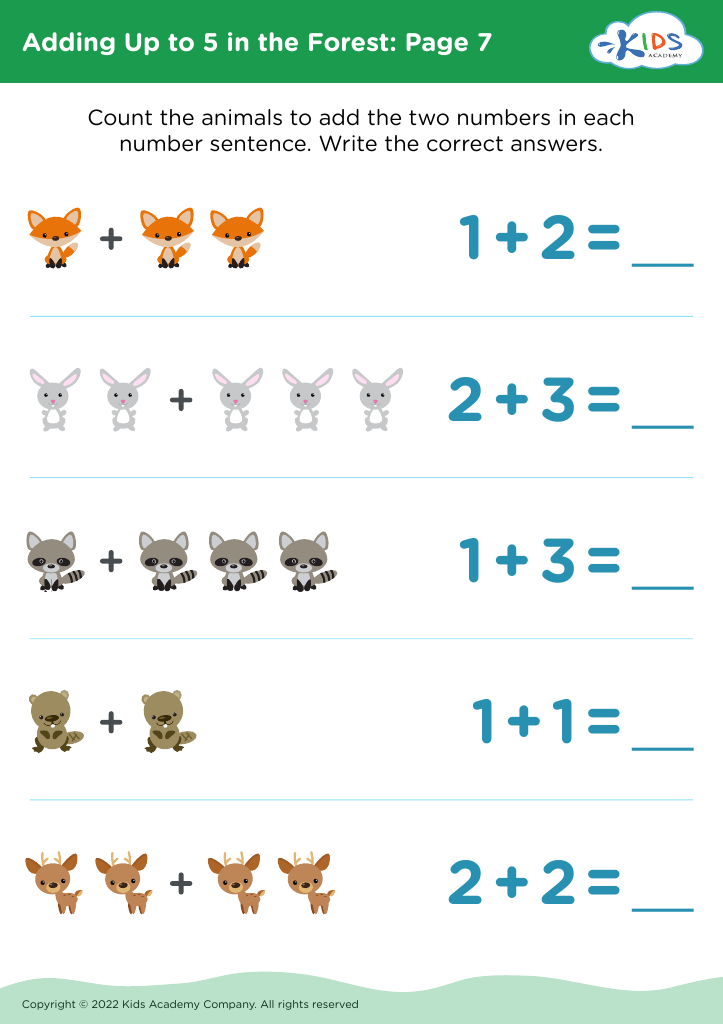
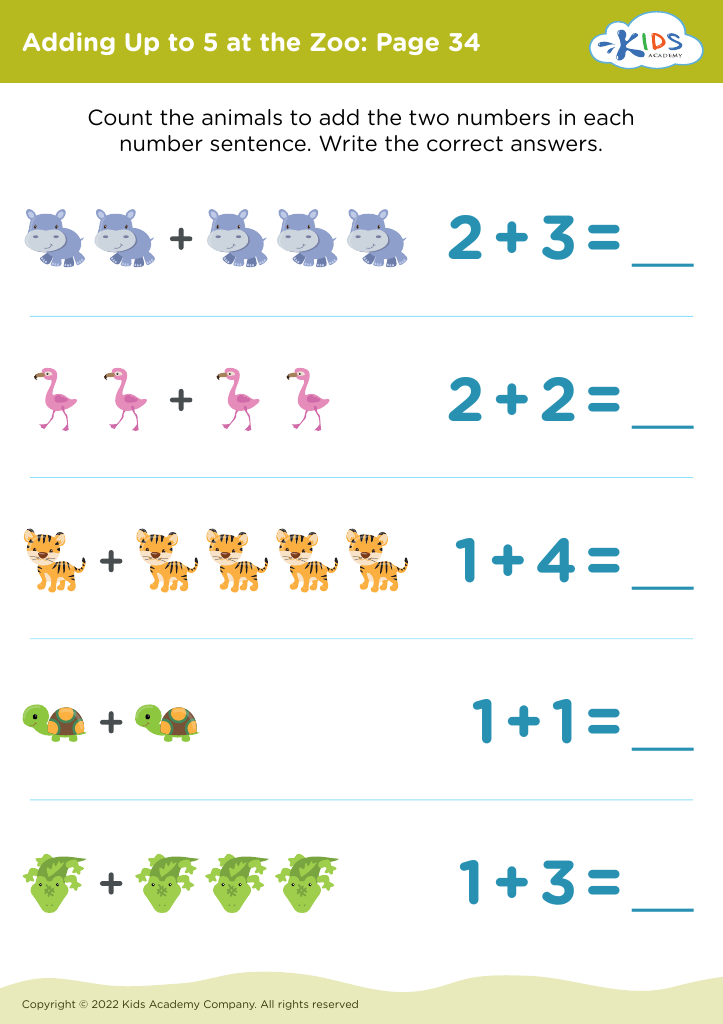
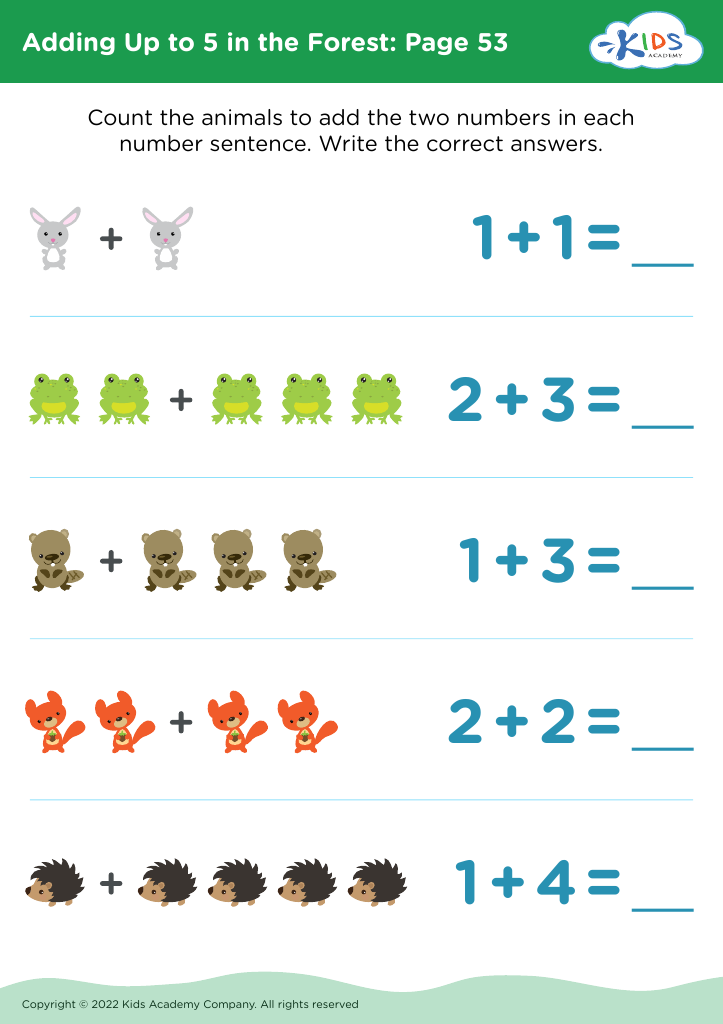
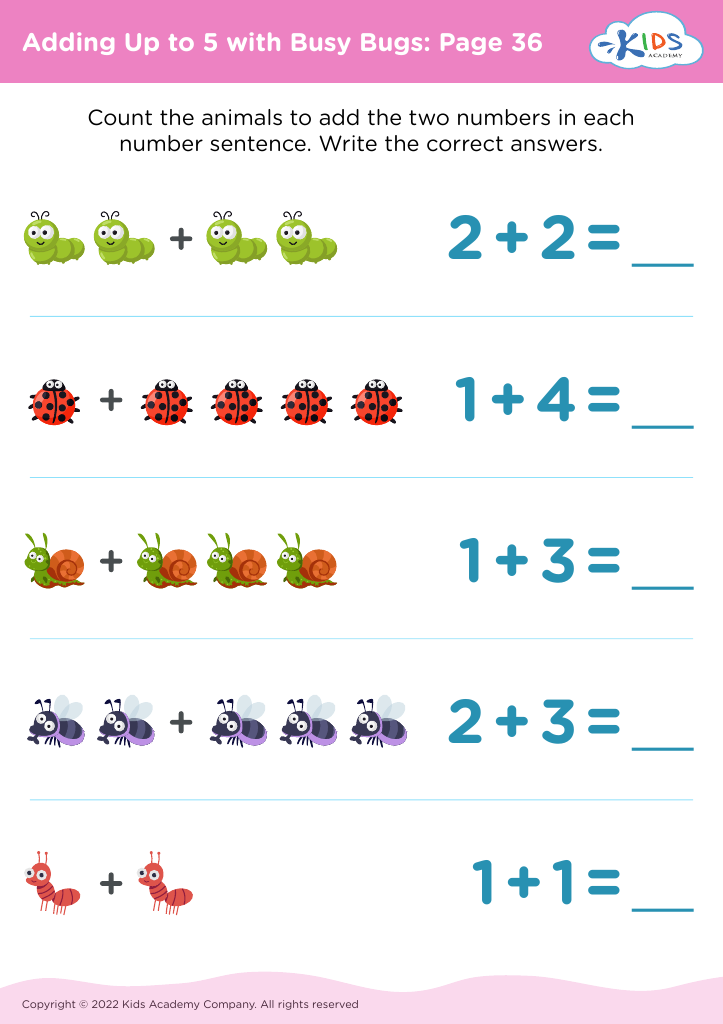
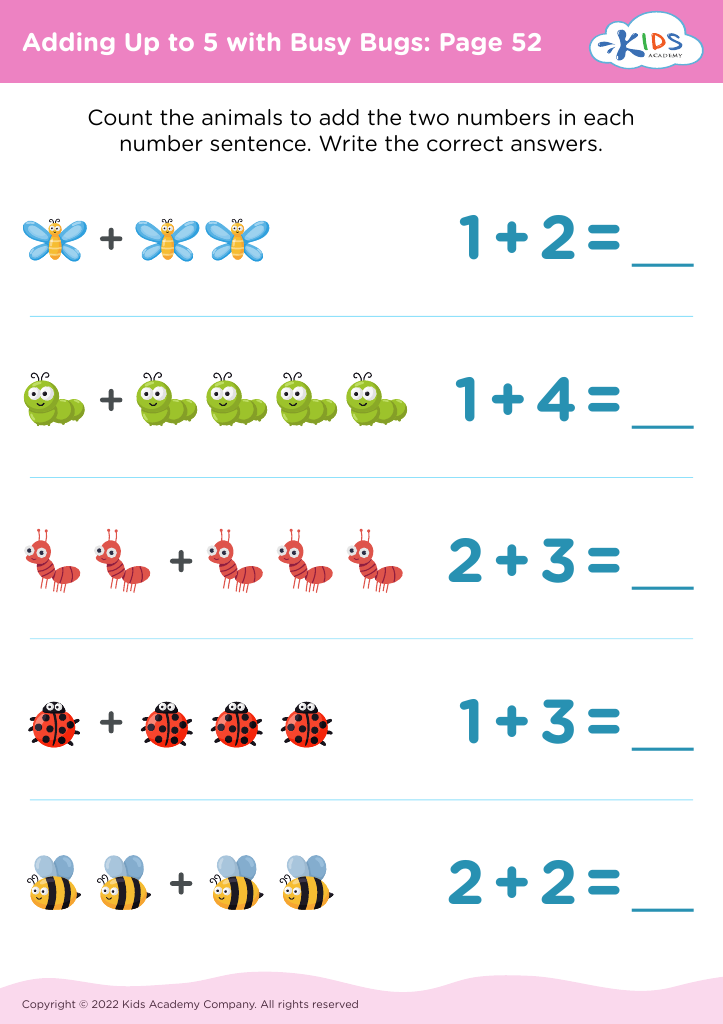








Visual comprehension of addition and subtraction is crucial for children aged 3-5, as it lays the foundation for their mathematical understanding and overall cognitive development. At this developmental stage, children learn best through visual and hands-on experiences. Teaching these concepts using visual aids—such as blocks, counters, or illustrations—makes abstract ideas tangible and relatable.
Understanding addition and subtraction visually helps children develop number sense, which is essential for later mathematical skills. It encourages them to recognize patterns, compare quantities, and understand relationships between numbers. This early exposure also builds confidence, as children grasp the fundamental concepts that will support their academic growth.
Moreover, engaging parents and teachers in this process promotes a collaborative learning environment. When caregivers demonstrate interest in a child’s learning, they cultivate a positive attitude towards mathematics, reducing anxiety around the subject. Activities that combine play and learning deepen children's comprehension and make mastering foundational math skills enjoyable.
Ultimately, fostering strong visual comprehension in early childhood not only enhances mathematical proficiency but also strengthens critical thinking and problem-solving skills, helping children thrive in their future educational journeys. Keeping these skills in focus supports a well-rounded development for a successful start to their academic careers.








