
Visual-motor skills Addition & Subtraction Worksheets for Ages 3-5
3 filtered results
Difficulty Level
Grade
Age
-
From - To
Subject
Activity
Standards
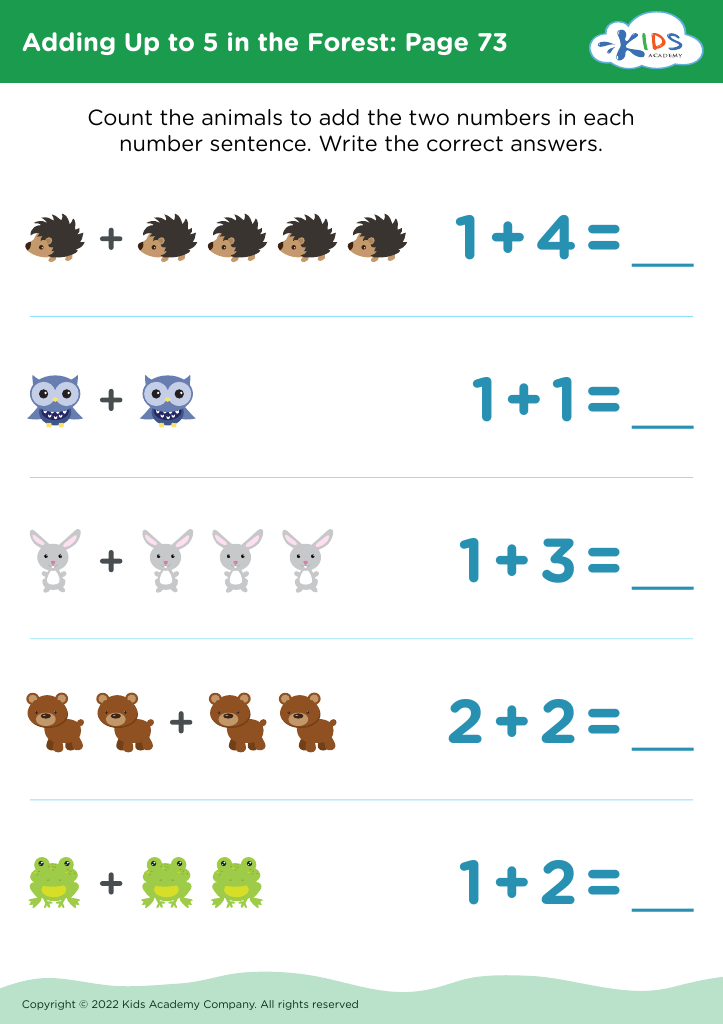
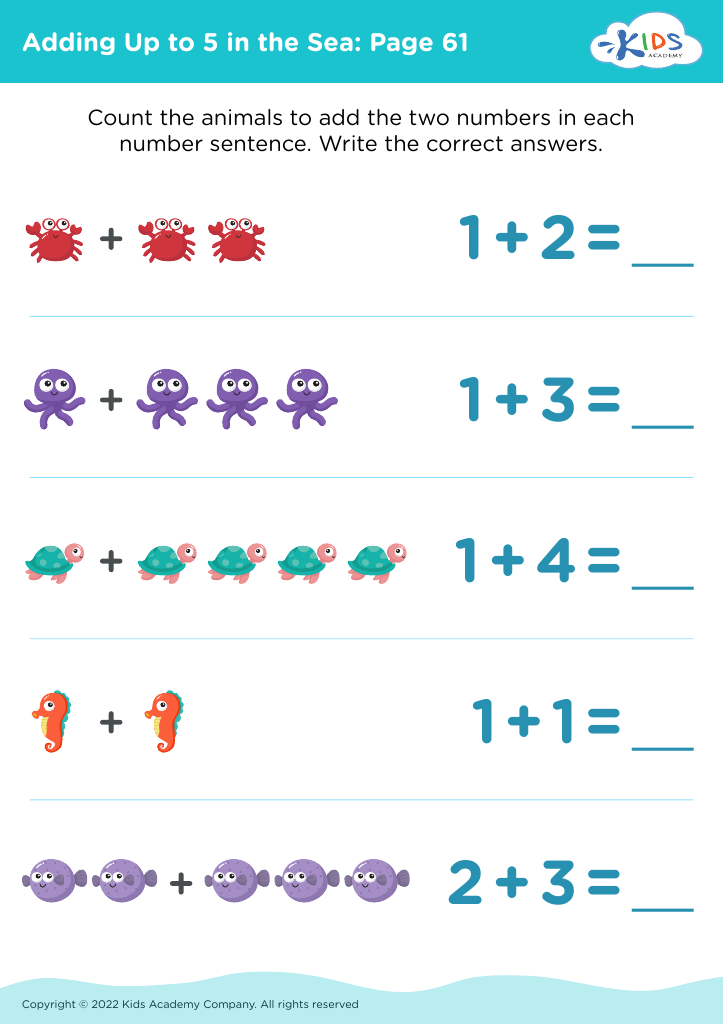
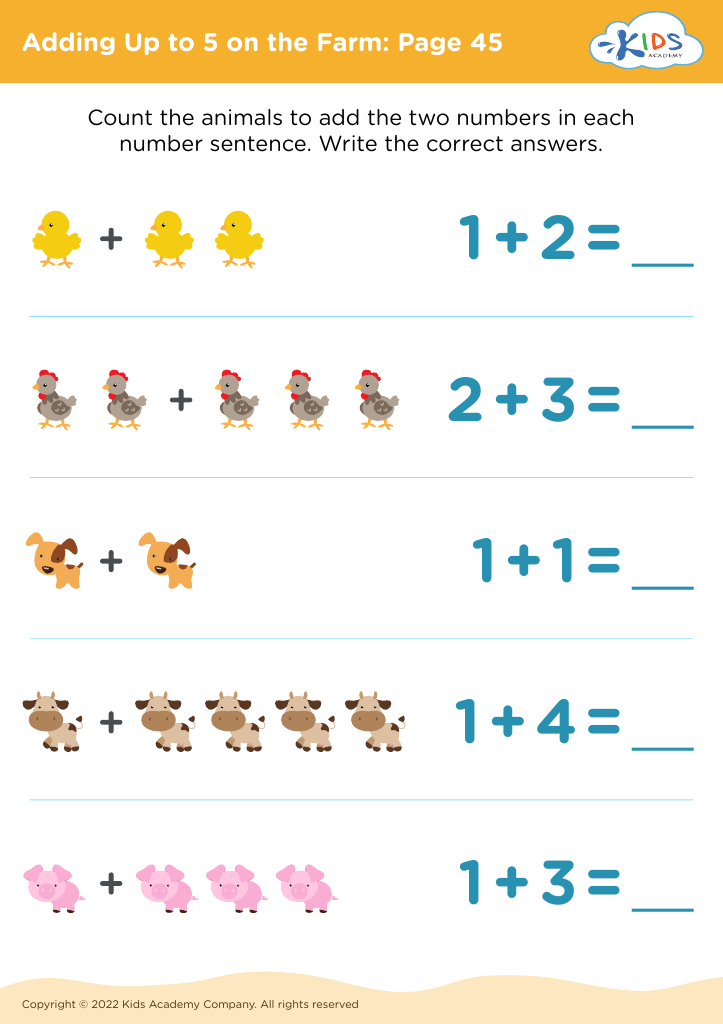
Enhance your child's early math learning with our Visual-Motor Skills Addition & Subtraction Worksheets designed for ages 3-5! These engaging worksheets promote essential visual-motor coordination while introducing preschoolers to fundamental addition and subtraction concepts. Through fun activities, children will practice counting, tracing, and solving simple math problems, all while strengthening their fine motor skills. Perfect for at-home learning or classroom use, these worksheets foster a solid math foundation while keeping young learners motivated and excited about numbers. Equip your little ones with the tools they need for successful math learning and watch their confidence grow! Access our printable worksheets today!
Favorites
With answer key
Interactive
Join Kids Academy for Free
Who is primarily going to use this learning content?








Visual-motor skills are crucial for young children as they form the foundation for early mathematical concepts, including addition and subtraction. For ages 3-5, these skills help children coordinate their visual observations with physical responses, which is vital when engaging in mathematical activities. When children practice visual-motor skills, they learn to notice relationships, copy shapes, and recognize numbers—all foundational to mastering addition and subtraction.
Parents and teachers should care about fostering these skills because they directly impact a child's confidence and proficiency in mathematics. Engaging in activities like drawing, using blocks, or playing with puzzles enhances visual tracking and hand-eye coordination, preparing children for more complex arithmetic tasks. These foundational skills not only support their mathematical learning but also contribute to overall cognitive development and problem-solving abilities.
Moreover, cultivating visual-motor skills early can prevent future learning difficulties, setting children up for success in later stages of education. By关注ing on these skills, parents and teachers facilitate a positive learning environment that promotes exploration and experimentation, empowering children to become proficient learners. Therefore, investing time in developing visual-motor skills is essential for building a strong math foundation for young learners.








