
Visual perception Addition & Subtraction Worksheets for Ages 3-5
14 filtered results
Difficulty Level
Grade
Age
-
From - To
Subject
Activity
Standards
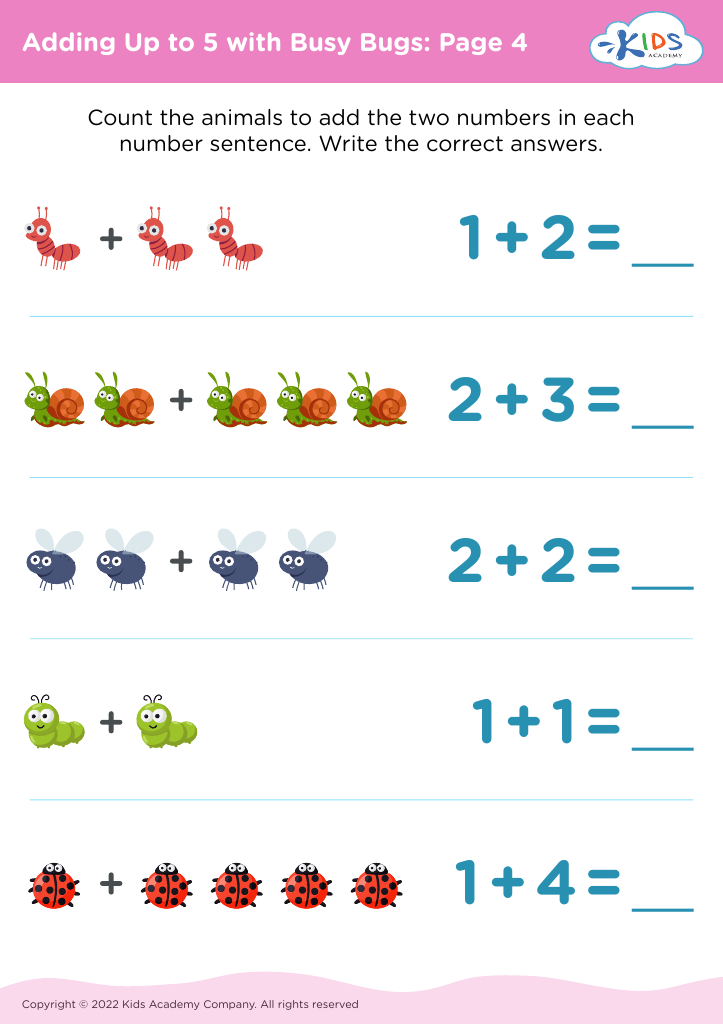
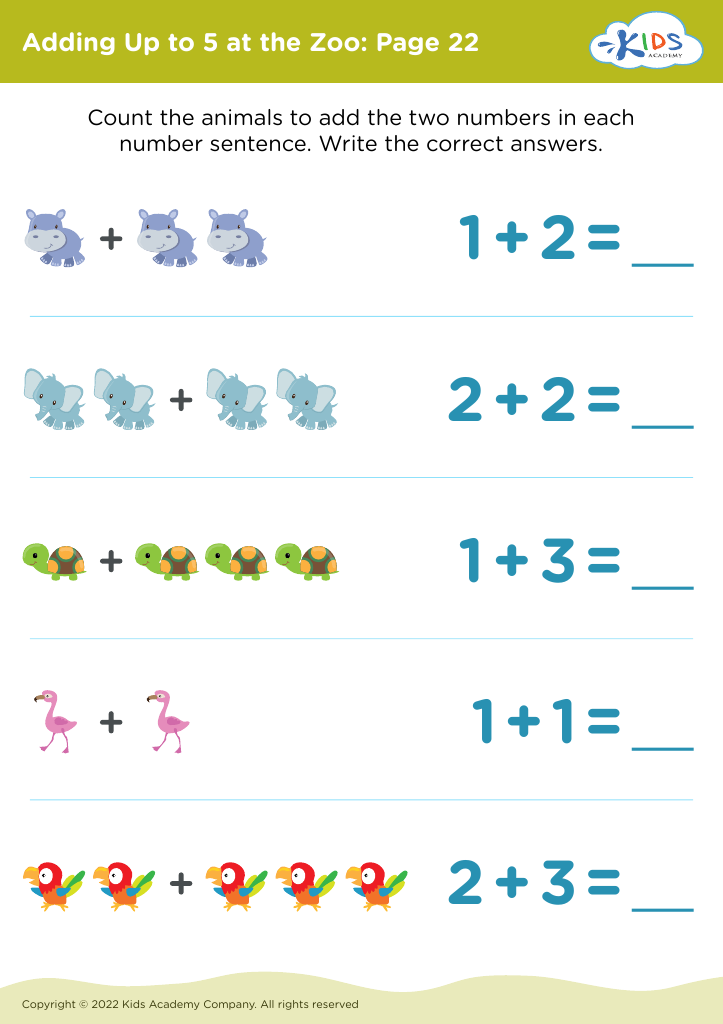
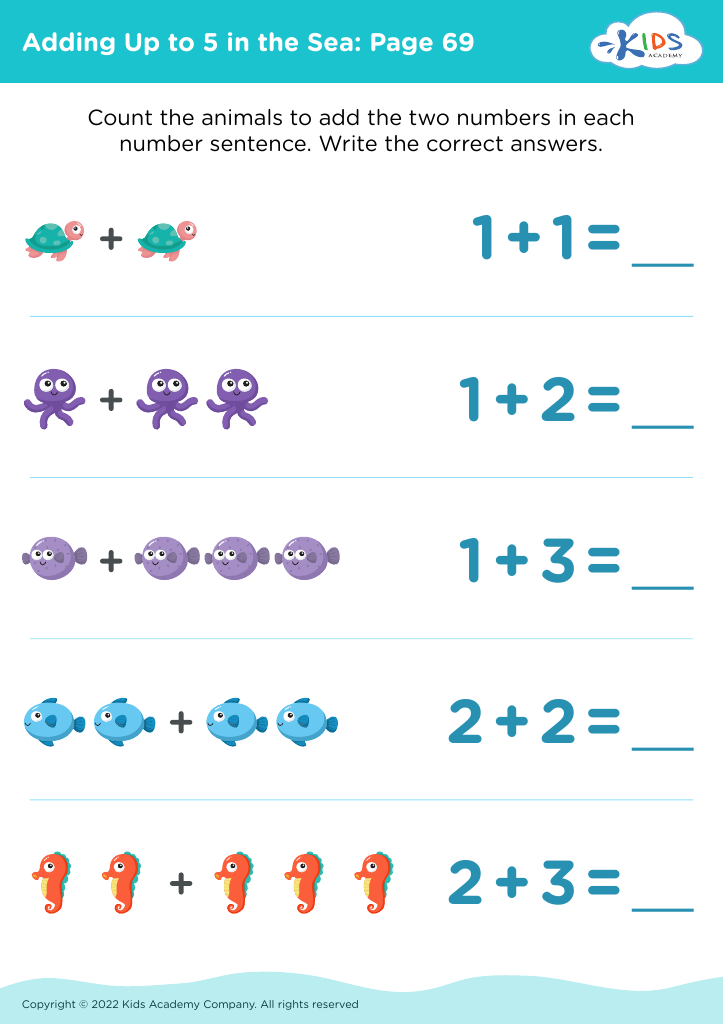
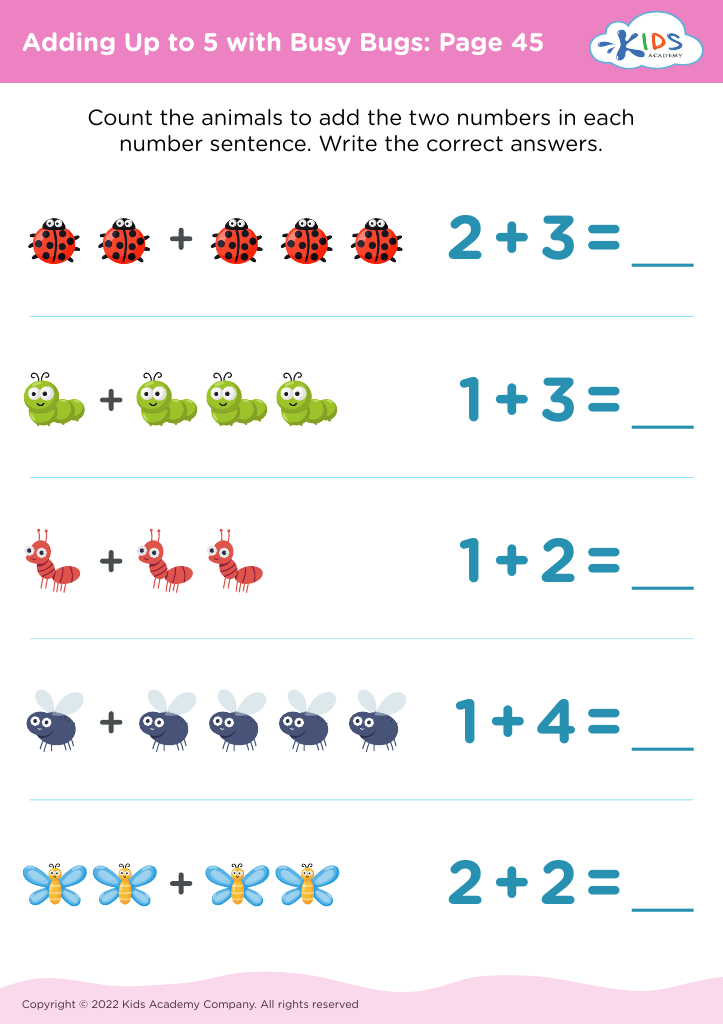
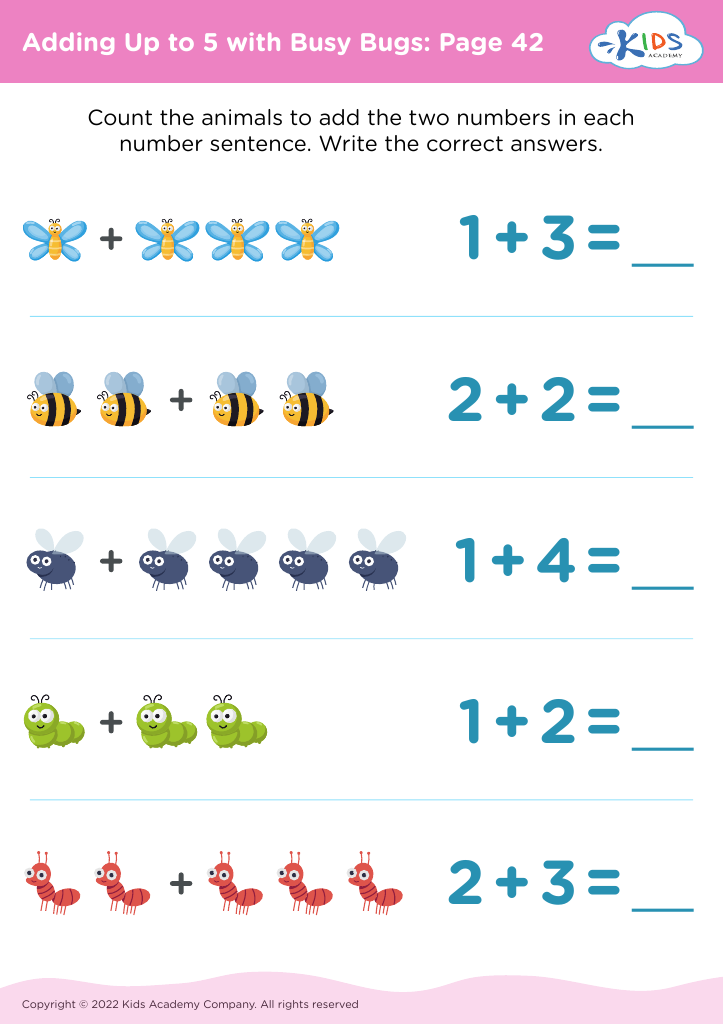
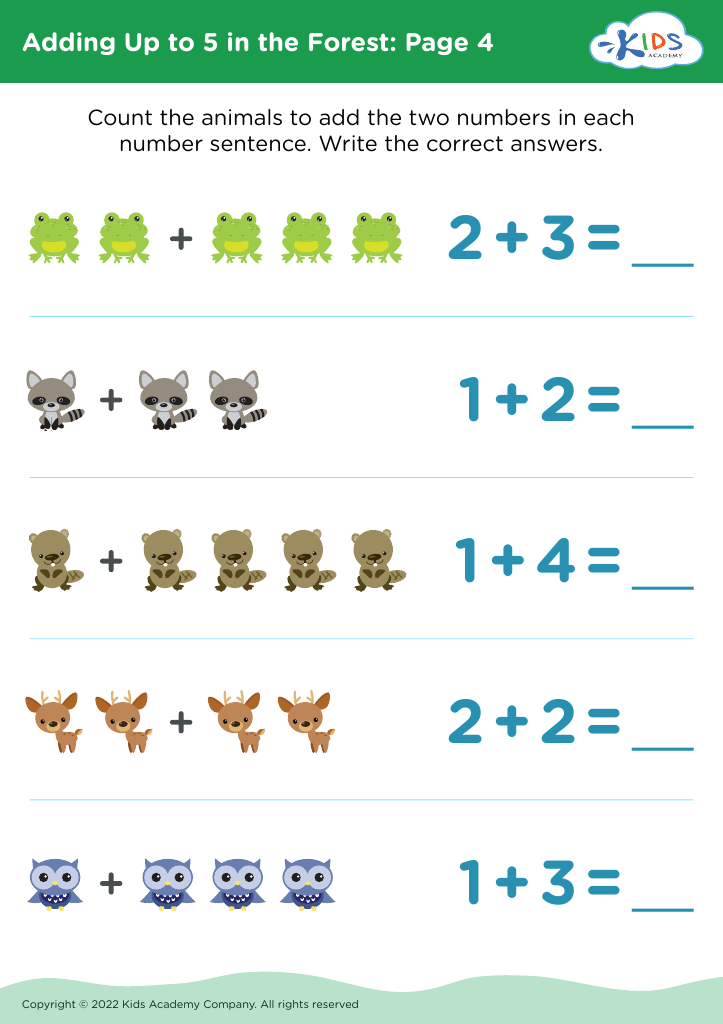
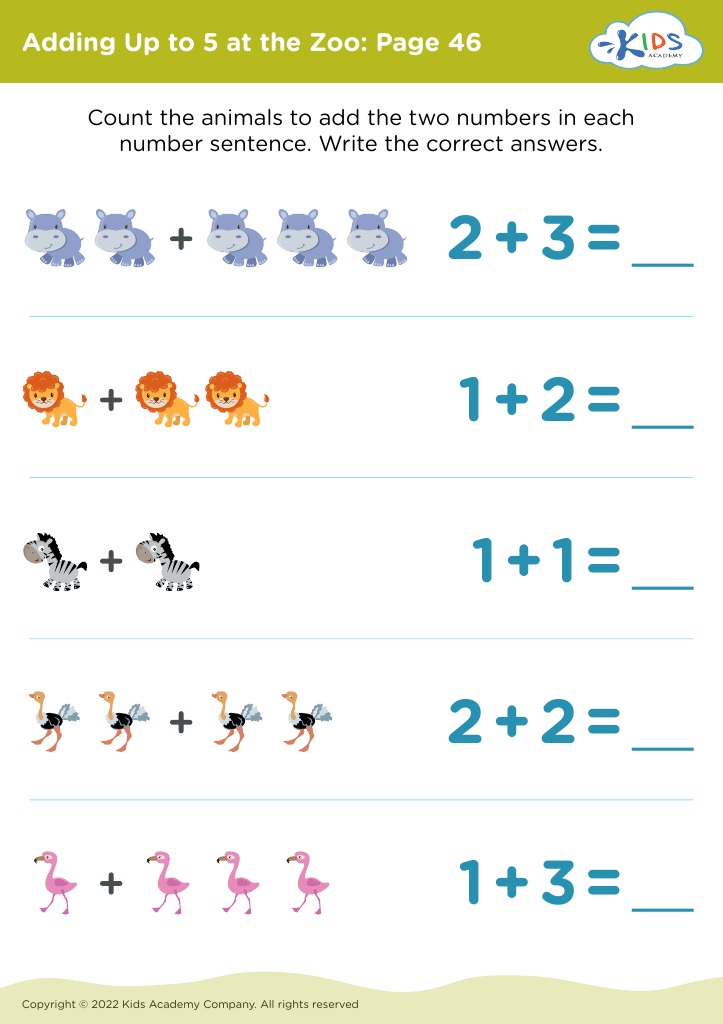
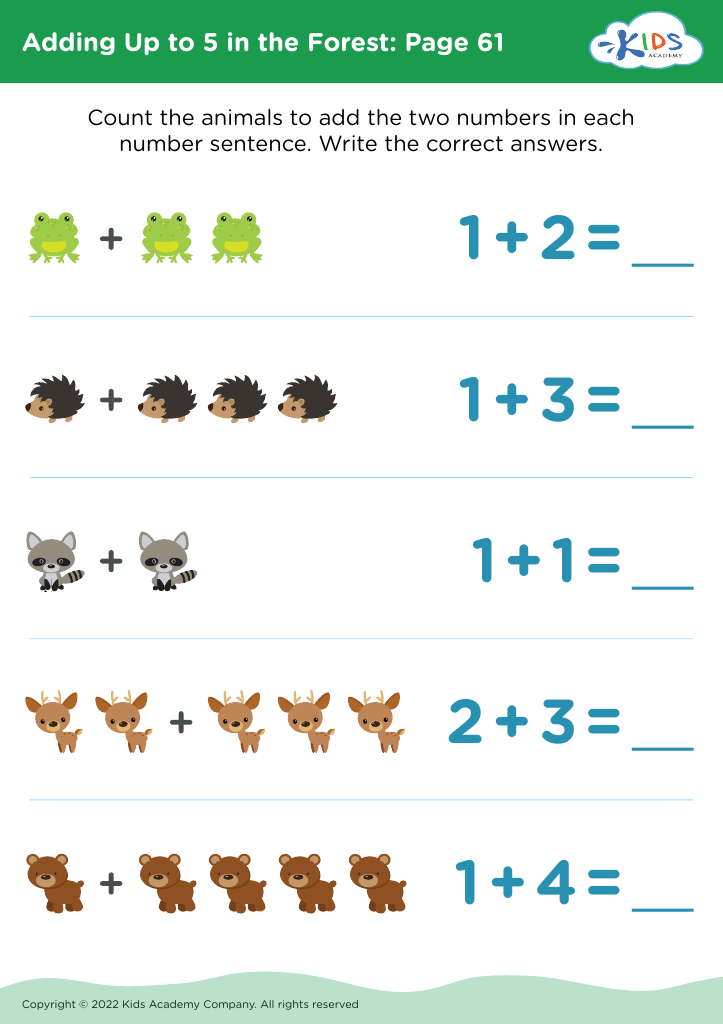
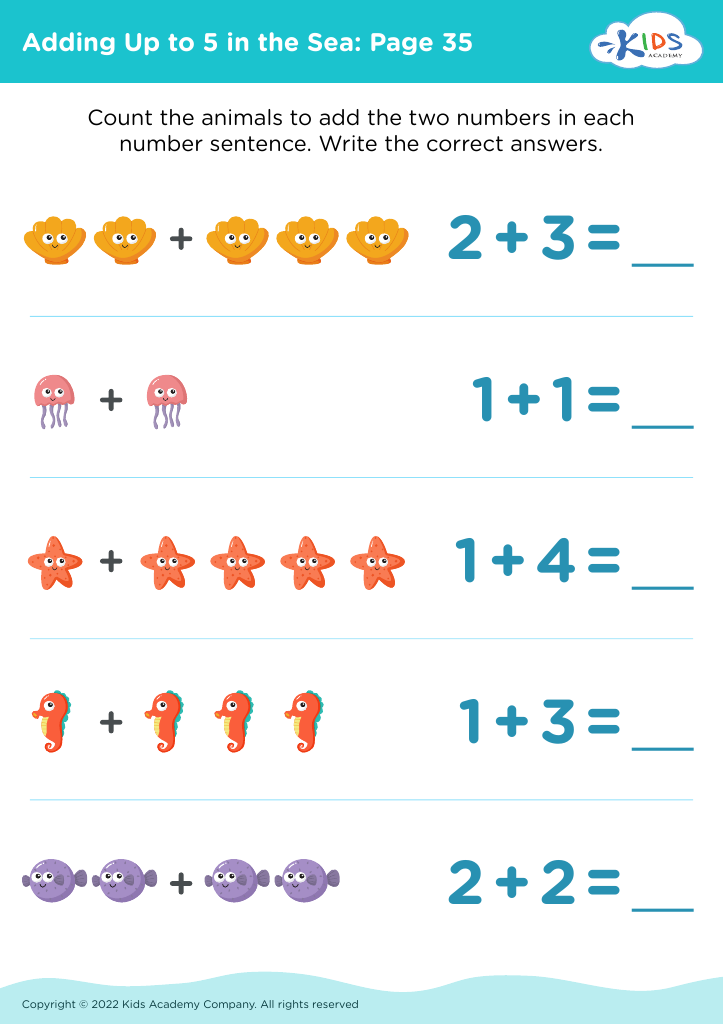
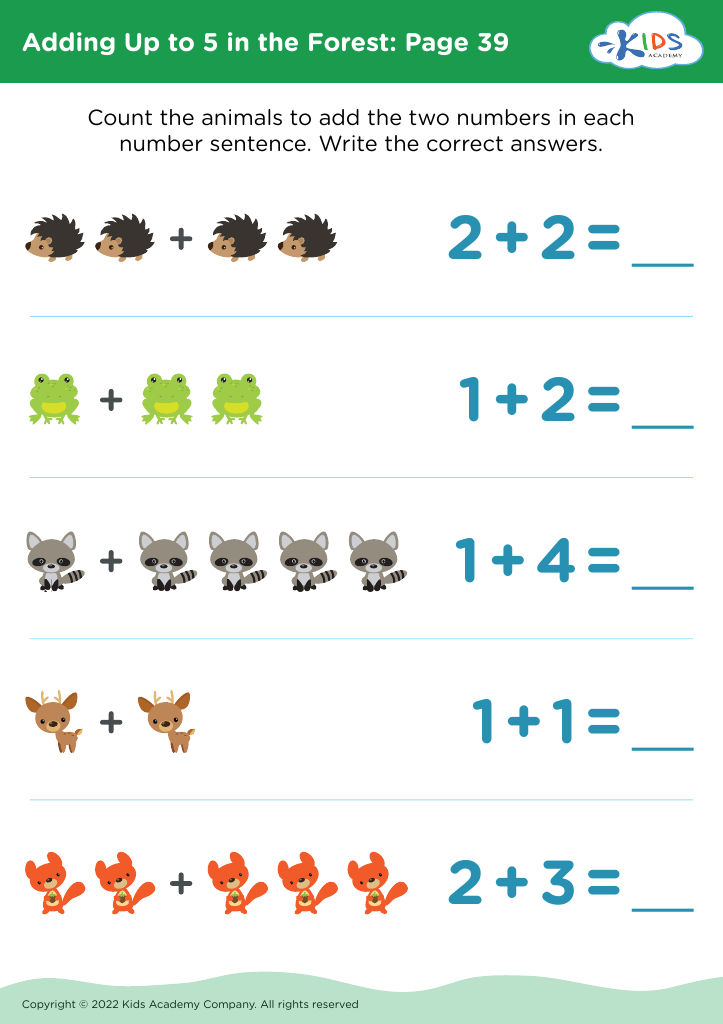
Enhance your child's foundational math skills with our engaging Visual Perception Addition and Subtraction Worksheets, designed specifically for ages 3-5. These worksheets encourage young learners to recognize and manipulate numbers through colorful visuals and interactive activities. By integrating visual perception with basic addition and subtraction, children will develop critical cognitive skills while having fun. Perfect for home or classroom use, our resources foster essential early math comprehension, helping kids build confidence in their abilities. Explore a variety of activities that promote problem-solving and logical thinking, setting the stage for a successful math journey. Get started today for a bright future in math!
Favorites
With answer key
Interactive
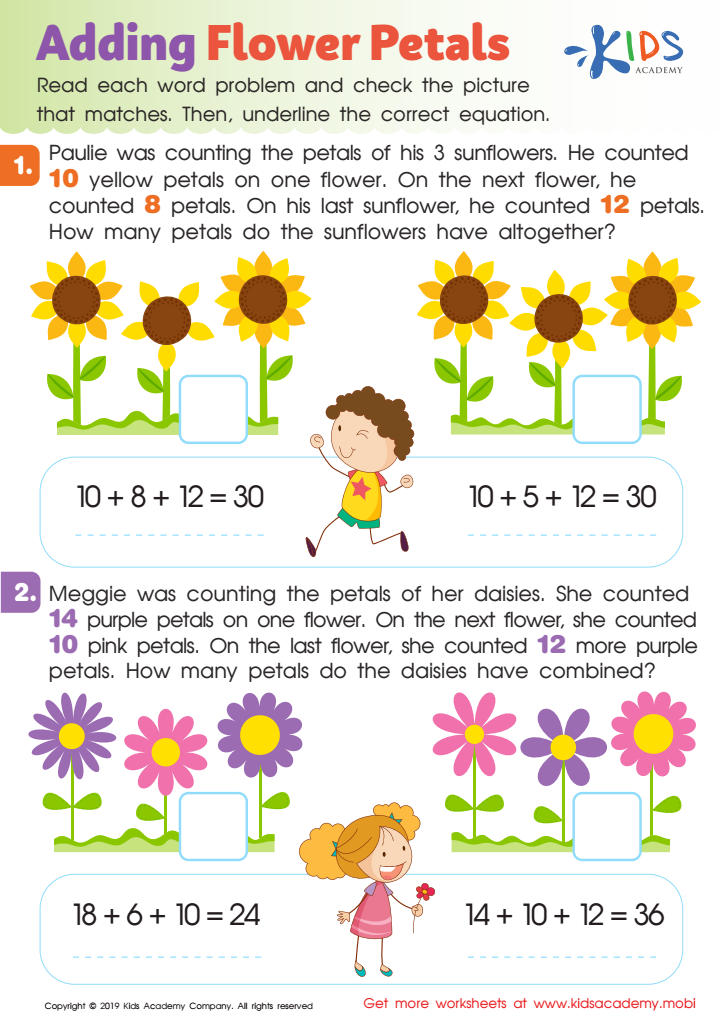
Adding Flower Petals Worksheet
This free worksheet helps little mathematicians learn to understand word problems. They'll read each one and match it to the corresponding picture. Important info is highlighted, teaching kids to look for key info when solving problems. Then they'll underline the correct number equation that matches the picture. A great way to practice problem-solving skills!
 Assign to My Students
Adding Flower Petals Worksheet
Worksheet
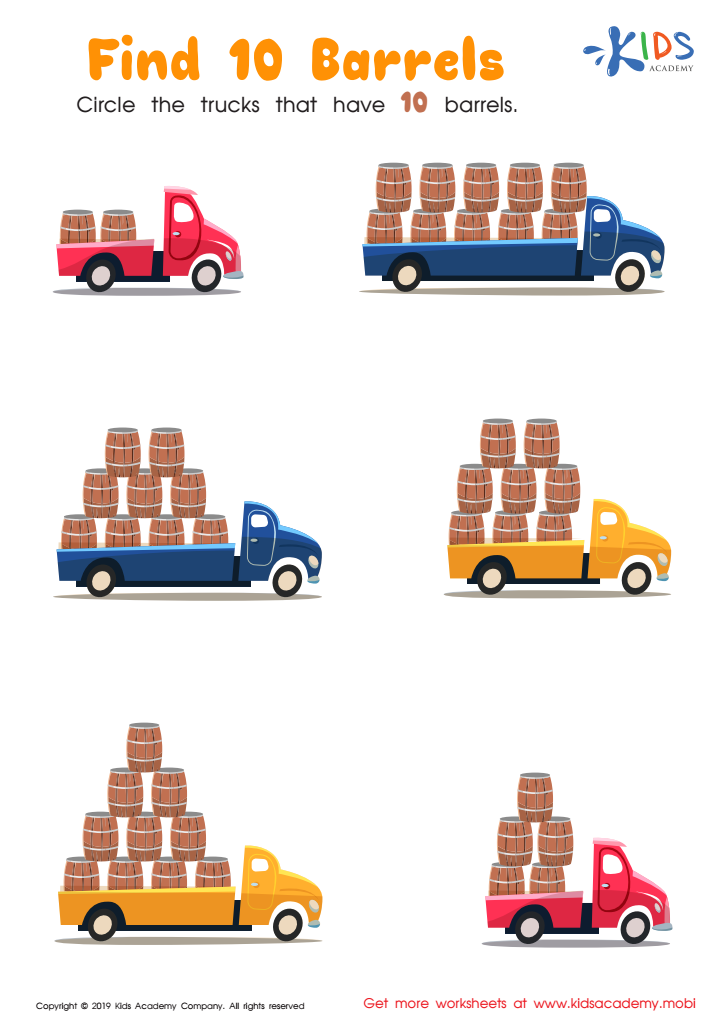
Find 10 Barrels Worksheet
Help your kids learn to count with 1, 2 and 3, then progress to tens and hundreds. Supplied with educational materials and colorful worksheets, they'll be counting as high as they can. Together, count the barrels on the trucks in the printout and encourage them to circle the ones with 10 barrels.
Find 10 Barrels Worksheet
Worksheet
Join Kids Academy for Free
Who is primarily going to use this learning content?








Visual perception is a crucial cognitive skill that involves the ability to interpret and organize visual information. For children aged 3-5, developing visual perception is an essential foundation for learning addition and subtraction. As children begin to grasp basic math concepts, their ability to visually recognize, compare, and manipulate quantities directly influences their success in early mathematical operations.
Parents and teachers should care about visual perception in addition and subtraction because it supports cognitive development and enhances learning experiences. Strong visual perception aids in counting, recognizing numbers, and understanding the relationships between different quantities. For instance, children can harness visual aids, such as counting blocks or number lines, to visualize problems, making abstract concepts more concrete. This skill also fosters problem-solving abilities as children learn to discern patterns and spatial relationships.
Moreover, visual perception activities can promote fine motor skills and hand-eye coordination, facilitating a holistic approach to learning. Engaging children in visually rich environments, incorporating games, and hands-on activities can nurture their mathematical understanding. Ultimately, a strong grasp of visual perception not only primes children for academic success in math but also cultivates critical thinking and confidence as they navigate future learning challenges.








