Visual perception improvement Addition & Subtraction Worksheets for Ages 3-5
5 filtered results
-
From - To
Enhance your child's math skills and visual perception with our engaging Addition & Subtraction Worksheets, specially designed for ages 3-5. These printable activities promote foundational numeracy while improving visual discrimination, essential for early learning success. Our worksheets feature fun, colorful illustrations that capture your child's attention, making learning an enjoyable experience. As children practice addition and subtraction in a playful context, they develop critical thinking and problem-solving abilities. Ideal for homeschooling, preschool activities, or supplemental learning, these worksheets lay the groundwork for mathematical fluency while nurturing essential cognitive skills. Start your child's math journey today with our visually stimulating resources!
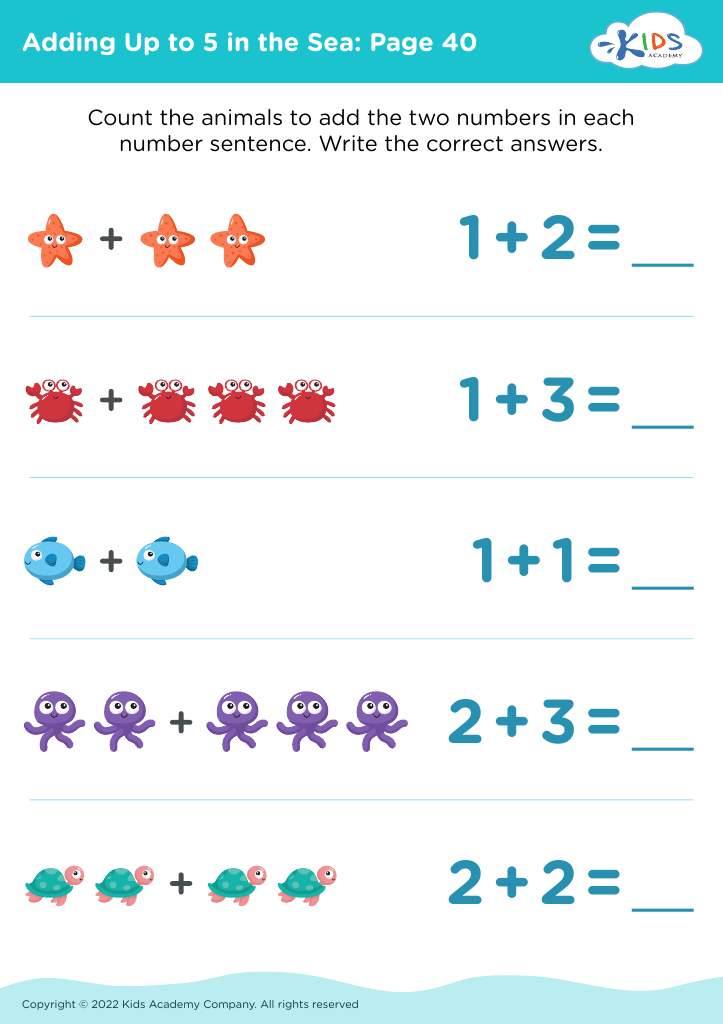
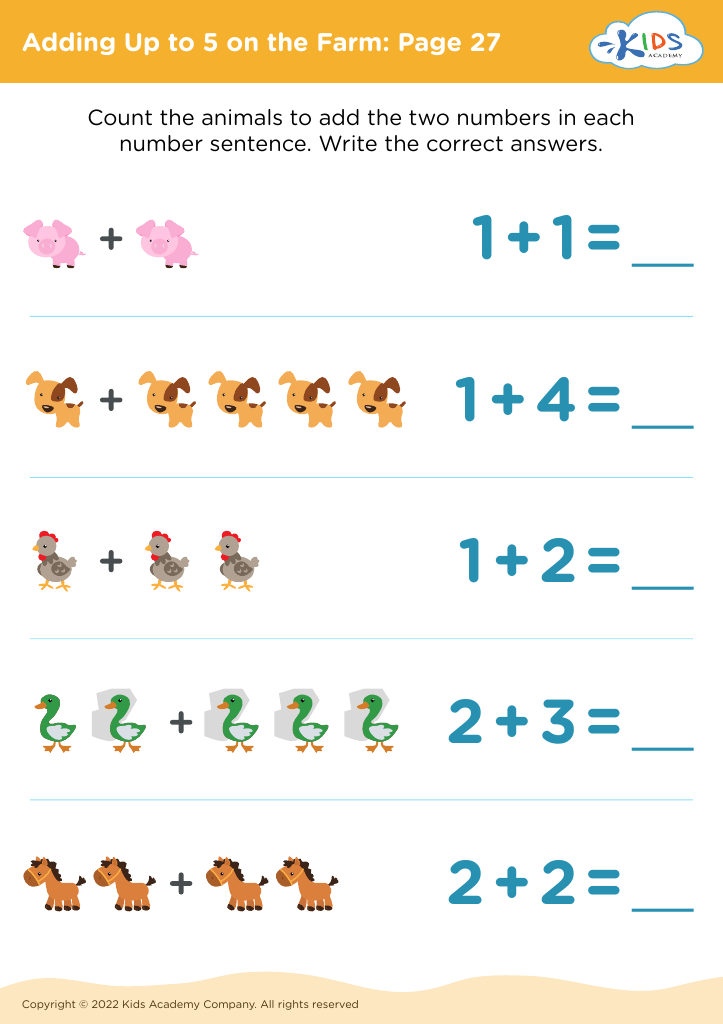

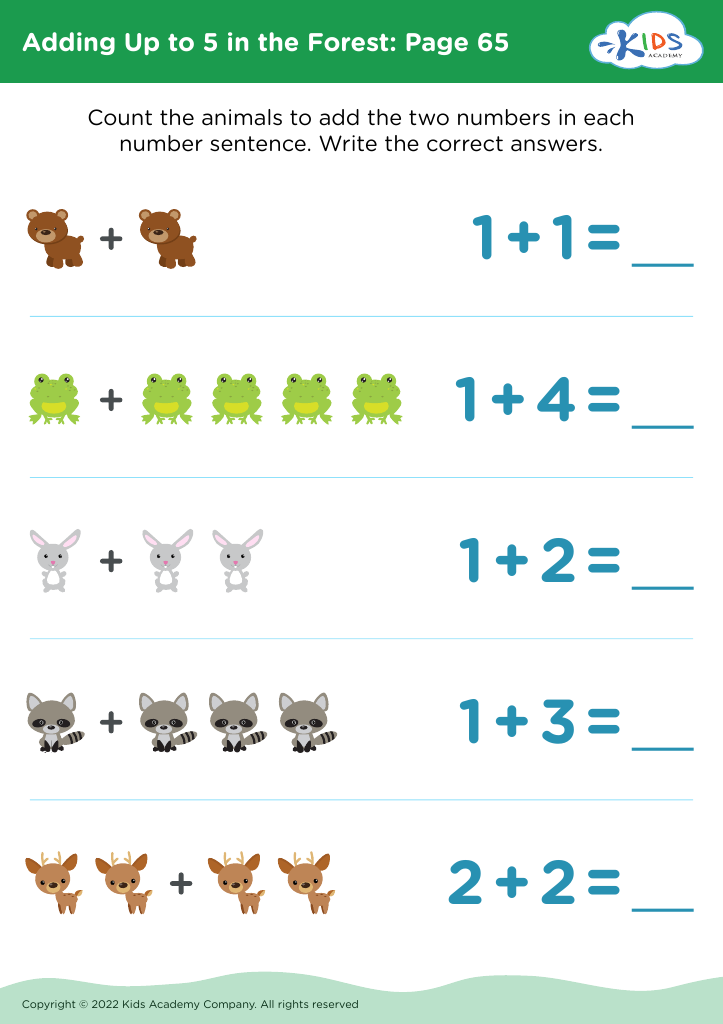
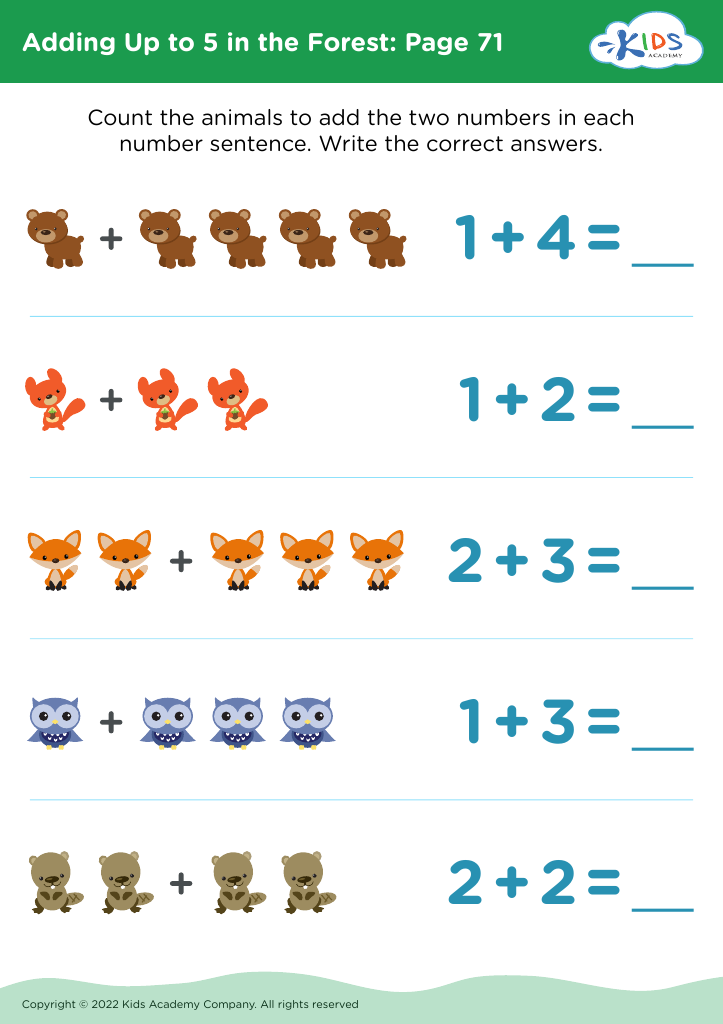








Visual perception skills are fundamental for children aged 3-5, particularly regarding addition and subtraction. These skills involve the ability to see, interpret, and understand visual information, which is crucial for mathematical learning. When children improve their visual perception, they become better at recognizing shapes, numbers, and spatial relationships, all of which are foundational for arithmetic operations.
For parents and teachers, focusing on visual perception improvement can lead to significant academic benefits. Enhanced visual perception enables children to identify patterns and quantities more easily, make sense of numerical concepts, and grasp basic math operations. As they learn to add and subtract, they can visualize problems more effectively, leading to increased confidence in their mathematical abilities.
Moreover, strong visual perception can affect a child's overall cognitive development and readiness for future learning. Engaging in activities that boost these skills, such as puzzles, sorting games, and matching exercises, makes math more engaging and enjoyable, which is vital in these formative years. Ultimately, investing in visual perception is an investment in a child's future success in mathematics and beyond, fostering a solid foundation for lifelong learning.








