Animal identification Addition Worksheets for Ages 3-5
27 filtered results
-
From - To
Explore our engaging Animal Identification Addition Worksheets designed for young learners aged 3-5! These fun and educational resources encourage early math skills through the fascinating world of animals. Kids will enjoy identifying different animals while practicing addition in a playful environment. Each worksheet features colorful illustrations and simple math problems tailored to enhance cognitive development and reinforce counting skills. Perfect for parents and educators, these worksheets make learning enjoyable and interactive, helping to build a strong foundation in math. Download now and watch your child's confidence grow as they complete each exciting addition challenge featuring their favorite animals!
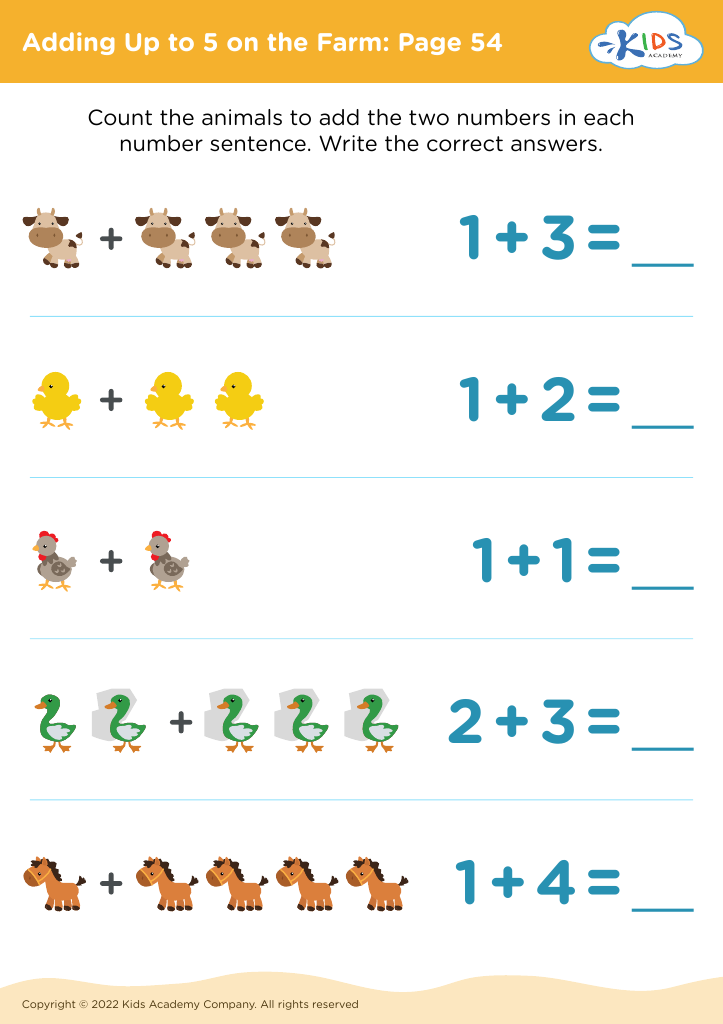
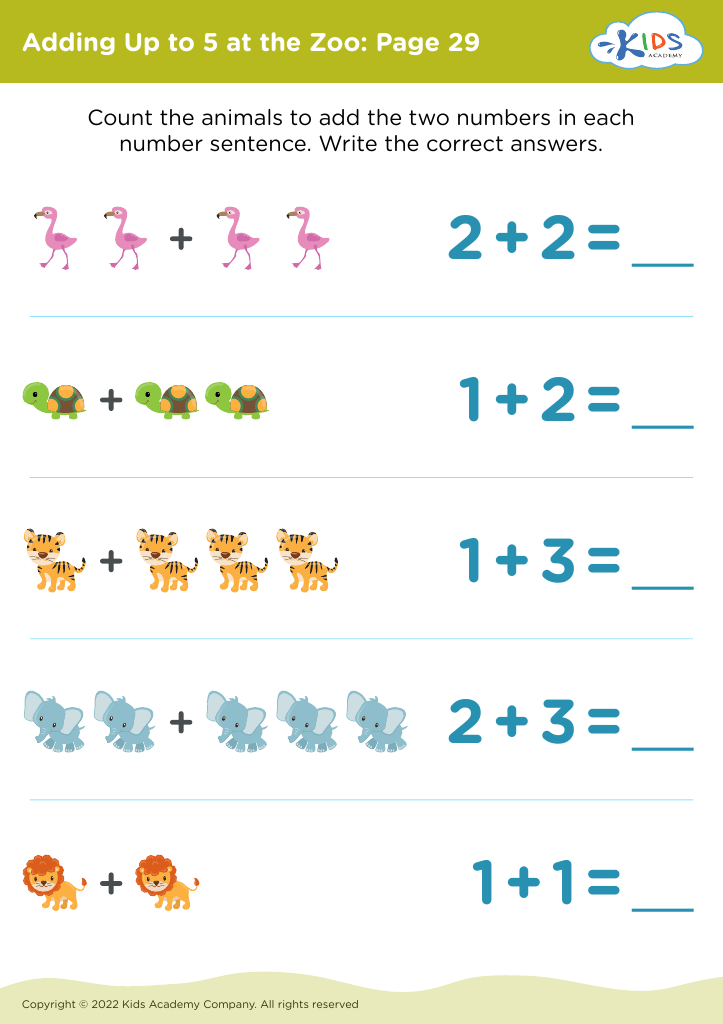
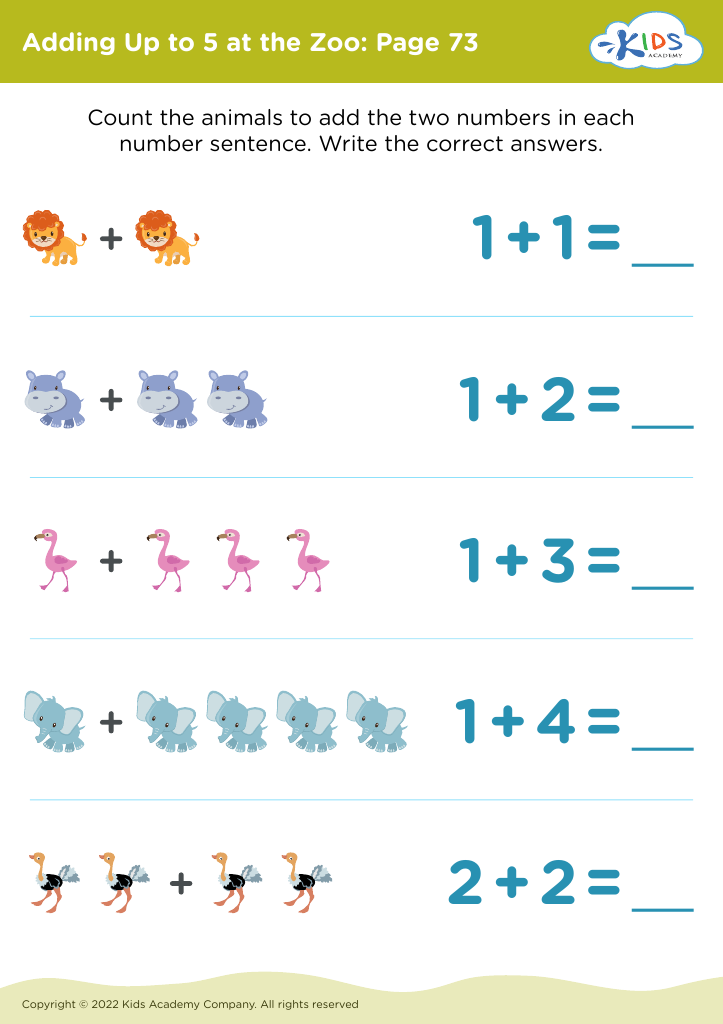
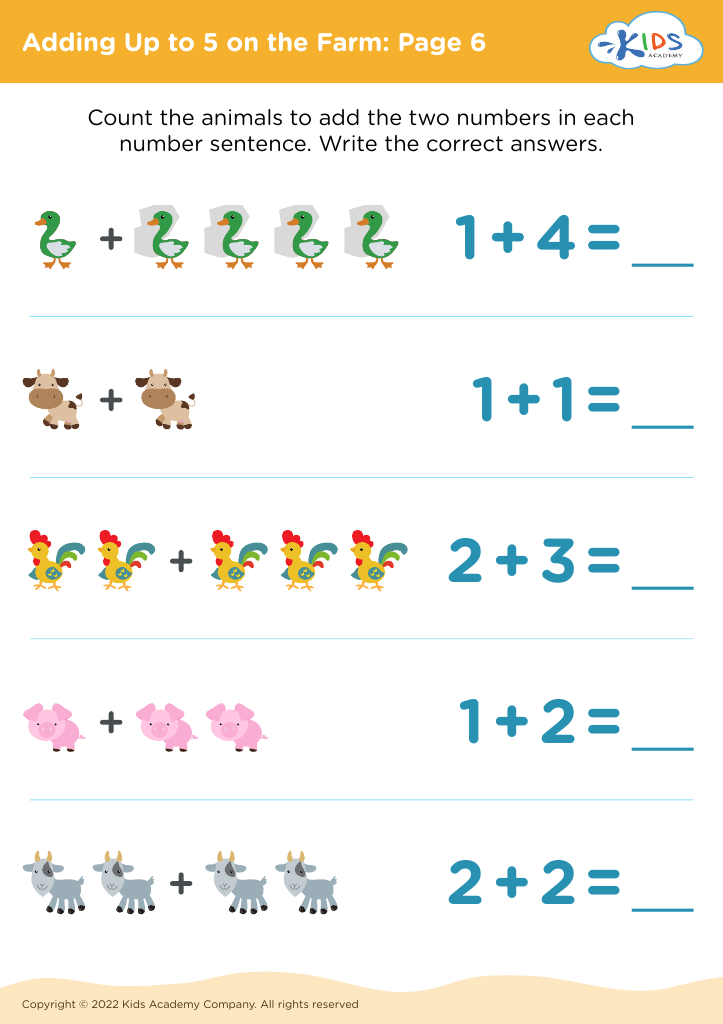
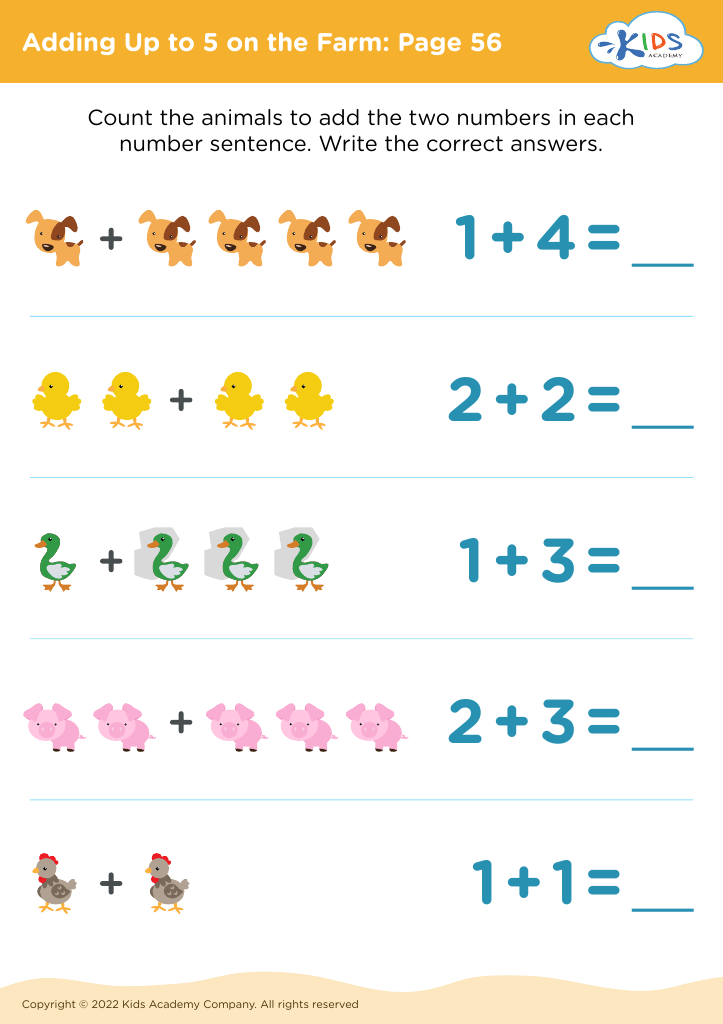
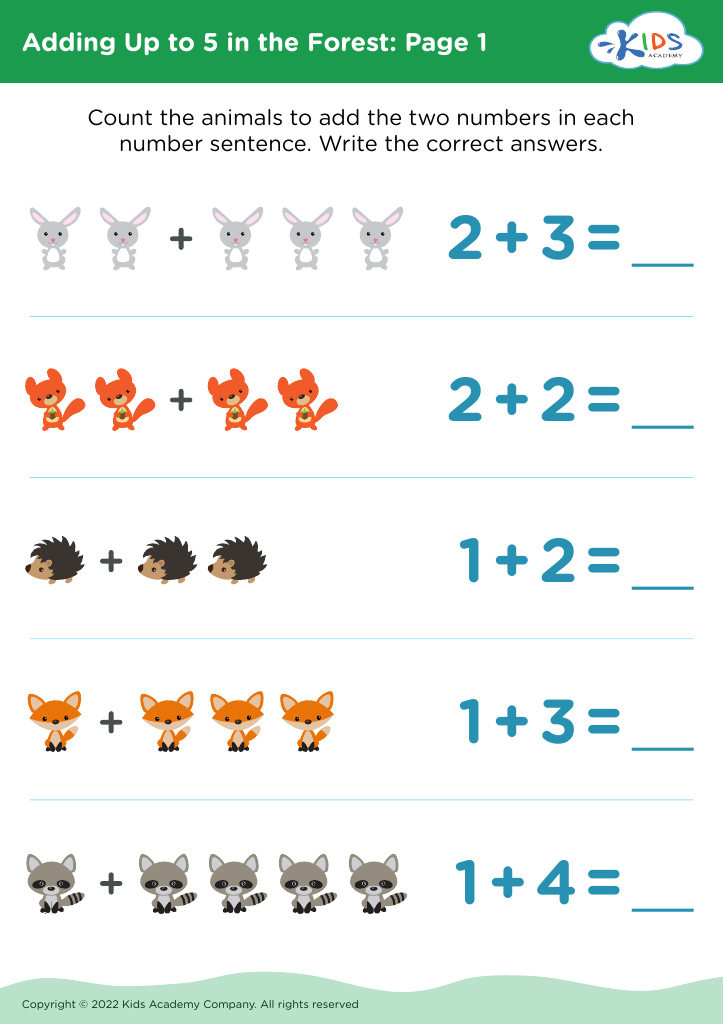
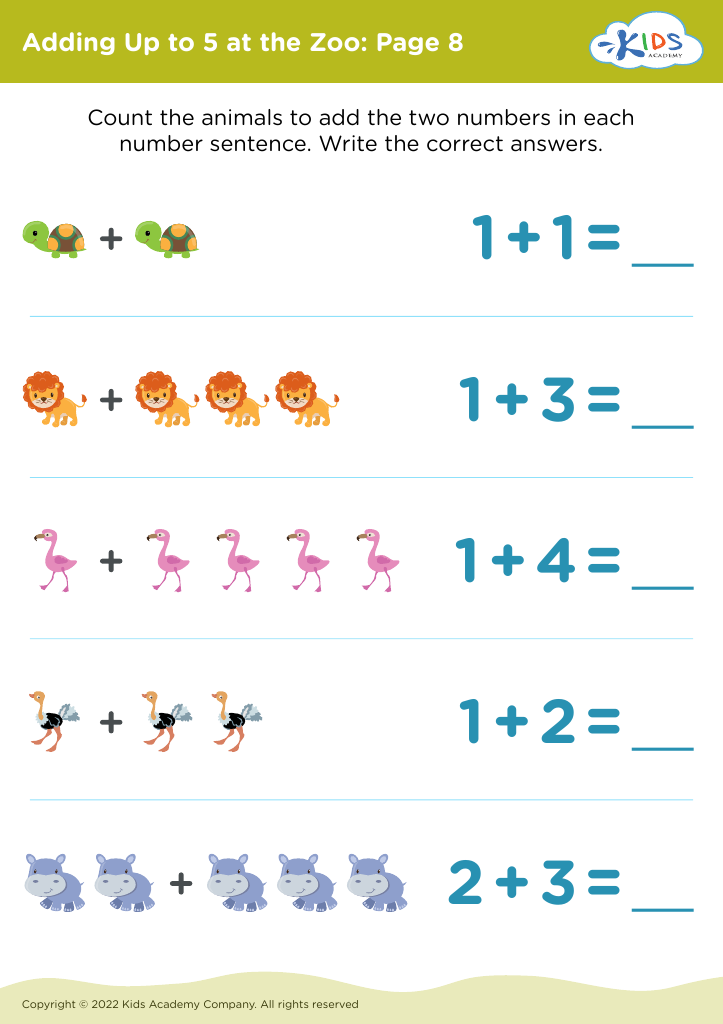
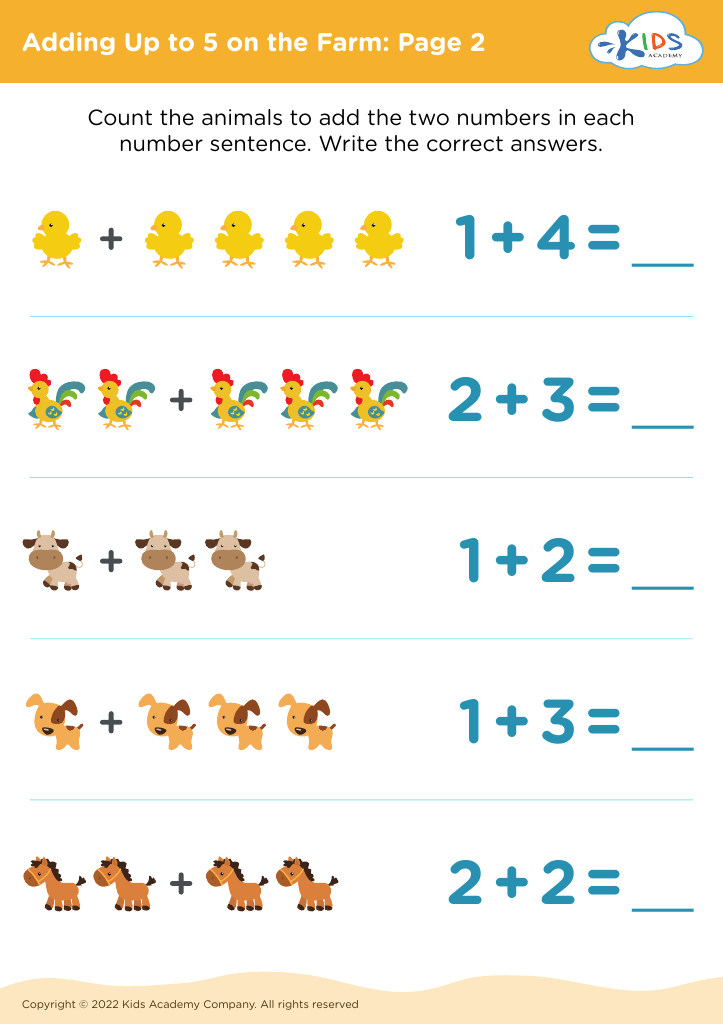
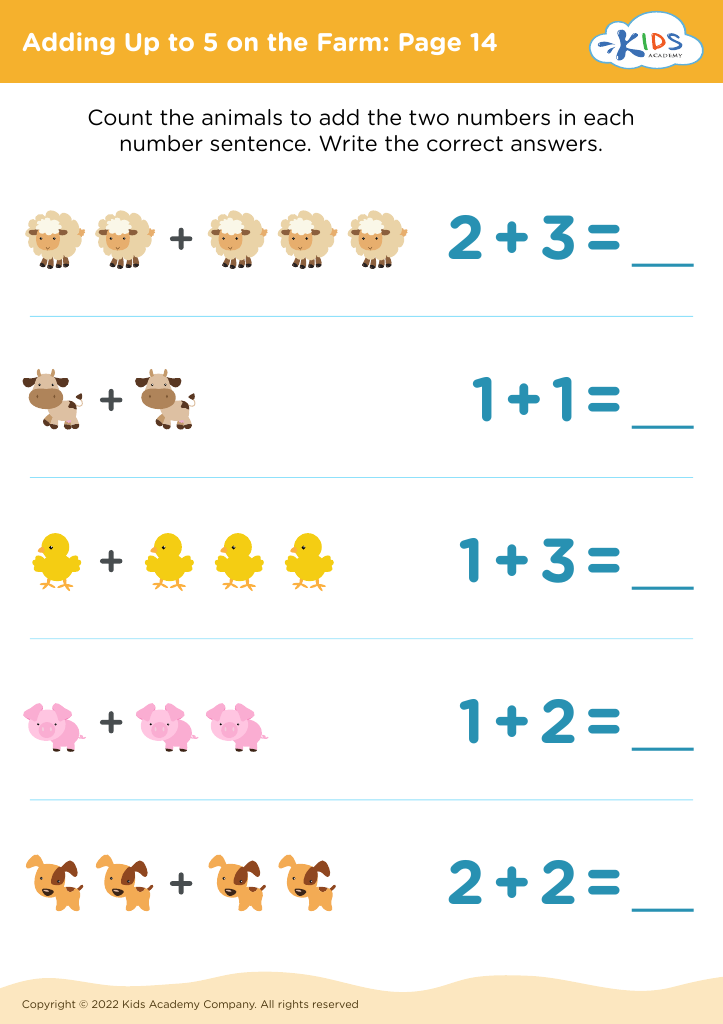
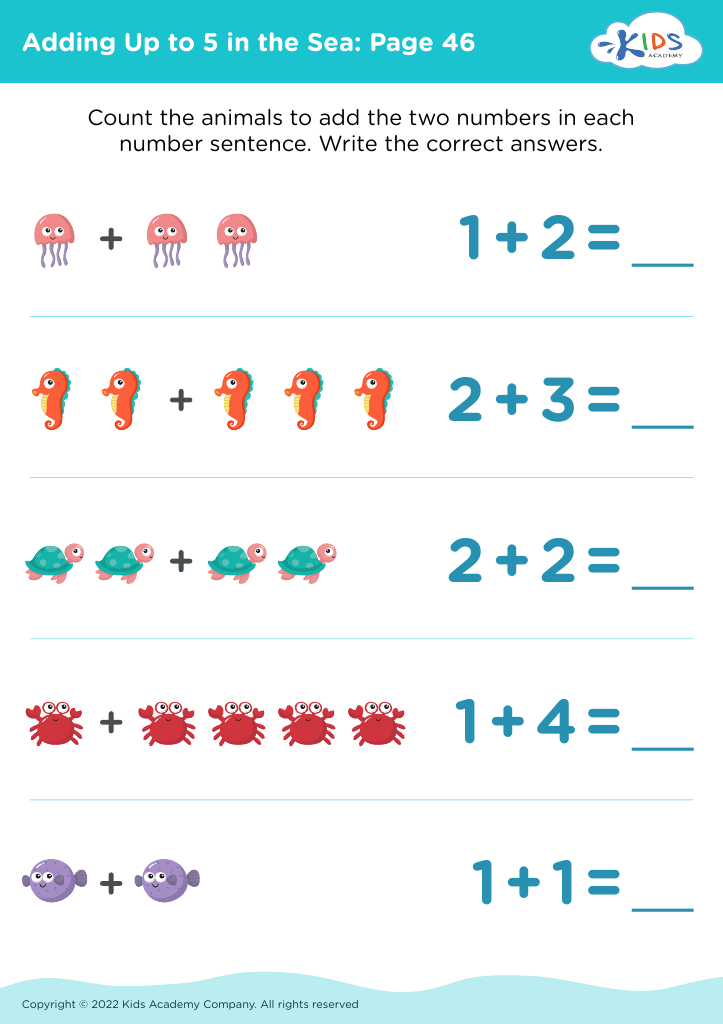
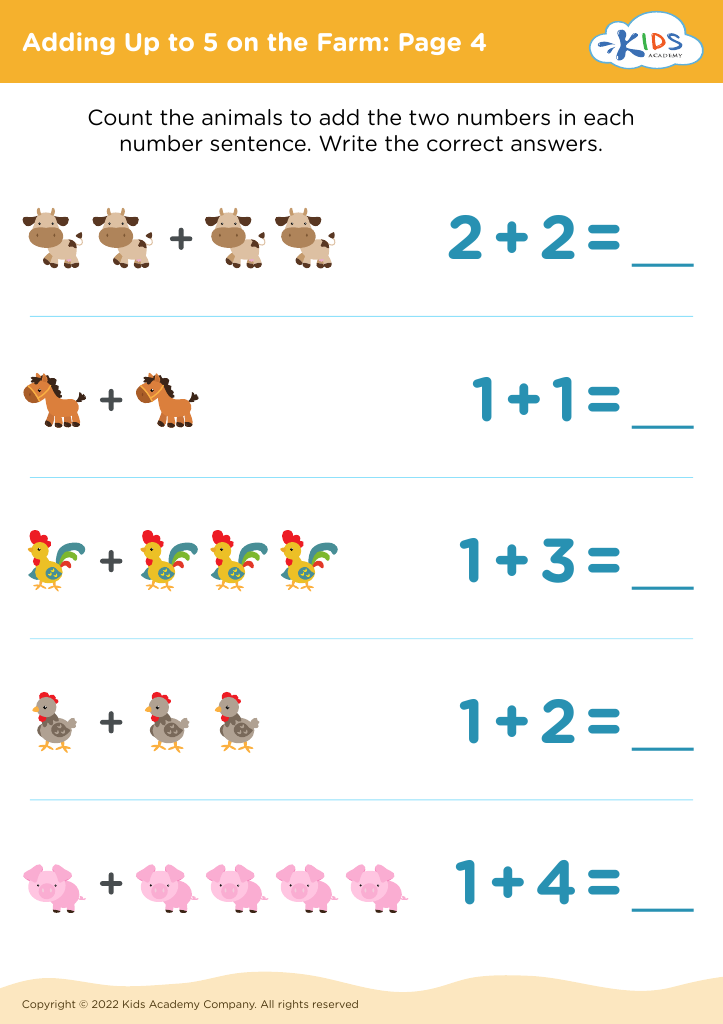
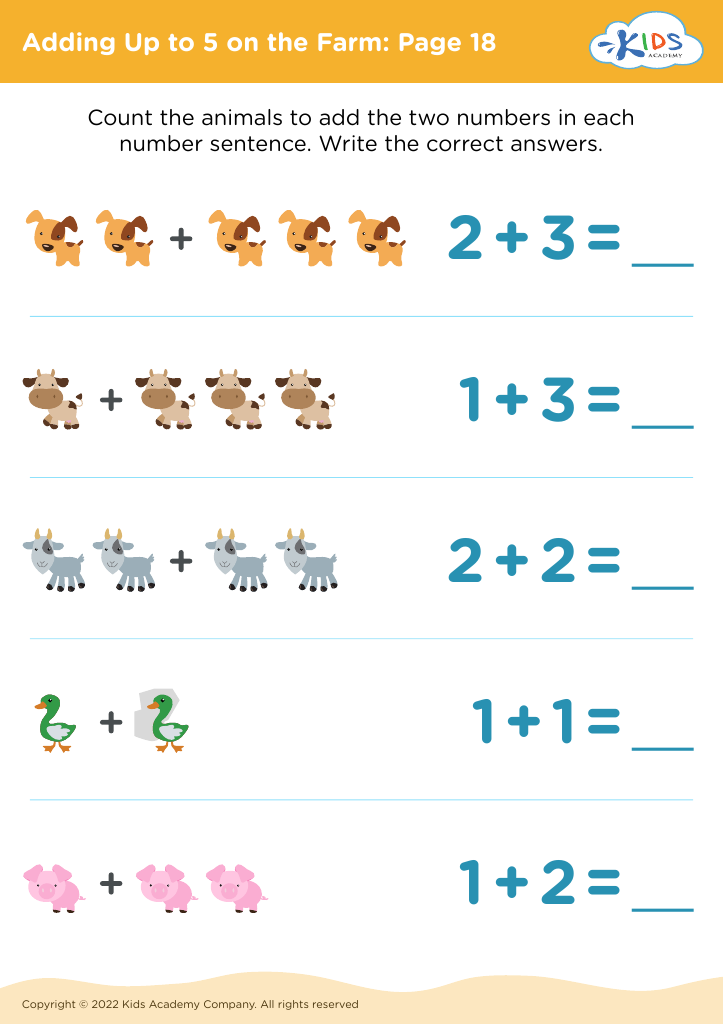
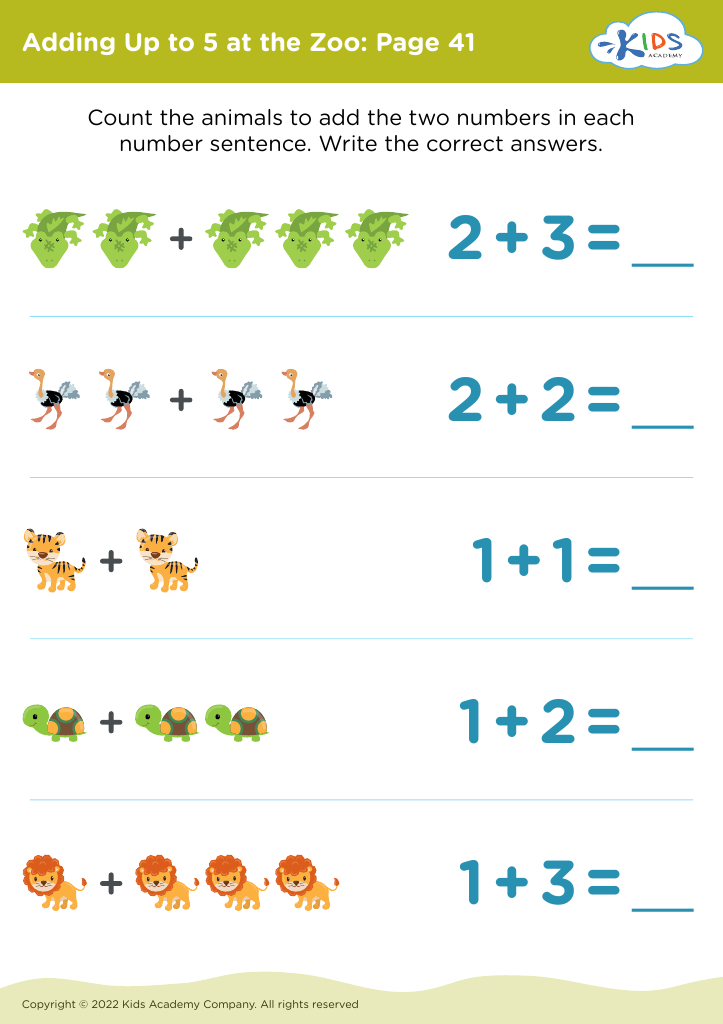
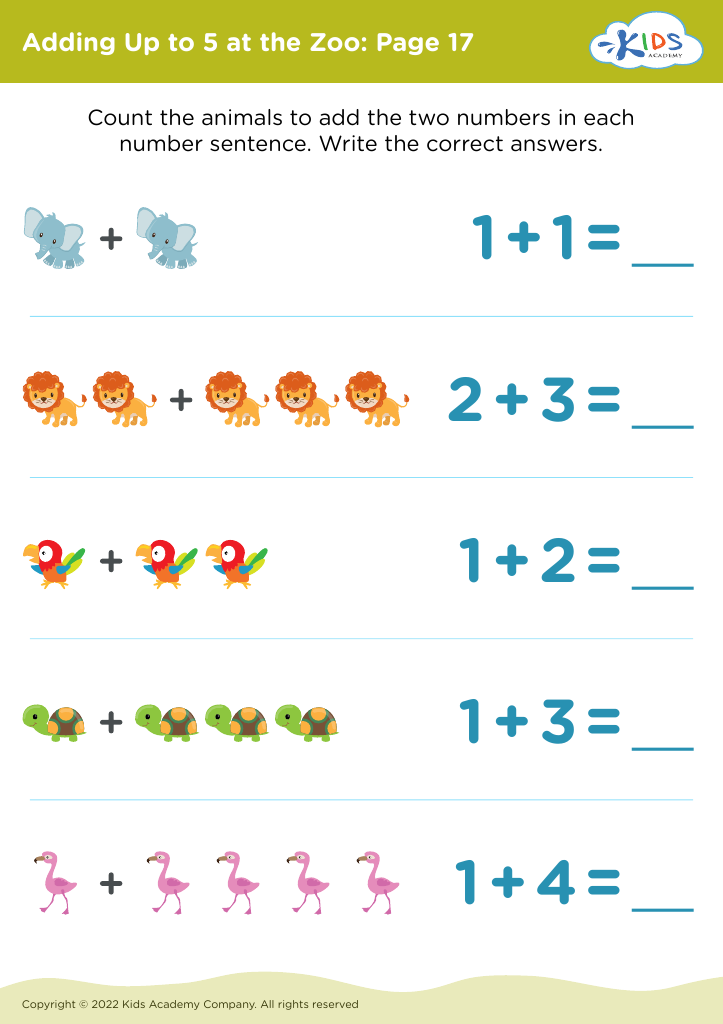
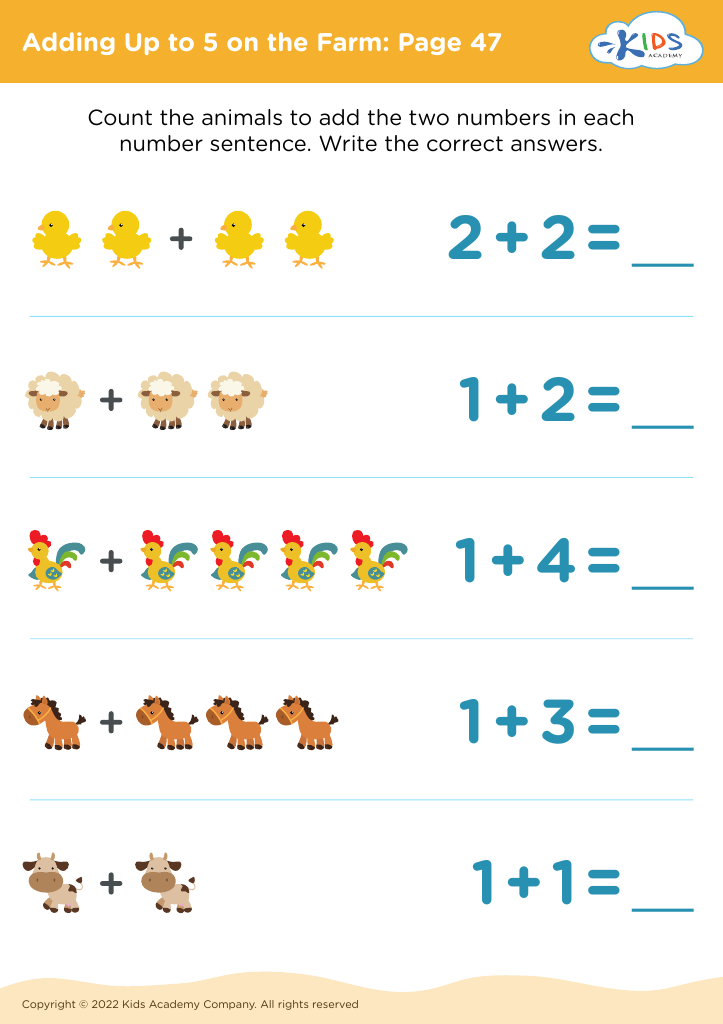
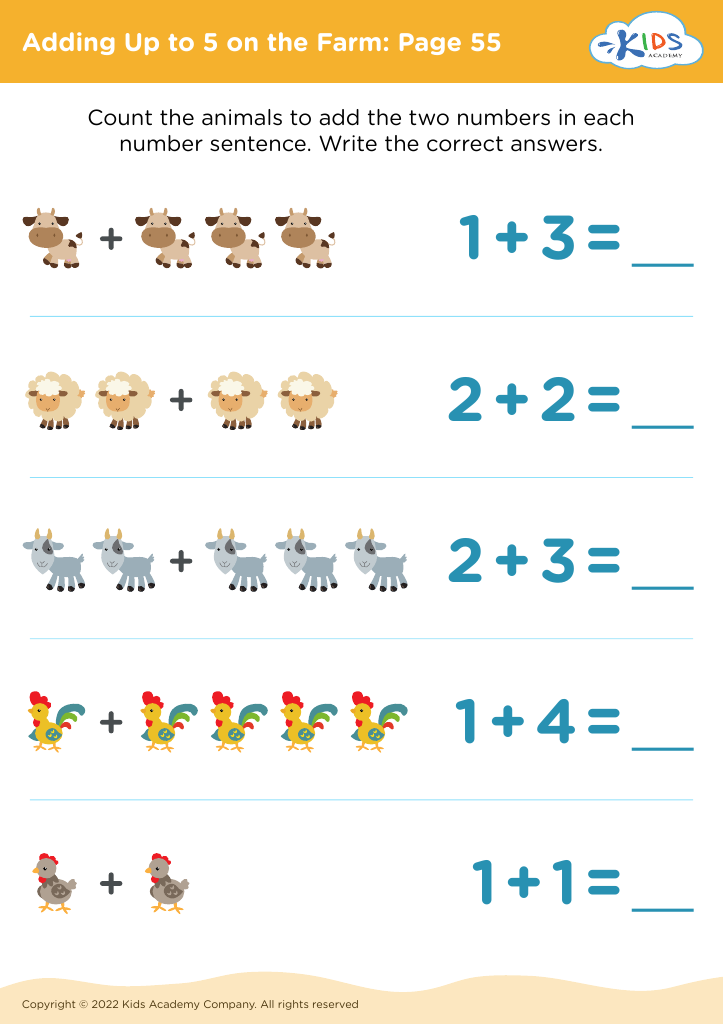
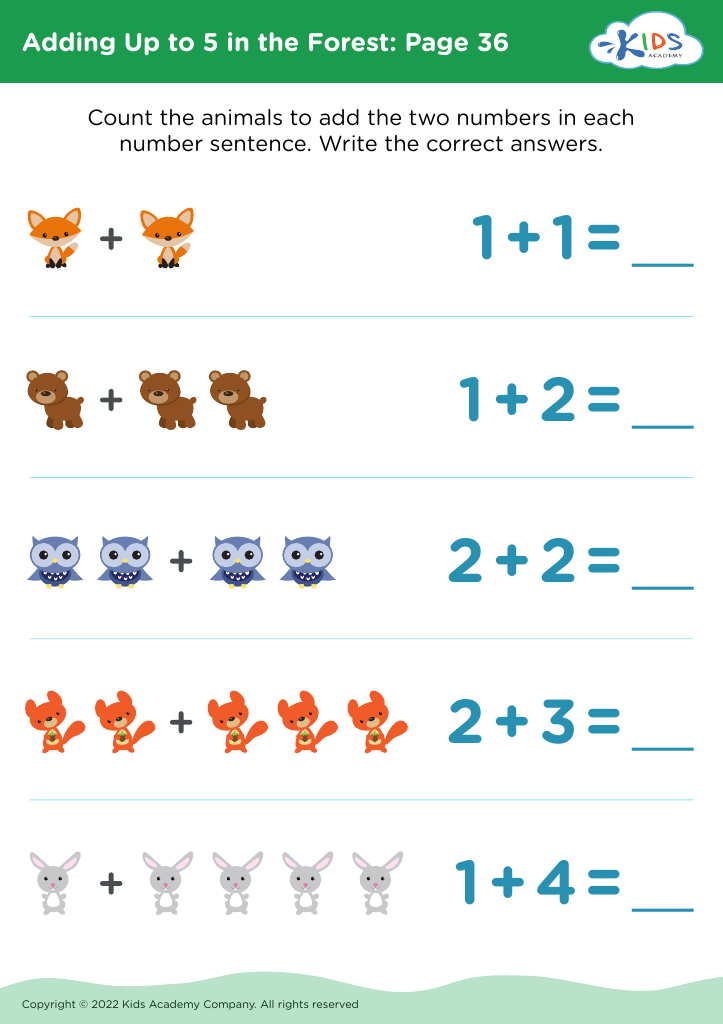
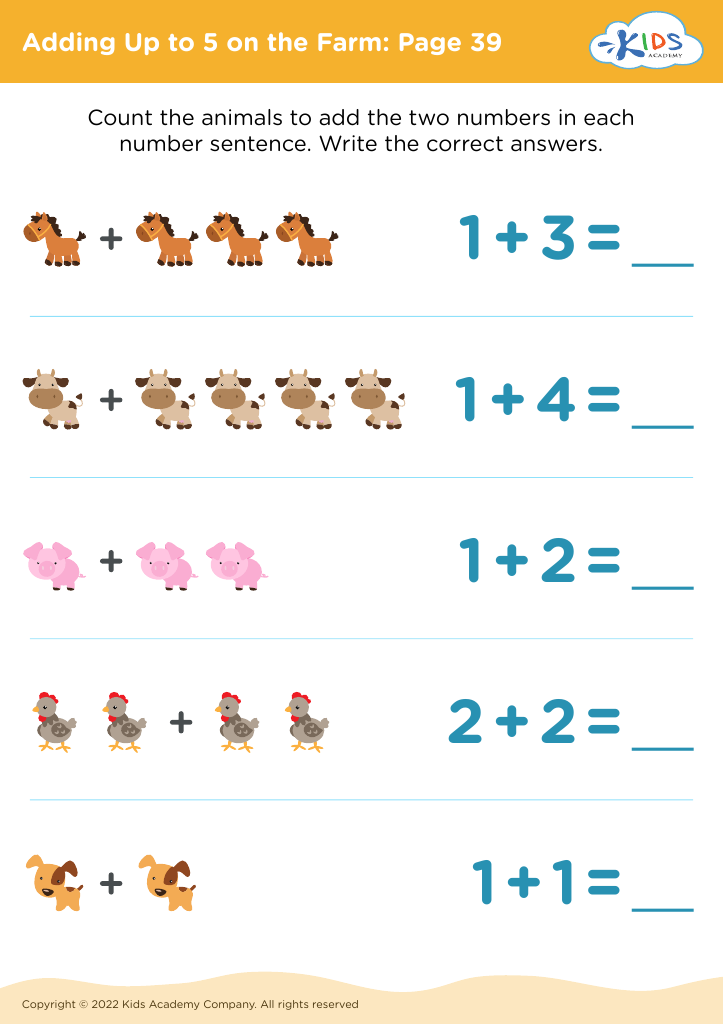
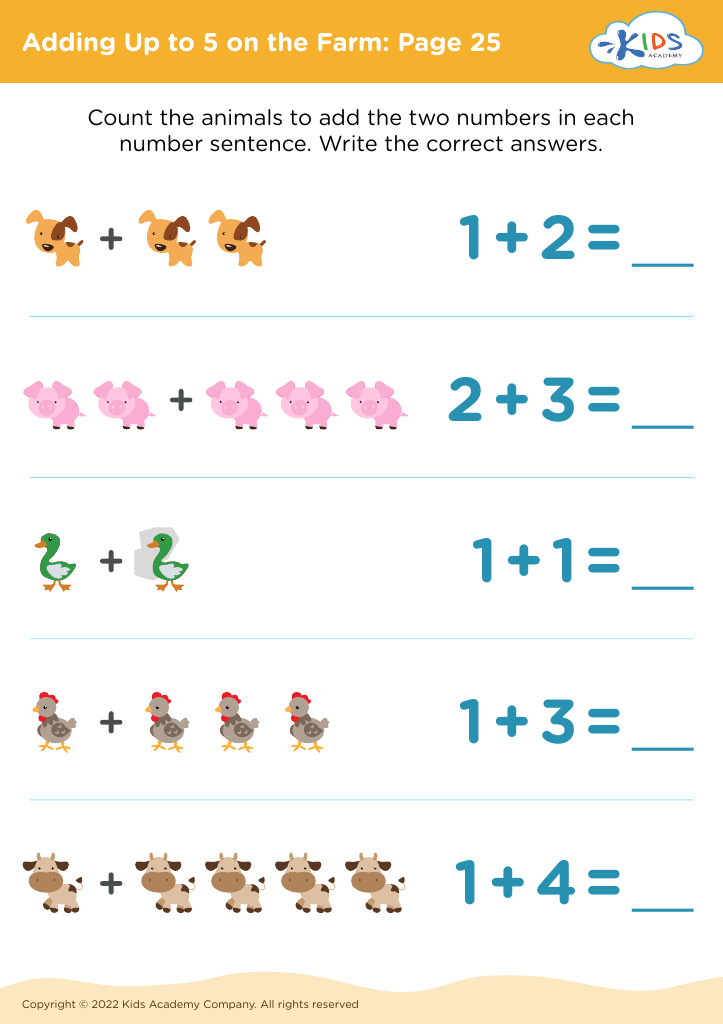
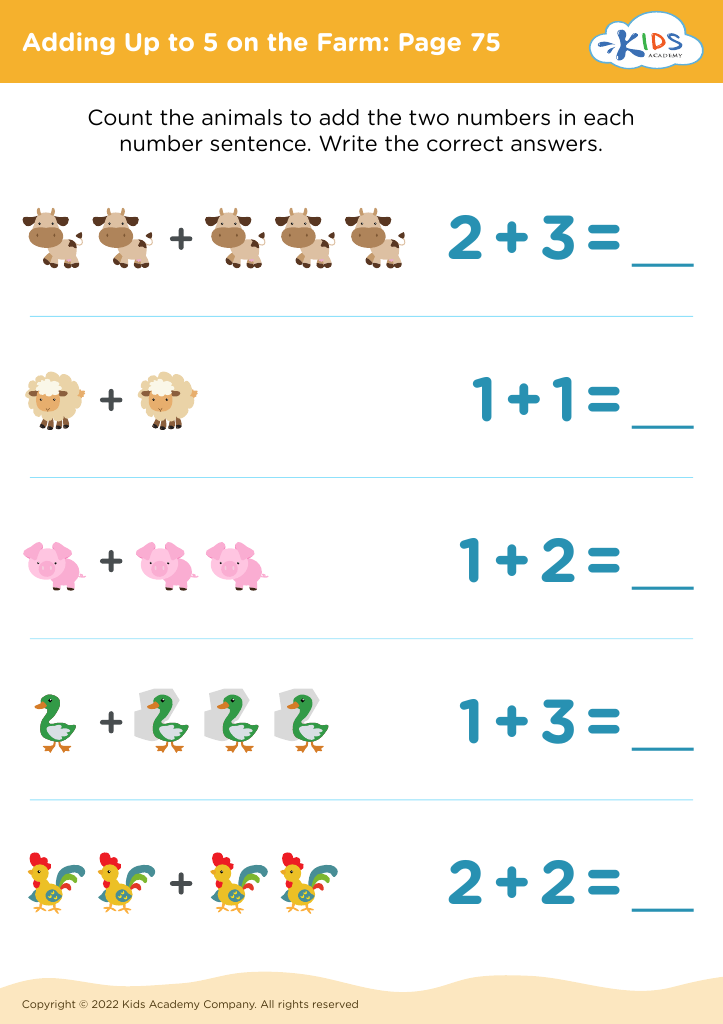
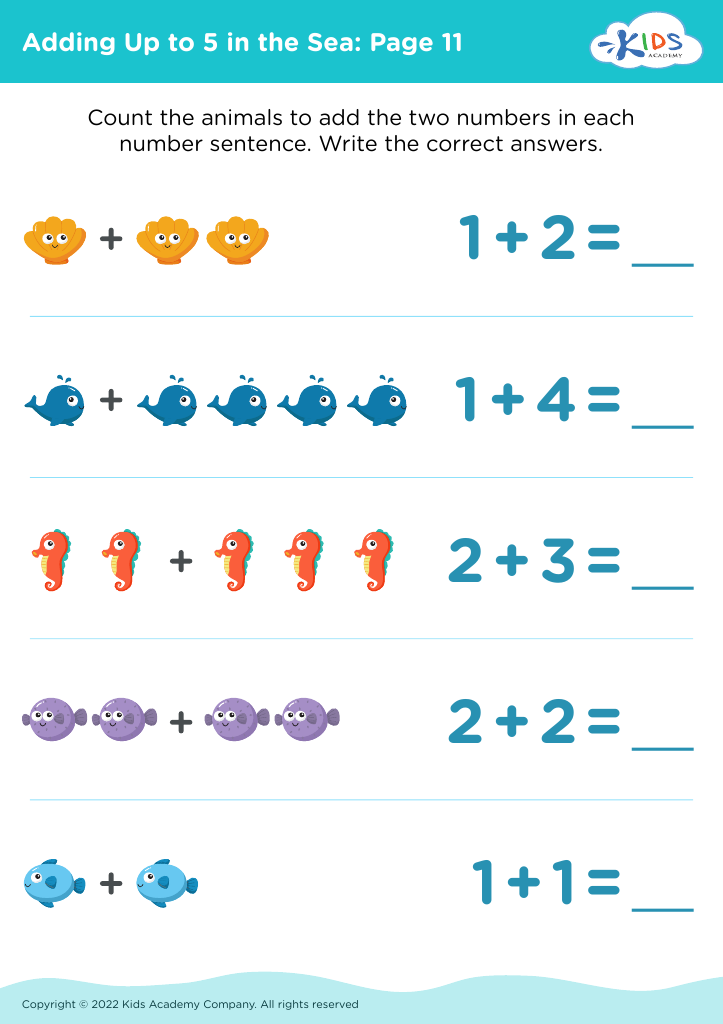
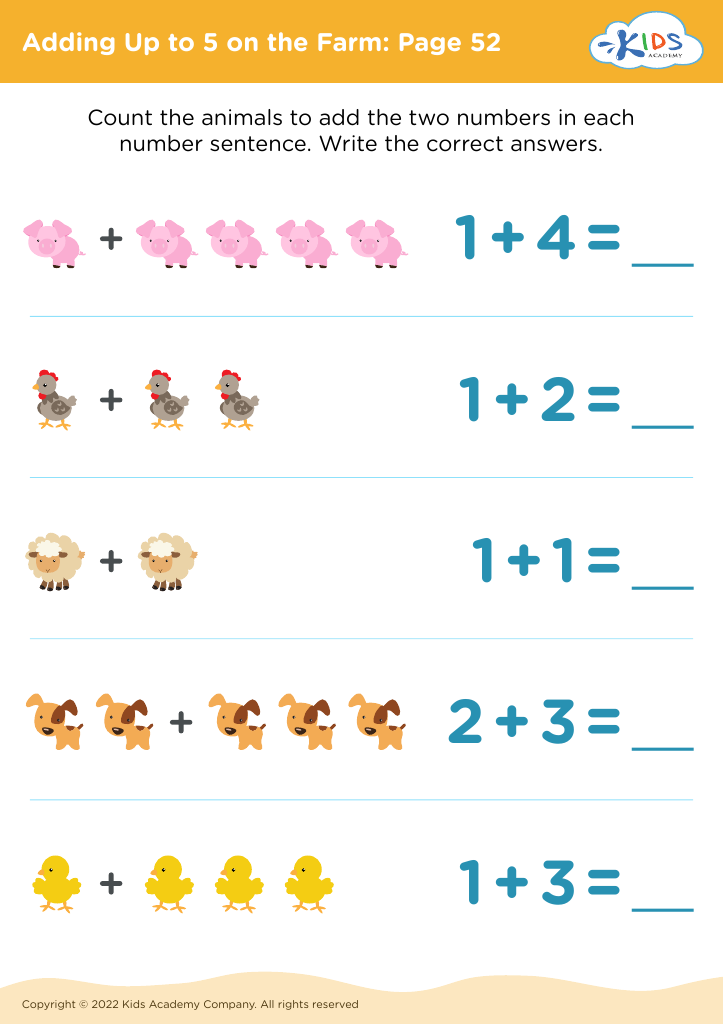
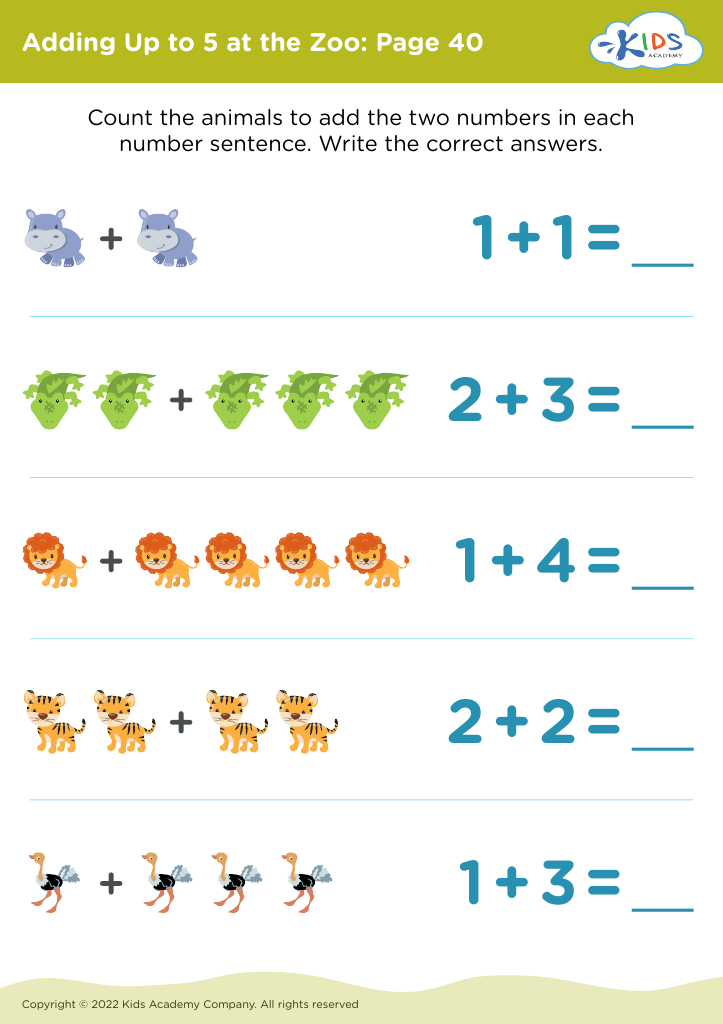
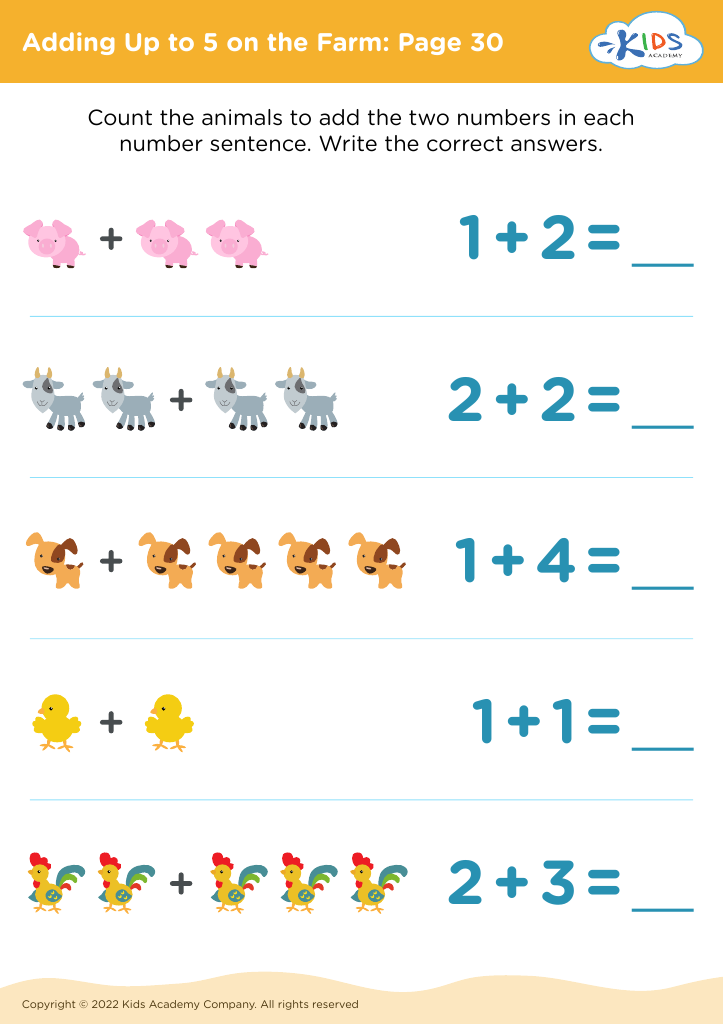








Animal identification activities combined with addition for children aged 3-5 are crucial for early childhood development. First, these activities stimulate cognitive skills by intertwining math concepts with engaging subjects like animals, making learning more appealing. At this young age, children are naturally curious about the world around them, and incorporating familiar creatures boosts interest and motivation.
Furthermore, animal identification fosters vocabulary acquisition as children learn the names and characteristics of various animals, enhancing their language skills. This increased vocabulary paves the way for better communication and comprehension as they grow.
Additionally, integrating addition into animal identification promotes foundational math skills. Simple addition tasks involving animals, such as counting the number of legs or grouping animals together, help children develop critical thinking and problem-solving skills while having fun.
Moreover, these activities support social skills when done in group settings, encouraging teamwork as children share their findings and work collaboratively on addition problems. Parents and teachers who prioritize such integrated learning experiences help build a solid foundation for children's academic success, social development, and a lifelong love of learning. By caring about and fostering these activities, they significantly contribute to holistic growth during this vital stage of development.








