Basic math concepts Addition Worksheets for Ages 3-5
11 filtered results
-
From - To
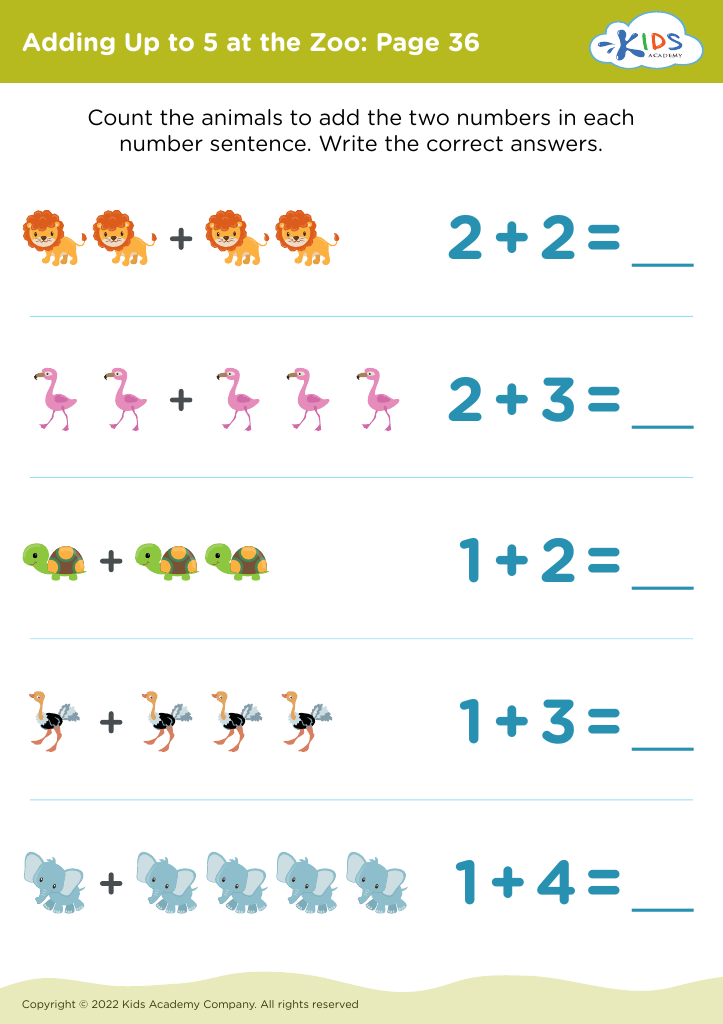
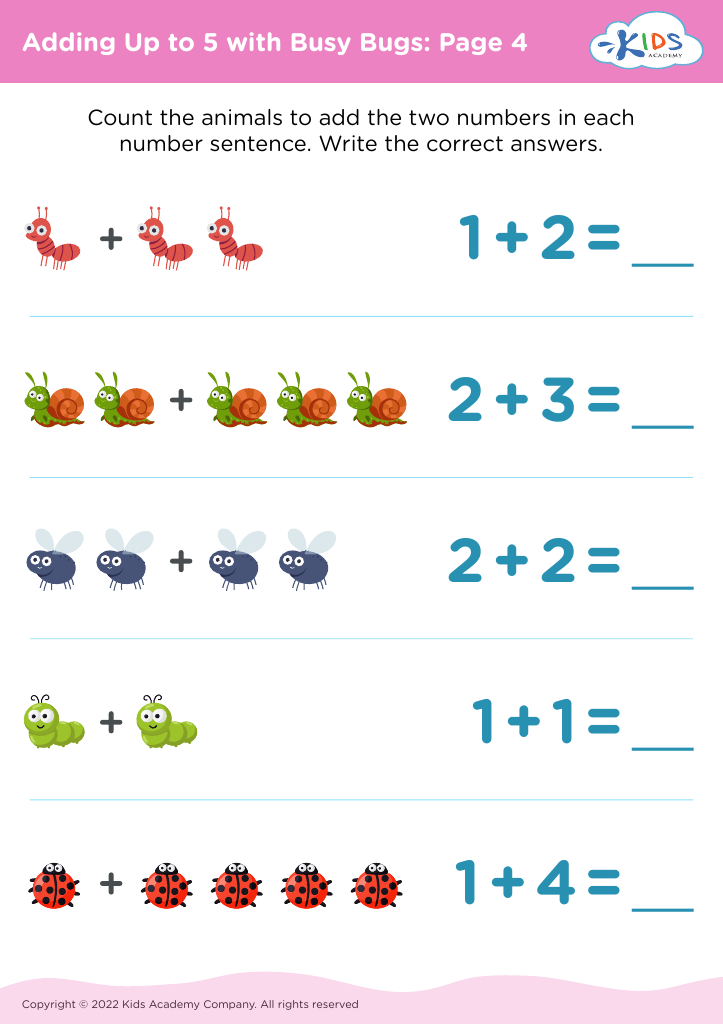
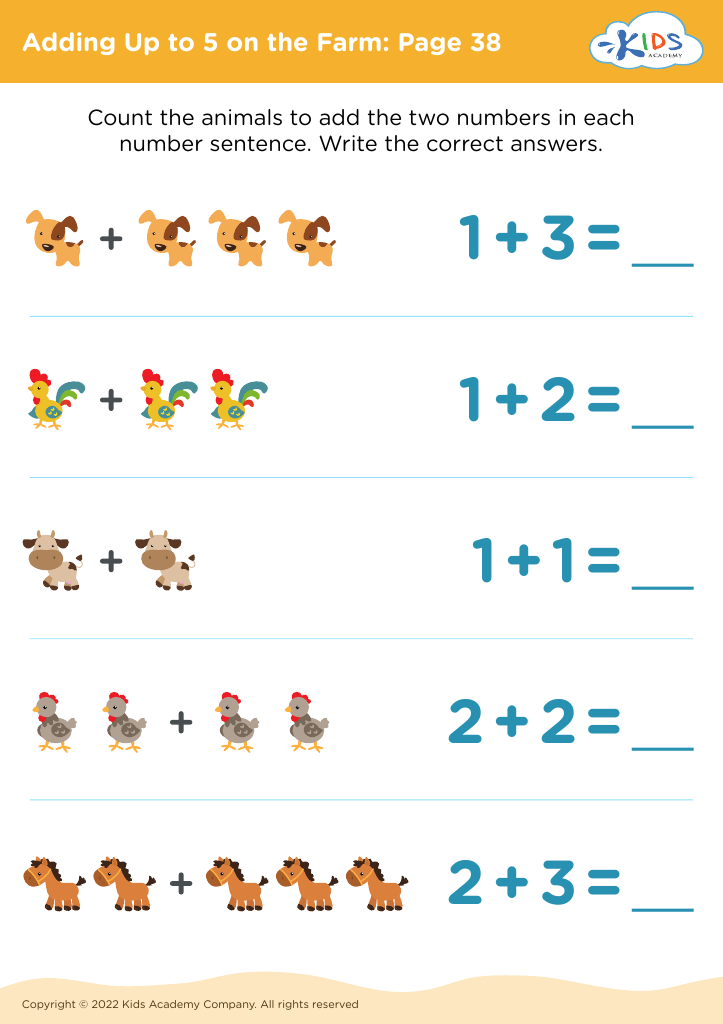
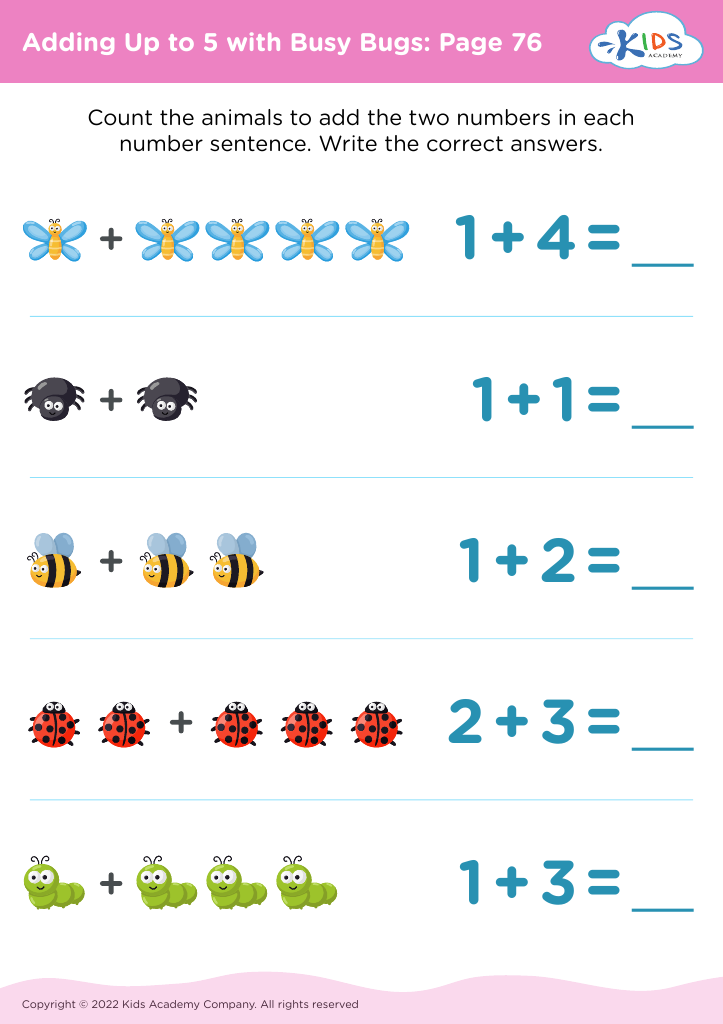
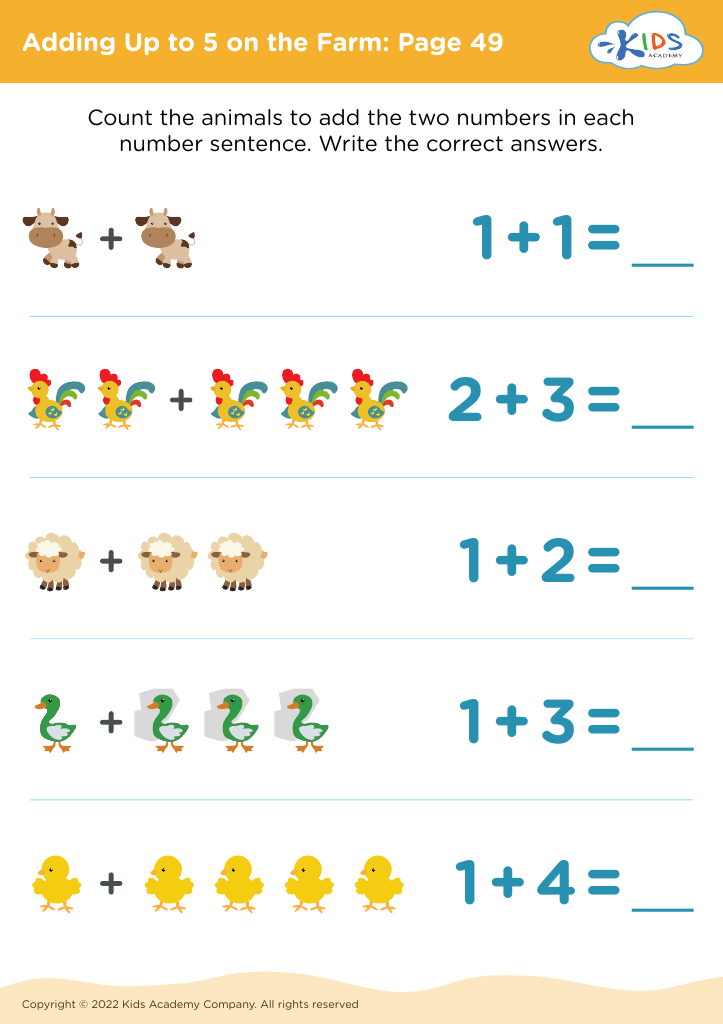
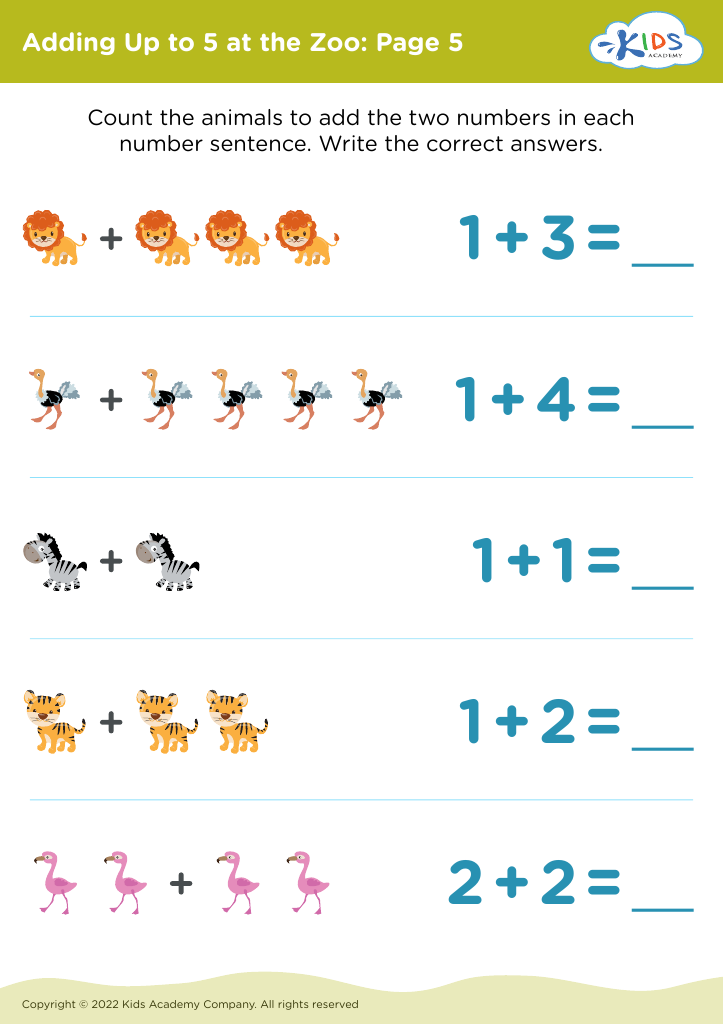
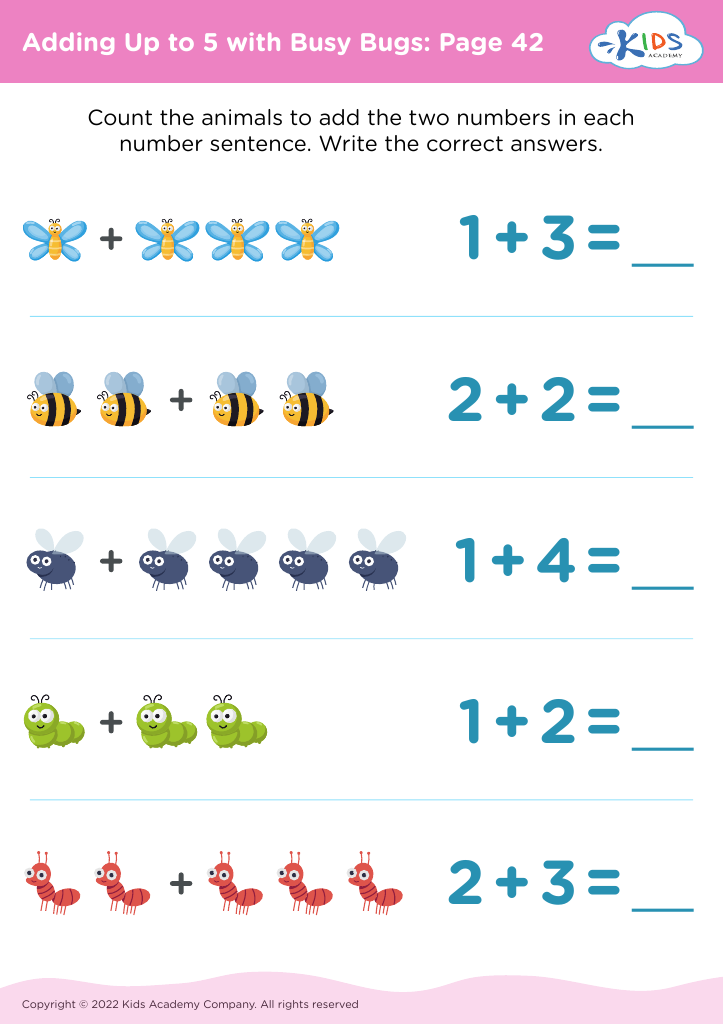
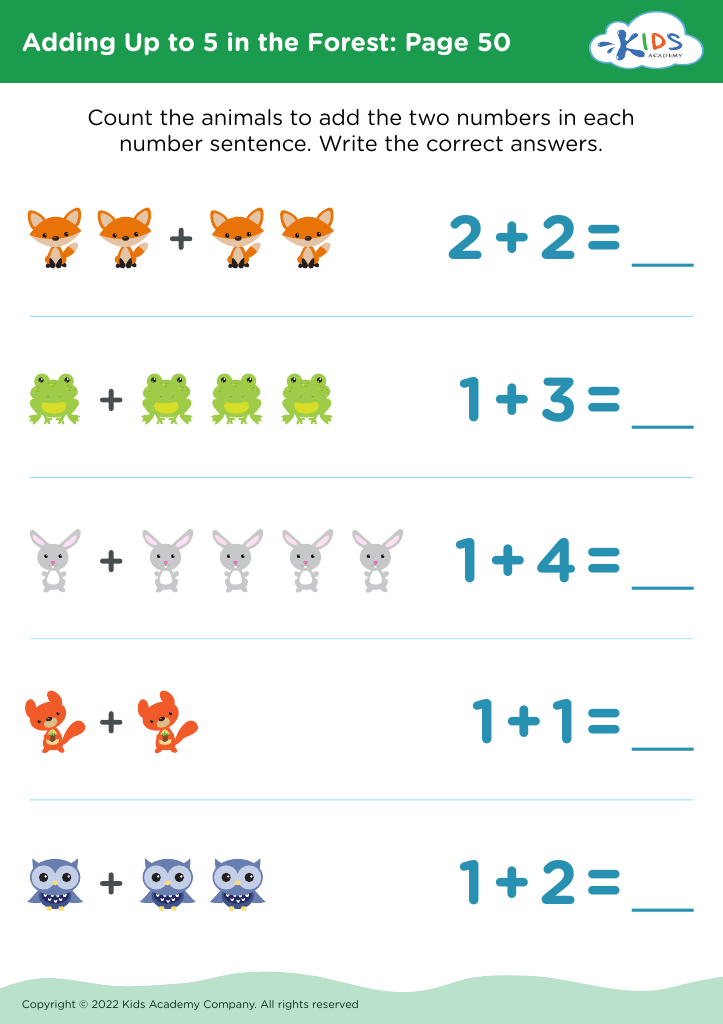
Welcome to our “Basic Math Concepts: Addition Worksheets for Ages 3-5” page! Designed specifically for young learners, our engaging worksheets make mastering addition both fun and effective. These colorful activities help children develop essential math skills through interactive exercises that promote critical thinking and problem-solving. Tailored for preschool and kindergarten children, our worksheets include various formats, such as counting objects, picture illustrations, and number lines to reinforce learning concepts. By giving kids the tools they need to confidently tackle addition, we empower parents and educators to support their early math journey. Explore our collection and stimulate a love for learning today!
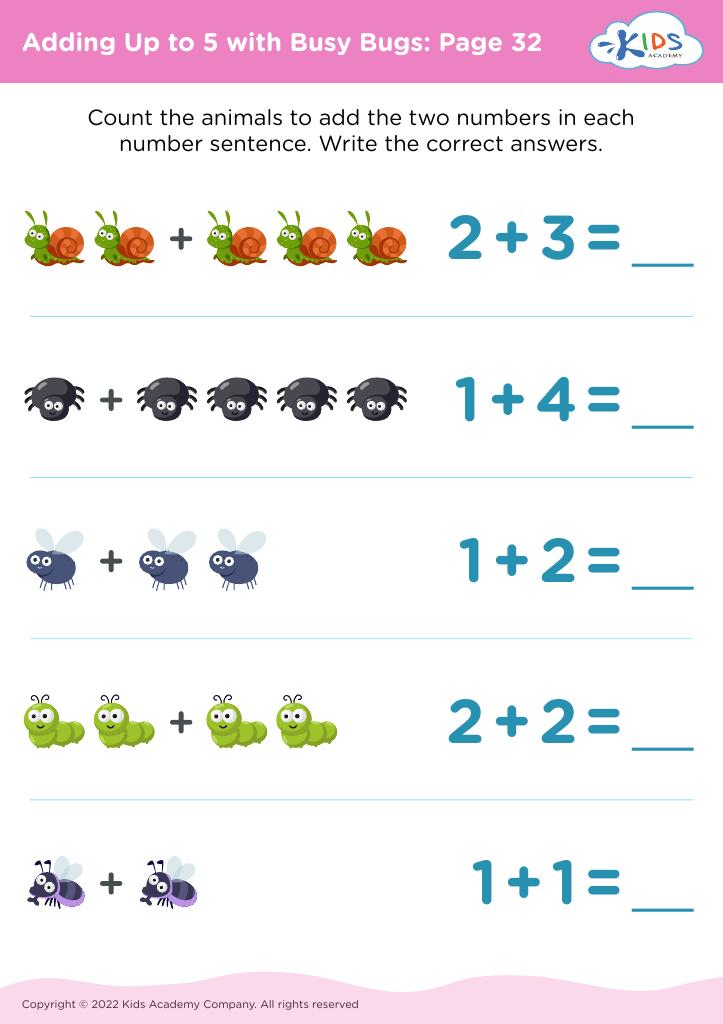
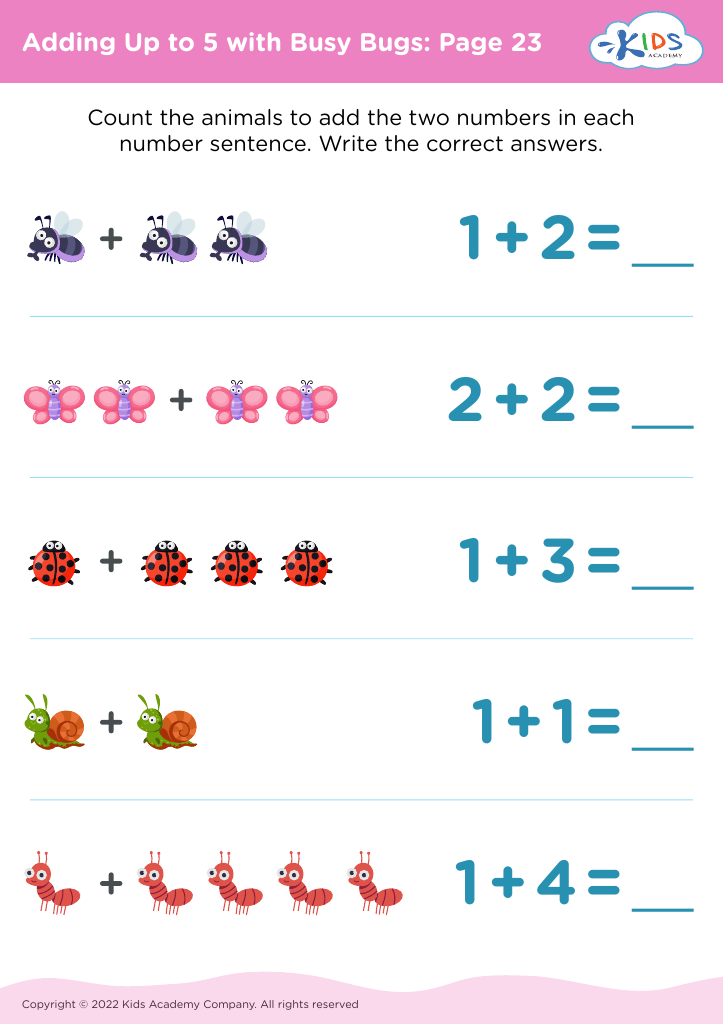
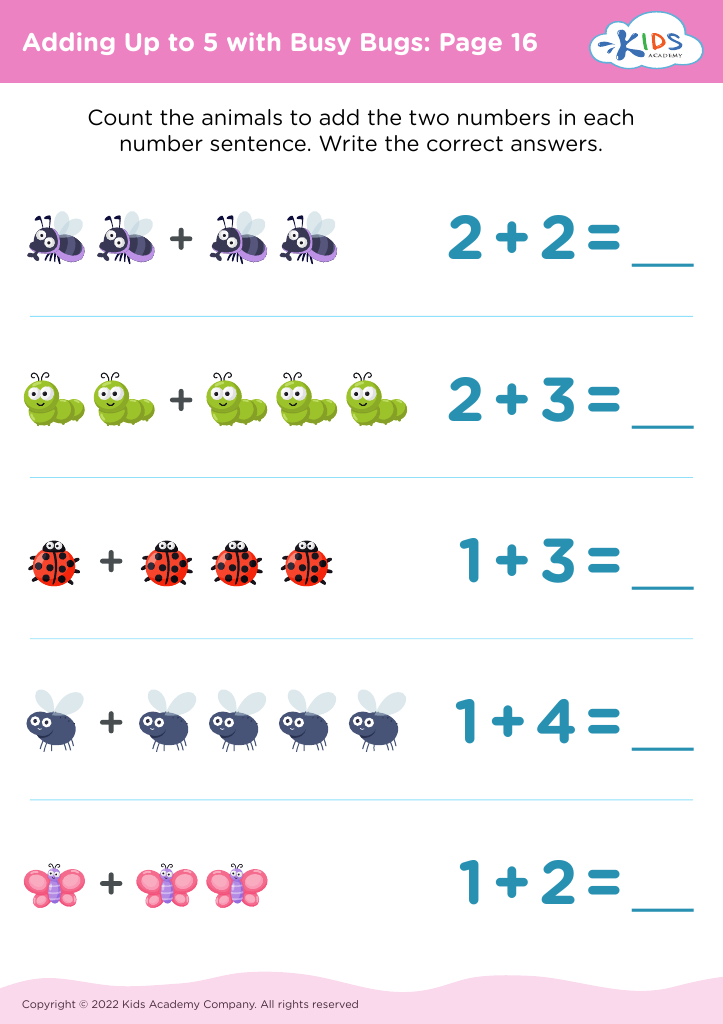








Parents and teachers should be attentive to basic math concepts like addition for children aged 3-5 because these skills are foundational for future learning. Mastering early addition promotes cognitive development and helped children develop problem-solving abilities. At this age, children are naturally curious and love interactive learning, making math an engaging and enjoyable experience.
Furthermore, when children learn basic addition, they gain confidence in their abilities and a sense of achievement that fosters a positive attitude toward math. Early interactions with numbers also build a strong vocabulary around mathematical terms, which supports language development.
Additionally, grasping early math concepts can enhance critical thinking skills, encouraging children to explore and reason about relationships between numbers and objects in their environment. This understanding is not just functional; it resonates in daily life scenarios, such as sharing snacks or counting toys, making learning practical and relevant.
Incorporating playful strategies like counting games, songs, and hands-on activities can deepen their comprehension and reinforce their interest in learning. By nurturing these basic skills, parents and teachers lay the groundwork for a passionate and proficient relationship with mathematics in the years to come.








