Counting proficiency Addition Worksheets for Ages 3-5
11 filtered results
-
From - To
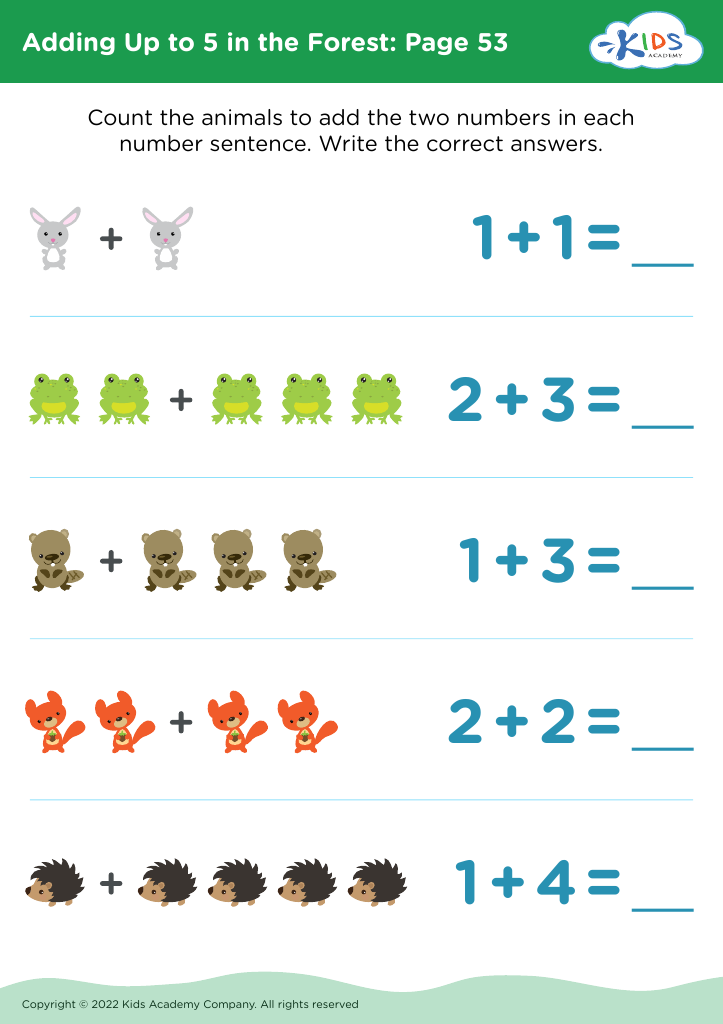
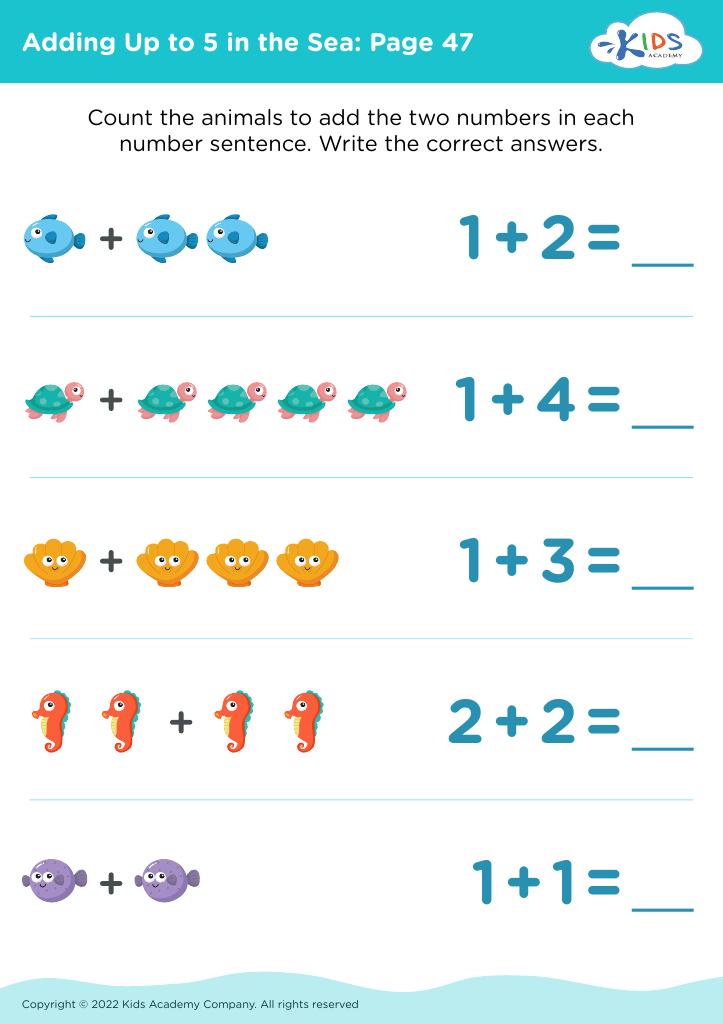
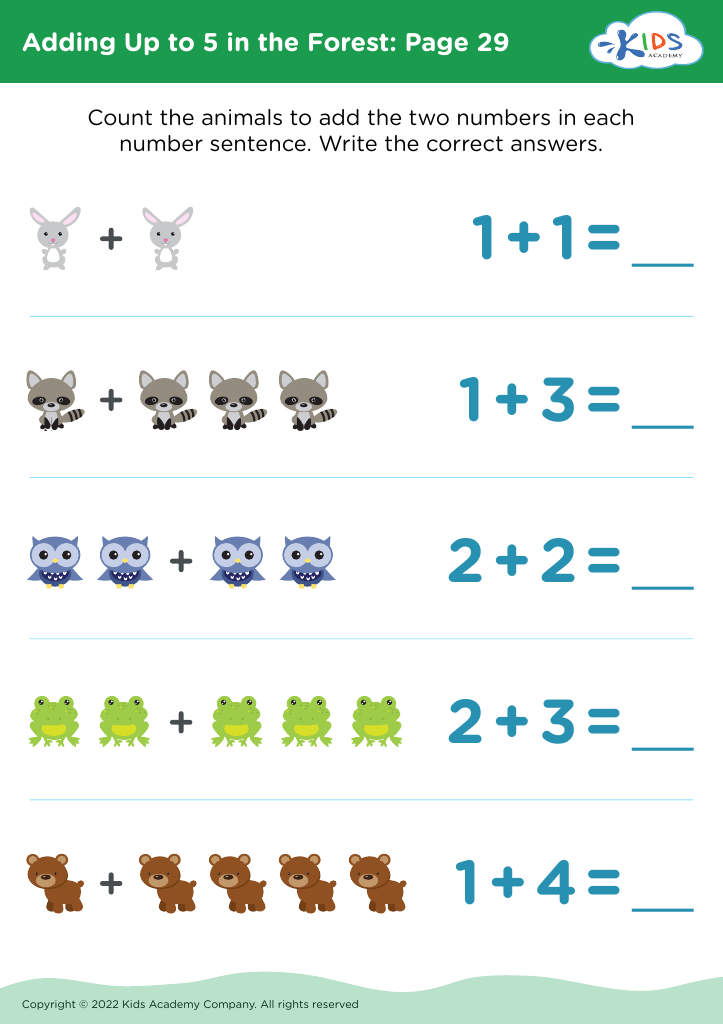
Discover a fun and effective way to boost your child's counting skills with our "Counting Proficiency Addition Worksheets for Ages 3-5" at Kids Academy! These carefully designed worksheets make learning addition enjoyable for young children, enhancing their counting proficiency through engaging activities. Ideal for preschoolers and kindergartners, our resources help build a strong foundation in math by promoting hands-on practice and visual learning. Start your child on the path to mathematical success with our colorful, easy-to-use worksheets, created to foster a love for numbers while mastering the basics of addition. Join us at Kids Academy today!
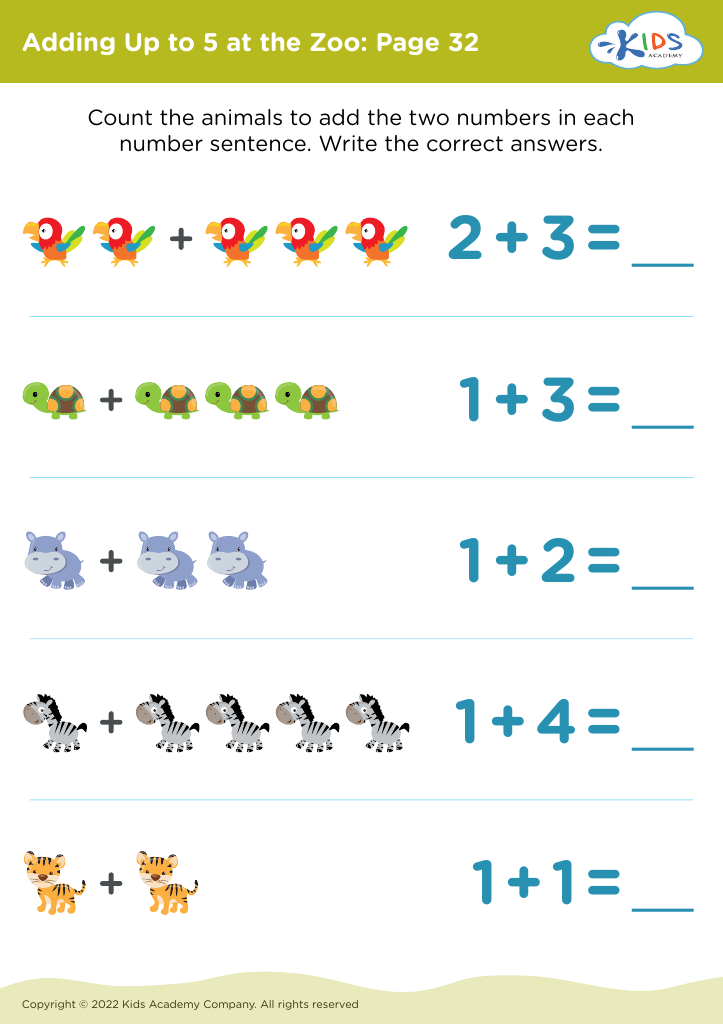
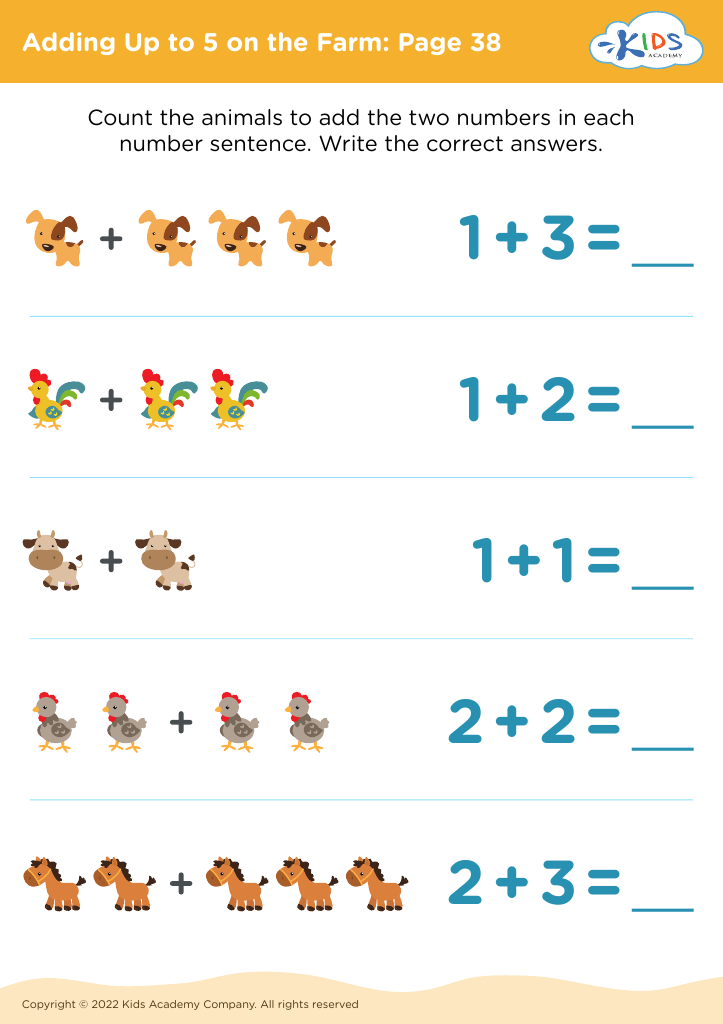
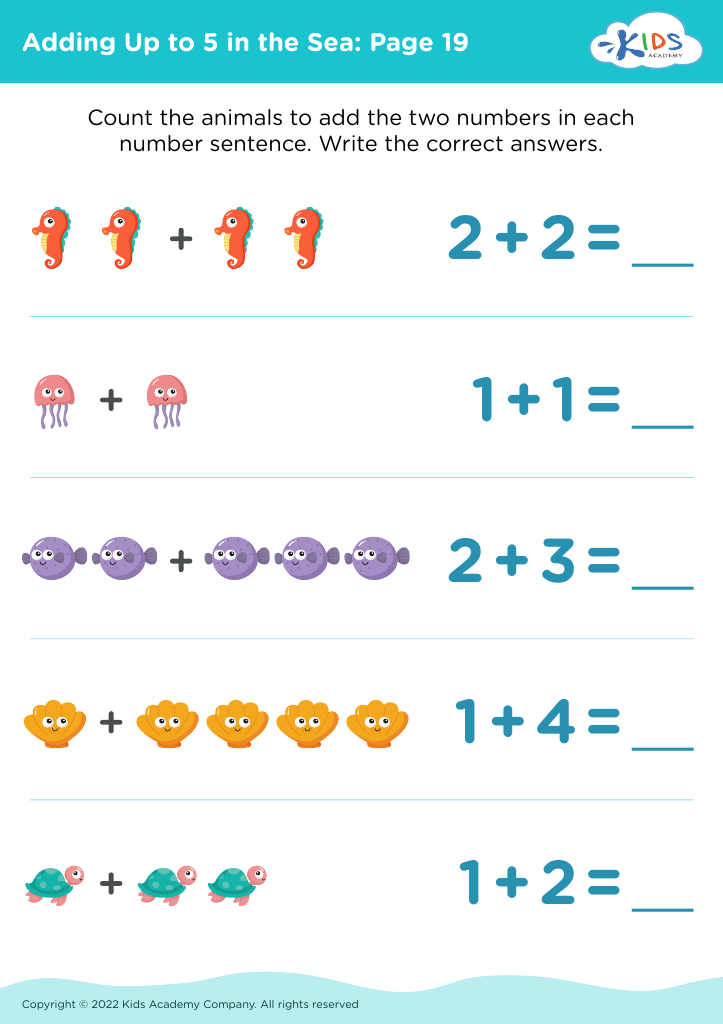
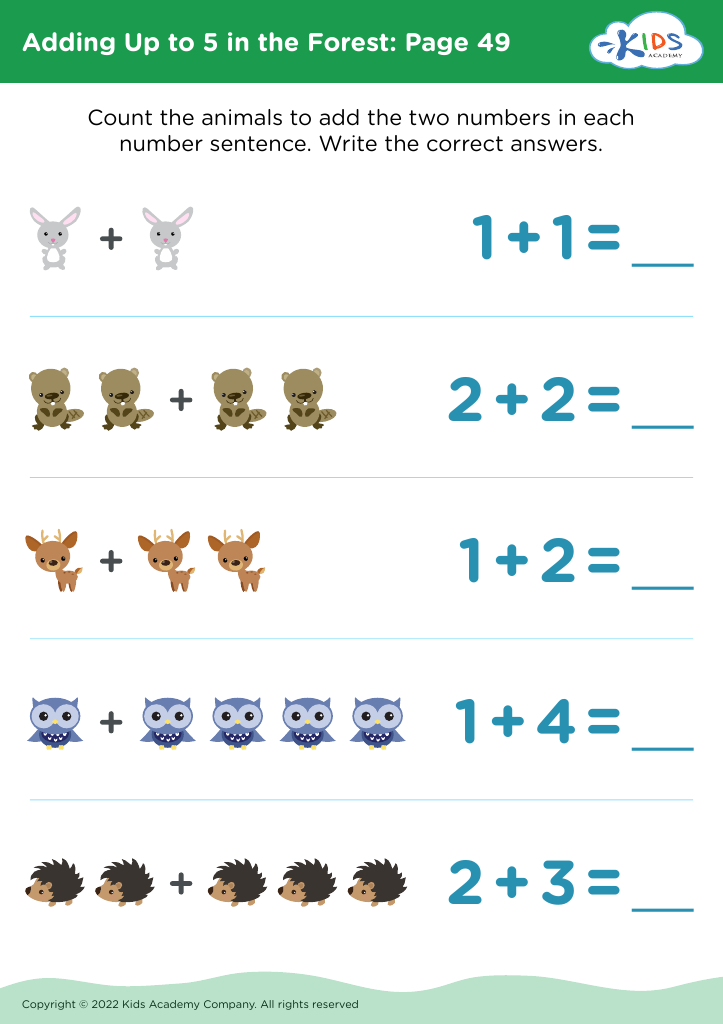
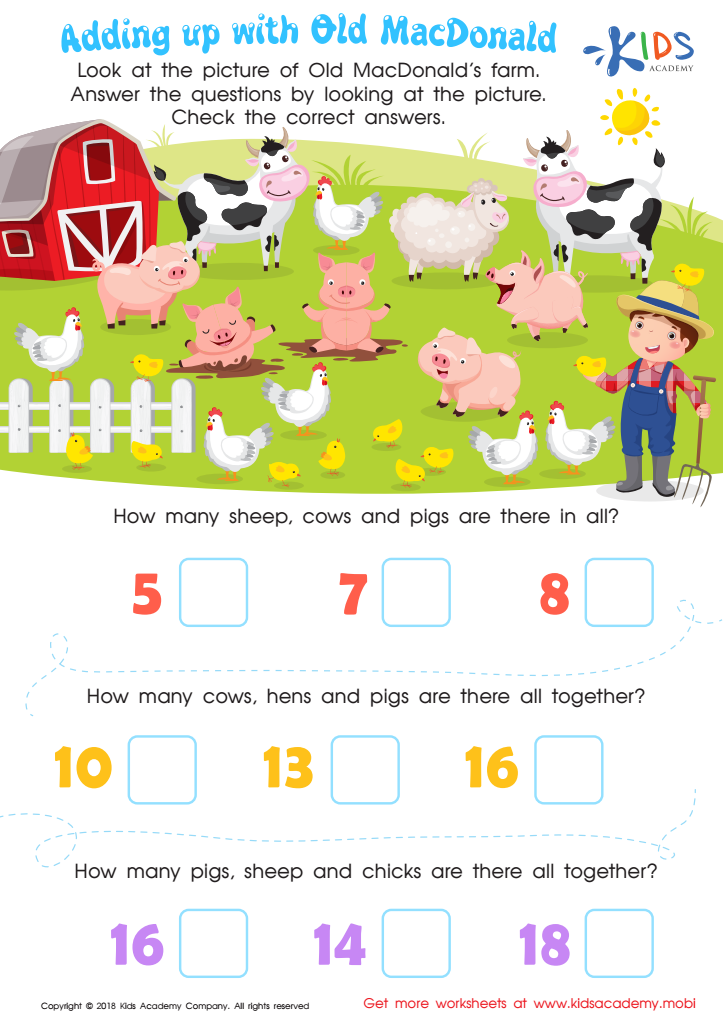
Adding Up with Old MacDonald Worksheet
 Assign to My Students
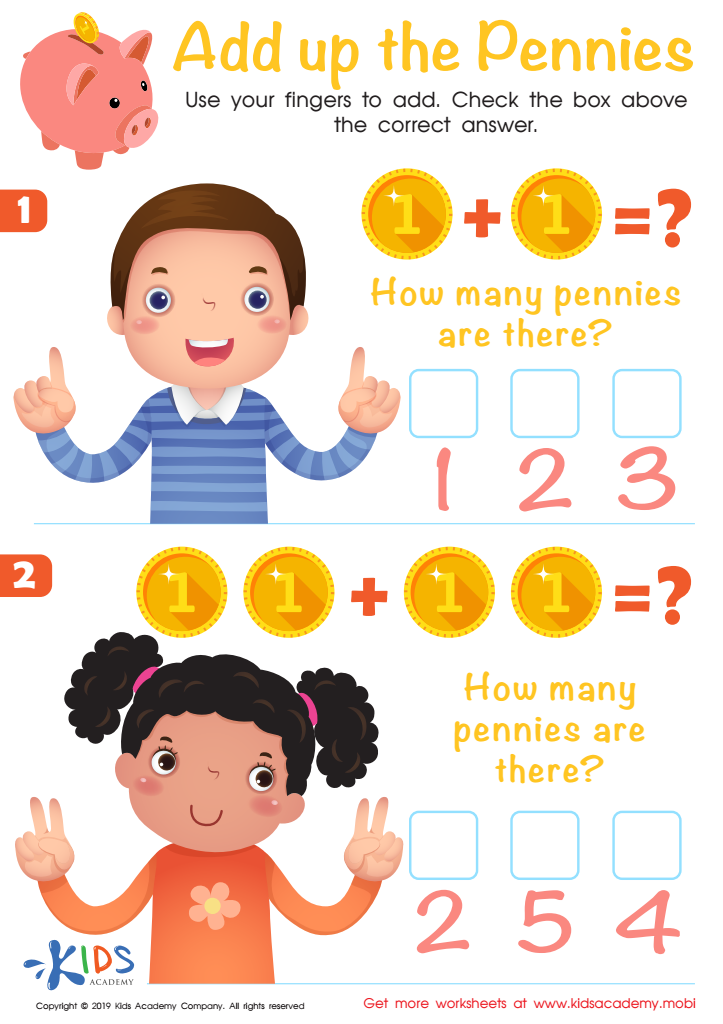
Add up the Pennies Worksheet
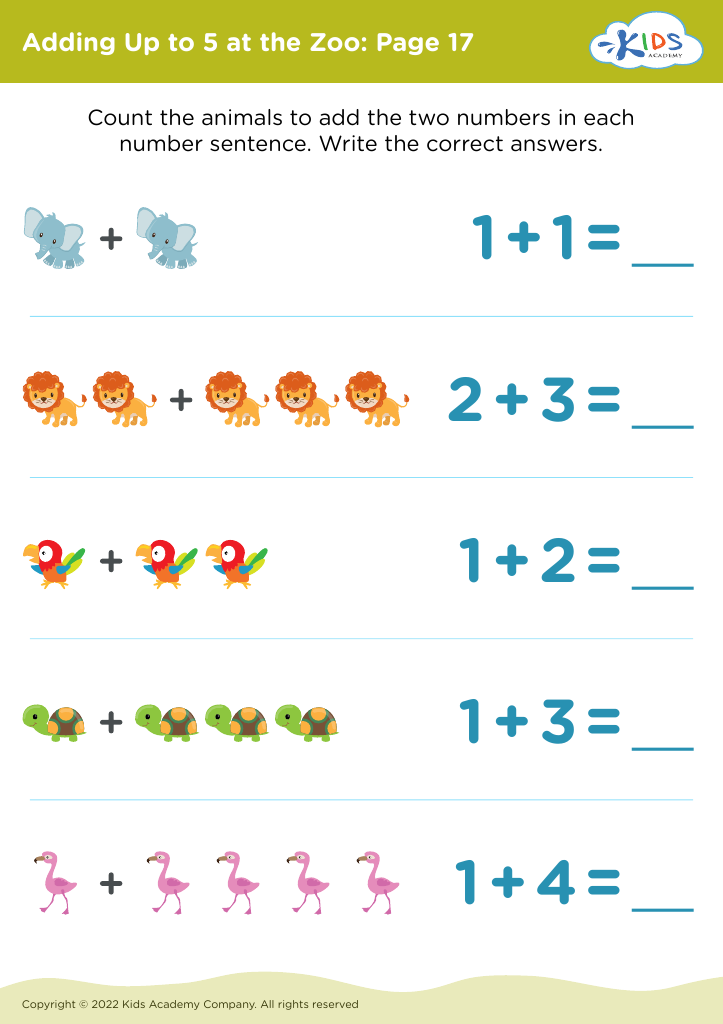
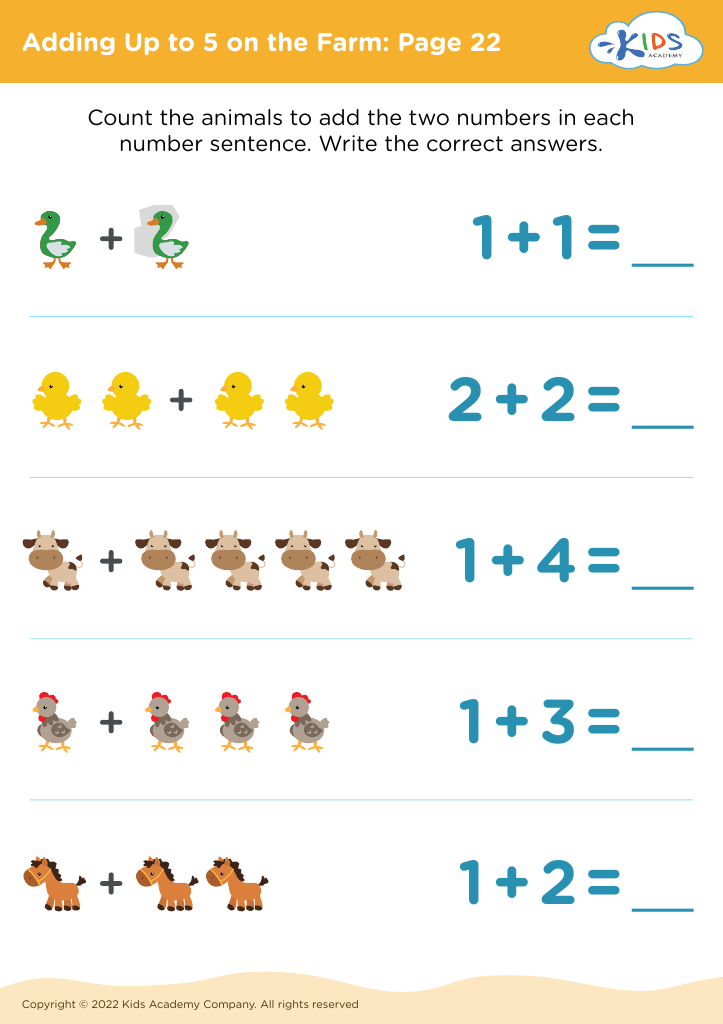




.jpg)



Counting proficiency and basic addition skills are foundational for young children aged 3-5 as they pave the way for future mathematical understanding and cognitive development. At this early age, children are in the critical period of developing their number sense, which is their ability to recognize, relate, and work with numbers effectively. Engaging children with counting and addition helps enhance their logical thinking and problem-solving abilities, which are essential skills both in academic settings and in daily life.
Furthermore, early proficiency in counting and addition builds confidence in children as they approach more complex math concepts in later years. This confidence can lead to a more positive attitude towards learning and school overall. Parents and teachers play crucial roles in creating a stimulating environment where children can explore numbers through fun and interactive activities. Simple counting games, object grouping, and using visual aids like counting blocks or number charts make learning engaging and meaningful.
Ensuring children develop strong counting and addition skills by the age of 5 can also uncover any early signs of learning difficulties, allowing for timely intervention. Thus, a focus on counting proficiency and addition at these early stages not only supports a child’s academic growth but also fosters a lifelong appreciation for learning.








