Hand-eye Coordination Addition Worksheets for Ages 3-5
18 filtered results
-
From - To
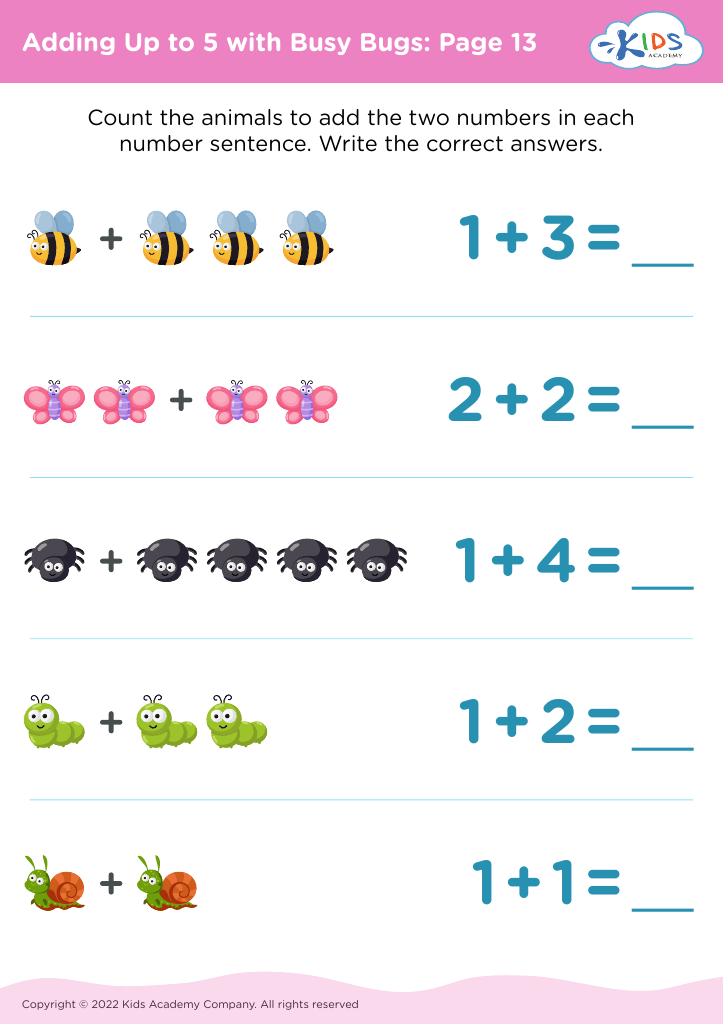
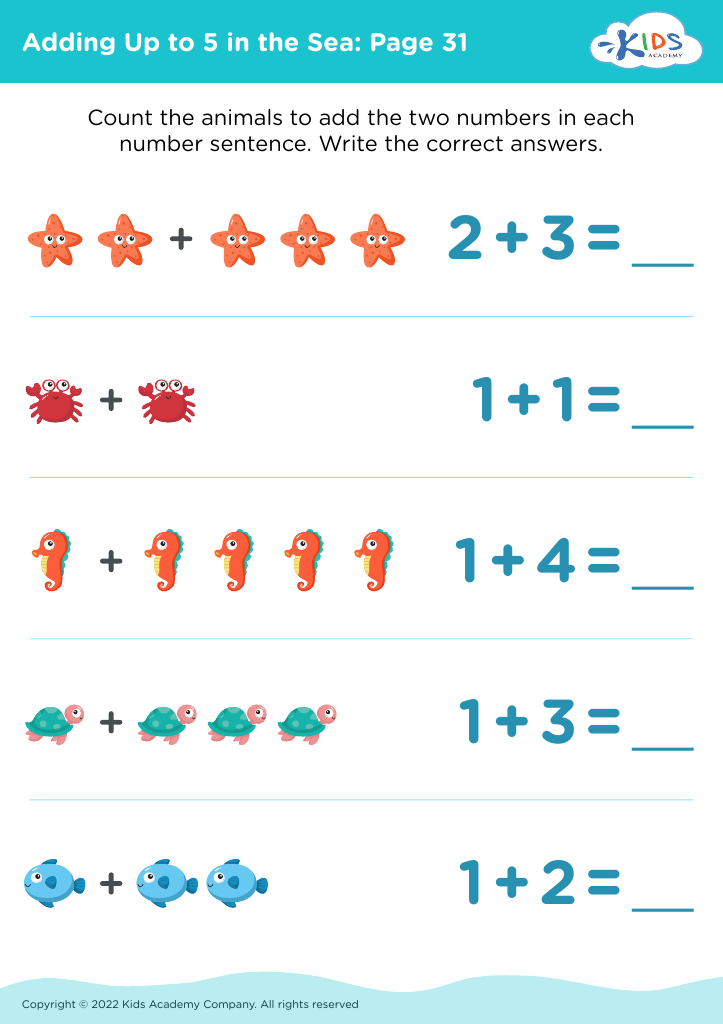
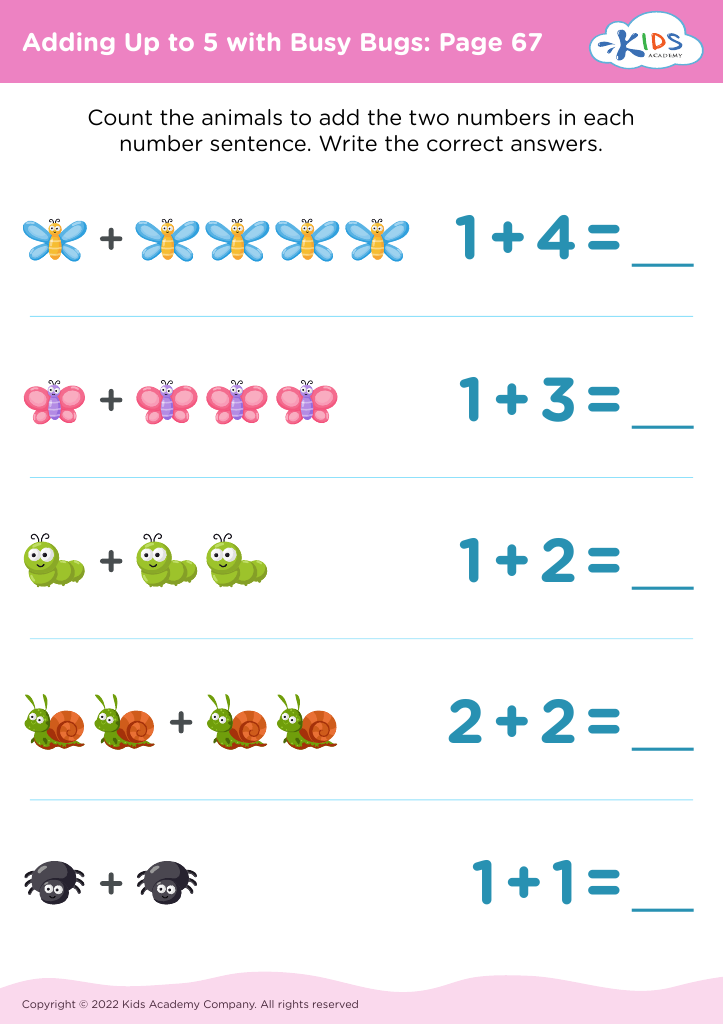
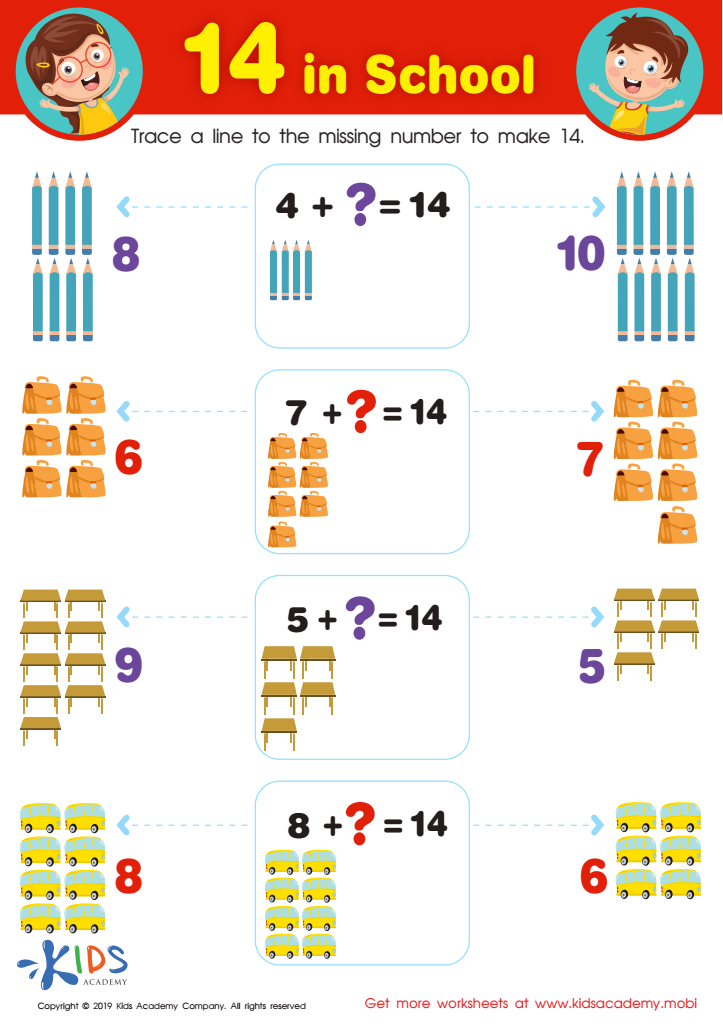
Enhance your child's learning experience with our engaging Hand-eye Coordination Addition Worksheets designed for ages 3 to 5. These worksheets incorporate fun, interactive activities that not only help young learners grasp essential addition skills but also improve their hand-eye coordination. By connecting math with physical movement, children develop fine motor skills essential for their overall development. Our user-friendly format allows parents and educators to seamlessly integrate these worksheets into playtime. Download them now to turn learning into a playful adventure, ensuring your little ones gain confidence in their math abilities while having fun! Perfect for home or classroom use!
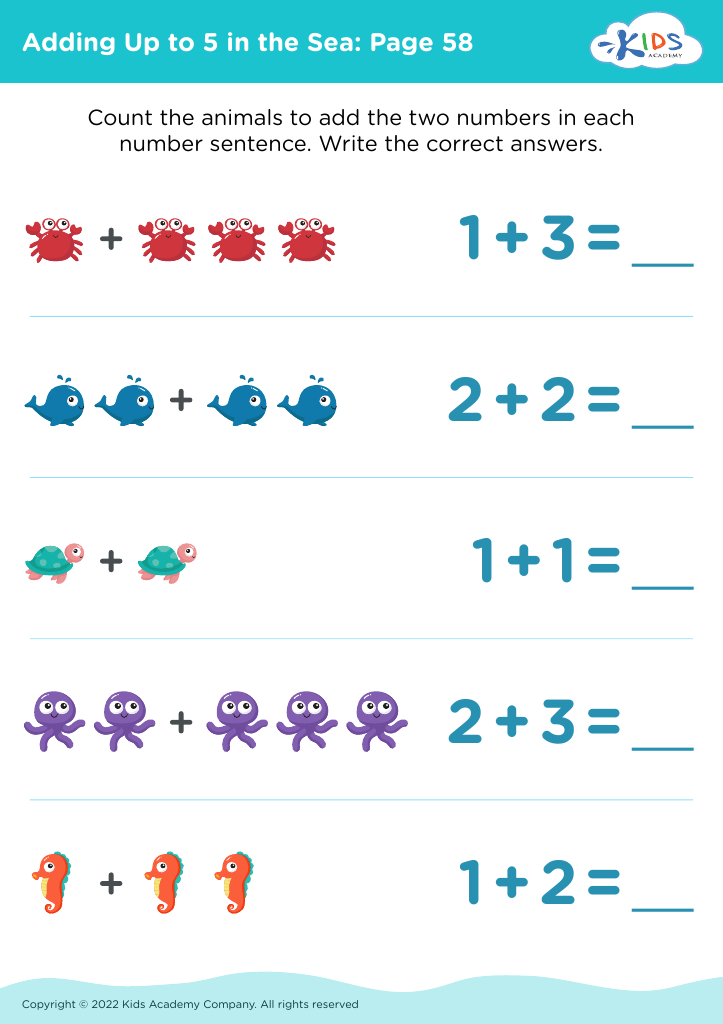
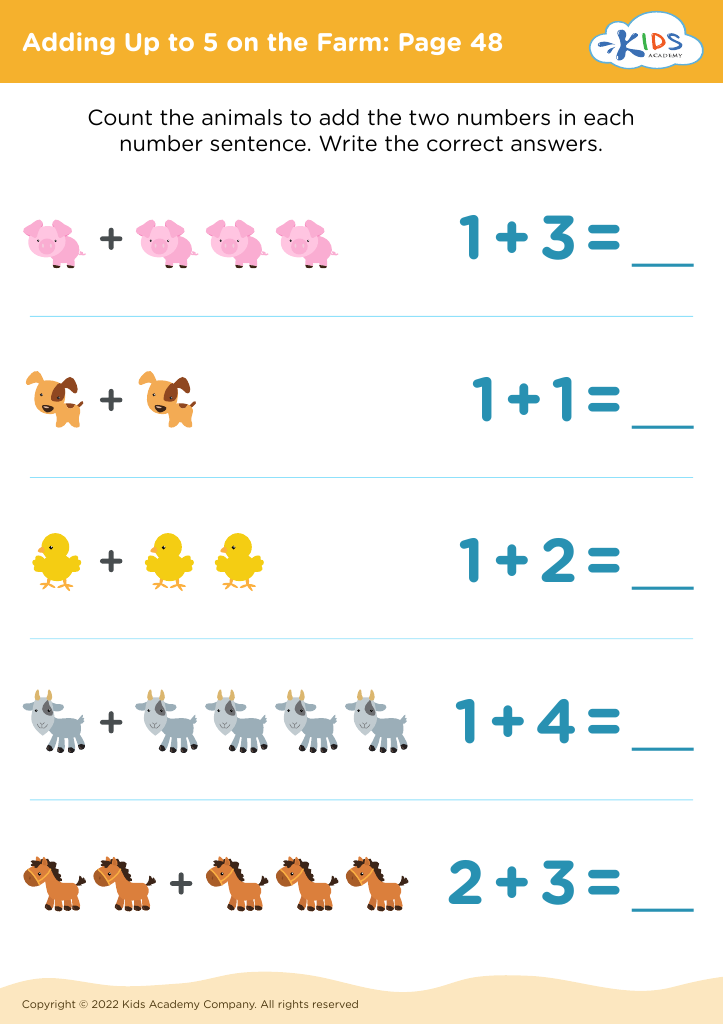
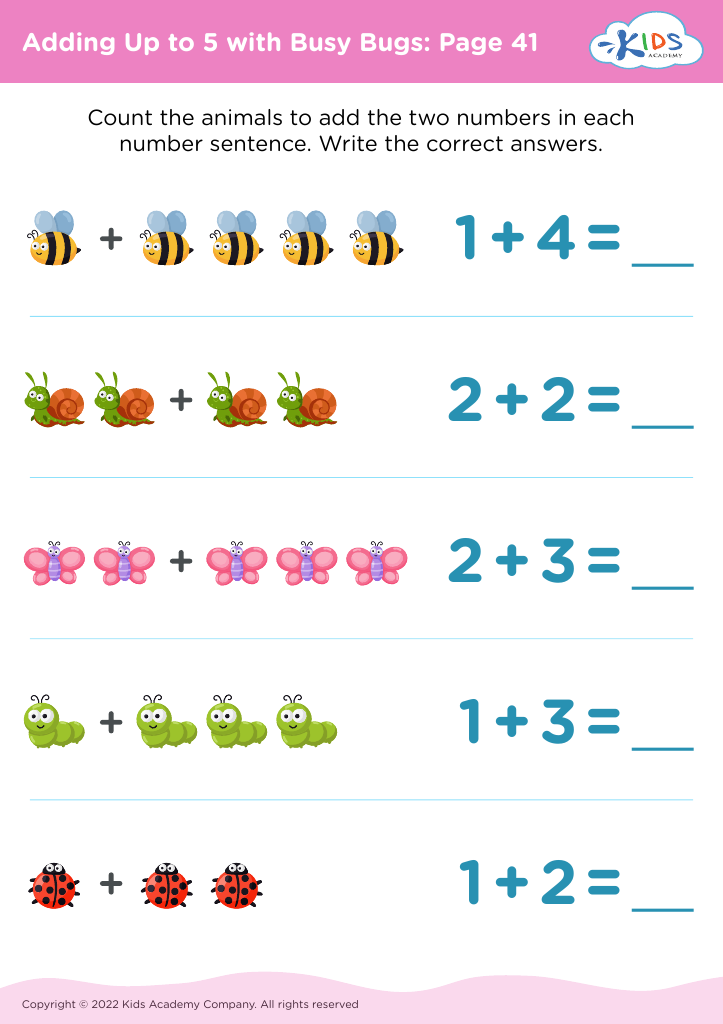
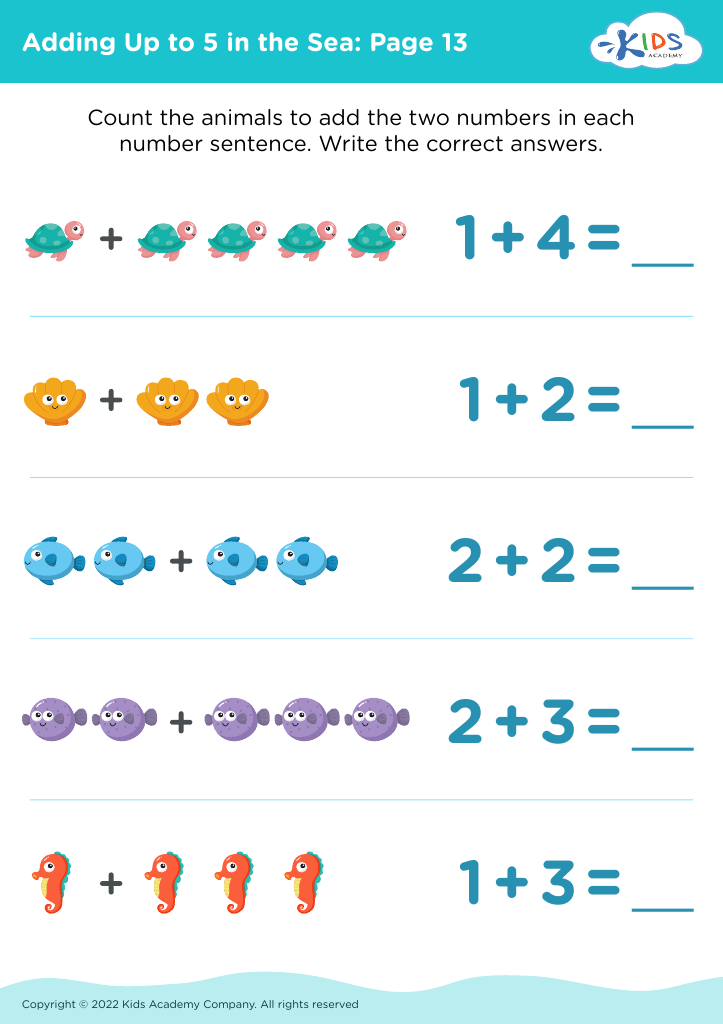
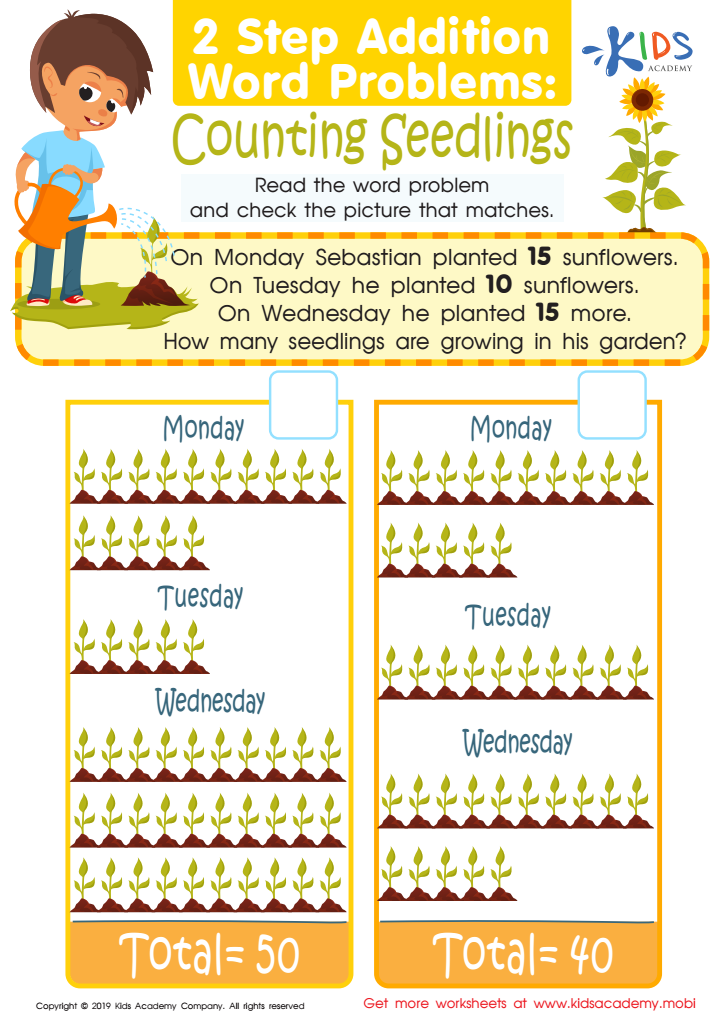
Counting Seedlings Worksheet
 Assign to My Students
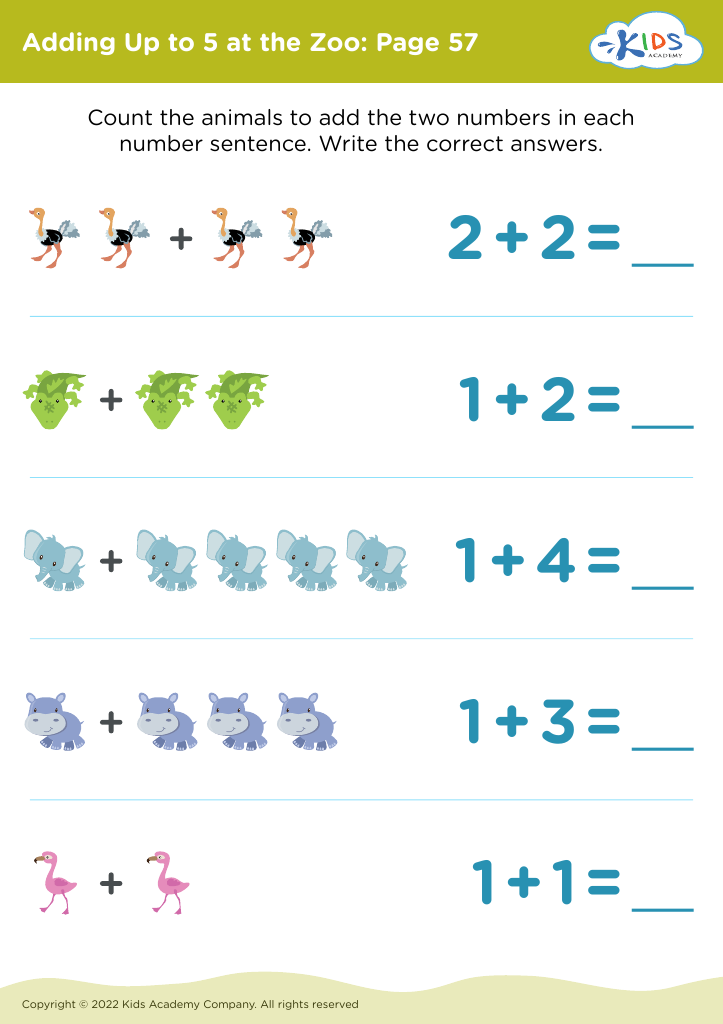
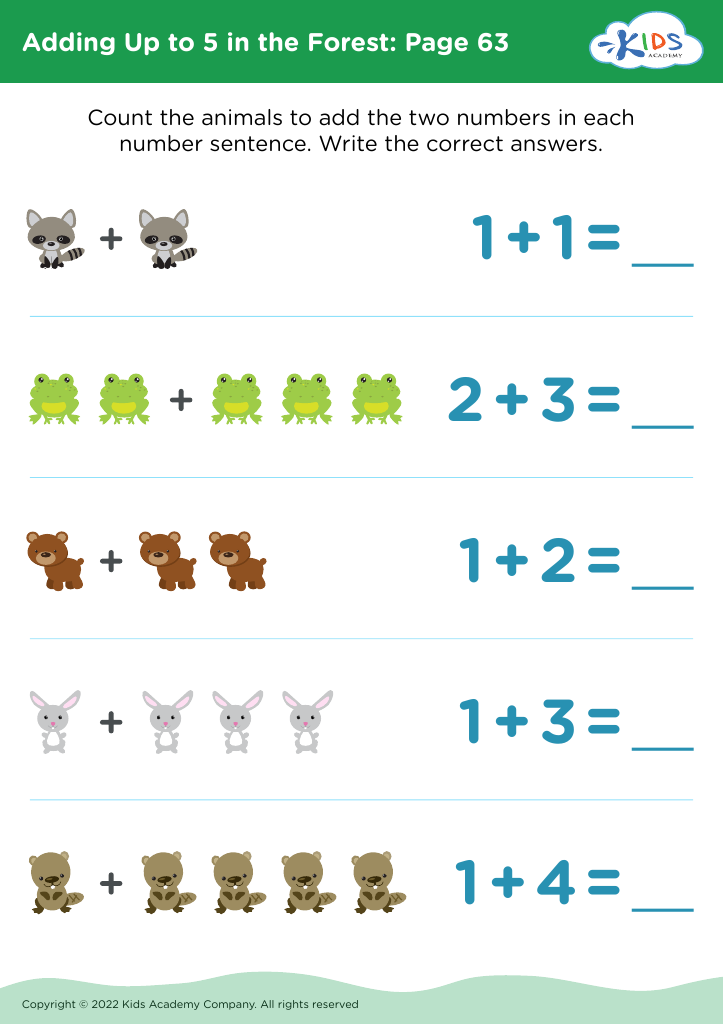
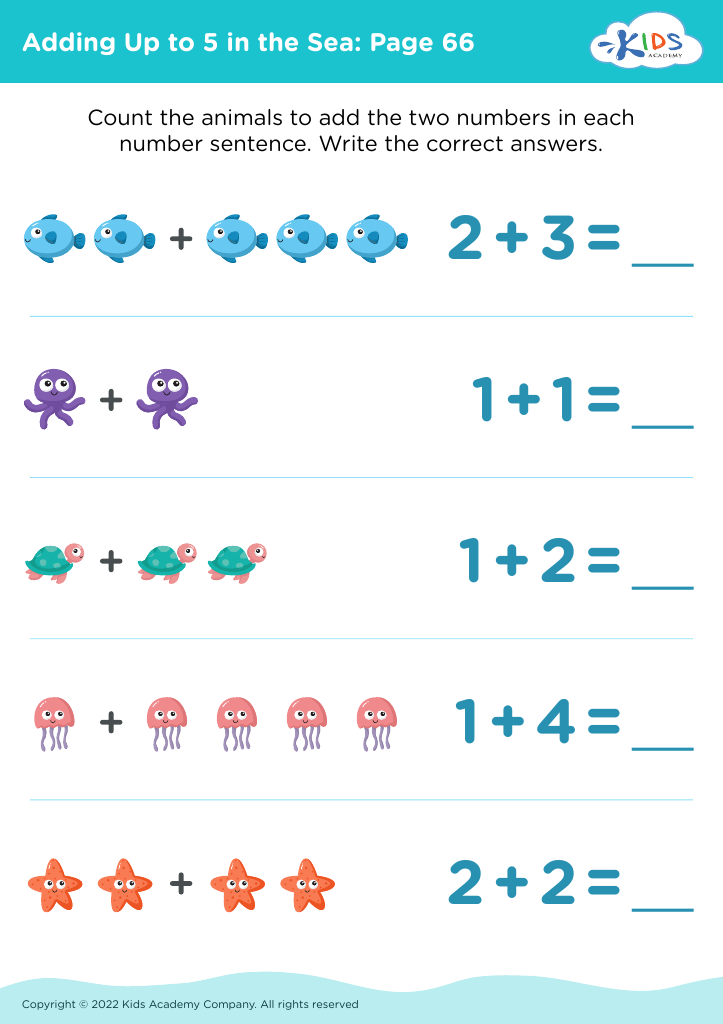
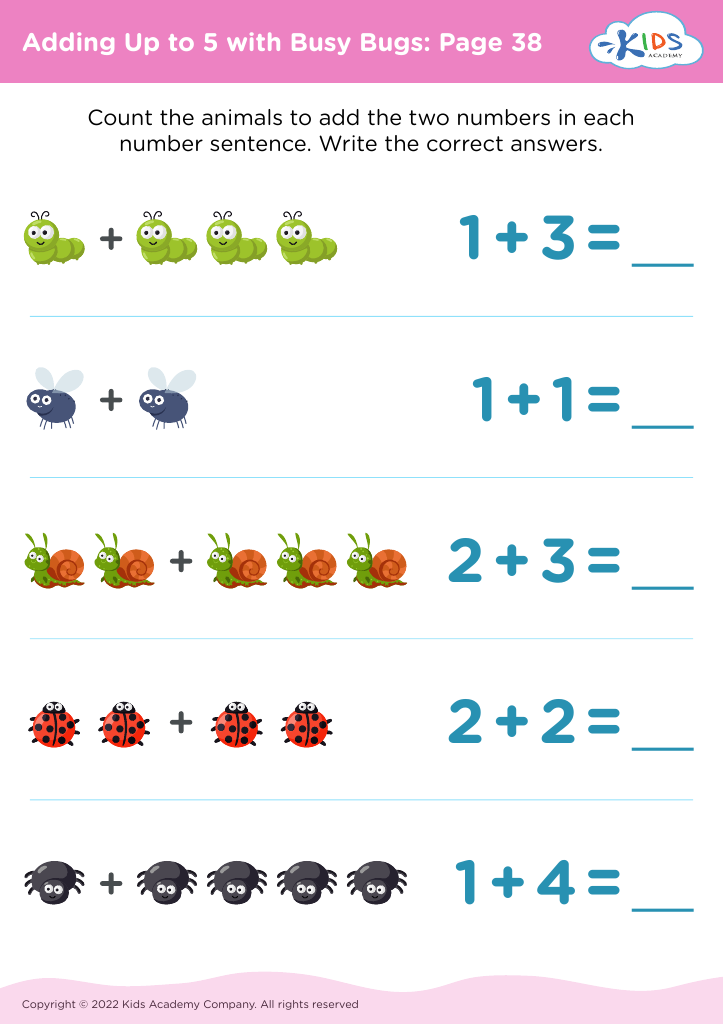
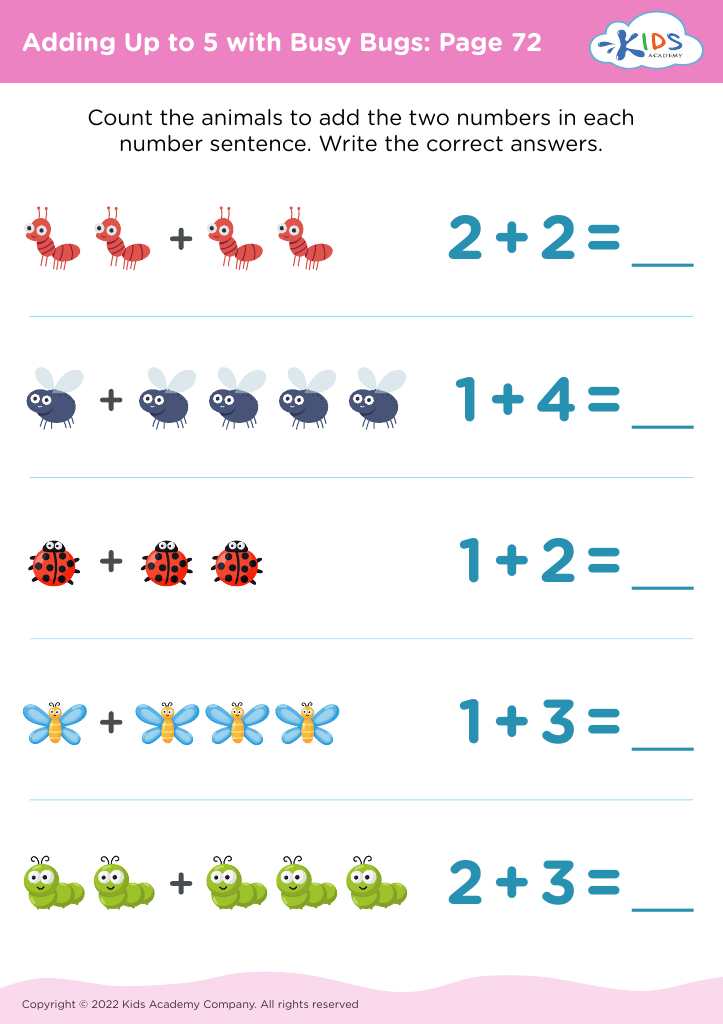
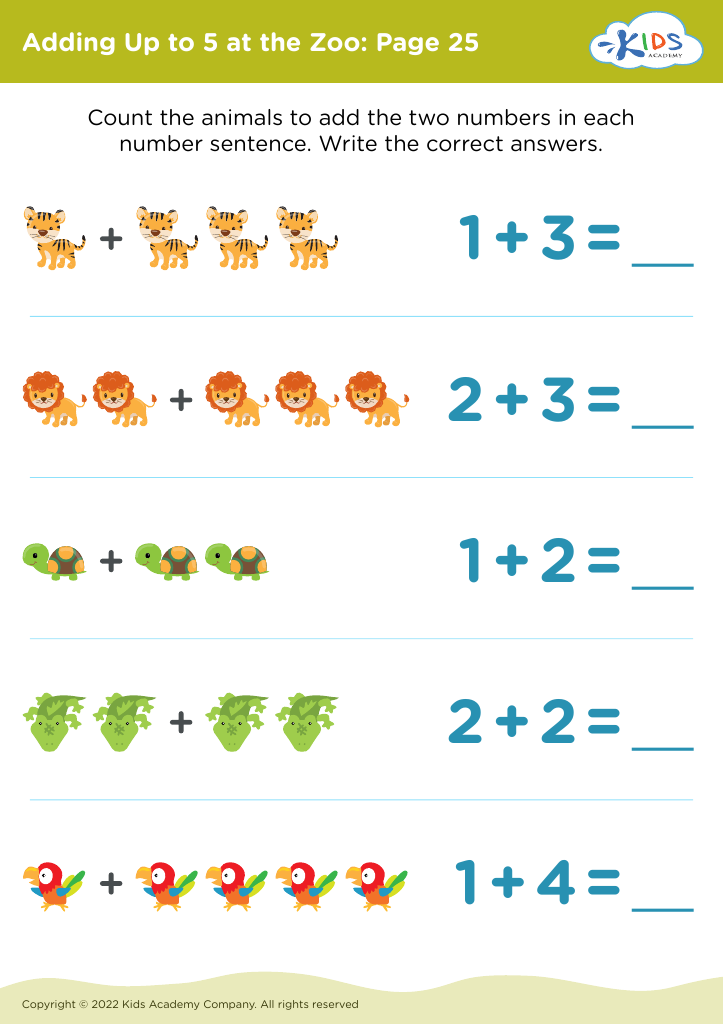
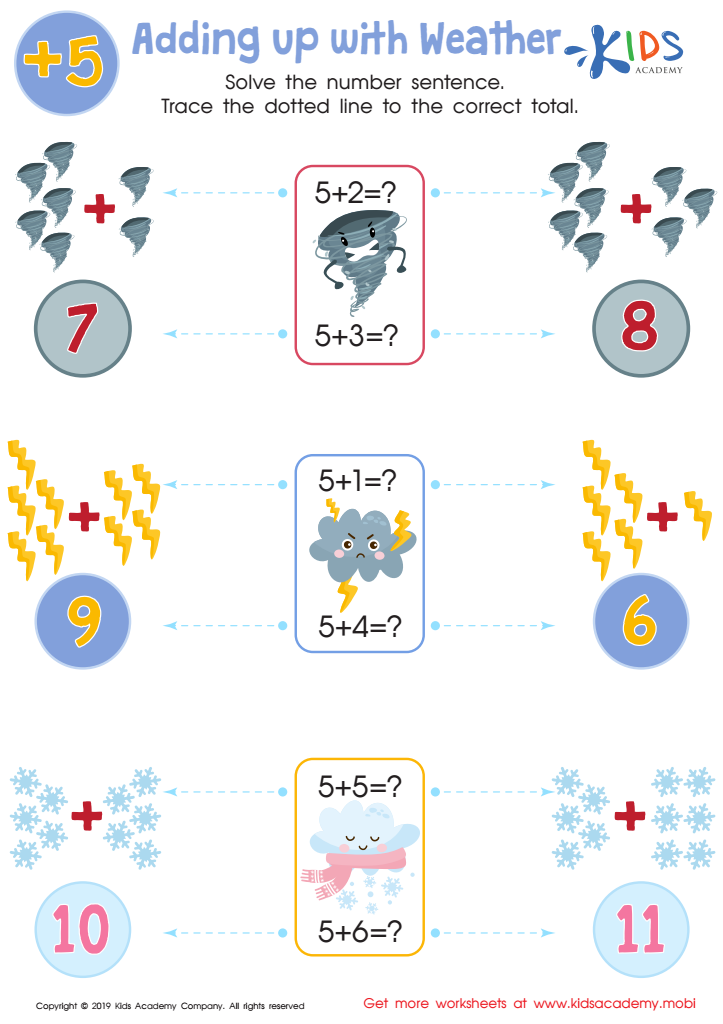
Adding up With Water Worksheet
14 in School Worksheet
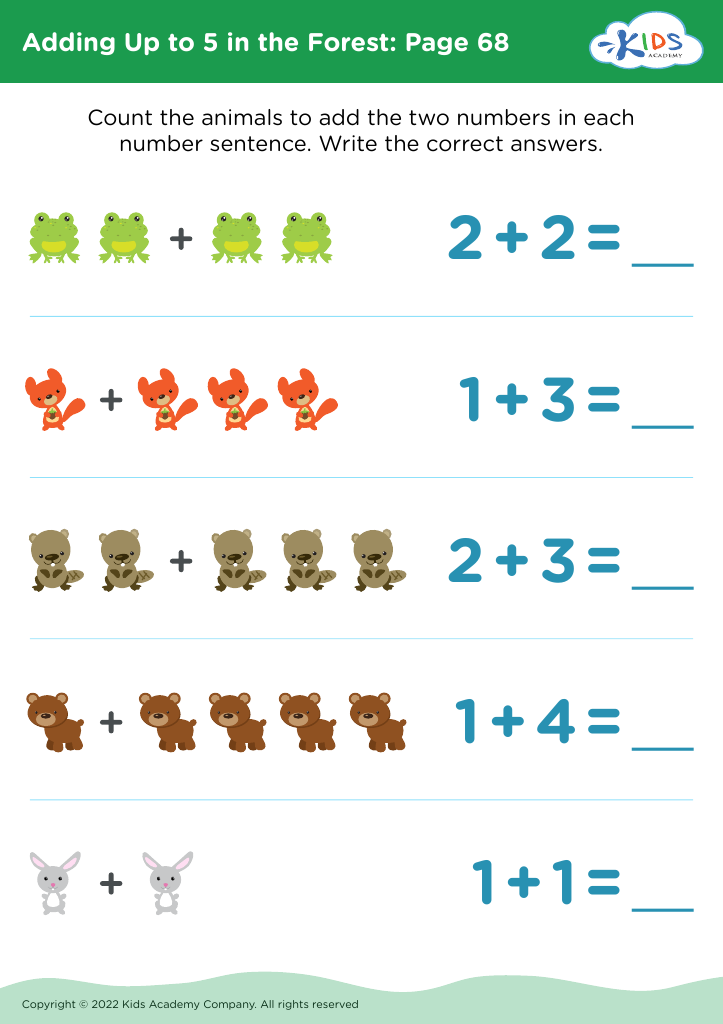
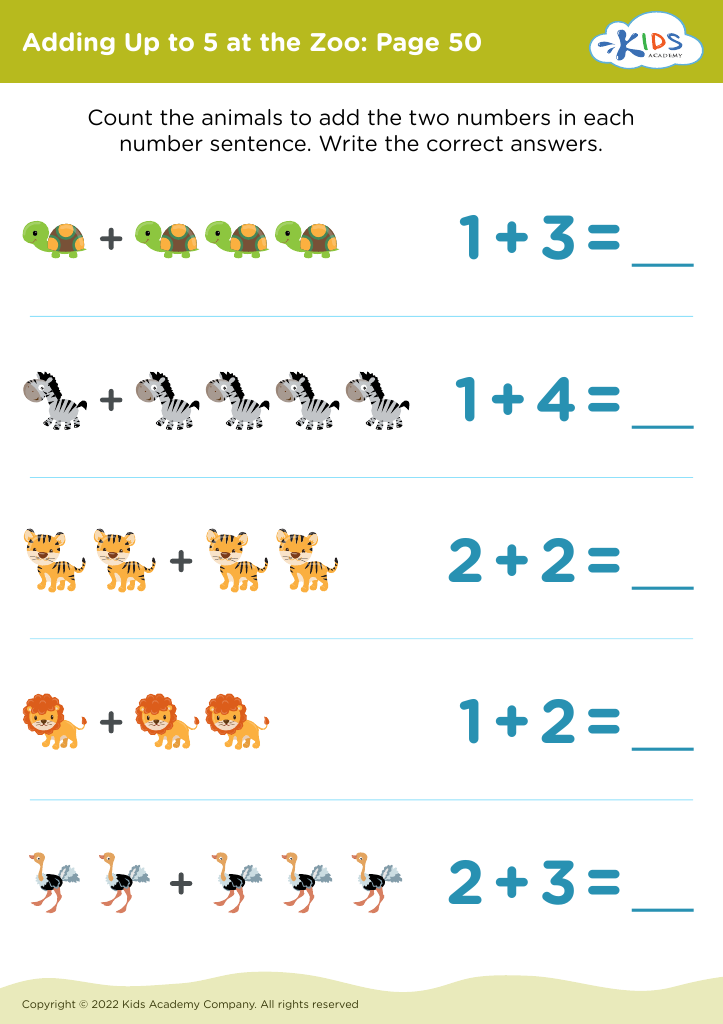








Hand-eye coordination is a crucial developmental skill for young children, particularly for those aged 3 to 5. It plays a significant role in their ability to engage in everyday activities and lays the foundation for more complex skills later in life. Parents and teachers should care about fostering this skill because it impacts children's overall learning, confidence, and physical abilities.
Exercises designed to improve hand-eye coordination, such as catching balls, threading beads, or stacking blocks, not only enhance motor skills but also promote cognitive development and spatial awareness. These activities encourage children to focus, anticipate actions, and develop problem-solving skills as they manipulate objects with precision.
Moreover, strong hand-eye coordination directly correlates with longer-term academic success, particularly in literacy and math. Children with well-developed coordination can easily navigate writing in school and engage in activities like drawing, crafting, or even playing sports, fostering a love for learning.
Lastly, nurturing these skills provides opportunities for parents and teachers to bond with children through play, making learning enjoyable and engaging. Investing time in developing hand-eye coordination early on lays a strong foundation for children's future learning, creativity, and social interactions, making it a priority for caregivers.








